

In today’s highly competitive digital marketplace, e-commerce has become more than just setting up a storefront and listing products. Consumers expect personalized experiences, fast responses, intuitive search, smart product suggestions, and seamless interactions. To meet these expectations, companies are increasingly turning to Artificial Intelligence (AI) and Machine Learning (ML). These technologies help make e-commerce apps smarter, more adaptive, and more efficient—benefiting both users and business owners.
This article explores how AI/ML can be integrated into e-commerce apps: what use cases are available, what challenges need to be addressed, how to plan and implement these integrations, and what future trends are emerging. By the end, you’ll have a roadmap to guide you in applying AI/ML into your own e-commerce products, and be ready to evolve as the field moves forward.
1. Key Use Cases of AI/ML in E-commerce
Use Cases
Before you begin integrating AI/ML, it’s essential to understand where these technologies add the most value. Not all features are equally impactful; some deliver measurable ROI quickly, while others require heavy investment. Below are some of the primary use cases where AI/ML is already making a big difference in e-commerce apps.
1.1 Personalized Product Recommendations
- Using customer browsing history, purchase history, preferences, and demographic data, ML models (collaborative filtering, content-based filtering, hybrid methods) can suggest products users are more likely to buy.
- Real-time personalization: depending on items viewed, time of day, current trends.
- Upselling / cross-selling: suggesting related or higher value products.
1.2 Search and Discovery Enhancement
- Smart search/autocomplete features that predict what users are typing; semantic search that understands user intent vs. literal keywords.
- Visual search: users upload image; app finds visually similar products.
- Filtering & faceting recommendation: dynamically adjusting filters based on what users tend to select.
1.3 Dynamic Pricing & Offer Optimization
- Real-time pricing adjustments based on supply, demand, inventory levels, competitor pricing, seasonality.
- Personalized discounts, coupons, or marketing offers based on user behavior.
- Bundling and promotions tailored per user or user segment.
1.4 Chatbots & Virtual Assistants
- AI chatbots to answer product questions, support, order tracking.
- Voice assistants to guide browsing or purchases.
- Conversational commerce: guiding users to products via natural language interaction.
1.5 Fraud Detection & Security
- ML models to detect unusual behavior (payment fraud, fake reviews).
- Spam detection on reviews or user-generated content.
- Transaction risk assessment and anomaly detection.
1.6 Inventory Management & Supply Chain Optimization
- Predictive demand forecasting: anticipating demand spikes, understanding seasonal trends.
- Stock replenishment automation, warehouse optimization.
- Predicting lead times, optimizing logistics.
1.7 User Experience & Visual Merchandising
- Image optimization (auto cropping, resizing), automatic tagging of product images.
- Virtual try-on features (AR/VR), style recommendations or matching (clothes, home decor).
- Dynamic display or layout optimization: what products or banners to show where.
These use cases demonstrate the many dimensions in which AI/ML can elevate an e-commerce app—from personalization and pricing to search and fulfillment. But before jumping into building, it’s vital to plan properly. The strategy, business goals, and readiness of your organization will make or break the integration. In the next section, we will look at Planning & Strategy: How to Prepare for Integration to ensure your AI/ML initiative has strong foundations.
2. Planning & Strategy: How to Prepare for Integration
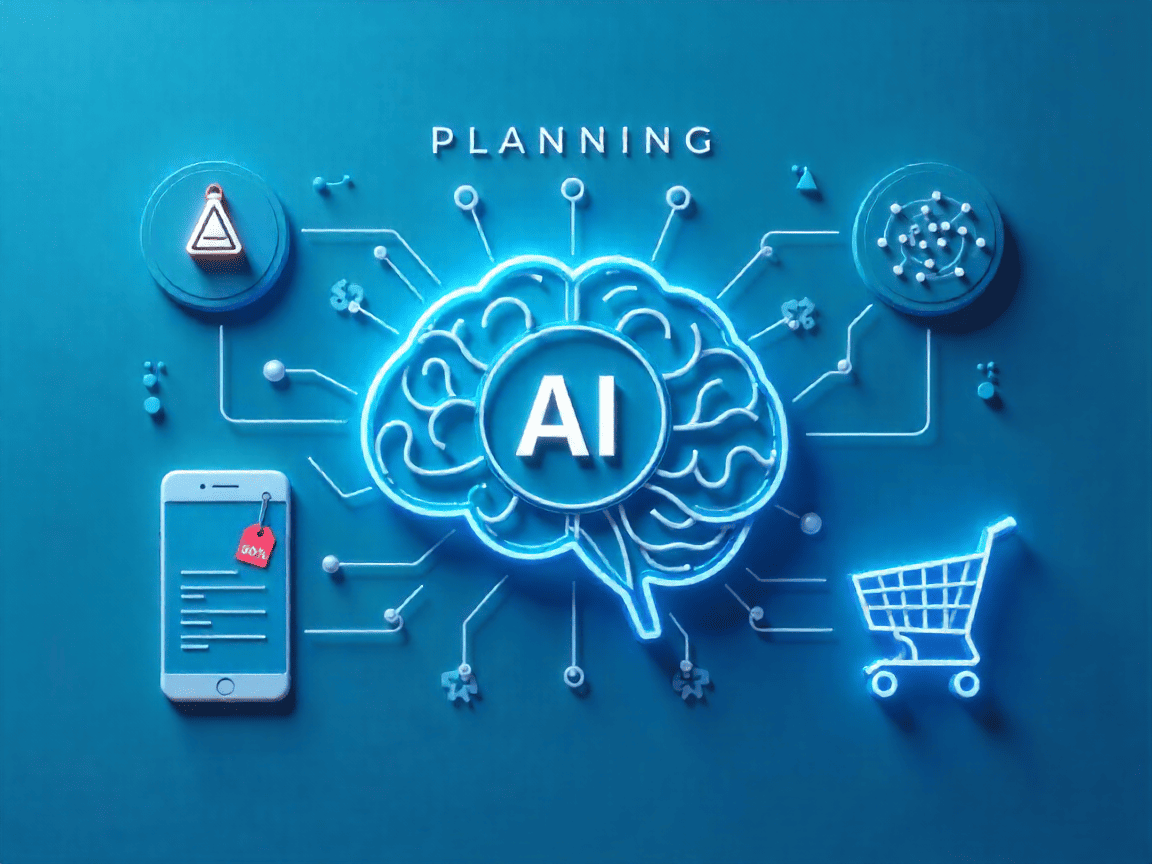
Integrating AI/ML is more than a technical project—it’s a strategic initiative that should align with business goals, customer expectations, and operational capacity. Poor planning can lead to cost overruns, low adoption, or models that deliver no meaningful advantage. This section lays out what to think through beforehand.
2.1 Setting Clear Business Objectives
- Define specific goals: increase conversion rate, reduce cart abandonment, improve average order value, improve search accuracy, cut down support costs, etc.
- Prioritize use cases based on impact vs complexity. Use a matrix to evaluate: soonest ROI, technical feasibility, resource availability.
2.2 Understanding Customer Journey
- Map the customer touchpoints: discovery, browsing, purchase, post-purchase, support. Where are the biggest pain points or drop-offs?
- Survey customers or do user research to understand what features they value: personalized suggestions, chatbot support, easy search, etc.
2.3 Internal Readiness Assessment
- Do you have the data infrastructure (databases, pipelines) to feed ML models?
- Are there team capabilities: data scientists / ML engineers / DevOps? Or will you require external partnership?
- Budget, timelines, legal or compliance considerations (especially if collecting sensitive personal data).
2.4 Technology Stack & Integration Constraints
- What platforms are you using (mobile iOS / Android / Web)? How will ML components integrate (backend, edge, cloud)?
- Consider API strategy: external ML services vs building your own.
- Scalability and performance constraints: model response latency, offline/online capabilities.
2.5 Roadmapping & Phasing
- Start small: a pilot or minimal viable feature (MVP) to test assumptions.
- Set milestones: proof of concept → delivery → iteration → scale.
- Plan for regular evaluation and iteration.
2.6 Cost/Benefit & Risk Analysis
- Estimating costs: infrastructure, hiring, data labeling, maintenance.
- Calculating expected benefits in revenue uplift, cost savings, customer satisfaction.
- Identifying potential risks: data privacy, biased models, over-automating and harming UX.
Having a solid strategy in place ensures that when you move to the technical side, you don’t encounter avoidable pitfalls. With business goals, data readiness, and resource mapping clarified, the next step is figuring out Technical Architecture, Tools & Algorithms—the building blocks for bringing AI/ML features to life.
3. Technical Architecture, Tools & Algorithms
Once you have clarity on what you want to achieve and your readiness, you need to decide how to build: what architecture supports your goals, which tools and frameworks suit your team, how to choose the appropriate ML algorithms. This section dives into the technical setup.
3.1 High-Level Architecture Patterns
- Centralized ML backend vs. distributed / edge ML: trade-offs in latency, infrastructure cost, update frequency.
- Microservices architecture: isolating ML components (recommendation engine, search module, chatbot) as independent services.
- API layer: how the e-commerce frontend(s) communicate to the ML services. Caching, fallback behavior.
3.2 Tools, Platforms & Frameworks
- Open source frameworks: TensorFlow, PyTorch, Scikit-Learn.
- Managed cloud services: AWS SageMaker, Google Cloud AI Platform, Azure ML. These give out-of-box services for some features like search-as-you-type, image recognition etc.
- Specialized third-party tools for recommendations, personalization, chatbot platforms.
3.3 Data Processing Pipelines
- ETL/ELT-style pipelines to clean, aggregate, normalize data from diverse sources (order history, clicks, search, inventory).
- Feature engineering: extracting features that models need (user behavior, product attributes, time-based features).
- Handling real-time vs batch data: streaming pipelines (Kafka, AWS Kinesis) vs scheduled jobs.
3.4 Algorithms & Model Types
- Collaborative Filtering / Matrix Factorization for recommendations.
- Content-based models (e.g. using NLP over product descriptions, images).
- Hybrid models and embedding-based methods (neural embeddings for products and users).
- Classification/regression models for pricing, fraud detection.
- Clustering and segmentation for user grouping
- NLP for search, chatbots, sentiment analysis. Computer vision for visual search or product tagging.
3.5 Infrastructure and Deployment
- Model serving: REST APIs, gRPC endpoints. Tools like TensorFlow Serving, TorchServe, or custom microservices.
- Versioning models and A/B testing: ensuring you can roll back, compare models.
- Retraining and monitoring pipelines to ensure models don’t degrade over time.
3.6 Performance, Latency, and Scaling Concerns
- Ensuring fast response times, especially for features directly in the user-flow (search, recommendations).
- Techniques: caching, approximate nearest neighbors for embeddings, indexing, pre-computing recommendations.
- Load balancing, auto-scaling, ensuring throughput under peak loads.
With architecture, tools, and algorithms in place, the backbone is ready—but it’s only as good as the data fueling it. In the following section, we’ll explore Data: Collection, Management & Ethical Considerations, because without good, clean, legal data, your AI/ML initiative might stall or go off track.
4. Data: Collection, Management & Ethical Considerations
Data is the lifeblood of AI/ML. Quality, volume, diversity, and ethics of data all influence the success of your features. This section walks through how to gather, manage, protect, and think ethically about your data.
4.1 Data Collection & Sources
- Internal data: user behavior logs, clickstreams, transaction histories, product metadata, reviews, return data.
- External data: market trends, competitor pricing, demographic or socio-economic data where relevant.
- Real-time vs historical data: when real-time inputs are required (e.g., dynamic pricing, immediate personalization) vs tasks that can use batch processing.
4.2 Data Quality & Cleaning
- Ensuring data is accurate, consistent, without missing values, outliers handled.
- Standardizing formats, ensuring product metadata is clean (e.g., consistent categories, attributes).
- De-duplication, handling cold start problems (new items, new users).
4.3 Data Labeling & Annotation
- For supervised learning models: labels for fraud vs non-fraud, sentiment in reviews, product categories, etc.
- Using human annotators, or crowd-sourced labeling; perhaps semi-supervised methods to reduce labeling cost.
- Quality assurance in annotation: inter-annotator agreement, validation.
4.4 Data Storage, Privacy & Compliance
- Secure storage: encryption at rest/in transit, access control.
- Regulatory compliance: GDPR, CCPA, local data protection laws if operating in multiple jurisdictions.
- Privacy by design: minimal data collection, user consent, anonymization/pseudonymization.
4.5 Bias, Fairness & Ethical Use
- Recognizing biases in data: e.g. purchase data biased toward existing customer demographics.
- Ensuring model fairness: avoid reinforcing stereotypes, over-/under-representation.
- Transparency: explainable models or features so users trust the system.
4.6 Data Governance & Versioning
- Data versioning to track how data used to train models changes over time.
- Governance policies for who can access what.
- Audit trails for decisions the ML models might make (esp. in areas like pricing, fraud detection).
With robust data practices in place, you’re in a much better position to move from theory into action. The next section will delve into Implementation: From Prototype to Production, putting all strategy, architecture, and data preparation into real working features.
5. Implementation: From Prototype to Production
Building a prototype is one thing; delivering reliable, scalable features to real users is another. This section describes the steps, best practices, and processes for turning your AI/ML ideas into operational parts of your e-commerce app.
5.1 Developing a Pilot or Prototype
- Choose a specific use case with manageable scope—for example, implementing recommendation for a subset of users or products.
- Build a minimal viable product (MVP) that you can test with real data to validate assumptions.
- User testing, usability testing, feedback gathering to understand adoption and UX impacts.
5.2 Iterative Development & Agile Practices
- Use iterations/sprints: deliver small pieces, measure, improve.
- Incorporate feedback loops from both users and internal stakeholders (e.g. operations, marketing).
- Continuous integration / continuous delivery (CI/CD) pipelines for model and code.
5.3 Integration with Frontend / Backend
- Designing APIs or services that frontend/mobile/web apps call for predictions (recommendations, search results, chat).
- Ensuring graceful fallback: if ML service is unavailable, default behavior or cached responses.
- Ensuring the frontend handles latency well: lazy loading, pre-fetching, placeholders.
5.4 Model Deployment & Monitoring
- Deploying models via containers or serverless functions, ensuring versioning.
- Monitoring model performance metrics over time: accuracy, drift, latency, errors.
- Setting up alerting for when models degrade, so you know when retraining is needed.
5.5 Scaling Up & Maintenance
- Scaling out to more users, more regions, larger product catalogs.
- Continuous retraining to account for changing patterns (new items, changing user behavior)
- Maintenance of data pipelines, infrastructure, keeping dependencies, libraries updated.
5.6 Security, Testing & QA
- Testing models for adversarial inputs, resilience, failure modes.
- Security testing for APIs, data pipelines.
- Ensuring no leakage of sensitive data; validating that model doesn’t inadvertently expose private info.
By now you have a working, production-grade integration of AI/ML features, set up, observed, and refined. But a product is only as good as how you measure its success and iterate. Next, we examine Measuring Success: Metrics, Feedback & Optimization, to ensure your investment is paying off and guiding future improvements.
6. Measuring Success: Metrics, Feedback & Optimization
To justify the cost, effort, and risk associated with integrating AI/ML, you’ll need clear ways to measure success, collect feedback, and optimize. Without good metrics and feedback loops, even well-built features can underperform or be ignored.
6.1 Key Performance Indicators (KPIs)
- Business metrics: conversion rate, average order value, cart abandonment rate, retention / churn, customer lifetime value.
- Feature metrics: recommendation click-through rate, search success rate, chatbot resolution rate, latency, system uptime.
- Operational metrics: cost of infrastructure, time to serve predictions, error rates, retraining frequency.
6.2 A/B Testing and Experimentation
- Running controlled experiments: compare AI feature vs baseline to measure uplift.
- Feature flagging to turn features on/off for user subsets.
- Statistical significance, user segmentation, ensuring results are valid.
6.3 User Feedback & Qualitative Data
- Surveys, user interviews, usability studies for features (e.g., do product suggestions feel relevant? Is the chatbot helpful?).
- Monitoring reviews or customer service tickets for issues related to the AI features.
6.4 Continuous Optimization
- Model retraining and refinement to account for drift.
- Feature enhancements: new signals, better filtering, improved UI/UX.
- Monitoring for bias or unexpected behavior and correcting it.
6.5 Scaling & Operationalizing Monitoring
- Dashboarding and reporting: making metrics visible to stakeholders.
- Log collection & observability: capturing logs, traces, errors.
- Setting SLOs (Service Level Objectives): latency, accuracy, failure rates.
Measuring and optimizing means you begin to see what’s working and what isn’t. But even the best efforts are subject to challenges and risks. In the following section, we’ll look at Challenges and Risks: What to Watch Out For, so you can anticipate, mitigate, and respond proactively.
7. Challenges and Risks: What to Watch Out For
While AI/ML offers major upside, it also carries non-trivial risks—technological, ethical, operational, even reputational. Being aware of these and planning to mitigate them is essential for any serious integration.
7.1 Data Privacy, Security, and Compliance Risks
- Mishandling or leaking personal data; non-compliance with privacy regulations (GDPR, CCPA, etc.).
- Data breaches or vulnerabilities in ML services.
- Risks in third-party APIs or services that may not align with your privacy standards.
7.2 Model Bias, Fairness, and Ethical Concerns
- Models reflecting biases present in training data (underrepresented user segments, skewed product data).
- Unintended consequences: discriminating users, making incorrect assumptions, unfair pricing.
- Ethical concerns around personalization vs user autonomy; transparency and user trust.
7.3 Over-Engineering, Cost Overruns & Technical Debt
- Building too much too fast: expensive to maintain, hard to debug.
- ML projects can run over budget, especially with data labeling, infrastructure, iterations.
- Accumulating technical debt if model/feature maintenance, retraining pipelines, monitoring are neglected.
7.4 Cold Start & Scalability Issues
- New users or new products with little historical data (“cold start”) are hard for recommendation systems.
- Scaling models to large catalogs, many users, across geographies; handling high traffic, query load.
7.5 Performance & Latency Trade-offs
- Features like search, recommendations, or personalization that happen in the user’s flow need low latency; if slow, they hurt UX.
- Reliability: ensuring redundant or fallback paths when ML components fail.
7.6 Keeping Up With Change & Model Drift
- User behavior, market trends, device usage, external factors all change. Models trained on old data may degrade.
- Detecting drift and retraining in time; avoiding stale suggestions or irrelevance.
Understanding risks lays the groundwork for robust, trustworthy implementations. Now, looking ahead, there are emerging trends and next-gen capabilities that can help you stay ahead of the curve. In the next section, we’ll explore Future Trends & Advancements in AI/ML for e-commerce.
8. Future Trends & Advancements
AI/ML is a rapidly evolving field. What seems cutting-edge today can become standard in a few years. To maintain competitive advantage, it’s important to watch what’s coming. This section looks at what is likely to shape the next generation of AI/ML in e-commerce apps.
8.1 Generative AI & Content Automation
- Automatically generating product descriptions, ad copy, or marketing content via large language models.
- Personalizing content (emails, messages, product pages) dynamically per user.
- AI-driven image generation for variations/bundles or for calling out look/feel.
8.2 More Advanced Visual & Augmented Reality Features
- Virtual try-ons: clothes, eyewear, furniture in room via AR.
- 3D product views, immersive experiences.
- Enhanced visual search and style matching using deep embedding models.
8.3 Voice Commerce & Conversational Interfaces
- Voice search, voice-activated shopping.
- More natural chatbots; multimodal assistants (voice + visuals).
- Conversational commerce expanded into messaging platforms or social platforms.
8.4 Edge AI & On-Device Intelligence
- Moving inference closer to user (on device, edge) to reduce latency, improve privacy.
- Offline capabilities: enabling features even when network is intermittent.
8.5 Explainable AI & Responsible AI
- Increasing demand for transparency: showing users why suggestions are made.
- Tools for interpretability; model auditing.
- Ethical guidelines as regulation increases.
8.6 AI-driven Automation in Operations
- More automation in logistics, returns, fraud prevention.
- Autonomous demand forecasting; dynamic supply chain adjustments
8.7 Integration with IoT & Omnichannel Experiences
- Smart gadgets (smart mirrors, kiosks) in physical retail aligning with e-commerce backend.
- Unified customer experience across web, mobile, in-store, social commerce.
These future trends are not just futuristic vision—they’re increasingly becoming expectations from customers and competitive differentiators. As you stay ahead, combining current foundations and emerging capabilities is vital. Next, in Conclusion, we’ll bring everything together and suggest how you can start acting now—and where to head from here.
9. Conclusion and What’s Next
In wrapping up, integrating AI and Machine Learning into your e-commerce app isn’t about chasing buzzwords—it’s about thoughtfully using powerful tools to create meaningful value for your customers and your business.
You’ve seen:
- The key use cases (recommendations, search, pricing, chatbots, inventory, UX improvements) where AI/ML can make a difference;
- How to plan strategically—aligning with business goals, assessing readiness, and defining roadmap;
- The technical architecture, tools, and algorithms best suited for different features;
- Importance of good data practices, privacy, ethical issues;
- How to move from prototype to production, scale, deploy, monitor;
- How to measure success, optimize, and what challenges to anticipate;
- What future trends are on the horizon.
FAQs
The Role of AI in E-Commerce Apps: Driving Personalization, Efficiency, and Growth
E-commerce has transformed shopping into a borderless, always-on experience. Customers expect product suggestions that feel tailor-made, checkout processes that are effortless, and customer service that responds at any hour. Meeting these expectations is no longer optional—it’s a competitive necessity.
Artificial Intelligence (AI) has emerged as the engine that powers this new era of digital commerce. From machine learning models that predict buying behavior to chatbots that resolve issues instantly, AI is quietly shaping every touchpoint of the shopper journey. Understanding how AI fits into e-commerce apps is essential for retailers who want to stay ahead.
Understanding AI in the E-Commerce Context
AI refers to computer systems capable of performing tasks that typically require human intelligence: learning, reasoning, problem-solving, and natural language understanding. Within e-commerce, AI isn’t just automation; it’s a sophisticated layer that adapts to patterns and improves over time.
Key technologies include machine learning (ML) for pattern recognition, natural language processing (NLP) for interpreting human queries, and computer vision for recognizing images. Together, these technologies enable e-commerce apps to learn from user behavior, predict needs, and respond intelligently.
Personalized Shopping Experiences
Personalization is where AI delivers its most visible magic. Machine learning models examine browsing histories, purchase patterns, and even dwell times to recommend products with uncanny accuracy. Instead of static “people also bought” lists, users see dynamic suggestions that evolve with each interaction.
Predictive analytics takes personalization further by forecasting what a shopper might need next. For example, a customer who buys running shoes might soon see targeted offers for athletic wear or nutrition supplements. This proactive approach boosts conversion rates and average order value.
Industry leaders showcase the impact: Amazon attributes a significant share of its revenue to AI-driven recommendations, while streaming giant Netflix has proven that personalization keeps users engaged—principles e-commerce apps can replicate. The result is an experience that feels bespoke, increasing customer loyalty and lifetime value.
Intelligent Search & Discovery
Traditional keyword search often frustrates shoppers. AI fixes this with NLP and semantic search, understanding the intent behind queries rather than relying on exact matches. Whether a user types “formal evening shoes” or “black dress shoes for wedding,” the engine surfaces relevant results.
Visual and voice search further enhance discovery. A customer can snap a photo of a handbag they admire and instantly find similar products. Voice search—fueled by smart assistants—enables hands-free browsing, a convenience that’s rapidly becoming standard. Intelligent search not only improves user satisfaction but also reduces bounce rates, directly impacting revenue.
AI-Powered Customer Support
Shoppers expect round-the-clock assistance, and AI chatbots meet that demand without exhausting human staff. Modern bots do more than answer FAQs: they handle order tracking, process simple returns, and escalate complex issues to live agents when needed.
Advanced NLP allows these bots to grasp context and sentiment. A frustrated customer might receive a proactive discount or faster escalation, turning a potential complaint into a positive brand moment. Retailers like Sephora and H&M deploy AI assistants that seamlessly blend support with product discovery, demonstrating how customer service can double as a sales channel.
Dynamic Pricing & Inventory Optimization
In traditional retail, price changes happen slowly. AI makes pricing fluid, adjusting in real time based on demand, competitor activity, seasonality, and even a shopper’s likelihood to convert. Airlines pioneered dynamic pricing; now, e-commerce platforms use similar algorithms to maximize margins while remaining competitive.
On the backend, AI predicts demand with precision. Machine learning models analyze historical sales, regional trends, and external factors like weather to forecast inventory needs. This reduces overstocking, minimizes stockouts, and optimizes warehouse space—benefits that directly protect profit margins.
Fraud Detection & Security
With rising online transactions comes increased fraud risk. AI excels at spotting anomalies that might escape human review. By analyzing patterns in login locations, payment methods, and order frequency, AI systems flag suspicious activity instantly.
These models improve as they ingest more data, staying ahead of evolving threats such as account takeovers or fake reviews. For shoppers, stronger security builds trust; for retailers, it cuts financial losses and protects brand reputation.
Operational Efficiency & Backend Automation
Beyond customer-facing features, AI streamlines operations. Intelligent logistics systems determine the most efficient shipping routes, while AI-driven robots manage warehouse picking and packing.
Routine tasks—like tagging products, updating inventory records, or processing supplier invoices—can be automated through AI, freeing employees to focus on strategic initiatives. This hidden layer of efficiency keeps costs down and scalability high, especially during seasonal spikes.
Implementation Considerations
Integrating AI requires more than just plugging in a new tool. Data quality is critical: inaccurate or incomplete data undermines model performance. Retailers must invest in robust data pipelines and ensure compliance with privacy regulations such as GDPR or CCPA.
Businesses face a key decision: build custom AI models or leverage off-the-shelf platforms. Custom models offer tailored precision but demand specialized talent and longer development cycles. Managed services from providers like AWS SageMaker, Google Cloud AI, or Azure ML accelerate deployment and lower the entry barrier.
Future Outlook
AI’s role in e-commerce is poised to deepen. Generative AI is beginning to create product descriptions, ad copy, and personalized marketing content at scale. Edge computing will allow AI to run directly on user devices, enabling hyper-personalized recommendations without constant server calls.
We can also expect richer experiences through augmented and virtual reality. Imagine AI-powered AR fitting rooms that instantly adapt recommendations based on how a garment drapes on a user’s digital twin. These innovations will further blur the line between physical and digital shopping.
Conclusion
Artificial Intelligence is no longer an optional add-on for e-commerce apps—it is the backbone of modern retail success. From personalized recommendations and intelligent search to dynamic pricing and fraud prevention, AI touches every layer of the customer journey and operational workflow.
For businesses, the question is no longer if but how to integrate these capabilities. Begin by auditing your current data infrastructure and identifying the most impactful use cases, whether it’s recommendation engines, chatbots, or predictive inventory management.
In our next discussion, we’ll dive deeper into the specific machine learning algorithms—from collaborative filtering to deep neural networks—that power these AI breakthroughs. Understanding those foundations will help retailers and developers make informed choices as they bring AI from concept to competitive advantage.