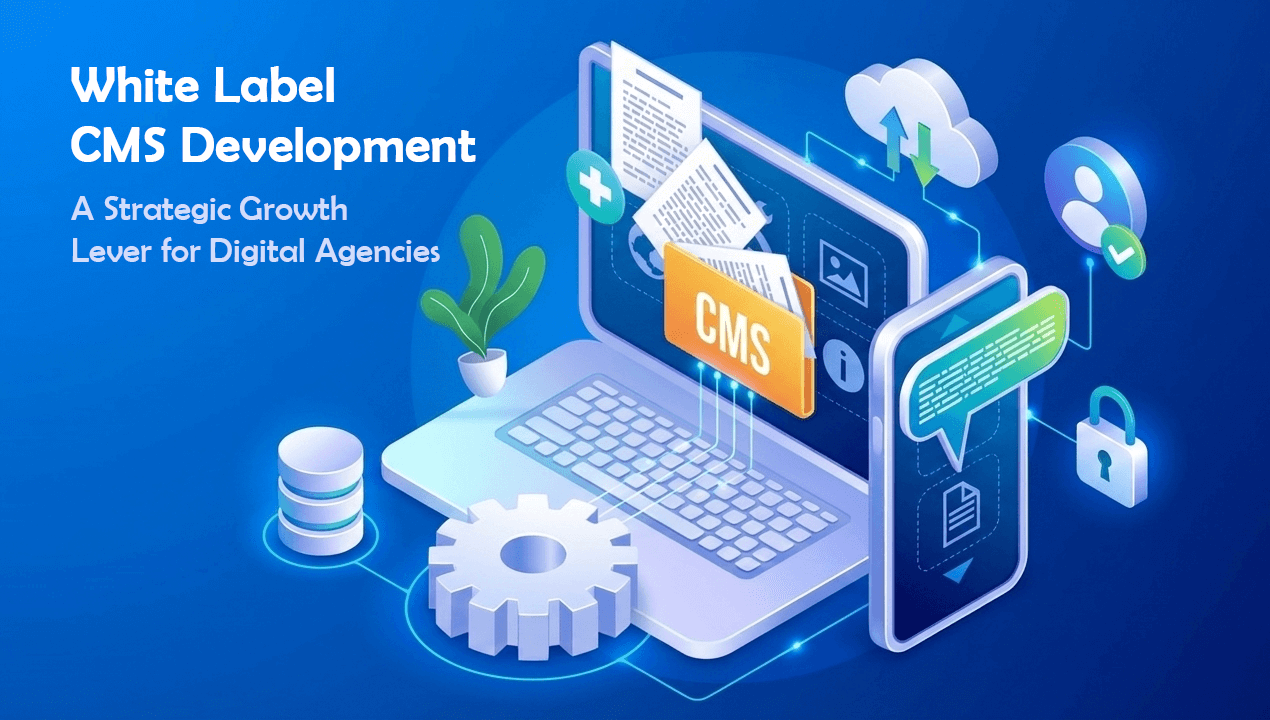
Introduction: Why White Label CMS Development Has Become Mission-Critical
Digital agencies today are under structural pressure.
Client expectations are rising. Budgets are tightening. Delivery timelines are shrinking. At the same time, agencies are expected to support multiple CMS platforms, ongoing enhancements, security updates, performance optimization, and post-launch support—often under fixed fees.
This is where white label CMS development has moved from a tactical option to a strategic operating model.
Across WordPress-based agencies, SaaS-focused studios, and full-service digital firms in the US, UK, Canada, Australia, and New Zealand, white label CMS development enables agencies to:
- Scale delivery without scaling headcount
- Maintain full brand ownership and client trust
- Offer enterprise-grade CMS solutions without in-house specialization
- Improve margins while reducing operational risk
The platforms you referenced—WordPress White Label CMS, VideoUserManuals, Dorik, Microweber, and enterprise CMS vendors—each represent pieces of the ecosystem. But agencies don’t just need tools. They need reliable execution models.
This guide consolidates those perspectives into a single, authoritative framework—and explains why CMS outsourcing to India, through a hybrid partner like Bantech Solutions, has become a competitive advantage rather than a cost play.
1. What Is White Label CMS Development?
White label CMS development refers to the practice of outsourcing CMS design, development, customization, or maintenance to a third-party team that works entirely under your agency’s brand.
Your client never sees the partner.
Your agency retains ownership.
Your brand remains the face of delivery.
Unlike reselling SaaS platforms or plugins, white label content management system development allows agencies to:
- Customize CMS functionality deeply
- Extend or build features beyond off-the-shelf capabilities
- Control UX, admin branding, and user workflows
- Support long-term client relationships
The white label CMS ecosystem broadly falls into three layers:
1. CMS Branding & Experience Layer
Tools like the WordPress White Label CMS plugin and VideoUserManuals focus on:
- Admin branding
- Role-based access
- Simplified client dashboards
- Custom onboarding experiences
These are essential for client perception, but they don’t solve engineering scale.
2. CMS Platform Layer
Platforms such as Dorik and Microweber offer:
- White-label-ready CMS environments
- No-code or low-code workflows
- Faster time-to-market for simple sites
They are effective for standardized builds—but less suitable for custom, high-complexity agency work.
3. CMS Engineering & Delivery Layer
This is where CMS outsourcing partners come in—handling:
- Custom CMS development
- Platform migrations
- Plugin/module development
- Performance, security, and scalability
This layer determines whether white labeling is profitable or painful.
2. Why Agencies Are Moving Toward White Label CMS Models
White label CMS development is not driven by convenience—it’s driven by economics and risk management.
Margin Compression Is Real
Agencies across Western markets are facing:
- Flat or declining project fees
- Higher client expectations
- Increased competition from SaaS and AI builders
Maintaining in-house CMS specialists for WordPress, headless CMS, open-source platforms, and custom builds is financially unsustainable for most mid-sized agencies.
White label CMS outsourcing allows agencies to:
- Convert fixed salaries into variable delivery costs
- Protect margins without reducing quality
- Price projects more competitively
Clients Expect CMS Expertise—Not Tools
Clients don’t care whether you use WordPress, Dorik, or Microweber. They care about:
- Performance
- Security
- Ease of content updates
- Scalability
Agencies that rely only on plugins or SaaS tools eventually hit technical ceilings. White label CMS development gives agencies access to real engineering depth when needed.
3. Platform Perspectives: What the Referenced Solutions Get Right
Each of the resources you shared contributes something valuable to the white label CMS conversation.
WordPress White Label CMS & VideoUserManuals
These tools excel at:
- Admin experience simplification
- Client onboarding
- Reducing support tickets
However, they assume that development capacity already exists.
Dorik
Dorik demonstrates how:
- No-code CMS platforms accelerate delivery
- White labeling helps agencies launch faster
But no-code tools struggle with:
- Complex integrations
- Enterprise scalability
- Long-term technical flexibility
Microweber
Microweber highlights the value of:
- Open-source CMS flexibility
- Full white label control
Yet open-source platforms still require engineering expertise to maintain, secure, and scale.
Enterprise CMS Service Providers
Service-led CMS development firms emphasize:
- Custom builds
- Long-term support
- Platform neutrality
This is closest to what agencies actually need—provided the delivery model is optimized.
4. White Label CMS Development vs In-House CMS Teams
| Factor | In-House CMS Team | White Label CMS Outsourcing |
| Cost structure | Fixed, high | Variable, predictable |
| Scalability | Slow | On-demand |
| Platform coverage | Limited | Multi-CMS |
| Risk | High | Distributed |
| Time-to-market | Moderate | Faster |
For agencies serving multiple markets and industries, white label CMS development is operationally superior.
5. Why CMS Outsourcing to India Works — When Done Right
For more than two decades, India has played a central role in the global technology services ecosystem. What began as cost-driven IT outsourcing has evolved into something far more sophisticated: strategic delivery partnerships that support product companies, digital agencies, and enterprises worldwide.
In the context of white label CMS development, India’s position as a global hub is not accidental. It is the result of structural advantages that, when paired with the right delivery model, create measurable competitive benefits for agencies in the US, UK, Canada, Australia, and New Zealand.
That said, the phrase “outsourcing to India” still triggers hesitation for some agency leaders. Concerns around communication, quality consistency, cultural mismatch, and accountability are not unfounded. They stem from outdated outsourcing models that prioritize low cost over long-term outcomes.
The reality today is more nuanced.
CMS outsourcing to India works exceptionally well—when it is executed through a modern, hybrid delivery model that aligns engineering depth with Western business expectations.
To understand why, it’s important to first examine the three foundational strengths that make India a global CMS powerhouse.
India’s Structural Advantage in CMS Development
1. Deep and Specialized CMS Talent Pools
India produces over 1.5 million engineering graduates annually, many of whom specialize early in web technologies, open-source frameworks, and CMS ecosystems. Over time, this has resulted in dense, highly specialized talent clusters across platforms such as:
- WordPress (core, multisite, custom themes, plugin engineering)
- WooCommerce and eCommerce CMS stacks
- Headless CMS architectures
- Open-source CMS frameworks
- Custom PHP and Laravel-based CMS builds
Unlike Western markets—where CMS expertise is often fragmented across freelancers or generalist developers—India has developed role-specific depth. It is common to find developers who have spent years working exclusively on:
- CMS performance optimization
- Security hardening
- Multisite governance
- Content workflow automation
- CMS-to-CRM or CMS-to-ERP integrations
For agencies, this depth matters. CMS projects are rarely “just websites.” They are living systems that evolve, integrate, and scale. Access to engineers who understand CMS platforms beyond surface-level implementation directly improves delivery outcomes.
2. Cost Efficiency Without Compromising Capability
Cost efficiency is often discussed, but rarely explained correctly.
CMS outsourcing to India is not effective because it is “cheap.” It is effective because it enables economic leverage.
Agencies in Western markets face:
- Rising salary expectations for developers
- High churn in technical roles
- Difficulty maintaining specialists across multiple CMS platforms
By contrast, India offers:
- Lower total employment costs
- Larger, more stable delivery teams
- The ability to maintain platform-specific specialists without inflating overhead
This allows agencies to:
- Convert fixed staffing costs into variable delivery costs
- Preserve margins even as client budgets tighten
- Take on more CMS projects without increasing internal headcount
Crucially, when managed correctly, this cost advantage does not come at the expense of quality. In fact, it often enables higher quality by allowing agencies to engage specialists instead of generalists.
3. Process Maturity and Delivery Discipline
Over the years, India’s outsourcing ecosystem has matured significantly. Leading CMS development teams now operate with:
- Agile sprint-based delivery
- Documented SOPs and workflows
- Dedicated QA and testing layers
- Structured handover and documentation practices
For agencies juggling multiple client projects, this level of process maturity reduces:
- Delivery risk
- Knowledge silos
- Dependency on individual developers
However, these advantages only materialize when the outsourcing model itself is designed correctly.

Despite India’s strengths, many agencies still report negative outsourcing experiences. These failures are rarely due to geography. They are due to outdated engagement models.
Communication Gaps
Pure offshore CMS teams often operate with:
- Limited exposure to client context
- Minimal understanding of agency workflows
- Asynchronous-only communication
This leads to misaligned expectations, rework, and frustration—especially when CMS requirements evolve mid-project, as they often do.
Time Zone Friction
While time zone differences can be an advantage when managed well, unmanaged offshore models often create:
- Slow feedback loops
- Delayed issue resolution
- Reduced collaboration during critical project phases
CMS projects, particularly those involving content migrations or live site changes, require real-time coordination.
Lack of Accountability and Ownership
Perhaps the most damaging issue with traditional outsourcing models is the absence of true accountability.
Freelancers and transactional vendors are typically measured by:
- Task completion, not outcomes
- Short-term deliverables, not long-term system health
When something breaks post-launch, agencies are left firefighting—often in front of clients who expect seamless support.
This is where the hybrid CMS outsourcing model fundamentally changes the equation.
The Hybrid Advantage: How Modern CMS Outsourcing Should Work
A hybrid CMS outsourcing model combines the engineering strength of India-based teams with the communication standards, accountability, and governance expectations of Western agencies.
This is not a compromise—it is an optimization.
What “Hybrid” Actually Means
A true hybrid partner does not simply place developers offshore and add a project manager on top. Instead, it integrates into the agency’s operating model by aligning:
- Communication with Western business norms
- Delivery execution with India-based engineering teams
- Governance and QA with agency-level expectations
This alignment transforms CMS outsourcing from a cost-saving tactic into a strategic capability.
How Bantech Solutions Delivers the Hybrid Advantage
Bantech Solutions exemplifies what modern CMS outsourcing should look like for Western agencies.
Rather than positioning itself as a vendor, Bantech operates as a long-term delivery extension—designed specifically for white label CMS development.
Western Communication Standards
Bantech prioritizes:
- Clear written and verbal communication
- Business-context awareness
- Structured reporting and sprint updates
This ensures agency stakeholders always know:
- What is being built
- Why decisions are being made
- How risks are being managed
For agencies, this reduces cognitive load and eliminates the need to “translate” requirements between teams.
India-Based Engineering Execution
Bantech’s CMS engineers are based in India, providing access to:
- Platform-specialized developers
- Scalable team structures
- Long-term resource continuity
This enables agencies to support:
- WordPress and WooCommerce ecosystems
- Custom CMS and headless builds
- Multi-site and enterprise CMS architectures
—all without inflating internal costs.
Structured Governance and Quality Assurance
Quality in CMS development is not accidental—it is engineered.
Bantech enforces:
- Multi-stage QA processes
- Performance and security checks
- Version control and rollback planning
- Documentation and knowledge transfer
This governance layer ensures that CMS projects are not only delivered—but are maintainable, scalable, and support-ready.
Why Hybrid CMS Partners Outperform Freelancers and Marketplaces
From an agency leadership perspective, the difference is stark.
Freelancers and marketplaces:
- Optimize for speed and price
- Operate with limited accountability
- Create dependency on individuals
Hybrid CMS partners:
- Optimize for reliability and continuity
- Operate under structured SLAs
- Build institutional knowledge over time
For agencies managing long-term client relationships, the latter is not optional—it is essential.
Strategic Outcomes for Western Agencies
When CMS outsourcing is done right—through a hybrid partner—the benefits compound over time.
Agencies gain:
- Predictable delivery capacity
- Faster time-to-market
- Improved margins
- Reduced operational risk
More importantly, they gain the freedom to focus on:
- Strategy
- Client relationships
- Business development
—while trusting that CMS execution is handled by a partner who understands both technology and agency realities.
CMS Outsourcing as a Competitive Advantage, Not a Cost Play
The most successful agencies do not ask, “How cheap can CMS outsourcing be?”
They ask, “How reliable, scalable, and invisible can it be?”
India’s CMS ecosystem provides the engineering depth.
Hybrid partners like Bantech Solutions provide the structure, communication, and accountability.
Together, they create a delivery model that enables agencies to:
- Compete at a higher level
- Say “yes” to more complex CMS projects
- Build long-term client trust without internal strain
This is why CMS outsourcing to India works—when done right.
And when done through a hybrid partner, it stops being outsourcing altogether.
It becomes strategic collaboration.
6. How Bantech Solutions Supports White Label CMS Development
Bantech Solutions operates as a long-term delivery extension of Western agencies—not a transactional vendor.
CMS Platforms Covered
- WordPress (custom themes, plugins, multisite)
- WooCommerce
- Headless CMS builds
- Custom PHP / Laravel-based CMS
- Open-source CMS frameworks
Opt for quality White Label Website Development Services at competitive prices:
https://www.bantechsolutions.com/white-label-website-development/
Engagement Models
- Dedicated CMS developers
- Sprint-based delivery
- Fixed-scope CMS builds
- Long-term maintenance retainers
Have a look at our Dedicated Development Teams: https://www.bantechsolutions.com/dedicated-development-team/
Governance & Quality
- Agile sprint planning
- Multi-layer QA
- Performance and security testing
- Documentation and handover
This ensures agencies can confidently position themselves as CMS experts, regardless of internal capacity.
9. Industry Trends Shaping White Label CMS Development (2025+)
White label CMS development is no longer evolving incrementally—it is undergoing a structural shift. What agencies delivered five years ago, and how they delivered it, is no longer sufficient to meet modern client expectations.
From architecture decisions to revenue models, the CMS landscape is being reshaped by forces that favor scale, specialization, and long-term delivery reliability. Agencies that adapt to these trends will grow. Those that don’t will find themselves competing on price, speed, or tools alone—none of which are sustainable advantages.
Below are the most important trends shaping white label CMS development from 2025 onward, and what they mean for agencies that want to remain competitive.
1. The Rise of Headless CMS Architectures
One of the most significant shifts in CMS development is the move away from tightly coupled, monolithic systems toward headless and decoupled CMS architectures.
Traditionally, CMS platforms bundled:
- Content management
- Presentation (themes/templates)
- Business logic
Headless CMS separates these concerns. Content is managed centrally and delivered via APIs to:
- Websites
- Mobile apps
- SaaS dashboards
- IoT devices
- Emerging interfaces (voice, AR, etc.)
Why This Matters for White Label CMS Development
For agencies, headless CMS introduces both opportunity and complexity.
On the opportunity side:
- Greater flexibility in frontend frameworks (React, Next.js, Vue)
- Faster performance and better Core Web Vitals
- Future-proof content reuse across channels
On the complexity side:
- Higher engineering requirements
- More moving parts to manage and maintain
- Increased reliance on specialized CMS and frontend expertise
This is precisely why white label CMS development partners are becoming more valuable. Few agencies can justify maintaining in-house teams proficient in:
- Traditional CMS platforms
- Headless CMS solutions
- Modern frontend frameworks
- API security and performance optimization
Agencies that want to offer headless CMS solutions without overextending internal teams are increasingly outsourcing this complexity to specialized CMS delivery partners.
2. Increased Demand for Multi-Site CMS Governance
As agencies serve clients with growing digital footprints, multi-site CMS management has moved from edge case to mainstream requirement.
Clients increasingly need to manage:
- Multiple brands
- Regional websites
- Franchise or partner portals
- Language and localization variants
—all from a single, governed CMS environment.
Governance Is the New Differentiator
Modern CMS projects are no longer judged only by design or features. They are evaluated on:
- Role-based access control
- Content approval workflows
- Versioning and rollback capabilities
- Security and compliance readiness
Agencies that cannot design and implement robust CMS governance models risk:
- Content errors across sites
- Security vulnerabilities
- Operational bottlenecks for clients
White label CMS development partners play a critical role here by:
- Architecting scalable multi-site CMS setups
- Implementing governance frameworks that clients can actually use
- Supporting long-term maintenance and expansion
This trend also reinforces the need for process maturity, not just technical skill—another reason agencies are moving away from freelancers toward structured CMS outsourcing partners.
3. Performance and Core Web Vitals as Deal-Breakers
Performance is no longer a “nice-to-have.” It is a commercial requirement.
Google’s Core Web Vitals have transformed performance metrics into:
- SEO ranking factors
- UX benchmarks
- Conversion drivers
Clients now expect CMS-driven websites to load fast, respond instantly, and perform consistently across devices.
CMS Performance Is an Engineering Problem
Many performance issues stem from:
- Bloated CMS themes
- Poor plugin architecture
- Inefficient database queries
- Lack of caching and CDN strategy
Solving these problems requires deep CMS engineering knowledge, not surface-level optimization.
As a result:
- Agencies are being judged on performance outcomes, not aesthetics
- CMS development teams must think like performance engineers
- Long-term CMS maintenance becomes as important as initial build
White label CMS development partners with dedicated performance expertise allow agencies to:
- Deliver measurable performance improvements
- Avoid reputational damage from slow or unstable CMS builds
- Retain clients through ongoing optimization retainers
Agencies without access to this depth of CMS performance expertise will increasingly struggle to compete—especially in SEO-sensitive industries.
4. AI-Assisted Content Workflows Integrated into CMS Platforms

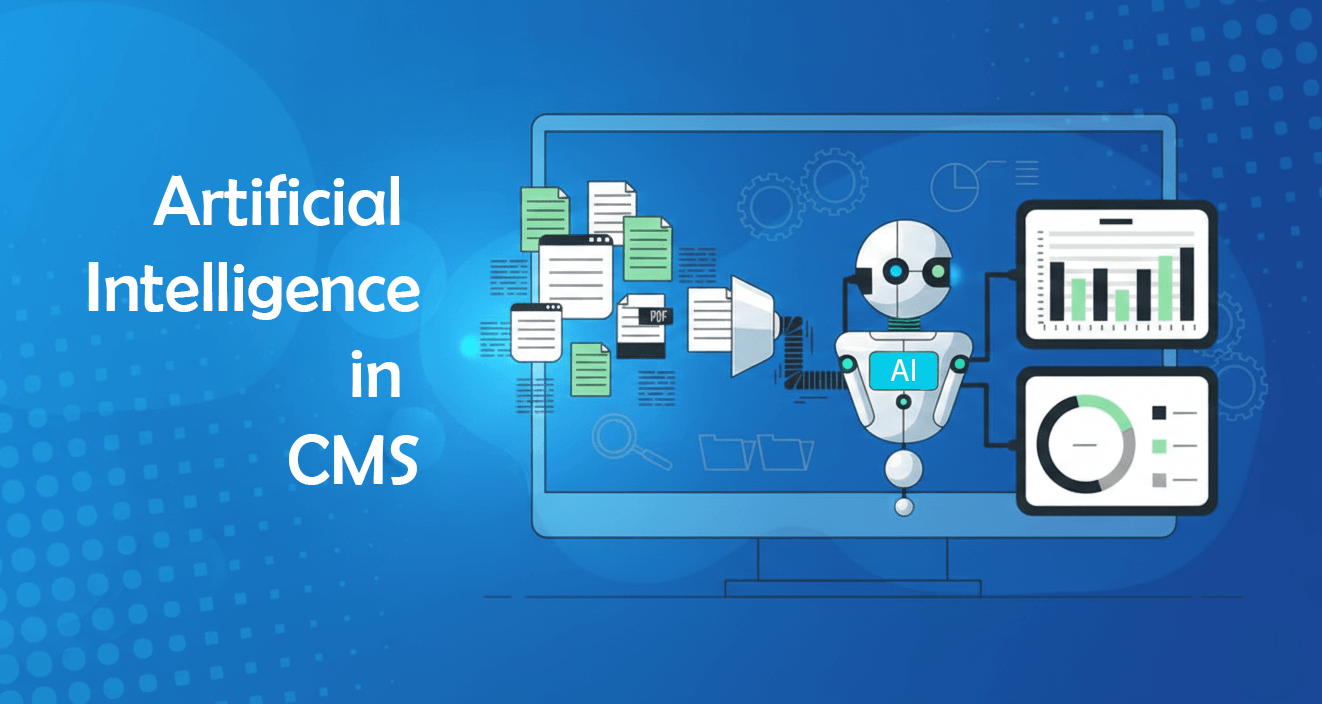
AI is no longer external to CMS platforms—it is becoming embedded within content workflows.
From AI-assisted content generation to intelligent tagging, personalization, and optimization, CMS platforms are evolving into content intelligence systems.
What This Means for Agencies
Clients are beginning to expect CMS platforms to:
- Assist with content creation
- Suggest SEO improvements
- Automate repetitive editorial tasks
- Support personalization at scale
This trend creates a widening gap between:
- Agencies that can integrate AI into CMS workflows
- Agencies that still deliver static, manual content systems
White label CMS development partners with AI integration capabilities help agencies:
- Extend existing CMS platforms with AI features
- Integrate third-party AI services responsibly
- Ensure AI workflows align with brand and governance rules
Crucially, AI-driven CMS functionality increases ongoing dependency on the agency—making long-term partnerships and retainers more viable.
5. Agencies Shifting from Project Revenue to Retainers
One of the most important business-model shifts impacting white label CMS development is the move away from one-off projects toward recurring revenue models.
Agencies are increasingly packaging CMS services as:
- Monthly maintenance retainers
- Performance optimization subscriptions
- Content and SEO support plans
- Continuous improvement engagements
This shift is driven by:
- Revenue predictability
- Higher lifetime client value
- Stronger client relationships
Why White Label CMS Delivery Enables Retainers
Retainers only work when agencies can:
- Deliver consistently
- Scale support without burning teams
- Maintain quality over time
White label CMS development partners enable this by:
- Providing stable, long-term CMS delivery capacity
- Reducing dependency on internal hires
- Supporting ongoing enhancements and support
Without scalable CMS delivery partners, agencies struggle to:
- Price retainers profitably
- Maintain service quality as client counts grow
- Avoid burnout among internal teams
In short, white label CMS development underpins modern agency economics.
6. Platform Proliferation and the Need for CMS-Agnostic Delivery
Clients no longer standardize on a single CMS platform. Agencies increasingly encounter:
- WordPress for marketing sites
- Headless CMS for SaaS products
- Open-source CMS for internal tools
- Custom CMS solutions for niche use cases
This platform diversity makes in-house specialization difficult.
White label CMS development partners allow agencies to:
- Remain CMS-agnostic
- Choose the right platform per use case
- Avoid locking their business model to a single technology
This flexibility is becoming a competitive differentiator—especially for agencies serving mid-market and enterprise clients.
7. Security, Compliance, and CMS Risk Management
As CMS platforms handle more data and integrations, security concerns are intensifying.
Clients now expect agencies to address:
- CMS security hardening
- Regular updates and patching
- Backup and disaster recovery planning
- Access control and auditability
Security failures are no longer technical issues—they are brand risks.
White label CMS development partners with structured governance help agencies:
- Implement security best practices consistently
- Reduce exposure to vulnerabilities
- Respond quickly to incidents
Agencies relying on ad-hoc CMS delivery models face increasing liability.
8. Why Agencies Without Scalable CMS Delivery Partners Will Struggle
When viewed collectively, these trends reveal a clear pattern:
CMS development is becoming:
- More complex
- More specialized
- More central to long-term client relationships
Agencies attempting to manage this complexity without scalable delivery partners face:
- Margin erosion
- Delivery bottlenecks
- Quality inconsistencies
- Burnout among senior technical staff
By contrast, agencies that invest in white label CMS development partnerships gain:
- Operational leverage
- Strategic flexibility
- Long-term growth capacity
This is where hybrid partners like Bantech Solutions become strategically relevant—not as vendors, but as invisible infrastructure behind agency success.
The Strategic Implication for Agencies in 2025+
The future of white label CMS development will favor agencies that:
- Think in systems, not projects
- Build partnerships, not pipelines
- Optimize for long-term delivery, not short-term wins
CMS platforms will continue to evolve. Client expectations will continue to rise. The agencies that thrive will be those that decouple growth from headcount—and that requires scalable CMS delivery models.
Agencies without reliable, long-term CMS outsourcing partners will find themselves constrained by:
- Talent availability
- Cost structures
- Delivery risk
Those with the right partners will scale confidently.
Final Reflection: White Label CMS Development as a Growth Strategy
White label CMS development is not about hiding vendors—it’s about building resilient agency operations.
Agencies that succeed over the next five years will be those that:
- Focus on strategy and client relationships
- Build delivery leverage through trusted partners
- Treat CMS outsourcing as a capability, not a shortcut
Bantech Solutions enables exactly that—acting not as a backend vendor, but as a strategic CMS development partner for agencies across the US, UK, Canada, Australia, and New Zealand.
Definition
White label CMS development is an arrangement in which a specialist development partner builds, maintains, and supports content management system (CMS) websites on behalf of an agency, which then delivers those products to its clients under its own brand name. The end client never sees the development partner. From the client’s perspective, the agency is the sole provider — handling discovery, strategy, design, development, and ongoing support.
This model has become a defining commercial strategy for marketing and digital agencies that want to offer comprehensive web development services without the overhead of building and maintaining an in-house technical team. Rather than hiring WordPress developers, Drupal engineers, or headless CMS specialists, agencies access that expertise on demand through a trusted white label partner, presenting a seamless and professional delivery to their clients.
The appeal is straightforward: agencies can sell services they don’t internally fulfil, retain full margin control, build ongoing client relationships, and scale their CMS delivery capacity up or down depending on the pipeline — all without the fixed cost of permanent developer headcount.
The Three Operational Layers
Understanding white label CMS development requires understanding the three operational layers through which the model functions. Each layer has distinct responsibilities, commercial implications, and quality benchmarks.
Layer One: The Agency Layer
The agency is the client-facing layer. It owns the commercial relationship, conducts discovery and strategy, manages project briefs, sets client expectations, and is responsible for the overall quality of delivery. The agency handles design (usually), content strategy, SEO, and communications. It invoices the client directly and sets its own pricing, which includes a margin on top of what the development partner charges.
The agency’s reputation is entirely on the line with each project. A failed delivery reflects on the agency brand, not the development partner. This is why governance at this layer matters so much — the agency must be disciplined in how it briefs projects, reviews work, manages timelines, and communicates with clients on technical matters.
Layer Two: The Development Partner Layer
The white label development partner sits in the middle layer. It is the technical engine that builds the CMS solutions. The partner receives the brief from the agency — typically via a scoping document, design files (usually Figma), and a set of functional requirements — and returns a built, tested, and deployable website or application.
A high-quality development partner will offer multi-platform capability, covering WordPress, WooCommerce, Drupal, headless CMS frameworks, and custom builds. It will also maintain a team of specialists rather than generalists, assign a dedicated account or project manager to the agency relationship, and operate under a non-disclosure agreement that ensures the end client is never aware of the partner’s involvement.
Layer Three: The Infrastructure and Tooling Layer
The third layer covers hosting infrastructure, version control, project management tooling, staging environments, and quality assurance systems. This layer is often shared between the agency and the development partner but must be clearly defined in any white label agreement. Questions that need answering include: who hosts the finished site, who manages DNS and SSL, who has access to production environments, and who is responsible for security updates and platform upgrades post-launch.
Agencies that leave this layer undefined often find themselves in disputes about accountability when things go wrong — a slow site, a failed update, or a security incident. Getting the infrastructure layer right from the start is one of the most important things an agency can do when setting up a white label CMS partnership.
How White Label CMS Development Works in Practice
In practice, a white label CMS project follows a predictable workflow that, once established, becomes highly repeatable and efficient. The typical process runs as follows.
The agency wins a client project — say, a corporate website rebuild on WordPress. It conducts discovery with the client, gathers requirements, and produces a brief. That brief is passed to the development partner through a secure channel, often a shared project management platform such as Basecamp, Linear, or a custom portal. The partner reviews the brief, may ask clarifying questions (always mediated through the agency to preserve the white label arrangement), and returns a quote and timeline.
Once approved, the development partner begins the build in a staging environment. Progress is shared with the agency for review and sign-off at each milestone — typically a design implementation review, a functional QA pass, and a pre-launch review. The agency relays consolidated feedback to the partner. The site is then launched, and handover documentation is provided in the agency’s own branded format.
Ongoing support and maintenance may then continue under a retainer agreement. The development partner fulfils the technical work; the agency bills the client for it. The partner remains invisible throughout.
Governance Requirements for White Label CMS Delivery
For white label CMS development to work consistently at scale, governance cannot be an afterthought. Agencies that operate without a governance framework find that white label delivery becomes chaotic as volume increases — missed briefs, misaligned expectations, quality inconsistencies, and accountability gaps.
Effective governance requires a number of foundational elements to be in place before the first project begins.
- Non-Disclosure Agreements: A robust, mutual NDA is non-negotiable. It must explicitly prevent the development partner from contacting end clients directly, disclosing the agency’s commercial arrangements, or soliciting clients introduced through the relationship. The NDA should survive termination of the main agreement.
- Service Level Agreements: The SLA defines response times, revision rounds, defect rectification timelines, and uptime commitments for managed hosting. Agencies should insist on SLAs that are tighter than those they offer their clients, providing a buffer for communication and review.
- Brief and Scoping Templates: Standardised project brief templates prevent ambiguity and reduce the back-and-forth that consumes project budgets. A good template covers business objectives, technical requirements, CMS platform, design references, page inventory, third-party integrations, SEO requirements, and launch date.
- Change Management Protocols: Out-of-scope requests are the most common source of tension in white label relationships. Agencies need a clear change request process — ideally a lightweight form that captures the change, estimated impact on cost and timeline, and client approval — before any additional work begins.
- Quality Assurance Checklists: Every project should be submitted against a pre-agreed QA checklist before the agency presents it to the client. This covers cross-browser compatibility, mobile responsiveness, page speed benchmarks, accessibility, broken links, and CMS admin usability.
- Communication Boundaries: The development partner must never communicate directly with the agency’s client. All communications must go through the agency. This should be a hard rule, reinforced in the contract and in the working relationship.
When these governance structures are in place, white label CMS development becomes a reliable, scalable engine for agency growth — one that allows ambitious agencies to compete for projects far beyond what their internal headcount would otherwise allow.
What Is a Headless CMS?
A headless CMS is a content management system in which the back-end — where content is created, stored, and managed — is completely separated from the front-end presentation layer. In a traditional or ‘coupled’ CMS such as WordPress or Drupal, the platform handles both content storage and how that content is rendered on the screen. The CMS dictates the templates, the themes, and the HTML output. In a headless CMS, the presentation layer is removed. Content is stored and managed independently, and delivered to whichever front-end application requests it through an API — typically a RESTful or GraphQL API.
The term ‘headless’ refers to the removal of the ‘head’ — the front end, the part of the website the visitor actually sees. What remains is the body: the content repository and the management interface. That content can then be consumed by any number of different front ends — a React or Next.js web application, a mobile app, a digital display, a voice interface, or a progressive web app — simultaneously and from a single source of truth.
Popular headless CMS platforms include Contentful, Sanity, Prismic, Storyblok, and Strapi (open source). WordPress can also be used in a headless configuration via its REST API or with WPGraphQL, which is sometimes called a ‘decoupled WordPress’ approach. This distinction matters for agencies, because it means there is a spectrum of headless options ranging from fully managed SaaS platforms to self-hosted solutions.
The Headless CMS Architecture Explained
To understand how a headless CMS works in practice, it helps to trace the flow of content from creation to display. A content editor logs into the CMS back end — which looks and functions much like any CMS admin interface — and creates or updates content: an article, a product page, a team member bio. That content is saved in the CMS’s content repository.
When a user visits a website built on a headless architecture, their browser sends a request to the front-end application — typically a JavaScript framework such as Next.js, Nuxt.js, or Gatsby. That application makes an API call to the headless CMS, retrieves the relevant content as structured data (usually JSON), and renders it using its own templates and components. The rendered HTML is then returned to the user’s browser.
In many modern implementations, this rendering happens at build time (Static Site Generation) or on the server (Server-Side Rendering), which produces very fast page loads. Some implementations use a combination of both via Incremental Static Regeneration, which allows frequently updated pages to be regenerated without rebuilding the entire site.
This architectural separation means the front end can be built by specialist JavaScript developers working entirely independently of the CMS configuration. It also means that design and interactive experiences are not constrained by CMS themes or plugins — the front end can be anything the development team is capable of building.
Benefits of a Headless CMS
The commercial and technical benefits of headless CMS architecture are significant and increasingly relevant as digital experiences become more complex.
- Performance: Because headless front ends are typically built with modern JavaScript frameworks and often pre-rendered, they deliver exceptional page speeds. This directly improves Core Web Vitals scores, which affect search rankings and conversion rates.
- Omnichannel Content Delivery: Content created in a headless CMS can be delivered to any digital touchpoint — website, mobile app, digital signage, smart TV, and more — from a single source. For clients with multiple channels, this eliminates duplication and inconsistency.
- Front-End Freedom: Developers are not constrained by CMS templates, themes, or plugins. The front end can be built with the best tools for the job, enabling complex animations, micro-interactions, and custom functionality that would be difficult or impossible in a coupled CMS.
- Scalability: Headless architectures, particularly those using CDN-hosted static sites, can handle very high traffic volumes with minimal infrastructure cost.
- Security: Because the CMS is not publicly exposed, the attack surface is significantly reduced compared to a traditional CMS front end. There is no login page for bots to target.
- Developer Experience: Developers work with modern tools and workflows — version-controlled code, component libraries, CI/CD pipelines — rather than the often cumbersome development experience of traditional CMS platforms.
When Agencies Should Recommend a Headless CMS
Headless CMS is not always the right choice, and part of an agency’s value lies in making the correct recommendation for each client. The following scenarios represent strong use cases for recommending a headless approach.
- Multiple Digital Channels: If the client manages a website, a mobile app, and digital in-store displays, a headless CMS enables all three to draw from the same content repository — eliminating duplication and inconsistency.
- High-Performance Requirements: Clients in sectors where page speed is a competitive differentiator — e-commerce, financial services, media — benefit substantially from the performance ceiling that headless architectures enable.
- Bespoke User Experiences: When the design calls for complex animations, highly custom page structures, or interactive features that don’t map to standard CMS templates, headless gives developers the freedom to build exactly what is needed.
- High Editorial Volume with Structured Content: Headless CMSs are particularly good at managing large volumes of structured content — news articles, product catalogues, documentation — with consistent schema and editorial workflows.
- Long-Term Scalability: For clients who anticipate significant audience growth or content volume increases, headless architecture provides a more scalable foundation than traditional CMS platforms.
When Not to Recommend a Headless CMS
Equally important is knowing when not to recommend headless. This intellectual honesty builds trust with clients and avoids costly overengineering.
- Small, Content-Light Sites: A five-page brochure site does not benefit from the complexity of a headless architecture. The additional build time and cost are not justified.
- Limited Budget: Headless builds generally cost more than equivalent WordPress builds because they require specialist JavaScript development. If budget is constrained, a well-built WordPress site will serve most clients better.
- Non-Technical Content Teams: Some headless CMSs have steep learning curves for editors. If the client’s team is not technically confident, the editorial experience may be worse than a traditional CMS.
- E-Commerce Complexity: For complex e-commerce projects with many integrations, a traditional WooCommerce or Shopify build is often more practical than composing a headless stack from scratch.
Implications for White Label CMS Delivery
For agencies operating a white label development model, headless CMS projects have specific implications. They require a development partner with genuine JavaScript framework expertise — building in Next.js or Nuxt.js is fundamentally different from WordPress theme development. Agencies should ensure their white label partner has demonstrable experience with at least one major headless CMS platform and the associated front-end framework.
Headless projects also require more thorough upfront scoping, because the content model must be designed carefully before development begins. Poorly structured content models are expensive to change later. A strong white label partner will include content modelling as a formal project phase, not an afterthought.
Pricing headless projects for white label delivery should reflect the higher technical complexity. Day rates and project fees will typically be higher than for equivalent WordPress projects. Agencies should factor this into their client proposals, positioning the premium as a performance and scalability investment rather than simply a cost.
Finally, ongoing support and maintenance for headless projects involves different considerations — framework updates, API version management, and CMS platform changes — compared to traditional CMS maintenance. Retainer agreements for headless clients should be scoped accordingly, with clear SLAs covering both the front-end application and the CMS back end.
What Are Core Web Vitals?
Core Web Vitals are a set of real-world performance metrics defined by Google that measure key aspects of user experience on the web. They form part of Google’s Page Experience signals, which directly influence search rankings. First introduced in 2020 and incorporated into Google’s ranking algorithm in 2021, Core Web Vitals have become a practical requirement for any agency delivering CMS websites — not just a technical nicety.
The three Core Web Vitals metrics are Largest Contentful Paint (LCP), Cumulative Layout Shift (CLS), and Interaction to Next Paint (INP). Each measures a different dimension of user experience, and each has a defined threshold for ‘Good’, ‘Needs Improvement’, and ‘Poor’ ratings. A site must score ‘Good’ on all three metrics for at least 75% of real-world visits to be considered passing.
The Three Core Web Vitals Metrics Explained
Largest Contentful Paint (LCP)
LCP measures loading performance. Specifically, it records the time from when a user first navigates to a page to when the largest visible content element — typically a hero image, a large text block, or a video poster — is fully rendered. A ‘Good’ LCP score is 2.5 seconds or less. Between 2.5 and 4 seconds is ‘Needs Improvement’. Above 4 seconds is ‘Poor’.
LCP is the metric most directly tied to the subjective feeling of a page loading quickly. It is the first impression users have of a site’s speed, and it is frequently the Core Web Vital that agencies find hardest to optimise on poorly built CMS sites. Slow server response times, unoptimised images, render-blocking resources, and poorly configured hosting are the most common causes of a poor LCP score.
Cumulative Layout Shift (CLS)
CLS measures visual stability. It quantifies how much the page layout unexpectedly shifts during loading — for example, when a font loads and pushes content down, or when a late-loading image causes the page to reflow. A ‘Good’ CLS score is 0.1 or less. Between 0.1 and 0.25 is ‘Needs Improvement’. Above 0.25 is ‘Poor’.
CLS is a user experience issue as much as a technical one. Pages with high CLS are frustrating to read — content jumps around as the page loads, causing users to lose their place or accidentally click the wrong element. For CMS websites in particular, layout shifts are often introduced by embedded content, injected ads or cookie banners, web fonts, and lazy-loaded images without reserved dimensions.
Interaction to Next Paint (INP)
INP replaced First Input Delay (FID) as a Core Web Vital in March 2024. It measures responsiveness — specifically, the latency between a user’s interaction (a click, a tap, or a keyboard press) and the next visual response from the page. A ‘Good’ INP score is 200 milliseconds or less. Between 200ms and 500ms is ‘Needs Improvement’. Above 500ms is ‘Poor’.
INP is directly affected by the amount of JavaScript executing on the main thread. Heavy plugin loads, large JavaScript bundles, and inefficient front-end code are the primary culprits for poor INP scores on CMS websites.
Platform-Specific Impacts
Different CMS platforms have inherently different Core Web Vitals characteristics, and agencies need to understand these differences to set appropriate expectations with clients and to brief development partners correctly.
- WordPress: WordPress sites have a wide range of Core Web Vitals performance depending on how they are built. A well-optimised WordPress site built with a lightweight theme, a good caching plugin, and a CDN can achieve excellent scores. However, the plugin ecosystem is WordPress’s biggest vulnerability — many popular plugins, including page builders like Elementor and Divi, add significant JavaScript and CSS payloads that hurt LCP and INP. Agencies must insist on performance-first development practices for WordPress projects.
- Headless CMS: Headless CMS implementations paired with a modern JavaScript front end (Next.js, Nuxt.js, Astro) typically achieve the best Core Web Vitals scores. Pre-rendering, CDN delivery, and optimised JavaScript bundles give these sites a structural performance advantage. For clients where performance is a commercial priority, headless architecture is the strongest recommendation.
- Drupal: Drupal is a capable platform for performance when configured correctly, but it has a complex caching layer that requires specialist knowledge to optimise properly. Core Web Vitals performance on Drupal sites varies significantly based on the theme, module selection, and server configuration.
- Shopify and E-Commerce Platforms: Shopify has invested heavily in its performance infrastructure, but app integrations and complex Liquid templates can introduce performance regressions. Agencies delivering Shopify builds should audit third-party apps carefully and test Core Web Vitals before and after integration.
Common CMS Causes of Poor Core Web Vitals Scores
Regardless of platform, the following are the most frequent technical causes of poor Core Web Vitals scores on CMS websites.
- Unoptimised Images: Images that are not compressed, not served in next-generation formats (WebP or AVIF), not lazy-loaded correctly, or not sized appropriately for their display dimensions are the single most common cause of poor LCP scores. The CMS must support and enforce image optimisation — either natively or through a plugin.
- No Caching Layer: Uncached CMS pages require a database query and server-side rendering on every visit. Without page caching and object caching (via Redis or Memcached), even modestly trafficked sites can produce slow server response times (TTFB) that directly damage LCP.
- Render-Blocking Resources: JavaScript and CSS files loaded in the document head that block rendering are a primary cause of poor LCP. Development partners should defer or asynchronously load non-critical scripts and inline critical CSS.
- Excessive Plugin or Module Loads: Every active WordPress plugin or Drupal module adds server-side processing and often additional front-end resources. A site with 40 active plugins is almost guaranteed to have performance issues unless each has been audited for its impact.
- No Content Delivery Network (CDN): Serving static assets (images, scripts, stylesheets) from the origin server rather than a CDN increases latency for users who are geographically distant from the hosting infrastructure.
- Cumulative Layout Shift from Fonts and Embeds: Web fonts that don’t specify fallback metrics, embedded third-party content without defined dimensions, and dynamically injected banners are common sources of CLS.
- Heavy JavaScript Execution: Large JavaScript bundles — particularly from page builders, analytics scripts, chat widgets, and marketing automation tools — slow down main thread execution and produce poor INP scores.
What Agencies Should Require From Development Partners
Agencies are commercially accountable for the performance of the websites they deliver, even when the technical work is done by a white label partner. Core Web Vitals scores are measurable, public, and directly linked to client outcomes. Agencies should therefore set clear performance standards in their partner agreements.
- Minimum Score Thresholds: Specify that all delivered sites must achieve ‘Good’ Core Web Vitals scores (LCP under 2.5s, CLS under 0.1, INP under 200ms) for at least 75% of visits, as measured by Google PageSpeed Insights and Chrome User Experience Report data.
- Pre-Launch Performance Testing: Require that the development partner runs PageSpeed Insights, Lighthouse, and WebPageTest against all key pages before launch and provides a performance report with the project handover documentation.
- Image Optimisation Standards: Mandate that all images are served in WebP or AVIF format, lazy-loaded below the fold, and sized correctly for their display dimensions. The hero/LCP image should be preloaded.
- Caching Configuration: Require documented server-side caching configuration (page cache, object cache, CDN) for all WordPress and Drupal projects.
- Plugin/Module Audit: For WordPress projects, require a pre-launch plugin audit that identifies any plugin with a measurable performance impact and confirms there is no lighter-weight alternative.
- Ongoing Monitoring: Include Core Web Vitals monitoring in any retainer agreement. Google Search Console provides ongoing field data; supplementary tools like SpeedVitals or Calibre can provide more granular monitoring.
Agencies that make Core Web Vitals a formal requirement in their development standards position themselves as performance-aware partners — a meaningful differentiator in a market where many agencies still treat page speed as an afterthought.
What Is Multi-Site CMS Management?
Multi-site CMS management refers to the technical and operational model by which a single agency manages multiple client websites from a centralised infrastructure and governance framework. Rather than treating each client website as an entirely separate, siloed entity — with its own hosting account, its own update process, its own security monitoring, and its own support workflow — a multi-site management model consolidates these functions into a shared system that the agency (or its white label development partner) operates at scale.
This model is distinct from WordPress Multisite, which is a specific WordPress feature that hosts multiple websites within a single WordPress installation sharing a single database and codebase. Multi-site CMS management, as a broader concept, can apply to any CMS platform and simply means that the agency has implemented standardised infrastructure, tooling, and processes for managing a portfolio of websites rather than managing each one in isolation.
For agencies, multi-site management is a significant commercial opportunity. Done well, it converts what would otherwise be disconnected, low-margin project work into a high-margin, recurring revenue model — one where the cost of management decreases as the portfolio grows, while the revenue per site remains constant or increases.
Multi-Site Architecture
The architecture underpinning multi-site CMS management varies depending on the platform, the scale of the portfolio, and the level of site isolation required by clients. However, the core architectural elements are consistent across most implementations.
WordPress Multisite
WordPress Multisite is a native feature that enables a single WordPress installation to host multiple sites, each with its own domain, admin dashboard, content, and theme. All sites share the same WordPress core installation, plugin codebase, and database (with separate table prefixes per site). A network administrator manages the overall installation, can activate themes and plugins for specific sites, and can apply updates across the entire network simultaneously.
WordPress Multisite suits agencies that manage a large portfolio of similar sites — franchise websites, regional microsites, or sites built on a shared template. It is not appropriate for sites that require different plugin sets, fundamentally different architectures, or strict data isolation between clients.
Managed Hosting With Centralised Tooling
The more flexible and commonly recommended approach for agency portfolios is to host each site separately — ideally on a managed WordPress hosting platform such as WP Engine, Kinsta, or GridPane — and use a centralised management tool to administer the portfolio. Tools such as MainWP, ManageWP, or WP Umbrella allow agencies to monitor uptime, manage updates, run security scans, and create backups across hundreds of sites from a single dashboard.
This approach preserves full site isolation — a problem on one site cannot cascade to others — while still delivering the operational efficiency of centralised management. It is the architecture most commonly recommended for agency multi-site management.
Headless Multi-Site
For agencies operating headless CMS portfolios, multi-site management takes a different form. Multiple front-end sites may share a single headless CMS back end (for example, a single Contentful or Sanity organisation with multiple spaces or projects), or each client may have their own CMS instance. The front-end applications are typically deployed via Vercel or Netlify, which provide their own portfolio management and deployment infrastructure.
Governance in a Multi-Site Model
Governance is the most critical success factor in multi-site CMS management. Without consistent governance, a growing portfolio becomes increasingly difficult to manage — update failures, security vulnerabilities, and performance degradation compound across sites. With strong governance, the portfolio becomes more efficient and more profitable as it scales.
Core governance requirements include a documented update policy that specifies when and how WordPress core, plugin, and theme updates are applied; a staging environment requirement so that updates are tested before being deployed to production; a backup policy with defined retention periods and tested restoration procedures; a security monitoring protocol covering malware scanning, failed login alerting, and vulnerability tracking; and an incident response process for handling site outages, hacks, or data loss events.
Agencies that white label their multi-site management to a development partner should require that the partner operates within this governance framework and provides monthly reporting against the agreed standards.
Technical Requirements
From a technical perspective, running a well-managed multi-site CMS portfolio requires investment in several key systems.
- Centralised Monitoring: A real-time monitoring system that alerts the agency or development partner when any site goes down, returns a server error, or experiences a significant performance degradation. Tools like Better Uptime, Pingdom, or the monitoring features built into managed hosting platforms serve this function.
- Automated Backup Infrastructure: Automated daily or hourly backups for each site, stored off-server, with a tested restoration process. Backups are the safety net that makes all other maintenance work less risky.
- Staging Environments: Every managed site should have a staging environment that mirrors production. Updates, code changes, and new feature builds should always go through staging before being pushed to live.
- Security Scanning: Regular automated scans for malware, file integrity violations, and known vulnerabilities. On WordPress, tools like Wordfence, Sucuri, or hosting-level security scanning provide this capability.
- Update Management Tooling: A centralised tool that can identify outdated plugins, themes, or CMS cores across the portfolio and manage updates in bulk with rollback capability.
- Access Management: Centralised management of admin credentials, with MFA enforced across all sites. Password management tools and single-sign-on solutions are valuable at portfolio scale.
The Commercial Opportunity
The commercial opportunity of multi-site CMS management for agencies is substantial. Consider the economics: a single web developer who manages 50 sites on a maintenance retainer at £200 per month per site generates £10,000 per month in revenue for work that, with the right tooling, requires 20-30 hours per month of actual technical time. Much of that time is automated.
The margin profile improves further when this work is fulfilled by a white label development partner. The agency sells the retainer to the client, retains a margin, and passes the fulfilment to the partner. The agency’s role becomes account management and reporting — low-cost activities that can be handled by non-technical staff.
At scale, agencies with 100 or more sites under management benefit from what might be called portfolio economics. The fixed cost of infrastructure, tooling, and management processes is spread across a larger base of revenue-generating sites. The incremental cost of adding a new site to the managed portfolio is very low, because the systems are already in place. This makes multi-site management one of the highest-margin revenue lines available to a digital agency.
Packaging is important in the commercial strategy. Agencies should offer tiered maintenance plans — for example, Basic (core updates, backups, uptime monitoring), Standard (all Basic plus plugin updates, security scanning, and monthly reporting), and Premium (all Standard plus performance monitoring, priority support, and a small development hours allowance). Tiered pricing allows clients to self-select based on their risk tolerance and budget, and gives the agency a clear upsell path.
Agencies that build a sizeable managed hosting portfolio also create a significant asset. A predictable, contracted recurring revenue stream is valuable not only operationally but commercially — it improves agency valuation multiples if the business is ever sold or acquires investment.
Why Agencies Outsource CMS Development
Outsourcing CMS development is one of the most impactful operational decisions an agency can make. For agencies that are primarily strategists, designers, or marketers, maintaining an in-house web development team can be costly, inefficient, and distracting from the agency’s core value proposition. A white label CMS development partner allows those agencies to offer a complete service — including sophisticated website builds — without the overhead, complexity, and risk of building an internal technical capability from scratch.
The decision to outsource is not simply about cost reduction, though that is one significant factor. It is a strategic choice about where the agency’s expertise, time, and capital are best deployed. Below are the six key benefits that define the commercial and operational case for outsourcing CMS development.
Benefit One: Converting Fixed Costs to Variable Costs
The most immediate financial benefit of outsourcing CMS development is the conversion of fixed costs — the salaries, benefits, equipment, training, and management overhead associated with a permanent development team — into variable costs that scale directly with revenue.
An in-house senior WordPress developer in the UK costs between £45,000 and £65,000 per year in salary alone. With employer’s National Insurance, pension contributions, equipment, software licences, training budget, and management time, the total cost of employment is typically 1.3–1.5x the base salary. A team of two developers costs the agency £130,000–£200,000 per year in direct employment costs, regardless of how much development work is actually required in any given month.
Development demand is rarely constant. Projects arrive in waves, influenced by sales cycles, seasonal factors, and client procurement timelines. A permanent team that is correctly sized for peak demand is overstaffed during quieter periods. A team correctly sized for average demand creates bottlenecks at peak times. Outsourcing eliminates this structural inefficiency. The agency pays for development capacity only when it needs it, and scales that capacity up during busy periods without any of the recruitment or onboarding overhead associated with permanent hiring.
This cost conversion also changes the agency’s financial risk profile. Variable costs move with revenue — when revenue falls, costs fall proportionally. Fixed costs do not. Agencies with heavy fixed cost structures are structurally more vulnerable to revenue downturns. Outsourcing CMS development is therefore not just a cost-saving measure but a risk management strategy.
Benefit Two: Access to Multi-Platform Expertise
CMS technology is not monolithic. The landscape includes WordPress, WooCommerce, Drupal, Shopify, Webflow, headless CMSs such as Contentful and Sanity, and custom builds using frameworks like Laravel or Next.js. Each platform has its own ecosystem, best practices, performance optimisation techniques, and ongoing update cycles. Maintaining deep expertise across all of these platforms in-house requires a much larger and more specialised team than most agencies can justify.
A white label CMS development partner that specialises in CMS delivery maintains dedicated specialists for each major platform. When an agency wins a Drupal project — a platform its internal team may have little experience with — the partner’s Drupal specialist handles the build without the agency needing to recruit, train, or bring in a contractor.
This breadth of expertise also has a commercial value: it allows the agency to position itself as platform-agnostic. Rather than steering every client toward the one or two platforms the internal team knows well, the agency can genuinely recommend the right platform for each project. Platform-agnostic positioning is credible, client-centric, and commercially powerful — it prevents the agency from losing projects to competitors who are better versed in the client’s preferred platform.
Multi-platform expertise also future-proofs the agency’s service offering. When a new CMS platform or front-end framework gains market traction, the agency doesn’t need to invest in internal training and upskilling — the white label partner’s team evolves to cover it, and the agency gains access to that new capability immediately.
Benefit Three: Improved Delivery Velocity
Delivery velocity — the speed at which projects move from brief to launch — is a significant competitive differentiator for agencies. Clients value reliable, fast delivery. Agencies that consistently deliver on time build reputations that generate referrals. Agencies that miss deadlines lose clients and damage their brand.
Outsourcing CMS development to a partner with a dedicated team and established processes typically produces faster delivery than an in-house team that is managing multiple workstreams simultaneously. White label partners that focus exclusively on CMS development have highly optimised build workflows — they build the same type of websites repeatedly, which means their processes are refined, their tooling is calibrated, and their team knows exactly what good looks like.
Velocity also benefits from the ability to flex capacity. When a large project arrives with a tight deadline, an outsourced partner can allocate additional resource immediately. An internal team is constrained by its headcount. For agencies that pitch on larger projects or need to deliver against ambitious timelines to win or retain clients, the ability to flex delivery capacity is a meaningful operational advantage.
There are also indirect velocity benefits. Agency directors and account managers who no longer spend time managing an internal development team can focus on client relationships, business development, and quality oversight — activities that move projects forward faster than any technical acceleration.
Benefit Four: Building Recurring Revenue Through Retainers
Retainer revenue is the foundation of a financially stable agency. Project revenue is unpredictable by nature — it depends on a continuous pipeline of new clients and projects. Retainer revenue is contracted, recurring, and predictable. It improves cash flow, reduces sales pressure, and creates a business that is worth more at exit.
Outsourcing CMS development makes retainer services financially viable in a way that in-house delivery often does not. A managed hosting and maintenance retainer — covering updates, security, backups, and support — requires modest but regular technical input. If that input is handled in-house, the revenue may not justify the developer time. Outsourced to a white label partner at a wholesale rate, the margin on a £200/month retainer can be 50–70%, making it an extremely high-margin revenue line.
White label partners enable agencies to offer a broader retainer service menu — not just maintenance, but ongoing content updates, SEO implementation, conversion rate optimisation, performance monitoring, and feature development — at price points that clients will pay and margins that are commercially attractive for the agency.
Benefit Five: Risk Reduction
Maintaining an in-house development team exposes agencies to a range of operational risks that outsourcing significantly reduces. Staff turnover is perhaps the most acute: when a key developer leaves — taking their knowledge of client systems, codebases, and configurations with them — the disruption to ongoing project delivery and client relationships can be severe. Building an outsourced model removes this key-person dependency. The white label partner’s team may change, but the agency’s point of contact, the processes, and the documentation remain stable.
Outsourcing also reduces the risk of skills obsolescence. Technology evolves quickly. An internal team that was expert in WordPress three years ago may not be current with modern JavaScript frameworks, headless architectures, or the latest performance optimisation techniques without significant ongoing investment in training and professional development. A specialist white label partner’s business model depends on staying current — their team is continuously trained on emerging technologies, because that expertise is their product.
Quality risk is also mitigated by working with a partner whose entire business is CMS delivery. A partner with established QA processes, code review practices, and pre-launch checklists will consistently produce better technical output than an in-house team that does CMS development as one of several responsibilities.
Commercial risk is also reduced. An agency that has over-hired in a growth period finds itself under significant financial pressure if revenue doesn’t meet projections. Outsourced delivery scales down with revenue. The financial cushion that variable cost delivery provides can be the difference between an agency surviving a difficult period and being forced into redundancies.
Benefit Six: Strategic Focus
Perhaps the most underappreciated benefit of outsourcing CMS development is the strategic focus it gives the agency’s leadership team. Managing developers — dealing with technical questions, code reviews, resource scheduling, recruitment, performance management, and professional development — is time-consuming and often outside the skill set of agency founders and directors who rose through marketing, design, or strategy disciplines.
When CMS development is outsourced, that management overhead disappears. Agency leadership can direct their energy toward the activities that create the most value: client strategy, business development, service innovation, team culture, and brand positioning. These are the activities that determine whether an agency thrives or stagnates, and they are the activities most frequently crowded out by the operational demands of managing an internal technical team.
Strategic focus also improves the quality of client relationships. Account managers who are not pulled into technical problem-solving have more bandwidth for proactive client communication, strategic planning, and identifying growth opportunities within existing accounts. Client retention and client lifetime value both improve as a result.
The cumulative effect of these six benefits — cost conversion, multi-platform expertise, delivery velocity, retainer revenue, risk reduction, and strategic focus — is an agency that is more profitable, more scalable, and more resilient than one relying on in-house CMS development capability alone.
The Growth Trap: Why Hiring More Developers Is Not the Answer
Many agencies approach the challenge of scaling CMS delivery by default through hiring. When the project pipeline grows, they recruit another developer. When complexity increases, they hire a specialist. This approach feels intuitive — more work requires more people — but it creates a growth trap that is difficult to escape.
Every additional developer hire increases the agency’s fixed cost base. It also adds management complexity: more people require more coordination, more processes, more oversight, and more HR infrastructure. Developer salaries in the UK have risen significantly over the past decade, and competition for skilled CMS developers is intense. Many agencies find that by the time they have built and managed a team of four or five developers, a significant portion of revenue is consumed by team costs and management overhead, leaving less for the profitable growth that justified the investment in the first place.
There is also a quality ceiling in this model. An in-house team of generalist developers can rarely maintain deep expertise across multiple CMS platforms simultaneously. As client requirements diversify — one client wants a headless build, another needs WooCommerce, a third has a legacy Drupal site — the in-house team is either stretched across platforms it doesn’t know deeply, or the agency turns down work it cannot confidently deliver.
The alternative — scaling through a white label partnership model — sidesteps these constraints entirely. It converts fixed costs to variable ones, accesses deep multi-platform expertise on demand, and removes the management burden of running a technical team, all while preserving and often improving the quality and speed of delivery.
The White Label Partnership Model for Scale
Scaling CMS delivery through white label partnership means establishing a commercial relationship with a specialist CMS development provider that acts as the agency’s invisible technical team. The development partner builds websites, applications, and ongoing maintenance services; the agency manages the client relationship, handles strategy and design, and presents the finished product under its own brand.
The structural advantage of this model for scaling is that capacity is available on demand. When the agency wins three new projects in a month, it passes three briefs to the development partner. When the pipeline is quieter, no capacity is sitting idle. The agency’s throughput is bounded not by headcount but by the relationship it has with its partner and the quality of its governance and briefing processes.
Scaling through white label partnership also allows the agency to take on larger and more complex projects than its internal team could handle. A development partner with 20 or 50 developers has the capacity, the specialist skills, and the project management infrastructure to deliver enterprise-scale CMS builds. An agency that can credibly pitch for and deliver those projects — backed by a strong partner — competes in a different commercial league from an agency constrained to the output of two or three in-house developers.
For this model to work at scale, the agency must invest in the partnership. This means dedicated time for partner management, regular performance reviews, clear communication of strategy and pipeline, and joint investment in process improvement. Agencies that treat white label partners as interchangeable commodity suppliers — swapping them out for marginally cheaper alternatives, providing low-quality briefs, and not investing in the relationship — rarely achieve the scaling benefits the model offers. Agencies that treat their partner as a strategic asset consistently out-deliver and out-grow their peers.
Building the Governance Layer
Scaling through white label partnership without governance is a recipe for chaos. As project volume grows, the points of failure multiply: briefs that don’t contain enough information, feedback that gets lost between client and agency, quality standards that drift, timelines that slip. Governance is the system that prevents these failures from occurring.
The governance layer in a scaled white label CMS model has three components: process standards, quality standards, and communication standards.
Process standards define how projects flow from the moment a client brief is confirmed to the moment a site launches. They cover briefing templates, scoping procedures, approval workflows, change management protocols, and launch checklists. These processes should be documented, trained, and enforced consistently across every project — not because they are bureaucratic, but because they are the mechanism by which quality is maintained as volume increases.
Quality standards define what a good deliverable looks like. They cover technical performance (Core Web Vitals thresholds), accessibility compliance, browser and device testing, security configuration, code quality, and CMS admin usability. These standards should be formalised in a quality specification document that forms part of every development brief and is used as the basis for pre-launch sign-off.
Communication standards define how information flows between the agency, the development partner, and the client. They specify who can communicate with whom, what channels are used for different types of communication, and how escalations are handled. Maintaining the white label boundary — ensuring the development partner never communicates directly with the agency’s client — is a core communication standard that must be enforced without exception.
Platform-Agnostic Positioning as a Scaling Strategy
One of the most commercially powerful aspects of scaling through white label partnership is the ability to adopt a genuinely platform-agnostic positioning. An agency with an in-house WordPress team will almost always recommend WordPress — not because it is always the best choice, but because it is the platform the team knows. This bias is invisible to the client but visible to the market.
An agency backed by a white label partner that covers WordPress, WooCommerce, Drupal, headless CMSs, and custom builds can approach every client conversation without a platform preference. The recommendation is based purely on what is right for the client’s requirements, budget, and long-term goals. This is a more credible, client-centric position — and it enables the agency to win projects it would otherwise lose to specialists.
Platform-agnostic positioning also future-proofs the agency’s service offering. As the CMS landscape evolves — as headless architecture matures, as new platforms emerge, as enterprise clients consolidate onto fewer platforms — the agency can evolve its recommendations without any internal retooling. The partner’s team absorbs the technology change; the agency benefits from it.
Practical Steps for Agencies Ready to Scale
For agencies that have identified white label CMS partnership as their scaling strategy, the practical implementation follows a clear sequence.
The first step is partner selection. Not all white label development providers are equal. Agencies should evaluate potential partners on their platform coverage, portfolio quality, communication standards, NDA and governance commitments, pricing transparency, and cultural fit. Reference checks with other agencies using the partner’s services are valuable. A paid pilot project is often the best way to assess whether a partnership will work in practice.
The second step is process design. Before the first white label project goes live, the agency should have its briefing templates, QA checklists, change management process, and communication protocols in place. These don’t need to be perfect at launch — they will evolve — but having them defined from the start prevents the disorganisation that undermines many early white label relationships.
The third step is team alignment. The agency’s account managers and client services team need to understand how the white label model works, what they can and cannot tell clients, and how to communicate project progress without exposing the development partner’s involvement. This is a training and culture exercise as much as a process one.
The fourth step is commercial packaging. Scaling CMS delivery through white label partnership is most effective when the agency has a clear, priced service menu — for both project delivery and ongoing retainers. Clear packaging reduces the time spent on custom quoting, makes the partner’s wholesale pricing easier to manage, and creates predictable revenue that supports further growth.
The result, for agencies that execute this well, is a CMS delivery capability that can scale significantly without a corresponding increase in fixed costs or management complexity — a genuinely leveraged growth model.
Two Fundamentally Different Approaches
WordPress and headless CMS represent two fundamentally different architectural philosophies for building web-based content experiences. Understanding this difference — and communicating it clearly to clients — is one of the most important capabilities an agency can develop. Getting this recommendation right determines whether a client ends up with a platform that serves their needs for years or one that frustrates their team and limits their growth.
WordPress, launched in 2003, is the world’s most widely deployed CMS, powering approximately 43% of all websites. It is a coupled CMS, meaning it manages both content and presentation within a single system. WordPress stores content in a MySQL database and uses PHP templates (themes) to render that content as HTML pages. The WordPress ecosystem includes tens of thousands of plugins that extend its core functionality, enabling everything from contact forms and e-commerce to membership systems and complex editorial workflows — all managed through a familiar admin interface.
A headless CMS, by contrast, separates content storage and management from presentation. The CMS provides a content repository and a management interface, but it does not render HTML. Content is delivered to a separate front-end application via an API — typically REST or GraphQL. The front end is built with a modern JavaScript framework such as Next.js, Nuxt.js, Astro, or SvelteKit, and it renders the content using its own templates and components. The CMS and the front end are independently deployable, scalable, and updatable.
Architecture Comparison
The practical architectural differences between WordPress and headless CMS have significant downstream implications for development complexity, performance, flexibility, and total cost of ownership.
In a WordPress build, the entire system — database, CMS logic, template rendering, and content delivery — runs on a single server stack. An incoming page request triggers PHP execution that queries the database, retrieves content, applies the theme template, and returns HTML to the browser. With good caching, this process is fast. Without caching, it can be slow, particularly under high traffic.
In a headless architecture, the content layer and the delivery layer are separate systems that may run on entirely different infrastructure. The CMS (Contentful, Sanity, Prismic, or headless WordPress) is typically hosted on a managed SaaS platform. The front-end application is deployed to a CDN-edge infrastructure via Vercel, Netlify, or Cloudflare Pages, where it is either pre-rendered at build time (Static Site Generation) or rendered on-demand at the edge (Edge SSR). This structural separation enables very high performance and scalability.
When WordPress Is the Right Choice
For the majority of agency client projects — particularly SME websites, marketing sites, portfolio sites, news and blog sites, and WooCommerce stores — WordPress is the right choice. The reasons are practical, not ideological.
- Budget Fit: WordPress builds are generally less expensive than equivalent headless builds. The development ecosystem is large, which keeps rates competitive. The theme and plugin ecosystem reduces custom development requirements for common functionality.
- Editorial Experience: WordPress’s editor (Gutenberg) is mature, widely understood, and genuinely usable for non-technical content editors. Most clients who have managed a website before have encountered WordPress. The learning curve is low.
- Plugin Ecosystem: For clients who need e-commerce, membership, bookings, events, multilingual support, SEO tools, or marketing automation integrations, WordPress’s plugin ecosystem provides reliable, well-supported solutions that would take significantly longer and cost significantly more to custom-build on a headless stack.
- Developer Availability: WordPress developers are abundant in the UK, which means competitive day rates and a large pool of white label partners and freelancers. For agencies outsourcing delivery, WordPress is the easiest platform to source quality development support for.
- Support and Longevity: WordPress has a huge global user base, active open-source development, and a commercial ecosystem of hosting, plugin, and support providers. It is not going away. Recommending WordPress to a client comes with a reasonable expectation of long-term platform stability.
The appropriate WordPress project profile is: SME marketing sites, brochure websites, content-heavy blogs and news sites, WooCommerce stores with moderate complexity, portfolio and agency sites, and charity or non-profit websites. These represent the vast majority of agency CMS work, and for all of them, WordPress is a sound technical and commercial choice.
When Headless CMS Is the Right Choice
Headless CMS becomes the appropriate recommendation when the client’s requirements push beyond what WordPress’s coupled architecture handles well.
- Multi-Channel Content Delivery: When content needs to be delivered simultaneously to a website, a mobile app, digital displays, and other touchpoints from a single repository, a headless CMS is architecturally essential. WordPress can serve as a headless back end via its REST API or WPGraphQL, but purpose-built headless platforms like Contentful or Sanity are better suited to structured multi-channel content delivery.
- Extremely High Performance Requirements: When page speed and Core Web Vitals scores are mission-critical — in competitive e-commerce, financial services, or media contexts — a headless front end delivered via CDN edge infrastructure outperforms any WordPress configuration.
- Complex Interactive Experiences: Applications that require sophisticated client-side interactivity, complex state management, or custom user flows that don’t map to standard page-level rendering benefit from the freedom that a JavaScript front-end framework provides.
- Enterprise Scale and Traffic: Sites that need to handle hundreds of thousands of daily visitors, with global CDN delivery, zero-downtime deployments, and independent scaling of content and delivery layers, are better served by headless architecture.
- Structured Content at Volume: Large content operations — major publishers, e-commerce catalogues with thousands of products, global documentation sites — benefit from headless CMSs’ superior content modelling and editorial workflow capabilities.
Cost and Delivery Implications
The cost and delivery implications of WordPress versus headless CMS are significant, and agencies need to factor them clearly into client proposals.
A standard WordPress marketing site — 10 to 20 pages, custom design, Gutenberg blocks, contact forms, basic SEO configuration, and a simple WooCommerce integration — typically has a development cost in the range of £5,000 to £15,000 depending on complexity and the agency’s rate card. Build time is typically 6 to 12 weeks. This is the core of most agency project pipelines.
An equivalent headless CMS build — the same site delivered as a Next.js front end against Contentful or Sanity — would typically cost 40 to 80% more, with a longer build timeline. The premium reflects the additional front-end development work required (building components from scratch rather than using WordPress themes and plugins), the more complex infrastructure setup, and the greater need for specialist JavaScript development skills.
The premium is justified when the client genuinely needs the capabilities headless delivers. It is not justified — and will result in an overspent, frustrated client — when the brief could have been met perfectly well with WordPress.
Ongoing maintenance and support costs also differ. WordPress maintenance retainers cover core updates, plugin updates, security monitoring, and performance management. These are well-understood, standardised, and easy to price. Headless maintenance involves front-end framework updates, API version management, build pipeline maintenance, and CMS platform changes — a broader and less predictable scope that should be reflected in higher retainer pricing.
The Case for Platform-Agnostic Agency Positioning
The commercial conclusion is that agencies should not position themselves as ‘WordPress agencies’ or ‘headless CMS agencies’ but as CMS strategy partners who recommend the right platform for each client’s needs. This positioning is only credible if the agency can genuinely deliver on multiple platforms — which is why the white label partnership model, with its multi-platform development capability, is such a powerful enabler of platform-agnostic positioning.
An agency that can look a client in the eye and say ‘you need WordPress because X, Y, and Z, and here’s exactly how we’ll build it’ — or, conversely, ‘your requirements call for a headless approach and here’s why’ — is a more trusted and more commercially successful agency than one that defaults to a single platform regardless of the project brief.
The Project-to-Retainer Transition
The most significant commercial transformation available to a CMS-focused agency is the transition from a primarily project-based revenue model to one anchored by recurring retainer revenue. Project revenue is lumpy, unpredictable, and exhausting to maintain. It requires a constant pipeline of new business to sustain cash flow. Every project has a defined end — and with that end, the revenue stops, the relationship typically reduces in intensity, and the agency must find and win the next project to replace it.
Retainer revenue is structurally different. It is contracted, predictable, monthly, and scalable. It creates a financial floor beneath which the agency’s revenue cannot fall — or at least, cannot fall quickly. It deepens client relationships, because the agency becomes embedded in the client’s ongoing operations rather than appearing for a project and then disappearing. And it increases the agency’s commercial value: businesses with recurring revenue are worth more — in terms of valuation multiples, investment attractiveness, and acquisition interest — than those without it.
For CMS-focused agencies, the natural path from project work to retainer revenue runs through website maintenance and support services. Every website the agency builds requires ongoing technical care — updates, security, performance monitoring, content support, and continuous improvement. That need exists regardless of whether the agency formalises it as a retainer or not. The only question is whether the agency captures that value or leaves it on the table.
The Components of a CMS Maintenance and Support Retainer
A well-structured CMS retainer is not simply a ‘we’ll keep your website working’ agreement. It is a comprehensive managed service that delivers measurable, ongoing value to the client. The strongest retainers cover multiple service categories that together justify a meaningful monthly investment.
- Platform Maintenance: Core CMS updates (WordPress, Drupal, or other platform), plugin and theme updates, PHP version management, and server environment updates. This is the foundation of any CMS retainer — without it, websites become vulnerable, slow, and technically indebted.
- Security Monitoring and Management: Regular malware scanning, firewall management, failed login monitoring, SSL certificate management, and incident response in the event of a security breach. Security is a compelling retainer component because the consequences of a breach — for the client’s brand, data, and operations — are severe, and most clients lack the knowledge to manage it themselves.
- Performance Monitoring: Regular Core Web Vitals reporting, uptime monitoring, server response time monitoring, and periodic performance audits with recommendations. As performance becomes more closely linked to search rankings and conversion rates, clients are increasingly willing to pay for its ongoing management.
- Backup and Recovery: Daily automated backups, off-server storage, tested restoration procedures, and guaranteed recovery time objectives in the event of data loss or site failure. Backup infrastructure is inexpensive but its value to the client is high — without it, a single server failure or hacking incident could mean the loss of years of content.
- Content Updates: A monthly allowance of content updates — text changes, image replacements, new pages, navigation adjustments — managed by the agency on behalf of the client. This is particularly valuable for clients who lack confidence in managing their own CMS and for those who want consistent editorial support.
- SEO Management: Ongoing technical SEO maintenance, including broken link monitoring, sitemap management, structured data updates, and regular reporting on search performance. SEO retainers can be a separate, higher-value service line, but for many clients, bundling basic technical SEO into the CMS retainer provides genuine value and differentiates the offer from pure maintenance providers.
- Development Hours Allowance: A monthly allocation of development hours for minor feature additions, conversion optimisation, A/B test implementation, or third-party integrations. This component converts the retainer from a maintenance-only service into an ongoing improvement service — which is commercially more compelling and harder to cancel.
Pricing Strategy for CMS Retainers
Pricing CMS retainers correctly requires understanding the client’s risk tolerance, the value they derive from the service, and the agency’s cost of fulfilment. The most common mistake agencies make is pricing retainers based purely on their internal cost — marking up their time by a fixed percentage. This typically results in under-pricing, because the value of security, uptime, and expert management is significantly higher than the hourly cost of delivering it.
A more effective approach is value-based pricing, anchored by the following considerations. What is the cost to the client of a major security breach? What is the financial impact of a day of downtime? What is the value of consistent technical and content support to the client’s marketing team? These are the benchmarks against which the retainer should be priced, not the agency’s hourly rate.
Tiered pricing is the most commercially effective structure for CMS retainers. Offering three tiers — typically named ‘Essentials’, ‘Growth’, and ‘Premium’ or similar — allows clients to self-select based on their budget and risk appetite while creating a clear upsell path. Essential tiers cover the basics: maintenance, security, backups, and monitoring. Growth tiers add performance management and content support. Premium tiers add development hours, advanced SEO, and priority response times.
Typical monthly pricing in the UK market ranges from £150–300 for an Essentials plan covering a standard SME WordPress site, £300–600 for a Growth plan, and £600–1,500 or more for a Premium plan that includes a meaningful development hours allowance. E-commerce and headless sites command higher prices, reflecting their greater technical complexity and the higher commercial stakes of downtime or performance degradation.
Annual billing incentives — offering one or two months free in exchange for an annual commitment — improve cash flow and reduce churn. Clients who have paid for a year are significantly less likely to cancel mid-term than those on rolling monthly arrangements.
How White Label CMS Delivery Makes Retainers Financially Viable
For agencies without large in-house technical teams, retainer services have historically been difficult to deliver profitably. A retainer priced at £250 per month might generate two to four hours of technical work in a given month — manageable for a busy in-house developer who handles 20 such retainers, but impossible to fulfil profitably at smaller scale when each retainer requires dedicating a proportion of an expensive permanent hire’s time.
White label CMS delivery fundamentally changes this equation. A development partner offering managed maintenance services at a wholesale rate — typically 40–60% of the retail price the agency charges the client — allows the agency to offer retainers at price points that generate meaningful margin without requiring any internal technical capacity.
At scale, the economics become extremely attractive. An agency with 50 clients on a £300/month Growth retainer generates £15,000 per month in retainer revenue. If the white label partner fulfils that delivery at £120/month per client (a 40% wholesale rate), the agency’s margin is £180/month per client — £9,000/month, or £108,000 per year — for work that requires minimal internal resource beyond account management and reporting.
The key to making this work is ensuring the white label partner offers a retainer fulfilment product that is specifically designed for the agency’s service tiers. The partner should be able to fulfil each tier at a defined wholesale cost, with defined SLAs, reporting templates, and escalation procedures. Agencies that try to run retainers through an ad-hoc arrangement with a partner — calling on them as needed rather than through a structured service product — find that costs and quality are inconsistent.
Transitioning Existing Clients From Projects to Retainers
For agencies with an existing project client base, the transition to retainer revenue begins with the conversation immediately following project launch. The post-launch period is the optimal moment to introduce a retainer, because the client has just experienced the value of the agency’s delivery, the website is live and requires ongoing care, and the commercial relationship is at its highest point of trust.
The pitch should not be framed as an upsell but as responsible stewardship. Something like: ‘Now that the site is live, we want to make sure it stays fast, secure, and up to date. Here’s how we protect your investment and ensure it keeps performing.’ This framing resonates with clients because it is genuinely true — an unmanaged website deteriorates over time — and because it positions ongoing care as a professional norm rather than an optional extra.
For clients who have previously worked with the agency on a project basis without a retainer, the audit approach is effective. Produce a brief technical audit of the client’s site — highlighting outdated plugins, slow page speeds, missing security configuration, or content that needs refreshing — and use it as the basis for a retainer conversation. The audit demonstrates the agency’s expertise and makes the value of ongoing management tangible and specific.
Why Platform Strategy Matters for Agencies
The CMS platforms an agency chooses to specialise in are not merely a technical decision. They are a commercial strategy that determines the types of clients the agency attracts, the projects it can credibly pitch for, the rates it can command, the margin profile of its work, and its long-term competitive positioning. Agencies that drift into platform coverage without a deliberate strategy often find themselves spread too thin — competent at many things but excellent at none, which makes them interchangeable in a market that rewards specialisation.
Conversely, agencies that build deep expertise in a carefully chosen set of CMS platforms, and understand the commercial opportunity within each, consistently out-earn and out-compete generalist agencies. They attract better clients, win larger projects, command premium rates, and build more valuable recurring revenue bases.
The challenge is choosing correctly. The CMS landscape is large and evolving. WordPress dominates by volume. Headless CMS is growing rapidly. Drupal serves the enterprise and public sector. WooCommerce has its own commercial ecosystem. Custom builds serve clients whose requirements exceed any off-the-shelf platform. Each represents a distinct commercial opportunity with its own client profile, margin characteristics, and competitive dynamics. Understanding each is the starting point for building a deliberate platform strategy.
WordPress: The Volume Play
WordPress is the commercial foundation for the majority of CMS-focused agencies. Its market share — over 43% of all websites — means the addressable market is enormous. Every sector, every size of organisation, and every geography has potential WordPress clients. The commercial case for WordPress specialisation is built on volume, ecosystem depth, and recurring revenue potential.
The average WordPress project for an SME client in the UK ranges from £5,000 to £25,000 in project value, depending on complexity. Margins on WordPress development, particularly for agencies working with a white label partner, are typically 40–60%. The plugin and theme ecosystem reduces custom development for most functional requirements, which keeps build times and therefore costs competitive while maintaining healthy margins.
The greatest commercial opportunity in WordPress, however, is not project work but managed services. Every WordPress site requires ongoing maintenance — updates, security, backups, performance management. Agencies that build a portfolio of managed WordPress clients create a recurring revenue base that is valuable, predictable, and highly scalable. A portfolio of 100 sites on a £250/month managed services plan generates £25,000/month in recurring revenue. At a 60% margin on white-label fulfilment, that is £15,000/month in profit from managed services alone.
The competitive challenge in WordPress is saturation. The barrier to entry is low, which means the market is crowded with low-cost providers, offshore developers, and DIY platforms that compete on price. Agencies that compete on WordPress expertise alone, without differentiating through quality, service, or specialisation within a vertical, will face persistent price pressure. The answer is either to niche by industry vertical (healthcare WordPress, financial services, education) or to niche by service type (performance-optimised WordPress, enterprise WordPress, managed WordPress at scale).
WooCommerce: The E-Commerce Extension
WooCommerce, the e-commerce extension for WordPress, powers a significant proportion of the world’s online stores. For agencies already working in WordPress, WooCommerce specialisation is a natural and commercially compelling extension. E-commerce projects are typically higher-value than standard WordPress builds — a mid-market WooCommerce store build can range from £15,000 to £60,000 or more, depending on complexity — and the ongoing revenue opportunity through managed hosting, security, and technical retainers is proportionally larger given the higher stakes of downtime for a trading business.
WooCommerce clients also have richer ongoing needs than content-only WordPress clients. Conversion rate optimisation, checkout flow improvement, product feed management, payment gateway integrations, ERP and inventory system connections, abandoned cart recovery, and analytics setup are all areas where an agency can provide ongoing value beyond basic maintenance. Each represents a retainer or project revenue opportunity.
The commercial challenge in WooCommerce is that it competes directly with Shopify, which has a much simpler and more polished e-commerce experience for most SME clients. Agencies should understand when to recommend WooCommerce versus Shopify — WooCommerce is generally better for clients who need deep customisation, complex product structures, or tight integration with existing WordPress content — and should not force WooCommerce on clients who would be better served by Shopify’s managed infrastructure and app ecosystem.
Headless CMS: The Premium Play
Headless CMS represents the premium segment of the agency CMS market. Projects are larger, clients are more sophisticated, and rates are significantly higher than equivalent WordPress work. An agency that builds genuine headless CMS capability — whether through internal hiring or white label partnership — positions itself in a less crowded, higher-margin segment of the market.
The commercial opportunity is concentrated in several sectors: media and publishing (which need high-performance, content-rich platforms), financial services (performance and security requirements), scale-up technology businesses (multi-channel digital presence), and enterprise marketing teams (complex content operations across multiple brands or regions). These are clients with meaningful budgets and long-term technical roadmaps that sustain multi-year agency relationships.
Headless CMS projects also naturally generate richer retainer relationships. Front-end framework maintenance, API management, performance monitoring, and feature development are ongoing technical activities that sustain higher-value retainers than basic WordPress maintenance. A headless CMS retained engagement might be worth £1,500–3,000/month versus £200–400/month for a comparable WordPress site.
The barrier to entry in headless CMS is knowledge. Agencies without genuine experience in Next.js, React, GraphQL, and headless CMS content modelling will struggle to deliver credibly. Building this capability through white label partnership — with a partner that has deep headless expertise — is the most accessible route for agencies that want to enter this segment without a large upfront investment in internal hiring.
Drupal: The Enterprise and Public Sector Play
Drupal is the CMS of choice for a significant proportion of enterprise organisations, government agencies, universities, and large charities. Its flexibility, scalability, security track record, and support for complex data structures and content workflows make it the preferred platform for organisations that have outgrown the WordPress ecosystem.
The commercial profile of Drupal work is distinct from WordPress. Projects are typically larger — major Drupal builds range from £50,000 to several hundred thousand pounds — but the client base is smaller and more concentrated. Winning Drupal business requires enterprise sales capabilities, procurement process experience, and often government framework memberships (such as G-Cloud in the UK). The barrier to entry is higher, but so are the rewards.
Drupal maintenance retainers are also higher-value than WordPress equivalents, reflecting the greater technical complexity of the platform and the higher stakes of downtime or security incidents for enterprise clients. A Drupal maintenance retainer for a complex enterprise site might be priced at £1,500–5,000/month.
For agencies not already embedded in the enterprise or public sector, Drupal specialisation is a long-term play that requires investment in reputation, accreditations, and relationships. It is not the fastest path to revenue growth, but for agencies with the right client relationships, it can be one of the highest-value CMS specialisations available.
Custom Builds: The High-Margin Specialist Play
Custom CMS development — building bespoke web applications that incorporate custom content management functionality, using frameworks like Laravel, Symfony, or custom headless architectures — represents the highest-margin and highest-complexity segment of agency CMS work. Custom builds are appropriate for clients whose requirements cannot be met by any off-the-shelf CMS: unique editorial workflows, deeply integrated business logic, proprietary data structures, or performance requirements that exceed what any packaged CMS can deliver.
The commercial case for custom build capability is strong in the right context. Custom projects command premium rates, generate long-term retainer relationships (because the client is locked into the agency’s knowledge of the bespoke codebase), and are virtually impossible to commoditise or undercut on price. The agency that builds a client’s custom platform becomes indispensable to that client’s digital operations.
However, custom CMS development requires the highest level of technical expertise and carries the greatest delivery risk. Scope creep, underestimation, technical debt, and key-person dependency are all amplified in custom build projects. Agencies that pursue this market must have strong project management discipline, clear commercial terms, and reliable development partners or in-house teams with the necessary skills.
Building a Deliberate Platform Strategy
The most commercially successful agencies do not try to cover every platform with equal depth. They build a deliberate platform strategy that reflects their existing strengths, their target client profiles, their team capabilities, and their revenue ambitions. A practical approach is to establish deep expertise in one or two core platforms — most commonly WordPress plus one adjacent specialisation (WooCommerce, headless, or Drupal) — and use a white label partner to cover the remainder.
This strategy allows the agency to market confidently in its areas of deep expertise while remaining capable of delivering across a broader platform range. It concentrates marketing and sales effort for maximum commercial impact, while the white label partnership ensures the agency never has to turn away a project because of a platform gap.
Security and Compliance as Agency Responsibilities
CMS security and compliance are not merely technical concerns — they are agency responsibilities with direct commercial, legal, and reputational implications. When an agency manages a client’s website, whether through an in-house team or a white label development partner, it assumes a degree of responsibility for the security and regulatory compliance of that digital asset. Understanding the nature of that responsibility, and fulfilling it systematically, is one of the defining characteristics of a professional, trustworthy agency.
The stakes are high. A successful cyber attack on a client’s website can result in data theft, financial loss, reputational damage, regulatory fines, and loss of client trust. Under the UK GDPR and its EU equivalent, organisations that process personal data have obligations to protect that data and to report breaches within 72 hours of discovery. Agencies that have not implemented adequate security practices — and that cannot demonstrate they have fulfilled their obligations — expose both their clients and themselves to significant risk.
The good news is that the core security practices required to protect most CMS websites are well-defined, relatively inexpensive to implement, and highly effective when applied consistently. The challenge for agencies is not understanding what good security looks like, but building the operational systems to apply it consistently across a portfolio of client websites.
The Key Security Risks for CMS Websites
Understanding the threat landscape is the starting point for building an effective security posture. CMS websites — particularly those running WordPress, which is both the most popular platform and therefore the most targeted — face a range of security risks that agencies must actively manage.
- Outdated Software: The most common entry point for attacks on CMS websites is outdated core software, plugins, or themes with known vulnerabilities. WordPress plugins are frequently found to contain security flaws that are patched in updated versions. Sites running outdated plugins are continuously exposed to exploits targeting those known vulnerabilities. The WordPress Vulnerability Database tracks known issues, and the gap between a vulnerability being published and exploitation attempts beginning is often measured in hours, not days.
- Compromised Credentials: Brute force attacks, credential stuffing from leaked password databases, and phishing attacks targeting CMS admin users are common. Weak passwords, reused credentials, and the absence of multi-factor authentication all amplify this risk.
- Malicious File Uploads: CMSs that allow file uploads without strict validation can be exploited to upload malicious PHP files that give an attacker arbitrary code execution on the server. This is a common attack vector on WordPress sites with misconfigured upload permissions.
- SQL Injection and Cross-Site Scripting (XSS): Poorly coded plugins or custom functionality can introduce SQL injection and XSS vulnerabilities that allow attackers to extract database content, inject malicious scripts, or redirect visitors to malicious sites.
- Supply Chain Attacks: Plugins or themes that have been acquired by malicious actors who then inject malicious code, or legitimate plugins that are compromised through their update mechanisms, represent a growing category of CMS security risk.
- Server Misconfiguration: PHP versions that are end-of-life, open directory listings, misconfigured file permissions, and the absence of a web application firewall all create exploitable vulnerabilities at the infrastructure level.
Agency Responsibilities for CMS Security
The responsibilities of an agency managing client CMS websites fall into three categories: technical, contractual, and communicative.
Technical responsibilities cover the implementation and maintenance of security controls: ensuring software is kept updated, that strong authentication is enforced, that backups are in place and tested, that security monitoring is active, and that the hosting environment is properly configured. These responsibilities exist regardless of whether the agency has a formal security agreement with the client — they are the standard of professional care that any competent digital agency should apply.
Contractual responsibilities define the scope and limits of the agency’s security obligations. Agencies should ensure their client contracts clearly specify what security services they do and do not provide, who is responsible for hosting configuration and server security, and what the agency’s liability is in the event of a security incident. Clear contracts protect both parties and create the commercial foundation for paid security management services.
Communicative responsibilities involve keeping clients informed about the security posture of their websites, alerting them promptly to any incidents or vulnerabilities, and providing regular reporting on security maintenance activities. Clients who are kept in the dark about security are more likely to be caught off-guard by incidents and more likely to hold the agency responsible.
Core CMS Security Practices
The following are the core security practices that agencies should implement and maintain for every client website under their management.
- Regular Software Updates: CMS core, plugins, and themes should be updated regularly — weekly for security patches, monthly for minor updates, with testing on staging before deployment to production. Automated update tools can assist, but should always be paired with a testing process rather than applied blindly to production.
- Strong Authentication: All admin user accounts should use strong, unique passwords managed through a password manager. Multi-factor authentication (MFA) should be enforced for all admin accounts — this single control eliminates the vast majority of brute-force and credential-stuffing attacks.
- Limiting Admin Access: The principle of least privilege should apply — users should have only the permissions necessary for their role. Dormant admin accounts should be removed. The default WordPress ‘admin’ username should never be used.
- Web Application Firewall (WAF): A WAF intercepts and filters malicious traffic before it reaches the CMS application. Services like Cloudflare, Sucuri, or Wordfence Premium provide effective WAF protection for WordPress sites. For headless architectures, Cloudflare provides excellent WAF coverage at the CDN edge.
- SSL/TLS Configuration: All sites must use HTTPS with a valid SSL/TLS certificate. Certificates should be monitored for expiry — an expired certificate not only breaks the site but destroys visitor trust. TLS 1.2 should be the minimum supported version, with TLS 1.3 preferred.
- Automated Malware Scanning: Regular automated scans for malware and file integrity violations provide early warning of compromise. For WordPress, Wordfence or Sucuri SiteCheck provide this capability. Managed hosting platforms often include server-level malware scanning.
- Backup Infrastructure: Automated daily backups stored off-server with a tested restoration process are essential. The backup is the last line of defence when other security measures fail. Backups that have never been tested should not be relied upon.
- Security Headers: HTTP security headers — including Content Security Policy, X-Frame-Options, X-Content-Type-Options, and Strict-Transport-Security — reduce the attack surface for cross-site scripting, clickjacking, and other browser-based attacks. These should be configured at the server or CDN level.
GDPR and Cookie Compliance for Agency-Managed Websites
Beyond technical security, agencies managing CMS websites must ensure those sites comply with relevant data protection legislation — primarily the UK GDPR and, for sites targeting EU audiences, the EU GDPR. Non-compliance can result in significant fines (up to £17.5 million or 4% of global turnover under UK GDPR), ICO investigations, and reputational damage.
The key areas of GDPR compliance relevant to CMS websites are consent management, privacy policy accuracy, data minimisation, and data subject rights.
- Consent Management and Cookie Compliance: Websites that use non-essential cookies — analytics cookies, advertising cookies, marketing automation cookies — must obtain explicit consent before setting those cookies. A cookie consent banner is the mechanism through which this consent is obtained and recorded. The banner must clearly explain what cookies are used and why, offer users a genuine choice to accept or reject non-essential cookies, and record consent in a way that can be demonstrated to regulators. Cookie banners that are designed to obscure the reject option or that use dark patterns to nudge users toward acceptance are non-compliant and represent a legal risk. Agencies should implement compliant consent solutions — Cookiebot, OneTrust, or CookieYes are commonly used — on all client sites that use non-essential cookies.
- Privacy Policy Accuracy: Every website that collects personal data — including contact form submissions, newsletter signups, analytics data, or e-commerce transactions — must have an accurate privacy policy that explains what data is collected, how it is used, who it is shared with, how long it is retained, and how data subjects can exercise their rights. Agencies that use template privacy policies without customising them to the client’s actual data practices create compliance risk. Privacy policies should be reviewed at least annually and updated whenever the site’s data practices change.
- Secure Data Handling: Contact forms, e-commerce checkout data, newsletter signup forms, and any other mechanism through which the site collects personal data must transmit and store that data securely. Form submissions should be transmitted over HTTPS, and stored data should be subject to access controls and retention limits. Integration with email marketing platforms and CRMs should be configured to comply with GDPR consent requirements.
- Data Subject Rights: UK and EU GDPR grant individuals rights over their personal data, including the right to access, correct, delete, and port their data. Agencies managing client websites should ensure there is a clear process for handling data subject requests — typically a named contact in the privacy policy and an internal procedure for responding within the 30-day statutory deadline.
Evaluating White Label Development Partners on Security Standards
For agencies that use white label development partners for CMS delivery, the partner’s security standards are a direct extension of the agency’s own security posture. A partner that builds insecure websites or implements poor security practices creates risk that ultimately falls on the agency and its clients.
Agencies should evaluate potential white label partners on the following security criteria: whether they apply security-by-default practices in their development process (including hardened WordPress configurations, security headers, and principle of least privilege); whether they have a documented policy for handling vulnerabilities and security incidents; whether they provide pre-launch security checks as part of their QA process; whether they have experience implementing cookie consent solutions and advising on GDPR compliance; and whether they are willing to contractually commit to minimum security standards in the white label agreement.
Partners who treat security as an afterthought — who skip hardening, ignore known vulnerabilities, or treat update management as optional — represent a significant commercial and legal risk to the agency. Security quality should be a primary evaluation criterion in partner selection, not a secondary consideration after price and capability.
Agencies that build a reputation for delivering and maintaining secure, compliant websites create a powerful commercial differentiator. In sectors such as healthcare, financial services, education, and public services — where data sensitivity is high and regulatory scrutiny is intense — security credentials are not a nice-to-have but a commercial requirement. The agency that can demonstrate a systematic, professional approach to CMS security and compliance is the agency that wins and retains the best clients in these sectors.