Introduction: Why Website Maintenance Is No Longer Optional for Agencies
For digital agencies serving clients across the USA, UK, Canada, Australia, and New Zealand, website launches are no longer the finish line—they’re the starting point. Clients today expect their websites to remain secure, fast, compliant, and continuously optimised long after go-live. This shift has transformed website maintenance for agencies (white label) from an operational afterthought into a strategic growth lever.
Yet many agencies struggle to deliver consistent, profitable maintenance at scale. Hiring full-time developers for unpredictable support work erodes margins. Relying on freelancers introduces risk. And DIY maintenance models distract agencies from their core strengths: strategy, growth, and client relationships.
This is where white label website support and outsourced website maintenance for agencies have emerged as dominant models. By partnering with specialist teams who work invisibly under the agency’s brand, agencies gain predictable delivery, recurring revenue, and operational resilience—without increasing headcount.
What Is Website Maintenance for Agencies (White Label)?
At its core, website maintenance for agencies (white label) is a delivery model where a specialised third-party team handles the ongoing technical upkeep of client websites—while the digital agency retains full ownership of branding, client communication, pricing, and accountability.
To the end client, nothing appears outsourced. Support requests are handled by the agency. Reports are branded by the agency. Performance improvements, security fixes, and updates are all credited to the agency. The external delivery team operates entirely behind the scenes, functioning as an invisible extension of the agency’s internal operations.
This distinction is not cosmetic. Website maintenance touches some of the most sensitive aspects of a client’s digital presence: security, uptime, performance, SEO stability, and revenue continuity. Any ambiguity around who is responsible for these areas can erode trust quickly. A white label model ensures that trust, ownership, and authority remain firmly anchored to the agency.
Why Website Maintenance Became a Standalone Agency Service
Historically, agencies treated maintenance as a courtesy—something bundled loosely into a project or handled reactively when issues arose. That model no longer works.
Modern websites are dynamic systems. Content management systems update frequently. Plugins and integrations introduce dependencies. Hosting environments evolve. Search engines increasingly factor performance and stability into rankings. Cybersecurity threats grow more sophisticated each year.
As a result, ongoing maintenance is no longer optional. It is a continuous operational requirement.
Industry analyses such as those published in BlogVault’s white label WordPress maintenance guide (https://blogvault.net/white-label-wordpress-maintenance/) outline how agencies that fail to formalise maintenance expose both themselves and their clients to unnecessary risk. Unpatched vulnerabilities, outdated plugins, and slow performance can lead to downtime, data loss, SEO penalties, and reputational damage.
White label website maintenance allows agencies to transform this operational necessity into a structured, revenue-generating service—without building and managing a large internal support team.
White Label Maintenance vs Traditional Outsourcing
It is important to separate white label maintenance from conventional outsourcing.
In traditional outsourcing arrangements, external vendors may interact directly with clients, appear in communication threads, or require clients to log into third-party systems. While this may reduce delivery costs, it fragments accountability and weakens the agency’s perceived authority.
White label website support is intentionally designed to avoid this.
Under a true white label model:
- The client never communicates with the external provider
- All work is delivered under the agency’s brand
- The agency controls scope, pricing, service tiers, and escalation paths
- The delivery partner follows the agency’s workflows and quality standards
This structure mirrors how mature providers like WP Buffs position white label maintenance as a brand-preserving solution for agencies that want to scale support without diluting trust (https://wpbuffs.com/plans/white-label/).
The agency remains the face of the service. The partner remains invisible.
What White Label Website Maintenance Actually Includes
A professional white label maintenance offering is far more comprehensive than basic updates. In practice, it functions as an ongoing operational safety net for every website under management.
Most mature programs include:
Preventive platform maintenance
This covers scheduled updates to the CMS core, plugins, and themes, along with compatibility checks to prevent conflicts that could break functionality. Updates are tested, staged, and deployed systematically rather than reactively.
Security monitoring and protection
Continuous malware scanning, vulnerability detection, firewall configuration, brute-force protection, and rapid incident response form the backbone of maintenance. Security failures do not just impact websites—they damage agency credibility.
Performance and stability optimisation
Ongoing monitoring of uptime, load times, database health, and Core Web Vitals ensures that websites remain fast and reliable. Performance optimisation directly affects SEO outcomes and conversion rates, making it a business-critical component of maintenance.
Backup and disaster recovery
Automated backups stored securely off-site, along with clearly defined restoration processes, protect against data loss, failed updates, and server issues. Recovery readiness is often the difference between a minor incident and a major client escalation.
Minor development and content support
Maintenance plans usually include a defined allowance for small fixes and updates—content changes, layout tweaks, form issues, and plugin configuration adjustments—without triggering new project scopes.
Platforms such as ManageWP emphasise that automation and reporting are essential to managing these tasks efficiently at scale (https://managewp.com/white-label-agency/). For agencies, the value lies not only in execution but also in visibility and predictability.
Why In-House Maintenance Models Break at Scale
Many agencies initially attempt to manage maintenance internally. Over time, structural problems emerge.
Maintenance work is continuous but uneven. Some weeks are quiet. Others involve urgent security patches or cascading plugin conflicts. Keeping senior developers available for unpredictable support work leads to underutilisation. Relying on junior staff increases risk. Freelancers introduce inconsistency and availability gaps.
As client portfolios grow, this model becomes unsustainable.
This is why outsourced website maintenance for agencies has become the default approach for growth-oriented agencies in the US, UK, Canada, Australia, and New Zealand. Outsourcing converts fixed staffing costs into scalable delivery capacity while maintaining service continuity.
How White Label Maintenance Fits Into a Hybrid Delivery Model
The most effective white label maintenance setups use a hybrid model—combining offshore execution with agency-aligned governance.
This is where partners like Bantech Solutions play a strategic role. Instead of operating as a detached vendor, Bantech integrates directly into agency workflows, delivering maintenance under the agency’s brand while aligning with Western communication standards and service expectations.
Through its white label website development and ongoing support capabilities (https://www.bantechsolutions.com/white-label-website-development/), Bantech enables agencies to manage both builds and maintenance through a single, consistent delivery partner. For agencies that require long-term continuity or higher volumes, Bantech’s dedicated development team model (https://www.bantechsolutions.com/dedicated-developers/) allows maintenance resources to scale alongside the client base—without increasing internal headcount.
Why White Label Maintenance Is a Strategic Asset
When positioned correctly, website maintenance for agencies (white label) is not a cost centre. It is infrastructure.
It stabilises revenue through recurring retainers. It strengthens client relationships by embedding the agency into day-to-day operations. It protects brand trust by ensuring reliability, security, and performance at all times.
Most importantly, it allows agencies to outsource execution while retaining control—a model that has become essential for agencies competing in high-expectation Western markets.
Why Website Maintenance Has Become a Core Agency Offering (Not an Add-On)
For many agencies, website maintenance began as an afterthought—something offered reactively when a client’s site broke, slowed down, or was hacked. In 2025, that mindset is no longer viable. Website maintenance has become a core agency service, driven by changes in client expectations, search algorithms, security risks, and agency economics.
The agencies that treat maintenance as optional are increasingly exposed to churn, margin erosion, and reputational risk. Those that productise it—especially through a white label model—are building more stable, scalable businesses.
Client Expectations Have Fundamentally Changed
Modern clients no longer see websites as static deliverables. A website is now a live business asset that supports marketing, sales, lead generation, and brand credibility. As a result, expectations extend far beyond launch day.
Clients increasingly assume that their agency will:
- Keep the site secure against evolving threats
- Ensure performance does not degrade over time
- Maintain compatibility with browser, plugin, and CMS updates
- Address minor issues quickly without new project contracts
This shift is well documented across WordPress and CMS ecosystems. Security providers consistently report that outdated plugins and unpatched sites are among the most common causes of website compromises, which is why continuous maintenance—not one-time hardening—is now considered best practice. The white label WordPress maintenance frameworks outlined by BlogVault reinforce this reality, showing how agencies are expected to manage updates, backups, and security proactively rather than reactively (https://blogvault.net/white-label-wordpress-maintenance/).
When agencies fail to meet these expectations, clients rarely blame “maintenance gaps.” They blame the agency.
Search, Performance, and Compliance Are Now Ongoing Responsibilities
Search engines no longer reward websites that are simply well-designed. Performance, stability, and user experience are continuous ranking factors. Google’s emphasis on Core Web Vitals means that a site’s speed and responsiveness today matter just as much as they did at launch—if not more.
Without active maintenance:
- Plugins accumulate technical debt
- Databases become bloated
- Hosting environments drift out of alignment
- Performance scores decline
This directly impacts SEO, paid media performance, and conversion rates. Agencies that manage ongoing optimisation retain control over these outcomes, while those that walk away after launch lose influence—and upsell potential.
Maintenance also increasingly intersects with compliance. Cookie handling, form security, data integrity, and uptime obligations are now part of many client contracts. Ongoing website support is no longer just “technical hygiene”; it is risk management.
Project-Only Agencies Face Structural Revenue Instability
From a business standpoint, agencies that rely primarily on project revenue operate with inherent volatility. Sales cycles fluctuate. Pipelines dry up. Teams are either underutilised or stretched thin.
Website maintenance changes this dynamic.
Agencies that package maintenance as a monthly service benefit from:
- Predictable recurring revenue
- Higher client lifetime value
- Reduced pressure to constantly sell new projects
White label maintenance providers such as WP Buffs openly position their agency programs around this exact benefit, highlighting how maintenance retainers stabilise cash flow and improve long-term agency sustainability (https://wpbuffs.com/plans/white-label/).
The key insight is that maintenance monetises responsibility. Agencies are already being held responsible—implicitly or explicitly—when something breaks. Maintenance simply ensures they are paid for carrying that responsibility.
Why In-House Maintenance Teams Don’t Scale Well
At first glance, building an in-house maintenance team seems logical. In practice, it is one of the least efficient ways to deliver ongoing website support.
Maintenance work is:
- Continuous but uneven
- Low visibility but high accountability
- Technically demanding but difficult to scope
Senior developers are overqualified for routine updates but required when issues escalate. Junior developers lack the experience to handle security incidents or performance regressions independently. Freelancers introduce inconsistency, availability risk, and knowledge silos.
This is why outsourced website maintenance for agencies has become the dominant model for mid-sized and growth-stage agencies. Outsourcing converts fixed staffing costs into variable delivery capacity, allowing agencies to scale up or down without operational whiplash.
Platforms like ManageWP have built entire ecosystems around this reality, enabling agencies to manage large volumes of sites efficiently while layering white label reporting and automation into their workflows (https://managewp.com/white-label-agency/).
Maintenance as a Retention and Relationship Tool
Clients with active maintenance plans behave differently from project-only clients. They engage more frequently, ask for advice earlier, and are less likely to shop around when new needs arise.
From the client’s perspective, maintenance creates reassurance:
- Someone is watching their site
- Problems are prevented, not just fixed
- The agency remains invested in outcomes
From the agency’s perspective, maintenance creates leverage. It opens the door to performance optimisation, CRO improvements, content updates, and future rebuilds—all within an existing commercial relationship.
This is why leading agencies increasingly treat maintenance not as support, but as relationship infrastructure.
Where White Label Delivery Fits In
The challenge is that all of the above increases operational burden. Delivering high-quality maintenance across dozens or hundreds of sites requires tooling, processes, and specialised skills.
This is where white label delivery becomes essential.
By partnering with a specialised white label maintenance provider, agencies can:
- Deliver enterprise-grade support without expanding internal teams
- Maintain full brand ownership and client trust
- Standardise maintenance processes across their portfolio
Hybrid partners like Bantech Solutions are purpose-built for this model, combining India-based delivery efficiency with Western-aligned communication and governance. Agencies that already rely on Bantech’s white label website development services are able to extend the same partnership into ongoing maintenance, creating continuity across the full website lifecycle (https://www.bantechsolutions.com/white-label-website-development/).
For agencies requiring deeper alignment, Bantech’s dedicated developer model allows maintenance capacity to scale predictably as client portfolios grow, without sacrificing quality or responsiveness (https://www.bantechsolutions.com/dedicated-developers/).
Key Takeaway from Section 2
Website maintenance is no longer optional, reactive, or peripheral. It is now a core agency responsibility—commercially, operationally, and reputationally.
Agencies that recognise this early and build structured, white label maintenance offerings are better positioned to:
- Retain clients longer
- Stabilise revenue
- Scale without operational drag
What Services Are Included in White Label Website Maintenance for Agencies?
One of the most common mistakes agencies make is underestimating the scope of professional website maintenance. Many still view it as occasional plugin updates or reactive fixes. In reality, white label website maintenance for agencies is a continuous operational service designed to protect performance, security, search visibility, and business continuity for client websites.
When agencies productise maintenance properly—and outsource execution to a specialist partner—the service becomes both defensible and profitable.
Core CMS, Plugin, and Theme Management
At the foundation of any maintenance program is structured update management. Modern CMS platforms like WordPress evolve constantly, as do the plugins and themes that power most agency-built sites. Updates are necessary for security and compatibility, but unmanaged updates are one of the leading causes of site breakage.
A mature white label maintenance workflow includes:
- Scheduled core, plugin, and theme updates
- Compatibility checks before deployment
- Staging or controlled rollout processes
- Rollback capability if conflicts occur
Providers such as BlogVault highlight the importance of update safety and rollback mechanisms in their white label maintenance framework, particularly for agencies managing multiple client sites at scale: https://blogvault.net/white-label-wordpress-maintenance/.
For agencies, outsourcing this responsibility eliminates risk while ensuring updates are handled consistently across all client environments.
Security Monitoring and Threat Prevention
Security is not a “set and forget” task. Websites are actively targeted by bots, malware, brute-force attacks, and exploit scripts—often without any visible warning signs until damage is done.
Professional white label website support includes:
- Continuous malware scanning
- Firewall and login protection configuration
- Vulnerability patching
- Incident response and cleanup
This level of protection is difficult for agencies to maintain internally without dedicated security resources. Services like WP Buffs have demonstrated that agencies offering managed security as part of maintenance plans experience lower churn and higher client trust, as outlined in their white label support programs: https://wpbuffs.com/plans/white-label/.
From a client perspective, security is not a technical feature—it is business insurance. Agencies that fail here risk reputational damage far beyond the cost of fixing a hacked site.
Performance Optimization and Uptime Monitoring
Website performance has become a commercial and SEO requirement. Google’s Core Web Vitals, mobile-first indexing, and user experience metrics now directly influence search visibility and conversion rates.
White label maintenance teams are responsible for:
- 24/7 uptime monitoring
- Page speed optimization
- Caching and CDN configuration
- Database cleanup and optimization
ManageWP emphasizes performance monitoring and automated reporting as critical components of scalable agency maintenance operations: https://managewp.com/white-label-agency/.
By outsourcing performance management, agencies ensure that slowdowns and outages are addressed proactively—often before clients notice an issue.
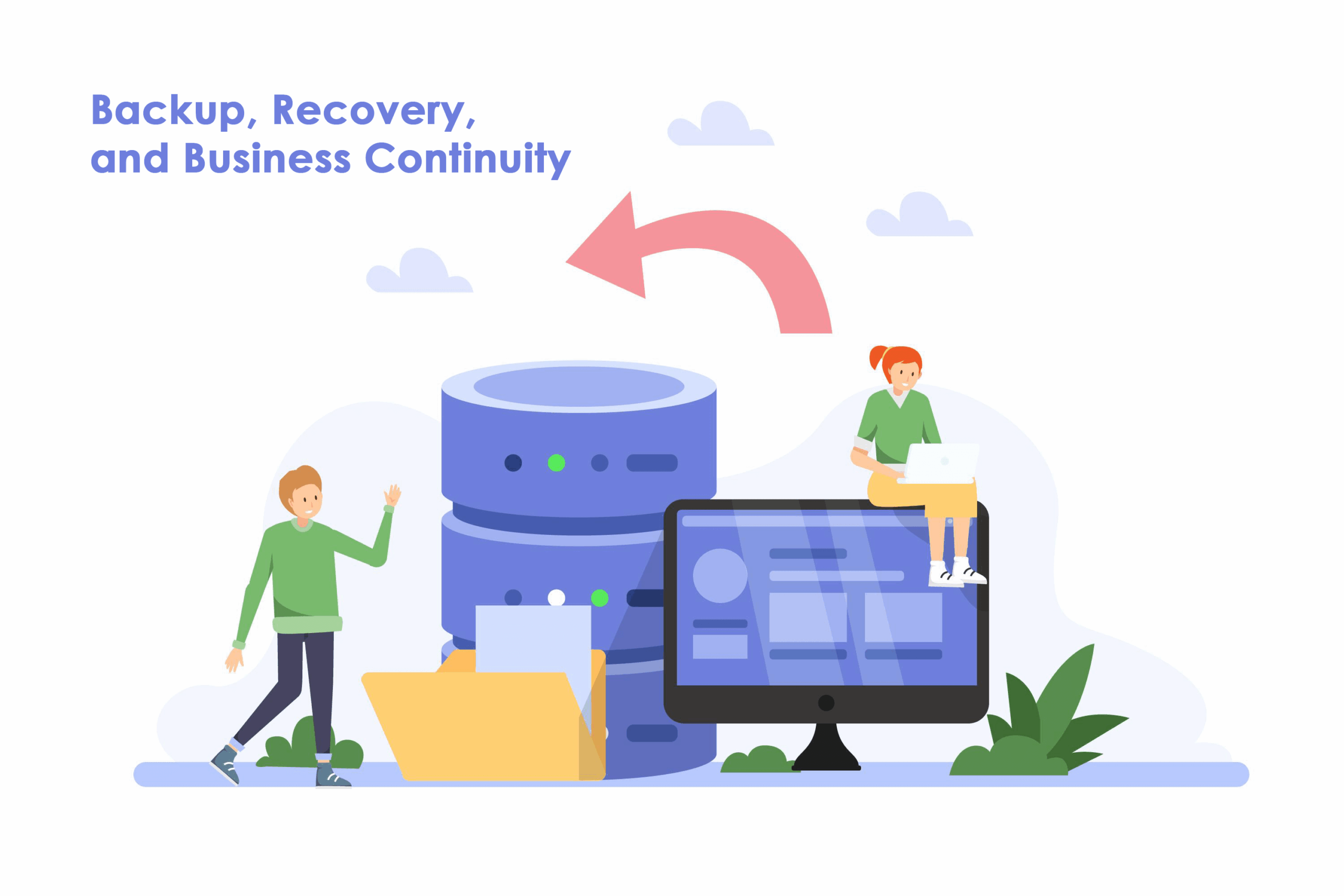
Backup, Recovery, and Business Continuity

Backups are often treated as an afterthought—until something goes wrong. A professional maintenance program includes automated, off-site backups and tested restore procedures, not just backup files sitting on the same server.
Best practices include:
- Daily automated backups
- Secure off-site storage
- One-click or rapid restore capability
- Periodic recovery testing
This level of preparedness reduces downtime, protects client data, and positions the agency as a reliable long-term partner rather than a reactive service provider.
Minor Edits and Content Support
One of the most overlooked—but most valued—components of white label maintenance is ongoing minor support. Clients frequently need small changes that don’t justify a new project but still require technical expertise.
This typically includes:
- Content updates and page edits
- Form fixes and configuration changes
- Small layout or styling adjustments
- Plugin configuration and troubleshooting
Agencies that bundle this into maintenance plans increase perceived value and reduce friction around “small requests.” The White Label Agency notes that clearly defining what qualifies as minor support is essential for protecting margins while keeping clients satisfied: https://thewhitelabelagency.com/resource/wordpress-maintenance-the-ultimate-guide/.
Why Service Depth Matters
Agencies that under-scope maintenance struggle with profitability and client satisfaction. Agencies that define, package, and outsource maintenance properly turn it into a reliable revenue stream and a retention engine.
White label website maintenance is not a checklist—it is an operational discipline. When delivered consistently, it becomes one of the strongest long-term assets an agency can offer its clients.
Why India Has Become the Global Hub for White Label Website Maintenance
For agencies across the US, UK, Canada, Australia, and New Zealand, outsourcing website maintenance is no longer a tactical cost decision—it is a structural advantage. Over the last decade, India has emerged as the global hub for outsourced website maintenance for agencies, not because of low cost alone, but because of a unique convergence of talent depth, operational maturity, and delivery scalability.
Understanding why India dominates this space—and how agencies should leverage it correctly—is essential to building a sustainable white label maintenance model.
Depth of CMS and Platform-Specific Talent
Website maintenance is not generic IT support. It requires specialists who understand CMS internals, plugin ecosystems, hosting environments, performance tuning, and security vulnerabilities across hundreds or thousands of sites.
India has one of the world’s largest concentrations of CMS-focused developers, particularly in WordPress, which powers over 43% of all websites globally according to usage data published by W3Techs at https://w3techs.com/technologies/details/cm-wordpress. This scale matters. It allows Indian teams to develop deep pattern recognition around common maintenance issues—plugin conflicts, update failures, performance bottlenecks, and security threats—that smaller in-house teams often encounter for the first time.
For agencies, this translates into faster resolution times, fewer escalations, and more predictable outcomes.
Cost Efficiency Without Compromising Quality
While cost arbitrage is often discussed, the more important factor is cost efficiency per unit of reliability.
Maintaining an in-house team in Western markets to handle ongoing website support typically involves senior developers performing low-visibility, interrupt-driven work—an inefficient use of expensive talent. Outsourcing maintenance to India allows agencies to reallocate internal resources toward strategy, growth, and client-facing innovation, while routine but critical operational work is handled by specialists who do this every day.
According to Deloitte’s global outsourcing insights at https://www2.deloitte.com/global/en/pages/operations/articles/global-outsourcing-survey.html, organizations that outsource operational IT functions are significantly more likely to report improved cost predictability and service consistency. For agencies selling recurring maintenance plans, that predictability is crucial.
Process Maturity and SLA-Driven Delivery
One of the most underappreciated advantages of Indian delivery teams is process discipline.
Most reputable Indian maintenance teams are built around:
- Ticket-based workflows
- Defined service-level agreements (SLAs)
- Multi-layer quality assurance
- Documented SOPs for updates, backups, and incident response
This operational maturity aligns perfectly with the needs of agencies managing dozens or hundreds of client websites. Maintenance is not creative work—it is risk management. Agencies benefit when execution is boring, repeatable, and measurable.
Platforms like ManageWP have long emphasized the importance of standardised workflows and reporting for agencies managing multiple sites at scale, which is why process-driven delivery is a core requirement for successful white label maintenance programs.
Where Pure Offshore Models Break Down
Despite these advantages, not all outsourcing arrangements succeed.
Pure offshore models often fail agencies due to:
- Communication gaps caused by time zone misalignment
- Lack of contextual understanding of Western client expectations
- Slow escalation during high-impact incidents
- Over-reliance on ticket queues instead of ownership
For maintenance, these failures are costly. A delayed response to a hacked site or prolonged downtime damages not just the website, but the agency’s credibility.
This is why leading agencies are moving away from “vendor marketplaces” and toward hybrid outsourcing partners.
The Hybrid Advantage: Why Structure Matters More Than Geography
A hybrid model combines India-based execution with Western-aligned governance, communication, and accountability. Instead of functioning as a detached offshore vendor, the partner operates as an extension of the agency’s internal team.
This typically includes:
- Overlapping working hours with US/UK/AU teams
- Clear escalation paths and named points of contact
- Alignment with agency-defined SLAs and tooling
- Proactive reporting instead of reactive ticket handling
This structure preserves the cost and talent advantages of India while eliminating the friction that causes most offshore partnerships to fail.
Why Outsourcing Website Maintenance to India Gives Agencies a Competitive Edge
By 2025, outsourcing website maintenance is no longer a cost-cutting tactic—it is a strategic capability. For agencies in the USA, UK, Canada, Australia, and New Zealand, the question is no longer whether to outsource maintenance, but where and how to do it without sacrificing quality, accountability, or client trust.
India has emerged as the global centre of gravity for white label website maintenance for agencies—not by chance, but by structural advantage.
India’s Structural Advantages in Website Maintenance Delivery
India’s dominance in outsourced website maintenance is built on three enduring factors: talent depth, cost efficiency, and operational maturity.
First, India has one of the world’s largest and most experienced pools of CMS specialists, particularly in WordPress, WooCommerce, PHP, JavaScript, and modern performance optimisation techniques. Unlike many regions where developers specialise narrowly, Indian teams often have hands-on exposure to maintaining hundreds or thousands of live websites across industries—an essential skill for maintenance work that demands pattern recognition and rapid diagnosis.
Second, cost efficiency remains a real advantage—but not in the simplistic “cheap labour” sense. Agencies outsourcing website maintenance to India typically achieve 40–60% cost savings compared to equivalent in-house teams in Western markets, while still working with senior-level engineers. This pricing arbitrage allows agencies to build profitable maintenance retainers without pushing client prices beyond market tolerance.
Third, India’s outsourcing ecosystem has matured. Website maintenance is no longer handled ad hoc. Indian delivery teams are accustomed to SLA-driven workflows, ticketing systems, documented SOPs, and structured QA—capabilities that are essential for maintaining uptime, security, and performance at scale. These traits align closely with how agencies need maintenance to function operationally.
Why Pure Offshore Models Often Fail Agencies
Despite these advantages, many agencies have had poor experiences with offshore maintenance. The issue is not geography—it is delivery design.
Pure offshore models often break down due to:
- Limited overlap with Western business hours
- Reactive communication instead of proactive reporting
- Ambiguous ownership during incidents
- Lack of strategic context around client expectations
When a site goes down or a security incident occurs, agencies need clarity, speed, and accountability. Any friction in communication or escalation directly affects client trust.
This is why many agencies move away from freelancers and generic offshore vendors, even when pricing is attractive. Maintenance is not a background task—it is a reputation-critical service.
The Hybrid Delivery Model: Where Most Agencies Win
The most successful agencies do not choose between onshore and offshore—they combine them.
A hybrid outsourcing model blends India-based execution with Western-aligned communication, governance, and quality control. In this structure:
- Day-to-day maintenance work is handled by experienced offshore engineers
- Communication, reporting, and escalation follow Western expectations
- SLAs, documentation, and accountability are clearly defined
This model preserves the cost and scalability benefits of outsourcing while eliminating the trust and communication gaps that plague pure offshore setups.
It is also the model increasingly recommended in agency and outsourcing thought leadership, particularly for ongoing services like white label website support and outsourced website maintenance for agencies, where consistency matters more than speed alone.
How Bantech Solutions Implements the Hybrid Advantage
Bantech Solutions operates explicitly within this hybrid model, which is why it functions less like a vendor and more like a long-term delivery partner for Western agencies.
Rather than offering generic maintenance packages, Bantech integrates directly into agency workflows, aligning with how agencies already manage projects, support tickets, and client reporting. Maintenance teams operate from India, but communication standards, documentation, and escalation paths are designed to match Western agency expectations.
Agencies using Bantech’s white label website development services (https://www.bantechsolutions.com/white-label-website-development/) benefit from continuity between build and maintenance phases—eliminating the common handoff problems that occur when development and support are split across vendors.
For agencies managing larger maintenance portfolios or enterprise clients, Bantech’s dedicated developer model (https://www.bantechsolutions.com/dedicated-developers/) allows teams to scale predictably without internal hiring, while maintaining institutional knowledge across client websites.
Outsourcing as a Growth Multiplier, Not a Risk
When outsourced website maintenance is implemented correctly—through a hybrid model with a long-term partner—it becomes a growth multiplier, not a liability.
Agencies gain:
- Predictable margins on maintenance retainers
- Faster response times without overstaffing
- The ability to support more clients without operational strain
- Improved client retention through proactive maintenance
Most importantly, agencies retain control. Brand ownership, pricing strategy, and client communication remain firmly with the agency, while execution scales quietly in the background.
White Label Maintenance as an Advantage, Not a Shortcut

As digital agencies mature, the question is no longer whether website maintenance should be offered—but how sustainably and reliably it can be delivered at scale.
Clients expect their websites to remain secure, fast, and stable long after launch. They also expect their agency to anticipate issues, not just react to them. Meeting those expectations consistently requires more than good intentions or ad-hoc support—it requires operational depth, repeatable processes, and access to specialised technical talent.
This is where white label website maintenance becomes less about outsourcing and more about infrastructure.
Agencies that rely solely on internal teams often find themselves constrained by cost, utilisation inefficiencies, and hiring cycles that don’t align with fluctuating maintenance demand. On the other end of the spectrum, agencies that lean on freelancers or generic vendors face risks around continuity, accountability, and quality control. Neither model scales cleanly.
A well-structured white label maintenance partnership sits in the middle. It allows agencies to retain full control over brand, pricing, and client communication, while quietly strengthening delivery capacity behind the scenes. When executed correctly, it supports recurring revenue, improves client retention, and reduces operational strain—without forcing agencies to overextend internally.
For agencies exploring this path, the choice of partner matters as much as the model itself.
Working with a hybrid partner like Bantech Solutions gives agencies access to experienced India-based engineering teams, while maintaining Western-aligned communication, governance, and quality standards. This balance is particularly valuable for agencies serving clients in the US, UK, Canada, Australia, and New Zealand, where expectations around reliability and accountability are high.
Bantech’s white label website development and maintenance approach (https://www.bantechsolutions.com/white-label-website-development/) is designed to integrate into existing agency workflows, rather than forcing agencies to adapt to rigid vendor processes. For agencies that need deeper continuity, the dedicated developer model (https://www.bantechsolutions.com/dedicated-developers/) offers a way to scale support capacity alongside client portfolios, without adding internal management overhead.
Reaching out to a partner like Bantech is not about committing to a vendor—it’s about evaluating whether your current maintenance delivery model is helping or quietly limiting your growth. For many agencies, simply having that conversation surfaces opportunities to improve margins, reduce risk, and deliver a more consistent client experience.
In a market where long-term relationships matter more than one-off projects, white label website maintenance—done thoughtfully—becomes a quiet but powerful advantage.
White label website maintenance for agencies is when a third-party technical team handles all the ongoing upkeep of client websites — updates, security, backups, performance — but does so completely under the agency’s brand. Clients never know anyone else is involved. The agency keeps full control of pricing, communication, and the client relationship.
You Built the Site. Now What?
Here’s something most agencies don’t talk about enough: the moment a website goes live is actually when the real work begins.
A client’s site is live. Everyone’s happy. Then three weeks later, a plugin update breaks the contact form. A month after that, the site starts loading slowly and the client notices before you do. Then someone emails asking if you can “just update a few things on the homepage.”
None of this is dramatic. But it adds up fast — especially when you’re managing ten, twenty, or thirty client sites at the same time. Suddenly your developers are spending chunks of their week on maintenance tasks instead of the actual project work that pays well.
This is the reality most agencies deal with quietly. And it’s exactly the problem white label website maintenance was built to solve.
So What Does “White Label” Actually Mean Here?
If you’re not familiar with the term, white labelling is basically when one company does the work and another company puts their name on it. You see it in all kinds of industries — retail products, software tools, even food brands.
In the context of website maintenance, it means this: a specialist technical team carries out all the day-to-day maintenance work on your client’s website, but as far as your client knows, that work is coming from you.
Reports are branded with your agency’s name. Support requests come through your system. Your client never gets an email from a company they’ve never heard of. They don’t log into some third-party platform. Nothing feels outsourced, because from their perspective, it isn’t.
That’s the whole point. You deliver the service. Someone else does the technical heavy lifting behind the scenes.
How It Actually Works Day to Day
It’s less complicated than it might sound. Once you’ve signed up with a white label maintenance partner, the general flow looks something like this.
You sell a maintenance plan to your client — you set the price, you decide what’s included, you handle the contract. The client pays you. Then you pass the site details and any specific requirements over to your delivery partner, who sets everything up on their end.
From there, they handle the ongoing work. Weekly updates, daily backups, security monitoring, uptime checks — all of it runs quietly in the background. If the client submits a minor support request, it comes to you, and you pass it along. Or some agencies set it up so requests go directly into a ticketing system the partner manages under the agency’s branding.
Every month, your partner puts together a maintenance report — what was updated, how the site performed, any issues that were caught and resolved. That report goes out under your logo.
Your client thinks you have a solid in-house support team. In a sense, you do — it’s just not all sitting in your office.
What’s Actually Included in the Service
This is where agencies sometimes get caught out. White label maintenance isn’t just running plugin updates once a month and calling it done. A proper service covers quite a bit more than that.
Updates — but done carefully. CMS core updates, plugin updates, theme updates. These happen regularly and they matter. An outdated plugin is one of the most common ways a WordPress site gets hacked. But updates also break things if they’re not handled properly — so a good maintenance partner tests changes before pushing them live, not after.
Security monitoring. Continuous scanning for malware, suspicious activity, and known vulnerabilities. If something is detected, it gets dealt with quickly. This isn’t a once-a-month audit — it’s ongoing.
Backups. Daily automated backups stored somewhere separate from the hosting server. This matters more than people realise until something goes wrong and you need to restore a site at short notice.
Performance and uptime. Someone watching whether the site is actually up, how fast it loads, and whether anything is quietly degrading over time. Slow sites hurt SEO and conversions, and clients notice.
Minor fixes and content updates. Small stuff — a broken form, a content change, a layout tweak. Most maintenance plans include a set number of hours or tasks for this kind of work each month. It keeps clients happy without every small request becoming a new project scope conversation.
Why Agencies Go This Route Instead of Hiring
The obvious question is: why not just hire someone internally to handle all this?
Some agencies do. But it rarely works as cleanly as it sounds. Maintenance isn’t a consistent full-time job — it’s a mix of routine low-stakes tasks and the occasional high-stakes emergency. Hiring a full-time developer to handle that work means paying a full-time salary for a role that’s sometimes very busy and sometimes very quiet.
Freelancers help with the cost problem, but they create a different one. They’re not always available when you need them. They don’t always know your clients’ sites. And when something urgent happens — a site goes down on a Friday evening — you’re suddenly chasing someone who may or may not be around.
What agencies actually need is reliable, consistent coverage without the overhead. White label maintenance delivers that. You know exactly what it costs per site per month. You know the work is getting done. And you’re not the one doing it.
The Client Trust Angle
Something worth thinking about: your clients don’t just trust your design skills or your marketing strategy. They trust you to keep their website — one of their most important business assets — safe and working.
That trust doesn’t stop at launch. If anything, it deepens over time as clients see you catching issues before they become problems, keeping their site fast, and responding quickly when they need something changed.
A white label model lets you maintain and build on that trust even when the technical execution is being handled by someone else. Because your clients aren’t thinking about who’s doing the work. They’re thinking about whether their website is in good hands.
When the answer is yes — when their site is consistently secure, fast, and well-maintained — they stay. They refer other people. They come back when they need more work done.
It’s Also a Proper Revenue Stream
Let’s be honest — maintenance is one of the few genuinely scalable ways to build recurring revenue in an agency.
Project revenue is unpredictable. Some months are flush, others are lean. Maintenance changes that equation. It’s money that comes in every month regardless of whether you closed a big project.
Most agencies buy white label maintenance at a wholesale rate and resell it at a margin. At ten clients on a reasonable plan, that’s meaningful monthly revenue with almost no extra overhead. At thirty or forty clients, it becomes a real stabilising force in the business.
And here’s the less obvious benefit: clients on maintenance plans stay clients longer. They’re in regular contact with your agency. They think of you first when they need something new. The lifetime value of a maintenance client is significantly higher than a one-and-done project client.
What to Look for in a Partner
Not all white label maintenance providers are worth working with. Some are excellent. Some will create more problems than they solve.
The things that actually matter: clear SLAs so you know what response times to expect, reporting that genuinely reflects the work being done, a structured onboarding process so nothing falls through the cracks, and a team that understands Western client expectations if you’re running an agency in the US, UK, Australia, Canada, or New Zealand.
That last point matters more than agencies sometimes realise. A partner who operates on a different communication rhythm, or whose escalation process doesn’t match how your clients expect things to work, will create friction — and your clients will feel it even if they can’t articulate exactly why.
The best white label partnerships feel like an extension of your own team, not a vendor you occasionally deal with.
The Bottom Line
White label website maintenance for agencies is a practical answer to a real problem. Clients need their websites looked after. Agencies are already accountable for that, whether or not there’s a formal service in place. And building an internal team to handle it at scale is expensive, inefficient, and difficult to sustain.
White label maintenance lets agencies do the right thing for their clients — ongoing, professional website support — without it becoming a drain on internal resources. Done well, it protects client relationships, generates predictable revenue, and frees up your team to focus on the work that actually grows your agency.
It’s not a shortcut. It’s just a smarter way to operate.
White label website maintenance typically includes CMS and plugin updates, security monitoring, daily backups, uptime and performance checks, and minor content or development support — all delivered under the agency’s brand. The exact scope varies by plan tier, but these five areas form the core of any professional maintenance service.
The Question Every Agency Eventually Asks
At some point, every agency that starts thinking about offering maintenance runs into the same wall. You know you want to add it as a service. You know your clients need it. But when it comes to actually defining what’s included — writing it into a proposal, building it into a pricing tier, explaining it to a client — things get vague fast.
“Ongoing support” doesn’t mean anything specific. “Regular updates” raises more questions than it answers. And clients, especially savvy ones, will ask exactly what they’re paying for each month.
So let’s get specific. Here’s what a proper white label website maintenance service actually covers — and why each piece matters more than most people realise.
1. CMS, Plugin, and Theme Updates
This is usually the first thing people think of when they hear “website maintenance,” and for good reason. It’s the most frequent task and, if neglected, one of the most damaging.
WordPress alone pushes out core updates, plugin updates, and theme updates on a rolling basis throughout the year. Some are minor patches. Others are significant security releases that need to be applied quickly. A site running outdated software is essentially an unlocked door — and automated bots scan the internet constantly looking for exactly that.
But here’s the thing agencies often discover the hard way: updates aren’t always safe to just run and forget. A plugin update can conflict with another plugin. A theme update can overwrite customisations. A core update can break functionality that was working perfectly the day before.
A professional white label maintenance service doesn’t just run updates — it runs them carefully. That means testing in a staging environment first, checking for compatibility issues, confirming everything works on the live site, and having a rollback plan ready if something goes wrong.
For agencies managing multiple client sites, this staged, systematic approach is the difference between maintenance that protects clients and maintenance that occasionally breaks their sites.
2. Security Monitoring and Active Threat Response
Security is the part of website maintenance that tends to get underestimated — right up until something actually happens.
Most website owners and even some agencies assume that a site is secure because nothing has visibly gone wrong. That assumption is dangerous. Malware can sit on a site for weeks before it becomes obvious. Spam scripts can run quietly in the background, damaging SEO and sending clients’ domains onto blacklists. Compromised login credentials can give an attacker persistent access without triggering any obvious alarms.
A white label maintenance service handles security as an ongoing active process, not a one-time setup. That typically includes:
Malware scanning — regular automated scans looking for injected code, suspicious files, and known malware signatures. When something is found, it gets removed promptly.
Firewall and login protection — configuration of web application firewalls, rate limiting on login attempts, and blocking of known malicious IP ranges.
Vulnerability monitoring — tracking known vulnerabilities in the plugins and themes installed on a site, so issues can be patched before they’re exploited.
Incident response — when a site is compromised, the maintenance team investigates, cleans the infection, and identifies how the breach occurred so it doesn’t happen again.
For agencies, the reputational dimension here is significant. If a client’s site gets hacked and the agency is responsible for maintenance, the agency owns that outcome. A solid security layer — delivered consistently and quietly through a white label partner — protects the client and protects the agency.
3. Daily Backups and Disaster Recovery
Backups are one of those things that seem unnecessary until the exact moment they aren’t. Then they’re the most important thing in the world.
A server fails. A bad update corrupts the database. A client accidentally deletes half their site while trying to make a simple edit. A hacker gets in and encrypts everything. These situations happen to real websites run by real agencies — more often than most people would admit.
What separates a minor, recoverable incident from a major client crisis is almost always whether there’s a recent, clean backup available and whether someone knows how to restore it quickly.
Professional white label maintenance includes daily automated backups as standard. But the details matter:
Off-site storage — backups stored on the same server as the website they’re backing up offer very little protection if that server fails or is compromised. Proper backups go somewhere separate: cloud storage, a remote server, or a dedicated backup platform.
Retention periods — keeping the last seven, fourteen, or thirty days of backups means you can restore to a specific point in time, not just the most recent version.
Tested restores — a backup that’s never been tested is a backup you can’t fully trust. A good maintenance setup includes periodic verification that backups can actually be restored cleanly.
For agencies that are making any kind of long-term commitment to their clients, this layer of protection is non-negotiable.
4. Uptime Monitoring and Performance Optimisation
A website being “live” and a website being fast and stable are two different things. Uptime monitoring catches the first problem. Performance management deals with the second.
Uptime monitoring means someone — or more accurately, something automated — is checking whether the site is actually responding at regular intervals, around the clock. When a site goes down, the maintenance team gets alerted immediately and investigates the cause. The goal is to catch and resolve outages before the client even notices, let alone before their customers do.
Performance optimisation is a broader, ongoing concern. Websites slow down over time. Databases accumulate bloat. Images get added without being compressed. Caching configurations drift out of alignment. New plugins add page weight. None of this happens dramatically — it creeps up gradually until the site that once loaded in two seconds is now taking five.
This matters commercially, not just technically. Google uses page speed and Core Web Vitals as ranking signals. A slow site loses search visibility. It also loses visitors — research consistently shows that users abandon pages that take too long to load, and that bounce rates climb sharply as load time increases.
Ongoing performance management as part of a white label maintenance plan typically includes database optimisation, image compression, caching configuration, and regular Core Web Vitals monitoring. The aim is to catch and correct performance degradation before it starts affecting the client’s traffic or rankings.
5. Minor Content Updates and Development Support
This is the component that often makes the biggest difference to day-to-day client satisfaction, even though it doesn’t sound as technically impressive as security or performance work.
Clients have small requests constantly. They need a phone number updated. They want a new team member added to the About page. A button on the homepage needs to link somewhere different. A form is throwing an error and needs someone to look at it.
None of this justifies opening a new project. It’s not complex enough to warrant a scoping conversation and a statement of work. But it needs to get done — and when clients have to chase their agency for small changes, it erodes the relationship over time.
Most white label maintenance plans include a defined allocation for minor support work each month. This might be framed as a number of hours, a number of tasks, or a set of defined “small change” categories. Whatever the structure, it gives clients a reliable, low-friction way to get small things handled without the hassle of formal project requests.
For agencies, this component also does something strategically valuable: it keeps you in regular contact with clients. You’re not just the agency that built the site two years ago. You’re the team that’s actively engaged with their website every month. That kind of ongoing visibility is quietly powerful when clients are considering new projects, referrals, or expanded work.
6. Reporting and Transparency
This one doesn’t always make the headline list of maintenance features, but it’s genuinely important — both for client confidence and for the agency’s own accountability.
A white label maintenance partner should produce a monthly report that documents everything that was done during the period. What plugins were updated. What security scans found — and resolved. Uptime statistics. Performance metrics. Any support tasks completed.
This report serves a few purposes. For clients, it makes the value of their maintenance investment visible. Maintenance is, by nature, mostly invisible — when it’s working well, nothing bad happens, and it can be hard for clients to appreciate what they’re paying for. A clear, well-presented monthly report changes that. It shows the work.
For agencies, branded reporting is the visible proof that the white label model is working. The report carries the agency’s logo and identity. It reinforces the agency’s role as the trusted expert looking after the client’s website. And it creates a natural monthly touchpoint that keeps the client relationship active.
How These Pieces Fit Together
It’s worth stepping back and looking at this as a system rather than a checklist.
Each of these components — updates, security, backups, performance, minor support, reporting — connects to the others. Updates that are applied without testing can create the kind of emergency that backups are there to fix. Security vulnerabilities that aren’t caught create incidents that damage performance and client trust. Performance issues that go unmonitored quietly undermine SEO results that the client is investing in elsewhere.
The value of a comprehensive white label maintenance service isn’t just in any individual component. It’s in the fact that all these areas are being watched and managed consistently, by people who do this every day, across a large number of sites. That scale and consistency is something an individual agency — especially one whose core strength is strategy, design, or marketing — simply can’t replicate internally at a reasonable cost.
What to Watch Out for When Evaluating Plans
Not everything sold as “white label maintenance” is equally comprehensive. Some providers offer very basic plans that cover updates and backups but not much else, and call it maintenance. Others bundle in hosting and present it as a maintenance service when the two are quite different things.
When you’re evaluating what a plan actually includes, ask specifically about the security layer — is it active monitoring or just periodic scans? Ask about the backup storage location and retention period. Ask what qualifies as a “minor update” and what triggers a separate charge. Ask how incidents are escalated and what the expected response time is.
The quality of a white label maintenance service is ultimately measured by what happens when something goes wrong. A site goes down at an inconvenient time. A plugin update breaks something. A client spots a performance issue. How quickly is it caught? How quickly is it fixed? How clearly is it communicated?
Those answers tell you more about a maintenance partner than any feature list.
The Short Version
White label website maintenance covers the full spectrum of ongoing technical care that a live website needs to stay secure, fast, and reliable. Updates, security, backups, performance, minor support, and transparent reporting — delivered under your agency’s brand, by a specialist team working quietly in the background.
For agencies, it’s the infrastructure that makes ongoing client relationships sustainable, and the foundation that makes recurring revenue from maintenance actually work.
White label WordPress maintenance typically costs agencies between $59 and $200 per site per month at the wholesale level, depending on the provider and plan tier. Agencies then resell these plans to clients at $150 to $800 per month. Most agencies achieve margins between 40 and 65 percent, creating a reliable recurring revenue stream.
Why Pricing Is the First Thing Agencies Want to Know
And honestly, fair enough. You can believe in the white label maintenance model completely, understand why your clients need it, and still get stuck at the same practical question: what is this actually going to cost me, and can I make money from it?
The answer is yes, you can make good money from it. But the pricing landscape is genuinely varied, and understanding what drives the differences matters a lot before you commit to a provider or start building out your own plan tiers.
So let’s break it down properly. Wholesale costs, what affects them, what agencies typically charge clients, and how to think about building a margin that actually works for your business.
What Agencies Typically Pay at the Wholesale Level
When you partner with a white label WordPress maintenance provider, you’re paying a wholesale rate per site per month. That rate varies depending on a few things we’ll get into shortly, but here’s a realistic picture of where the market sits right now.
At the entry level, basic maintenance plans from white label providers start somewhere around $29 to $59 per site per month. At this price point you’re usually getting plugin and theme updates, automated backups, and basic uptime monitoring. It covers the fundamentals but not much more.
Mid-tier plans, which include more comprehensive security monitoring, performance checks, and an allowance for minor support work, typically run between $79 and $150 per site per month. This is where most agencies find the sweet spot for their standard client offering.
Premium plans with faster response times, more support hours, dedicated account management, and deeper technical coverage can push up to $200 or more per site per month. These make sense for agency clients with high-traffic sites, e-commerce platforms, or businesses where downtime has a direct and significant cost.
Volume pricing is also a real factor. Most providers reduce the per-site rate once you hit certain thresholds. An agency managing five sites might pay $99 per site. The same agency managing thirty sites with the same provider might pay $69. This is worth factoring into your growth projections because the margin gets better as your portfolio grows.
What Affects the Cost
Not all sites are equal, and not all maintenance plans should be priced the same way. Several factors push the cost up or down, both on the provider side and when you’re pricing for clients.
The complexity of the site. A simple five-page brochure site running a clean WordPress theme with a handful of plugins is straightforward to maintain. A WooCommerce store with custom integrations, payment gateways, live inventory, and high traffic is a different proposition entirely. More complexity means more things that can break, more time spent on updates, and more serious consequences when something goes wrong. Providers price accordingly, and agencies should too.
The number of plugins installed. More plugins mean more updates, more potential conflicts, and more surface area for security vulnerabilities. A site running forty plugins is genuinely more demanding to maintain than one running ten, even if both sites look similar on the outside.
Response time expectations. Some clients need a two-hour response window on critical issues. Others are fine with next-business-day. Faster response SLAs cost more because they require the provider to have capacity available at short notice. If you’re selling to clients in industries where downtime is very costly, you’ll likely need a premium tier that reflects this.
Support hours included. How much minor support work is included in the monthly plan matters a lot for both cost and client satisfaction. A plan that includes two hours of support tasks per month is genuinely different from one that includes five, even if everything else looks the same.
Security depth. Basic malware scanning versus active firewall management, real-time threat monitoring, and incident response are quite different levels of protection. More comprehensive security coverage costs more but is often essential for clients in regulated industries or those handling sensitive customer data.
What Agencies Charge Clients
Here’s where it gets commercially interesting.
Agencies don’t sell maintenance at cost. They mark it up, add their own value through account management and client communication, and price it in a way that reflects both what the market will bear and what their positioning demands.
At the lower end of the market, agencies running basic maintenance plans for small business clients often charge somewhere between $99 and $250 per month per site. These are typically simpler sites with modest needs, and the pricing reflects that.
For mid-market clients, monthly maintenance plans commonly run between $300 and $600 per site. This is the range where most digital agencies operating in the US, UK, Australia, Canada, and New Zealand find the most traction. The scope is comprehensive enough that clients can clearly see the value, and the pricing is sustainable enough that the agency makes a real margin.
For enterprise clients, high-traffic sites, or complex e-commerce platforms, monthly maintenance retainers of $800 to $1,500 or more are not unusual. When a client’s website is generating significant revenue, the cost of professional ongoing maintenance is easy to justify.
What Margin Actually Looks Like in Practice
Let’s put some real numbers on this because abstract percentages only tell you so much.
Say you partner with a white label provider at $89 per site per month for a mid-tier plan. You sign up ten clients at $350 per month each. Your wholesale cost is $890 per month. Your revenue is $3,500 per month. Your gross margin before your own account management time is $2,610 per month, or roughly 74 percent.
Add in a couple of hours of your own time for client communication, reporting review, and occasional escalations, and your net margin is still comfortably above 50 percent.
Scale that to twenty clients and your gross margin is over $5,000 per month from maintenance alone, with the same infrastructure and the same provider relationship.
This is why agencies that build a maintenance revenue line consistently report that it becomes one of the most valuable parts of their business, not because any individual client is paying a lot, but because the revenue is predictable, the margin is solid, and the workload doesn’t scale linearly with the number of clients.
How to Structure Your Pricing Tiers
Most agencies find that offering two or three plan tiers works better than a single one-size-fits-all option. It makes the conversation with clients easier because they’re choosing between options rather than deciding whether to buy at all.
A simple three-tier structure might look something like this.
A basic plan covers updates, backups, and uptime monitoring. It’s the entry point for smaller clients or those with simpler sites who want basic protection without a large monthly commitment. You might price this somewhere between $99 and $199 per month depending on your market.
A standard plan adds security monitoring, performance checks, Core Web Vitals reporting, and a small monthly allowance for minor updates. This is your core offering and the one most clients end up on. Pricing in the $250 to $450 range is common here.
A premium plan adds faster response times, more support hours, deeper security coverage, and possibly dedicated account management. This is right for clients with high-traffic or revenue-generating sites where reliability is critical. Pricing from $500 upwards is reasonable and defensible at this level.
The key with tiering is to make the differences clear and meaningful. Clients should be able to understand why the premium plan costs more without needing a technical explanation. Frame it in terms of response time, depth of coverage, and how much support time is included rather than leading with technical features.
The Conversation About Value
Pricing white label maintenance isn’t just a numbers exercise. It’s also a positioning question, and how you talk about the service with clients matters as much as the actual price.
Some agencies make the mistake of presenting maintenance as a technical formality. Updates, backups, security scans. Clients nod along, understand vaguely that it sounds important, and then quietly wonder if they really need to pay for it every month.
The better framing is around outcomes and protection. Their website is one of their most important business assets. It’s working for them twenty-four hours a day. Without proper maintenance, it’s vulnerable to security threats, at risk of going down at inconvenient moments, and gradually falling behind on the performance benchmarks that affect their search rankings.
What the maintenance plan buys them is peace of mind, reliability, and someone keeping watch. For most business owners, that framing lands much better than a list of technical tasks.
It also makes the monthly cost feel proportionate. A business paying $1,500 a month on Google Ads is not going to baulk at $300 a month to make sure their website stays secure, fast, and functional. Put in those terms, the conversation shifts considerably.
What to Watch Out for When Comparing Providers
Price is not the only thing that matters when evaluating white label maintenance providers, and agencies that choose purely on cost often regret it.
A provider offering maintenance at $29 per site sounds attractive until you discover that support responses take three days, security monitoring is a monthly automated scan rather than ongoing protection, and there’s no rollback process when an update breaks something.
The cost of a client escalation, a hacked site, or a botched update that takes down an e-commerce store during peak trading hours is orders of magnitude higher than the money saved on a cheap maintenance plan.
When comparing providers, ask specifically about what happens when something goes wrong. What is the actual response time on a critical issue? How is a security incident handled? What is the rollback process if an update causes problems? Who do you contact and how quickly do they respond?
The answers to those questions tell you far more about the real cost of a partnership than the monthly rate does.
Building a Maintenance Offering That Actually Makes Sense
The agencies that make the most from white label maintenance are not the ones that simply pick the cheapest provider and add a markup. They’re the ones that build a genuinely useful service, price it to reflect the value it delivers, and position it as a natural part of the ongoing relationship with every client.
That means being selective about the provider you work with, building plan tiers that make sense for your specific client base, and having a clear, confident conversation about why ongoing maintenance matters rather than treating it as an upsell to be bolted onto a project invoice.
Done right, white label WordPress maintenance doesn’t just add revenue. It changes the shape of your agency’s business, making it more stable, more predictable, and more resilient in the months when project work is quieter than you’d like.
That combination of margin, retention, and stability is what makes it worth doing properly from the start.
White Label Maintenance vs Traditional Outsourcing
White label maintenance means a third-party team handles all website upkeep invisibly under your agency’s brand. Traditional outsourcing means hiring an external vendor who may interact directly with your clients, appear in communications, or operate independently of your brand. The key difference is ownership: white label keeps your agency central to everything.
They Sound Similar. They Are Not.
When agencies first start thinking about getting outside help with website maintenance, “white label” and “outsourcing” often get used interchangeably. It is easy to see why. Both involve handing technical work to an external team. Both reduce the burden on your internal staff. And on the surface, both seem to solve the same problem.
But the experience of working with each model, and more importantly the experience your clients have, is genuinely different. And those differences have real consequences for your agency’s reputation, your client relationships, and your long-term business stability.
Understanding the distinction properly is not just a matter of semantics. It is a practical decision that affects how your agency operates, how your clients perceive you, and how much control you retain over the services you sell.
What Traditional Outsourcing Actually Looks Like
Traditional outsourcing, in the context of website maintenance, typically means hiring an external developer, a freelancer, or a third-party agency to handle technical work on your behalf. Sometimes this is done on a project basis. Sometimes it is a loose ongoing arrangement.
The defining characteristic of traditional outsourcing is that the external party operates as a separate, visible entity. They might communicate directly with your clients. They might appear in email threads, on invoices, or in project management tools that clients also have access to. Clients often know, either explicitly or by inference, that someone outside your agency is involved.
In some arrangements this is perfectly fine and openly acknowledged. A small agency might tell a client upfront that they work with a trusted development partner for certain technical tasks. The client knows. Everyone moves forward with that understanding.
But in others, particularly in ongoing website maintenance where clients expect their agency to be the responsible party, the visible presence of an external vendor creates friction. Clients start wondering who actually looks after their site. They question whether the agency has the expertise it presented. They feel less certain about who to call when something goes wrong.
Traditional outsourcing also tends to be less structured around the agency’s specific processes and standards. External vendors have their own ways of working, their own tools, and their own communication rhythms. Getting them to operate consistently within your agency’s framework requires significant management effort, and even then it is not always reliable.
What White Label Maintenance Actually Looks Like
White label maintenance is a fundamentally different structure. The external team is specifically set up to be invisible. Their entire purpose is to deliver the work under your agency’s brand, in a way that your clients never have any reason to question.
Reports carry your logo. Support requests come through your systems. Communication with clients goes through you, not the delivery partner. The partner does not appear in any client-facing document, email, or conversation. As far as your clients are concerned, your agency is doing the work.
This is not just a cosmetic difference. It is a structural one. A white label maintenance partner is not an external vendor you occasionally redirect technical tickets to. They are an extension of your agency’s delivery capability, operating under your brand guidelines, your service standards, and your client expectations.
The best white label partners are set up specifically for this kind of integration. They have structured onboarding processes, branded reporting templates, ticketing systems that sit behind the agency’s own client portal, and communication protocols designed around the agency being the single point of contact. They are built to be invisible, and they are good at it.
The Brand and Trust Difference
This is where the practical gap between the two models really shows up.
Your clients trust your agency. That trust is built over time through the quality of your work, the reliability of your communication, and the consistency of your service. It is one of the most valuable things your agency has, and it is surprisingly fragile.
When a client discovers that someone they have never heard of is responsible for keeping their website secure and operational, it raises questions. Not necessarily accusations, but questions. Who are these people? Why didn’t the agency tell us? What else is being handled by someone we don’t know about?
Those questions do not always surface as a direct conversation. More often they show up as quiet unease, reduced trust, and a slightly lower barrier to looking at other agencies when the current contract comes up for renewal.
Traditional outsourcing, where the external party is visible in any client-facing context, creates this risk. White label maintenance eliminates it. Because nothing is visible. There are no questions to answer because there is nothing for the client to notice.
The agency retains full credit for everything. Security improvements, performance gains, fast responses to support requests, neat monthly reports showing what was done. All of it is attributed to the agency, because as far as the client knows, the agency is doing it.
The Accountability Difference
Here is something worth thinking about honestly. When something goes wrong with a client’s website, who does the client hold responsible?
Not the outsourced developer. Not the third-party vendor. The agency.
This is true regardless of which model you use. Whether you are using traditional outsourcing or a white label partner, your clients see you as the responsible party. You are the one who sold the service. You are the one who manages the relationship. When a site goes down or gets hacked, you are the first call.
Given that reality, the model you use for delivery should match the accountability you carry. Traditional outsourcing creates a mismatch: the agency is accountable but the external vendor operates independently, sometimes communicating directly with clients, sometimes working in ways the agency cannot fully control or predict.
White label maintenance closes that gap. Because the delivery partner operates under your brand and within your processes, you have much greater visibility and control over what is happening. You are not just accountable on paper. You are genuinely in control of the service.
When an issue arises, your white label partner reports it to you. You handle the client communication. The response is co-ordinated through your agency. There is no confusion about who is managing what, no crossed wires between a client and an external vendor, and no awkward situations where a third party tells your client something before you have had a chance to.
The Consistency Difference
One of the less-discussed problems with traditional outsourcing is consistency. External vendors have their own work rhythms, their own priorities, and their own client lists. You are not their only client, and during busy periods your work may not receive the same attention as during quieter ones.
Freelancers are particularly prone to this. A freelancer who is great when they are available can become a serious liability when they are not. Holidays, illness, competing workloads, or simply moving on to a different career focus can leave an agency suddenly without the resource they had been relying on for client maintenance.
This creates operational fragility. Agencies that depend on specific individuals for ongoing client work are exposed every time that individual becomes unavailable. And for maintenance, which clients expect to be continuous and reliable, gaps in coverage are not acceptable.
White label maintenance providers are structured to avoid this. They are businesses, not individuals. They have teams, processes, and redundancy built in. If one person is unavailable, another picks up the work. The service continues. SLAs are maintained. Your clients experience no disruption.
That structural reliability is something traditional outsourcing arrangements, especially those built around individual freelancers or small contractors, simply cannot match.
The Reporting and Visibility Difference
Ask yourself this: in a traditional outsourcing arrangement, how much do you actually know about what is being done on your clients’ sites each month?
In many cases, the answer is: not much. The work gets done, or at least you hope it does, but there is no structured reporting. No monthly summary of what was updated. No record of what security scans found. No uptime statistics. No performance data. If a client asks what maintenance was done last month, you are relying on the external vendor to tell you something you can pass along.
That is a precarious position to be in. It puts you dependent on the vendor’s communication habits for information that is fundamentally your responsibility to know.
White label maintenance is built around reporting. Good providers produce detailed monthly reports covering every significant action taken: what was updated, what security scans found, uptime statistics, performance data, support tasks completed. These reports are branded with your agency’s identity and are ready to share directly with clients.
This transparency serves everyone. Clients can see the value of what they are paying for each month. Agencies have a clear record of what has been done across every site in their portfolio. And the provider is accountable to a documented standard of service.
The Commercial Difference
There is also a straightforward business difference between the two models that is worth being clear about.
Traditional outsourcing is primarily a cost management tool. You use it to reduce the expense of doing work internally. The benefit is lower costs. The trade-off is reduced control and variable quality.
White label maintenance is a revenue model as well as a delivery model. You are not just reducing costs. You are building a scalable, recurring revenue stream under your brand. Every client on a maintenance plan is generating margin every month, with no additional project sales required.
This distinction changes how you think about the partnership. With traditional outsourcing, you are managing a cost centre. With white label maintenance, you are managing a product. The external team is part of your service delivery infrastructure, not just a cost-reduction mechanism.
Agencies that make this mental shift, from outsourcing as cost management to white label as product infrastructure, tend to build much more successful maintenance offerings. They invest in finding the right partner, building the right plan tiers, and positioning maintenance properly to clients. The result is a business line that delivers consistent margin and significantly improves client retention.
Which Model Is Right for Your Agency
The honest answer is that it depends on what you are trying to achieve.
If you occasionally need extra technical capacity for specific project tasks and you are comfortable with clients knowing an external resource is involved, traditional outsourcing arrangements can work fine. There are legitimate use cases for it, particularly in project-based work where a specialist skill is needed temporarily.
But for ongoing website maintenance, where clients expect continuity, reliability, and consistent quality under your agency’s brand, white label is almost always the better model. The accountability structure matches what clients expect. The brand integrity is preserved. The service is consistent. And the commercial opportunity is significantly stronger.
Most agencies that have tried both models for maintenance come to the same conclusion. Traditional outsourcing works well enough until something goes wrong or until a client notices. White label maintenance is designed so that neither of those things happens.
The difference is not just in the delivery. It is in what the model says about how seriously you take the service you are selling.
Agencies outsource website maintenance to reduce operational overhead, deliver consistent client support without expanding headcount, and build predictable recurring revenue. Managing maintenance in-house is expensive, inconsistent, and difficult to scale. Outsourcing to a specialist partner gives agencies reliable delivery, better margins, and more time to focus on the work that actually grows their business.
The Question Behind the Question
When an agency starts asking whether they should outsource website maintenance, they are usually already feeling the strain of not doing it.
Maybe a client’s site went down over a weekend and nobody noticed until Monday. Maybe a plugin conflict broke an e-commerce store and your lead developer spent two days fixing it instead of finishing a project that was already behind schedule. Maybe you have been promising clients “ongoing support” without any real structure behind that promise, and it is starting to show.
The question is not really whether outsourcing is a good idea in theory. Most agency owners already sense that it is. The real question is whether the benefits are substantial enough to justify making a change, and whether the risks of outsourcing are manageable.
The short answer to both is yes. But let’s actually walk through why, properly, because the reasons go deeper than most people initially expect.
Your Developers Should Not Be Doing Maintenance
This is probably the most immediate and practical reason, and it is one that gets overlooked because it feels too obvious to dwell on.
When a client submits a maintenance request, or when a plugin update needs to be run across fifteen client sites, or when someone needs to check why a site is loading slowly, that work almost always falls on whoever is available. Which usually means a developer who was supposed to be doing something else.
The problem is not that the work is too complex. Often it is not. The problem is the interruption. Development work, real project development, requires sustained focus. Every time a developer stops to handle a maintenance task, they lose momentum on the work that is actually moving projects forward. Research into the cost of task-switching consistently shows that recovering full focus after an interruption takes significantly longer than the interruption itself.
Multiply that across a team, across multiple clients, across a full working week, and the productivity loss is substantial. And you are paying senior developer rates for work that does not require senior developer skills most of the time.
Outsourcing maintenance to a specialist partner removes this from your team’s plate entirely. Your developers work on projects. The maintenance partner handles maintenance. Both are done better as a result.
The In-House Maintenance Model Breaks at Scale
Some agencies manage website maintenance internally without too much trouble when they have a small number of clients. Five sites, maybe ten. It is manageable. Someone runs updates on a Friday afternoon, checks the backups are working, deals with the occasional support request.
Then the client list grows. Fifteen sites. Twenty-five. Forty. And suddenly that Friday afternoon maintenance routine has become a significant operational undertaking. There are more updates to run, more backups to verify, more security alerts to investigate, more minor support requests coming in from more clients at more inconvenient times.
The in-house model does not scale gracefully. As volume increases, either the quality of maintenance declines because the same people are trying to cover more ground, or someone has to be hired specifically for maintenance work, which brings its own costs and complications.
Outsourcing solves this scaling problem cleanly. Your white label maintenance partner can handle five sites or fifty sites without any change to your internal operations. You add new clients to the maintenance program, the partner onboards them, and the work continues. Your overhead does not grow proportionally with your client base.
Maintenance Work Is Inconsistent by Nature
Here is something that catches a lot of agencies off guard. Website maintenance is not a steady, predictable workload. Some weeks nothing significant happens. Other weeks bring a critical WordPress security update, two client support requests, a server performance issue, and a plugin conflict all at the same time.
This unpredictability makes it genuinely difficult to staff for internally. If you hire someone specifically for maintenance, you are paying them a full salary during the quiet weeks. If you rely on existing team members to absorb maintenance tasks, you are creating unpredictable pressure on people whose primary responsibilities are elsewhere.
A specialist outsourcing partner is structured for exactly this kind of variable workload. They have teams, tools, and processes in place to handle both the routine and the urgent. When a critical security vulnerability is disclosed and needs to be patched across every client site urgently, your partner has the capacity to do it. When things are quiet, you are not paying for idle capacity.
This is one of the genuine structural advantages of outsourcing maintenance rather than trying to own it entirely in-house.
Security Is Not Something to Handle Casually
Let’s be direct about this. Website security is a serious and growing concern, and it is not an area where casual, ad-hoc maintenance is sufficient.
WordPress sites are targeted constantly by automated bots looking for outdated plugins, known vulnerabilities, and weak login credentials. The vast majority of successful website attacks do not happen because someone specifically targeted your client. They happen because a vulnerability existed and was not patched in time.
Managing security properly requires continuous monitoring, not periodic check-ins. It requires keeping up with vulnerability disclosures across every plugin installed on every client site. It requires knowing what to do when malware is found, how to clean it effectively, and how to prevent reinfection.
Most agencies are not security specialists. They are designers, marketers, strategists, or developers. Expecting your team to also be genuinely strong on website security, across every client site they manage, is a significant stretch.
A specialist maintenance partner does this every day across a large number of sites. They see patterns. They know the common attack vectors. They have tools and processes specifically built for security monitoring and incident response. That depth of expertise is genuinely difficult to replicate in-house unless security is your core business.
The consequences of getting security wrong are serious. A hacked client site reflects directly on the agency that is supposed to be looking after it. The reputational damage from a significant security incident can outlast the technical recovery by a long time.
Client Expectations Have Changed
Ten years ago, a client might have been happy to hear that the agency would “check in on the site” occasionally and deal with issues when they arose. That expectation has shifted considerably.
Clients today understand that their website is a live business asset. It is generating leads, supporting marketing campaigns, processing transactions, and representing their brand twenty-four hours a day. They expect it to be treated accordingly.
That means proactive maintenance rather than reactive fire-fighting. It means someone monitoring their site’s uptime, not just responding when it goes down. It means regular reports showing what has been done, not silence until something breaks. It means a clear point of contact and a defined response time when they submit a support request.
Meeting these expectations consistently, across a growing portfolio of clients, requires infrastructure that most agencies simply do not have internally. Outsourcing to a specialist partner gives you that infrastructure without building it from scratch.
And here is the commercial reality: agencies that meet these expectations keep clients longer. Clients that feel their website is properly looked after, that someone is watching and maintaining it professionally, are significantly less likely to look elsewhere when their contract comes up for renewal.
Recurring Revenue Changes Your Business
This is probably the most compelling reason for a lot of agency owners, and it deserves some direct attention.
Project-based revenue is fundamentally unpredictable. A good month followed by a quiet one. A strong pipeline that suddenly softens. Seasonality in certain industries. The constant need to sell new work to replace completed projects.
Maintenance retainers change this dynamic. They generate revenue every month regardless of what is in the project pipeline. Clients pay their maintenance fee in January whether they have a new project for you or not.
When you outsource maintenance through a white label partner, your margin on those retainers can be substantial. Wholesale costs typically sit between $59 and $200 per site per month. Agencies commonly charge clients between $250 and $600 for a mid-tier plan. On twenty clients, that is potentially $3,000 to $8,000 per month in maintenance margin alone, with relatively modest management overhead on your side.
Beyond the direct margin, maintenance clients have a higher lifetime value than project-only clients. They are in regular contact with your agency. They think of you first when new needs arise. They refer other clients more readily because they have an ongoing relationship with you, not just a memory of a project you delivered two years ago.
Building a maintenance revenue line is one of the most effective things an agency can do to make its business more stable and less dependent on the constant pressure of selling new projects.
It Frees You to Focus on What Actually Grows Your Agency
There is an opportunity cost to doing maintenance in-house that is easy to underestimate. Every hour your team spends on routine updates, backup checks, security scans, and minor support tasks is an hour not spent on strategy, business development, creative work, or the client relationships that drive growth.
This is true even when the maintenance work is being handled by junior team members. Managing those people, reviewing their work, handling escalations when something goes wrong, and ensuring quality across multiple client sites still requires time and attention from people who could be contributing elsewhere.
Outsourcing maintenance does not just save money. It redirects attention. It gives your team back time that was previously absorbed by operational work that, however necessary, does not move your agency forward.
The agencies that grow most consistently are the ones that are disciplined about where they focus their energy. Outsourcing the operational, repeatable, low-differentiation work of website maintenance is a straightforward way to protect that focus.
The Risk of Not Outsourcing Is Real
It is worth naming this directly because the decision to continue managing maintenance in-house often gets framed as the safe, conservative choice. It is not.
The risks of under-resourced or inconsistently delivered maintenance are significant. Client sites getting hacked. Performance degradation that quietly damages SEO rankings. Downtime that the client notices before you do. Support requests that get delayed because your team is busy with project work. Minor issues that grow into serious problems because nobody was watching closely enough.
Any of these can damage client relationships that took years to build. Some of them create financial liability. And the cumulative effect of delivering mediocre maintenance, even without any single dramatic incident, is that clients lose confidence in the agency and start looking around.
The question is not whether the risks of in-house maintenance outweigh the risks of outsourcing. The question is whether the risks of doing maintenance poorly outweigh the discomfort of changing how you deliver it.
For most agencies that have thought it through honestly, the answer is clear.
The Practical Bottom Line
Agencies outsource website maintenance because the alternative, handling it in-house at scale, creates operational drag, inconsistent quality, and unnecessary costs without delivering proportionally better outcomes.
A specialist white label partner brings dedicated expertise, structured processes, continuous coverage, and branded reporting to a service that your clients genuinely need and are willing to pay for. You retain the client relationship, the margin, and the credit for a service delivered well.
It is not about offloading responsibility. It is about delivering that responsibility properly, in a way that is sustainable as your agency grows.
Agencies make money from website maintenance plans by purchasing wholesale maintenance services from a white label partner at a lower rate, then reselling those services to clients at a marked-up price under their own brand. The margin between what agencies pay and what they charge creates a consistent monthly revenue stream that compounds as the client base grows.
The Revenue Model Most Agencies Are Sitting On
Here is something worth saying plainly. A lot of agencies are already doing the work involved in website maintenance. They are running updates, handling security issues, responding to minor support requests, checking on site performance. They are just not charging for most of it properly.
It gets absorbed into project time. It gets handled as a favour. It gets bundled vaguely into a retainer that was scoped for something else entirely. And at the end of the month, that work has consumed real hours without generating revenue that reflects its actual value.
Website maintenance plans fix this. They take work the agency is already responsible for, structure it into a clearly defined monthly service, price it properly, and turn it into predictable recurring revenue that shows up every single month whether or not a new project has been sold.
For many agencies, building out a maintenance offering is not about adding something entirely new. It is about finally getting paid properly for something they have been doing for free.
The Basic Revenue Structure
The commercial model behind website maintenance plans is straightforward, and that simplicity is part of what makes it so attractive.
At its core, it works like this. The agency partners with a white label maintenance provider who handles the actual technical work. The provider charges the agency a wholesale rate per site per month. The agency then sells maintenance plans to their clients at a higher rate, under their own brand. The difference between what the agency pays and what they charge is their margin.
The wholesale cost of a mid-tier white label maintenance plan typically sits somewhere between $79 and $150 per site per month, depending on the provider and what the plan includes. Agencies commonly sell comparable plans to clients at between $250 and $500 per month. That gap is where the money is.
On a single client that might seem modest. But maintenance revenue compounds quickly as the client base grows. Ten clients at $350 per month each generates $3,500 in monthly revenue. If the wholesale cost across those ten sites is $1,000, the gross margin is $2,500 per month, recurring, without any additional project sales required.
Twenty clients takes that gross margin to $5,000 per month. Thirty clients to $7,500. And so on. The workload on the agency side does not scale proportionally because the technical delivery is being handled by the partner.
Why the Margin Holds Up
One of the questions agencies ask early on is whether the margin is sustainable or whether it gets eroded over time as clients push back on pricing or as provider costs increase.
The honest answer is that the margin holds up well for a few reasons.
First, maintenance is a service that clients genuinely value and do not want to shop around for constantly. Once a client is on a maintenance plan and their site is being looked after reliably, changing providers feels risky. Nobody wants to disrupt something that is working. The switching cost, both practically and psychologically, keeps clients on plans far longer than they might stay with a project-based service.
Second, the value of maintenance is not purely about the technical tasks performed. It is about peace of mind, reliability, and having someone accountable. Clients are not comparing your maintenance plan against a list of tasks they could hire someone to do individually. They are paying for the confidence that their website is being looked after by their trusted agency. That is harder to commoditise than a task list.
Third, as the agency’s portfolio of maintained sites grows, the per-site wholesale cost from the provider often decreases due to volume pricing. The agency’s margin actually improves with scale rather than shrinking.
The Lifetime Value Shift
To understand why maintenance plans matter commercially, you need to look beyond the monthly margin and consider what they do to the lifetime value of a client.
A client who engages an agency for a single website project and then moves on might generate $5,000 to $20,000 in revenue over the lifetime of that relationship. A client on an ongoing maintenance plan at $350 per month generates $4,200 per year in maintenance revenue alone. Over three years that is $12,600, before any additional project work is factored in.
And here is the thing about maintenance clients: they do more additional project work. They are in regular contact with the agency. They think of the agency as an active part of their business, not as someone they hired once for a specific job. When they need a new landing page, a site redesign, an e-commerce integration, or a digital marketing campaign, the agency they are already paying every month is the obvious first call.
This means maintenance clients do not just generate maintenance revenue. They generate higher project revenue as well, because the relationship stays warm and the agency stays visible and relevant.
The lifetime value of a maintenance client is consistently and significantly higher than a project-only client. Agencies that build a strong maintenance base are not just generating more revenue. They are fundamentally changing the shape of their client relationships.
How to Structure Plans That Sell
Having a maintenance offering is one thing. Having one that actually converts well during sales conversations is another.
The agencies that sell maintenance most successfully tend to structure their plans around outcomes and peace of mind rather than technical features. Clients do not get excited about “plugin updates and malware scanning.” They do get interested in “your site stays secure, loads fast, and someone is watching it around the clock.”
The framing matters enormously. A business owner paying for a maintenance plan is not buying a checklist of tasks. They are buying confidence that their website, one of their most important business assets, is being properly looked after by people they trust.
Most agencies find that a two or three tier structure works well. A basic plan covers the essentials at a lower price point and gives clients an accessible entry point. A standard plan adds more comprehensive security, performance monitoring, and a monthly support allowance, and this is usually where most clients land. A premium plan is for clients with high-traffic or revenue-generating sites who need faster response times and deeper coverage.
The tiering serves a commercial purpose beyond just accommodating different budgets. It frames the conversation around which plan is right rather than whether to buy one at all. That is a more productive sales conversation and it tends to result in higher average plan values because clients self-select based on how much their site matters to their business.
When to Introduce Maintenance in the Sales Process
This is something a lot of agencies get wrong. They think of maintenance as an upsell, something to bring up after the project is done and delivered. The better approach is to introduce it at the start.
When a client is deciding whether to commission a website project, they are already thinking about the long term. This is going to be their website for the next three to five years. Of course they care whether it will be properly maintained. Of course they want to know their agency is not going to disappear after launch day.
Introducing maintenance early in the conversation positions it as a natural part of the full service rather than an afterthought. It also makes the ongoing relationship part of the client’s expectation from the beginning, which makes it much easier to convert them onto a plan at launch.
Agencies that present maintenance as part of their standard offering rather than an optional add-on consistently achieve higher conversion rates and higher average monthly values. Clients feel they are getting a complete, professional service rather than being upsold something at the end of a project.
The Operational Overhead Is Lower Than You Think
A concern agencies sometimes have about maintenance plans is that managing them will create significant additional work internally. In practice, with a white label partner handling the technical delivery, the ongoing management overhead per client is relatively modest.
Most of what the agency needs to do month to month is review the partner’s reports, apply the agency’s branding, and send them to clients. Handle the occasional client question about something in the report. Pass along minor support requests. Manage the commercial relationship with the client, including renewals and plan upgrades.
For a typical maintenance client, this might amount to two or three hours of internal time per month across communication, reporting, and relationship management. At ten clients that is twenty to thirty hours per month across the team, not in one person’s role but distributed across whoever manages client relationships.
Against a gross margin of $2,500 or more per month at ten clients, that overhead is very manageable. And it does not grow steeply as the portfolio grows because the processes are repeatable and get more efficient over time.
Maintenance Plans as a Business Development Tool
There is a dimension to maintenance revenue that goes beyond the direct margin, and it is worth naming explicitly.
Agencies with a strong maintenance base have a fundamentally different business development position than those without one. They have a base of active, engaged clients who are already paying them every month. They have regular touchpoints with those clients that keep the agency’s work visible and relevant. They have a reason to be having conversations with clients about their website’s performance, their marketing results, and their future plans.
This creates a natural pipeline for upsells and expansions. A client whose site is on a maintenance plan and whose monthly report shows strong traffic but declining conversion rates is a natural candidate for a CRO project. A client whose site has been maintained well for two years but is starting to feel dated is a natural candidate for a redesign conversation. A client who is happy with their maintenance service and mentions that a colleague is looking for a new website is a natural referral source.
None of these opportunities require active selling in the traditional sense. They arise naturally out of the ongoing relationship that maintenance plans create. Agencies that maintain strong client relationships consistently report that maintenance clients generate disproportionately more referrals and upsell revenue than project-only clients.
The Compounding Effect Over Time
The most powerful thing about maintenance revenue is not the margin in any given month. It is what happens as the base grows and stabilises over time.
An agency that adds five new maintenance clients every quarter and retains the majority of existing ones is building a compounding revenue base. After two years of consistent growth, the maintenance revenue alone might be covering a significant portion of the agency’s fixed costs. That changes the commercial pressure on the project side considerably. You are no longer selling projects to keep the lights on. You are selling projects to grow, which is a much better position to be in.
It also changes how the business feels to run. The anxiety of a quiet month in the project pipeline is considerably reduced when there is a reliable base of recurring maintenance revenue coming in regardless. Decisions about hiring, investment, and growth can be made with more confidence because the floor under the business is higher and more stable.
This is why the agencies that commit properly to building a maintenance offering, pricing it well, structuring it clearly, and delivering it consistently, tend to look back on it as one of the best commercial decisions they made.
It is not a get-rich-quick model. It builds gradually. But it builds reliably, and what it builds is genuinely durable.
A WordPress website maintenance plan typically includes core, plugin, and theme updates, security monitoring and malware scanning, daily automated backups, uptime and performance monitoring, and an allowance for minor content or development support. Most plans also include monthly reporting. The exact scope varies by tier, but these are the foundations of any credible maintenance offering.
Before We Talk About What Is Included, Let’s Talk About Why It Matters
There is a version of this conversation that turns into a dry feature list pretty quickly. Updates, backups, security. Tick, tick, tick. And yes, those things absolutely need to be in the plan. But if you are an agency putting together a maintenance offering, or a business owner trying to understand what you are actually buying, the more useful starting point is understanding what happens to a WordPress site when these things are not being done.
WordPress powers a huge portion of the web. That ubiquity is also what makes it a constant target. Automated bots scan the internet around the clock looking for sites running outdated plugins with known vulnerabilities. They are not targeting specific businesses. They are looking for unlocked doors, and outdated WordPress installations are exactly that.
Beyond security, WordPress sites drift. Performance degrades as databases accumulate clutter. Plugins fall out of compatibility with each other. Themes get left behind as core WordPress evolves. What launched as a fast, clean, well-functioning website gradually becomes slower, more fragile, and more vulnerable without active, ongoing maintenance.
A WordPress maintenance plan is the structured answer to all of this. Here is what a proper one actually covers.
Core, Plugin, and Theme Updates
This is the most visible and most frequent component of any WordPress maintenance plan, and it is worth spending time on because it is also the one most often handled carelessly.
WordPress core updates, plugin updates, and theme updates happen constantly throughout the year. Some are minor version bumps. Others are significant releases that address security vulnerabilities or introduce breaking changes. Keeping everything current is genuinely important, but the way updates are managed matters just as much as whether they are done at all.
The problem with simply running all available updates as soon as they appear is that updates sometimes break things. A plugin update can conflict with another plugin on the same site. A theme update can overwrite custom code that was added after the theme was installed. A major WordPress core release can expose compatibility issues with plugins that have not yet been updated to match.
A professional maintenance plan handles updates with a structured process. Updates are reviewed before they are applied. Where possible, they are tested in a staging environment that mirrors the live site. The live site is checked after updates are pushed to confirm everything is still functioning correctly. If something breaks, there is a rollback process in place to restore the previous state quickly.
This staged, careful approach is the difference between maintenance that protects a site and maintenance that occasionally causes the problems it is supposed to prevent.
Security Monitoring and Malware Scanning
If updates are the most visible part of a maintenance plan, security monitoring is the most important, and the most underestimated by people who have not experienced a compromised website.
A hacked WordPress site can cause serious damage well before the site owner is even aware anything has happened. Malware can redirect visitors to spam pages. Injected code can steal customer data. Compromised sites get flagged by Google and removed from search results. Hosting providers suspend accounts when malware is detected. Email domains get blacklisted when compromised sites are used to send spam.
The consequences are not just technical. They are commercial and reputational. Recovering from a significant security incident takes time, money, and effort. And the trust damage with clients or customers is harder to repair than the technical damage.
A proper WordPress maintenance plan includes security monitoring as an ongoing active process, not a monthly checkbox. This typically covers several things.
Regular malware scanning looks for injected code, suspicious files, and known malware signatures. When something is found, it is removed promptly and the infection vector is investigated so the same entry point cannot be used again.
Firewall configuration and management helps block known malicious traffic before it reaches the site. This includes web application firewalls that filter out common attack patterns, rate limiting on login attempts to prevent brute force attacks, and blocking of known malicious IP ranges.
Vulnerability monitoring tracks security disclosures for the specific plugins and themes installed on each site. When a vulnerability is published, the affected plugin can be updated or mitigated before it is exploited.
And when something does go wrong, incident response is part of the picture. A maintenance plan should include a clear process for what happens when a site is compromised, who handles the cleanup, and how the incident is communicated.
Daily Automated Backups
Backups sit in an interesting position in the maintenance conversation. Everyone agrees they are important. Fewer people think carefully about the details until the moment they actually need to restore from one.
The critical things about backups are not just that they exist but how they work in practice.
Daily automated backups mean that at worst, recovering from a disaster means losing one day of changes rather than weeks or months. For a business running an active website with regular content updates or e-commerce transactions, the difference between a daily backup and a weekly one can be enormously significant.
Off-site storage is equally important. A backup stored on the same server as the website it is backing up offers very limited protection. If the server fails, is compromised, or is shut down by the hosting provider, the backup fails alongside the site. Proper backups go somewhere completely separate, whether that is cloud storage, a dedicated backup platform, or a remote server.
Retention periods determine how far back you can go. Keeping the last fourteen or thirty days of backups means that if a problem is not noticed immediately, there is still a clean restore point available. Some issues, particularly certain types of malware, can persist quietly for days before becoming obvious. A longer retention window is a meaningful safety net.
And finally, backup restoration needs to actually work. A backup that has never been tested is a backup you cannot rely on. A maintenance plan worth the name includes periodic verification that backups can be restored cleanly and that the process is documented clearly enough that it can be executed quickly under pressure.
Uptime Monitoring
A website being technically live and a website actually being available to visitors are not always the same thing. Servers go down. Hosting environments experience issues. Plugin conflicts can cause fatal errors that take a site offline. Without active monitoring, these outages can persist for hours before anyone notices.
Uptime monitoring means automated checks running at regular intervals, sometimes every minute, confirming that the site is responding correctly. When it stops responding, an alert fires immediately and the maintenance team investigates.
The goal is to catch and resolve outages as quickly as possible, ideally before the site owner or their customers notice anything at all. For businesses where the website is generating leads or processing sales around the clock, even a short period of downtime has a direct commercial cost. Consistent uptime monitoring is what makes rapid response possible.
Most professional maintenance plans include uptime monitoring as standard and report on monthly uptime statistics as part of the regular reporting cycle. Clients can see that their site was available for the full month, and if there were any incidents they can see how quickly they were resolved.
Performance Monitoring and Optimisation
Website performance is not a one-time concern. A site that launched in excellent condition can degrade gradually over time in ways that are not always obvious until they start affecting search rankings or user behaviour.
Databases accumulate clutter from post revisions, transient data, and spam comments. Images get added without optimisation. Caching configurations drift. New plugins add page weight. Hosting environments get more loaded as other sites on shared infrastructure grow.
The cumulative effect of these small degradations is a website that loads noticeably slower than it did at launch. And slower websites lose visitors. Google uses Core Web Vitals as ranking signals, which means performance degradation directly affects search visibility. Conversion rates decline as load times increase. The business impact is real even when the cause is not immediately obvious.
A maintenance plan should include regular performance monitoring that tracks load times, Core Web Vitals scores, and any emerging issues that are starting to affect performance. When problems are identified, optimisation work addresses them before they become significant. This includes database cleaning, image optimisation, caching management, and keeping an eye on any plugins that are creating unusual performance overhead.
Minor Content Updates and Development Support
This component is often what clients notice most in day-to-day terms, even though it is not the most technically complex part of the maintenance service.
Clients have small requests regularly. They need a staff member’s contact details updated. They want a new service added to a page. A form is not working correctly. A button is linking to the wrong page. None of this is complex enough to warrant a formal project, but all of it needs to get done and clients notice when it does not.
Most maintenance plans include a defined monthly allowance for minor support work. This might be expressed as a number of hours, a number of specific tasks, or a set of clearly defined request types. Whatever the format, it gives clients a low-friction way to get small things handled without starting a new project conversation every time.
For agencies, this is also the component that keeps the client relationship active and visible on a practical level. Clients are not just receiving a monthly report telling them updates were run. They are experiencing tangible responsiveness. Their requests are getting handled. Their agency is present and engaged with their website.
That ongoing engagement, however modest in any given month, is a significant factor in client retention over time.
Monthly Reporting
A maintenance plan without reporting is maintenance that clients cannot see or appreciate. Monthly reports are how the value of the service is made visible.
A good maintenance report covers what was updated during the month, what security scans found and resolved, uptime statistics, performance data, and a summary of any support tasks completed. It should be clear enough that a non-technical client can read it and understand what was done and why it mattered, without needing a detailed explanation.
For agencies using a white label partner, reports are produced by the partner and branded with the agency’s identity before being sent to clients. The report reinforces the agency’s role as the expert responsible for the site’s health and creates a monthly touchpoint that keeps the relationship active.
Over time, these reports also build a documented history of the maintenance work performed. That record is useful if questions ever arise about what was done, when, and why.
Putting It All Together
What makes a WordPress maintenance plan genuinely valuable is not any individual component but the fact that all of these areas are being managed consistently, by people who do this every day, without the site owner needing to think about any of it.
Updates handled carefully. Security monitored actively. Backups running daily and stored properly. Performance watched and optimised over time. Minor requests handled promptly. Everything documented and reported monthly.
That combination of coverage, consistency, and accountability is what separates a real maintenance plan from a vague promise of “ongoing support.” For agencies building a maintenance offering and for clients considering one, understanding what is actually included is the foundation for making the right decisions about scope, pricing, and expectations.
To choose a white label website maintenance provider, look for clearly defined service scope and SLAs, structured branded reporting, proven onboarding processes, and communication standards that match your clients’ expectations. The right provider operates as an invisible extension of your agency, not a separate vendor. Reliability, transparency, and cultural alignment matter as much as technical capability.
The Decision That Shapes Everything Downstream
Choosing a white label maintenance provider is one of those decisions that feels administrative on the surface but turns out to have a significant impact on how your agency operates, how your clients experience your service, and ultimately how profitable your maintenance offering becomes.
Get it right and you have a partner that quietly strengthens your client relationships month after month, delivers consistent work under your brand, and gives you a maintenance service you can sell with genuine confidence.
Get it wrong and you are dealing with missed updates, slow responses to client issues, reports that do not reflect the work, and the awkward position of defending a service to clients when the delivery behind it is not holding up.
The good news is that the things that separate good providers from poor ones are not mysterious. They are identifiable if you know what to look for and what to ask. Here is a practical guide to making this decision well.
Start With Scope: What Exactly Do They Cover
The first thing to establish clearly with any potential provider is exactly what their service includes and, just as importantly, what it does not.
This sounds obvious but it is where a lot of agencies run into trouble. A provider’s marketing page will almost always describe their service in glowing terms. Comprehensive maintenance. Full coverage. Everything you need. The reality behind those phrases varies enormously.
Ask for a detailed breakdown of what is included in each plan tier. Specifically, ask about updates and how they are handled. Are they tested in a staging environment before being pushed live? Is there a rollback process if something breaks? How are major WordPress core updates managed compared to minor plugin updates?
Ask about security. Is monitoring continuous or periodic? What does the malware scanning process look like? What happens when an infection is found? Who handles the cleanup and how quickly?
Ask about backups. Where are they stored? How often are they run? How many days of backups are retained? Has the restoration process been tested?
Ask about support. What qualifies as a minor support task and what triggers an additional charge? How are support requests submitted and tracked? What is the expected turnaround time?
The answers to these questions will tell you quickly whether you are looking at a genuinely comprehensive service or a basic offering with impressive language around it.
Evaluate Their SLAs Seriously
SLA stands for service level agreement, and in the context of white label maintenance, it is basically the provider’s commitment about how quickly they will respond to and resolve different types of issues.
This matters a great deal more than most agencies initially appreciate, for a simple reason. When a client’s site goes down or is compromised, you are the one fielding the call. Your client is not thinking about whether your provider’s SLA covers this scenario. They are thinking about how quickly their site is going to be back up and what their agency is doing about it.
If your provider’s SLA means they will respond to a critical issue within twenty-four hours, but your client is a retail business whose site is down on a Saturday during peak trading, that SLA is not going to feel acceptable to anyone involved.
Look for providers who offer differentiated response times based on issue severity. A critical outage should have a response time measured in hours, not days. A security incident should trigger immediate action. Routine tasks can operate on longer timeframes, but urgent situations need genuine urgency.
Also look at how SLAs are monitored and what happens when they are not met. A provider who can tell you clearly how they track performance against their SLAs, and who takes accountability seriously when they fall short, is a fundamentally different partner from one who treats SLAs as marketing language.
Assess Their Communication Standards
This is the factor that agencies operating in the US, UK, Australia, Canada, and New Zealand most commonly underestimate when evaluating providers, particularly when considering offshore partners.
Technical capability matters enormously. But so does communication. And communication gaps, whether caused by time zone misalignment, language barriers, or simply different expectations about responsiveness, create friction that your clients eventually feel even if they cannot articulate exactly why.
Think about what communication actually looks like in practice. When a client submits a support request, how is it tracked and acknowledged? If an issue arises outside of standard business hours, how is it escalated? If something goes wrong that you need to communicate to a client urgently, how quickly can you get information from the provider?
The best white label partners have communication processes that are designed around the agency being the single point of contact at all times. They understand that you need clear, timely information because you are the one managing the client relationship. They do not leave you chasing updates. They do not send confusing technical reports that you have to translate before you can tell your client what happened.
When evaluating a provider, ask specifically about their communication model. Who is your point of contact? How do you reach them when something is urgent? What are their working hours and how do they handle out-of-hours incidents? Ask for a sample of how they communicate during an incident. The clarity and professionalism of that communication will tell you a lot.
Look Hard at Their Reporting
Reporting is one of the most commercially important aspects of white label maintenance, and it is an area where providers vary significantly in both quality and flexibility.
The monthly maintenance report is what makes the value of your service visible to clients. It is what turns “we look after your website” from an abstract promise into documented, demonstrable work. A well-produced report builds client confidence, reinforces the agency’s expertise, and gives clients a reason to feel good about their monthly investment.
A poorly produced report, or worse, no report at all, does the opposite. Clients start wondering what they are actually paying for. They have no visibility into what was done. And when something eventually does go wrong, there is no track record to point to.
Ask any potential provider to show you a sample maintenance report. Look at it as your client would. Is it clear and well-organised? Does it explain what was done in plain language, not just technical shorthand? Does it include meaningful data like uptime statistics and performance metrics? Is it presented in a way that would give a non-technical client confidence?
Then ask how the report is delivered. Can it be white labelled fully with your agency’s branding, logo, and contact details? Is it produced automatically or does it require manual assembly? Can it be customised to include additional information specific to your clients?
Providers who have invested in quality reporting understand that it is part of the service, not an afterthought. Those who treat reporting as a minor operational detail tend to produce reports that reflect that attitude.
Test Their Onboarding Process
The onboarding process for a new client site tells you a great deal about how a provider operates generally. A provider with a structured, documented onboarding process is a provider who has thought carefully about how to deliver consistent, reliable maintenance at scale.
When you bring a new client site to a white label maintenance partner, there should be a clear process for what happens. Site access is collected securely. The current state of the site is audited. Existing plugins, themes, and configurations are documented. Monitoring tools are set up. Backups are configured and verified. Security tools are installed and configured.
This process should not rely on memory or improvisation. It should be repeatable and documented so that every site is set up to the same standard regardless of which team member handles the onboarding.
Ask a potential provider to walk you through their onboarding process in detail. How long does it take? What information do they need from you? What do they check during the initial audit? How do they confirm that monitoring and backups are working correctly before the site officially goes into maintenance?
The quality of this answer is a strong signal about the quality of the ongoing service.
Check Their Track Record With Agencies Specifically
There is an important distinction between a provider who maintains websites and a provider who specifically works with agencies in a white label capacity. The technical work is similar but the service model is quite different.
A provider who works directly with end clients operates differently from one whose entire model is built around being invisible behind agency brands. The latter understands things the former does not always appreciate: that the agency is always the point of contact, that client communications should never reveal the provider’s involvement, that reporting and processes need to align with how the agency works, and that the provider’s job is to make the agency look good, not to build their own relationship with the client.
Look for providers who explicitly serve agencies in a white label capacity and who can speak fluently about how they handle that model. Ask for references from agency partners specifically. Ask how many agency relationships they currently support and how long those relationships have typically lasted.
Longevity of agency partnerships is a particularly useful signal. White label maintenance relationships that last for years do so because the provider is consistently delivering. Short-term relationships that cycle through agencies regularly often do so because the delivery is inconsistent and agencies keep looking for something better.
Red Flags Worth Taking Seriously
A few things are worth treating as genuine warning signs rather than minor concerns.
Vague answers about security incident response. If a provider cannot clearly explain what happens when a client site is hacked, how the cleanup is handled, and what the expected timeline is, that is a significant problem. Security incidents happen. How they are handled defines the quality of the service.
No staging or testing process for updates. Providers who push updates directly to live sites without any testing step are cutting corners that will eventually cause problems for your clients. Updates break things. A staging process exists to catch those problems before your clients experience them.
Unclear or non-existent rollback procedures. If something goes wrong after an update, how does the site get restored? If the answer is uncertain or vague, that should give you pause.
Providers who want to communicate directly with your clients. This fundamentally undermines the white label model. A provider who insists on direct client contact, even occasionally, is not operating as a true white label partner.
Pricing that seems too low to be sustainable. Maintenance done properly requires real expertise, real tools, and real time. Pricing that is dramatically below market rates usually reflects a service that is correspondingly thin. The cheapest option in white label maintenance is often the most expensive in terms of the problems it eventually creates.
The Partnership Mindset
The final thing to look for, and it is harder to quantify than SLAs or reporting templates, is whether the provider genuinely operates with a partnership mindset.
The best white label maintenance providers do not think of themselves as a vendor you occasionally pass tickets to. They think of themselves as part of your delivery infrastructure, invested in your clients’ outcomes because your clients’ outcomes reflect on them too.
This shows up in small ways. They flag issues proactively rather than waiting to be asked. They communicate clearly when something unusual comes up. They think about how their work will look from your clients’ perspective. They take ownership of problems rather than explaining why they were not their fault.
You get a sense of this fairly quickly in initial conversations. Ask them about a time a maintenance issue went wrong and how they handled it. Ask them how they handle a situation where an update causes an unexpected problem on a live site. Listen not just to the technical answer but to how they talk about accountability and client impact.
A provider who treats those questions as a normal and reasonable part of the evaluation process, and who answers them with honesty and specificity, is a provider who takes their role seriously.
That is the kind of partner worth building a maintenance offering around.
Not maintaining a client’s website creates serious risks including security breaches, malware infections, SEO ranking drops, broken functionality, compliance issues, and prolonged downtime. For agencies, the consequences extend beyond the technical damage. Client trust erodes, relationships break down, and the agency’s reputation suffers in ways that are difficult and slow to repair.
The Problem With “We’ll Deal With It When Something Goes Wrong”
A lot of agencies and clients operate on a reactive maintenance model without consciously deciding to. There is no formal maintenance plan in place. Updates get run occasionally when someone remembers. Backups exist in theory. Security is handled by the hosting provider, presumably. And the site mostly works, so nobody is in a hurry to change anything.
This approach feels low-risk because nothing bad has happened yet. The site is live. Clients are not complaining. There are other priorities.
But the risk is not in what has happened. It is in what is accumulating quietly in the background. Every week a plugin goes unpatched is another week that known vulnerability sits on a live website. Every month performance is not monitored is another month that a gradual slowdown goes unaddressed. Every quarter without a tested backup is another quarter where a disaster recovery situation could go very badly.
The risks of neglecting website maintenance are not hypothetical. They are well-documented, common, and in many cases preventable. Here is an honest look at what those risks actually are and why agencies in particular need to take them seriously.
Security Breaches and Malware Infections
This is the most serious and the most immediate risk of neglected maintenance, and it is worth spending real time on because the consequences reach further than most people initially appreciate.
WordPress is the most widely used content management system in the world. That popularity makes it a constant target. Automated bots scan the internet continuously, looking for sites running outdated plugins with known vulnerabilities, weak login credentials, or security misconfigurations. They are not targeting specific businesses. They are looking for any unlocked door, and an unmaintained WordPress site has a lot of them.
When a site is compromised, the damage takes several forms.
Malware injections can redirect visitors to spam or phishing sites. Clients lose customers who land on what appears to be their website and are sent somewhere else entirely. That kind of incident destroys trust in a way that is very hard to undo.
Search engines detect compromised sites and respond accordingly. Google flags hacked sites in search results, sometimes showing warnings to visitors before they even click through. Sites can be deindexed entirely if the infection is severe or persistent. Recovering search rankings after a deindexing event can take months.
Hosting providers suspend accounts when malware is detected on their servers. A suspended hosting account means the site is completely offline, not just degraded. The client’s website disappears entirely until the issue is resolved.
Email domains associated with compromised sites get blacklisted when the site is used to send spam. A blacklisted domain means legitimate emails from the client’s business start landing in spam folders, affecting their ability to communicate with customers, suppliers, and anyone else they rely on email to reach.
And all of this lands on the agency. The client does not think about whose responsibility it was to keep the plugins updated. They think about who was supposed to be looking after their website and why it got hacked.
SEO Damage and Search Ranking Drops
Security breaches cause the most dramatic SEO damage, but neglected maintenance degrades search rankings even without a security incident.
Google and other search engines have become increasingly sophisticated about measuring and rewarding website quality. Core Web Vitals, which measure real-world page experience including loading speed, visual stability, and interactivity, are direct ranking signals. A site that is gradually slowing down due to database bloat, unoptimised images, and accumulated plugin overhead is a site that is gradually losing ground in search results.
The frustrating thing about this kind of damage is that it is invisible until it shows up in traffic reports. There is no error message. No obvious break. The site appears to be working normally. But the slow, consistent performance degradation is affecting rankings, which affects traffic, which affects leads and revenue.
Clients who are investing in SEO or content marketing are particularly exposed to this risk. They are putting money into building search visibility and the technical state of their website is quietly undermining those efforts. When they eventually notice the traffic decline and start asking questions, an agency that cannot point to consistent performance monitoring and maintenance has a difficult conversation ahead.
Beyond performance, outdated plugins and themes can introduce technical SEO issues as well. Broken internal links, malformed structured data, incorrect canonical tags, and crawl errors all accumulate over time on sites that are not actively maintained. Each individual issue might be minor. Together they create a site that search engines struggle to crawl and rank effectively.
Downtime and Availability Problems
A website being technically online and a website being reliably available to visitors are not always the same thing. Without active uptime monitoring, outages can persist for hours before anyone notices.
Consider what that means for a client whose website is their primary source of leads or transactions. Every hour of downtime is potential customers landing on an unavailable site and leaving, almost certainly to a competitor. For e-commerce sites the cost is direct and immediate. For service businesses it is harder to quantify but no less real.
Downtime has multiple causes, not all of which are related to security. A server issue at the hosting provider. A plugin conflict that throws a fatal error. A failed update that breaks a core dependency. A database that becomes corrupted. Any of these can take a site offline, and without monitoring, the agency and client are relying on a visitor or customer to notice and report the problem.
The communication dynamic when this happens without proactive monitoring is always uncomfortable. The client finds out their site is down from a customer who tried to reach it. They call the agency. The agency was not aware. Nobody was watching. That conversation, however it resolves technically, leaves a mark on the client’s confidence in their agency.
Broken Functionality and User Experience Failures
WordPress is an ecosystem of interacting components. Core software, plugins, themes, custom code, third-party integrations. These components are all updated independently by their developers, and updates do not always play well together.
A plugin update that conflicts with another plugin can break functionality anywhere on the site. Contact forms stop working. Checkout processes fail. Booking systems throw errors. Image galleries stop displaying correctly. Navigation menus break on mobile.
Any of these failures, left undetected and unaddressed, are costing the client real business. A contact form that does not submit is silently losing every enquiry that comes through it. A broken checkout is abandoning every purchase attempt. The site looks fine from the outside. The damage is invisible unless someone is actively testing and monitoring.
Without a maintenance plan that includes regular functionality checks alongside updates, these issues can persist for weeks. Clients lose revenue and leads without understanding why. When the problem is eventually discovered, the conversation about how long it has been broken and why nobody noticed is not a comfortable one for an agency to have.
Compliance and Legal Exposure
This is an area that does not get enough attention in maintenance conversations, but it is increasingly relevant.
Data protection regulations across many markets require websites to handle user data appropriately. Cookie consent mechanisms, privacy policies, and data processing practices need to stay current with evolving requirements. Contact forms and e-commerce checkouts that handle personal data need to be secured and functioning correctly.
An unmaintained website can fall out of compliance in several ways. Cookie consent tools that are not updated may stop functioning correctly. Security vulnerabilities that expose user data can create regulatory liability. Outdated SSL certificates or misconfirmed HTTPS settings can compromise data in transit.
For clients in regulated industries, healthcare, finance, legal services, education, the compliance dimension is even more significant. A security breach or compliance failure can trigger regulatory investigation, fines, and reputational damage that goes well beyond the website itself.
Agencies that are responsible for client websites without a formal maintenance arrangement have real exposure here. If a client suffers a data breach or compliance failure on a site the agency built and nominally supports, questions about the agency’s role and responsibility are almost inevitable.
Reputational Damage to the Client
Beyond the technical and commercial consequences, there is a reputational dimension to neglected website maintenance that is easy to underestimate because it is harder to measure.
A slow website makes a poor impression. A website with broken links or outdated content signals that nobody is paying attention. A site that has been visibly hacked, showing spam content or warning messages, is actively damaging the client’s brand in front of their own audience.
Websites are often the first interaction a potential customer has with a business. The impression made in those first few seconds shapes how that person thinks about the brand, whether they trust it, and whether they proceed to engage. A technically degraded website creates a degraded first impression that no amount of good advertising or reputation management fully compensates for.
Clients intuitively understand this even when they cannot articulate it technically. When their website is not performing well, they feel it. It contributes to a general dissatisfaction that colours the entire agency relationship, even when other aspects of the work are going well.
The Damage to the Agency Relationship
All of the above risks converge on one outcome that agencies should care about deeply: the erosion of the client relationship and the acceleration of churn.
Clients who experience a security incident, a significant period of downtime, SEO damage, or persistent broken functionality on a site their agency is supposed to be looking after lose confidence. Not necessarily all at once, but steadily. Each incident raises the same question: is my agency really on top of this?
When that question reaches a certain threshold, clients start looking at alternatives. They might not say anything directly. They might not even consciously decide to leave. But they become less loyal, more receptive to competitors, and less likely to expand the relationship with new projects or referrals.
The lifetime value of a client lost to maintenance-related dissatisfaction is significant. The referrals they would have made never happen. The projects they would have brought back go elsewhere. And in some cases, the story of what went wrong gets told to other potential clients.
The Honest Summary
None of these risks require a dramatic incident to materialise. Many of them build slowly and quietly over months before they become visible. That is precisely what makes neglected maintenance so dangerous.
The agencies that take maintenance seriously, either by building strong internal processes or by partnering with a specialist white label provider, are not just protecting their clients from technical problems. They are protecting their own reputation, their client relationships, and the long-term commercial health of their business.
The cost of doing maintenance properly is modest and predictable. The cost of not doing it, when something eventually goes wrong, is neither.
A hybrid outsourcing model for website maintenance combines offshore technical delivery with agency-aligned governance, communication, and quality control. Instead of choosing between a fully in-house team or a detached offshore vendor, agencies use a specialist partner who executes the work remotely but operates within the agency’s processes, standards, and client expectations.
Why the Old Choices Were Never Quite Right
For a long time, agencies thinking about website maintenance had two options that both came with significant drawbacks.
Option one was keeping everything in-house. Full control, but expensive, difficult to scale, and operationally demanding in ways that pulled the team away from higher-value work. Option two was outsourcing to an offshore vendor. Lower cost, but often frustrating in practice, with communication gaps, inconsistent quality, and a service that did not quite match the expectations of clients in Western markets.
Neither model was wrong exactly. Both solved part of the problem. But neither solved all of it, and agencies that had tried both often ended up feeling like they had to choose between control and cost efficiency, between quality and scalability.
The hybrid outsourcing model exists because that choice is a false one. It is a delivery structure built specifically to capture the benefits of both approaches while managing the weaknesses of each. And for agencies building a white label maintenance offering in markets like the US, UK, Australia, Canada, and New Zealand, it has become the model that works.
What Hybrid Actually Means in Practice
The word hybrid gets used loosely in a lot of business contexts, so it is worth being precise about what it means here.
A hybrid outsourcing model for website maintenance is not simply using an offshore team for some tasks and an in-house team for others. It is a more integrated structure than that.
In a true hybrid model, the technical delivery of maintenance work is handled by an offshore specialist team. Updates, security monitoring, backups, performance checks, minor support tasks, monthly reporting. All of the day-to-day operational work sits with the external partner. This is where the cost efficiency and scalability of outsourcing come from.
But the governance layer, the communication standards, the quality oversight, the escalation processes, and the alignment with how the agency works and what its clients expect, that sits much closer to the agency. The partner is not operating independently with their own processes and their own communication rhythms. They are operating within a framework that has been deliberately designed to integrate with how the agency delivers service to clients.
The result is a delivery model that looks and feels, from the client’s perspective, like a well-resourced in-house team, while operating with the efficiency and scalability of a specialist outsourcing arrangement.
Why Pure Offshore Models Often Disappoint
To understand why the hybrid model matters, it helps to be honest about why pure offshore arrangements frequently underperform, even when the technical capability of the offshore team is genuinely strong.
The most common frustration is communication. Not language barriers in the basic sense, but a broader mismatch in communication expectations. An agency in London or New York or Sydney has clients who expect responsive, clear, professional communication. When something goes wrong with a client’s site, the agency needs information quickly, presented in a way they can communicate to the client without translation or interpretation.
A pure offshore vendor operating on their own processes and their own schedule does not always deliver this. Responses come through a ticket system that prioritises queue order over urgency. Updates are technical and detailed in ways that assume the reader has the same context the developer does. Escalation paths are unclear. Time zone gaps mean urgent issues raised at the end of one business day do not get picked up until the start of the next.
None of this reflects poorly on the technical capability of the offshore team. It reflects a structural mismatch between how the offshore vendor operates and what the agency actually needs from the partnership.
The second common frustration is context. A pure offshore vendor is managing a large number of clients across a large number of sites. They know your clients’ sites technically. They may not understand the broader context of those clients’ businesses, why a particular site is critical, what the client’s expectations around communication are, or how an issue should be framed when it needs to be escalated.
This lack of context creates situations that feel avoidable. A response to a client issue that is technically accurate but commercially tone-deaf. A report that documents the work done but misses the significance of a metric the client cares about. A decision made about a site without understanding why a particular configuration exists.
Why Fully In-House Models Hit a Ceiling
The in-house model has its own well-documented limitations, particularly for agencies that are growing or that have ambitions to scale their maintenance offering.
Maintenance work is operationally demanding in a way that is easy to underestimate when you are managing a small number of sites. As the portfolio grows, the volume of routine tasks grows with it. Updates across thirty sites take significantly more time than updates across five. Security monitoring that is manageable when you are watching a handful of sites becomes a substantial ongoing commitment at scale.
Hiring to meet this demand creates a different kind of problem. Maintenance requires people who are available consistently, including outside business hours for urgent issues, but the workload is not even enough to justify a large dedicated team. You end up either overstaffed during quiet periods or understaffed during busy ones.
There is also the expertise gap. Effective WordPress maintenance requires knowledge that spans updates, security, performance, backup systems, and minor development. Finding and retaining people with genuine depth across all of these areas is harder and more expensive than it sounds, particularly in competitive hiring markets.
The in-house model works at small scale. It becomes increasingly costly and difficult to sustain as the maintenance portfolio grows, and it rarely delivers the responsiveness and consistency that a well-structured outsourcing arrangement can provide.
The Three Layers of a Hybrid Model
A well-designed hybrid outsourcing model operates across three distinct layers, and understanding these helps explain why it performs better than either pure alternative.
The first layer is technical execution. This is where the offshore specialist team operates. They handle all the routine and technical maintenance tasks: running updates carefully, monitoring security, managing backups, tracking uptime and performance, completing minor support requests, and producing the raw material for monthly reports. This layer benefits from the depth of expertise and operational efficiency that a specialist team working at scale can provide. It is also where the cost efficiency comes from.
The second layer is quality and governance. This is where the hybrid structure differs most significantly from a pure offshore arrangement. Instead of the technical team operating independently against their own standards, the work is governed by processes, SLAs, and quality benchmarks that have been defined in alignment with the agency’s expectations. Someone is responsible for ensuring that the technical layer is performing consistently, that SLAs are being met, that reports are accurate and complete, and that any issues are flagged appropriately rather than quietly managed.
This governance layer can sit partly with the agency and partly with a senior point of contact at the partner organisation. What matters is that it exists and that it is actively managed rather than assumed.
The third layer is communication and client alignment. This is where the agency operates. Client relationships, service communication, escalation management, report delivery, and commercial decisions all sit with the agency. The partner provides the information and the work. The agency provides the relationship and the context. Neither tries to do what the other is better placed to do.
How It Works Day to Day
In practical terms, a hybrid maintenance model feels quite different from both the in-house and pure offshore alternatives.
When a client submits a minor support request, it comes through the agency’s ticketing system or client portal. The agency either handles the triage and passes it to the partner with context, or the partner has access to a system that operates under the agency’s branding so the handoff is invisible to the client. Either way, the client never interacts directly with the offshore team.
When a security alert fires, the partner’s monitoring system detects it, the relevant people are notified according to a defined escalation path, and the issue is investigated and addressed. The agency is informed with enough clarity to communicate with the client if necessary. The client hears from their agency, not from an offshore team they have never heard of.
When the monthly maintenance cycle completes, the partner produces a detailed report covering everything that was done during the period. That report is reviewed, branded with the agency’s identity, and sent to the client by the agency. It looks like something the agency produced. It reflects the agency’s service standards. The client has no reason to think otherwise.
This is the hybrid model working as intended. Efficient, expert technical delivery operating quietly behind a consistent, professional agency-branded service experience.
The Communication Bridge
One thing worth addressing directly is how the communication layer actually functions in a well-run hybrid arrangement, because it is the piece most often glossed over in general descriptions of the model.
The best hybrid partnerships invest specifically in building what you might call a communication bridge between the offshore execution team and the Western agency context. This means having senior people involved in the partnership who understand both sides, who can translate technical findings into business-relevant language, who are available during overlapping business hours for urgent matters, and who take ownership of communication quality rather than simply passing information back and forth.
This is not about having a sales contact who checks in occasionally. It is about having a genuinely integrated relationship where the partner understands the agency’s client base, knows which sites are business-critical, anticipates communication needs during incidents, and behaves more like a trusted colleague than a vendor fulfilling tickets.
Agencies that find this kind of partnership describe it as a fundamentally different experience from working with a conventional offshore vendor. The technical work is similar. The communication quality and the sense of shared ownership are what make the practical difference.
What Makes a Partner Truly Hybrid
Not every provider that describes itself as a hybrid outsourcing partner actually operates that way. The label has become common enough that it is worth knowing what to look for in practice.
A genuine hybrid partner has overlapping working hours with your agency, not just occasional availability. They have a named point of contact who knows your agency and your clients, not just a rotating support queue. They have governance processes that are transparent and documented, not just described in general terms during a sales conversation. They are proactive about communication during incidents, not waiting to be asked for updates. They align their reporting and processes with how your agency works, not the other way around.
The simplest test is to ask a potential partner what happens when something goes seriously wrong with a client’s site on a Friday evening. Who gets alerted? How quickly? What does the escalation path look like? Who communicates with the agency and how? The answer to that scenario tells you quickly whether the partner is genuinely structured for hybrid delivery or whether they are a conventional offshore vendor with better marketing language.
Why This Model Has Become the Standard for Growth-Oriented Agencies
The agencies that build the most successful and scalable maintenance offerings have broadly converged on the hybrid model for reasons that are not difficult to understand.
It gives them cost-efficient delivery without the quality and communication problems of pure offshore arrangements. It gives them scalability without the overhead and hiring challenges of in-house teams. It gives them the reliability and consistency their clients expect without requiring them to build and manage a dedicated maintenance operation themselves.
Perhaps most importantly, it gives them a maintenance service they can sell with confidence. When an agency knows their maintenance delivery is genuinely strong, documented, and consistently executed, they can position it properly to clients, price it to reflect its value, and build a recurring revenue line that holds up over time.
That combination of operational confidence and commercial sustainability is what the hybrid outsourcing model, done well, actually delivers.