
The Rise of AI-Powered Chatbots
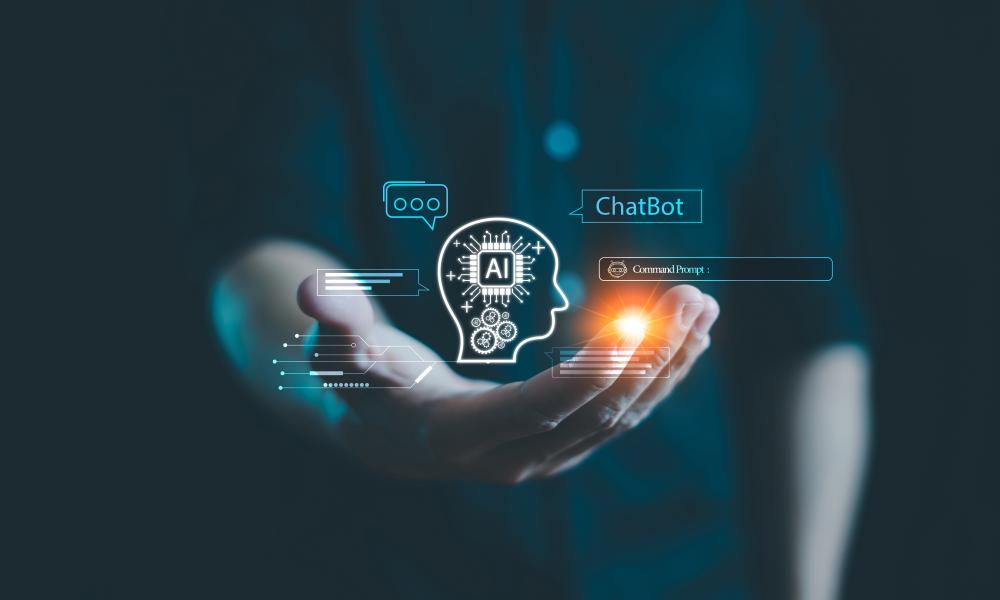
AI-Powered Chatbots are transforming the way businesses interact with customers. These virtual assistants, capable of handling a myriad of tasks, have become indispensable in today’s digital communication landscape. As a professional in the tech industry with over 20 years of experience at Bantech Solutions, I’ve witnessed firsthand the exponential growth in their application and sophistication.
At Bantech, we’ve developed chatbots that streamline operations for companies in industries ranging from healthcare to logistics. Chatbots are not merely about answering questions; they enhance customer experience, gather valuable insights, and even drive sales. Our solutions enable businesses to engage with customers 24/7, providing instant responses that improve satisfaction and loyalty.
These AI-Powered Chatbots operate on complex algorithms that allow them to understand queries and deliver relevant answers. They are more than just fancy tools; they represent a shift towards efficiency and personalization in customer interactions. The key lies in their ability to learn and adapt, becoming more accurate with each interaction.
How AI-Powered Chatbots Work
Creating an effective AI-Powered Chatbot involves several critical steps:
- Data Collection: Gather extensive data sets related to the customer queries and interactions.
- Algorithm Selection: Choose a suitable AI model that can learn from the data.
- Training: Use supervised learning to teach the chatbot how to interpret and respond to various inputs.
- Validation: Test the chatbot with real-world scenarios to ensure reliability and accuracy.
- Deployment: Integrate the chatbot into the desired platform for end-user interaction.
Each phase is crucial in developing a chatbot that aligns with specific business needs. At Bantech Solutions, we’ve refined this process to ensure that the chatbots we deliver are not only functional but also intuitive and efficient.
Benefits for Businesses
AI-Powered Chatbots offer numerous advantages that can lead to significant business growth:
- Cost Reduction: Automated interactions reduce the need for large customer service teams.
- 24/7 Availability: Providing consistent support around the clock increases customer satisfaction.
- Data Collection: Chatbots gather valuable insights that influence business strategies and decision-making.
In my experience, chatbots can increase efficiency and foster better customer relationships. Clients at Bantech frequently report a boost in customer engagement and satisfaction after implementing our AI solutions.
Common Challenges with AI Chatbots
Despite their benefits, AI-Powered Chatbots can face several challenges:
Understanding Context: While advanced, some chatbots struggle with complex inputs. This makes context-aware responses difficult, necessitating continuous improvement and learning.
Security and Privacy: Keeping customer data secure is paramount. Ensuring compliance with regulations like GDPR is crucial to avoid breaches and maintain trust.
At Bantech, we focus on overcoming these challenges by using state-of-the-art security measures and continuously updating our AI models to improve contextual accuracy.
Are AI-Powered Chatbots Reliable?
With advances in machine learning and natural language processing, AI-Powered Chatbots have become increasingly reliable. They can handle a wide array of tasks, from simple inquiries to complex problem-solving, with remarkable efficiency.
However, as with any technology, they are not infallible. Their reliability hinges on continuous monitoring and updates. At Bantech Solutions, we ensure that our chatbots are regularly refined, allowing them to meet the evolving demands of end-users effectively.
The Power of AI Integration Services
How AI Integrates with Existing Systems
- Needs Assessment: Understanding the client’s current systems and identifying specific areas where AI can add value.
- Technology Alignment: Selecting AI tools and technologies that complement the existing infrastructure.
- Implementation: Developing and deploying AI solutions with a focus on minimal disruption to current processes.
- Ongoing Support: Offering post-implementation support to ensure long-term success and adaptability.
Can Any Industry Benefit from AI Integration?
Tackling Challenges with AI Integration
- Data Privacy: Employing encryption and compliance with data protection laws.
- System Compatibility: Conducting thorough analyses to ensure seamless integration.
- Workforce Adaptation: Offering training to help employees embrace new technologies.
What Makes AI Integration Services Crucial?
Exploring the Potential of Web3 Development
As a seasoned technology professional, I’ve witnessed firsthand the digital evolution from Web 1.0 to the promising horizon of Web3. Web3 development is not just about implementing blockchain or harnessing decentralized technologies. It’s a revolution poised to redefine how businesses interact with technology, moving towards a user-centric, decentralized internet ecosystem. Web3 emphasizes decentralization, where blockchain technology mitigates the over-reliance on giants like Google and Amazon.
Our experience at Bantech Solutions with digital transformation showcases that industries are gearing up for this shift. From gaming to finance, Web3 development enables businesses to build transparent, secure, and scalable systems. Unlike the traditional Web 2.0, where data ownership is often compromised, Web3 fosters data sovereignty, where users regain control over their data, enhancing trust and privacy.
Why Does Web3 Development Matter?
In my 20+ years of technology work, I’ve often marveled at how each technological leap reshapes user expectations and business models. Web3 development matters because it introduces a decentralized framework, encouraging community governance and empowering users. This transformation is not just theoretical-it’s happening, with enterprises exploring decentralized finance (DeFi) and non-fungible tokens (NFTs) as new revenue streams.
Web3’s blockchain-backed architecture ensures transactions are transparent yet secure, a boon for industries that demand stringent compliance. The potential for smart contracts to automate processes and reduce human error is a game-changer in sectors like real estate and legal services. At Bantech, we continually integrate these advancements to offer clients competitive, forward-thinking solutions.
Consider the traditional system’s inherent limitations with scalability and privacy; these are precisely where Web3 shines. Personalized experiences become possible without compromising user data. With Web3, businesses can decentralize their operations, thus reducing single points of failure and increasing system resilience.
For companies like ours, Web3 development opens up new avenues for product ideation and custom software solutions. By leveraging technologies like blockchain and AI, we are crafting the tools that businesses need to stay ahead.
How Can Businesses Transition to Web3 Development?
Transitioning to Web3 can seem daunting, but with strategic steps, businesses can smoothly integrate this new paradigm:
- Assess Current Infrastructure: Evaluate existing systems to identify areas ripe for decentralization.
- Engage with Experts: Collaborate with technology partners like Bantech Solutions, who understand the nuances of blockchain and decentralized applications.
- Plan and Execute: Develop a phased approach, starting with pilot projects to demonstrate value and scalability.
- Educate and Train: Invest in the skills development of your workforce to handle new Web3 technologies effectively.
At Bantech, our strategy is rooted in a client-centric approach, ensuring that our solutions are not only innovative but also aligned with our clients’ business goals and visions.
What Challenges Does Web3 Development Face?
Despite its promise, Web3 development still faces hurdles that businesses must navigate. The high energy demands of blockchain technology are well-documented, raising sustainability concerns. Moreover, scalability remains a pressing issue, with blockchain networks like Ethereum occasionally struggling under high transaction volumes.
Another challenge is the current need for a regulatory framework. As governments and regulatory bodies scramble to keep up, businesses must stay vigilant and compliant, particularly in sectors like finance and healthcare. Yet these challenges are not insurmountable. By staying adaptable and informed, businesses can turn potential roadblocks into stepping stones.
As part of Bantech’s commitment to innovation, we continually seek solutions that address these challenges, such as exploring energy-efficient blockchain alternatives and advocating for industry standards in compliance.
How Does Community Play a Role in Web3 Development?
One of the most exciting aspects of Web3 development is the vital role communities play. Unlike the traditional hierarchical structures of Web 2.0, Web3 decentralized networks thrive on community participation and decision-making. This participatory model leads not only to a more balanced power dynamic but also to a source of innovation and creativity.
From open-source contributions to decentralized autonomous organizations (DAOs), communities are at the heart of Web3. This model empowers users to shape the direction of platforms they engage with, making them co-creators rather than mere consumers. Bantech Solutions believes in nurturing these communities, providing platforms that enable collaboration and shared growth.
In practice, fostering a robust community around your Web3 projects can lead to a resilient and innovative ecosystem. Encourage feedback, facilitate access to resources, and enable contribution, as these steps can transform users into advocates, driving your business further into this new digital age.
How do AI-Powered Chatbots enhance customer experience?

AI-Powered Chatbots have revolutionized customer interaction by providing instant, 24/7 support that caters to a range of customer needs. At Bantech Solutions, we’ve seen firsthand how these chatbots can significantly enhance customer engagement. Imagine, for instance, a customer trying to track a package late at night. Instead of waiting for business hours, the customer can interact with a chatbot that provides immediate updates and answers. These bots use natural language processing to understand and respond to queries effectively, learning from each exchange to become even more efficient. According to a study by Juniper Research, businesses could save over $8 billion annually by 2022 through chatbot integration. Have you considered how enhanced customer support could impact your business relationships and satisfaction levels?
What are the common misconceptions about AI-Powered Chatbots?
A common misconception is that chatbots are impersonal and incapable of handling complex tasks. However, the reality is quite different. At Bantech Solutions, we develop chatbots that are not just simple tools but integral parts of a customer engagement strategy, capable of understanding nuanced human emotions and queries. These chatbots also use machine learning to improve over time, becoming more adept at managing complex issues. Another myth is that they replace human jobs. Rather, they complement human efforts by managing routine inquiries, allowing employees to focus on more strategic tasks. It’s interesting to consider: how might your business evolve if routine tasks are automated, freeing up time for innovation?
How do AI Integration Services benefit various industries?
AI Integration Services offer versatile benefits across multiple sectors. For instance, in healthcare, AI can predict patient needs, optimizing resource allocation and improving patient care. Meanwhile, in logistics, AI algorithms enhance supply chain efficiency by predicting and mitigating potential disruptions. Bantech Solutions has leveraged AI to drive innovation in industries ranging from finance to real estate, tailoring solutions to the unique challenges of each domain. The introduction of AI often leads to decreased operational costs and increased efficiency–imagine a logistics network that uses AI to seamlessly reroute shipments based on real-time traffic data. As industries continue to adopt AI, what transformative changes can you envision in your field?
How does Web3 development transform business models?
Web3 development introduces a paradigm shift from centralized to decentralized systems, empowering community-driven business models. This approach not only democratizes data but also ensures transparency and security, fostering a new level of trust with consumers. Imagine a real estate platform using blockchain to automate contract verifications, effectively eliminating intermediary costs and streamlining transactions. At Bantech Solutions, we integrate Web3 technologies to create scalable, user-centric solutions that redefine traditional business operations. Over time, as more companies embrace this shift, we’re likely to see a landscape where users are not just consumers but active participants. How might your business innovate using the decentralized principles of Web3?
Resources
- edX – Visit the homepage of edX for a wide range of online courses and certifications.
- National Institute of Standards and Technology (NIST) – Explore the homepage of NIST for standards and technology resources.
- IBM – Access the homepage of IBM for information on AI technologies and solutions.
- The Institution of Engineering and Technology (IET) – Check out the homepage of IET for engineering and technology resources.
- World Wide Web Consortium (W3C) – Discover the homepage of W3C for web standards and development resources.