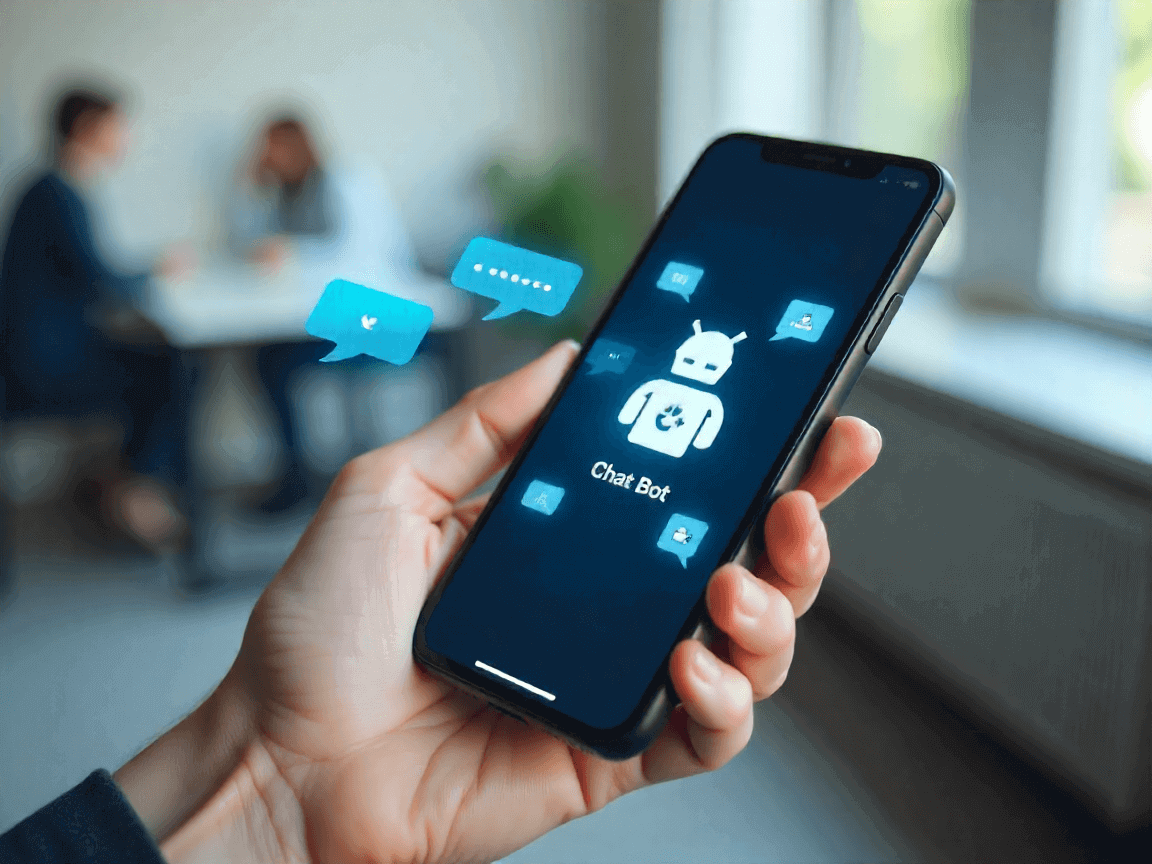

The rapid advancements in Artificial Intelligence (AI) have catalyzed a transformative era for digital customer interaction, automation, and business intelligence. AI-powered chatbots, fueled by powerful machine learning algorithms and innovative development methods, are no longer mere tools for scripted responses but sophisticated digital agents driving customer satisfaction, operational efficiency, and actionable analytics. In 2025, the synergy between machine learning, deep learning, and AI development continues to reshape industries—from healthcare and finance to retail and education. This article thoroughly investigates the state-of-the-art technologies, market trends, use cases, practical development approaches, and future opportunities of AI-powered chatbots, synthesizing insights from industry-leading research and application guides.
This evolving landscape has several key characteristics and developments worth highlighting to fully appreciate the scope and scale of AI-powered chatbots today:
- AI-powered chatbots represent a fusion of natural language processing and machine learning, leading to unprecedented levels of automation in customer service.
- In 2025, adoption of AI chatbots spans small businesses to global enterprises, showcasing versatility and scalability.
- Chatbots are no longer limited to simple troubleshooting; they generate insights, collect feedback, and support transaction processing.
- Research in adaptive learning enables chatbots to recognize slang, regional dialects, and evolving conversational styles.
- Regulatory bodies are increasingly developing ethical guidelines for chatbot deployment, emphasizing transparency and user consent.
- Companies view chatbots as a strategic investment, improving brand image and enabling differentiation in competitive markets.
- AI chatbots serve both external (customer-facing) and internal (employee-support) functions, covering knowledge bases, HR queries, and IT support.
- Integration with popular business platforms (Slack, Microsoft Teams, WhatsApp) accelerates cross-channel support and responsiveness.
- Real-world case studies illustrate dramatic reductions in wait times and improvements in customer loyalty.
From this foundation, let’s explore the latest market trends and the technological backbone powering modern chatbots.
Market Trends and Technological Foundations
In 2025, the market for AI-powered chatbots stands at an inflection point. Adoption rates are soaring, with global investments projected to exceed $10 billion, and nearly 80% of customer-facing businesses estimated to employ conversational AI technologies. Behind this surge lies the continuous refinement of machine learning models, the integration of advanced natural language processing (NLP), and the assimilation of deep learning frameworks. Chatbots are now capable of understanding context, interpreting sentiment, and delivering nuanced responses that mirror human interactions.
Machine learning algorithms empower chatbots to learn from historical conversations, user behavior, and feedback, enabling personalized customer experiences and predictive support. These bots utilize analytics engines that process real-time user data, detect patterns, and adjust conversation flows dynamically. Leading platforms like GPT-4 and Google Dialogflow illustrate how AI development pushes the boundaries of what chatbots can achieve—handling complex queries, multi-turn conversations, and industry-specific tasks.
Notably, sectors such as healthcare leverage AI chatbots for triage, scheduling, and instant health advice, while financial institutions deploy them for secure transactions and fraud monitoring. Analytics tools continuously measure engagement, satisfaction rates, sentiment scores, and business impact, providing actionable insights for organizational decision makers.
To better understand these technological shifts and market expansions, consider the following notable trends and innovations shaping the chatbot space:
- The market for conversational AI is expected to grow at a CAGR exceeding 20% through 2028.
- Major tech players, including Google, Microsoft, and Amazon, continue to push advancements in chatbot AI.
- Hybrid models combining machine learning with rule-based approaches improve accuracy across edge cases.
- Sentiment analysis and emotion detection allow chatbots to adapt tone and response style dynamically.
- Ongoing improvements in transfer learning facilitate rapid customization for new languages and domains.
- Analytics solutions deliver real-time dashboards tracking active sessions, escalation rates, and instant feedback.
- Visual recognition capabilities are being integrated for handling image and document-based interactions.
- Organizations deploy chatbots to automate survey collection, lead qualification, and personalized marketing campaigns.
- Cross-industry benchmarking identifies best practices for scaling and monitoring chatbot performance.
Understanding these market drivers, let’s delve into the step-by-step approach to building and deploying cutting-edge AI chatbots.
Building Modern AI Chatbots: Step-by-Step Guide
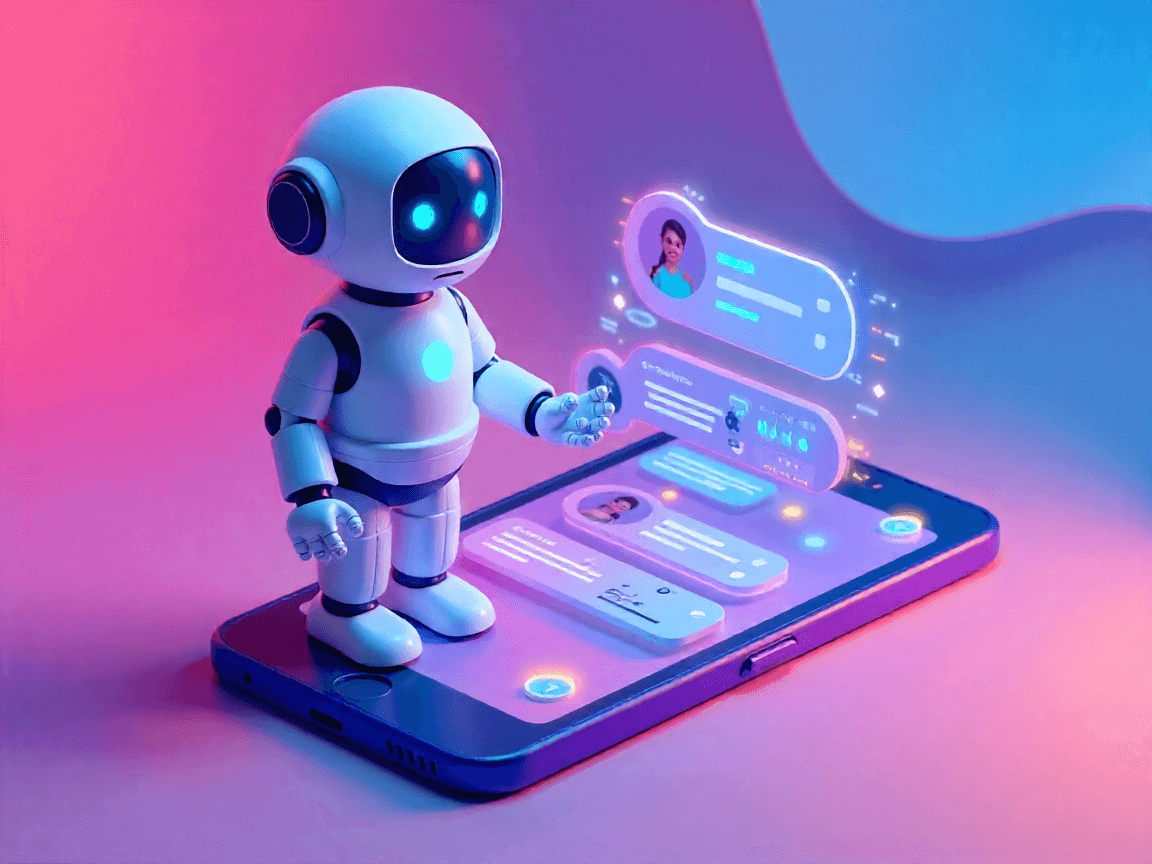
Developing an effective AI chatbot in 2025 is a systematic process that demands strategic planning, technical expertise, and user-centric design. The first step involves defining business objectives and identifying target user personas, which inform conversation flows and functionality. Leveraging machine learning, developers gather and preprocess historical data to train models capable of contextual understanding, language generation, and sentiment interpretation.
A typical development pipeline involves:
- Data Collection & Annotation: Curating relevant datasets covering broad linguistic variability.
- Model Selection & Training: Choosing between supervised, unsupervised, or hybrid approaches using frameworks like TensorFlow or PyTorch.
- Integration of NLP: Implementing transformers and sequence-to-sequence models for context-sensitive dialogue.
- Testing & Validation: Running A/B tests, evaluating confusion matrices, and adjusting against real-world interactions.
- Deployment & Monitoring: Integrating the chatbot with omnichannel platforms (web, mobile, social media), and establishing feedback loops.
The modern approach incorporates ethical AI, ensuring non-biased responses, respecting privacy, and facilitating transparency. Analytics dashboards track bot performance, accuracy, completion rates, and user satisfaction, providing continual improvement directions.
Use cases now span from customer onboarding, technical support, and personalized recommendations to internal knowledge management and workflow automation. Businesses that effectively harness machine learning for chatbot development gain competitive advantages—reducing operational costs, enhancing service quality, and scaling their digital presence.
These foundational steps are complemented by important best practices and technical considerations that enhance chatbot development success:
- Prioritize security and privacy throughout the chatbot development lifecycle; implement robust authentication and encryption.
- Incorporate feedback mechanisms that allow users to rate responses and suggest improvements.
- Preprocessing should address bias in data, ensuring diverse and representative training sets.
- Utilize cloud-based development environments for scalable deployment and continuous integration.
- Modular architecture enables easier updates, maintenance, and integration with third-party services.
- Test chatbots using multiple personas and stress-test conversation trees to identify limitations.
- Use conversational analytics to improve intent recognition and response relevance over time.
- Integrate multilingual support to expand reach and accessibility for global audiences.
- Collaborate with subject matter experts during data annotation to enhance domain-specific accuracy.
With the foundational process laid out, let’s examine the specific impacts and use cases driving industry transformation.
Industry-Specific Impacts and Use Cases
AI-powered chatbots are revolutionizing workflows and interactions across a spectrum of industries. In retail, chatbots streamline shopping experiences with dynamic product recommendations and real-time order updates. Healthcare applications range from patient triage and symptom checking to appointment scheduling and post-discharge follow-up, often integrating with electronic medical record systems for seamless communication.
In financial services, AI chatbots provide instant support for account queries, automate loan application processes, and enhance fraud detection through pattern recognition and predictive analytics. Education institutions use them for personalized learning paths, answering student queries, and automating administrative tasks.
These impact stories are underpinned by robust analytics—measuring response times, satisfaction scores, conversion rates, and retention. For instance, studies have demonstrated that organizations integrating advanced chatbots experience 25% higher customer satisfaction and 40% reduced support costs. Machine learning models filter spam, identify escalation triggers, and deliver insights for strategic planning, making chatbots an indispensable business asset.
As industries continue to digitalize, chatbots become gateways to integrating other emerging technologies—IoT devices, augmented reality, virtual assistants—amplifying value creation and user engagement.
The following examples illustrate how diverse industries are leveraging AI-powered chatbots to transform their operations and customer interactions:
- Retail chatbots can upsell, cross-sell, and handle abandoned cart scenarios automatically.
- Healthcare bots monitor patient adherence to prescribed regimens and trigger alerts for anomalies.
- Finance chatbots streamline onboarding, update users on regulatory changes, and assist in routine transactions.
- Educational bots offer individualized tutoring, track progress, and connect students to additional resources.
- Government agencies deploy chatbots for citizen queries, emergency notifications, and form processing.
- Manufacturing employs AI chatbots for inventory checks, supply chain status updates, and troubleshooting.
- Integration of chatbots with CRM and ERP systems boosts accuracy in data management and reporting.
- Bots equipped with speech synthesis support accessibility for visually impaired users.
- Analytics from chatbot interactions reveal consumer preferences, enabling targeted innovation.
While these functional achievements are impressive, the true innovation lies in emerging trends and future opportunities for AI-driven chatbot development.
Future Opportunities, Emerging Trends & Challenges
The future of AI chatbot development is brimming with potential—and challenges. Current research focuses on multimodal AI, allowing chatbots to interpret and respond to textual, vocal, and visual inputs. Augmented reality interfaces and voice assistants are merging with chatbot platforms, enabling immersive, conversational experiences in retail, healthcare, and beyond.
Generative AI is driving hyper-personalized content and recommendations, while collaborative bots—working alongside human agents—provide contextually rich assistance. However, challenges persist: data privacy, bias mitigation, security concerns, and ensuring transparency in automated decision-making are paramount for sustained adoption.
Advancements in federated learning and explainable AI aim to make conversations safer, more reliable, and comprehensible. The next-gen chatbots will be adaptive, empathetic, and highly integrated within enterprise ecosystems, supporting complex workflows and strategic decision making.
The future landscape holds powerful opportunities for developers, businesses, and consumers alike; organizations that invest in continuous AI development and machine learning expertise will be best positioned to capture value from these intelligent interfaces.
Looking forward, these emerging trends and challenges capture the dynamic and complex future landscape of AI chatbot development:
- Progress in multimodal AI broadens chatbot capabilities to combine text, voice, and visual inputs seamlessly.
- Real-time translation and localization open markets for international brands and e-commerce.
- Explainable AI features help users understand chatbot decisions, fostering greater trust and adoption.
- Federated learning enables decentralized data training, improving privacy and compliance.
- Use of generative adversarial networks (GANs) enhances chatbot creativity and context simulation.
- Integration with IoT allows chatbots to control devices, automate home/office environments, and gather sensor data.
- Regulatory requirements are evolving, requiring ongoing adaptation to new data governance standards.
- Collaboration between bots and human teams promotes complexity management and escalation handling.
- Next-wave innovation may transform chatbots into virtual colleagues, supporting decision making beyond support tasks.
Conclusion
AI-powered chatbots, underpinned by robust machine learning and ongoing artificial intelligence development, are at the heart of digital innovation in 2025. Their role spans customer satisfaction, workflow automation, actionable analytics, and strategic transformation across industries. By mastering emerging technologies, ethical development practices, and data-driven analytics, organizations can unlock the full potential of conversational AI.
To summarize, these strategic imperatives and actionable insights will guide organizations toward successful AI chatbot adoption and long-term value creation:
- Businesses must balance innovation with robust security, transparency, and ethical considerations.
- Monitoring and continual improvement remain critical for sustaining value from AI chatbot investments.
- Workforce upskilling—AI literacy and chatbot management—prepares organizations for deeper AI integration.
- Community and open-source collaboration accelerates best practice sharing and technological evolution.
- User feedback is a vital driver of new features, guiding chatbot enhancements and future roadmaps.
- Successful chatbot projects leverage cross-functional teams, linking IT, operations, marketing, and support.
- The horizon for AI-powered chatbots promises greater personalization, empathy, and strategic importance across the global business landscape.
As we look forward, business leaders and developers must focus on responsible innovation, continual learning, and adaptability—ushering in a future where chatbots serve not only as support agents, but as indispensable partners in enterprise growth and customer engagement.
FAQs
AI-powered chatbots are digital assistants that communicate with users using artificial intelligence and natural language processing. Machine learning algorithms allow chatbots to understand user queries, learn from interactions, and constantly improve their responses based on feedback and new data.