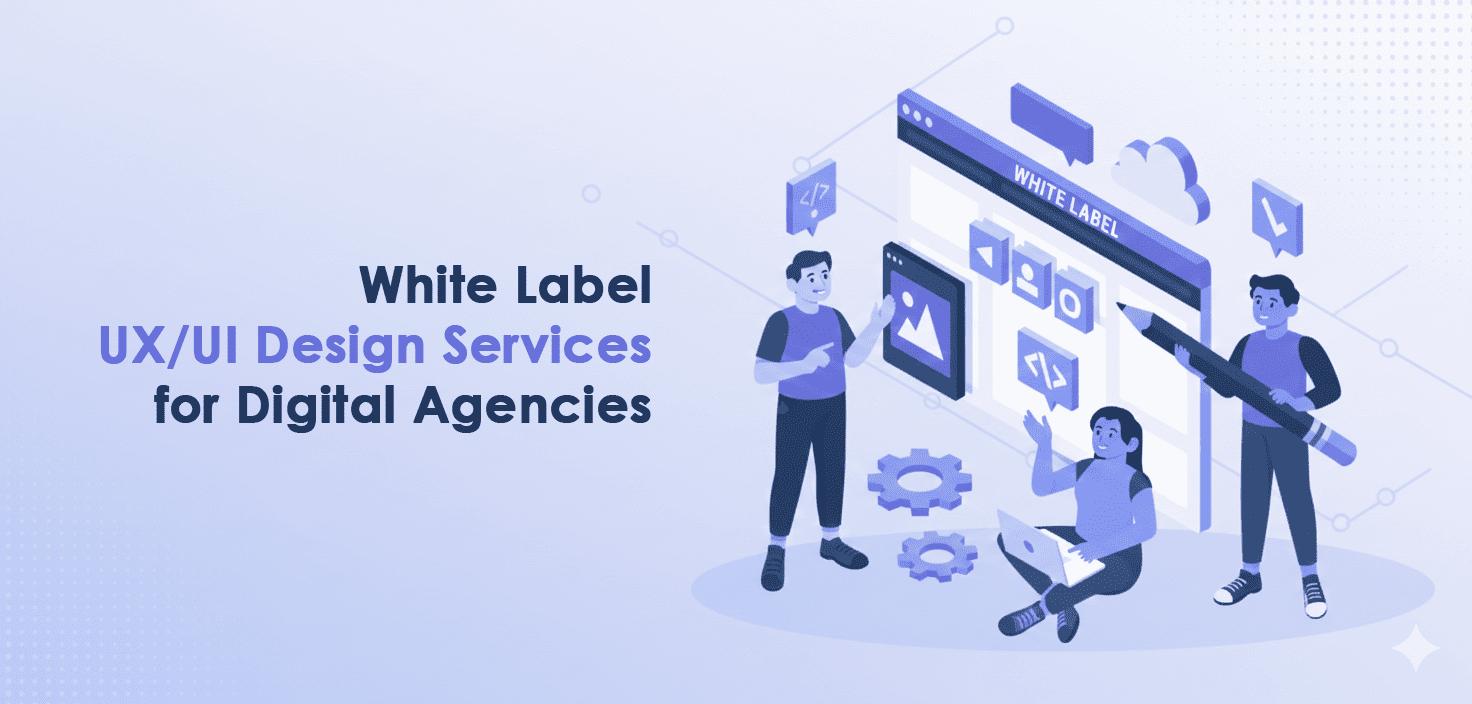

Introduction: Why UX/UI Has Become an Agency Scaling Constraint
Over the past decade, UX and UI design have shifted from being “nice-to-have” visual layers to core business drivers. Today, clients don’t judge digital products solely on functionality — they judge them on usability, clarity, accessibility, and emotional resonance. Whether it’s a SaaS dashboard, a conversion-focused marketing site, or a mobile app MVP, user experience is now inseparable from business outcomes.
For digital agencies and product-focused startups across the US, UK, Canada, Australia, and New Zealand, this shift has created a paradox.
On one hand, demand for sophisticated UX/UI design has never been higher. On the other hand, building and maintaining an in-house UX team that can handle fluctuating workloads, diverse industries, and evolving design standards has become increasingly difficult. Senior UX designers are expensive, hiring cycles are slow, and underutilization between projects silently erodes margins.
This is where white label UX/UI design services have emerged as a strategic solution — not as a cost-cutting shortcut, but as a scalable delivery model aligned with how modern agencies actually operate.
Instead of hiring full-time designers for unpredictable pipelines or relying on inconsistent freelancers, agencies are partnering with white label UX/UI teams that work invisibly behind the scenes, fully aligned to the agency’s brand, process, and client expectations.
The result?
Agencies stay lean, protect margins, and deliver consistently high-quality design — without compromising ownership, confidentiality, or client trust.
What Are White Label UX/UI Design Services?
At its core, white label UX/UI design services refer to a delivery model where a specialized external design team executes UX and UI work on behalf of an agency, while remaining completely invisible to the end client.
The agency retains:
- Full brand ownership
- Client communication control
- Pricing authority
- Intellectual property rights
The white label partner focuses purely on execution excellence.
This model is fundamentally different from outsourcing design to freelancers or marketplaces. White label UX/UI services are structured, process-driven, and designed specifically for agency workflows, not one-off gigs.
White Label UX/UI Design vs Traditional Outsourcing
Traditional outsourcing often fails agencies because it’s optimized for vendors — not for client-facing delivery.
White label UX/UI design services, by contrast, are built around agency realities:
| Aspect | Traditional Outsourcing | White Label UX/UI |
| Client visibility | Vendor often visible | Partner remains invisible |
| Brand alignment | Limited | Fully aligned to agency |
| Process maturity | Inconsistent | Structured & repeatable |
| Accountability | Project-based | Partnership-driven |
| Scalability | Rigid | Elastic |
This distinction matters.
Agencies don’t just need designers — they need predictable delivery, design governance, and process continuity across multiple client accounts.
How White Label UX/UI Design Services Work in Practice
For most agencies, the white label UX/UI engagement typically follows a clear and repeatable structure:
1. Discovery & Alignment
The agency aligns the white label partner on:
- Brand standards
- Target industries
- UX philosophy
- Tools (Figma, FigJam, Miro, Jira, Slack, etc.)
2. Embedded Design Execution
The white label team operates as an extension of the agency, handling:
- UX research synthesis
- User flows and information architecture
- Wireframes and prototypes
- UI design systems
- Design handoff to developers
3. Invisible Collaboration
All outputs are delivered:
- Under the agency’s name
- Using agency-defined communication protocols
- With full confidentiality and IP protection
From the client’s perspective, nothing changes — except the quality and consistency of design output.
Why UX Design for Agencies Is Harder Than Ever
Many agency leaders assume UX hiring challenges are temporary. In reality, structural forces are at play.
Rising UX Expectations
Clients today expect:
- Data-informed UX decisions
- Accessibility compliance
- Mobile-first design
- Consistent design systems
- Conversion-optimized flows
This requires multi-disciplinary UX expertise, not just visual design.
Talent Cost Inflation
In Western markets, senior UX/UI designers command premium salaries — often without guaranteeing consistent utilization. For agencies running multiple mid-sized accounts, this creates cost inefficiencies that compound over time.
Pipeline Volatility
Agency work is rarely linear. One month brings three product redesigns; the next month slows down. Hiring full-time UX talent for fluctuating demand is a structural mismatch.
White label UX/UI design services solve this mismatch by aligning capacity with demand, not payroll with hope.
The Role of White Label UI Designers in Modern Agencies
White label UI designers are no longer just “execution resources.” In mature partnerships, they contribute to:
- Design system standardization
- UX consistency across multiple client brands
- Faster iteration cycles
- Improved developer handoffs
- Reduced rework and scope creep
For agencies offering:
- SaaS UX design
- Website UX optimization
- CRO-driven UI redesigns
- MVP and startup product design
…white label UI designers become a core operational asset, not a backup option.
Why India Has Become Central to White Label UX/UI Delivery
India’s role in global design outsourcing has evolved significantly.
What was once perceived as purely cost-driven outsourcing has matured into capability-driven partnerships, particularly in UX/UI.
Key reasons agencies increasingly source white label UX/UI design services from India include:
- Deep, specialized UX talent pools
- Strong familiarity with Western product standards
- Significant cost-to-skill advantage
- Mature delivery processes
- Time zone overlap with structured communication
However, not all India-based partners are equal.
The real advantage emerges when agencies work with hybrid partners that combine Indian execution strength with Western communication, governance, and quality expectations.
This is where partners like Bantech Solutions differentiate themselves — by operating not as offshore vendors, but as long-term strategic design partners for Western agencies.
Why Demand for White Label UX/UI Design Services Is Accelerating
Why White Label UX/UI Design Services Are Growing Rapidly
The demand for white label UX/UI design services is not a short-term trend driven by cost pressure alone. It is the result of structural changes in how digital agencies operate, how clients buy services, and how digital products are evaluated in competitive markets.
Across the US, UK, Canada, Australia, and New Zealand, agencies are facing a common reality:
UX quality is no longer a differentiator — it is a baseline expectation. Agencies that fail to deliver consistently strong UX/UI outcomes increasingly lose deals, retainers, and long-term client trust.
This has pushed agencies to rethink how UX design is sourced, scaled, and governed.
Trend 1: UX Has Become a Revenue-Critical Capability
In earlier agency models, UX was often treated as a supporting discipline — something layered on top of development or visual design. That model no longer works.
Today:
- SaaS buyers evaluate products within minutes
- Conversion rates are directly tied to UX clarity
- Poor UX leads to churn, not just dissatisfaction
- Investors scrutinize UX maturity in startups
As a result, agencies are expected to deliver:
- Research-backed UX decisions
- Clear information architecture
- Consistent design systems
- Measurable UX improvements
This level of maturity requires dedicated UX expertise, not generalist designers.
White label UX/UI design services allow agencies to offer this depth without building a full in-house UX department, which is costly, slow, and difficult to scale.
Trend 2: Talent Scarcity and Cost Inflation in Western Markets
One of the strongest forces accelerating white label adoption is UX talent economics.
In Western markets:
- Senior UX designers command premium salaries
- Hiring cycles often exceed 8–12 weeks
- Retention is increasingly difficult
- Underutilization between projects drains margins
For agencies, this creates a paradox:
They need senior UX capability to win deals — but cannot justify full-time hires for fluctuating pipelines.
White label UX/UI design services solve this by offering:
- Immediate access to senior and mid-level UX designers
- Flexible engagement models (project-based, retainer, or dedicated)
- Cost predictability
- Zero long-term payroll risk
This shift is particularly visible among agencies transitioning from project revenue to retainer-driven models, where consistent delivery matters more than sporadic peaks.
Trend 3: Agencies Are Moving Toward Scalable Delivery Models
Modern agencies are no longer optimizing purely for creative output — they are optimizing for operational scalability.
This includes:
- Standardized delivery processes
- Predictable margins
- Faster onboarding of new clients
- Reduced dependency on individual hires
White label UX/UI design services fit naturally into this evolution.
By working with white label UI designers who already operate within mature design systems, agencies can:
- Standardize UX workflows
- Reduce onboarding friction
- Improve delivery speed across accounts
- Maintain consistent quality even during growth spurts
This is especially important for agencies managing multiple parallel client accounts across SaaS, web, mobile, and eCommerce.
Trend 4: Client Expectations Are Rising Across US, UK, CA, AU & NZ
Client sophistication has increased dramatically.
Across Western markets, clients now expect agencies to:
- Justify UX decisions with logic and data
- Design for accessibility and inclusivity
- Deliver mobile-first experiences by default
- Align UX with business KPIs
- Maintain brand consistency across platforms
For startups and scale-ups, UX is often tied directly to:
- Fundraising outcomes
- Product adoption
- Market differentiation
For agencies, failing to meet these expectations risks:
- Scope creep
- Reduced trust
- Shorter client lifecycles
White label UX/UI design services help agencies meet these expectations consistently, without burning out internal teams or overextending leadership bandwidth.
Trend 5: India’s Role Has Shifted From Cost Savings to Capability
India’s design outsourcing story has evolved significantly.
While cost efficiency remains a factor, agencies increasingly choose India-based partners because of:
- Large pools of UX/UI specialists
- Experience working with Western SaaS and agency clients
- Familiarity with global UX standards
- Mature delivery processes
However, agencies have also learned that not all outsourcing models deliver the same results.
Pure offshore models often fail due to:
- Communication gaps
- Misaligned expectations
- Lack of UX governance
- Inconsistent quality
This has led to the rise of hybrid white label UX/UI partners — firms that combine:
- India-based design execution
- Western-style communication standards
- Structured QA and review processes
- Long-term partnership orientation
A good example of this hybrid approach is how Bantech Solutions structures its white label UX/UI services:
https://www.bantechsolutions.com/white-label-ux-ui-design-services-614423/
This model gives agencies the best of both worlds — execution efficiency without sacrificing quality, clarity, or control.
Trend 6: UX Is Becoming a Retainer-Led Service, Not a One-Off
Another key driver behind the growth of white label UX/UI design services is the shift from one-time UX projects to ongoing UX retainers.
Agencies increasingly offer:
- Continuous UX optimization
- CRO-driven design iterations
- Design system maintenance
- Feature-level UX enhancements
These recurring services require:
- Ongoing UX capacity
- Consistent design knowledge
- Stable delivery teams
Hiring full-time designers for each retainer is inefficient. Freelancers lack continuity. White label UX/UI teams provide the ideal middle ground — stable, scalable, and deeply integrated.
Why Agencies Prefer Strategic Partners Over Vendors
As UX becomes mission-critical, agencies are moving away from transactional vendors and toward strategic white label partners.
The difference is subtle but important.
A strategic white label UX/UI partner:
- Thinks in terms of long-term agency growth
- Understands agency-client dynamics
- Aligns with brand and positioning
- Improves over time through shared learnings
This is why agencies increasingly evaluate partners not just on portfolio quality, but on:
- Process maturity
- Communication discipline
- Confidentiality standards
- Ability to scale with the agency
Bantech Solutions positions itself precisely in this category, offering agencies a long-term, hybrid UX/UI delivery model designed specifically for Western markets:
https://www.bantechsolutions.com/
Strategic Benefits of White Label UX/UI Design Services

Why White Label UX/UI Design Services Are a Growth Multiplier
As agencies scale, they face a critical pivot: how do you deliver consistently excellent design without building and managing large internal teams?
White label UX/UI design services answer this by offering a turnkey design extension that feels like an in-house team but operates behind the scenes, fully aligned with the agency’s brand and client expectations.
Here’s how that translates into strategic advantage.
Benefit 1: Cost Efficiency Without Compromising Quality
One of the strongest reasons agencies adopt white label UX/UI design services is predictable cost structures.
Hiring senior UX designers in Western markets (especially the US, UK, Canada, Australia, and New Zealand) often costs significantly more than engaging an equivalent skill level through a white label partner. According to industry salary data, senior UX designers in the US often command six-figure salaries with benefits and overhead (see Glassdoor UX Salary Data).
By contrast, partnering with a white label team allows agencies to:
- Pay only for active delivery hours
- Avoid recruitment and retention costs
- Scale up or down with demand
- Allocate budgets to revenue-generating work
This is not simply “offshoring for cheap labor.” It’s a capital allocation strategy — spend where client value is created and remove fixed payroll liabilities.
External Resource: For UX designer salary benchmarks, see this overview on Glassdoor (https://www.glassdoor.com/Salaries/ux-designer-salary-SRCH_KO0,11.htm).
Benefit 2: Speed to Market and Faster Delivery Cycles
Project timelines matter. In competitive pitches and client deliverables, slow UX delivery can be a liability.
White label UX/UI design services provide agencies with:
- Immediate capacity when you need it
- Flexible teams that ramp up quickly
- Faster iteration cycles
- Reduced design bottlenecks
Because white label teams work routinely across multiple clients, their internal processes tend to be leaner and more efficient than ad-hoc internal hires or freelancers.
External Resource: The Nielsen Norman Group consistently finds that usability improvements implemented early yield higher ROI — making speed a design advantage (https://www.nngroup.com/articles/roi-usability/).
Benefit 3: Elastic Scalability for Fluctuating Pipelines
Unlike full-time hires, white label UX/UI design services allow agencies to scale capacity up and down easily based on demand.
This elasticity is vital in:
- Retainer-driven agencies
- Project-based work with variable workloads
- Seasonal or campaign-heavy workflows
- Startups and product pipelines with sporadic design bursts
Agencies can maintain core internal staff for strategy and account leadership while outsourcing execution and delivery peaks to a white label partner.
This reduces both risk and unused talent cost — a hidden drain in traditional agency staffing models.
Benefit 4: Access to Specialized UX and UI Skill Sets
UX and UI are broad disciplines. A single in-house hire rarely covers:
- UX research and synthesis
- Information architecture
- Interaction design
- UI design systems
- Accessibility standards
- Conversion rate optimization (CRO)
White label teams typically comprise specialists rather than generalists, which means:
- Higher quality deliverables
- Greater design depth
- Ability to support diverse clients (SaaS, eCommerce, mobile, enterprise)
External Resource: Material from the Interaction Design Foundation shows the range of UX specializations (https://www.interaction-design.org/literature/topics/ux-design).
This depth lets agencies expand service offerings without building a full internal curriculum of UX skills.
Benefit 5: Margin Protection and Predictable Delivery
Margins are the lifeblood of healthy agencies.
Unlike freelancers — who may underdeliver, miss deadlines, or disappear — white label partners:
- Operate under agreed SLAs (Service Level Agreements)
- Maintain quality standards
- Provide structured feedback loops
- Offer clear delivery milestones
This consistency allows agencies to:
- Price retainers more accurately
- Protect profit margins
- Ensure delivery commitments are met
Thus, white label UX/UI design services are not just cheaper — they reduce delivery risk, which is often the unseen cost eat in agencies.
UX Design for Agencies: Comparing Delivery Models
To better understand the strategic advantage of white label partnerships, let’s compare common engagement models:
| Aspect | In-House Team | Freelancers | White Label UX/UI Services |
| Cost Predictability | Low | Medium | High |
| Scalability | Rigid | Unpredictable | Elastic |
| Quality Consistency | Medium | Variable | High |
| Recruitment Overhead | High | None | None |
| Delivery Governance | Medium | Low | High |
| Client Confidence | Medium | Low | High |
In-House Teams
Pros: Strong internal culture, direct oversight
Cons: High cost, limited flexibility, recruitment risk
Freelancers
Pros: Low upfront cost, quick engagement
Cons: Quality inconsistency, limited accountability
White Label UX/UI Services
Pros: Built for agencies, predictable delivery, scalable
Cons: Requires governance alignment
In practice, many agencies find the most balanced model is a hybrid — retain a small core internal design leadership team and scale execution through white label partners.
How White Label UI Designers Work Within Agency Workflows
The success of any white label partnership comes down to process alignment and integration.
Top agencies choose white label partners who understand:
- Creative briefs and discovery methods
- UX research synthesis
- Design system standards
- Collaboration in tools like Figma, Miro, Figure Jam, or Zeplin
- Version control and design handoffs
This means white label UI designers don’t disrupt workflows — they enhance them.
To achieve this, strong partners like Bantech Solutions structure collaborations around:
- Shared communication channels (Slack, Teams)
- Weekly design reviews
- Clear feedback cycles
- Documentation and knowledge transfers
For a deeper look at how Bantech structures its UX/UI offerings, visit https://www.bantechsolutions.com/services/ui-ux-design/
Case Examples Where White Label UX/UI Makes a Difference
Example 1: SaaS Product Launch
An agency won a new SaaS client requiring full UX research, prototypes, and UI system creation in 8 weeks.
Challenge: Internal team was at capacity.
Solution: White label UX/UI design services filled gaps, delivered prototypes ahead of schedule, and enabled the agency to focus on client strategy and product roadmap alignment.
Result: Satisfied client, strong retention, and expanded engagement.
Example 2: Marketing Site Overhaul
A digital marketing agency needed to revamp multiple client sites simultaneously with UX optimization to lift conversion metrics.
Challenge: Multiple concurrent design demands.
Solution: Scalable delivery through white label UI designers.
Result: Faster turnaround, consistent quality, and higher campaign performance.
These scenarios are common across Western markets, where agencies are under pressure to deliver both quality and speed.
Cost Benchmarking (High-Level)
Here’s a simplified view of how cost structures typically compare:
| Model | Typical Monthly Cost | Scalability |
| Senior In-House UX Designer (US) | $8,000–$12,000+ | None |
| Freelance UX/UI Designer | $4,000–$10,000 | Variable |
| White Label UX/UI Design Partner | $5,000–$9,000 (flexible) | Elastic |
Note: Actual costs vary by scope, experience, urgency, and geography.
White label partners often deliver comparable quality at more predictable costs — which directly protects agency margins.
Why Agencies Prefer Long-Term Partners Over One-Off Vendors
Today’s leading agencies view design delivery as a strategic capability, not a commodity.
Strategic partners:
- Know the agency’s client base
- Understand brand standards
- Anticipate delivery needs
- Improve efficiency over time
This long-term view is very different from ad-hoc outsourcing or gig work. And it’s precisely why agencies seeking growth choose partners like Bantech Solutions — not just suppliers.
Learn more about Bantech’s white label engagement models at https://www.interaction-design.org/literature/topics/ux-design
How Agencies Successfully Implement White Label UX/UI Design Services
Implementing White Label UX/UI Design Services the Right Way
Adopting white label UX/UI design services is not simply about “outsourcing design.” When done poorly, it introduces friction, quality risks, and delivery delays. When implemented correctly, it becomes a repeatable, scalable operating model that strengthens an agency’s delivery engine.
The difference lies in process integration, governance, and expectations — not geography.
This phase focuses on how agencies should operationalize white label UX/UI design services to achieve long-term success.
Step 1: Clarify What You Are Outsourcing — and What You Are Not
One of the most common mistakes agencies make is outsourcing thinking instead of execution.
High-performing agencies typically retain:
- Client strategy and account ownership
- UX vision and success metrics
- Stakeholder communication
- Final approval authority
White label UX/UI design services should primarily handle:
- UX research synthesis (not stakeholder interviews unless specified)
- Wireframes and user flows
- UI design and design systems
- Iterative design execution
- Developer handoffs
This separation ensures:
- Strategic control remains in-house
- Design execution scales predictably
- Accountability stays clear
This approach aligns with UX governance best practices outlined by the Nielsen Norman Group:
https://www.nngroup.com/articles/ux-governance/
Step 2: Standardize Your UX Process Before Scaling It
White label partnerships work best when agencies already have — or are willing to define — a repeatable UX process.
Before onboarding a white label UX/UI partner, agencies should document:
- Discovery inputs and UX brief formats
- Wireframing standards
- UI system principles
- Accessibility requirements
- Review and feedback cycles
This doesn’t need to be complex. Even a lightweight UX playbook dramatically reduces friction and rework.
Google’s UX design principles offer a useful reference for standardization:
https://design.google/principles/
Agencies that skip this step often blame the partner when the real issue is internal ambiguity.
Step 3: Integrate White Label UI Designers Into Existing Tools
White label UX/UI design services should integrate seamlessly into your existing workflow — not introduce parallel systems.
Most agencies already use:
- Figma for design
- FigJam or Miro for workshops
- Jira, ClickUp, or Asana for delivery
- Slack or Microsoft Teams for communication
White label UI designers should operate inside these tools, following the same conventions as internal staff.
Figma’s own collaboration documentation highlights why shared design environments improve speed and consistency:
https://www.figma.com/best-practices/
Tool alignment ensures:
- Faster onboarding
- Clear version control
- Transparent progress
- Easier developer handoff
Step 4: Establish UX Governance and Review Cadence
UX quality does not scale automatically — it must be governed.
Agencies that succeed with white label UX/UI design services typically implement:
- Weekly design review calls
- Defined acceptance criteria
- Clear feedback ownership
- UX quality benchmarks
This governance prevents:
- Design drift
- Inconsistent UI patterns
- Misaligned assumptions
- Scope creep
According to McKinsey, organizations that embed design governance outperform competitors in both revenue growth and customer satisfaction:
https://www.mckinsey.com/capabilities/mckinsey-design/our-insights/the-business-value-of-design
White label partners should welcome this structure — not resist it.
Step 5: Start With a Pilot Before Long-Term Commitment
Rather than committing immediately to large retainers, agencies should begin with:
- A single UX audit
- A limited redesign
- One SaaS feature flow
- A short sprint-based engagement
This allows agencies to evaluate:
- Communication quality
- Design maturity
- Feedback responsiveness
- Timeline reliability
Once trust is established, expanding into monthly UX retainers or dedicated designer models becomes far easier and lower risk.
This phased approach aligns with vendor-risk best practices recommended by Gartner-style procurement frameworks (summarized here):
https://www.cio.com/article/403122/how-to-manage-outsourcing-risk.html
Step 6: Align on Confidentiality, IP, and White Label Boundaries
For agencies, white label integrity is non-negotiable.
Any white label UX/UI design services engagement should clearly define:
- IP ownership (agency retains full rights)
- Non-disclosure agreements
- Non-compete clauses
- No direct client communication
These safeguards protect:
- Agency reputation
- Client trust
- Long-term account value
Agencies working with regulated clients (fintech, healthcare, SaaS) should ensure partners understand data handling best practices, even when only working with design artifacts.
General guidance on IP protection in outsourcing can be found here:
https://www.wipo.int/sme/en/ip_business/outsourcing.htm
Step 7: Move From Projects to UX Retainers
The real leverage of white label UX/UI design services emerges when agencies shift from project-based usage to retainer-based models.
Retainers enable:
- Continuous UX optimization
- Faster iteration cycles
- Deeper product understanding
- Better design consistency
Common retainer structures include:
- Monthly UX design hours
- Dedicated UX/UI designer allocation
- POD-based design teams
According to research from the Interaction Design Foundation, continuous UX improvement leads to stronger user retention and product performance:
https://www.interaction-design.org/literature/article/why-ux-design-is-important
White label teams are uniquely suited for this model because they provide stability without payroll lock-in.
Common Implementation Mistakes to Avoid
Agencies that struggle with white label UX/UI design services often make predictable errors:
Treating the Partner Like a Freelancer
White label teams require context, documentation, and governance — not ad-hoc instructions.
Expecting Strategy Without Direction
UX strategy must be led internally unless explicitly scoped.
Ignoring Time Zone Overlap Planning
Even hybrid models require planned overlap for reviews and collaboration.
Over-Optimizing for Cost
The cheapest partner often becomes the most expensive through rework and churn.
These pitfalls are well documented in outsourcing research across creative and technology disciplines.
Why Hybrid Partners Outperform Pure Offshore Models
Pure offshore outsourcing often fails agencies due to:
- Weak communication
- Misaligned UX maturity
- Limited accountability
Hybrid partners — combining Indian execution with Western communication standards — mitigate these risks.
This model allows agencies to:
- Maintain UX leadership locally
- Scale execution globally
- Preserve quality and consistency
This is the model used by Bantech Solutions for its white label UX/UI design services:
https://www.bantechsolutions.com/white-label-ux-ui-design-services-614423/
It aligns cost efficiency with delivery maturity — a combination increasingly preferred by Western agencies.
Pricing Models, Commercial Structures & Long-Term ROI
Understanding Pricing for White Label UX/UI Design Services
One of the most common questions agencies ask when exploring white label UX/UI design services is not whether it works — but how pricing should be structured to protect margins while remaining competitive for clients.
The answer depends on how mature the agency’s delivery model is and how UX is positioned within its service mix.
High-performing agencies treat UX not as a cost center, but as a revenue-enabling capability.
Common Pricing Models Used by Agencies
1. Fixed-Scope UX/UI Projects
This model works best for:
- Website redesigns
- MVP launches
- UX audits
- One-off SaaS features
How it works
- Agency defines UX scope upfront
- White label UX/UI design services are priced per project
- Clear deliverables and timelines
Pros
- Easy to sell to clients
- Simple budgeting
- Clear scope control
Cons
- Less flexibility
- Requires strong discovery upfront
This model aligns with best practices around scope clarity and UX planning outlined by Nielsen Norman Group:
https://www.nngroup.com/articles/project-based-ux/
2. Monthly UX/UI Retainers (Most Strategic)
Retainers are where agencies unlock the highest long-term value from white label UX/UI design services.
Common retainer use cases:
- Ongoing UX optimization
- CRO-driven UI improvements
- Feature iteration for SaaS products
- Design system maintenance
How it works
- Agency sells a monthly UX retainer to the client
- White label UX/UI partner provides dedicated capacity
- Work flows continuously without re-scoping
Why retainers win
- Predictable revenue
- Stronger client retention
- Deeper UX understanding over time
- Higher agency lifetime value (LTV)
According to research summarized by Forrester, continuous UX investment significantly improves customer retention and product adoption:
https://www.forrester.com/blogs/customer-experience-drives-revenue-growth/
3. Dedicated White Label UX/UI Designers
This model is ideal for:
- Agencies with steady pipelines
- Product studios
- SaaS-focused agencies
- Scale-ups managing multiple accounts
How it works
- Agency reserves a full-time or part-time designer
- Designer works exclusively for the agency
- Operates like an internal team member
Pros
- Maximum continuity
- Deep product knowledge
- Faster delivery cycles
Cons
- Requires consistent workload
This model is especially effective when paired with a hybrid partner that provides governance, QA, and backup capacity.
Cost Benchmarks: What Agencies Typically See
While exact pricing varies by experience level, region, and scope, the relative cost structure is consistent across markets.
High-Level Monthly Cost Comparison
| Model | Approx. Monthly Cost | Risk Profile |
| Senior In-House UX Designer (US/UK) | $8,000–$12,000+ | High |
| Freelance UX/UI Designer | $4,000–$10,000 | Medium |
| White Label UX/UI Partner | $5,000–$9,000 (flexible) | Low |
These benchmarks align with publicly available salary and contractor data:
- Glassdoor UX salary data: https://www.glassdoor.com/Salaries/ux-designer-salary-SRCH_KO0,11.htm
- Upwork UX freelancer rate overview: https://www.upwork.com/hire/ux-designers/
The key difference is risk exposure. White label UX/UI design services reduce:
- Hiring risk
- Attrition risk
- Underutilization cost
- Delivery inconsistency
How Agencies Price White Label UX/UI Services to Clients
Agencies rarely pass through white label costs directly. Instead, they package UX strategically.
Common pricing approaches include:
UX as a Standalone Line Item
- Transparent UX discovery and design pricing
- Works well for SaaS and enterprise clients
UX Bundled With Development
- Simplifies client buying decisions
- Increases perceived value
- Protects margins
UX as a Retainer Add-On
- Adds recurring revenue
- Strengthens client lock-in
- Increases account stickiness
McKinsey research shows that organizations with strong design practices outperform competitors in revenue growth and shareholder returns:
https://www.mckinsey.com/capabilities/mckinsey-design/our-insights/the-business-value-of-design
Agencies that internalize this insight price UX accordingly — not as a commodity, but as a strategic lever.
ROI: Why White Label UX/UI Design Services Pay Off Long Term
The ROI of white label UX/UI design services is not limited to cost savings.
Agencies typically see returns in four areas:
1. Higher Win Rates
Stronger UX proposals and design credibility improve pitch outcomes.
2. Better Client Retention
Clients stay longer when UX continuously improves performance.
3. Operational Stability
Predictable delivery reduces internal stress and leadership burnout.
4. Margin Expansion
Lower fixed costs + scalable delivery = healthier margins.
UX ROI is well documented across industries. Nielsen Norman Group estimates usability improvements can generate returns far exceeding their cost:
https://www.nngroup.com/articles/roi-usability/
Why Agencies Are Moving Away From Freelancers
Freelancers still play a role, but agencies increasingly recognize their limitations at scale:
- Inconsistent availability
- Limited accountability
- Knowledge loss between projects
White label UX/UI design services offer:
- Team continuity
- Process discipline
- Long-term knowledge retention
This makes them better suited for agencies serving multiple concurrent clients, particularly across SaaS, fintech, and digital products.
Why a Hybrid India-Based Partner Is a Competitive Advantage
Outsourcing to India works best when it is structured and hybrid, not transactional.
Pure offshore models fail due to:
- Communication gaps
- Weak UX governance
- Cultural misalignment
Hybrid partners solve this by combining:
- India-based execution
- Western communication standards
- Structured review processes
- Long-term partnership mindset
This approach allows agencies to benefit from India’s UX talent density without sacrificing quality or control.
Bantech Solutions follows this hybrid model for white label UX/UI delivery:
https://www.bantechsolutions.com/white-label-ux-ui-design-services-614423/
Final Conclusion
White Label UX/UI Design Services as a Strategic Agency Asset
White label UX/UI design services are no longer a tactical workaround for capacity issues. They have become a core operational strategy for agencies that want to scale sustainably, protect margins, and deliver consistently high-quality digital experiences.
For agencies in the US, UK, Canada, Australia, and New Zealand, the question is no longer whether to outsource UX/UI — but how to do it intelligently.
The most successful agencies:
- Retain UX strategy and client leadership internally
- Scale execution through trusted white label partners
- Invest in governance, process, and long-term collaboration
This model enables growth without fragility.
When executed through a hybrid partner that understands Western agency expectations, UX maturity, and confidentiality requirements, outsourcing becomes a competitive advantage, not a risk.
Bantech Solutions positions itself within this strategic space — not as a design vendor, but as a long-term white label UX/UI partner built to support agency growth over time:
https://www.bantechsolutions.com/