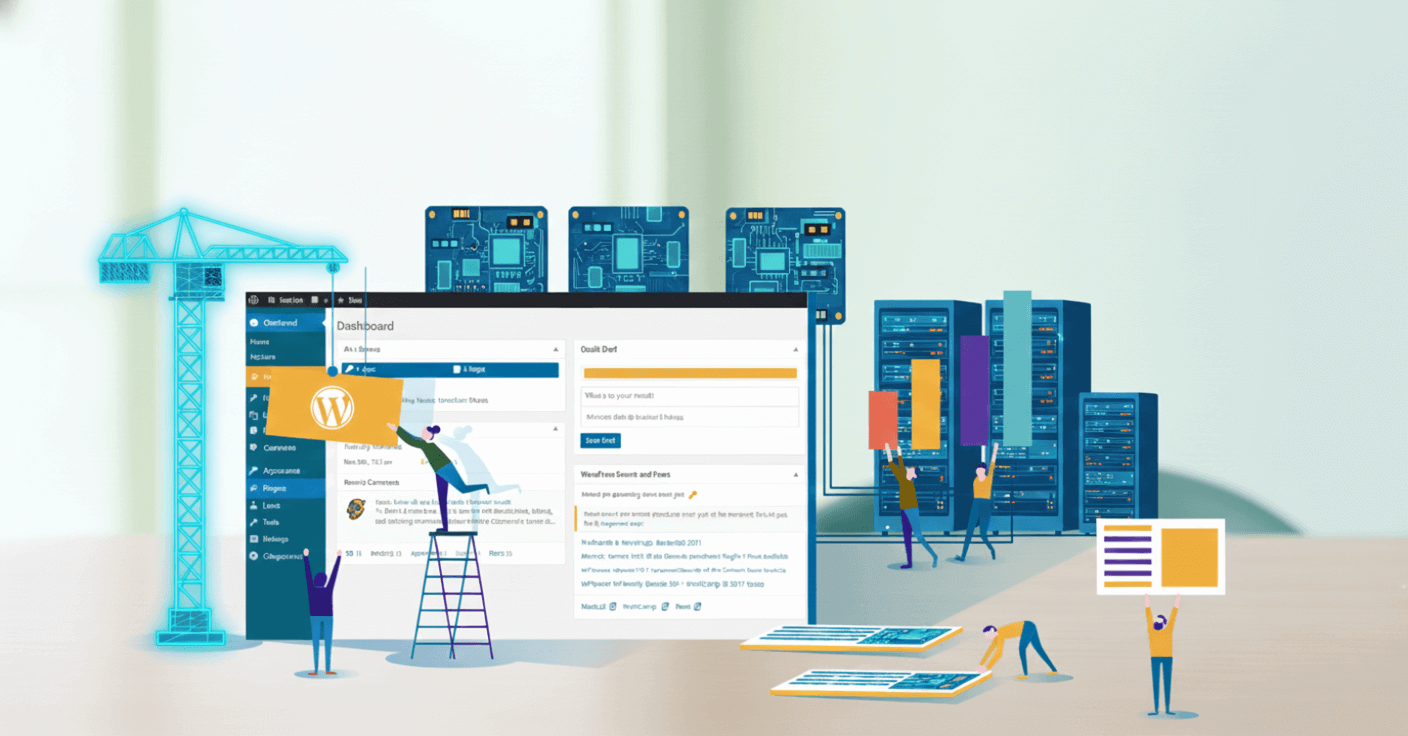
Digital agencies across the USA, UK, Canada, Australia, and New Zealand are navigating a market that demands faster delivery, broader technical capabilities, and consistent cost-efficiency. Yet talent shortages, rising operational expenses, and unpredictable project loads make it difficult to maintain an in-house team that can scale on demand.
Enter white label website development — a proven, high-growth model that enables agencies to deliver world-class websites under their own brand while leveraging the expertise, capacity, and specialized systems of a trusted external partner.
This guide consolidates insights from the most authoritative industry content — including PixelCrayons, Hosted.com, Eluminous Technologies, DevsData, and top partner program reports — into a single, exhaustive resource designed specifically for Western digital agencies and startups.
More importantly, it demonstrates how partnering with a hybrid global provider like Bantech Solutions gives agencies a competitive advantage, especially when outsourcing to India — the world’s largest and most mature IT talent ecosystem.
What Is White Label Website Development?
White label website development is a model where an external development team builds websites on behalf of an agency, while the agency presents the work under its own brand. The end-client never interacts with the development provider — all communication, delivery, and reporting happens through the agency.
How It Works (Simple Breakdown)
- Agency signs a client for a website project
- Agency shares scope & requirements with the white label partner
- Partner builds the website (design, development, testing)
- Agency presents work to the client as its own
- Agency earns the profit margin between client billing & outsourcing cost
This silent partnership allows agencies to expand capabilities without increasing headcount, overhead, or risk.
Why White Label Web Development Has Become a Core Agency Growth Strategy
Global data indicates that 74% of digital agencies outsource at least some development (Source: industry surveys quoted across major white-label agencies). The reasons are strategic — not tactical.
1. Talent Shortages Are Rising in Western Markets
Demand for developers far exceeds supply in the US, UK, Canada, Australia, and New Zealand.
- The US has 1M+ unfilled tech roles.
- Developer salaries have risen 8–12% annually across English-speaking markets.
White label partners remove this bottleneck completely.
2. Project Loads Are Unpredictable
Agencies don’t receive projects in neat, predictable cycles. Some months are heavy, others are quiet.
White label models provide elastic capacity, letting you scale up or down instantly.
3. Lower Cost, Higher Margins
Outsourcing to India reduces production costs by 40–60%, while improving margin predictability.
Agencies report 25–50% higher profit per website when using a structured white label partner.
4. On-Demand Access to Specialized Skills
Top white label teams offer full-stack capabilities:
✔ WordPress
✔ Webflow
✔ Shopify
✔ WooCommerce
✔ React / Next.js
✔ PHP / Laravel
✔ Headless CMS
✔ UI/UX Design
✔ QA & Testing
Hiring for all these skills in-house is unaffordable for most agencies.
5. Faster Delivery, Happier Clients
A strong white label partner operates with factory-like precision — dedicated teams, QA processes, repeatable SOPs, and flexible working hours.
Agencies often accelerate delivery timelines by 20–40% through outsourcing.
White Label Website Development vs. Traditional Outsourcing
Many agencies confuse these two models. The difference is substantial.
| Item |
Traditional Outsourcing |
White Label Web Development |
| Brand Ownership |
Shared or visible |
Fully agency-owned |
| Client Communication |
Outsourcing team may interact |
Agency handles all communications |
| Confidentiality |
Moderate |
Maximum (NDA-driven) |
| Workflow Control |
Limited |
Agency retains full control |
| Positioning |
“Vendor-client” |
“Silent strategic partner” |
White label development is designed specifically to help agencies scale, not just to hire cheap labour.
What Services Are Included in White Label Web Development?
Different partners offer different scopes, but the most mature firms (like Bantech Solutions) cover end-to-end capabilities:
Website Design & UI/UX
Wireframing, prototyping, user journeys, brand implementation, accessibility.
Front-End Development
HTML/CSS, React, Webflow, Next.js, Vue.js.
CMS Development
WordPress, Webflow, Shopify, Drupal, custom CMS.
E-Commerce Development
WooCommerce, Shopify, Magento, BigCommerce.
QA Testing
Cross-browser, responsive, performance, and security tests.
Website Maintenance & Updates
Retainer models, ongoing fixes, plugin updates, performance monitoring.
DevOps & Hosting Support
Advanced scaling for large sites.
The more comprehensive the partner, the safer it is for an agency to scale long-term.
When Should an Agency Consider White Label Development?
Based on consolidated insights from the shared articles, agencies typically explore white label partnerships when they experience:
An inconsistent or overloaded project pipeline
Outsourcing keeps your team from burning out.
Skill gaps you can’t hire for
Especially high-demand skills like Webflow, headless CMS, and React.
Budget limitations
Hiring in-house teams in Western countries can cost 4–8× more.
Tight delivery deadlines
White label teams operate with large delivery squads.
Desire to expand service offerings rapidly
Many agencies add e-commerce, advanced CMS, or maintenance services via white label partners.
If your agency sees any of these patterns — you’re already in the ideal zone for white-label scaling.
Benefits of White Label Website Development for Agencies

Below is a refined summary combining insights from PixelCrayons, DevsData, Hosted.com, and other authority sources
1. Expand Your Offerings Without New Hires
You instantly gain access to a full tech team without recruitment, onboarding, or salaries.
2. Predictable Revenue & Margin Growth
Agencies using white label partners report consistent 30–50% higher profitability per website.
3. Faster Delivery Times
Distributed, cross-timezone teams accelerate turnaround.
4. Higher Quality Through Specialization
White label partners build websites daily — they have fine-tuned processes.
5. Competitive Advantage Over Local Agencies
You can offer more, charge competitively, and scale quickly — while others struggle with talent shortages.
The Complete White Label Website Development Workflow
A consolidated workflow inspired by top industry guides:
1. Requirement Gathering
Agency → Bantech
- Project brief
- References
- Brand guidelines
- Features list
- Sitemap
- SEO requirements
2. Design Phase
- Wireframes
- UI exploration
- Client feedback loop
- Final design approval
3. Development Phase
- CMS setup
- Front-end dev
- Custom functionality
- E-commerce integration
4. QA Testing
- Performance
- Responsive checks
- Browser compatibility
- Functional testing
- Accessibility testing
5. Delivery and Launch
The final website is sent back to the agency — who presents it under their brand.
6. Maintenance & Support (Optional)
White label partners maintain uptime, security, and updates quietly in the background.
Pricing Models in White Label Web Dev Services
Top articles consistently highlight three models:
1. Fixed-Cost Project Pricing
Ideal for smaller agencies with predictable scopes.
2. Hourly / Time-Based Pricing
Useful for long-term or flexible projects.
3. Dedicated Team or Monthly Retainer
Best suited for scaling agencies who need predictable capacity.
Bantech Solutions offers hybrid models to match your preferred way of selling.
Why Western Agencies Outsource to India for White Label Development
India remains the global leader in digital outsourcing — and for good reasons:
1. Largest pool of certified developers globally
Over 5.8 million IT professionals as of 2024.
2. Cost advantage of 40–60%
The economics simply make sense for agencies.
3. High English proficiency
Smooth communication with Western clients.
4. Strong alignment with global time zones
Overlap with US, UK, Canada, Australia, and NZ.
5. Mature outsourcing ecosystem
India has decades of experience delivering at scale.
This is why the world’s largest agencies — including WPP and Publicis subsidiaries — rely on Indian talent centers.
Why Choose Bantech Solutions as Your White Label Web Development Partner?
This pillar article positions Bantech as the ideal hybrid partner — combining offshore excellence with onshore-style communication and project governance.
1. Hybrid Delivery Model (India + Global Presence)
You get:
- Indian technical expertise
- Western account management expectations
- Structured communication
- Predictable delivery
2. Agency-Focused Systems
Bantech is built specifically for agencies — not end-clients.
3. Full Confidentiality & NDA Protocols
Your brand stays front and center, always.
4. Flexible Pricing for Agency Margins
We help you protect profitability while improving client satisfaction.
5. Deep Technical Expertise
Bantech delivers on:
- WordPress
- Webflow
- Shopify
- Laravel
- React / Next.js
- Headless architecture
- Custom development
- Full QA & DevOps
6. Commitment to Long-Term Partnerships
Our retention rate with partner agencies: 95%+
7. White Label Client Communication Assets
We provide:
- White-label slide decks
- Reporting templates
- SOPs
- Project plans
- Technical documentation
You look bigger, more capable, and more structured — overnight.
Industry Trends Shaping the Future of White Label Development
1. Rise of Webflow & No-Code Tools
Agencies are shifting from WordPress to hybrid Webflow + custom dev.
2. Headless Architecture Is Becoming Mainstream
Clients demand speed, scalability, and security.
3. Mobile-First UI/UX Standards Are Mandatory
Over 63% of traffic globally is mobile.
4. AI-Enhanced Development Pipelines
AI accelerates workflows — but doesn’t replace human expertise.
5. Client Expectations Are Increasing
Better design, better SEO, better performance — delivered faster.
White label partners who can adapt rapidly (like Bantech) set agencies apart in this competitive landscape.
Common Challenges Agencies Face — and How White Label Partnerships Solve Them
1. Overloaded Teams
→ White label adds instant capacity.
2. Difficulty Scaling Up
→ Add 2, 5, or 20 developers overnight.
3. Cost Overruns
→ Fixed models keep margins predictable.
4. Skilled Talent Shortages
→ Access full-stack teams on demand.
5. Missed Deadlines
→ Structured workflows accelerate delivery.
Final Recommendations for Agencies Evaluating a White Label Partner
Use this checklist:
✔ Proven agency-focused experience
✔ Transparent processes & communication
✔ End-to-end capabilities
✔ Strong NDAs & confidentiality
✔ Flexible pricing for agency resale
✔ Portfolio + case studies
✔ Long-term partnership orientation
✔ Quality-first culture
✔ Ability to scale on demand
This is the framework Bantech Solutions is built upon.
Primary Keyword Questions (Required: 5)
- What is the real value of white label website development for digital agencies?
- How do agencies benefit financially from white label website development partnerships?
- What skills and technologies are included in modern white label website development services?
- How do I choose the right partner for white label website development?
- Why is India the preferred destination for white label website development outsourcing?
LSI / Secondary Keyword Questions (5–10 included)
- What should agencies look for in white label web development teams?
- How do white label web dev services improve project scalability?
- What are the cost differences between in-house and white label web development?
- Which platforms are best supported through white label web dev services?
- How can agencies use white label web development models to expand service offerings?
Conclusion: A Better, More Scalable Future for Agencies
The agencies that grow fastest in the next decade will not be the ones that hire the most — but the ones that build the smartest partnerships. White label website development has become the backbone of profitable, scalable agency operations across the US, UK, Canada, Australia, and New Zealand.
And with global talent shortages rising, outsourcing to India — especially through a hybrid, strategic partner like Bantech Solutions — gives agencies the perfect combination of cost efficiency, skill depth, flexibility, and brand protection.
If your agency is preparing to scale, diversify services, or simply regain control over delivery timelines, there has never been a better time to adopt the white-label model.
FAQs
For decades, digital agencies have balanced a delicate equation: providing exceptional client experiences while keeping production costs, delivery timelines, and internal capacity under control. As technology stacks expand and client expectations rise, the traditional in-house staffing model has become increasingly difficult to scale. Agencies now need flexible, specialized, and cost-predictable ways to deliver high-quality websites without inflating overhead.
This is where white label website development has evolved from a niche outsourcing tactic into a core operational strategy. Agencies—whether boutique studios, creative shops, or enterprise consultancies—are embracing white label teams to increase output, diversify technical capabilities, and secure a competitive edge in markets that reward speed and specialization.
This guide unpacks what white label website development truly is, how it works behind the scenes, and why it has become one of the most critical levers for agency scalability in 2025 and beyond.
1. Understanding White Label Website Development: A Modern Extension of Agency Capabilities
Before diving into the mechanics, it’s essential to establish a grounded definition. White label website development refers to the practice where an external development team builds websites on behalf of a digital agency, which then delivers the finished product under its own brand.
While outsourcing isn’t new, white-label execution is unique in its invisibility and alignment. Unlike freelance handovers or project marketplaces, white label partners operate as a seamless extension of the agency’s internal team. They follow the agency’s processes, brand language, standards, and communication expectations.
Historically, agencies leaned on in-house developers as the backbone of delivery. But as the market grew more complex—introducing platforms like Webflow, headless CMS frameworks, Jamstack architectures, AI-driven design tools, and custom React ecosystems—the cost of maintaining a full bench of specialized developers skyrocketed. Gartner estimates that IT skill diversification needs have doubled in the last five years, making flexible models like white label increasingly attractive.
Source: https://www.gartner.com/en/articles/it-talent-shortage
Today, white label development is less about cost-cutting and more about sustainable capability building.
2. How the White Label Development Model Works in Practice
To understand how agencies operationalize white label partnerships, it’s helpful to break down the typical workflow. Though each provider may have proprietary systems, the core structure remains consistent across the industry.
Step 1: Scope & Requirements Gathering
The agency collects the client’s needs—designs, branding, functionality requirements, integrations, timelines, and budget. The white label partner receives a technical brief or design package (Figma, PSD, XD, etc.). Some partners even support early scoping or solution architecture.
Step 2: Project Mapping & Estimation
The white label team reviews technical complexity, identifies risks, and provides estimates or milestones. Well-established partners offer SLAs to ensure predictability in delivery windows.
Step 3: Development & QA
Execution is handled entirely by the white-label provider. This includes:
Many advanced providers also use automated testing or CI/CD workflows, aligning with modern engineering practices.
Step 4: Delivery Under the Agency’s Brand
All documentation, communication, and files are delivered as if the agency produced them internally. White label partners never contact the end client unless specifically requested to appear as “internal team members.”
Step 5: Launch & Ongoing Support
Maintenance, security updates, hosting support, and iterative improvements can be handled by the partner, giving agencies recurring revenue potential through retainer plans.
This operational model allows agencies to scale up or down on demand, without hiring, training, or maintaining large internal teams—something McKinsey identifies as a defining trait of “future-ready organizations.”
Source: https://www.mckinsey.com/capabilities/people-and-organizational-performance/our-insights/the-organization-of-the-future
3. Why Agencies Choose White Label Partners: The Strategic Advantage
Agencies don’t choose white label development simply to reduce costs—even though it often does. The model’s real value lies in strategic flexibility.
A. Expanded Technical Capabilities
No agency can afford to staff specialists in every modern technology. White label partners solve this by maintaining multidisciplinary teams skilled in WordPress, Webflow, Shopify, Laravel, React, Next.js, and more. This breadth allows agencies to pitch and win broader projects without internal skill constraints.
B. Faster Time-to-Market
In a competitive landscape where clients expect fast delivery, white label teams provide elasticity. Agencies can instantly scale production without altering internal headcount, helping them win deadlines that competitors must decline.
C. Predictable, Profitable Margins
Instead of fluctuating operational costs, agencies get transparent project-based or retainer-based pricing. This predictability simplifies quoting and improves profitability.
D. Stronger Client Retention
When agencies can consistently deliver high-quality websites—even during busy seasons—client trust increases. According to a Statista report, 82% of clients cite reliability as their top reason for staying with a digital agency.
Source: https://www.statista.com/
White label development ensures reliability doesn’t rely solely on internal bandwidth.
4. The Invisible Partnership: Maintaining Client Trust and Brand Consistency
For many agencies, the fear isn’t outsourcing—it’s the possibility of clients discovering it. White label models address this concern directly.
A. Total Brand Alignment
Documents, staging links, reports, and technical explanations are brand-neutral or branded with the agency’s identity. The end-client sees a unified operation.
B. Silent Delivery Pipelines
White label partners never interact with clients unless specifically requested. Some providers even join meetings as “your development team,” maintaining perfect continuity.
C. NDAs and Security Protocols
Reputable white label partners enforce strict agreements—NDAs, non-circumvention clauses, data-processing frameworks (GDPR, CCPA), and encrypted file transfer.
This structured ecosystem creates the trust and stability agencies need to confidently outsource sensitive development work.
5. Choosing the Right White Label Development Provider: A Framework for Agencies
Selecting a white label partner is a strategic decision, not a transactional one. Agencies should evaluate providers across the following dimensions:
A. Technical Breadth & Depth
Do they support the platforms your clients request? Are they capable of solving complex problems or only basic templated builds? Mature partners demonstrate architectural thinking, not just coding proficiency.
B. Processes, Tooling & Communication
Look for:
- Dedicated project managers
- Clear SLAs
- Transparent task tracking (Jira, Asana, Monday.com)
- Git-based version control
- Staging workflows
- Robust QA processes
These elements reduce friction and ensure predictability.
C. Quality of Output
Ask for coded examples, past project links, or Git access. Look for:
D. Ethical and Operational Stability
Does the provider follow ethical hiring practices? Are teams full-time or ad-hoc freelancers? How long have they been in the industry? Reliability matters.
By applying a rigorous selection framework, agencies reduce risk and increase long-term operational efficiency.
6. Future-Proofing Agency Growth with a White Label Approach
The agency landscape is changing rapidly. AI-assisted design, low-code platforms, and distributed teams are reshaping how digital work gets produced. White label development plays a crucial role in helping agencies adapt without sacrificing craftsmanship.
A. The AI + Human Hybrid Model
Many white label teams already leverage AI tools for code auditing, accessibility checks, and performance benchmarking. Agencies that partner with such teams gain the advantage of continuous improvement without large tech investments.
B. Demand for Specialized Experiences
Websites are evolving beyond static pages—headless architectures, custom dashboards, immersive UI micro-interactions. White label partners that stay ahead of the curve give agencies strategic leverage.
C. Reduced Industry Fragmentation
As agencies consolidate offerings, white label providers act as a backbone of execution. This trend mirrors the broader shift towards modular, ecosystem-driven service models described in Deloitte’s Future of Digital Services analyses.
Source: https://www2.deloitte.com/
The takeaway is clear: agencies that harness white label development aren’t outsourcing—they’re future-proofing.
Bringing It All Together: Practical Takeaways for Agencies
If your agency is exploring white label website development, here are the key principles to keep in mind:
- White label is not outsourcing—it’s capability extension.
- Agencies that scale with partners outperform those that rely solely on internal bandwidth.
- Choose providers with transparent processes and strong technical versatility.
- Security, NDAs, and predictable communication workflows are non-negotiable.
- White label partnerships open doors to new service offerings and larger clients.
Done well, white label development can become the most stable, margin-positive part of an agency’s delivery engine.
Final Reflection
The agencies that will thrive over the next decade are those that understand one truth: scalability is no longer a luxury—it’s a necessity. White label website development offers a practical, future-aligned model for expanding capacity, enhancing expertise, and delivering exceptional digital experiences without inflating operational cost.
In an industry built on creativity, strategy, and precision execution, white label partners enable agencies to stay focused on what they do best—while ensuring every website delivered meets the standards of a world that’s always accelerating.
For more than two decades, digital agencies have shaped the online presence of brands, helping businesses navigate shifting platforms, rapidly evolving user expectations, and a speed-obsessed digital economy. Yet the internal structure of most agencies has barely kept pace. As new frameworks, CMS ecosystems, and specialized development disciplines emerge each year, agencies must decide whether to constantly rebuild internal teams—or strategically augment them.
This tension between growing demand and limited internal capacity has pushed agencies toward a more modern, sustainable model: outsourcing website development to white label partners. What was once considered a workaround is now a foundational strategy for agencies that want to scale without operational strain. White label development has become synonymous with elasticity, technical depth, and client-ready delivery pipelines.
In a landscape where competition is fierce and project timelines are unforgiving, outsourcing is less about cost—and more about capability. In this article, we explore the strategic, technological, and operational reasons why so many agencies are turning to white label partners to fuel consistent, profitable growth.
1. The Rising Complexity of Modern Web Development
As digital ecosystems deepen, the websites clients ask for today are far more complex than the static pages of the past. Agencies are expected to deliver performant, secure, optimized, multi-device experiences—often built on diverse frameworks such as WordPress, Webflow, Shopify, React, Next.js, or even headless architectures.
A. Rapidly expanding technical requirements
Frameworks evolve faster than most teams can retrain. The 2024 Stack Overflow Developer Survey highlights how new JavaScript frameworks and CMS tools continue to fragment the ecosystem, requiring specialists rather than generalists.
Source: https://survey.stackoverflow.co/
A small- to mid-size digital agency, even with a talented in-house team, cannot maintain mastery across all the emerging standards. As a result, technical debt grows and project risks increase.
B. Clients expect more — and expect it faster
Page speed, accessibility (WCAG guidelines: https://www.w3.org/WAI/standards-guidelines/wcag/), security compliance (GDPR: https://gdpr.eu/), and mobile responsiveness are now baseline requirements. Agencies feel pressure not only to deliver visually appealing designs but engineering-grade builds.
Outsourcing to white label specialists bridges this gap, giving agencies instant access to a broader and deeper skill set—without requiring long hiring cycles or constant retraining.
2. Capacity Challenges and the Reality of Agency Workloads
Agency workloads rarely follow predictable rhythms. They come in waves—new campaigns, seasonal spikes, unexpected RFP wins, redesign requests, platform migrations, and more. This volatility creates operational strain.
A. Scaling internally is expensive—and slow
Hiring developers takes weeks or months. Onboarding them takes even longer. And once the busy season passes, agencies often face underutilized staff. According to the U.S. Bureau of Labor Statistics, tech talent shortages remain significant, making it expensive and difficult to maintain internal resourcing levels. Source: https://www.bls.gov/
White label outsourcing solves the elasticity problem. Agencies scale up for complex or high-volume projects—and scale down during quieter cycles—without affecting fixed overhead.
B. Burnout is becoming a critical industry issue
A 2023 Adobe Workfront report noted that digital teams often operate in a state of constant urgency, with short turnarounds and shifting client priorities contributing to high burnout rates.
Source: https://business.adobe.com
White label partners alleviate bottlenecks by absorbing production tasks, allowing agency teams to focus on client experience, strategy, and creative innovation instead of scrambling to meet deadlines.
3. Strategic Cost Efficiency Without Compromising Quality
Outsourcing has long been associated with cost reduction, but modern white label development offers something more nuanced: strategic cost efficiency. Agencies not only save money—they re-allocate resources to higher value work.
A. Predictable margins in an unpredictable industry
White label partners typically offer transparent, project-based or retainer pricing models. This predictability helps agencies create more accurate proposals, maintain healthy profit margins, and avoid scope creep surprises.
B. Operational efficiency improves performance
McKinsey’s research on “future-ready organizations” emphasizes the importance of modular service models that increase operational efficiency without inflating headcount.
Source: https://www.mckinsey.com/
White label outsourcing fits this blueprint, allowing agencies to shift repetitive or specialized tasks to external experts while keeping their internal team lean, focused, and high-performing.
C. A wider skill set for the same budget
Instead of hiring separate specialists for Shopify, headless CMS, JavaScript frameworks, and custom backend systems, agencies get access to all of these through a single partner—often at a fraction of the cost of full-time staffing.
4. Strengthening Agency Focus: Strategy, Creativity, and Client Experience
Most agency founders did not start their businesses to manage code repositories or optimize database queries. They started them to solve problems creatively, build brands, and guide digital transformation.
A. Outsourcing lets agencies focus on what they do best
White label development removes the burden of technical execution so agencies can focus on:
- Strategic consulting
- Creative direction
- Relationship-building
- Brand storytelling
- UX/UI innovation
These are the areas where agencies deliver the most value and differentiation.
B. Increased client satisfaction through better project management
Instead of juggling production tasks, internal teams can allocate more time to client communication, quality assurance, and strategic oversight. This naturally improves client satisfaction, which is crucial considering HubSpot’s findings that 72% of customers value consistent communication as a key to brand trust.
Source: https://www.hubspot.com/
C. Better alignment between sales and delivery
With predictable development support, sales teams can pitch confidently, knowing the agency has the capacity and expertise to execute. This alignment reduces both internal risk and client disappointment.
5. Expanding Service Offerings Without Expanding Payroll
Competition among agencies is intensifying. Clients increasingly want one partner who can handle everything—design, development, SEO, automation, hosting, integrations, and long-term support. But building an internal team to support these services requires significant investment.
A. White label partners unlock new revenue streams
By outsourcing development, agencies can immediately offer:
- Webflow development
- Custom WordPress builds
- Shopify stores
- Headless CMS setups
- API integrations
- Performance optimization
- Security hardening
- Maintenance retainers
This service expansion happens without hiring new specialists.
B. Faster time-to-market for new offerings
When agencies want to add a new service—like headless builds or React-based platforms—a white label partner already has the expertise. This reduces the time needed to bring new services to market and increases competitive differentiation.
C. Stronger pitch decks and proposal success rates
Proposals become more robust when backed by a team with proven capabilities. Case studies, example builds, and technical documentation from a white label partner strengthen an agency’s credibility during RFP processes.
6. Risk Reduction and Increased Delivery Reliability
Every agency has faced the stress of a project going sideways—missed deadlines, unexpected bugs, technology gaps, or sudden developer resignations. White label partners minimize these risks through professional-grade operational systems.
A. Better process maturity
Established white label teams use:
This level of maturity is often difficult for small or mid-sized agencies to replicate internally.
B. Built-in redundancy
If one developer becomes unavailable, the partner assigns another. This continuity ensures that agency timelines remain intact.
C. Compliance and security readiness
Many white label partners follow recognized standards or guidelines like GDPR, SOC 2, OWASP security principles, and SLA-based support models.
- OWASP: https://owasp.org/
This reduces risk for agencies operating in regulated spaces such as finance, healthcare, or legal services.
Bringing It All Together: Practical Takeaways for Agencies
If your agency is considering white label development, here are the core principles to guide your decision:
- Outsourcing is a capability multiplier, not a replacement for internal teams.
- Modern web development is too complex for any one team to master alone.
- White label partnerships unlock elasticity—scale up or down without operational strain.
- Agencies improve margins and reduce risk through predictable pricing models.
- Strategic focus improves when technical execution is handled by specialists.
- Service expansion becomes faster, cheaper, and more reliable.
- Client satisfaction rises when delivery risks fall.
In essence, white label development becomes the operational backbone that supports modern agency growth.
Final Reflection
Digital agencies today operate in an environment defined by speed, specialization, and rising client expectations. Outsourcing website development to white label partners isn’t just a tactical move—it’s a strategic evolution. It enables agencies to maintain creative excellence, improve delivery reliability, win more projects, and protect their teams from burnout.
The agencies that embrace this model early position themselves for long-term resilience. Those that cling to traditional, resource-heavy structures may struggle to keep pace with a digital world that continues to accelerate.
White label partnerships aren’t the future of agency operations—they are the present reality of sustainable, scalable growth.
Across the digital landscape, agencies are navigating a moment of unprecedented complexity. Technology cycles are accelerating, client expectations are rising, and modern websites now demand a mix of engineering, design, performance optimization, and compliance considerations that go well beyond traditional development. Yet the constraints of talent availability, hiring overhead, and operational predictability continue to weigh heavily on agencies trying to scale sustainably.
This tension—between what agencies need to deliver and what they can realistically support internally—has driven a significant shift in how digital teams operate. Increasingly, agencies are turning to white label developers as a strategic alternative to hiring in-house. This model is no longer viewed as a fallback for overflow work, but rather as a cornerstone of modern agency operations.
The underlying question isn’t simply “Should we outsource?” but rather: What advantages do white label developers provide that in-house teams cannot match in today’s environment? The answer spans capacity, capability, cost, quality, and strategic flexibility.
In this article, we’ll explore the core benefits of choosing white label developers over traditional in-house hiring—and why this model is shaping the future of agency delivery.
1. Access to Broader Technical Expertise Without Expanding Internal Headcount
As digital ecosystems grow more fragmented, agencies face the challenge of staying fluent in a wide array of tools, frameworks, and CMS platforms. Maintaining this level of expertise in-house is expensive—and often unrealistic.
A. Modern web development requires multidisciplinary skill sets
Developers today must navigate:
The 2024 Stack Overflow Developer Survey highlights this growing specialization, noting that developers now work across more frameworks and tooling ecosystems than ever before.
Source: https://survey.stackoverflow.co/
Hiring in-house for every skill is financially prohibitive—white label teams solve this by giving agencies access to a broad talent pool under a single partnership.
B. Agencies can take on more complex or varied projects
Without specialists, agencies decline work or take on projects outside their comfort zone—both risky. White label partners allow agencies to confidently pitch and deliver projects across multiple platforms and architectures.
C. Expertise evolves as the industry evolves
Technology shifts rapidly. White label teams:
- Upskill continuously
- Follow industry trends
- Maintain updated processes
- Bring lessons from hundreds of projects
This agility is difficult for in-house teams to match without constant investment.
Smooth Transition:
While expertise is a major advantage, agencies also face unpredictable workload fluctuations—which brings us to capacity.
2. Elastic Capacity That Scales With Demand (Without Long-Term Commitments)
Agency workloads are rarely steady. Peaks and troughs are normal, influenced by client budgets, marketing seasons, and project cycles. Hiring full-time developers creates fixed overhead that doesn’t align with this reality.
A. White label teams provide on-demand scalability
Instead of maintaining a large staff to handle occasional busy months, agencies can scale up or down instantly through white label support. This flexibility allows them to take on more projects without the fear of overextending.
B. Hiring is slow—white label onboarding is fast
The U.S. Bureau of Labor Statistics reports ongoing talent shortages in software development, with hiring timelines averaging months for specialized roles.
Source: https://www.bls.gov/
By contrast, white label providers can often start within days and bring complete teams ready to deliver.
C. Agencies avoid burnout and team overwhelm
Adobe Workfront research highlights burnout as one of the most pressing issues in digital delivery environments.
Source: https://business.adobe.com
White label teams absorb production pressure, helping agencies maintain healthier internal cultures and more balanced workloads.
Smooth Transition:
Scalability is one part of the equation—sustainability and financial predictability form the other.
3. Reduced Operational Costs With More Predictable Budgets
Hiring in-house developers is expensive—not just in salary, but in the ecosystem that surrounds it.
A. Total cost of ownership goes far beyond salary
In-house hiring includes:
- Salaries + annual increments
- Benefits and insurance
- Recruitment costs
- Training and tooling
- Hardware and software
- Paid leave
- HR and administrative overhead
In contrast, white label developers operate on transparent project rates, hourly models, or retainer plans—offloading the overhead burden entirely.
B. Profitability becomes more predictable
Clear pricing enables agencies to create more accurate proposals and maintain healthy margins. Instead of guessing internal labor hours, they get fixed, reliable estimates from white label partners.
C. Agencies avoid the risks of underutilized employees
During slow months, in-house teams can become an expensive resource with limited work. White label models eliminate this problem by turning production into a variable cost.
McKinsey’s analyses of digital organizations show that modular workforce models significantly improve efficiency and economic resilience.
Source: https://www.mckinsey.com/
Smooth Transition:
But cost and scalability matter little without reliable quality—a hallmark of mature white label teams.
4. More Consistent Quality Through Mature Engineering Processes
High-quality development requires discipline. Many white label teams operate like fully structured engineering organizations, not ad-hoc freelancers or contractors.
A. Professional workflows ensure reliability
Top white label providers rely on:
- Git version control
- Code reviews
- CI/CD pipelines
- Multi-device QA suites
- Automated testing
- Performance audits
- Structured documentation
These processes produce more consistent outcomes than small internal teams juggling competing priorities.
B. Dedicated QA and DevOps support improves stability
Most agencies cannot afford full-time QA analysts or DevOps engineers—white label teams include these roles as part of their delivery pipeline.
C. Delivery risks decrease
White label partners bring redundancy. If a developer becomes unavailable, teams shift internally to maintain pace. In-house teams rarely have this redundancy, leading to timeline risks.
Smooth Transition:
Operational excellence is crucial, but agencies also need freedom to focus on what differentiates them: strategy, creativity, and client relationships.
5. Agencies Can Focus on Strategy and Creative Value Instead of Production
Agencies exist to bring ideas to life—not to manage code merges or server configurations. White label support allows internal teams to stay focused on the highest-value parts of the client journey.
A. Creative and strategic roles remain in-house
White label developers handle the execution, allowing agency teams to excel at:
- Brand strategy
- UX design
- Concept development
- Client consulting
- Performance measurement
- Campaign planning
This strengthens client satisfaction and positions the agency as a strategic partner—not just a production vendor.
B. More time for client relationships
HubSpot’s research on client retention shows that consistent communication is one of the top factors driving long-term loyalty.
Source: https://www.hubspot.com/
With development offloaded, agency teams can dedicate more time to nurturing relationships rather than fighting production fires.
C. Enhanced creative experimentation
Agencies that aren’t constrained by limited development bandwidth can test new ideas, explore emerging platforms, and innovate without fear of overwhelming their teams.
Smooth Transition:
This ability to stay innovative feeds directly into another major advantage—market expansion.
6. Faster Service Expansion Without Hiring New Specialists
In-house teams lock agencies into the capabilities of the employees they have. White label partners break those limits.
A. Agencies can expand offerings immediately
White label teams enable agencies to offer:
- Shopify store builds
- Custom web applications
- Advanced React or Next.js development
- Headless CMS implementations
- API integrations
- Webflow enterprise-level builds
- Accessibility audits
- Maintenance retainers
This breadth would require multiple hires—expensive hires.
B. Enter new markets faster
Agencies can respond quickly to trends (AI-driven features, headless eCommerce, automation workflows) without the delay of recruitment or training.
C. Strengthened proposals and RFP success rates
White label experts often contribute technical architecture documents, case studies, and feasibility insights that make proposals more compelling.
Smooth Transition:
As agencies expand and innovate, risk management becomes crucial—and white label partners help reduce those risks.
7. Lower Delivery Risks Compared to In-House Hiring
When agencies rely solely on in-house staff, they face operational vulnerabilities.
A. White label teams offer continuity and redundancy
If an in-house developer resigns mid-project, timelines suffer. White label partners can rapidly replace resources and maintain continuity.
B. Lower dependence on individual expertise
In-house teams often have one “expert” for a platform. If that person is overloaded or unavailable, the project stalls. White label teams eliminate single points of failure.
C. Stronger documentation and process discipline reduce errors
Providers with mature workflows reduce the risk of:
- Bugs
- Delays
- Misaligned architecture
- Technical debt
- Poor scalability
Reliability becomes an operational asset—not a gamble.
Bringing It All Together: Practical Takeaways
White label developers offer key advantages that in-house hiring typically cannot match:
- Broader and deeper expertise across modern frameworks
- Elastic capacity that adapts to demand
- Reduced operational costs and more predictable margins
- More consistent engineering quality and process discipline
- The ability to focus on strategy and creative value
- Faster expansion into new service lines
- Lower operational and delivery risks
For agencies navigating increasing technical complexity, white label partnerships provide a strategic, future-ready model for sustainable growth.
Final Reflection
The agency landscape is evolving faster than internal hiring cycles can accommodate. Where once in-house teams formed the backbone of digital delivery, today’s reality demands elasticity, specialization, and operational resilience that traditional staffing cannot reliably provide. White label developers bridge this gap—not by replacing internal teams, but by empowering agencies to do more, deliver faster, and compete at a higher level.
The decision is no longer about outsourcing vs. in-house—it’s about building a modern, adaptive operational ecosystem. And in that ecosystem, white label development emerges not as a shortcut, but as a strategic evolution.
Agencies today aren’t just competing on aesthetics or messaging — they’re competing on technical capability, scalability, and delivery speed. As digital projects become more complex, agencies increasingly rely on white label website development to expand their service portfolio without overextending internal teams. This model allows creative, marketing, and branding firms to deliver sophisticated web solutions under their own brand while leveraging the engineering expertise of a specialized partner.
But the biggest question agencies ask is simple: “What kinds of websites can we actually build with a white label development team?”
The answer has expanded dramatically over the last decade. White label partners today aren’t limited to brochure sites; they build everything from enterprise-grade eCommerce systems to custom applications that integrate with modern cloud ecosystems. Leading outsourcing markets like India, Eastern Europe, and LATAM now supply development expertise spanning frontend frameworks, backend languages, cloud-native architectures, and emerging technologies.
Below, we explore the full spectrum of website types agencies can confidently deliver through white label development — with context, strategic nuance, and forward-facing insight.
1. Marketing & Corporate Websites
Marketing and corporate sites remain the most commonly outsourced category because they form the digital foundation for most brands. But the expectations for “simple websites” are no longer simple. Modern marketing sites require performance optimization, interactive components, localization, analytics integration, and CMS flexibility.
A white label partner allows agencies to deliver sites built on WordPress, Webflow, Craft CMS, or headless CMS platforms such as Contentful or Sanity. This ensures the agency can serve clients of every maturity level — from startups to global enterprises — without hiring multiple specialists internally.
Well-executed marketing websites today demand:
- Lighthouse-optimized performance (Google reports a 32% increase in bounce probability when load time moves from 1 to 3 seconds — source: thinkwithgoogle.com)
- Modular content blocks for long-term scalability
- Advanced SEO foundations, including structured data
- Cross-device responsiveness and accessibility standards (WCAG 2.1)
White label teams often bring predefined component libraries, design-system experience, and automation pipelines that accelerate production timelines while improving consistency.
2. eCommerce & Subscription Platforms
The rise of online purchasing has dramatically increased the complexity of eCommerce builds. These projects involve checkout logic, payment gateways, product inventory workflows, conversion optimization, and integrations with ERP/CRM platforms.
Agencies typically outsource eCommerce because maintaining full-time specialists in WooCommerce, Shopify, Magento (Adobe Commerce), or custom Node.js/PHP commerce stacks is expensive.
A strong white label eCommerce partner can deliver:
- Multi-store setups
- Advanced product taxonomies
- Subscription billing (Stripe, Chargebee)
- Headless storefronts (Next.js, Hydrogen, Vue Storefront)
- Global payment solutions (PayPal, Razorpay, Adyen, etc.)
- API-driven integrations with systems like Salesforce or Zoho
According to Statista, global eCommerce sales are projected to reach $7.9 trillion by 2027, increasing demand for scalable, secure online selling experiences.
Reference: https://www.statista.com/statistics/379046/worldwide-retail-e-commerce-sales/
For agencies that want to participate in that growth, white label development offers technical depth without internal complexity.
3. Membership, LMS & Community Platforms
Membership platforms and online learning systems (LMS) have surged as more businesses monetize knowledge, training, and exclusive content. These platforms require far more than standard site builds — they involve automated access rules, course architecture, progress tracking, gamification, community features, and secure login flows.
White label developers can build systems using:
- WordPress LMS plugins (LearnDash, TutorLMS, LifterLMS)
- Custom LMS platforms built with Laravel, Node.js, or Django
- Community tools like BuddyBoss, Circle, or custom APIs
- Single sign-on (SSO) and role-based access control
- SCORM, xAPI, or video streaming integrations
Agencies usually outsource LMS development because these projects require niche engineering expertise and long-term maintenance. A white label LMS team ensures the agency can say “yes” to high-value learning platform projects without operational risk.
4. Complex Web Applications & SaaS Platforms
This is where white label development shows its true strategic value.
Many agencies excel in brand, UX, and product strategy — but building a full SaaS platform internally requires engineers skilled in distributed systems, cloud hosting, API architecture, security, and DevOps.
With a white label partner, agencies can co-create:
- Custom dashboards
- Multi-tenant SaaS platforms
- Workflow management systems
- Booking engines
- Marketplace platforms
- Analytics or reporting tools
- React/Next.js SPAs and PWAs
These solutions require deeper technology stacks such as:
- Frontend: React, Next.js, Vue, Svelte
- Backend: Node.js, Laravel, Python Django, Go
- Cloud: AWS, Azure, Google Cloud
- Databases: PostgreSQL, MongoDB, Redis
Gartner reports that SaaS will remain the largest public cloud services market, projected to reach $232 billion by 2025 (source: https://www.gartner.com/en/newsroom).
This signals a long-term opportunity for agencies to collaborate with white label partners and capture recurring software projects that would otherwise be out of scope.
5. Portals, Intranets & Workflow Systems
Modern organizations run on internal systems — HR portals, partner dashboards, employee intranets, document management systems, and workflow automation tools. These digital ecosystems often require secure authentication, database interactions, role hierarchies, collaboration features, and integrations with corporate tools like Microsoft 365 or Google Workspace.
Agencies rarely maintain teams capable of enterprise-grade engineering, which is why white label partnerships become invaluable. Common builds include:
- Dealer or distributor portals
- HR and employee onboarding systems
- Partner or vendor management platforms
- Document repositories
- Internal knowledge bases
- Corporate intranets using SharePoint, WordPress, or custom frameworks
Many of these projects involve integrating identity systems like Azure AD, Okta, or Auth0, which require specific technical expertise. A white label team helps agencies deliver these systems confidently and securely.
6. Multi-Language, Multi-Location & Enterprise Websites
As brands scale globally, their digital presence becomes increasingly complex. They require localization, translation workflows, region-specific content, and governance models that allow dozens — or sometimes hundreds — of people to contribute while maintaining brand consistency.
These projects often use enterprise CMS platforms such as:
- Sitecore
- Drupal
- Adobe Experience Manager
- WordPress multisite networks
- Headless CMS ecosystems
Key features include:
- Advanced caching and CDN configurations
- Localization-ready components
- Translation automation (Smartling, Lokalise)
- Multi-site management rules
According to CSA Research, companies that invest in localization are 1.5x more likely to increase market share (source: https://csa-research.com).
White label development teams help agencies offer enterprise-grade capabilities that align with global digital transformation goals.
7. Landing Pages, Funnels & High-Velocity Conversion Assets
Performance-driven brands need rapid, data-backed experimentation. Landing pages, CRO-driven funnels, and marketing automation assets require quick turnaround times that internal agency teams can struggle to maintain.
White label developers support agencies by creating:
- High-speed landing pages built with React, Next.js, Webflow, or WordPress
- A/B testing variations
- Personalized sections using user data
- Integrations with HubSpot, Marketo, and custom CRMs
- Funnel builds for paid campaigns
As reported by HubSpot, companies with 40+ landing pages generate 12x more leads than those with fewer than 5 (source: https://blog.hubspot.com/marketing).
Outsourcing ensures agencies can meet this demand without overwhelming internal designers or developers.
Bringing It All Together: What This Means for Agencies
White label website development isn’t just a fulfillment model — it’s a strategic growth engine. It allows agencies to:
- Expand service offerings instantly
- Reduce dependency on in-house engineering
- Deliver highly technical projects without technical risk
- Improve turnaround times
- Serve larger, more complex clients
- Maintain brand consistency and ownership
Instead of scaling headcount, agencies scale capability.
The diversity of web platforms — from simple landing pages to enterprise digital ecosystems — demonstrates that a well-chosen white label partner is not just a vendor, but a silent extension of an agency’s technical team.
Closing Reflection
The future of digital services will be defined by collaboration, specialization, and scalability. Agencies that embrace white label web development can move beyond project-based work and step into long-term digital innovation roles for their clients. As technology advances and client expectations accelerate, the ability to build any type of website — without internal bottlenecks — becomes a competitive advantage.
In a landscape where speed, quality, and adaptability determine success, white label partnerships allow agencies to deliver all three. And in that sense, the question isn’t “What types of websites can be created?”
But rather, “What opportunities could your agency unlock if nothing was beyond your technical reach?”
In an era where digital execution speed increasingly determines competitive advantage, agencies must balance creativity, engineering, and client management with unprecedented efficiency. The demand for websites — across marketing, eCommerce, SaaS, and enterprise ecosystems — continues to grow, but in-house teams often struggle to scale fast enough to match this velocity. This is where white label website development has become an indispensable extension of modern agency operations.
Yet a foundational question remains at the center of every engagement:
“How long will this project take?”
Clients expect precise estimates, while agencies require predictable delivery cycles to maintain margins, quality, and trust. The timeline for white label website development is both structured and dynamic — influenced by scope, collaboration maturity, technical complexity, and the processes of the partner agency.
This article provides a comprehensive, data-informed breakdown of typical white label project durations, offering clarity that helps agencies set expectations, avoid bottlenecks, and scale with confidence.
1. Understanding the Core Phases of a White Label Project
Before estimating timelines, it’s essential to understand the universal workflow most white label partners follow. Although tools and methodologies differ — Agile, hybrid Agile, Kanban, or traditional waterfall — the structure remains anchored around foundational engineering best practices.
A More Elaborate Build-Up
White label development is not a “plug-and-play” model; it mirrors the rigor of full-scale digital product delivery. Whether the project is a five-page marketing site or a multi-module SaaS platform, the phases remain consistent, and each phase impacts time-to-delivery.
Most white label projects follow this multi-stage timeline:
1. Discovery & Requirements (3–10 days)
This includes technical assessment, design file review, platform selection, backlog creation, and feasibility checks.
McKinsey notes that poor upfront requirements account for nearly 40% of project overruns (source: https://www.mckinsey.com).
This phase prevents those overruns.
2. UI Development (5–20 days)
Frontend work varies widely depending on the number of templates, animations, components, and responsiveness requirements.
Design complexity directly extends timelines.
3. Backend Development (7–40 days)
This includes CMS setup, custom logic, third-party integrations, and database architecture.
More integrations = longer timelines.
4. QA, Bug Fixes & Optimization (5–15 days)
Industry benchmarks suggest QA consumes 15–25% of total development time (source: IEEE Software Journal).
QA is not optional — it is timeline-defining.
5. Deployment & Handover (2–5 days)
Includes DNS configuration, hosting setup, training, and documentation.
The phases above form the baseline upon which specific project durations are built.
2. Timeline for Marketing & Corporate Websites (2–6 Weeks)
A Stronger Section Introduction
Most agencies first turn to white label partners for marketing and corporate websites. These projects set the tone for collaboration and create a baseline for delivery expectations. While technically simpler than web applications, modern marketing sites still demand performance optimization, accessibility compliance, and CMS flexibility — all of which influence timelines.
Typical Duration Breakdown
A standard marketing or brochure website, usually 7–15 pages, typically takes 2–4 weeks with a mature white label partner. Larger corporate sites — 20+ pages with localization, advanced layouts, or integrations — extend the timeline to 4–6 weeks.
Key factors affecting duration:
- Number of unique page templates
- CMS type (WordPress, Webflow, Craft, headless CMS)
- Animations and interaction complexity
- Revisions and content readiness
- Integration with marketing tools (HubSpot, GA4, CRM)
Google’s Core Web Vitals framework (https://web.dev/vitals/) has increased development time slightly, as teams must now optimize render-blocking resources, LCP, CLS, and FID to achieve competitive rankings.
3. Timeline for eCommerce Websites (8–16 Weeks)
A More Elaborate Build-Up
eCommerce projects introduce significantly more complexity than marketing sites. Beyond visuals, they require secure transactions, product logic, multi-step flows, and backend systems that support logistics, inventory, and customer lifecycle management.
Agencies frequently outsource eCommerce because these projects require specialized engineers in WooCommerce, Shopify, Magento/Adobe Commerce, or headless environments.
Typical Duration Breakdown
Most white label eCommerce platforms take 8–12 weeks for mid-sized stores:
- Product catalog setup
- Custom checkout logic
- Payment gateways
- Shipping rules
- Tax configuration
- CRM/ERP integrations
- Performance and security layers
Larger, multi-store, or API-heavy eCommerce builds can stretch to 16–20 weeks.
According to Statista, global eCommerce revenue continues to rise sharply, creating increasing complexity and demand for scalable builds (source: https://www.statista.com/topics/2454/e-commerce-worldwide/).
White label teams typically shorten timelines by using predefined modules or reusable frameworks, but editing or extending these modules still requires careful engineering.
4. Timeline for Membership, LMS & Community Platforms (10–18 Weeks)
A Stronger Conceptual Introduction
Membership or learning platforms extend beyond traditional web development. They introduce behavioral models, user segmentation, content gating, dashboards, and often gamification elements. These systems are not built overnight — and clients often underestimate their scope.
Agencies rely on white label partners specifically to handle these deeper architectural challenges.
Typical Duration Breakdown
A standard LMS or membership site built on WordPress with plugins like LearnDash or BuddyBoss generally takes 10–14 weeks.
A custom LMS or community system built with Laravel, Django, or a modern JS framework can take 14–18 weeks or more.
Timeline drivers include:
- Course architecture
- Role-based access control
- Progress tracking & gamification
- Video streaming & CDN integration
- Payment/subscription logic
- Custom dashboards
Research from Thinkific and LearnDash suggests LMS adoption grows 30–40% annually, raising expectations for more robust and feature-rich builds (source: https://www.learnworlds.com/lms-statistics/).
5. Timeline for Web Applications & SaaS Platforms (3–9 Months)
A More Strategic Intro
This category represents the deepest technical work performed by white label teams. SaaS platforms and custom web applications require multi-tenant logic, advanced APIs, data security models, administrative dashboards, and long-term scalability considerations. These are not “website projects” — they are software products.
Typical Duration Breakdown
A typical MVP-level SaaS platform takes 12–20 weeks, depending on:
- The number of user types
- Feature complexity
- Integration depth
- Data infrastructure
- DevOps & cloud environment setup (AWS, Azure, GCP)
Full-scale SaaS products with analytics, automation, and real-time features often require 6–9 months, executed in Agile sprints.
Gartner reports SaaS remains the fastest-growing cloud market, projected to hit $232 billion by 2025 (https://www.gartner.com/en/newsroom).
This growth accelerates demand — and complexity — for SaaS delivery timelines.
White label teams often serve as long-term development partners here, not just project executors.
6. Timeline for Enterprise Websites & Multi-Language Platforms (12–24 Weeks)
A More Elaborate Build-Up
Enterprise businesses operate across multiple regions, languages, and governance structures. Their websites must reflect this operational complexity — blending unified branding with localized content experiences. These builds involve content modeling, permissions, scalability, and strict compliance.
Typical Duration Breakdown
Enterprise-grade websites using Sitecore, AEM, Drupal, headless CMS frameworks, or WordPress multisite typically take 12–24 weeks.
The timeline grows based on:
- Number of regions
- Translation workflows
- Content migration volume
- Stakeholder approval cycles
- Integrations with enterprise tools (Salesforce, Dynamics, Marketo)
CSA Research found that companies investing in localization are 1.5x more likely to increase revenue across markets (https://csa-research.com).
Naturally, the systems powering that localization take time to build correctly.
7. How Partnership Maturity Impacts Project Duration
A Transitional Build-Up
Beyond scope and complexity, one of the most overlooked variables influencing delivery time is the maturity of the agency–white label relationship. Experienced collaboration dramatically accelerates timelines — while inconsistent workflows create friction.
Timeline Effects of Collaboration Maturity
With a new white label partner:
- Onboarding takes longer
- Miscommunication risks are higher
- Processes need alignment
Expect timelines to lean toward the upper end of the ranges described above.
With an established partner:
- Velocity improves
- Revisions reduce
- Communication becomes streamlined
- Reusable components speed up production
Agencies that maintain long-term partnerships often see 20–40% faster delivery times after the first 2–3 projects, according to internal outsourcing benchmarks published by Accelerance (https://www.accelerance.com/outsourcing-statistics).
Bringing It All Together: Practical Takeaways
- Simple marketing sites: 2–6 weeks
- eCommerce platforms: 8–16 weeks
- Membership/LMS sites: 10–18 weeks
- Web apps & SaaS: 12 weeks to 9 months
- Enterprise, multi-region sites: 12–24 weeks
Key factors that shape timelines:
- Project complexity
- Quality of design files
- CMS/application architecture
- Integrations
- Approval cycles
- Partnership maturity
For agencies, the goal is not just predicting timelines — it’s engineering predictability. White label partners provide this by offering defined processes, repeatable frameworks, and cross-functional expertise.
Closing Reflection
Time remains the most valuable currency in digital transformation. Agencies that can forecast timelines with confidence — and deliver consistently — earn long-term client trust. White label development empowers agencies to scale their output without stretching internal resources, but timelines must be understood holistically: not just as engineering estimates, but as reflections of collaboration quality, scope clarity, and strategic alignment.
In the end, the question is never simply “How long will this project take?”
The real question is:
“How reliably can your agency deliver — today, and at the scale tomorrow will demand?”
Pricing is one of the most opaque yet influential components of the white label partnership model. Agencies rely on white label development teams to scale efficiently, increase output velocity, and expand offerings without exponentially increasing overhead. Yet understanding how much it will cost—and why—can feel complex, especially when comparing offshore, nearshore, and regional partners.
White label pricing isn’t arbitrary. It’s shaped by predictable variables: skill level, timelines, deliverable complexity, partnership maturity, and the development model chosen. As more agencies adopt hybrid service delivery models, clarity around pricing becomes essential—not only for quoting clients but also for protecting margins and ensuring operational predictability.
This article breaks down the core pricing structures used across the global white label development ecosystem. You’ll find practical explanations, industry data, references, and thought leadership to help you evaluate costs with strategic confidence.
1. The Foundations of White Label Pricing: Why It Varies
A More Elaborate Build-Up
Before comparing pricing models, it’s important to understand why costs differ so widely across agencies and geographies. White label development is not a commodity; it’s a specialized service delivered by teams with different capabilities, maturity levels, and operating frameworks. Pricing reflects not just hours worked, but also operational stability, technical excellence, and quality assurance processes.
Key Drivers Behind Pricing
1. Skill Set & Expertise
Advanced skills cost more. Developers specializing in React, Next.js, Laravel, Shopify, or WooCommerce have higher market value than generalists.
For example, Stack Overflow’s annual survey notes that JavaScript, Python, and TypeScript developers consistently command above-average global rates (source: https://survey.stackoverflow.co/).
2. Region & Cost of Talent
Offshore markets like India and the Philippines usually offer lower costs compared to nearshore locations such as Eastern Europe or Latin America. U.S. and Western Europe remain the highest-cost regions.
According to Accelerance’s Global Software Outsourcing Trends report, the rate gap between regions can be as wide as 300–400% (source: https://www.accelerance.com/global-outsourcing-trends).
3. Project Complexity
Custom features, integrations, headless architecture, and eCommerce logic increase the number of engineering hours required.
4. Delivery Speed
Fast-turnaround projects cost more due to increased staffing, overtime, or resource prioritization.
Understanding these foundational factors sets the context for comparing pricing models.
2. Hourly Pricing: The Most Flexible but Hardest to Predict
A Strategic Introduction
Hourly pricing remains the most traditional model used by offshore and freelance white label teams. It offers unmatched flexibility but requires careful scope control to avoid budget creep. Agencies that work on evolving or ambiguous requirements often prefer this model, as it allows iterative development without the constraints of fixed-scope contracts.
How Hourly Pricing Typically Works
Hourly rates vary significantly based on geography and specialization:
- India & Southeast Asia: $20–$40/hour
- Eastern Europe: $30–$60/hour
- Latin America: $35–$65/hour
- U.S. & Western Europe: $75–$150/hour
Rates are quoted per skill: frontend developer, backend developer, QA engineer, project manager, DevOps specialist, etc.
Strengths of Hourly Pricing
- Ideal for ongoing work or undefined scopes
- Allows rapid changes mid-project
- Transparent time tracking
- Agencies can scale up/down weekly
Limitations
- Harder to estimate final cost
- Requires mature project management
- Not ideal for fixed-budget client work
Given these variables, hourly pricing is best suited for agencies comfortable managing delivery and scope internally.
3. Fixed-Price Projects: Predictability for Well-Defined Scope
A More Comprehensive Intro
When agencies need certainty—both for their client pitches and internal planning—fixed-price models become the preferred option. This model works only when requirements are clearly documented and stable. It’s the closest thing white label development has to a traditional “productized” engagement.
How Fixed Pricing Works
A partner quotes a single price based on:
- Scope documentation
- Wireframes or design files
- Integration needs
- Estimated engineering hours
- QA/test cycles
- Project management overhead
Typical ranges (approximate and commonly seen in offshore markets):
- Small website (5–7 pages): $1,500–$3,000
- Mid-size corporate site (10–20 pages): $3,000–$6,000
- WooCommerce store: $4,000–$10,000
- Shopify store: $3,000–$8,000
- Custom web application MVP: $15,000–$40,000
These numbers shift based on complexity, design detail, and integrations.
Strengths of Fixed Pricing
- Perfect for proposals requiring strong budget control
- Clear delivery expectations
- Reduces risk of runaway costs
Limitations
- Limited flexibility for scope changes
- Partners include risk buffers, increasing cost
- Requires high-quality documentation upfront
Research from the Standish Group (https://standishgroup.com/) shows that well-defined projects are 3x more likely to be delivered on time and within budget, reinforcing why fixed-price works best for clarity-driven engagements.
4. Monthly Dedicated Team Model: The Modern Scaling Strategy
A Strategic Build-Up
As agencies grow, project-based outsourcing becomes inefficient. They need predictable bandwidth, domain familiarity, and stable delivery velocity. This has made the Dedicated Team Model the fastest-growing pricing structure across the outsourcing ecosystem.
Many high-performing agencies now rely on dedicated teams to support all their development, treating the white label partner as a “shadow department” integrated with internal workflows.
How the Team Model Works
The agency pays a monthly fee per specialist:
- Frontend Dev: $2,000–$4,000/month
- Backend Dev: $2,500–$5,000/month
- QA Engineer: $1,500–$3,000/month
- Project Manager: $2,500–$5,000/month
- Full-stack Senior Dev: $3,500–$7,000/month
Costs vary widely by region and seniority.
Advantages
- Strong alignment with internal processes
- Highly predictable monthly cost
- Faster knowledge transfer across projects
- Improved code consistency and reuse
- Reduced onboarding time after the first 60–90 days
Challenges
- Requires consistent project volume
- Agencies must manage workload allocation
- Long-term commitment may be necessary
A Deloitte report noted that 57% of companies outsource specifically to improve scaling flexibility, and dedicated teams are the model most aligned with that outcome (source: https://www2.deloitte.com/global/en/pages/operations/articles/global-outsourcing-survey.html).
5. Retainers & Maintenance Plans: The Often Overlooked Cost Layer
A Stronger Intro
A website’s real lifespan begins after launch. Updates, security patches, uptime monitoring, feature enhancements, and CMS upgrades all require continuous investment. White label partners often offer maintenance retainers to ensure long-term stability and incremental improvements.
How Retainer Pricing Works
Typical monthly retainers include:
- Small sites: $200–$500/month
- Mid-size CMS sites: $500–$1,500/month
- eCommerce sites: $1,000–$3,500/month
- Enterprise or SaaS platforms: $3,000–$10,000/month
Retainers often include:
- Security monitoring
- Plugin updates
- Bug fixes
- Performance optimization
- Small enhancements
- Monthly reporting
- Emergency support
This recurring revenue becomes an extremely valuable margin stabilizer for agencies.
6. Hidden Costs Agencies Don’t Always Factor In
A More Nuanced Introduction
Even with transparent pricing models, there are subtle cost drivers that agencies often overlook. These hidden variables can erode margins if not properly anticipated when quoting clients.
Common Hidden Cost Areas
1. Revision Cycles
Additional revisions—especially for animation-heavy designs—can add 10–25% to project cost.
2. Third-Party Tools and Plugins
Premium plugins, CRM connectors, analytics tools, and hosting can significantly impact budgets.
3. Content Migration
One of the most underestimated tasks; migrating even 50–100 pages of content can add weeks to a timeline and a few thousand dollars to a budget.
4. Rush Fees
Urgent timelines often include 20–40% premium pricing due to resource reallocation.
5. Incomplete Requirements
Undefined functionality always translates into higher cost late in the project.
Research from PMI (Project Management Institute) shows scope creep occurs in 52% of all technology projects, usually leading to budget increases (source: https://www.pmi.org/learning/thought-leadership/pulse).
Bringing It All Together: Practical Takeaways
Key Pricing Models at a Glance
- Hourly: Flexible but unpredictable
- Fixed Price: Predictable but rigid
- Dedicated Team: Best for scaling
- Retainers: Critical for long-term stability
What Agencies Should Remember
- Price is tied to complexity—not just to the number of pages.
- A mature white label partner offers transparent breakdowns for planning.
- The most cost-efficient option depends on project volume and clarity.
- Long-term partnerships often lead to discounted rates and increased speed.
- Hidden costs should always be anticipated in client proposals.
The agencies that win long-term are those who understand pricing models deeply enough to package them seamlessly into their service offerings.
Closing Reflection
White label website development pricing is not simply a matter of numbers—it’s a reflection of capability, process maturity, regional economics, and strategic alignment. As agencies continue to adopt hybrid delivery models, the ability to interpret and leverage these pricing structures becomes a competitive advantage in itself.
The real question isn’t just “How much does it cost?”
It’s “How does pricing shape the way your agency scales, delivers, and competes in a fast-changing digital landscape?”
When pricing is understood clearly and used strategically, white label development becomes more than outsourcing—it becomes an engine for sustainable, intelligent growth.
As agencies scale through white label partnerships, one recurring concern emerges across nearly every project briefing:
“Will the white label team also handle SEO, performance optimization, and mobile readiness?”
In today’s digital landscape, these components are no longer optional add-ons—they are fundamental engineering requirements. Google’s ranking signals have evolved far beyond keyword density or meta tags. Metrics such as Core Web Vitals, mobile usability, rendering efficiency, and accessibility standards are now critical determinants of visibility and engagement. Clients expect their websites to load instantly, adapt fluidly across devices, and maintain strong technical SEO foundations from day one.
White label development partners vary significantly in how they approach these responsibilities. Some integrate SEO and performance optimization into their core workflow, while others treat them as separate, premium services. For agencies, understanding these distinctions is crucial—not only for ensuring client satisfaction but also for protecting long-term project credibility.
This article provides a comprehensive, data-informed exploration of how leading white label partners handle SEO, performance, and mobile optimization. It also outlines the expectations agencies should set and the processes that lead to consistently high-quality outcomes.
1. Understanding the Foundations: What “SEO and Optimization” Actually Cover
A More Elaborate Build-Up
Before determining whether a partner handles SEO or optimization, agencies must define what “SEO” means in a development context. Many teams confuse technical SEO with content SEO, or assume that performance optimization happens by default when code is written efficiently. The reality is more nuanced.
Modern digital ecosystems require websites to adhere not only to marketing best practices but to engineering standards shaped by Google, W3C, and industry research on user behavior.
What Technical SEO Includes
White label partners typically handle technical SEO, which includes:
- Semantic HTML structure
- Accurate heading and markup hierarchies
- Clean URLs
- Schema markup (when included in scope)
- XML sitemaps
- Robots.txt configuration
- Canonical tags
- Open Graph & metadata handling
- Crawlability enhancements
- Core Web Vitals compliance foundations
Google’s documentation emphasizes that technical health is essential for discoverability, even when content quality is high (source: https://developers.google.com/search/docs/fundamentals/seo-starter-guide).
What They Typically Don’t Cover
Content-driven SEO—keyword strategy, competitor analysis, content clusters, backlinking, editorial SEO—is rarely included in standard development packages. These require marketing expertise, not engineering.
Why This Matters
Agencies often assume SEO is “built-in.” But the truth is: only technical SEO is development-dependent, and white label partners handle it only if it’s part of their defined workflow. Therefore, clarity around expectations becomes essential before kickoff.
2. How White Label Partners Approach Performance Optimization
A Context-Rich Introduction
Performance has evolved from a UX concern to a revenue and ranking issue. Google Research shows that the probability of bounce increases by 32% when page load time goes from 1 to 3 seconds (source: https://www.thinkwithgoogle.com). Performance now directly impacts SEO, conversion, and retention.
White label partners play a crucial role in ensuring a site meets or exceeds performance benchmarks, but their involvement varies depending on architecture, tools, and platform choice.
Key Performance Areas a Good Partner Manages
1. Code Optimization
This includes removing unused CSS, minimizing JavaScript, implementing deferred loading, and ensuring efficient component rendering—especially in frameworks like React, Next.js, Vue, or headless CMS environments.
2. Image & Media Optimization
Techniques include:
- WebP conversion
- Lazy loading
- Responsive source sets
- CDN integration (Cloudflare, AWS CloudFront, Akamai)
3. Server & Hosting Optimization
Even well-built sites underperform on poorly configured servers. A strong white label partner helps optimize:
- Caching layers
- CDN routing
- Server-side rendering (SSR)
- Compression (Gzip/Brotli)
4. Core Web Vitals Tuning
Largest Contentful Paint (LCP), First Input Delay (FID), and Cumulative Layout Shift (CLS) now serve as direct ranking signals (source: https://web.dev/vitals/).
Where Performance Becomes a Shared Responsibility
Performance is both an engineering and infrastructure concern. A development partner can optimize code, but hosting, content volume, and third-party scripts also influence scores. Therefore, performance optimization thrives best when the agency and partner collaborate proactively.
3. Mobile Optimization: Non-Negotiable in a Mobile-First World
A Forward-Thinking Intro
Mobile optimization is no longer a feature—it is the baseline expectation of modern web users. Globally, mobile accounts for over 58% of web traffic (Statista, 2024: https://www.statista.com/statistics/277125/share-of-website-traffic-coming-from-mobile-devices/). Google’s mobile-first indexing makes mobile performance a default ranking requirement.
White label partners who fail to deliver mobile excellence risk undermining the entire digital strategy of the agency they support.
How Strong White Label Teams Handle Mobile Optimization
1. Responsive Architecture
Modern CSS frameworks and fluid grid systems ensure layout adaptability across devices—from large desktop screens to small mobile displays.
2. Touch & Interaction Optimization
Includes tap target sizes, gesture support, accessibility requirements, and device-specific input handling.
3. Mobile Performance Techniques
- Preloading critical assets
- Optimizing JavaScript execution
- Adjusting image breakpoints
- Prioritizing visible content
4. Device Testing Across Real Hardware
Modern partners use tools like BrowserStack, LambdaTest, or real-world device labs. Testing ensures consistency across iOS, Android, and various browsers.
What White Label Partners May Not Cover
Device-specific UX strategy or mobile content rewrite typically sits within the agency’s scope—not development.
Mobile optimization is handled thoroughly when explicitly included in the agreed scope, reinforcing the importance of defining expectations early.
4. Where the Line Is Drawn: Agency vs. White Label Responsibilities
A Smoothly Transitioning Intro
Understanding the division of responsibilities ensures seamless collaboration between agencies and white label teams. While partners handle engineering-driven optimization, agencies contribute strategy, content, and client-facing verification.
White Label Responsibilities Typically Include
- Technical SEO setup
- Semantic markup
- Mobile responsiveness
- Speed optimization
- Accessibility compliance (WCAG 2.1 AA when scoped)
- Core Web Vitals improvements
- CDN integration support
- Code-level performance tuning
Agency Responsibilities Typically Include
- Keyword targeting
- SEO strategy and content planning
- On-page copy optimization
- Metadata writing (unless specified otherwise)
- CRO-driven UX strategy
- Ongoing analytics monitoring
- Third-party script management (often a performance killer)
This division ensures white label partners focus on engineering excellence while agencies retain strategic ownership.
5. How to Ensure Your White Label Partner Meets Optimization Standards
A More Elaborate Intro
Even the best partnerships benefit from structured guardrails. Agencies that expect high technical SEO or performance must build processes for alignment, clarity, and quality measurement.
Critical Steps to Ensure Guaranteed Delivery
1. Include Optimization in the Statement of Work (SOW)
Never assume it is included. Specify:
- Lighthouse performance targets
- Core Web Vitals thresholds
- Mobile responsiveness requirements
- Structured data expectations
2. Establish a Technical Checklist
Top partners already follow these checklists internally. Agencies benefit by using them to validate outcomes.
3. Request Performance Benchmarks
Partners can share test results from:
- Lighthouse
- PageSpeed Insights
- WebPageTest
- GTmetrix
4. Align on Hosting and Infrastructure
Without proper hosting, even the best code performs poorly.
5. Maintain Ongoing Retainer-Level Optimization
Performance degrades over time as content grows and plugins/scripts multiply. Retainers prevent long-term issues.
Bringing It All Together: Practical Takeaways
- Most white label partners handle technical SEO, not content SEO.
- Performance optimization depends on scope and platform—never assume it’s automatic.
- Mobile optimization is typically included, but device-specific UX is not.
- High-performance outcomes require shared responsibility between agency and partner.
- Defining optimization requirements early ensures predictable quality.
- Testing tools and benchmarks must be part of the sign-off workflow.
White label development is most successful when agencies and partners work as a unified hybrid team, not as siloed service providers.
Closing Reflection
SEO, performance, and mobile optimization are now essential pillars of modern web development, not optional enhancements. White label partners can deliver exceptional technical foundations—often exceeding the capabilities of smaller in-house teams—but only when expectations are clearly defined and aligned with established processes.
In the evolving digital landscape, where speed, visibility, and mobile-first experiences shape brand perception, the question is no longer “Will my partner handle this?”
The real question becomes:
“How can our partnership create a build-first foundation that supports long-term discoverability, performance, and user trust?”
White label development isn’t simply about outsourcing—it’s about building a future-ready delivery ecosystem.
Every agency knows this moment well: the website is delivered, the client signs off, and the project appears complete — until the inevitable email arrives. “Can we make a few small changes?” Sometimes the request is a copy tweak. Other times it’s a full layout revision, a new feature, or an integration that wasn’t part of the original scope.
Client requests after delivery aren’t an anomaly; they’re part of the natural lifecycle of digital products. As businesses evolve, so do their websites. New campaigns emerge, leadership changes, product launches accelerate, and customer feedback loops introduce unexpected needs. Digital properties must keep up with that momentum, which means agencies must decide how to manage post-launch changes without compromising timelines, margins, or client trust.
White label development partners play an essential role in making these updates seamless. But what actually happens after the website has been delivered? Who manages revisions? What qualifies as a bug versus a new requirement? And how do agencies keep change requests from spiraling into scope creep?
This article breaks down the structure, strategy, and expectations behind post-delivery revisions — offering clear insight into how modern white label partners manage revisions in a scalable, predictable, and quality-driven way.
1. Why Post-Launch Change Requests Are Normal (and Increasingly Common)
A More Elaborate Build-Up
In the early days of the internet, a “website launch” signaled the end of development. Today, launch is simply the beginning. Websites function as continuously evolving digital systems. They are shaped by analytics, user feedback, operational changes, and shifting market dynamics. As a result, request cycles often continue after delivery — sometimes heavily.
Why Clients Frequently Request Changes After Launch
1. Stakeholder Alignment Happens Late
Many organizations finalize internal opinions only after seeing the live website. It’s not unusual for new stakeholders to join, executives to weigh in, or marketing leaders to propose changes based on real-world usage.
2. Data-Driven Improvements Require Iteration
Tools like Google Analytics 4, Hotjar, and Search Console often reveal optimization opportunities post-launch. For example, high bounce rates or unexpected drop-offs may prompt a redesign of key sections.
3. Business Needs Shift Quickly
McKinsey reports that 70% of digital initiatives evolve significantly within six months of launch due to market or operational shifts (source: https://www.mckinsey.com). This directly impacts website priorities.
How This Shapes White Label Workflows
White label partners anticipate this reality. Most build change-request workflows into their service offerings — from revision windows to hourly change packages to ongoing retainers — ensuring agencies can respond quickly and professionally when clients request updates.
2. Understanding the Difference Between “Revisions,” “Bugs,” and “New Scope”
A Contextual Introduction
One of the most critical — yet often misunderstood — components of post-launch workflow is classification. Not all change requests are equal. Some are part of the original scope, some are genuine defects, and others represent new work. Without clear definitions, agencies risk losing margin or damaging relationships.
How White Label Partners Categorize Requests
**1. Bug Fixes
A bug is an error in functionality that deviates from the approved design or specification. Examples include:
- Broken responsiveness
- Incorrect form validation
- Misaligned elements not matching approved designs
Most white label teams offer 30–90 days of free bug fixes, depending on the engagement model.
**2. Revisions Covered Under Scope
These are adjustments identified during the test or approval phase, such as small copy updates or minor spacing fixes. Once the project is formally “delivered,” revision windows typically close unless otherwise defined.
**3. New Scope
Any change that was not part of the original agreement — new pages, new sections, redesigned components, new API integrations — is treated as fresh work.
The Project Management Institute (PMI) notes that scope creep is responsible for derailing over 50% of digital projects when not managed proactively (source: https://www.pmi.org/learning/thought-leadership/pulse).
Why This Classification Matters
Clear classification ensures:
- Accurate billing
- Predictable timelines
- Reduced disputes
- Transparent communication with clients
Agencies that frame client expectations early enjoy smoother post-launch cycles and better profitability.
3. How White Label Teams Handle Post-Delivery Change Requests
A Stronger, Forward-Thinking Intro
White label partners operate as extension teams — meaning they must adapt to agency workflows while maintaining engineering discipline. When a change request arrives, the best partners follow a structured process designed to preserve clarity, feasibility, and quality control.
A Typical White Label Change-Request Workflow
1. Intake and Assessment
The agency forwards the client’s request to the white label team. The partner then:
- Reviews feasibility
- Checks for dependencies
- Confirms whether it’s a bug, revision, or new scope
2. Impact Analysis
This stage includes timeline and cost estimation. Partners assess:
- Design updates
- Development hours
- QA testing
- Deployment steps
3. Approval and Execution
The agency approves the cost/timeline and communicates it to the client. Work is queued into the partner’s sprint or task system.
4. QA and Deployment
Changes undergo quality checks similar to the initial build. Professional partners maintain version control and staging environments to prevent accidental disruptions.
Why This Process Matters
Structure reduces ambiguity. It ensures that agencies avoid the pressure of saying “yes” to everything, while also giving clients peace of mind that updates are executed professionally and predictably.
4. Pricing Models for Post-Launch Changes: What Agencies Should Expect
A More Elaborate Intro
Post-launch work requires pricing predictability. Agencies must understand how white label teams charge for revisions so they can confidently quote clients without risking margin compression.
Common Pricing Models
1. Hourly Pricing
The most flexible approach. Rates typically range based on region and skillset. This is ideal for smaller requests or unpredictable update cycles.
2. Fixed-Price Micro-Projects
For clearly defined updates — such as new landing pages or feature additions — partners often offer fixed pricing. This reduces ambiguity and helps agencies pre-sell upgrade packages.
3. Monthly Retainers
Many agencies prefer a retainer for ongoing updates. Retainers typically include:
- Monthly development hours
- Priority support
- Performance and security updates
- Ongoing optimization
This model is increasingly popular because it provides revenue stability for agencies and predictable bandwidth for clients.
Why Pricing Transparency Is Critical
Without clear pricing, agencies risk undercharging, absorbing costs, or eroding profitability. Transparent pricing ensures win–win outcomes for all parties.
5. Post-Launch Changes as Part of the Website Lifecycle
A Strategic Forward-Looking Intro
Websites are no longer static digital brochures; they are living systems. As technologies evolve and user expectations rise, continuous updates become essential. White label partners who understand this lifecycle help agencies transition from one-off projects to ongoing value creation.
Key Lifecycle Components White Label Teams Support
1. Performance and SEO Upgrades
Google’s algorithm shifts regularly. Core Web Vitals updates and ranking signals require iterative improvements (source: https://developers.google.com/search/blog).
2. Content and UX Enhancements
Real-world user behavior reveals friction points that are not visible during staging.
3. Security and Maintenance
Plugins, CMS platforms, and frameworks require ongoing updates. Security vulnerabilities often emerge post-launch — especially in WordPress ecosystems.
4. Feature Additions Over Time
CRM integrations
Dashboard enhancements
New marketing campaigns
Payment gateways
These additions often shape the website’s evolution and long-term usefulness.
Why Agencies Benefit from Embracing Continuous Development
Post-launch cycles create opportunities to deepen client relationships, offer retainer packages, and build predictable recurring revenue streams. Agencies that offer structured post-launch workflows differentiate themselves significantly.
Bringing It All Together: Practical Takeaways
- Post-launch changes are inevitable, not disruptive.
- Classification matters: bug vs. revision vs. new scope.
- White label partners follow structured workflows to manage updates.
- Pricing models vary, including hourly, fixed-price, and retainers.
- Websites require continuous evolution, not static completion.
- Agencies that set expectations early reduce friction and build trust.
- Strong documentation and scopes protect profitability.
The agencies that thrive are those that view post-launch changes as part of a broader digital lifecycle — not as an exception to the rule.
Closing Reflection
Client change requests after delivery are not signs of poor planning; they are signals of a digital world in motion. Businesses evolve, users behave unpredictably, and technology shifts continuously. White label partners exist not just to build websites but to support this ongoing evolution with professionalism and clarity.
The real opportunity lies not in avoiding change requests, but in mastering how they are managed. When agencies and white label teams operate as a unified system — aligned on workflow, pricing, and lifecycle thinking — change becomes less of a disruption and more of a structured path toward long-term digital success.
For agencies working with white label development partners, intellectual property (IP) ownership is not just a legal concern — it is a strategic one. Websites represent brand equity, customer experience, and increasingly, operational capability. As digital ecosystems expand, agencies must reassure clients that the solution delivered belongs entirely to them. Any ambiguity around ownership can create risk, limit scalability, or compromise future enhancements.
In white label arrangements, the promise is clear: your agency presents the work as your own. But what does this mean for IP rights? Who legally owns the code, design files, integrations, and digital assets produced during the engagement? How do licensing rules, third-party tools, and open-source frameworks influence ownership clarity?
These questions matter now more than ever. Global IP disputes have increased as digital services become core to organizational value creation. The World Intellectual Property Organization (WIPO) notes that digital transformation has led to a “significant expansion in software-related IP considerations,” requiring clearer contracting and governance frameworks (source: https://www.wipo.int).
This article breaks down, in practical and strategic detail, what agencies own, what they license, and how to ensure clean, conflict-free intellectual property rights when working with white label partners.
1. Understanding Intellectual Property in Digital Projects
A More Elaborate Build-Up
Before exploring what white label arrangements guarantee, it’s essential to understand what “ownership” means in the context of software and website development. Unlike physical assets, intellectual property comprises multiple layers — some created uniquely for a project and others assembled using pre-existing or licensed components. Ownership depends on clear definitions.
The Layers of IP in Web Development
1. Custom Code & Project-Specific Assets
This includes:
- Custom HTML/CSS/JS
- PHP, Node.js, or Python logic
- Bespoke backend functionality
- Custom-built modules or widgets
- Unique design elements
These are typically fully owned by the agency or the end client under a white label agreement.
2. Pre-Built or Licensed Elements
This covers third-party or open-source components such as:
- WordPress core
- Pre-built plugins
- Themes
- JavaScript libraries (React, Vue, jQuery)
- External API connectors
These are governed by licenses, not owned outright.
3. Content, Media & Brand Assets
Logos, copy, images, and videos belong to the client or agency, depending on sourcing.
Why Clarity Is Critical
Agencies must differentiate between “ownership” and “usage rights.”
White label partners provide usage rights for licensed components but full ownership for custom work — a distinction that protects both parties and ensures long-term scalability.
2. How White Label Agreements Typically Define Ownership
A Strong Contextual Introduction
White label development models exist specifically to support agency branding, autonomy, and long-term control. Therefore, industry-standard agreements are structured so that all custom work produced by the development partner becomes the property of the agency or its client once payment is completed. However, the specifics depend on how the contract is written.
What Agencies Normally Own in a White Label Engagement
1. Full Rights to Custom Code
Most white label agreements specify a Work Made for Hire model, where:
- All code written uniquely for the project
- All design assets
- All proprietary features
… belong fully to the agency/client.
This aligns with U.S. Copyright Office guidelines on assigned works (source: https://www.copyright.gov/circs/circ09.pdf).
2. Unlimited Use Rights
Ownership includes the ability to:
- Modify
- Transfer
- Resell
- Repurpose
- Scale or redeploy the code
Agencies benefit from this unrestricted control, especially when serving long-term or multi-location clients.
What Is Not Transferred
A partner cannot transfer rights they do not possess. This includes:
- Commercial plugin licenses (unless purchased for the client)
- CMS platform ownership
- Proprietary frameworks owned by other companies
This division protects agencies from legal and licensing conflicts later.
3. The Role of Open-Source Licensing (and What Agencies Should Know)
A Forward-Looking Intro
A significant portion of modern web development relies on open-source frameworks. WordPress, React, Laravel, Django, Bootstrap — these ecosystems power millions of websites. Agencies often misunderstand open-source licensing as “free ownership,” but the reality is more structured.
How Open-Source Licenses Influence Ownership
1. GPL (General Public License)
WordPress, WooCommerce, and many plugins/themes fall under GPL, allowing:
- Free use
- Modification
- Redistribution
But requiring any derivative work to also fall under GPL.
More details: https://www.gnu.org/licenses/gpl-3.0.en.html
2. MIT License
Frameworks like React and Tailwind CSS are MIT-licensed, allowing nearly unrestricted use — including commercial reuse — with minimal attribution requirements.
3. Proprietary Plugins/Add-Ons
Some require per-site or per-year licensing. Clients own the rights to use, but not the underlying IP.
Why This Matters for Agencies
Ownership disputes rarely arise from custom code. They arise from:
- Misunderstanding plugin licenses
- Reusing paid theme assets across multiple clients
- Not properly documenting which tools are GPL vs. proprietary
A mature white label partner helps avoid these issues by clearly documenting all software components.
4. Ensuring Your Agency Retains Full Ownership: Best Practices & Governance
A More Elaborate Intro
Even though white label partnerships are designed to protect your ownership, agencies must still take strategic steps to ensure clarity, especially as they scale across dozens or hundreds of web projects. IP governance becomes a core operational competency — just as important as delivery timelines or quality processes.
Key Steps Agencies Should Take
1. Confirm Ownership Clauses in the Master Services Agreement
Ensure the MSA states:
- Custom code = fully owned by agency/client
- Transfer of rights occurs upon full payment
- Partner assigns all creative and technical output to the agency
2. Maintain a Components Inventory
Document:
- Plugin licenses
- Theme usage
- APIs
- External libraries
This ensures transparency and avoids future renewal or usage conflicts.
3. Use a Private Repository (GitHub, GitLab, Bitbucket)
Code stored in the agency’s repository ensures ownership is centralized.
It also prevents dependency on the white label partner for long-term access.
4. Clearly Define “Reusable Components”
Some partners maintain internal libraries to accelerate builds. Agencies must understand:
- Whether they own these components
- Whether they have usage rights only
- Whether the library is proprietary to the partner
Modern partners clarify this upfront.
5. Specify Asset Rights in the Project Scope
Images, icons, fonts, and third-party integrations must be addressed explicitly.
The Outcome of Strong Governance
Agencies gain confidence, legal protection, and freedom to scale — especially across multi-brand or multi-location clients.
5. What Happens If Ownership Isn’t Properly Defined
A Smoothly Transitioning Intro
While most white label partnerships protect agency ownership, the biggest risks arise from ambiguity. Undefined ownership creates operational, legal, and reputational vulnerabilities, especially if a client wants to switch hosting, move to another agency, or repurpose code for future digital initiatives.
Key Risks of Poor Ownership Documentation
1. Inability to Modify or Extend the Code
If the partner retains ownership rights, agencies may face restrictions on:
- Rebuilding with other teams
- Using code for derivative projects
- Scaling the solution independently
2. Licensing Violations
Using proprietary components without proper licensing can lead to financial penalties or forced removal.
3. Compromised Client Trust
Clients expect full ownership. If an agency cannot guarantee it, credibility suffers — and long-term contracts may be lost.
4. Legal Disputes
Copyright disputes frequently arise when ownership is unclear. According to WIPO, software-related IP claims have grown substantially in cross-border digital services (source: https://www.wipo.int).
Why This Matters More Today
As digital transformation accelerates, websites increasingly interact with CRM systems, analytics platforms, automation workflows, and data-driven customer experiences. Ownership must be airtight to support future innovation.
Bringing It All Together: Practical Takeaways
- Custom code and project-specific assets are almost always fully owned by the agency in modern white label agreements.
- Open-source tools are licensed, not owned, and come with specific usage rights.
- Proprietary themes, plugins, and third-party tools require proper licensing for each project.
- Clear contracts, documentation, and governance practices are essential for long-term IP protection.
- Agencies should retain code repositories and maintain component inventories for transparency and scale.
- Ownership clarity protects revenue, credibility, and future development flexibility.
In short: agencies retain full ownership when the partnership is structured correctly — and the best white label partners help make that process seamless.
Closing Reflection
Intellectual property ownership is more than a legal checkbox — it is a strategic safeguard in a digital-first economy. Websites, applications, and digital experiences now function as core business infrastructure. Agencies that control their IP maintain leverage, independence, and long-term client value.
With the right white label partner, IP ownership becomes a straightforward, frictionless process. The real opportunity lies in using that ownership to foster innovation, strengthen client relationships, and build a scalable, future-ready digital agency model.
White label website development has become a strategic growth enabler for agencies seeking scale without expanding internal teams. It allows agencies to deliver high-quality, technically robust websites under their own brand while relying on specialized external developers. Yet, like any outsourced model, white label development introduces certain risks — risks that can impact timelines, client satisfaction, resource allocation, and long-term credibility if not managed proactively.
Every agency operating in the digital economy faces increasing pressure to move faster while maintaining exceptional quality. Clients expect websites that are optimized, stable, secure, accessible, and scalable. In this environment, white label partnerships offer a powerful competitive edge — but only if agencies understand the inherent risks and implement strong mitigation frameworks.
This article explores the most common risks associated with white label development and provides practical strategies that agencies can implement immediately. Drawing on industry research, outsourcing best practices, and lessons from global digital transformation initiatives, this guide equips you with a blueprint to build reliable, scalable, and future-ready white label partnerships.
1. Risk of Miscommunication and Misaligned Expectations
A More Elaborate Build-Up
Miscommunication is the silent disruptor behind most failed outsourcing relationships. Even when both the agency and the white label partner are competent, differences in terminology, assumptions, cultural norms, and processes can create misalignment. This risk grows as project complexity increases — particularly in multi-page, multi-stakeholder, or technically custom builds.
The Project Management Institute reports that poor communication is responsible for 56% of project failures across digital initiatives (source: https://www.pmi.org). In white label development, this risk can be amplified if the agency–partner workflow lacks structure.
How This Risk Manifests
- Unclear scope or requirements
- Misinterpreted design specifications
- Unstated assumptions about features
- Misalignment on timelines or deliverables
- Inconsistent feedback cycles
Mitigation Strategies
- Create detailed, visual documentation — storyboards, wireframes, annotated designs.
- Use a shared project management system (Jira, Trello, ClickUp, Asana).
- Define communication SLAs for responses, updates, and escalation.
- Establish a weekly alignment call, especially during early projects.
- Document everything, including decisions and changes — ambiguity is expensive.
Clear communication not only reduces risks but increases development velocity and predictability.
2. Risk of Quality Variability Across Projects
A Stronger Introduction
White label development teams often work on multiple agency projects simultaneously. Without rigorous processes, this can lead to variations in the quality of code, testing depth, or adherence to design standards. Inconsistent quality can jeopardize an agency’s reputation, especially when delivering to clients with established brand expectations.
Quality variability is a common outsourcing concern. A study by Accelerance found that 47% of companies cite inconsistent quality as the top outsourcing challenge (source: https://www.accelerance.com).
How Quality Risks Appear
- Poor responsiveness or UX inconsistencies
- Incomplete or buggy functionality
- Non-standardized codebases
- Missing accessibility or SEO best practices
- Inadequate QA testing before deployment
Mitigation Strategies
- Implement a standardized Design-to-Dev handoff process via Figma, Zeplin, or Adobe XD.
- Require coding standards documentation and enforce reviews (e.g., ESLint rules, naming conventions, component libraries).
- Make QA mandatory, not optional — with written test cases and acceptance criteria.
- Use a staging environment for all reviews before client demonstration.
- Conduct periodic code audits for long-term projects.
Quality consistency is achievable when clear frameworks reinforce predictable output standards.
3. Risk of Missed Deadlines or Delivery Slippage
A More Elaborate Intro
Meeting deadlines is central to agency-client relationships. A single delay can disrupt marketing campaigns, product launches, or brand initiatives. White label partners typically juggle multiple clients, time zones, and workloads — introducing potential for bottlenecks if capacity or project planning is weak.
According to McKinsey, 66% of large digital projects experience timeline overruns (source: https://www.mckinsey.com). White label engagements reflect similar challenges without structured governance.
How Delivery Risks Occur
- Overcapacity within the partner’s team
- Underestimated project complexity
- Slow agency-side feedback cycles
- Undefined milestones or unclear dependencies
- Sudden scope changes without timeline adjustment
Mitigation Strategies
- Use milestone-based project plans, not open-ended deadlines.
- Define buffer periods for revisions and unexpected complexities.
- Track progress in real time via shared dashboards.
- Pre-validate bandwidth before confirming timelines with clients.
- Establish a penalties-and-credits system for chronic delays (rarely used, but useful for enterprise agencies).
Delivery reliability improves dramatically with consistent planning and shared accountability.
4. Risk of Code Ownership or Licensing Issues
A Strategic Build-Up
Intellectual property rights are critical for agencies because websites often serve as business assets. If a white label partner uses improperly licensed plugins, proprietary frameworks, or unapproved third-party code, agencies may face legal or operational challenges later.
Software IP disputes have increased significantly as digital transformation accelerates (WIPO, https://www.wipo.int). Ensuring clean ownership is non-negotiable.
How This Risk Shows Up
- Unauthorized reuse of code
- Use of unlicensed premium plugins
- Proprietary frameworks that restrict reuse
- Ambiguous ownership clauses in contracts
Mitigation Strategies
- Use a clear Master Services Agreement defining IP transfer upon project completion.
- Request an inventory of all plugins and libraries used.
- Store code in your agency’s Git repository to centralize control.
- Avoid partners who use “black box” proprietary systems that limit ownership.
- Ensure open-source components comply with GPL/MIT licenses.
Ensuring legal clarity protects long-term innovation and client trust.
5. Risk of Lack of Transparency in Development Processes
A More Contextual Intro
Transparency is one of the most essential — yet least discussed — qualities in a white label partnership. Without visibility into workloads, resourcing, sprint cycles, or blockers, agencies can feel uninformed or unable to predict project outcomes. This becomes problematic when communicating with clients who expect clarity.
A Harvard Business Review study emphasizes that transparency in collaborative environments directly improves performance and reduces rework (source: https://hbr.org).
Where Transparency Breaks Down
- Hidden timelines or unclear delivery dates
- Limited visibility into task progress
- No access to code during development
- Unexplained changes or missed expectations
- Poor documentation of decisions or updates
Mitigation Strategies
- Demand full access to project boards and task trackers.
- Request weekly progress demos or sprint reviews.
- Use shared documentation repositories for decisions, specs, and updates.
- Agree on transparency expectations during onboarding — not mid-project.
The more transparent the workflow, the more predictable and scalable the partnership.
6. Risk of Dependency on a Single Vendor
A Forward-Looking Intro
White label development partnerships often evolve into long-term relationships. While stability is valuable, relying exclusively on a single vendor without contingency planning introduces operational risk. If the partner faces internal issues, staffing changes, geopolitical challenges, or sudden capacity shortages, the agency may struggle to maintain continuity.
This risk reflects broader outsourcing trends — Gartner forecasts that vendor-related operational risk will continue to rise as companies increase dependency on external digital service providers (source: https://www.gartner.com/newsroom).
How Dependency Risk Appears
- Sudden lack of resource availability
- Reduced flexibility in scaling up/down
- Over-reliance on one partner’s processes or tools
- Difficulty transitioning code or workflows elsewhere
Mitigation Strategies
- Build secondary vendor relationships as backup capacity.
- Maintain internal knowledge repositories to reduce partner dependency.
- Ensure all code and assets are stored in your repositories.
- Standardize workflows across vendors so switching is seamless.
- Periodically audit partner performance.
Mitigation doesn’t require reducing trust — it requires building structural resilience.
7. Risk of Inadequate Post-Launch Support
A Strong Intro
Even the best-built websites require ongoing maintenance. Plugins update, browsers evolve, content changes, security patches roll out, and performance degradation occurs. If the white label partner does not offer predictable post-launch support, agencies may struggle to meet client expectations in the long term.
The digital industry acknowledges that “launch is the beginning, not the end” of a web project — a philosophy reflected in DevOps and continuous improvement practices.
How Support Risks Emerge
- No clear retainer or maintenance plan
- Slow response to post-launch issues
- Unclear support hours or SLAs
- Missing security, performance, or technical monitoring
Mitigation Strategies
- Include post-launch support packages in your scope.
- Define SLAs for response and resolution times.
- Use maintenance retainers with fixed monthly hours.
- Ensure a structured bug-fix window (e.g., 30–90 days).
- Maintain a roadmap for iterative improvements.
Consistent support transforms websites into long-term revenue streams instead of one-off deliverables.
Bringing It All Together: Practical Takeaways
- White label development carries predictable risks, but each can be fully mitigated with proper governance.
- Communication is the foundation of success — documented, consistent, and structured.
- Quality requires standardization in code, design, QA, and review processes.
- Timelines must be managed collaboratively, with shared systems and milestones.
- IP rights must be explicitly defined, with transparent licensing and documentation.
- Transparency enhances trust and predictability, enabling smoother delivery cycles.
- Backup vendors and internal repositories reduce dependency risks.
- Post-launch support must be structured, not assumed.
Agencies that operationalize these safeguards build partnerships that scale effortlessly and deliver consistent client value.
Closing Reflection
White label website development is not simply a cost-efficient production model — it is a strategic capability that can expand an agency’s reach, accelerate delivery, and unlock new market opportunities. Like any powerful tool, its risks must be respected and managed with maturity.
The agencies that thrive in the next decade will be those that treat white label partnerships as part of a disciplined digital ecosystem — one built on clarity, governance, transparency, and continuous improvement.
When risks are addressed proactively, white label development transforms from a tactical outsourcing function into a sustainable competitive advantage. And in that sense, the question isn’t “What are the risks?” but rather:
“How do we architect a partnership model that is resilient, scalable, and future-ready?”