Digital agencies across the USA, UK, Canada, Australia, and New Zealand are operating in one of the most competitive landscapes the industry has ever experienced. Clients want faster turnarounds, flawless UX, stronger performance, and full marketing integration — all while keeping budgets lean. This widening expectation gap forces agencies to rethink how they build websites and scale their production capabilities.
White label WordPress development has become one of the most transformative solutions, enabling agencies to expand their service capacity, increase revenue, and deliver high-quality websites without hiring or managing an internal development team.
This guide blends insights from top industry resources, outsourcing trends, and modern agency operations to offer a comprehensive, authoritative, and practical blueprint for leveraging white label WordPress development as a true growth engine — and how Bantech Solutions fits perfectly into that model.
What Is White Label WordPress Development (and Why Agencies Depend On It)?
As digital demand accelerates, agencies must find smarter, more efficient ways to deliver websites without sacrificing quality or profitability. Many agencies start with freelancers or internal hires, but quickly experience bandwidth issues, rising payroll costs, and inconsistent delivery.
This is where white label WordPress development becomes a strategic advantage.
White label WordPress development occurs when an external development team builds websites for your clients while staying invisible behind your agency’s brand. Your agency handles communication and project ownership; the white label partner handles production, engineering, and delivery — all without the client knowing they exist.
This model provides agencies with enterprise-level development capability, predictable workflows, and scalable production — without operational overhead.
Why WordPress Remains the Platform of Choice for Western Agencies
Before exploring why white label WordPress development is growing so rapidly, it’s essential to understand the platform’s dominance. Despite the introduction of newer no-code tools, proprietary CMS systems, and SaaS builders, WordPress continues to power more than 43% of the internet and remains the preferred ecosystem for agencies and businesses worldwide.
WordPress offers unmatched flexibility, SEO performance, plugin extensibility, and design control — making it the ideal foundation for modern business websites. For agencies, it provides predictable development workflows and a scalable product offering across multiple industries.
From SMBs to enterprise clients, WordPress’ adaptability ensures that agencies can service almost any vertical with confidence — and outsourcing development amplifies these strengths even further.
Key Services Agencies Outsource Through White Label WordPress Development
As agency service offerings expand, so do the technical requirements behind delivering them. Whether building custom themes, integrating APIs, creating complex WooCommerce stores, or managing long-term maintenance plans, agencies often lack the internal bandwidth or expertise to support every aspect.
Outsourcing makes it possible to maintain service quality without growing overhead.
1. Website Design & Custom Theme Development
Designing high-quality, modern interfaces requires a combination of UX thinking, frontend coding expertise, brand alignment, and performance considerations. Maintaining an internal design team is expensive and difficult to scale. Outsourcing design ensures agencies can consistently deliver visually compelling, high-performing websites without the burden of hiring creative staff.
Design services typically include:
- Figma or XD to WordPress conversions
Figma and Adobe XD are the industry standards for modern web design, but converting these design files into a fully functional website requires advanced development skills. Agencies often create stunning visual concepts but lack the in-house resources to turn them into production-ready WordPress themes.
A white label partner ensures:
- Pixel-perfect conversions that honor the original design
- Clean, semantic HTML and CSS output
- Component-based architecture for easy updates
- Consistent styling across all breakpoints
- Optimized asset management (SVGs, images, icons)
- Accurate reproduction of animations, hover effects, and micro-interactions
This allows agencies to focus on creative strategy while the white label team handles the technical craftsmanship required to bring these designs to life.
While many agencies rely on page builders like Elementor or Bricks, larger clients often demand a fully custom WordPress theme tailored to performance, branding, accessibility, and long-term scalability.
With white label custom theme development, agencies gain access to:
- Custom theme frameworks built from scratch
- Modular design systems that can be reused across projects
- Gutenberg-compatible themes for native editing
- Optimized codebases that improve performance & SEO
- Theme structures that support complex layouts and dynamic content
- Advanced customization options for marketing teams
Custom themes also reduce plugin dependency, improve site speed, and provide more robust long-term maintainability — making them ideal for enterprise-level clients.
- Responsive interface implementation
Responsive design is no longer optional — every website must deliver seamless performance across desktop, tablet, and mobile. Yet responsive implementation requires a level of technical precision that many agencies struggle to maintain internally.
White label teams ensure:
- True responsiveness (not just scaling down elements)
- Breakpoint-specific layout control
- Mobile-first development methodologies
- Fluid grids and flexible components
- Optimization for retina and high-resolution displays
- Consistent UX across browsers and device types
With more than 60% of traffic coming from mobile devices, responsive excellence is a non-negotiable part of agency delivery — and a white label team helps protect that standard.
As WordPress continues shifting toward block-based editing, agencies increasingly require custom Gutenberg blocks that allow clients to edit content visually without breaking design consistency.
White label Gutenberg development includes:
- Custom reusable blocks aligned with the brand’s design system
- Block-based layout builders tailored to client needs
- Advanced ACF-based block development
- Drag-and-drop functionality for non-technical users
- Theme.json configuration for centralized styling
- Performance-optimized blocks that reduce plugin reliance
Agencies can offer clients a user-friendly editing experience while retaining complete control over style, structure, and brand consistency.
- Tailwind CSS or component-based UI frameworks
Modern WordPress development has evolved beyond traditional CSS workflows. Agencies seeking performance, clarity, and scalability increasingly adopt component-based frameworks like Tailwind CSS, Bootstrap, or other utility-first approaches.
White label development teams leverage these tools to deliver:
- Clean, maintainable component-driven code
- Faster development cycles and fewer styling conflicts
- Highly consistent spacing, typography, and color systems
- Smaller CSS bundles, improving page speed
- Modern UI patterns that match today’s design expectations
These frameworks are particularly valuable for agencies servicing:
- SaaS platforms
- Tech startups
- Conversion-focused landing pages
- Marketing teams needing rapid iteration
Bantech Solutions ensures that each UI component is reusable, lightweight, and optimized for performance — enabling agencies to deliver modern digital experiences without investing in specialized in-house front-end talent.
2. WordPress Website Development (Core Service)
At the heart of every digital agency offering lies the ability to convert strategy and design into a functioning, stable, scalable website. This requires deep technical expertise — something many agencies cannot maintain in-house year-round. Outsourcing core development brings consistency, speed, and specialist-level talent to each project.
Services typically include:
Custom builds form the foundation of high-quality client websites. Unlike pre-made themes, custom WordPress builds allow agencies to deliver:
- Tailored layouts aligned with brand identity
- Fully modular design systems
- Minimal plugin dependencies
- Cleaner code for better performance
- Enhanced security and long-term scalability
Custom builds are ideal for clients who need:
- Unique UX/UI
- Complex page structures
- Strong SEO foundations
- Multi-functional layouts
- Integration-heavy backends
Outsourcing custom builds ensures senior-level expertise without requiring a full internal development department.
- Elementor, Bricks, Divi, or Oxygen development
Page builders dominate modern WordPress production, but each builder carries its own learning curve, performance considerations, and best practices.
A white label partner provides specialized expertise across the major builders:
Elementor
- Drag-and-drop workflow adaptation
- Dynamic content setups
- Global styling consistency
- Custom widgets and templates
Bricks Builder
- Lightweight, performance-focused architecture
- Reusable components and templates
- Custom queries and loop builder functionality
Divi
- Visual builder optimizations
- Theme builder configurations
- Global presets and modules
Oxygen
- Highly customizable code-friendly builds
- Advanced layout and CSS control
- Ideal for complex, developer-centric sites
Outsourcing builder-based development ensures faster delivery, fewer errors, and optimized page performance across all major platforms.
- Custom plugin development
When clients require functionality beyond standard plugin capabilities, custom plugin development becomes essential. This is one of the most technically demanding aspects of WordPress development and requires senior-level talent.
Common use cases include:
- Custom integrations
- Membership systems
- Booking engines
- Data-processing tools
- Workflow automation
- Custom post type relationships
- Dashboard enhancements
Bantech Solutions’ white label developers ensure plugins are:
- Secure
- Maintainable
- Lightweight
- Compatible with the WordPress ecosystem
- Built for long-term scalability
Custom plugin development is a high-margin service agencies can confidently offer with a strong white label team behind them.
Many agencies work with premium or client-selected themes that require adjustments to:
- Layouts
- Typography
- Color systems
- Navigation
- Mobile responsiveness
- Templates and dynamic sections
- Custom functionality modules
A professional white label partner ensures theme customizations are made using child themes and best practices — protecting your clients from update conflicts, broken layouts, or security vulnerabilities.
Modern websites are no longer standalone experiences; they must integrate seamlessly with a variety of external systems.
White label developers frequently build integrations for:
- CRMs (HubSpot, Salesforce, Zoho)
- Email tools (Mailchimp, ActiveCampaign, Klaviyo)
- Payment gateways (Stripe, PayPal, Authorize.net)
- Marketing automation platforms
- ERP/Inventory systems
- Third-party booking & scheduling apps
- Custom REST or GraphQL APIs
Strong integration work elevates an agency’s offering — positioning them not just as website builders, but as technology solution partners.
- Landing pages and funnels
High-converting landing pages and funnel builds are essential for digital marketing agencies. These require:
- Fast deployment
- Clean, modular components
- CRO-focused design
- A/B testing compatibility
- Tracking and analytics setup
- CRM or marketing automation syncing
White label teams build funnels that are:
- Lightweight
- Conversion-optimized
- Easy to manage
- Fully aligned with campaign goals
This allows agencies to launch campaigns without waiting on overstretched internal teams.
- Multi-site and enterprise WordPress setups
Enterprise WordPress environments require deeper architectural considerations such as:
- Multi-site networks
- Multi-language setups
- Data architecture planning
- User role management
- Security hardening
- Automated deployment setups
- Custom dashboards
- Performance tuning for scale
These projects are complex and require a high level of WordPress engineering expertise — something most agencies simply do not have access to internally.
A white label partner ensures enterprise builds run smoothly, securely, and efficiently, enabling agencies to confidently bid on larger, higher-value projects.
3. WordPress Maintenance & Care Plans
Long-term website maintenance is essential for client retention but operationally taxing for agencies. Clients expect fast fixes, regular updates, performance tuning, and strong security — all of which require dedicated resources. Outsourcing maintenance allows agencies to offer premium care plans without increasing internal workload.
Typical services include:
- Plugin updates
- Uptime monitoring
- Backups and restores
- Speed optimization
- Performance audits
- CRO enhancements
- Bug fixes
4. WooCommerce Store Development
E-commerce development is one of the highest-value services an agency can offer — yet it is also one of the most technically demanding. Unlike standard marketing websites, e-commerce stores must support complex functionality such as real-time inventory updates, variant logic, secure payment flows, tax automation, shipping rules, discount engines, analytics tracking, performance optimization, and customer account management.
Delivering all of this reliably requires specialized WordPress + WooCommerce expertise, which most agencies cannot justify hiring full-time due to unpredictable project volume. As a result, agencies increasingly turn to white label WooCommerce development partners who can provide deep technical capability on demand.
A strong white label partner like Bantech Solutions allows agencies to confidently take on larger e-commerce projects, scale production, and deliver enterprise-grade online store experiences—without expanding their internal team or taking on delivery risks.
Below is a deeper look at the key WooCommerce development tasks that digital agencies commonly outsource.
WooCommerce Store Setup
Setting up WooCommerce correctly from day one is critical to long-term stability and scalability. This includes:
- Installing and configuring WooCommerce core
- Setting up product categories, attributes, and taxonomies
- Shipping zones and rate configurations
- Tax rules (including international VAT/GST)
- Currency and localization settings
- Store-wide performance optimization
- Integration of recommended plugins and extensions
A white label team ensures the store is built on a solid technical foundation, preventing performance bottlenecks or scalability issues as the business grows.
Custom Checkout Workflows
Checkout is the highest-impact part of any e-commerce store. Poorly optimized flows lead to abandoned carts, payment failures, and lost revenue. WooCommerce offers a basic checkout structure, but modern brands require tailored, conversion-centric experiences.
White label development teams create:
- One-page checkouts
- Multi-step checkout flows
- Conditional logic for fields
- Custom delivery / pickup options
- Checkout upsells and cross-sells
- Cart abandonment prevention mechanisms
- Custom payment confirmations and receipt pages
These enhancements improve conversion rates and customer satisfaction, giving agencies a powerful value-added offering.
Product Configurators
Today’s buyers often expect customizable products, bundles, or dynamic pricing. Building these advanced configurators requires specialized development that goes far beyond standard WooCommerce product types.
Common white label tasks include:
- Custom product builders (e.g., choose size, color, material)
- Dynamic price calculations
- Live previews or conditional displays
- Multi-variable product combinations
- Add-ons and personalization fields
- Build-your-own-bundle functionality
These features help brands differentiate their online stores and improve average order value (AOV).
Payment Integrations
Payment integration is one of the most sensitive and technically significant parts of e-commerce development. Agencies must ensure compliance, security, and frictionless processing across global markets.
White label developers handle integrations for:
- Stripe
- PayPal
- Authorize.net
- Square
- Mollie
- Razorpay
- Apple Pay / Google Pay
- Buy Now, Pay Later systems (Klarna, Afterpay, Affirm)
- Regional payment options depending on the client’s country
This expertise helps agencies deliver secure, smooth checkout experiences that reduce disputes and failed transactions.
Subscription Systems
Memberships and subscriptions are increasingly popular among SaaS businesses, digital product creators, consultants, service providers, and publishers. WooCommerce Subscriptions is powerful but complex, especially when managing renewals, proration, upgrades, downgrades, or multi-payment gateways.
Common outsourcing tasks include:
- Subscription tiers and pricing models
- Automated renewals and reminders
- Trial periods and onboarding flows
- Paywall integration for digital content
- Recurring payment optimization
- Integration with CRM or email automation
- User dashboard customization
A white label partner ensures subscription systems run smoothly — improving retention, MRR, and overall customer lifetime value for your clients.
API and CRM Sync
Modern e-commerce stores rarely operate in isolation. Brands require seamless workflow automation and data synchronization across their business stack. This demands deep integration work that most agencies cannot handle internally.
White label developers implement integrations with:
CRMs
- HubSpot
- Salesforce
- Zoho
- Pipedrive
ERP & Inventory Systems
- NetSuite
- SAP
- Odoo
- TradeGecko / QuickBooks Commerce
Marketing Platforms
- Klaviyo
- Mailchimp
- ActiveCampaign
Other APIs
- Shipping providers
- Payment verification tools
- Analytics and BI platforms
These integrations allow your clients to run their business more efficiently while positioning your agency as a full-service digital partner.
5. White Label Technical Support
Clients rarely disappear after launch; they return with revisions, enhancements, fixes, or new integrations. Technical support can overwhelm internal teams and prevent agencies from focusing on new sales. Outsourcing support gives agencies 24/7 responsiveness and reliable troubleshooting while remaining entirely white labeled.
The Business Case: Why Agencies Are Scaling Faster With White Label Teams
Growing an agency isn’t about adding more clients — it’s about having the operational foundation to deliver more work without compromising quality or mental bandwidth. Thousands of agencies hit growth ceilings simply because their internal teams cannot support increasing project loads.
White label WordPress development eliminates this ceiling by unlocking flexible, reliable, and scalable production capacity.
1. Dramatically Lower Costs
Hiring locally in the USA, UK, Australia, or Canada is expensive — with senior developers costing up to $120k annually. Outsourcing dramatically reduces cost while maintaining high technical quality, enabling agencies to offer competitive pricing while increasing profitability.
2. Ability to Scale on Demand
Project volume fluctuates constantly, and small agencies struggle to maintain full-time staff during slow periods or expand capacity during peak seasons. White label teams adapt instantly to changing demand, providing flexibility that internal teams cannot match.
3. Higher Profit Margins
Lower production costs combined with increased delivery capacity raises profit margins significantly. Agencies typically see their average net margin increase from 20% to 40–60%, depending on their pricing model and level of outsourcing.
4. Faster Delivery (Improving Client Satisfaction)
Clients expect quick delivery, but small teams cannot always keep up. Outsourced teams follow streamlined workflows, multi-layer QA, and SOP-driven processes to accelerate build times — sometimes cutting project duration by 30–50%.
5. Opportunity to Expand Your Service Offering
Agencies often hesitate to offer new services because they lack internal expertise. With a reliable white label partner, agencies can instantly add services such as WooCommerce development, UI/UX design, maintenance plans, or custom plugin development — unlocking new revenue streams.
Why Outsourcing to India Gives Western Agencies a Competitive Advantage
While outsourcing is available worldwide, India remains the leading destination for agency partnerships. This is due not only to cost efficiency but also to the country’s deep technical talent pool, maturity in global delivery standards, and strong communication culture.
Indian agencies provide Western businesses with a level of expertise, reliability, and scalability unmatched by other outsourcing regions.
Advantages include:
- Largest pool of experienced WordPress developers
- High English proficiency
- Mature outsourcing processes
- Strong overlap with Western time zones
- Favorable cost structure
- Ability to scale quickly with hybrid teams
Why Bantech Solutions Is the Ideal White Label WordPress Partner
Not all outsourcing partners are built equally. Some rely heavily on freelancers; others lack structure or fail to align with agency workflows. Bantech Solutions was created specifically to serve digital agencies with a predictable, scalable, and agency-centric delivery model.
Every process, communication standard, and engagement model is optimized for Western agency success.
1. Built Specifically for Agencies
Bantech doesn’t operate as a general IT company. Every process — from onboarding to development to reporting — is designed around agency workflows. This ensures alignment, predictability, and seamless white label integration.
2. Hybrid Onshore–Offshore Delivery
The hybrid model blends Western communication culture with India’s deep technical capabilities. Agencies receive enterprise-level service quality without enterprise-level costs.
3. Dedicated White Label WordPress Developers
Instead of juggling freelancers, agencies get full-time developers who operate as an extension of their internal teams. This improves consistency, code quality, and project predictability.
4. Transparent, Secure, and Scalable Processes
Bantech uses documented SOPs, multi-stage QA, NDAs, and secure systems to guarantee high-quality output and full client confidentiality — essential for white label success.
5. Western Communication Standards
Miscommunication is a top outsourcing concern. Bantech eliminates this with English-proficient PMs, structured reporting, clear expectations, and overlapping time zones.
6. Flexible Engagement Models
Agencies grow at different paces. Bantech offers per-project pricing, monthly retainers, and fully dedicated teams — allowing agencies to scale on their terms.
How the White Label WordPress Development Process Works
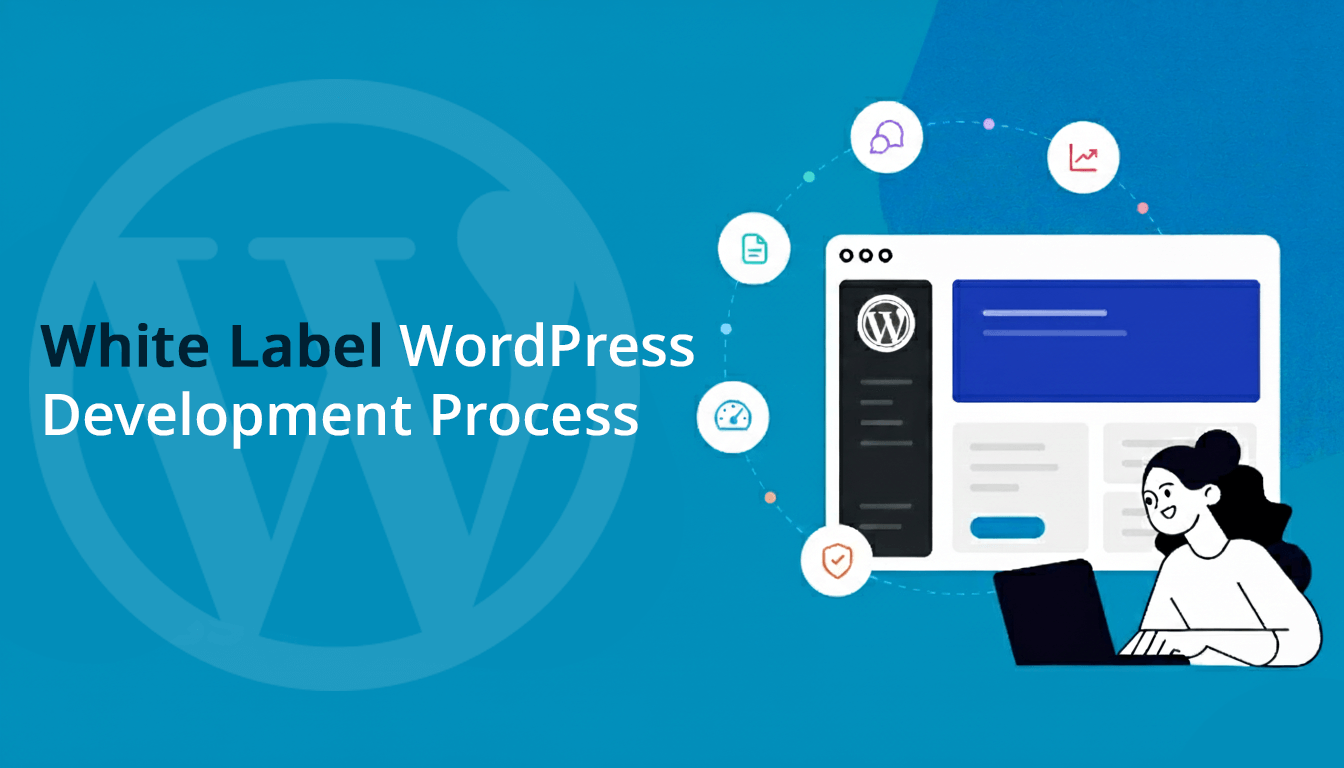
A great white label partnership runs quietly in the background, enhancing your agency’s output while preserving your brand’s integrity. Bantech follows a predictable, structured workflow to ensure reliability, consistency, and quality at every stage.
Steps include:
- Discovery
- Estimation & proposal
- Kickoff
- Development
- QA & testing
- Review
- Launch & support
Common Concerns Agencies Have (and How Bantech Solves Them)
Every agency considering outsourcing has concerns — from client exposure to quality consistency. These concerns are valid, and the right partner must address them proactively. Bantech’s white label-first operations are designed to eliminate the most common outsourcing risks.
Pricing Models for White Label WordPress Development
Choosing the right pricing structure ensures profitability and stability for your agency. Bantech offers flexible models to match project workloads and long-term growth strategies.
SEO Benefits: Why White Label WordPress Development Helps Agencies Rank Better
SEO success begins with strong technical foundations. White label WordPress developers ensure every site is built with clean code, optimized performance, schema-ready structures, and SEO-friendly design — giving marketing teams a powerful advantage.
Final Thoughts: The Future of Agency Growth Depends on Strategic Partnerships
The digital landscape is changing rapidly, and agencies that rely solely on internal teams will struggle to scale profitably. The winners in 2025 and beyond will be agencies that leverage strategic partnerships to increase capacity, expand service offerings, and deliver consistent excellence.
Bantech Solutions offers Western agencies the specialized knowledge, scalable workflows, and hybrid talent needed to grow sustainably — without sacrificing brand quality or client satisfaction.
FAQs
WordPress has grown from a blogging platform into the foundation of more than 43% of all websites worldwide, according to W3Techs (https://w3techs.com/technologies/details/cm-wordpress). For digital agencies, this dominance creates both an opportunity and a pressure point. Clients expect robust websites delivered quickly — optimized for performance, accessibility, security, and seamless experience. Yet scaling an internal development team is rarely straightforward. Hiring, training, and maintaining specialized WordPress engineers can become a structural burden for agencies whose project volumes fluctuate month to month.
This is where white-label WordPress development steps in — not simply as an outsourcing model but as a modern operational strategy. It enables agencies to offer premium development services under their own brand while the actual build is handled by an external expert team. While white-label approaches have existed for decades in manufacturing, software, and even fintech, the application of this model to WordPress reflects a broader shift: agencies are transforming into lean, scalable service providers that prioritize strategy and client relationships over production overhead.
In this article, we break down what white-label WordPress development truly is, why it matters now, and the emerging forces shaping its long-term role in the digital ecosystem.
1. Understanding the Core Concept: What White-Label WordPress Development Really Means
Before exploring advantages or trends, it’s important to ground the concept. White-label WordPress development is a service delivery model where a specialized development partner builds websites on behalf of an agency, but the agency presents the work as their own. The end client never interacts with or sees the development partner.
This model mirrors long-standing white-label practices in SaaS, manufacturing, and e-commerce, where branding and delivery are separated from production. The agency maintains creative control, client communication, and ownership of the relationship. The partner provides the engineering muscle — from custom theme development to plugin integrations and performance tuning.
What makes this model compelling today is that WordPress itself has matured into a powerful application framework. Modern builds require proficiency in Gutenberg, React-based block development, theme and plugin architecture, API integrations, security frameworks, lighthouse optimization, and more. Few agencies want to carry this full spectrum of expertise in-house.
White-label teams fill that capability gap without diluting the agency’s brand voice or positioning.
2. Why White-Label WordPress Development Has Become Essential for Agencies
As agencies expand their client portfolios, they often reach a plateau: opportunities increase, but production bandwidth does not. This tension is especially visible in WordPress projects because clients expect fast delivery timelines and enterprise-quality output, even for mid-sized websites.
Industry surveys reinforce this reality. According to a Statista report (https://www.statista.com/topics/3474/web-development/), demand for web development services continues to rise annually, but talent availability is tightening. Agencies are being pushed to deliver more without increasing operational cost structures.
White-label WordPress development solves this by offering:
- Elastic capacity – scale up or down based on project volume
- Specialized skills on demand – custom blocks, WooCommerce builds, API-first architecture
- Predictable pricing and delivery models
- Freedom to focus on client strategy and acquisition
In essence, agencies gain the operational flexibility of a large development team without the financial weight of becoming one.
3. How White-Label WordPress Partnerships Work in Practice
The mechanics of white-label collaboration are straightforward but structured. Agencies typically handle discovery, brand positioning, UI/UX design, and client communication. Once scope and design are finalized, the development partner takes over the build.
A typical workflow includes:
- Discovery & Documentation – Agencies present brand guidelines, wireframes, feature lists, and functional requirements.
- Development & QA – The white-label team builds the site in a staging environment — including custom modules, Gutenberg blocks, integrations, and performance optimization.
- Feedback Cycles – Agencies review internally and relay structured feedback to ensure brand consistency.
- Deployment & Handover – The site is deployed under the agency’s name, and documentation is handed over for client onboarding.
This model works because it preserves clear ownership lines. The agency remains the face of every conversation while the development partner ensures engineering excellence behind the scenes.
White-label teams often follow modern workflows such as Git-based versioning, CI/CD pipelines, automated testing, and containerized environments — capabilities that many mid-sized agencies may find expensive or difficult to maintain internally.
4. The Strategic Benefits: Why Agencies Prefer White-Label Over In-House Teams
This section matters because agencies today are not simply choosing outsourcing; they are choosing strategic specialization. The rise of white-label WordPress development reflects broader industry shifts such as remote-first talent pools, the gig economy, and the decoupling of service branding from service production.
Some of the most valuable benefits include:
1. Cost Efficiency Without Compromise
Maintaining a full in-house WordPress team requires salaries, benefits, training, DevOps environments, and design/development workflows. White-label partners eliminate that fixed cost and convert it into a project-based or retainer-based structure.
2. Faster Time to Market
Agencies avoid bottlenecks by tapping into teams who work on WordPress exclusively. This often reduces delivery timelines by 20–40%, according to agency reports published on platforms like Clutch (https://clutch.co) and DesignRush (https://www.designrush.com/).
3. Access to Specialized Expertise
Complex builds — such as WooCommerce marketplaces, multilingual setups, membership platforms, or block-based custom architecture — require niche skills many in-house teams do not possess consistently.
4. Operational Scalability
Agencies can pitch bigger deals, accept more projects, and take on varied technical challenges knowing they have the engineering capacity to deliver.
White-label WordPress development is not merely a cost-saving measure — it is a growth strategy that expands an agency’s service capability without diluting its brand identity.
5. What Types of Services White-Label WordPress Teams Typically Offer
As WordPress continues to evolve, white-label offerings have expanded far beyond simple theme installations. A mature partner can cover nearly everything an agency would need, including:
- Custom Figma-to-WordPress development
- Fully custom themes and block patterns
- Gutenberg custom block development
- WooCommerce store development
- Plugin customization & API integrations
- Performance optimization (Core Web Vitals)
- WordPress security hardening
- Multisite setup and management
- Ongoing maintenance and support
- Hosting, DevOps, and technical consulting
These services reflect the broader shift from WordPress as a CMS to WordPress as a full-scale application platform. The right white-label partner ensures agencies stay future-ready without constant internal re-training.
6. How to Choose the Right White-Label WordPress Development Partner
Partner selection is one of the most strategic decisions an agency can make. The wrong firm can cause missed deadlines, code quality issues, or client dissatisfaction. The right firm becomes a long-term production arm.
When evaluating providers, consider:
1. Demonstrated Expertise
Look for case studies, GitHub repositories, plugin contributions, or public code standards. Providers like rtCamp (https://rtcamp.com) and 10up (https://10up.com), for example, openly publish engineering guidelines — a sign of technical maturity.
2. Strong QA and Deployment Processes
A white-label partner should use linting, staging environments, automated testing, and CI/CD workflows.
3. Transparent Communication
They must adapt to your project management style — whether Agile sprints, milestone-based reviews, or fixed delivery models.
4. Confidentiality and NDA Norms
White-label inherently requires invisibility. Ensure strict NDA compliance and private-label rights.
5. Flexible Engagement Models
Project-based, hourly, dedicated teams — the right partner will align with your agency’s growth pattern.
Agencies should treat this selection process the same way they would evaluate an internal hire — but with the higher expectation of proven market expertise.
7. The Future of White-Label WordPress Development
The future of WordPress itself is moving toward block-based editing, full site editing, and a tighter integration of JavaScript/React workflows. As these capabilities mature, white-label partnerships will shift in three key ways:
1. Increased Specialization
Partners will provide niche services such as headless WordPress, decoupled architectures, and React-based custom blocks — all areas where demand is rising.
2. AI-Augmented Development
AI-assisted code generation, automated QA, and content workflows will be increasingly common. White-label partners already experimenting with AI tooling will stand out.
3. Enterprise Expansion
As more enterprise brands adopt WordPress (Netflix, Salesforce, Microsoft — sources: https://wpvip.com), agencies will require white-label partners with security certifications, governance frameworks, and enterprise-grade SLAs.
The future points toward deeper collaboration models rather than superficial outsourcing arrangements. Agencies that build strategic partnerships early will be positioned to scale more aggressively over the next decade.
Bringing It All Together: Practical Takeaways for Agencies
White-label WordPress development is no longer just a convenient option. For many agencies, it is becoming the structural backbone that supports scale, technical excellence, and profitability. The model works because:
- It removes the operational burden of hiring and training.
- It creates predictable, high-quality delivery cycles.
- It lets agencies focus on strategy, UX, creative, and client relationships.
- It provides access to advanced engineering talent on demand.
The agencies winning today — and those positioned to win tomorrow — are the ones that build transparent, reliable, long-term production partnerships.
Final Reflection
White-label WordPress development is ultimately a story about specialization. Agencies excel when they focus on creative strategy, relationship building, and brand leadership. Development partners excel when they focus on engineering depth, process rigor, and technical innovation. When these strengths combine, agencies can deliver exceptional digital experiences at scale — without overstretching internal resources.
As WordPress continues evolving into a more powerful site-building ecosystem, the role of white-label partners will only become more pivotal. For agencies willing to embrace this model, the future is not just efficient — it is expansive.
WordPress powers more than 43% of all websites globally, making it the most widely used content management system in the world (source: https://w3techs.com/technologies/details/cm-wordpress). As organizations expand their digital presence, they expect faster build cycles, more sophisticated functionality, and long-term maintainability. But meeting that expectation consistently is one of the biggest operational challenges agencies face today.
Most agencies are not struggling because they lack ideas or clients—they’re struggling because modern WordPress development requires deep technical specialization. Block-based development, custom Gutenberg components, API integrations, WooCommerce customization, and performance optimization have made WordPress a serious engineering ecosystem, not a simple website builder. This evolution has forced agencies to rethink how they deliver work at scale without compromising quality or timelines.
Enter white-label WordPress development services—a model where specialized development teams build websites on behalf of an agency, while the agency retains full ownership of client communication, brand presentation, and project relationship. This approach has become a growth engine across the digital services landscape, but not every organization leverages it the same way.
So, who exactly should use white-label WordPress development services? And more importantly, why now?
Let’s break down the types of organizations that benefit most, what challenges they solve, and how this model fits into the broader evolution of digital production.
1. Digital Marketing Agencies Looking to Scale Without Expanding Headcount
Digital marketing agencies were among the earliest adopters of white-label development services. As marketing campaigns increasingly required landing pages, microsites, funnels, membership areas, and high-performing WordPress builds, agencies found themselves competing not just on creative strategy—but on technical execution.
Why this group benefits
Marketing agencies typically operate on lean staffing models, where strategists, designers, and account managers take priority over full-time developers. Yet clients often expect agencies to “handle everything,” including website builds.
A 2023 HubSpot report found that 71% of marketing agencies identify technical production capacity as a bottleneck (source: https://research.hubspot.com). Without consistent development resources, agencies risk losing deals or forcing clients to find external vendors—creating a fractured experience.
How white-label fills the gap
White-label WordPress teams give agencies instant access to development capacity without onboarding new employees. It allows them to:
- Offer full-service digital production
- Deliver faster without sacrificing quality
- Avoid the overhead of managing an internal dev team
- Pitch larger projects confidently
This model blends especially well with agencies that focus on strategy and content but want to maintain ownership of website delivery.
2. Creative & Branding Studios That Need Technical Execution Support
Branding and creative studios excel at storytelling, identity systems, and design. But translating those creative assets into functional websites requires technical skills their teams may not specialize in.
Over the past decade, clients have begun expecting branding agencies to deliver “brand + website” as a unified package. This shift has created pressure for studios to expand beyond their core creative expertise.
The operational challenge
Creative studios often produce highly custom designs, advanced animations, and unique interactive elements. Implementing these in WordPress demands senior-level developers comfortable with:
- Custom theme architecture
- Advanced CSS/JS animation
- Gutenberg block development
- Pixel-perfect design execution
Instead of hiring in-house developers for sporadic website needs, studios increasingly rely on white-label WordPress teams who can translate design files (Figma, Sketch, Adobe XD) into performant, responsive, production-ready websites.
Why this group benefits
White-label partners preserve the artistry and integrity of creative work while providing the engineering muscle to bring it to life. This allows creative studios to:
- Expand their offerings
- Increase revenue per client
- Keep design teams focused on what they do best
A smooth handoff between design and white-label engineering ensures creative vision is preserved without requiring internal technical expansion.
3. Web Design Agencies With More Projects Than Production Capacity
Many web design agencies grow faster than their technical teams can handle. While they may already employ in-house developers, fluctuating demand makes it difficult to maintain stable capacity.
The growth bottleneck
Agencies hit a scale ceiling when:
- They close more deals than their team can deliver
- Senior developers become overloaded
- Hiring becomes too slow or expensive
- Specialized skills are needed temporarily (e.g., WooCommerce, headless WordPress)
According to a 2024 Clutch report, 52% of agencies outsource development work during periods of rapid scaling (source: https://clutch.co).
How white-label WordPress services help
White-label partners act as an extension of the existing team, absorbing overflow work or taking ownership of entire projects. This allows agencies to maintain consistent delivery velocity.
The result?
- No missed deadlines
- No turning away new opportunities
- No burnout for internal teams
- Increased revenue with lower risk
For design-led agencies, white-label development becomes the missing operational layer that turns them into a truly scalable business.
4. IT Consultancies and System Integrators Offering WordPress as an Add-On
Not all businesses that deliver websites identify as agencies. Many IT consultancies, software development firms, and system integrators offer WordPress solutions only as a component of a broader digital transformation package.
Why this group turns to white-label developers
These companies typically focus on:
- Enterprise systems
- API development
- Infrastructure
- Custom software
- ERP/CRM integration
WordPress may be just one part of the client ecosystem. Building an entire in-house WordPress team rarely makes economic sense—especially if only 10–20% of projects involve WordPress.
White-label solves the specialization problem
Instead of spreading their team thin, consultancies rely on white-label developers who handle:
- Enterprise WordPress builds
- Multisite networks
- Custom API integrations
- Performance and accessibility compliance
- Complex plugin extension
This arrangement keeps consultancies competitive in full-service RFPs without diluting their engineering focus.
5. Freelancers Needing Professional Backup for Larger or More Complex Projects
Freelancers often live at the intersection of high skill and limited bandwidth. They can design, develop, and manage websites—but not at scale.
Common limitations freelancers face
- Limited time
- Limited technical specialization
- Difficulty handling concurrent deadlines
- Inability to take on large accounts alone
Yet many freelancers attract strong leads through referrals or long-term relationships. Turning away these opportunities can be financially and reputationally costly.
How white-label WordPress support empowers freelancers
White-label partners can step in as invisible collaborators, enabling freelancers to:
- Accept larger projects
- Deliver enterprise-level builds
- Increase earning potential
- Maintain client ownership
This model transforms freelancers into boutique studios—without the operational complexity.
6. Enterprises Managing High-Volume WordPress Content or Brand Microsites
Large organizations often rely on WordPress for:
- Marketing sites
- Campaign microsites
- Landing page experiments
- Event pages
- Regional or product-specific sites
Maintaining these at scale requires significant development capacity, governance, accessibility standards, and security practices.
Why enterprises adopt white-label models
Instead of relying solely on their internal IT teams—who are usually focused on mission-critical systems—enterprises outsource the high-volume production of WordPress assets.
This approach provides:
- Faster turnaround times
- Access to specialized WordPress engineering standards
- Compliance with enterprise-level security and DevOps
- Reduced workload for internal teams
Enterprise WordPress partners such as WP Engine/WordPress VIP (https://wpvip.com) highlight how managed and outsourced development ecosystems are becoming essential for large brands with ongoing content cycles.
7. Startups and SaaS Companies That Need a Marketing Website, Fast
Early-stage companies need a professional-grade website before they can invest in full-time engineering teams. The website becomes the cornerstone of:
- Brand positioning
- Investor storytelling
- SEO and demand generation
- Product education
The challenge
Most startups prioritize product development over marketing development. Their engineers typically don’t want to spend time on websites.
White-label WordPress services solve this by offering
- Fast, high-quality website builds
- Ongoing support without hiring developers
- A scalable foundation for future redesigns
- Cost-efficient execution
This allows startups to preserve engineering bandwidth for core product innovation while maintaining a polished public-facing experience.
Bringing It All Together: Practical Takeaways
White-label WordPress development is not a niche outsourcing model. It has become a strategic lever for agencies and organizations trying to balance growth, expertise, and efficiency.
The groups that benefit most include:
- Marketing agencies scaling rapidly
- Creative studios that need technical translation
- Web design firms with inconsistent production capacity
- IT consultancies requiring specialized WordPress expertise
- Freelancers expanding their capabilities
- Enterprises with complex content ecosystems
- Startups and SaaS companies needing quality without overhead
The common thread among all of them is the same:
They require consistent, high-quality WordPress execution without expanding internal teams or compromising delivery standards.
White-label services provide this alignment—unlocking elasticity, specialization, and long-term growth.
Final Reflection
The evolution of WordPress from a simple content platform to a full digital experience layer has redefined what it means to build a modern website. As expectations rise, organizations can no longer rely on static teams or fragmented vendor networks. They need a scalable, specialized, and operationally seamless way to deliver WordPress solutions.
White-label development offers that bridge. It empowers agencies, studios, enterprises, and independents to operate like larger organizations—without sacrificing agility or profitability. In a digital economy where speed and quality dictate competitive advantage, the organizations that embrace white-label partnerships will position themselves not just to meet demand but to lead their markets.
For decades, outsourcing has been the backbone of the digital services economy. Agencies, consultancies, and enterprises have relied on external teams to scale production, reduce costs, and access specialized skills. But in recent years, a growing number of organizations have shifted toward a different operational model: white-label development. While often spoken about as a variation of outsourcing, white-label development is a fundamentally different approach—designed not only to increase capacity but to preserve brand ownership and streamline client-facing delivery.
This shift has accelerated as technology becomes more complex and client expectations more demanding. Businesses across industries—from SaaS to digital marketing to enterprise consulting—need ways to expand their technical capabilities without diluting the brand experience. Traditional outsourcing solves the production problem. White-label development solves the brand continuity problem.
To understand why white-label development has gained such momentum, we must explore how it differs structurally, operationally, and strategically from regular outsourcing. These differences shape everything from client communication to development workflows, and ultimately determine how businesses scale in a fast-moving digital landscape.
1. The Core Difference: Client Visibility and Brand Ownership
Before diving into processes and long-term strategy, it’s important to establish the foundational difference between the two models.
Regular outsourcing is visible; white-label development is invisible.
In traditional outsourcing, the external development team is acknowledged as a third-party contributor. They may communicate directly with the client, participate in meetings, or co-brand deliverables. The agency acts primarily as a coordinator or intermediary.
In contrast, white-label development is purpose-built for brand invisibility. The development partner works strictly behind the scenes, with the agency taking full credit for the work. The client never interacts with or sees the third-party provider. This is especially critical in industries where agencies must maintain a unified brand experience.
The model mirrors practices in established sectors like SaaS reselling and OEM manufacturing, where private-label production has been standard for decades. Companies protect client relationships by ensuring production remains silent and seamless.
Why this matters
Brand loyalty is fragile. According to Edelman’s Trust Barometer (https://www.edelman.com/trust), 81% of consumers say trust influences their purchasing decisions. When agencies introduce multiple outside vendors into the process, consistency weakens. White-label development removes that instability by allowing agencies to maintain a single, uninterrupted brand narrative.
This distinction is the foundation upon which all other differences are built.
2. Workflow Integration and Communication Models
One of the most overlooked areas where white-label and regular outsourcing diverge is workflow integration. The way teams communicate has direct impact on quality, consistency, and delivery velocity.
Regular outsourcing involves multi-party communication.
In traditional outsourcing arrangements, communication often flows directly between the client and the outsourced development team. This can be beneficial in highly technical projects, where the client wants domain-specific clarity, but it also introduces risk:
- Misalignment in expectations
- Mixed messaging
- Project management overhead
- Reputational risk when communication breakdowns occur
White-label development centralizes communication.
In white-label models, all client communication stays within the agency. The external team communicates exclusively with the agency—not with the client. This ensures:
- Unified messaging
- Controlled delivery timelines
- Consistent quality standards
- Reduced risk of miscommunication
A report by McKinsey (https://www.mckinsey.com/capabilities/operations/our-insights) highlights that centralized communication frameworks reduce delivery friction by up to 30%. White-label development is structured around that insight: a single voice, a unified workflow, and predictable outcomes.
Why this matters
Clients expect cohesion—not a patchwork of vendors. White-label development offers agencies the ability to orchestrate a single, coherent delivery experience.
3. Ownership of Delivery, Accountability, and Client Experience
When evaluating the differences between white-label development and regular outsourcing, few areas are as important as accountability.
In traditional outsourcing:
- The outsourced vendor is considered a co-executor of the project.
- The client may attribute mistakes or delays to that vendor.
- Responsibility is shared, often resulting in fragmented accountability.
In white-label development:
- The agency retains 100% ownership of the outcome.
- Successes—and failures—are attributed entirely to the agency.
- The development partner remains strictly a silent executor.
This alignment pushes white-label partners to adopt more structured processes, including:
- mature QA pipelines
- strict NDA and confidentiality compliance
- standardized documentation
- design-to-development accuracy
- post-launch support frameworks
These operational standards are not optional—they’re built into the white-label model, because the partner’s reputation hinges on the agency’s brand success.
Agencies benefit from this structured accountability because it creates a predictable delivery ecosystem. In regular outsourcing, the agency must often mediate between client expectations and vendor limitations. In white-label development, the partner operates as an extension of the agency’s internal team.
4. Scalability, Reliability, and Specialization
The scalability benefits of outsourcing are well known, but white-label development offers a different level of reliability and specialization that traditional outsourcing does not always guarantee.
Traditional outsourcing prioritizes cost and capacity.
Organizations often outsource to reduce workloads or operational costs. While this works at scale, outsourcing vendors typically serve multiple clients simultaneously, each with different brand and process requirements. Alignment varies from project to project.
White-label development prioritizes continuity and specialization.
Most white-label partners:
- specialize in specific technologies (e.g., WordPress, Shopify, Laravel)
- build long-term relationships with agencies
- adapt fully to the agency’s brand and workflow
- maintain dedicated pods for recurring agency partners
Because white-label teams embed themselves into the agency’s operational rhythm, scalability becomes predictable—not just available.
A 2024 survey by Clutch (https://clutch.co/developers/resources) found that agencies using white-label partners increased project throughput by 37% without increasing headcount. This is because white-label partners offer “always-on” capacity aligned with the agency’s preferred tools, methodologies, and code standards.
Why this matters
Regular outsourcing grows the project pipeline.
White-label development grows the business.
5. Transparency, Confidentiality, and Brand Protection
Confidentiality is rarely the defining factor in traditional outsourcing relationships. Outsourced teams may appear in email threads, Zoom calls, or documentation. Their involvement is acknowledged, even expected.
But white-label development operates on a fundamentally different premise.
White-label partnerships require strict confidentiality.
This includes:
- signing NDAs
- removing all vendor branding
- producing documentation consistent with the agency’s style
- remaining invisible in client communication
- delivering assets under the agency’s brand name
Many white-label providers also adhere to ISO/IEC 27001 guidelines for security and confidentiality—standards commonly required in enterprise environments.
Why this matters
Agency-client trust relies on perceived internal capability. White-label development strengthens that trust by ensuring:
- no external vendor confusion
- no stakeholder overlap
- no risk of brand dilution
This level of confidentiality and brand stewardship is not expected—or typically required—in regular outsourcing engagements.
6. Pricing Models and Value Perception
While pricing varies based on region, expertise, and team size, the pricing structures themselves differ substantially between the two models.
Regular outsourcing focuses on hours and effort.
Hourly and T&M (time and materials) models dominate traditional outsourcing. These are effective for project-based or technical-only engagements but can create unpredictable cost fluctuations.
White-label development focuses on long-term partnership economics.
White-label pricing is designed for repeatable, scalable, long-term work, often with:
- project-based fixed pricing
- dedicated team models
- volume-based discounts
- monthly retainers for continuous production
This stability allows agencies to price their services confidently—preserving healthy margins without requiring internal cost forecasting.
According to Deloitte’s Global Outsourcing Report (https://www2.deloitte.com/global/en/pages/operations/articles/global-outsourcing-survey.html), structured long-term outsourcing agreements reduce financial variance by up to 25%. White-label development aligns closely with these models, making it especially attractive to agencies that want predictable profitability.
Bringing It All Together: Practical Takeaways
White-label development and traditional outsourcing both provide external production capacity—but they serve fundamentally different business goals.
Choose regular outsourcing if you need:
- technical support only
- direct client-to-developer communication
- flexible, project-specific collaboration
- short-term or specialized engineering resources
Choose white-label development if you need:
- invisible production scalability
- full client ownership and brand continuity
- consistent delivery frameworks
- long-term, predictable development capacity
- a partner who operates as an extension of your agency
Outsourcing supports execution.
White-label development supports business growth.
Agencies, consultancies, and creative studios increasingly prefer white-label models because they extend capability without expanding internal teams or compromising brand identity.
Final Reflection
As digital ecosystems grow more interconnected, organizations need operational models that balance scale, specialization, and brand control. Outsourcing will continue to play a vital role in global production, but white-label development has emerged as the model best suited for agencies and businesses that prioritize relationship ownership and brand consistency.
The future of digital delivery is not merely about producing more work—it is about producing consistent, high-quality work under a unified brand experience. White-label development enables that future by merging the reliability of internal teams with the efficiency of external expertise.
For agencies aiming to grow without growing overhead, or for businesses seeking to maintain quality while expanding offerings, white-label development is not simply an alternative to outsourcing—it is the evolution of it.
WordPress has evolved from a simple blogging tool into a comprehensive digital experience platform powering more than 43% of all websites globally (source: https://w3techs.com/technologies/details/cm-wordpress). For agencies, consultants, and creative studios, this dominance creates opportunity—and pressure. Clients expect faster website delivery, stronger performance metrics, deeper integrations, and ongoing maintenance support. Yet maintaining an in-house development team capable of delivering all these services consistently is becoming increasingly difficult.
This is where white-label WordPress agencies enter the picture. Unlike traditional outsourcing vendors, white-label partners work behind the scenes, enabling agencies to offer expanded technical capabilities under their own brand. Their services cover a wide spectrum—from custom theme development to enterprise-level integrations—acting as an invisible extension of the agency’s own team.
But what exactly can a white-label WordPress agency provide? And how do their capabilities help agencies scale without inflating complexity?
This article breaks down the entire service ecosystem offered by white-label WordPress partners, explaining not only what they do but also why these services matter in an increasingly competitive digital environment.
1. Custom WordPress Theme Development: Bringing Unique Designs to Life
Every strong digital presence begins with design—and the ability to translate that design into a fast, secure, and maintainable WordPress theme is one of the foundational capabilities of a white-label partner. But modern theme development is more complex than simply converting PSD or Figma files into code.
The shift toward custom themes and block-based design
WordPress’ move toward Gutenberg and block-based editing has reshaped how themes must be built. Agencies need themes that are flexible enough for content creators, yet structured enough to preserve design consistency. White-label development teams specialize in building:
- Fully custom themes
- Block-based themes using Gutenberg
- Component libraries and reusable design systems
- Accessibility-ready themes (WCAG 2.1 AA compliance)
A 2024 WP Engine report (https://wpengine.com/resources) notes that block-based websites load 30–40% faster due to streamlined markup and modern architecture. White-label agencies ensure themes meet these evolving performance demands.
Why agencies rely on this expertise
Theme development often requires deep technical skills—React, PHP, modern CSS frameworks, REST API integrations—and agencies cannot always staff internally for this level of specialization. A white-label partner ensures pixel-perfect execution of designs and consistency across all client projects.
2. Custom Plugin Development and Feature Extensions
As digital experiences become more personalized and dynamic, agencies frequently require functionality that standard plugins cannot provide. This is where white-label WordPress teams deliver significant value.
Custom functionality built the right way
A white-label agency builds:
- Custom plugins
- Plugin extensions
- Third-party API integrations
- Feature modules for CRM, ERP, LMS, and SaaS systems
- Membership and subscription logic
These solutions ensure clients get the exact functionality they need without relying on bloated or insecure third-party tools.
Security and performance baked into every build
A poorly coded plugin can expose an entire website to vulnerabilities. According to Sucuri’s 2023 Website Threat Report (https://sucuri.net/reports), plugin vulnerabilities accounted for 61% of hacked WordPress websites. White-label partners adhere to coding standards (WordPress Coding Standards, OWASP), ensuring that functionality is secure, optimized, and maintainable.
Why agencies choose white-label plugin expertise
Building plugins requires niche engineering skills that agencies often do not have internally. White-label teams fill this gap, allowing agencies to offer enterprise-grade custom functionality without expanding their engineering departments.
3. WooCommerce Store Development and E-Commerce Engineering
E-commerce represents one of the most technically demanding areas of WordPress development. WooCommerce powers nearly 30% of all online stores (source: https://woocommerce.com), but building high-performance stores requires advanced expertise.
A white-label WooCommerce team typically handles:
- Store setup and custom theme development
- Custom checkout workflows
- Subscription models and memberships
- Product configurators
- Multi-vendor marketplace builds
- ERP, CRM, and payment gateway integrations
- Inventory automation
- Performance optimization for large catalogs
These capabilities transform WooCommerce from a simple plugin into a scalable e-commerce system capable of competing with Shopify Plus or BigCommerce builds.
Why this matters for agencies
E-commerce projects often stretch internal resources and require specialized knowledge. White-label teams ensure agencies can confidently pitch and deliver large-scale e-commerce initiatives while maintaining client ownership and brand integrity.
4. Website Maintenance, Security, and Ongoing Support
Launching a site is only the beginning. The real challenge lies in maintaining it—keeping plugins updated, monitoring security, preventing downtime, and optimizing performance as traffic grows.
White-label partners provide continuous operational support, including:
- Core, theme, and plugin updates
- Daily backups
- Uptime monitoring
- Security auditing
- Malware removal
- Speed optimization
- Broken link and site health monitoring
Companies like Kinsta (https://kinsta.com/learn/wordpress-maintenance/) and WP Buffs highlight how ongoing maintenance reduces issues by more than 40%. White-label partners operate similarly—ensuring agencies stay proactive rather than reactive.
Why agencies rely on this service
Maintenance and support create long-term recurring revenue. But they can also drain internal resources if not managed properly. White-label teams allow agencies to offer premium support tiers without hiring dedicated staff.
5. Performance Optimization and Core Web Vitals Improvement
As Google continues to prioritize Core Web Vitals and site speed as ranking factors, performance optimization has become essential—not optional. Clients now expect sites to load in under two seconds and achieve high Lighthouse scores.
White-label optimization services typically include:
- Caching and CDN configuration
- Image compression and next-gen formats
- Code minification and bundling
- Lazy loading and script deferral
- Database optimization
- Server or hosting recommendations
Google’s Core Web Vitals documentation (https://web.dev/vitals/) shows that websites meeting performance thresholds see measurable SEO improvements.
Why this matters for agencies
Performance is now part of brand perception. Agencies that cannot ensure top-tier performance risk losing clients to more technically prepared competitors. White-label partners ensure consistent performance across every project.
6. WordPress Migrations, Multisite, and Enterprise Implementations
Beyond standard site builds, many organizations require complex architectural work—data migrations, multisite deployments, or enterprise integrations. These projects require deep WordPress engineering expertise.
Typical advanced services include:
- Migrations from Drupal, Joomla, HubSpot, Shopify, or custom CMS
- Full WordPress Multisite setup
- SSO integrations
- Enterprise workflows and governance
- Headless WordPress development
- API-first architecture
- Custom Gutenberg block libraries
Large companies such as Microsoft and Spotify use WordPress VIP (https://wpvip.com/customers/) to manage enterprise-grade digital ecosystems. White-label partners often follow similar engineering standards for their agency clients.
Why agencies need this level of expertise
Handling large-scale migrations or multisite builds requires capabilities beyond what most agencies keep internally. White-label teams function as a specialist wing, enabling agencies to pursue high-value enterprise deals.
7. Content Migration, SEO Setup, and Digital Readiness Support
White-label partners frequently support agencies with the final mile of website delivery: content loading, SEO configuration, and readiness for launch.
This includes:
- Content population and formatting
- Schema markup
- Technical SEO setup
- Redirect mapping
- Analytics and tracking implementation
- Tag Manager configuration
- Core SEO best-practice adherence
A site without proper SEO readiness risks poor performance—even if it is beautifully developed. White-label partners close this gap by ensuring every project is “launch ready.”
Bringing It All Together: Practical Takeaways
A white-label WordPress agency is far more than a hidden development vendor. It is a strategic production partner capable of:
- Expanding an agency’s service portfolio
- Providing deep engineering expertise
- Maintaining brand consistency and client trust
- Ensuring long-term site performance and security
- Delivering enterprise-grade solutions invisibly
From custom development to ongoing support, a white-label WordPress agency offers an end-to-end digital production engine—allowing agencies, studios, and consultancies to grow without overextending internal teams.
Final Reflection
As WordPress continues to evolve—shifting toward headless architecture, modern block-based development, and enterprise adoption—the demand for specialized technical expertise will only intensify. Agencies that rely solely on in-house resources may struggle to keep pace with this evolution. White-label WordPress partners offer a future-ready solution: scalable, specialized, and seamlessly integrated into the agency’s brand experience.
The future of digital delivery belongs to agencies that combine strategic creativity with deep technical execution. White-label partnerships make that combination not only possible—but sustainable.
For modern digital agencies, WordPress development is no longer a peripheral service—it is central to client delivery. With WordPress powering more than 43% of all websites globally (source: https://w3techs.com/technologies/details/cm-wordpress), demand for high-quality, scalable, fast-loading WordPress sites has grown exponentially. Yet not every agency is structured to maintain an internal team capable of handling the complexities of modern development—from Gutenberg block engineering to API-driven architectures and performance optimization that meets Core Web Vitals.
This leads to a critical operational decision: Should an agency build an in-house WordPress development team, or partner with a white-label development provider? While hiring may seem like the traditional route, white-label WordPress development has emerged as a strategic alternative—one that aligns with the realities of project-based demand, fluctuating workloads, and the increasing technical sophistication of WordPress as a platform.
White-label development is more than outsourced labor. It is a business model designed to allow agencies to expand capacity, protect their brand identity, and deliver technical excellence without the operational weight of recruiting, training, and managing full-time developers. As client expectations accelerate and competition intensifies, agencies are rethinking how they deliver technical work at scale—and white-label partnerships are at the center of that shift.
1. Cost Efficiency and Financial Predictability in an Uncertain Market
Even before discussing scalability or expertise, the most immediate reason agencies avoid hiring in-house teams is the cost structure. Full-time developers come with salaries, benefits, equipment, training budgets, taxes, and overhead. According to Glassdoor, experienced WordPress developers in the US average between $70,000–$110,000 per year, not including benefits (source: https://www.glassdoor.com/Salaries/wordpress-developer-salary).
The cost of hiring extends far beyond salary
When agencies hire internally, they commit to fixed expenses—even during periods of low project volume. This misalignment creates financial exposure. In contrast, white-label WordPress partnerships convert fixed costs into variable, project-aligned investments. Agencies pay only for work delivered, not for downtime, recruitment cycles, or ongoing employee management.
Predictable project margins and improved cash flow
White-label partners typically operate under consistent pricing models—per project, retainer, or dedicated team—which allows agencies to forecast margin with far greater accuracy. This is especially important in competitive markets where agencies must quote confidently and deliver profitably.
A Deloitte outsourcing report (https://www2.deloitte.com/global/en/pages/operations/articles/global-outsourcing-survey.html) states that cost reduction remains the top driver of outsourcing decisions, but the real value lies in optimized financial predictability. White-label development aligns perfectly with this principle.
Transition to the next point
While cost efficiency is compelling, agencies don’t adopt white-label models purely to save money—they also do it to access a level of expertise that is difficult and expensive to build internally.
2. Access to Specialized Expertise Without Long Hiring Cycles
Agencies today are expected to deliver sophisticated WordPress solutions: custom Gutenberg blocks, WooCommerce customizations, multisite networks, headless architectures, API integrations, and Core Web Vitals optimization. Maintaining a team with all these capabilities is not realistic for most small or mid-sized agencies.
In-house hiring limitations
Recruiting top-tier WordPress engineers takes months. After hiring, agencies must:
- Train them on internal processes
- Keep them upskilled as WordPress evolves
- Provide ongoing mentorship
- Absorb the cost of turnover and re-hiring
And because skillsets vary, one developer rarely covers all technical needs.
White-label partners offer immediate access to high-level talent
A white-label WordPress agency typically employs multidisciplinary teams:
- Backend engineers (PHP, REST API, WP architecture)
- Frontend specialists (React, Gutenberg blocks, CSS frameworks)
- WooCommerce engineers
- DevOps and performance experts
- QA professionals
- Accessibility specialists
This collective expertise allows agencies to confidently take on high-value, technically complex projects without staffing or training constraints.
Smooth transition
Yet expertise alone is not the full story—agencies also need the ability to scale rapidly when demand spikes. This leads to the next advantage.
3. Operational Scalability Without Risk or Hiring Bottlenecks
Agency workloads fluctuate dramatically. One quarter may bring three large projects, while the next brings ten smaller ones. Hiring in-house teams locks agencies into rigid operational structures that often don’t align with business cycles.
The scalability challenge of in-house hiring
When internal teams are overwhelmed, deadlines suffer. When demand slows, developers sit idle—draining resources. This mismatch creates long-term operational inefficiencies.
White-label WordPress development eliminates this mismatch
White-label partners scale elastically:
- Need an extra developer for a week? Done.
- Need a full team for a month? Available.
- Need 10 simultaneous projects delivered? No internal hiring required.
This elasticity allows agencies to focus on selling and strategic client support, while production scales in the background.
A McKinsey study (https://www.mckinsey.com/capabilities/operations/our-insights/the-future-of-operations) notes that flexible external partnerships can increase delivery capacity by 30–50% without increasing administrative overhead.
Transition to the next point
Scalability ensures agencies can handle volume, but another powerful benefit of white-label partnerships is consistency—specifically in project delivery and quality.
4. Higher Delivery Consistency and Standardized Production Quality
One of the understated challenges of hiring in-house is that teams vary in skill, experience, and coding standards. Over time, agencies may accumulate inconsistent codebases, undocumented features, or varying development methods across client projects.
White-label partners prioritize standardized, repeatable quality
Because white-label agencies serve multiple digital partners, they develop:
- Rigid coding standards
- Documented workflows
- Reproducible QA processes
- Performance and security benchmarks
- Version-controlled development ecosystems
Their success depends on consistency—and agencies benefit from that rigor.
Why in-house teams struggle with standardization
Internal developers rotate off projects, take vacations, change roles, or eventually leave. Each transition risks:
- Knowledge loss
- Reduced maintainability
- Slower handovers
- Unpredictable code quality
White-label avoids these issues entirely
Documentation, code repositories, QA protocols, and deployment workflows are maintained centrally, ensuring project stability even as agency needs evolve.
Smooth transition
Consistency helps agencies deliver reliably, but delivery also depends on time. This leads to the next major advantage: speed.
5. Faster Turnaround Times and Reduced Production Delays
Speed is a competitive advantage in digital services. Agencies that deliver quickly win more deals, increase client satisfaction, and improve their margins. But internal development teams can only move as fast as capacity allows.
Why in-house teams slow down delivery
- Limited number of developers
- Overlapping deadlines
- PTO, sick days, or unexpected absences
- Bottlenecks caused by single points of expertise
White-label WordPress partners operate with larger teams
They offer:
- Parallel development
- Dedicated pods for projects
- Overlapping time-zone coverage
- Fast, documented feedback cycles
- Resource redundancy
This often results in 20–40% faster delivery, according to mid-market agency performance benchmarks published on Clutch (https://clutch.co).
Why speed matters strategically
Faster production allows agencies to:
- Take on more projects
- Reduce operational stress
- Beat competitors in proposal timelines
- Increase profitability per client
Transition to the next idea
Speed is valuable—but only when delivered without diluting brand control. This brings us to a defining difference between the two models.
6. Better Brand Control and Client Ownership Compared to In-House Models
When agencies hire in-house developers, these employees inevitably become part of the client-facing delivery experience. Their communication style, availability, and capacity shape client perception. This can be beneficial, but it can also introduce risk—especially if developers lack client-handling experience.
White-label development preserves agency identity
White-label teams operate entirely behind the scenes:
- No direct client interaction unless requested
- No external branding
- No vendor signatures
- No dilution of agency’s service positioning
This ensures that all communication, presentations, and deliverables reflect the agency’s brand voice.
Why brand control matters now more than ever
Clients buy relationships. According to Edelman’s Trust Barometer, 81% of consumers choose providers they trust (source: https://www.edelman.com/trust). Fragmenting the delivery experience with mixed internal and external messaging weakens that trust.
Smooth transition
Brand continuity matters—but so does operational focus. And this leads to the next advantage.
7. Agencies Can Focus on Strategy, Not Production Management
In-house teams require constant oversight:
- task assignment
- training
- code reviews
- workflow management
- performance evaluations
This management overhead often consumes leadership time that should be spent on strategy, sales, and client relationships.
White-label development shifts production responsibility outward
The partner handles:
- technical planning
- implementation
- QA
- deployment
- documentation
Freeing agencies to focus on:
- client strategy
- creative output
- brand development
- business growth
This division of responsibilities aligns with how modern agencies operate: lean internal strategy teams supported by specialized external execution engines.
Bringing It All Together: Practical Takeaways
White-label WordPress development is not a cost-cutting shortcut—it is a strategic operating model built for agencies that want to grow without internal friction.
Compared to hiring in-house, white-label offers:
- Lower overhead and predictable finances
- Faster access to specialized expertise
- Elastic scalability aligned with project demand
- Greater consistency and technical rigor
- Faster delivery cycles
- Stronger brand control
- Freed-up leadership time for strategy
Agencies that adopt this model can confidently expand their capabilities, pursue more ambitious projects, and reduce operational complexity—all while maintaining a seamless client experience.
Final Reflection
As WordPress continues maturing into a modern engineering ecosystem—with headless builds, block-based editing, and API-driven architectures—agencies must choose development models that match the pace of change. Hiring in-house may provide stability, but it cannot always offer the breadth, speed, and scalability required in today’s competitive environment.
White-label WordPress development enables agencies to operate like larger organizations without becoming one. It blends the trust of internal delivery with the capacity of an external production engine, giving agencies the freedom to innovate while ensuring that every project shipped reflects the strength of their brand.
In a landscape defined by specialization, adaptability, and speed, white-label WordPress partnerships are not simply an alternative to hiring in-house—they are the future of agency operations.
In today’s agency landscape, cost-efficiency is no longer a matter of simple budgeting—it’s a strategic differentiator. As WordPress continues to dominate the CMS market with over 43% global usage (source: https://w3techs.com/technologies/details/cm-wordpress), agencies are under pressure to deliver high-quality websites faster, more consistently, and at competitive price points. Yet maintaining an in-house WordPress development team has become increasingly expensive due to rising salaries, evolving skill demands, and constant tooling updates.
This ongoing tension between growing client expectations and operational constraints has pushed many agencies to question the economics of their delivery model. Can they sustain a full internal team? Should they hire more developers to meet demand? Or is a more flexible, scalable approach—such as white-label WordPress development—more cost-effective in the long run?
White-label development is often framed as an outsourcing alternative, but its economic advantages go far beyond cost reduction. Agencies that adopt white-label partnerships unlock a fundamentally different financial model—one built on elasticity, specialization, and predictable margins.
This article breaks down exactly why white-label WordPress development is often far more cost-effective than in-house hiring, and how agencies can leverage it to stabilize costs, increase output capacity, and grow sustainably.
1. Eliminating the Fixed Costs of Hiring, Training, and Retention
Before an agency can determine whether white-label development is cost-effective, it must understand the true cost of hiring internally. Salaries are only one component of total employment expense—there are hidden operational burdens that compound over time.
The rising cost of WordPress talent
According to Glassdoor and Indeed (sources: https://glassdoor.com, https://indeed.com/salaries), the average WordPress developer salary has risen steadily, with mid-level developers earning between $60,000 and $90,000 USD annually, and senior-level developers surpassing six figures in many regions. In competitive markets like the U.S., Canada, and the U.K., salary inflation is accelerating due to increased demand for React, Gutenberg block development, WooCommerce expertise, and API integration skills.
The hidden costs agencies overlook
Beyond salary, agencies must also account for:
- Hiring and recruitment fees
- Onboarding and training
- Development tools and licenses
- Health benefits and insurance
- Paid time off, sick leave, and turnover
- Skill upgradation as WordPress evolves
A Deloitte HR report estimates that finding and onboarding a new technical employee costs 1.3 to 1.5 times their salary (source: https://www2.deloitte.com).
How white-label solves this cost burden
White-label development converts fixed payroll expenses into flexible, predictable project-based costs. Agencies only pay for the work they need—no recruitment, no downtime, no administrative overhead.
This shift alone can reduce annual operational costs by 30–40%, especially for small and mid-sized agencies.
2. Scalability Without the Financial Risk of Overstaffing
One of the most expensive challenges agencies face is workload volatility. Some months bring a flood of new projects; others slow down significantly. Maintaining a consistent internal team during these fluctuations can strain finances.
The scalability dilemma
If an agency hires too many developers, payroll becomes a liability during slow periods.
If it hires too few, deadlines slip and opportunities are lost.
Both scenarios have measurable financial consequences.
White-label development offers elastic capacity
One of the primary economic advantages of white-label WordPress development is the ability to scale up or down instantly.
A white-label partner provides:
- Additional bandwidth during peak workloads
- Specialized engineers for complex tasks
- Standby capacity without ongoing cost
- Reduced risk when bidding on larger projects
Agencies gain the freedom to accept more work without assuming long-term financial commitments.
The result: higher revenue with lower overhead
A report by Clutch (https://clutch.co) found that agencies using white-label partners increased project throughput by up to 37%, directly improving revenue potential without increasing fixed expenses.
This scalability becomes a key part of a cost-effective growth strategy.
3. Access to Specialized Expertise Without Paying Specialist Salaries
Modern WordPress development is no longer a one-dimensional skill set. Agencies today require expertise in:
- Custom Gutenberg block development
- WooCommerce customization
- API integrations (CRM, ERP, LMS, SaaS platforms)
- Site performance optimization
- Security hardening
- Multisite configurations
- Headless WordPress
Hiring senior specialists for each of these areas is prohibitively expensive—and often unnecessary on a full-time basis.
White-label partners offer expertise on demand
A white-label WordPress agency typically maintains a multi-disciplinary team of specialists who can be deployed as needed. This lets agencies access high-level skill sets without incurring premium salaries.
This expertise reduces risk and prevents costly technical debt
Poor development decisions—such as choosing the wrong architecture or using unoptimized plugins—can cost agencies thousands in future fixes. White-label partners mitigate that risk by applying best practices and enterprise-grade development standards.
Why this is economically significant
Agencies no longer need to invest in niche talent internally. They pay only for the expertise required, when it is required—maximizing value and minimizing cost exposure.
4. Faster Delivery Cycles Increase Profit Margins
Time is a direct economic variable. The faster an agency delivers projects, the more profitable it becomes. But hiring and training new developers to speed up internal delivery is rarely cost-effective.
White-label partners accelerate production timelines
Experienced white-label teams operate with mature workflows, including:
- Established coding standards
- Prebuilt components and frameworks
- Streamlined QA processes
- Automated testing tools
- Dedicated project managers
This operational maturity shortens development cycles.
Faster delivery = improved profit margin
When agencies can deliver WordPress projects 20–40% faster (a range supported by various agency surveys on platforms like UpCity and Clutch), they:
- Increase client satisfaction
- Improve cash flow
- Take on more projects
- Reduce labor hours per project
The compounding effect of faster delivery positions white-label development as one of the most cost-efficient operational models for agencies aiming to scale.
5. Reduced Technical Debt and Maintenance Costs Over Time
Technical debt is one of the most expensive—and often invisible—costs agencies face. Poor code, security flaws, or performance issues create long-term expenses that exceed the savings of low-quality development.
White-label development emphasizes long-term maintainability
Reputable white-label agencies use:
- Modular architectures
- Clean coding principles
- Security best practices (OWASP, WPCS)
- Version-controlled repositories
- Staging environments and testing pipelines
This reduces the likelihood of future bugs, vulnerabilities, or rebuilds.
Why this matters for cost-effectiveness
Fixes and rebuilds are significantly more expensive than building something correctly the first time. WordPress security reports—such as Sucuri’s annual analysis (https://sucuri.net/reports)—reinforce that poorly coded themes and plugins are among the top vulnerabilities exploited by attackers.
White-label expertise lowers long-term maintenance costs by preventing systemic issues before they arise.
6. Predictable Pricing Models Improve Financial Planning
A major advantage of white-label development is pricing stability—something internal hiring cannot provide.
Typical white-label pricing models include:
- fixed-price project estimates
- hourly or bucket-based systems
- dedicated team retainers
- monthly maintenance subscriptions
These predictable structures help agencies maintain consistent margins, allocate budgets more accurately, and price client projects with confidence.
In contrast, in-house development introduces high variability
Payroll fluctuations, technical training, developer churn, and recruitment cycles make budgeting difficult and unpredictable.
Predictability = cost-effectiveness
White-label partners provide stable, transparent pricing—eliminating many of the financial unknowns that hinder agency growth.
Bringing It All Together: Practical Takeaways
White-label WordPress development is not simply “cheaper outsourcing.” It is a strategically cost-efficient model that aligns agency operations with financial sustainability.
The reasons it is more cost-effective than hiring in-house include:
- Reduction of fixed employment costs
- Elastic scalability without risk
- Access to specialized expertise without premium salaries
- Faster project delivery that increases margin
- Lower maintenance costs due to higher-quality engineering
- Predictable pricing that improves financial planning
For agencies navigating fluctuating workloads, evolving technical demands, or competitive market pressures, the cost structure of white-label development offers clarity and stability.
Final Reflection
Agencies succeed when they balance creativity, strategy, and technical execution—but this balance becomes difficult to maintain when internal resources are stretched thin. White-label WordPress development provides a powerful alternative: the ability to expand capacity, improve quality, and optimize costs without sacrificing control or brand integrity.
As WordPress continues to evolve and client expectations rise, cost-effectiveness will increasingly depend on flexibility rather than headcount. Agencies that embrace white-label partnerships position themselves not just to survive the volatility of the digital market—but to thrive in it.
As the digital ecosystem matures, clients increasingly view website support and maintenance not as an optional add-on, but as a core expectation. WordPress—now powering over 43% of the internet (source: https://w3techs.com/technologies/details/cm-wordpress)—demands continuous updates, security patches, performance tuning, uptime monitoring, content changes, and compatibility adjustments. But for agencies, scaling this level of ongoing care internally can be expensive, operationally complex, and talent-intensive.
This is why white-label WordPress support and maintenance has become one of the most strategic service extensions for modern agencies. Instead of hiring internal support specialists or allocating valuable developer hours to maintenance tasks, agencies can partner with an invisible, expert team that works behind the scenes—while the agency retains full branding, client communication, and revenue ownership.
But can an agency truly offer ongoing support and maintenance through a white-label partner without compromising client relationships or quality? The short answer is yes. The long answer—which this article explores in depth—reveals why this model is not just viable but transformative for agencies focused on sustainable growth, operational efficiency, and long-term client retention.
Let’s break down how white-label partners deliver ongoing WordPress support, why this approach is growing rapidly, and what agencies must consider when adopting it.
1. Why Ongoing WordPress Support Matters More Than Ever
Before exploring how white-label support works, it’s important to understand why demand for continuous WordPress maintenance is rising so sharply. Websites today are no longer static assets—they are living systems with dependencies, integrations, analytics layers, and security frameworks. Even small lapses in maintenance can have serious consequences.
Security threats are growing rapidly
According to Sucuri’s 2023 Threat Report (https://sucuri.net/reports), WordPress accounted for 96% of infected CMS platforms scanned by the company, driven primarily by outdated plugins or themes. This highlights the need for structured, ongoing maintenance—not occasional check-ins.
Performance and Core Web Vitals influence search rankings
Google’s Core Web Vitals update (https://web.dev/vitals/) forces websites to maintain ongoing optimization in areas such as speed, responsiveness, and visual stability. Performance monitoring is no longer optional—it’s tied directly to visibility and conversion rates.
User expectations are evolving
Clients expect their websites to operate smoothly across devices, browsers, and user conditions. Issues ranging from plugin conflicts to hosting misconfigurations directly impact user experience.
Why this creates pressure for agencies
Agencies must balance:
- Production work
- New client acquisition
- Creative strategy
- Technical support
- Maintenance requests
…often with limited internal resources.
White-label partners help agencies offload the most resource-intensive portion of the lifecycle—support and maintenance—without sacrificing client satisfaction or quality.
2. What White-Label WordPress Support Services Typically Include
White-label WordPress maintenance is not limited to monthly updates. Reputable partners deliver comprehensive, SLA-driven support systems that cover every layer of a WordPress website.
1. Core, Theme, and Plugin Updates
Routine updates keep sites secure and compatible with modern WordPress standards. Automated updates are risky—so most white-label teams perform updates manually, with staging-environment testing.
2. Uptime Monitoring and Incident Response
Many partners use monitoring tools such as UptimeRobot, New Relic, or custom server scripts to track website availability 24/7. When downtime occurs, they act immediately—often before the client even notices.
3. Security Audits and Malware Removal
Security scanning (via Wordfence, Sucuri, or custom tools) helps detect vulnerabilities early. Regular audits include:
- firewall configuration
- brute-force attack mitigation
- file integrity checks
- permission hardening
4. Speed Optimization and Core Web Vitals Improvements
White-label teams optimize caching, minimize scripts, improve media delivery, and streamline database performance—critical for SEO and conversion rates.
5. Backup Management and Disaster Recovery
Regular backups ensure business continuity. Many partners provide daily backups plus immediate restoration in case of hosting failures or cyber incidents.
6. Content Updates and Small Fixes
Agencies often receive recurring requests like:
- adding blog posts
- updating banners
- adjusting menus
- fixing CSS issues
White-label partners typically cover these under monthly maintenance scope.
7. Hosting and Infrastructure Advisory
White-label providers advise agencies on selecting optimized hosting environments (e.g., Kinsta, WP Engine) and can assist with migrations and server tuning.
Why this matters
A robust support offering increases an agency’s customer lifetime value. A white-label partner allows them to deliver enterprise-grade support even if they don’t have internal DevOps or maintenance specialists.
3. How White-Label Support Fits Seamlessly Into an Agency’s Workflow
What makes white-label support compelling is not just the technical coverage—it’s how it integrates operationally and invisibly into the agency’s brand experience.
1. The agency remains the primary point of contact
Clients interact only with the agency, not the white-label provider. All communication channels remain fully branded.
2. Support tasks are handled behind the scenes
Agencies typically relay support tickets, requests, or maintenance work to the partner through:
- a project management tool
- a shared Slack channel
- a dedicated helpdesk
- email or ticketing system
The partner executes the tasks invisibly.
3. White-label partners follow your agency’s processes
This includes:
- your documentation style
- your communication tone
- your reporting format
- your approval workflows
This consistency strengthens the perception that all work is executed internally.
4. Agencies gain predictable delivery capacity
The biggest advantage is operational freedom. Agencies no longer have to guess whether support requests will overload their internal teams.
Why the workflow matters
White-label support isn’t merely outsourcing. It is operational augmentation—an invisible backend maintaining the agency’s forward-facing reputation.
4. Cost Efficiency: Why White-Label Support Is More Affordable Than In-House Teams
Support and maintenance require ongoing, dedicated resources. But hiring technical support engineers or maintenance developers comes with substantial costs—both visible and hidden.
In-house costs include:
- Salaries and benefits
- Continuous training
- Hiring and onboarding
- Management overhead
- Tools, licenses, and infrastructure
- Bench time during slow periods
According to Glassdoor, the average salary of a WordPress developer in the U.S. is $60,000–$95,000/year (https://glassdoor.com). Multiply this by multiple roles and layered support expertise, and the ongoing cost becomes significant.
White-label support dramatically reduces overhead
Agencies pay only for:
- monthly support tiers
- hourly maintenance packages
- task-based or SLA-driven support
There is no bench cost, no benefits, no hiring, no training. This allows agencies to offer premium support profitably while keeping internal costs lean.
Why this matters financially
Support is recurring revenue. When delivered efficiently, it increases margins over time. White-label partners make that recurring revenue predictable and scalable.
5. How White-Label Support Strengthens Client Relationships and Retention
Support is one of the most powerful tools for client retention. A well-maintained site builds trust, results in repeat work, and positions the agency as a long-term strategic partner—not just a project vendor.
1. Faster response times build trust
White-label partners often operate with defined SLAs—such as responding within 2–8 hours depending on severity. Faster support resolutions increase client satisfaction.
2. Proactive maintenance reduces client complaints
When support teams stay ahead of problems, clients remain confident, reducing the volume of urgent escalations.
3. Agencies appear more capable and resource-rich
Regardless of size, agencies can deliver enterprise-level support—something that differentiates them in competitive markets.
4. Consistency leads to more upsell opportunities
Support often opens the door to:
- redesign projects
- new features
- marketing retainers
- SEO engagements
According to HubSpot’s State of Marketing Report (https://research.hubspot.com), existing clients are 60–70% more likely to buy again. Support keeps agencies connected to this high-value audience.
6. How to Choose the Right White-Label Support Partner
Not all partners operate at the same level, and choosing the right one determines long-term success.
Look for partners that provide:
- 24/7 uptime monitoring
- manual update testing environments
- documented processes
- clear SLAs
- transparent communication
- security best practices (OWASP, WordPress Coding Standards)
- scalable support tiers
- white-labeled reporting
Companies like WP Buffs, GoWP, and WordPress VIP themselves highlight the need for structured support ecosystems (https://wpvip.com/support/).
Why this matters
A strong partner reduces risk. A weak partner introduces it.
Bringing It All Together: Practical Takeaways
White-label WordPress support is not just a convenient operational model—it’s a strategic growth engine. Agencies can:
- Offer premium support without internal overhead
- Maintain complete brand ownership and client communication
- Scale support capacity instantly as portfolios grow
- Improve client retention through proactive, reliable maintenance
- Increase recurring revenue with minimal risk
The question isn’t whether agencies can offer ongoing support and maintenance through a white-label partner—they absolutely can. The real question is: Can agencies afford not to?
Support is no longer an optional service. It is a competitive differentiator and a retention driver. White-label partnerships give agencies the leverage to deliver exceptional support at scale—while focusing internal resources on strategy, creative work, and high-impact projects.
Final Reflection
Digital experiences today demand continuity, not one-off production. Clients expect their websites to evolve, adapt, and remain secure. Agencies that rely solely on internal teams often find themselves stretched thin, unable to balance creativity with ongoing upkeep. White-label WordPress support provides a forward-looking alternative—one that respects the legacy of web development while embracing its operational future.
By combining specialization, scalability, and brand invisibility, white-label support transforms agencies into full-service, future-ready partners capable of serving clients long after launch day. In an increasingly complex digital landscape, those who master ongoing support—not just project delivery—will define the next era of agency growth.
As agencies grow their service offerings, outsourcing WordPress development often becomes a practical necessity rather than a luxury. Yet as common as outsourcing has become—especially with WordPress powering over 43% of the web (source: https://w3techs.com/technologies/details/cm-wordpress)—many agencies still hesitate for one specific reason: Will my clients know?
In an industry built on trust, confidentiality, and brand consistency, the fear of exposing external partners is understandable. Agencies want to maintain a seamless experience, position themselves as full-service providers, and avoid introducing multiple voices into the client relationship. And in the traditional outsourcing model, that fear is justified—outsourced developers may join client calls, appear in communication threads, or leave traces in documentation.
But the rise of white-label WordPress development has fundamentally changed the equation. Unlike classic outsourcing, white-label partnerships are intentionally designed to operate invisibly, allowing agencies to expand their capabilities without revealing the external teams delivering the work.
This article explores whether clients can detect outsourced development, how white-label relationships protect your brand, and why the invisible delivery model aligns with modern agency growth.
1. Understanding Visibility: Traditional Outsourcing vs. White-Label Delivery
Before addressing whether clients can detect outsourced work, it’s essential to understand the structural difference between outsourcing models.
Traditional outsourcing is visible—and often intentionally so.
In typical outsourcing arrangements, developers may:
- Communicate directly with clients
- Attend project meetings
- Appear in email threads
- Provide documentation under their own brand
- Become part of the client’s extended team
This visibility is not inherently bad; for highly technical enterprise projects, it may even be required. But for agencies that want to preserve full brand ownership, traditional outsourcing often introduces complexity and risk.
White-label outsourcing is intentionally invisible.
White-label partners deliver work under your agency’s identity, with no client interaction or branding of their own. Communication flows exclusively between the agency and the white-label team—not the client.
Clients only see:
- your messages
- your documentation
- your presentations
- your deliverables
- your brand
This structural difference is why white-label outsourcing has become the preferred model for agencies offering WordPress services while scaling production quietly.
Reference
The concept parallels established industries: SaaS white-labeling, OEM manufacturing, and private-label branding—where production occurs behind the scenes while the client only interacts with the front-facing brand (source: https://hbr.org/2009/05/the-age-of-customer-capitali).
2. Confidentiality and NDAs: The First Layer of Client-Side Invisibility
No white-label partnership is complete without the legal and operational safeguards that ensure confidentiality.
White-label agencies typically enforce:
- Formal NDAs
- White-label or private-label agreements
- Non-disclosure clauses specific to client identity
- Communication boundaries prohibiting direct client contact
- Removal of vendor branding from all deliverables
These agreements exist to protect the agency’s ownership of the client relationship. Clients should never see:
- the developer’s name
- the partner’s branding
- references to external involvement
- code comments revealing other companies
This confidentiality practice is industry standard across reputable white-label development firms. Many follow ISO 27001-aligned security and privacy frameworks (reference: https://www.iso.org/isoiec-27001-information-security.html).
Why this matters
Agencies maintain total control of their brand presence while expanding development capacity—a rare combination in traditional outsourcing.
3. Workflow Integration: How White-Label Teams Operate Behind the Curtain
Another reason clients do not detect white-label development is the operational structure. White-label partners integrate seamlessly into the agency’s existing workflows.
Agencies control all client-facing elements:
- meetings
- presentations
- requirements gathering
- design reviews
- progress updates
- demo calls
- delivery and training
The white-label team only interacts with the agency, using whatever tools or processes the agency prefers.
This creates a unified delivery experience where:
- clients never see multiple vendor signatures
- deliverables follow the agency’s documentation style
- communication remains centralized under one voice
- the production team stays invisible unless explicitly disclosed
A McKinsey report on operational consistency notes that centralized communication reduces project friction by up to 30% (source: https://www.mckinsey.com/capabilities/operations/our-insights). White-label workflows are intentionally built around this principle.
The result
Clients perceive the process as coming entirely from your agency—even when the production capacity is augmented behind the scenes.
4. Technical Delivery Without External Fingerprints
Perhaps the strongest reassurance comes from how the technical work itself is delivered. Skilled white-label WordPress partners understand that quality is not only about code—it is also about neutrality.
Typical white-label practices ensure invisibility in the final product:
- No partner branding in backend comments
- No developer signatures in functions, theme files, or plugin headers
- Documentation prepared under the agency’s style guide
- Branded training materials
- White-labeled staging environments
- Custom domain staging URLs
Even the Git commit history can be configured to show the agency name rather than the external development team.
External fingerprints are removed from:
- source files
- DNS setups
- CMS admin areas
- plugin metadata
- deployment logs
White-label engineering teams are built to mirror your agency’s capabilities—not replace or overshadow them.
Reference
Professional WordPress development standards recommend removing identifiable metadata in distributed projects to maintain clean handoff processes (source: “Professional WordPress Development, Wiley Publishing”).
5. When Might Clients Know? The Edge Cases and How Agencies Avoid Them
While white-label partnerships are designed to remain invisible, agencies often ask: Are there any scenarios where clients might find out?
The short answer: Only when processes are mismanaged.
Potential exposure scenarios include:
- The agency invites external developers to client meetings.
- Project management tools expose account names from the partner team.
- Emails are accidentally forwarded or copied to the wrong party.
- Deliverables contain leftover branding from the partner.
- The agency openly references capacity limitations.
But these are not structural issues—they’re operational oversight. Reputable white-label partners provide onboarding to help agencies avoid these pitfalls and establish clean communication boundaries.
How agencies prevent exposure:
- Use agency-branded emails and internal channels for developer communication.
- Keep project management tools segmented or use agency-created accounts.
- Establish roles and workflows during kickoff.
- Implement a documentation and QA checklist before delivering files to clients.
With the correct processes in place, the white-label partner remains fully invisible throughout the project lifecycle.
6. Strategic Advantage: Why Most Clients Never Need to Know
Even if an agency chooses transparency, most clients never ask whether work is outsourced because:
- They care about results, not production logistics.
- They judge the agency on outcomes, not staffing models.
- Outsourcing is now mainstream across industries—marketing, IT, content, design, engineering, and support.
A Deloitte study (https://www2.deloitte.com/global/en/pages/operations/articles/global-outsourcing-survey.html) found that 65% of businesses outsource to improve focus, not to reduce cost. This shift reflects a broader truth: clients value expertise and consistency more than internal team composition.
When agencies deliver polished work, meet deadlines, and maintain accountability, the question of “Who built this?” rarely arises—and when it does, agencies retain the discretion to disclose or keep silent.
White-label partnerships empower agencies to:
- present themselves as full-service
- expand offerings without hiring
- maintain brand cohesion
- scale production without overhead
Clients judge agencies by the experience delivered—not the invisible team enabling it.
Bringing It All Together: Practical Takeaways
White-label WordPress development is intentionally structured to keep outsourcing invisible while maximizing agency capabilities. The core reasons clients won’t know include:
- The white-label team works behind the scenes with no client interaction.
- All deliverables are branded for the agency.
- NDAs and confidentiality frameworks prohibit exposure.
- Technical fingerprints are removed from code, documentation, and staging.
- Communication remains centralized and agency-controlled.
For agencies, this means they can scale their WordPress offerings confidently—without hiring full-time staff or exposing external vendors to clients.
Final Reflection
The question of whether clients will know about outsourced WordPress development reveals a deeper concern about trust, control, and perception. As the digital services landscape evolves, agencies no longer need to choose between transparency and capability. White-label WordPress partnerships offer a model where agencies can grow quietly, sustainably, and strategically—delivering exceptional digital experiences under their own brand.
Clients ultimately care about outcomes: performance, design quality, reliability, and business impact. When white-label development enables agencies to deliver those outcomes consistently, the operational model becomes secondary. What matters most is the agency’s ability to present a unified front—a trusted partner who owns the relationship end-to-end.
White-label partnerships make that possible. They are not merely a way to outsource—they are a way to scale without compromise.
As WordPress continues to shape the digital landscape—powering more than 43% of all websites globally (source: https://w3techs.com/technologies/details/cm-wordpress)—agencies are increasingly turning to white-label development partnerships to scale their capabilities. These partnerships offer agencies the ability to expand their technical output without hiring in-house developers, maintain brand continuity, and deliver high-quality projects faster.
Yet choosing the right white-label partner is far from a transactional decision. It requires careful evaluation of technical expertise, communication workflows, confidentiality standards, scalability, and cultural alignment. The wrong partner can lead to missed deadlines, inconsistent code quality, damaged client relationships, and long-term reputational risk. The right partner becomes a silent extension of your team—elevating your delivery capacity and enabling sustainable growth.
The modern agency environment demands more than a competent coder. It demands a white-label partner who understands your brand, your processes, your pace, and your promise to clients. This article explores the key factors agencies must consider when evaluating white-label WordPress partners, grounded in industry insights, operational best practices, and future-focused thinking.
1. Evaluate Technical Expertise and Specialization
Choosing a white-label partner starts with understanding their depth of technical specialization. WordPress development has matured dramatically over the past decade, and agencies need partners who understand both traditional and emerging engineering standards.
A white-label partner’s expertise must go beyond basic theme development
With WordPress shifting toward Full Site Editing (FSE) and Gutenberg block architecture, developers must now be proficient in:
- Custom theme development
- Block-based design and pattern creation
- PHP, React, JS, and modern CSS frameworks
- Custom plugin development
- WooCommerce engineering
- Headless WordPress setups (via REST API or GraphQL)
Leading engineering teams like 10up (https://10up.com) and Human Made (https://humanmade.com) highlight that future-ready WordPress development demands a deep understanding of performance optimization, accessibility standards, and API design.
Why this matters for agencies
A white-label partner is not simply a production vendor—they are a reflection of your technical credibility. Poor code, slow page speeds, inaccessible design, or unstable plugins can undermine your brand. As WordPress evolves, agencies must look for partners who evolve with it.
2. Assess Their Portfolio, Case Studies, and Industry Experience
A credible white-label partner should have a proven track record. While confidentiality agreements may limit the specifics they can disclose, the partner should still be able to present:
- anonymized case studies
- examples of complex functionality
- sample code repositories
- industry vertical experience
- past work with agencies
What to look for in a portfolio
- Clean, scalable architecture
- Custom builds—not just template modifications
- Demonstrated understanding of UX and usability
- Fast-loading websites with strong Core Web Vitals
- Projects similar to your agency’s typical scope
Evaluating work samples is not simply about aesthetics—it’s about understanding how the partner solves problems.
Why industry experience adds value
Experience in your niche enables faster onboarding, stronger collaboration, and smoother alignment with your typical client needs. For example, an agency specializing in e-commerce will benefit from a partner proficient in WooCommerce, inventory automation, and multisite retail architectures.
3. Understand Their Development Process, Documentation, and QA Standards
Beyond technical ability, operational discipline distinguishes reliable white-label partners from risky ones. Well-structured development processes ensure quality, repeatability, and predictability across projects.
A high-quality white-label partner should provide:
- A formal discovery and requirements-gathering workflow
- Technical documentation for every build
- Code reviews and internal QA
- Performance and accessibility testing
- Staging environments and version control
- Deployment best practices (CI/CD recommended)
Google’s engineering guidelines (https://developers.google.com/web) emphasize the importance of structured QA and Lighthouse testing for modern web projects—standards your partner should also follow.
Why these processes are non-negotiable
Without structure, agencies face inconsistent deliverables, miscommunication, and rework. A strong white-label partner treats every project with the rigor of an internal engineering team—not as ad hoc freelance delivery.
4. Evaluate Communication Quality and Collaboration Style
Smooth communication is the backbone of successful white-label partnerships. Because the partner is invisible to clients, they must work in lockstep with your internal team.
Key indicators of strong collaboration include:
- Quick response times
- Clear project updates
- Centralized communication through tools you already use (Slack, Asana, Jira, ClickUp)
- Transparent timelines and milestone tracking
- The ability to adapt to your processes, not force their own
A 2023 McKinsey Operations Report (https://www.mckinsey.com/capabilities/operations) found that effective communication frameworks reduce project delays by up to 30%—a critical differentiator when managing large or overlapping workloads.
Why this matters for white-label work
You are the bridge between the partner and the client. Any misalignment affects your reputation, not theirs. White-label development requires partners who integrate seamlessly into your operational flow.
5. Review Confidentiality Standards, NDAs, and White-Label Integrity
The essence of white-label work is invisibility. When evaluating a partner, strict confidentiality practices are essential.
Required white-label confidentiality standards include:
- NDA-compliant processes
- Non-branded deliverables
- No client-facing communication
- Confidentiality built into contracts and workflows
- Secure systems for sharing credentials and assets
Partners who work with enterprise clients often follow ISO/IEC 27001-aligned security practices, ensuring safe handling of sensitive data.
Why confidentiality is crucial
The trust your clients place in you is the currency of your agency. If a partner mishandles that trust—by contacting a client, referencing another agency, or exposing their involvement—the damage is difficult to reverse.
A reliable white-label partner understands this responsibility at a cultural level, not just a contractual one.
6. Consider Scalability, Flexibility, and Resource Availability
Agencies rarely operate on predictable production cycles. Deadlines shift, client requests expand, and multiple projects overlap. A white-label partner must be equipped to handle this variability.
Key scalability factors include:
- Ability to deploy larger teams quickly
- Flexibility with timelines and scope
- Support for multiple concurrent projects
- Dedicated development pods for long-term partners
- Capacity to handle enterprise workloads
A Clutch outsourcing report (https://clutch.co/developers/resources) notes that agencies using flexible external teams increase productivity by up to 37% without hiring additional staff.
Why this matters for long-term growth
Scalability is more than resource availability; it’s the partner’s ability to grow with your business. A strong white-label partner offers continuity—not just capacity.
7. Analyze Pricing Models and Value for Money
Price should not be the deciding factor—but it should be aligned with value, predictability, and long-term sustainability.
Common white-label pricing models include:
- Per-project pricing
- Hourly models
- Retainer-based or dedicated team models
- Hybrid structures (project + maintenance)
What matters most when evaluating pricing
- transparency
- predictability
- alignment with your project margins
- no surprise costs
- fair revision policies
- long-term volume discounts
Deloitte’s Global Outsourcing Survey (https://www2.deloitte.com/global/en/pages/operations/articles/global-outsourcing-survey.html) states that predictable pricing frameworks reduce financial risk by 25%—a crucial benefit for agency profitability.
Why price is strategic, not transactional
The right white-label partner enables higher client satisfaction, faster delivery, and improved margins. The wrong partner becomes expensive—even if the price looks low initially.
Bringing It All Together: Practical Takeaways
Choosing a white-label WordPress partner is not about finding someone who can code. It is about finding a partner who:
- strengthens your brand
- expands your capabilities
- works seamlessly behind the scenes
- aligns with your processes
- upholds confidentiality
- delivers consistently high-quality work
This decision has direct impact on:
- your agency’s growth potential
- project profitability
- client retention
- operational efficiency
- long-term reputation
The right partner becomes an extension of your team.
The wrong partner becomes a long-term liability.
Final Reflection
As the digital landscape grows more sophisticated, agencies must balance creative vision with technical execution. In-house teams offer control, but not always flexibility. Freelancers offer flexibility, but not reliability. White-label development offers something uniquely powerful: a silent, scalable, high-expertise engine behind your brand.
Selecting the right partner is not simply a procurement decision; it is a strategic investment in your agency’s future. An investment in stability, scale, and capability. An investment in the promise you make to your clients.
The agencies that thrive over the next decade will not be the ones that try to do everything internally, but the ones that build intelligent ecosystems of partners—quiet, capable, and deeply aligned with their vision.
Growth is often seen as the natural outcome of acquiring new clients, expanding service lines, or raising prices. But for digital agencies—especially those building WordPress websites—growth is rarely constrained by demand. Instead, it is constrained by production capacity, technical specialization, delivery consistency, and operational overhead. Many agencies hit a growth ceiling not because their pipeline dries up, but because their internal teams simply cannot keep up.
This gap has driven agencies toward white-label WordPress development, which is no longer a niche operational tactic. It has become a mainstream acceleration strategy—allowing agencies to expand output, take on more complex projects, and deliver faster without multiplying internal headcount. White-label development enables agencies to scale horizontally (more projects, more clients) and vertically (higher-value, more technically demanding services) without diluting brand identity or compromising delivery quality.
But how does this model enable faster scaling? And why is it increasingly considered a more strategic path than traditional hiring or project-by-project outsourcing?
Let’s break down the forces reshaping agency growth and explore the specific ways white-label WordPress partners unlock scalable, sustainable acceleration.
1. Solving the Scaling Bottleneck: Capacity Without Headcount
Most agencies are structured around a predictable limitation: internal teams can only handle a finite number of projects at once. Hiring more developers often feels like the obvious growth lever, but the reality is more complicated. Recruiting takes time, onboarding takes months, and full-time salaries create fixed overhead whether the project pipeline is full or not.
The challenge: Scaling teams is slow, risky, and expensive.
According to Glassdoor (https://www.glassdoor.com/research), the average time-to-hire for tech roles is 44 days, and that doesn’t include onboarding or training. Meanwhile, DigitalOcean’s 2023 Currents Report (https://www.digitalocean.com/currents) notes that 58% of small agencies struggle with unpredictable workloads, making full-time hiring financially risky.
White-label WordPress development eliminates the hiring bottleneck.
A white-label partner offers immediate access to a trained, specialized development team that integrates into your workflow without needing onboarding or training. This provides:
- Elastic capacity — the ability to scale up during peak demands and scale down when work slows.
- Zero hiring overhead — no recruiting, HR, benefits, or infrastructure cost.
- Instant access to senior-level expertise — available on day one.
Why this accelerates growth
Instead of expanding slowly, agencies can take on large projects or multiple concurrent builds without fear of overwhelming the in-house team. Scaling becomes decoupled from hiring—a fundamentally different operational model.
2. Expanding Service Capabilities Without Increasing Complexity
Scaling isn’t just about doing more work; it’s about doing more kinds of work. Clients increasingly want advanced WordPress functionality: custom Gutenberg blocks, bespoke plugins, WooCommerce customization, API-driven integrations, multisite networks, and more. Delivering these services internally requires specialized developers—skills most agencies don’t have on staff.
The mismatch between demand and internal skill sets
A survey from WP Engine (https://wpengine.com/resources) found that custom WordPress development requests grew 38% in 2023, while agencies reported that technical specialization was their number-one bottleneck.
White-label partners solve this capability gap.
A seasoned white-label WordPress provider brings a depth of expertise in:
- Custom theme and plugin development
- Performance, security, and accessibility compliance
- WooCommerce engineering
- API architecture and integrations
- Enterprise WordPress implementations
- Headless WordPress
- Ongoing maintenance and DevOps
Instead of saying no to complex opportunities—or silently Googling solutions at midnight—agencies can confidently offer enterprise-level services.
Why this accelerates growth
Capability expansion increases deal size, improves win rates, and unlocks higher-value clients. Agencies no longer grow linearly with talent—they grow exponentially with expertise.
3. Reducing Delivery Timelines Through Parallel Production
Even the most talented in-house teams are structurally limited by time. They can only juggle a finite number of builds at once. As projects stretch out, delivery times increase, proposals slow down, and client satisfaction dips.
The timeline pressure agencies face
A HubSpot Agency Growth Report (https://research.hubspot.com) notes that 72% of agencies lose deals due to extended delivery timelines. Fast, predictable execution is now a core competitive advantage.
White-label development introduces parallel production.
Instead of funneling all work through internal developers, agencies can run multiple projects simultaneously:
- While the internal team focuses on high-touch custom work
- The white-label partner completes production work in the background
- Projects move through the pipeline faster and with greater predictability
This creates a scalable delivery engine where no single team becomes the bottleneck.
Why this accelerates growth
When you shorten delivery cycles, you shorten revenue cycles. Agencies become capable of taking on more work without compromising quality or timelines.
4. Preserving Brand Ownership While Expanding Operational Capacity
One of the biggest myths about outsourcing is that it diminishes an agency’s brand identity. With traditional outsourcing, this risk is real—third-party communication, shared branding, or mismatched workflows can create inconsistent client experiences.
White-label development, however, is built around brand invisibility.
White-label = complete brand protection
The partner works entirely behind the scenes under strict NDA. They do not appear on client calls, in project communication, or in documentation. Deliverables are fully white-labeled.
This allows agencies to maintain:
- A unified client-facing identity
- Consistent delivery standards
- Full control over communication and expectations
- A seamless brand experience
Why this accelerates growth
Agencies can scale operations without signaling expansion or revealing vendor relationships. Clients perceive continuity and professionalism while the agency quietly increases production volume and service depth.
Brand integrity stays intact—even as production scales dramatically.
5. Protecting Margins and Increasing Profitability Through Predictable Cost Structures
Scaling faster isn’t purely about operational capacity—it’s also about economic efficiency. Many agencies struggle not because they lack work, but because inconsistent production costs eat into margins.
The financial challenges of in-house scaling
Hiring developers introduces fixed costs:
- Salaries
- Benefits
- Software and hardware
- Management overhead
- Training and upskilling
- Idle resource costs during slow months
Meanwhile, client budgets rarely increase at the same pace.
White-label development introduces variable, predictable costs
White-label partners typically work on:
- Project-based pricing
- Resource-based pricing
- Retainer models
- Hybrid structures
This allows agencies to align cost with revenue, optimizing profitability per project.
A Deloitte outsourcing report (https://www2.deloitte.com/global/en/pages/operations/articles/global-outsourcing-survey.html) found that 59% of companies outsource to reduce operational cost, while 57% do so to focus on core business growth.
Why this accelerates growth
When agencies know exactly what production costs will be, they can price confidently, protect margins, and scale without financial strain. Growth becomes predictable, not speculative
6. Increasing Focus on Strategy, Creativity, and Client Relationships
Agencies thrive when they spend time on work that generates leverage:
- Strategy
- Creative direction
- Client consulting
- Account management
- UX/UI
- Growth planning
They struggle when bogged down by:
- Production bottlenecks
- Developer oversight
- Technical troubleshooting
- Maintenance workloads
White-label development reallocates cognitive and operational energy
Internal teams can focus on high-impact, high-value work, while white-label partners handle:
- Coding
- QA
- Technical documentation
- Deployment
- Maintenance
This operational separation mirrors the specialization seen in mature industries—where strategic firms rely on silent production partners to deliver speed and accuracy.
Why this accelerates growth
Agencies become more consultative, more innovative, and more valuable—strengthening client relationships and increasing retention.
Bringing It All Together: Practical Takeaways
White-label WordPress development doesn’t merely help agencies “handle more work.” It fundamentally transforms how agencies scale by providing:
- Elastic production capacity without expanding headcount
- Technical specialization that unlocks new service lines
- Faster delivery cycles through parallel development
- Brand continuity with invisible production capabilities
- Predictable economics that protect margins and cash flow
- Stronger strategic focus for creative and account teams
In short:
White-label development allows agencies to scale both faster and smarter—without sacrificing quality, profitability, or identity.
Final Reflection
As the WordPress ecosystem evolves—shifting toward headless builds, custom Gutenberg workflows, and enterprise-grade integrations—agencies will face increasing pressure to deliver more advanced digital experiences at speed. Scaling through hiring alone will not be sustainable. Scaling through ad-hoc outsourcing will not be consistent.
White-label WordPress development represents a new operational model:
a hybrid of specialization, elasticity, and brand protection that mirrors how modern digital organizations grow.
Agencies that embrace this model position themselves for scalable, sustainable, future-proof expansion. Those that don’t risk hitting a ceiling defined not by market opportunity—but by operational limitation.