
The Partner Decision That Now Shapes Agency Futures
For digital agencies in the USA, UK, Canada, Australia, and New Zealand, the question is no longer whether SaaS should be part of their growth strategy — it is how to execute SaaS without destabilising the core business.
Over the last few years, many agencies have recognised the appeal of SaaS-led growth: recurring revenue, stronger client lock-in, and higher long-term valuation. Yet far fewer have successfully made the transition from services to scalable software products.
The reason is not vision. It is execution.
Building SaaS is fundamentally different from delivering projects. It requires architectural thinking, long-term engineering discipline, security maturity, and continuous iteration — capabilities most agencies are not structured to maintain internally.
This is why the choice of a whitelabel SaaS development partner has quietly become one of the most important strategic decisions an agency can make.
Not as a vendor.
Not as a short-term outsourcing solution.
But as a long-term extension of the agency’s delivery and product capability.
Agencies that choose the right partner accelerate growth, reduce risk, and unlock new revenue models. Agencies that choose poorly often abandon SaaS altogether — after burning capital, time, and internal trust.
The Real Constraint Agencies Face: Capability, Not Ambition
Most agency leaders already understand why SaaS matters. What holds them back is the gap between ambition and operational reality.
Developing SaaS internally requires:
- Dedicated product management
- Senior SaaS architects
- Security-aware engineering teams
- DevOps and infrastructure expertise
- Ongoing maintenance beyond launch
For agencies built around client delivery, this introduces immediate strain. Hiring even a small SaaS team in Western markets can add $400,000–$700,000 per year in fixed costs before a product generates meaningful revenue.
As Gartner has consistently noted, talent scarcity and engineering cost inflation are among the top operational risks for digital firms. This makes in-house SaaS development a high-stakes gamble for most agencies.
A whitelabel SaaS development partner exists to remove this constraint — allowing agencies to build SaaS products without rebuilding their organisation.
Why Project-Led Agencies Hit a Growth Ceiling Without a SaaS Partner
Traditional agency growth is linear by design.
More clients require:
- More developers
- More project managers
- More QA
- More operational overhead
Even high-performing agencies eventually encounter margin pressure. Industry benchmarks show average agency operating margins hovering between 10–20%, despite rising revenues.
Project-based revenue also suffers from:
- Inconsistent pipelines
- Heavy founder involvement
- Revenue volatility
- Lower acquisition multiples
This is where agencies begin exploring SaaS — but without the right partner, SaaS simply becomes another expensive experiment layered on top of an already stressed delivery model.
A capable whitelabel SaaS development partner changes this dynamic by enabling agencies to introduce non-linear revenue without internal disruption.
Why Clients Are Pushing Agencies Toward SaaS-Led Solutions
Client expectations are evolving faster than most agencies realise.
Across Western markets, clients increasingly expect:
- Automated workflows instead of manual execution
- Platforms instead of point solutions
- Real-time dashboards instead of static reports
- Continuous value instead of one-off delivery
They are no longer buying “work.” They are buying outcomes enabled by software.
Agencies that rely solely on services struggle to meet these expectations at scale. Agencies that introduce SaaS — delivered under their own brand — reposition themselves as technology partners rather than service vendors.
However, clients also expect SaaS products to be:
- Secure
- Scalable
- Reliable
- Continuously improved
Meeting these expectations without a specialised SaaS partner exposes agencies to reputational risk.
SaaS Productisation Only Works With the Right Delivery Model
SaaS productisation is not about building an app once and selling it repeatedly. It is about committing to a product lifecycle.
Successful SaaS-backed agencies typically:
- Launch MVPs quickly
- Iterate based on usage data
- Scale infrastructure as adoption grows
- Continuously refine features and UX
According to SaaS Capital benchmarks:
- Companies with recurring revenue models grow 1.5–2x faster than services-only businesses
- Predictable MRR improves cash flow planning and investment confidence
But these benefits only materialise when SaaS is executed professionally.
A SaaS dev outsourcing agency with white-label capability provides:
- Speed to market
- Architectural stability
- Reduced execution risk
- Cost efficiency without quality compromise
Valuation Reality: Why Acquirers Care Who Built Your SaaS
From an acquisition or investment perspective, SaaS-backed agencies are evaluated very differently.
Buyers assess:
- Code quality and maintainability
- IP ownership clarity
- Security posture
- Dependency on third parties
- Scalability readiness
Agencies that build SaaS through poorly structured vendors often fail technical due diligence — regardless of revenue performance.
In contrast, agencies working with a mature whitelabel SaaS development partner can demonstrate:
- Clean IP ownership
- Documented architecture
- Stable engineering processes
- Reduced key-person risk
This is why SaaS-enabled agencies frequently command 2–3x higher valuation multiples than services-only peers.
Why “Whitelabel” Matters More Than Most Agencies Realise
Not all SaaS partners are suitable for agencies.
True white-label partners:
- Remain invisible to end clients
- Do not compete for IP or product control
- Align with agency branding and positioning
- Support long-term roadmap ownership
Many generic SaaS vendors fail here. They prioritise delivery speed over brand alignment, or retain architectural control that limits agency independence.
Choosing the wrong model can quietly undermine the very advantage SaaS is meant to create.
Setting the Foundation for the Right Partnership
At its core, choosing a whitelabel SaaS development partner is not a technical decision — it is a strategic one.
It determines:
- How fast you can move to market
- How safely you can scale
- How confidently you can sell SaaS to clients
- How attractive your agency becomes long-term
What Exactly Is a Whitelabel SaaS Development Partner — and Why Most Vendors Don’t Qualify
Why “Whitelabel SaaS Partner” Is Not Just Another Outsourcing Label
As SaaS adoption has accelerated, the market has become crowded with vendors claiming to offer “white-label SaaS development.” In practice, very few actually meet the requirements agencies need to succeed long term.
For agencies, the distinction matters enormously.
A whitelabel SaaS development partner is not simply a team that builds software on contract. It is a delivery partner that operates entirely behind the scenes, enabling the agency to own, brand, sell, and scale a SaaS product as if it were built in-house.
This difference becomes critical once SaaS moves from experimentation to revenue dependency.
Agencies that mistake generic SaaS outsourcing for white-label partnership often discover the problem too late — when architecture limits growth, IP ownership becomes unclear, or client expectations outpace the vendor’s capabilities.
The Core Definition: What a True Whitelabel SaaS Development Partner Does
At its most fundamental level, a whitelabel SaaS development partner provides end-to-end SaaS product engineering while remaining invisible to the agency’s clients.
But in practice, the role is broader and more strategic.
A true partner is responsible for:
- Product discovery and technical feasibility
- SaaS architecture design (multi-tenant, scalable, secure)
- MVP development and launch
- Ongoing product evolution and optimisation
- Infrastructure, DevOps, and performance management
- Security, data protection, and compliance alignment
- Long-term roadmap execution
Most importantly, the partner builds the product as if the agency owns the engineering function, not as a disposable project team.
Why Generic SaaS Outsourcing Agencies Fall Short
Many agencies initially engage what appears to be a capable SaaS dev outsourcing agency, only to encounter structural issues months later.
Common shortcomings include:
- Project-first mindset rather than product lifecycle thinking
- Single-tenant or poorly abstracted architectures
- Limited experience with SaaS scalability beyond MVP
- Inadequate security and data isolation practices
- Rigid contracts that don’t support iteration or growth
These vendors may deliver a functioning application, but they are not equipped to support a SaaS business.
This distinction is critical: building software is not the same as building a SaaS product.
The Non-Negotiables of a Whitelabel SaaS Development Partner
Agencies evaluating partners should treat the following capabilities as non-negotiable.
1. True White-Label Engagement Model
A qualified partner must:
- Remain invisible to end clients
- Never appear in client-facing documentation
- Avoid conflicts of interest with direct-to-market SaaS products
- Operate under strict confidentiality and NDA frameworks
Anything less introduces brand and trust risk.
2. Clear IP Ownership and Control
Agencies must retain:
- Full source code ownership
- Rights to modify, resell, and scale the product
- Freedom from vendor lock-in
Partners that retain architectural control or reuse proprietary frameworks without clarity create long-term dependency — a red flag for both growth and valuation.
3. SaaS-Grade Architecture (Not “App-Level” Builds)
A whitelabel SaaS development partner must demonstrate deep experience with:
- Multi-tenant SaaS architectures
- Tenant-level data isolation
- Role-based access control
- Modular, API-first systems
This is especially important for agencies targeting mid-market or enterprise clients, where scalability and security expectations are higher.
Why Multi-Tenancy Is the First Real Test of Partner Competence
Multi-tenancy is often misunderstood.
In simple terms:
- One codebase
- One infrastructure
- Multiple clients (tenants)
- Strict data isolation
Done correctly, multi-tenancy:
- Reduces operational cost
- Enables faster feature rollouts
- Supports scalable growth
Done poorly, it becomes a security and performance nightmare.
Agencies should expect their whitelabel SaaS development partner to clearly explain:
- How tenant data is separated
- How permissions are managed
- How performance scales as tenants increase
- How updates are deployed without disruption
If a partner cannot explain this in plain language, they likely cannot execute it reliably.
SaaS Is a Long Game — Why Lifecycle Ownership Matters
Unlike projects, SaaS products are never “finished.”
After launch, agencies must contend with:
- Feature requests from multiple clients
- Infrastructure scaling as usage grows
- Performance optimisation
- Security updates and patching
- Integration requests
- UX refinement
A transactional vendor that disengages post-launch forces agencies back into reactive hiring or vendor switching — both expensive and risky.
A true whitelabel SaaS development partner plans for:
- Continuous improvement
- Long-term maintenance
- Predictable scaling
- Technical debt management
This lifecycle mindset is what separates SaaS partners from coders-for-hire.
Governance: The Invisible Factor That Determines Success
One of the most overlooked elements of white-label SaaS partnerships is governance.
Agencies in the US, UK, CA, AU, and NZ operate with:
- Structured communication
- Clear documentation expectations
- Predictable delivery cycles
- Accountability-driven reporting
Partners that lack governance maturity create friction, misalignment, and delivery risk.
This is where hybrid models — combining offshore engineering with Western-aligned governance — consistently outperform pure offshore setups.
Why Agencies Need Partners Built Specifically for Them
Many SaaS vendors serve multiple audiences:
- Startups
- Enterprises
- Direct SaaS founders
- Agencies
This creates conflicting priorities.
An agency-focused whitelabel SaaS development partner is structurally different:
- Engagement models are designed around agency workflows
- Delivery aligns with client-facing commitments
- Confidentiality is absolute
- Long-term partnership is prioritised over short-term margins
This agency-first orientation is rare — and essential.
Setting the Stage for Partner Evaluation
By this point, one thing should be clear:
Not every SaaS development company qualifies as a whitelabel partner.
Agencies that treat this decision lightly risk:
- Platform instability
- Brand damage
- Lost clients
- Wasted capital
- Failed SaaS initiatives
Build vs Buy vs White-Label: How Agencies Should Choose the Right SaaS Execution Model
Why This Decision Determines Whether SaaS Becomes an Asset or a Liability
For many agencies, the move toward SaaS begins with enthusiasm and ambition—but stalls at the same critical crossroads: how should we actually build this product?
There are three primary paths available:
- Build the SaaS platform in-house
- Buy or resell an existing SaaS product
- Partner with a whitelabel SaaS development partner
Each option carries distinct implications for cost, speed, control, risk, and long-term value. The wrong choice doesn’t just slow execution—it can undermine trust with clients and derail the entire SaaS initiative.
Option 1: Building SaaS In-House — Maximum Control, Maximum Risk
At first glance, building SaaS internally feels like the most “pure” option. You control the roadmap, own the IP, and keep everything under one roof.
In reality, the in-house route is where many agencies overestimate their readiness.
What In-House SaaS Development Actually Requires
Building and sustaining a SaaS platform demands:
- Product managers who think beyond client briefs
- Senior SaaS architects (not just full-stack developers)
- Security-aware engineering
- DevOps and infrastructure management
- QA automation and performance monitoring
In Western markets, assembling even a lean SaaS team can cost $500,000–$800,000 annually before the product generates meaningful revenue.
Why Agencies Struggle With In-House SaaS
- Hiring takes months
- Attrition disrupts continuity
- Product development competes with client delivery
- Engineering priorities constantly shift
Gartner consistently highlights internal capability strain as a major reason digital firms fail to scale new product initiatives.
For agencies without a strong product DNA, in-house SaaS often becomes a sunk cost rather than a growth engine.
Option 2: Buying or Reselling an Existing SaaS — Speed Without Differentiation
The second path is to buy, license, or resell an existing SaaS product under a reseller or white-label arrangement.
This option is attractive because it promises:
- Fast time to market
- Minimal engineering involvement
- Predictable licensing costs
However, speed comes at a strategic cost.
The Hidden Downsides of Buying SaaS
- Limited product differentiation
- Vendor-controlled roadmap
- Licensing fees that cap margins
- Risk of platform changes outside your control
Most importantly, agencies do not truly own the product.
From a valuation standpoint, resold SaaS revenue is often discounted because it depends on third-party stability rather than internal capability.
This model may work for short-term revenue expansion—but it rarely builds long-term defensibility.
Option 3: White-Label SaaS Development — Control Without Internal Burden
For most agencies, partnering with a whitelabel SaaS development partner offers the strongest balance of speed, ownership, and scalability.
Why White-Label Works for Agencies
With the right partner, agencies gain:
- Full IP ownership
- Custom-built SaaS aligned to their niche
- Faster MVP launches (often 8–16 weeks)
- Lower upfront cost compared to in-house teams
- The ability to scale without hiring internally
This model allows agencies to act like SaaS companies without becoming one operationally.
Scenario-Based Comparison: Which Model Fits Which Agency?
Scenario A: Mid-Size Marketing Agency (20–50 staff)
- Wants to productise reporting or automation
- Limited engineering bench
- Needs fast validation
Best fit: White-label SaaS development
In-house is too risky; buying SaaS limits differentiation.
Scenario B: Large Digital Agency (100+ staff)
- Strong engineering team
- Multiple service lines
- Long-term SaaS ambition
Best fit: Hybrid approach
White-label partner for MVP and early scale, internal team later if justified.
Scenario C: Boutique Niche Agency
- Deep domain expertise
- Clear product idea
- Limited capital
Best fit: White-label SaaS partner
Allows focus on niche value rather than infrastructure.
Cost, Risk, and Time-to-Market Comparison
| Factor | Build In-House | Buy SaaS | White-Label SaaS |
|---|---|---|---|
| Time to MVP | 12–24 months | 1–3 months | 8–16 weeks |
| Upfront Cost | Very high | Low | Moderate |
| IP Ownership | Full | None | Full |
| Scalability Control | High | Low | High |
| Execution Risk | High | Medium | Low–Medium |
| Long-Term Value | High (if successful) | Limited | High |
This table highlights why white-label SaaS development has become the default strategic choice for agencies looking to scale responsibly.
Why White-Label SaaS Requires the Right Partner — Not Just Any Vendor
White-label is not a shortcut. When executed poorly, it introduces:
- Architectural debt
- Security gaps
- Vendor dependency
- Brand risk
This is why the choice of whitelabel SaaS development partner is inseparable from the choice of model itself.
The partner must:
- Think in terms of product lifecycles
- Design for multi-tenant scale
- Align with agency delivery rhythms
- Commit to long-term evolution
Without these capabilities, white-label SaaS simply becomes outsourced technical debt.
Decision Clarity Before Execution
Before committing to any SaaS path, agencies should ask:
- Do we need speed or control first?
- Can we afford long-term internal investment?
- How critical is IP ownership?
- How much execution risk can we absorb?
- Is this a revenue experiment or a strategic pillar?
For most agencies, the answers point toward white-label SaaS — but only when executed through a partner built for agency-led productisation.
The Technical Foundations Agencies Must Get Right — Without Becoming a SaaS Engineering Company
Why Technical Decisions Define SaaS Success Long After Launch
Many agency-led SaaS initiatives fail not because the idea was flawed, but because technical foundations were treated as implementation details rather than strategic decisions.
In the early stages, MVP speed often takes precedence. The platform works, early users are onboarded, and initial traction feels promising. But six to twelve months later, cracks begin to appear—performance issues, security concerns, integration limitations, or scaling failures.
By then, reversing poor technical choices becomes expensive and disruptive.
This is why agencies must ensure their whitelabel SaaS development partner thinks beyond MVP delivery and builds for long-term resilience from day one.
Multi-Tenant SaaS Architecture — Explained in Plain English
At the heart of every scalable SaaS product lies multi-tenancy.
In simple terms:
- One platform
- One codebase
- One infrastructure
- Many customers (tenants)
Each tenant’s data, users, and configurations remain isolated, even though they share the same underlying system.
This model enables:
- Lower operational costs
- Faster feature rollouts
- Easier maintenance
- Scalable growth without duplication
However, multi-tenancy is not trivial to implement correctly.
A competent whitelabel SaaS development partner designs multi-tenancy at the architectural level, not as an afterthought. Retrofitting a single-tenant application into a multi-tenant SaaS later is one of the most common and costly mistakes agencies make.
Data Isolation: The Non-Negotiable Expectation of Western Clients
Clients in the US, UK, Canada, Australia, and New Zealand have become increasingly sensitive to data privacy and security.
They expect:
- Strict data separation between tenants
- Role-based access control
- Secure authentication mechanisms
- Clear auditability
Gartner estimates that nearly 45% of SaaS security incidents stem from poor architecture and misconfigured access controls rather than external attacks.
For agencies, this is a reputational risk. A single breach can undermine years of client trust.
A reliable whitelabel SaaS development partner must clearly articulate:
- How tenant data is isolated
- Where encryption is applied
- How permissions are managed
- How compliance requirements are supported
If these answers are vague or overly technical, that’s a warning sign.
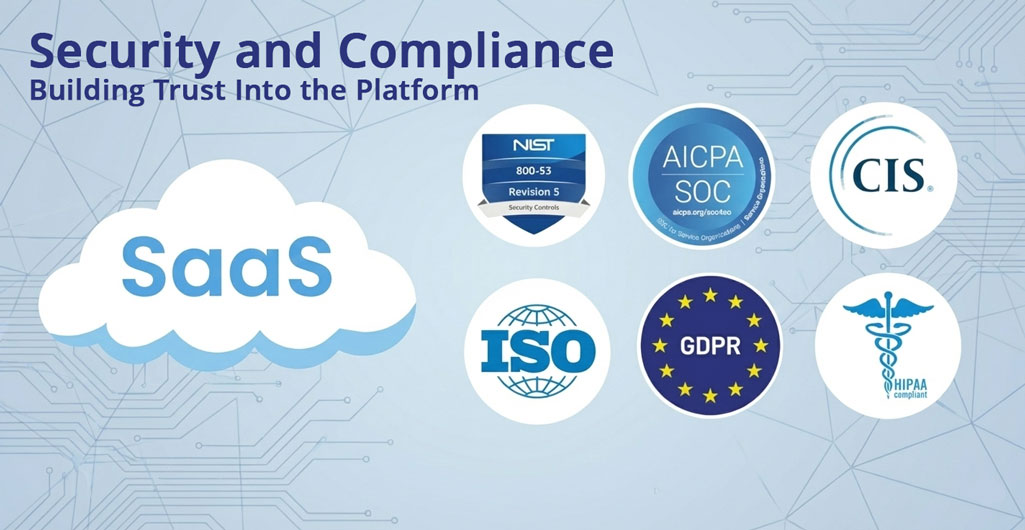
Security and Compliance: Building Trust Into the Platform
Security is no longer a “feature.” It is part of the product’s value proposition.
Agencies must assume that clients—especially mid-market and enterprise customers—will ask about:
- Data encryption (at rest and in transit)
- Authentication standards (OAuth, MFA)
- Secure hosting practices
- Backup and recovery policies
While agencies are not expected to be security experts, their SaaS dev outsourcing agency must be.
The role of the partner is to:
- Embed security best practices by default
- Document them clearly
- Support compliance-aligned architectures (GDPR-ready, SOC-aligned designs)
This enables agencies to sell SaaS with confidence rather than hesitation.
Scalability Planning Beyond the MVP Stage
A common failure pattern in agency-led SaaS products is success-driven collapse.
The platform works for 10 clients.
Then performance degrades at 50.
At 100, stability becomes unpredictable.
Scalability must be planned before it is needed.
A forward-thinking whitelabel SaaS development partner considers:
- Load testing and performance benchmarks
- Modular service design
- Horizontal scaling strategies
- Database optimisation
- Infrastructure monitoring
This ensures that growth becomes an operational advantage—not a liability.
Tech Stack Flexibility and Future-Proofing
Technology evolves quickly. SaaS platforms must adapt.
Rigid, tightly coupled stacks create long-term risk. Agencies should prioritise partners who:
- Design API-first architectures
- Use modular, replaceable components
- Support modern frameworks without lock-in
- Document systems thoroughly
This flexibility allows:
- Easier integration with third-party tools
- Faster feature development
- Smoother team transitions if needed
A whitelabel SaaS development partner that prioritises future-proofing protects the agency’s investment long after the initial build.
Why “It Works” Is Not Enough for SaaS
In project work, “it works” is often sufficient.
In SaaS, “it works” is merely the starting point.
Agencies must consider:
- How the platform behaves under load
- How quickly bugs can be resolved
- How safely updates can be deployed
- How easily new features can be added
This is where many generic vendors fall short. They optimise for delivery completion rather than long-term operability.
A SaaS-minded partner optimises for:
- Stability
- Maintainability
- Observability
- Continuous improvement
The Hidden Role of DevOps and Infrastructure Management
Behind every reliable SaaS product is invisible infrastructure work.
This includes:
- Deployment pipelines
- Monitoring and alerting
- Automated backups
- Rollback mechanisms
- Environment management
Agencies rarely want to own this responsibility internally—and they shouldn’t have to.
A mature whitelabel SaaS development partner includes DevOps as part of the engagement, not as an afterthought or upsell.
Why Technical Confidence Enables Better Selling
When agencies understand—at a high level—how their SaaS product is built, they sell it more confidently.
They can answer client questions about:
- Security
- Scalability
- Reliability
- Longevity
This confidence translates into higher deal sizes, longer contracts, and stronger client relationships.
The role of the partner is not just to build the product—but to enable the agency to own the narrative around it.
Outsourcing SaaS Development to India in 2025: Why the Right Partner Changes the Equation
Why Outsourcing Still Carries Skepticism — and Why That View Is Outdated
For many agency leaders in the USA, UK, Canada, Australia, and New Zealand, outsourcing still triggers mixed reactions.
Earlier generations of offshore outsourcing often delivered inconsistent quality, communication friction, and limited accountability. Those experiences left a lasting impression—and a justified one.
However, the global SaaS landscape has changed dramatically.
Today, the question is no longer whether agencies should outsource SaaS development—but how to do it in a way that strengthens the business rather than introducing risk.
This is where the distinction between transactional outsourcing and partnering with a whitelabel SaaS development partner becomes critical.
India’s Evolution: From Cost Center to SaaS Engineering Hub
India is no longer simply a destination for low-cost development. It is one of the world’s most mature SaaS engineering ecosystems.
According to NASSCOM:
- India hosts 7,000+ SaaS companies
- Indian SaaS firms serve customers in over 150 countries
- The ecosystem produces more than 1.5 million engineering graduates annually
Many global SaaS platforms—across fintech, martech, healthtech, and enterprise software—are built and scaled by Indian engineering teams operating at world-class standards.
For agencies, this means access to depth, scale, and experience that is increasingly difficult to replicate locally.
Talent Density and Delivery Velocity
One of India’s most underappreciated advantages is talent density.
In practical terms:
- SaaS architects are easier to source
- Teams often have multi-product experience
- Engineering turnover is lower within structured firms
- DevOps and cloud expertise is widely available
This density enables faster iteration cycles and more predictable delivery.
A capable SaaS dev outsourcing agency in India can often deliver in weeks what would take months in Western markets—not by cutting corners, but by operating with focused, specialised teams.
Cost Efficiency Without Compromising Quality
Cost efficiency remains a real advantage—but it is no longer the primary one.
A senior SaaS engineer in India typically costs 40–60% less than their Western counterpart. However, the true value lies in what agencies can do with that efficiency:
- Build MVPs without massive upfront investment
- Iterate more aggressively based on feedback
- Scale engineering capacity without internal disruption
When paired with the right governance model, cost efficiency becomes a growth enabler rather than a risk factor.
Why Pure Offshore Models Still Fail
Despite India’s strengths, pure offshore models often disappoint agencies.
Common failure points include:
- Communication gaps
- Misaligned expectations
- Lack of transparency
- Inconsistent accountability
These issues are not about geography—they are about governance.
Agencies operating in Western markets require:
- Clear documentation
- Predictable sprint cycles
- Outcome-oriented reporting
- Cultural alignment around quality and ownership
This is where hybrid delivery models outperform traditional offshore setups.
The Hybrid Model: Where Strategy Meets Execution
A hybrid whitelabel SaaS development partner combines:
- Offshore engineering scale (India)
- Western-aligned project management and governance
- Structured communication and documentation
- Clear escalation and accountability paths
This model bridges the trust gap that historically plagued outsourcing.
From an agency’s perspective, it feels less like outsourcing and more like extending an internal team—without the overhead.
Time-Zone Leverage: The Hidden Advantage Agencies Underuse
One of the most practical benefits of working with Indian teams is time-zone leverage.
When structured correctly:
- Work progresses while Western teams are offline
- Feedback loops accelerate
- Release cycles shorten
- Bottlenecks resolve faster
This “follow-the-sun” model is particularly powerful in SaaS development, where iteration speed directly impacts product success.
A mature whitelabel SaaS development partner designs workflows to take advantage of this rather than fighting it.
Risk Mitigation Through Specialisation
Agencies often fear that outsourcing increases risk. In reality, the opposite is true when partnering with specialists.
Specialised SaaS partners:
- Have battle-tested architectures
- Follow established security practices
- Anticipate scaling challenges
- Maintain institutional knowledge beyond individuals
This reduces dependency on single hires and protects agencies from internal attrition shocks.
Why India + Hybrid Governance Works for Western Agencies
For agencies in the US, UK, CA, AU, and NZ, the optimal model is clear:
- India for engineering depth and velocity
- Hybrid governance for communication and trust
- White-label engagement for brand protection
This combination allows agencies to compete at a level that would otherwise require enterprise-scale resources.
How Agencies Should Evaluate a Whitelabel SaaS Development Partner (and Avoid Costly Mistakes)
Why Partner Selection Is the Highest-Risk Decision in SaaS Productisation
For agencies pursuing SaaS-led growth, few decisions carry more long-term risk than choosing the wrong development partner.
Ideas can pivot. Features can change. Pricing models can be refined.
But a poorly chosen whitelabel SaaS development partner can lock an agency into architectural debt, delivery instability, and vendor dependency that is difficult—and expensive—to unwind.
Most SaaS failures in agency environments are not caused by bad product ideas. They stem from misaligned partnerships chosen too quickly, evaluated too shallowly, or framed as cost-saving exercises rather than strategic relationships.
This section provides a practical, agency-first framework to evaluate partners with clarity and confidence.
The Core Question Agencies Must Ask First
Before comparing vendors, agencies should ask one foundational question:
“Is this partner built to help agencies run SaaS businesses—or just to deliver software?”
The difference is subtle, but decisive.
A SaaS business requires:
- Lifecycle ownership
- Ongoing iteration
- Security and scalability discipline
- Predictable governance
- Long-term alignment
A vendor that optimises for project completion will inevitably fall short once the product enters active use.
The Agency-Focused Partner Evaluation Framework
Agencies should assess potential partners across five critical dimensions.
1. SaaS Product Maturity (Not Just Technical Skill)
Ask:
- How many multi-tenant SaaS platforms has the team built?
- Have they scaled products beyond MVP?
- Do they understand subscription models, user tiers, and usage-based logic?
A qualified whitelabel SaaS development partner should speak fluently about:
- Tenant onboarding
- Feature flagging
- Backward compatibility
- Product evolution
If discussions remain limited to frameworks and tools, that’s a warning sign.
2. White-Label Readiness and Confidentiality
White-label SaaS requires more than NDAs.
Agencies should confirm:
- The partner never interacts with end clients
- Branding and positioning are fully agency-controlled
- No reuse of proprietary IP without explicit permission
- Clear policies around confidentiality and non-compete
Partners that also sell SaaS directly to the same markets introduce structural conflicts.
3. Governance, Communication, and Accountability
Delivery success depends heavily on governance.
Agencies should evaluate:
- Sprint planning and reporting cadence
- Documentation standards
- Escalation paths
- Ownership clarity
A reliable SaaS dev outsourcing agency provides transparency by default—not only when asked.
If progress updates feel reactive or inconsistent during sales conversations, they will worsen post-engagement.
4. Scalability and Continuity Planning
Agencies must plan for success—not just launch.
Ask:
- How do teams scale as adoption grows?
- What happens if key engineers leave?
- How is knowledge documented and transferred?
- Can capacity expand without disrupting delivery?
Partners built around individuals rather than systems introduce operational fragility.
5. IP Ownership, Flexibility, and Exit Safety
From day one, agencies should protect future optionality.
Confirm:
- Full ownership of source code
- Freedom to modify or transition if needed
- Clean handover processes
- No hidden dependencies on proprietary frameworks
These factors significantly affect valuation and acquisition readiness.
The Most Common Red Flags Agencies Overlook
Many warning signs appear early—but are often ignored due to excitement or time pressure.
Key red flags include:
- Overpromising speed without architectural clarity
- Vague answers about security and data isolation
- Reluctance to document systems
- Fixed-scope contracts that discourage iteration
- Heavy reliance on one or two senior developers
Any of these should prompt deeper scrutiny.
Transactional Vendors vs Long-Term Partners
Not all vendors are meant to be partners—and that’s okay.
Transactional vendors:
- Optimise for short-term delivery
- Focus on scope completion
- Minimise involvement post-launch
Long-term whitelabel SaaS development partners:
- Invest in product thinking
- Anticipate scaling challenges
- Align incentives with agency growth
- View success as ongoing, not contractual
For agencies building SaaS as a strategic pillar, only the second category is viable.
Why Agencies Often Fail at This Stage
Despite best intentions, agencies commonly:
- Prioritise cost over capability
- Rush selection to meet client timelines
- Underestimate governance importance
- Assume SaaS is “just another build”
These mistakes compound over time.
The cost of switching partners six or twelve months in is significantly higher than getting the decision right upfront.
Setting the Foundation for Sustainable Partnership
A strong whitelabel SaaS development partner should feel less like an external supplier and more like an embedded capability.
When evaluation is done properly, agencies gain:
- Confidence in delivery
- Reduced execution risk
- Faster time to market
- Long-term strategic leverage
Why Bantech Solutions Fits the Partner Profile Modern Agencies Actually Need
Positioning Matters: Why This Is About Fit, Not Superiority
Not every SaaS development company is right for every agency.
Some vendors are optimised for startups.
Others focus on enterprise IT projects.
Many chase volume across unrelated industries.
Bantech Solutions is deliberately structured for one audience only: digital agencies that want to build, own, and scale SaaS products under their own brand.
That focus shapes everything—from engagement models and governance to how success is defined.
This section does not attempt to “sell” Bantech. Instead, it maps how Bantech’s operating model aligns with the evaluation framework agencies should already be using.
Agency-Only, White-Label by Design
Bantech Solutions operates on a strict agency-only, white-label engagement model.
This means:
- No direct-to-market SaaS products
- No competing client relationships
- No exposure to end customers
- No dilution of agency brand ownership
For agencies, this removes a major structural risk that exists with many SaaS vendors: conflict of interest.
Bantech’s success is directly tied to the agency’s success. There is no parallel incentive to prioritise internal products or alternative revenue streams.
This alignment is foundational—not contractual.
SaaS Product Thinking, Not Project Delivery Mentality
One of the most consistent failure points in white-label SaaS initiatives is the “project mindset”—vendors optimising for delivery milestones rather than product health.
Bantech operates with a product lifecycle orientation, which includes:
- Discovery and validation support
- MVP scoping with scalability in mind
- Architecture decisions aligned to long-term growth
- Continuous iteration post-launch
This approach reflects a clear understanding that SaaS is never finished. It evolves, compounds, and requires sustained engineering discipline.
Agencies benefit because they are not forced to reframe expectations midstream—SaaS realities are built into the engagement from day one.
Hybrid Governance: The Practical Middle Ground Agencies Need
Bantech’s delivery model combines:
- Indian SaaS engineering depth
- Western-aligned governance and communication standards
This hybrid approach addresses the two most common agency concerns with outsourcing:
- Loss of visibility
- Loss of control
In practice, this means:
- Clear sprint planning and reporting
- Documented architecture and decisions
- Predictable delivery cycles
- Transparent ownership and escalation paths
Agencies remain in control of product direction, while engineering execution scales efficiently behind the scenes.
Technical Discipline Without Overengineering
Bantech’s SaaS delivery philosophy is pragmatic rather than theoretical.
Key principles include:
- Multi-tenant architecture designed upfront
- Security and data isolation treated as defaults
- Cloud-native scalability planning
- API-first, integration-ready systems
- Avoidance of unnecessary proprietary lock-in
This balance matters.
Overengineering slows time to market.
Underengineering creates future risk.
Bantech’s value lies in engineering restraint—building what is necessary today without limiting what becomes possible tomorrow.
Continuity, Not Dependency
A critical but often overlooked factor in SaaS partnerships is continuity.
Agencies should never be dependent on:
- A single developer
- Undocumented systems
- Unclear handover processes
Bantech mitigates this by:
- Structuring delivery around teams, not individuals
- Maintaining documentation as a standard practice
- Ensuring knowledge transfer is continuous, not reactive
This reduces operational fragility and improves long-term optionality—important for agencies considering future exits or internalisation.
Cost Efficiency Framed as Optionality, Not Cheapness
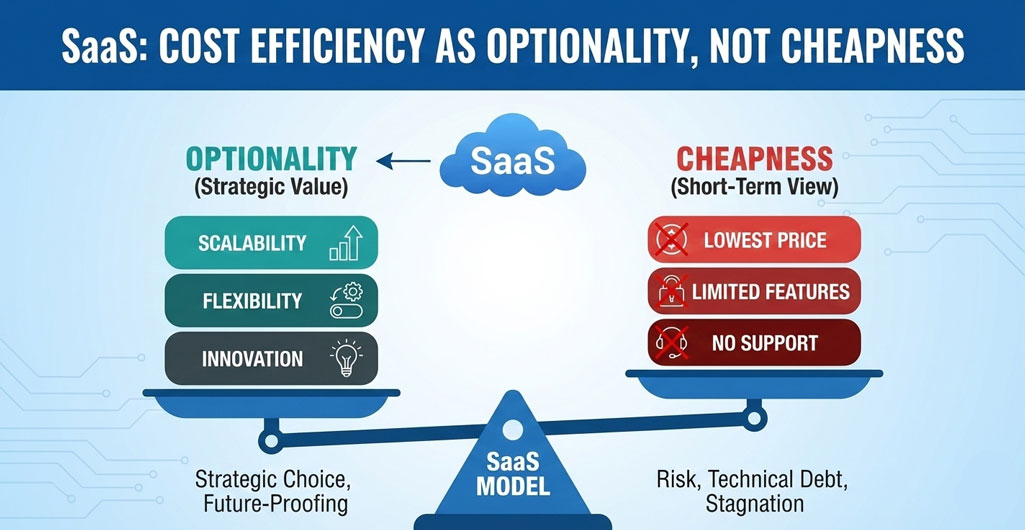
While cost efficiency is a reality of offshore delivery, Bantech does not position itself as a low-cost vendor.
Instead, cost efficiency is framed as strategic optionality:
- The ability to test SaaS ideas without overcommitting capital
- The freedom to iterate aggressively based on real usage
- The flexibility to scale engineering capacity without internal disruption
This reframing is important. Agencies are not outsourcing to save money—they are outsourcing to allocate resources more intelligently.
Comparison Snapshot: Bantech vs Typical SaaS Vendors
| Dimension | Bantech Solutions | Typical SaaS Vendor |
|---|---|---|
| Target Audience | Agencies only | Mixed (startups, enterprises, agencies) |
| Engagement Model | 100% white-label | Often partially white-label |
| Product Mindset | SaaS lifecycle-focused | Project delivery-focused |
| Governance | Hybrid, Western-aligned | Offshore-only or inconsistent |
| IP Ownership | Fully agency-owned | Often unclear or restrictive |
| Long-Term Alignment | Built-in | Transactional |
This comparison highlights why fit matters more than features.
Why Long-Term Partnerships Outperform Short-Term Wins
Agencies that succeed with SaaS rarely treat development as a one-off initiative.
They:
- Build roadmaps instead of feature lists
- Invest in platforms, not just products
- Choose partners who grow with them
Bantech’s operating model supports this long-term view. Engagements are structured to evolve, not reset every quarter.
This continuity reduces friction, improves velocity, and compounds institutional knowledge over time.
Conclusion
From Service Providers to Platform Owners: The Strategic Role of the Right Partner
The shift from services to SaaS is not a trend—it is a structural evolution in how agencies create value.
Agencies that remain purely project-driven will continue to face:
- Margin pressure
- Talent constraints
- Growth ceilings
- Lower valuation multiples
Agencies that successfully introduce SaaS gain:
- Recurring revenue
- Stronger client retention
- Non-linear growth
- Strategic optionality
But SaaS success is not determined by ideas alone. It is determined by execution, architecture, governance, and partnership choices.
A whitelabel SaaS development partner is not a vendor decision.
It is a strategic decision that shapes speed, risk, and long-term outcomes.
By combining:
- Agency-only focus
- White-label discipline
- SaaS-first engineering
- Hybrid governance
- Long-term alignment
Bantech Solutions positions itself as a partner for agencies that want to build platforms—not just deliver projects.
For agencies ready to move from client work to product ownership, the right partner doesn’t just help you build SaaS.
They help you become a different kind of agency.