Digital agencies today face a complex balancing act. Clients expect end-to-end digital expertise, measurable outcomes, faster execution, and competitive pricing—all while agencies must protect margins, retain talent, and scale delivery without operational strain.
This growing gap between demand and internal capacity has forced agencies to rethink how they grow. Rather than hiring aggressively or narrowing their service offerings, many high-performing agencies are adopting whitelabel digital marketing services for agencies as a long-term operational strategy.
When implemented correctly, whitelabeling allows agencies to scale sustainably, expand services confidently, and maintain consistent quality—without sacrificing brand ownership or client trust.
Understanding Whitelabel Digital Marketing Services for Agencies
Whitelabel digital marketing services enable agencies to sell specialized services under their own brand while fulfillment is handled by an external partner. From the client’s perspective, the agency remains fully responsible for strategy, communication, and results.
What changes is the delivery engine.
As digital marketing has grown more specialized, maintaining in-house expertise across SEO, PPC, web development, analytics, and performance optimization has become increasingly difficult. Each discipline requires dedicated tools, continuous learning, and hands-on experience.
Whitelabeling allows agencies to separate client-facing strategy from execution, enabling them to deliver expert-level services without internal bottlenecks. This model preserves brand control while unlocking operational scalability.
Why Whitelabeling Has Become a Core Agency Growth Strategy
The traditional agency growth model—hire more people as you win more clients—no longer scales efficiently. Rising salaries, long onboarding cycles, and unpredictable workloads make aggressive hiring risky.
Whitelabel digital marketing services for agencies offer a more flexible alternative. Agencies can expand their service portfolio without increasing fixed costs, respond faster to new opportunities, and maintain consistent delivery quality regardless of workload fluctuations.
This shift also changes how agencies compete. Instead of limiting growth based on internal capacity, agencies with strong whitelabel partners can confidently pitch larger retainers, broader scopes, and multi-channel engagements.
Ultimately, whitelabeling transforms growth from a staffing challenge into a systems-driven process.
As client expectations increase and service complexity deepens, agencies are realizing that scalability is no longer about headcount—it’s about operational leverage. Whitelabeling enables agencies to design delivery models that are resilient, adaptable, and margin-focused.
Key Reasons Agencies Are Adopting Whitelabel Models
- Rising talent costs in Western markets
Salaries for experienced SEO and PPC specialists have increased significantly in the US, UK, Canada, and Australia, while competition for talent has intensified. According to Glassdoor and Indeed salary data, senior digital marketers often command compensation that directly erodes retainer margins. - Long hiring and ramp-up cycles
Recruiting, onboarding, and training new hires can take months. During this time, agencies either delay delivery or overload existing teams—both of which impact client satisfaction and retention. - Volatile demand across service lines
Agency workloads are rarely linear. Some months require rapid scale-up, while others see reduced demand. Whitelabeling allows agencies to match delivery capacity with real-time demand instead of carrying underutilized resources. - Client demand for integrated, full-service offerings
Modern clients prefer agencies that can manage SEO, PPC, content, and technical execution together. Whitelabel partners make it possible to offer these services cohesively without building every capability in-house.
Pressure to protect and improve margins
By converting fixed staffing costs into variable delivery costs, agencies gain greater control over profitability—especially on long-term retainers.
Industry Trends Reinforcing the Shift
Independent research and agency reports consistently show that outsourcing and white-label delivery are becoming mainstream:
These insights reinforce a clear pattern: agencies that systemize delivery outperform those that rely solely on internal expansion.
How Whitelabeling Changes Competitive Positioning
Agencies that adopt whitelabel digital marketing services for agencies are no longer constrained by team size. This allows them to:
- Pitch larger retainers without delivery risk
- Take on multi-location or enterprise SEO and PPC engagements
- Expand into new industries or geographies faster
- Maintain consistent service quality even during rapid growth phases
Instead of asking “Can we deliver this?”, agencies can focus on “How do we position this to win?”—a critical shift for long-term growth.
By treating whitelabeling as a core operational strategy rather than a short-term fix, agencies build scalable systems that support growth, resilience, and profitability well into the future.
Improving Agency Profitability Through Whitelabel Delivery
Profitability is one of the most compelling reasons agencies adopt whitelabel models. As overhead costs rise, many agencies struggle to maintain healthy margins—especially on SEO and PPC retainers that demand continuous effort.

Whitelabel delivery introduces cost predictability. Agencies pay for execution based on demand rather than carrying full-time specialists whose utilization may fluctuate. This variable-cost structure allows agencies to stabilize margins across clients and scale revenue without proportionally increasing expenses.
Specialized fulfillment teams also work more efficiently. Defined workflows, repeatable processes, and platform expertise reduce errors and rework. Faster turnaround and consistent performance lead to better client outcomes and stronger retention, further improving lifetime value.
White Label SEO for Agencies: Building Retainers That Last
Search engine optimization remains one of the most valuable long-term services agencies can offer. It supports organic growth, strengthens brand visibility, and encourages long-standing client relationships. At the same time, SEO is highly technical and constantly evolving.
White label SEO for agencies exists because maintaining deep SEO expertise internally is resource-intensive. Algorithm updates, technical audits, content optimization, and authority building require specialists who stay immersed in SEO daily.
A capable white-label SEO partner manages these complexities end to end—covering technical SEO, on-page optimization, content alignment, link acquisition, and performance reporting. This allows agencies to focus on SEO strategy, client education, and goal alignment rather than execution details.
Agencies that partner with Bantech for SEO benefit from dedicated teams that understand Western search behavior and competitive landscapes. Bantech’s SEO services are designed specifically for agency delivery, ensuring consistency, transparency, and scalability across client accounts.
Learn more about how this works in practice here: https://www.bantechsolutions.com/seo-services-india/
White Label PPC Management: Scaling Paid Media Without Operational Risk
Paid media delivers faster results than organic channels, but it also demands constant oversight. Campaigns require daily optimization, accurate tracking, creative testing, and rapid response to performance changes.
As agencies grow their PPC client base, internal teams often struggle to maintain performance consistency. Burnout, delayed optimizations, and tracking errors can quickly erode client trust.
White label PPC management solves this by providing dedicated paid media specialists who focus exclusively on campaign execution. These teams manage account structures, bidding strategies, conversion tracking, and ongoing optimization across platforms like Google Ads and Microsoft Ads.
For agencies, this creates a stable delivery foundation. Campaigns remain optimized even as the client portfolio expands, and new accounts can be onboarded without hiring delays. Agencies retain full control over strategy and client communication while execution risk is handled by specialists.
Bantech’s PPC services are built to integrate seamlessly with agency workflows, ensuring performance-driven delivery aligned with client goals.
As paid media ecosystems become more complex, execution quality has become a defining factor in client retention. Platform automation, AI-driven bidding, privacy changes, and rising competition mean that PPC is no longer a “set and forget” channel. Agencies that scale PPC successfully do so by treating execution as a specialized, always-on discipline.
Why PPC Is One of the Highest-Risk Services to Scale In-House
Unlike SEO, where results compound over time, PPC performance can decline quickly when execution slips. Agencies scaling paid media internally often encounter predictable challenges:
- Daily optimization requirements
Google Ads and Microsoft Ads reward frequent, data-driven adjustments. Missed optimizations can directly increase CPCs and reduce ROAS.
https://support.google.com/google-ads/answer/6167122 - Increased platform complexity
Smart bidding, audience layering, conversion modeling, and automation require deep platform expertise to use effectively rather than blindly. - High sensitivity to tracking errors
Even small issues with GA4, conversion tags, or attribution models can invalidate performance data and lead to poor decision-making.
https://support.google.com/analytics/answer/10089681 - Team burnout and performance inconsistency
PPC managers handling too many accounts often default to reactive management, which impacts testing velocity and long-term performance.
These risks compound as agencies grow, making PPC one of the most operationally demanding services to scale.
How White Label PPC Management Reduces Risk and Improves Outcomes
White label PPC management introduces specialization and consistency into paid media delivery. Dedicated teams focus solely on campaign execution, allowing agencies to scale without sacrificing performance standards.
Key benefits include:
- Dedicated PPC specialists per account or portfolio
Specialists stay immersed in platform updates, algorithm changes, and best practices, ensuring campaigns remain competitive. - Faster optimization cycles
White-label teams operate with defined optimization cadences, improving responsiveness to performance signals and market changes. - Improved tracking and attribution accuracy
Experienced teams proactively manage conversion tracking, GA4 configurations, and attribution models—critical in a post-cookie environment. - Consistent testing frameworks
Structured A/B testing of creatives, audiences, and landing pages improves performance predictability over time.
By offloading execution to specialists, agencies reduce operational risk while maintaining strategic oversight.
Industry Data Supporting Specialized PPC Delivery
Multiple industry sources highlight why specialization matters in paid media:
These insights reinforce a clear conclusion: PPC performance is execution-dependent, and execution requires specialization.
How Bantech Supports Agencies with White Label PPC Management
Bantech’s PPC services are designed specifically for agency-scale delivery. Rather than operating as a detached vendor, Bantech integrates into agency workflows, reporting structures, and quality standards.
Agencies benefit from:
- Dedicated PPC specialists aligned to their client portfolios
- Support across Google Ads, Microsoft Ads, and performance tracking
- Structured optimization and testing processes
- Transparent reporting that agencies can present directly to clients
This approach allows agencies to scale paid media services confidently, knowing execution quality remains consistent as demand grows.
You can explore how this model works in more detail here:
https://www.bantechsolutions.com/ppc-services
Strengthening Paid Media as a Scalable Revenue Stream
White label PPC management shifts paid media from a fragile, high-risk service into a scalable revenue stream. Agencies no longer need to choose between growth and quality. Instead, they gain the ability to expand PPC offerings while maintaining performance, protecting client trust, and preserving internal team focus.
As competition intensifies and platforms continue to evolve, agencies that rely on specialized, integrated PPC delivery models will be far better positioned to scale profitably and sustainably.
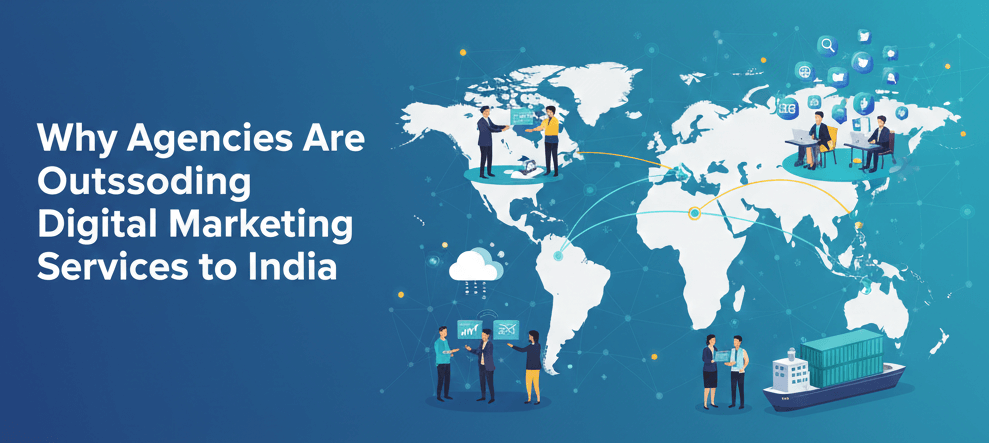
Why Agencies Are Outsourcing Digital Marketing Services to India

Outsourcing has matured significantly over the past decade. It is no longer driven solely by cost reduction, but by access to global talent, operational efficiency, and scalability.
India has emerged as a leading outsourcing destination for digital marketing because of its deep talent pool, strong technical education, and extensive experience working with Western markets. Many SEO specialists, PPC managers, developers, and analysts in India work exclusively on campaigns targeting the USA, UK, Canada, Australia, and New Zealand.
Time-zone advantages enable faster turnaround, while cost efficiencies help agencies maintain competitive pricing without compromising margins. However, the success of outsourcing depends heavily on how the partnership is structured.
Agencies that treat outsourcing as transactional often struggle with inconsistency. Those that work with integrated, long-term partners achieve better quality, communication, and results.
What has changed most is how agencies use outsourcing. Instead of delegating isolated tasks, high-growth agencies are now embedding offshore teams directly into their delivery models. This shift reflects a broader realization: sustainable growth requires access to specialized talent at scale, not just lower costs.
Key Reasons India Has Become a Strategic Outsourcing Hub for Agencies
India’s position as a global digital services hub is the result of multiple structural advantages that align closely with agency needs:
- Unmatched depth of digital talent
India produces a large number of graduates in engineering, computer science, and digital disciplines each year, many of whom specialize early in SEO, paid media, analytics, and web technologies.
Strong familiarity with Western markets
Indian digital professionals frequently work on campaigns targeting English-speaking countries and are well-versed in Western consumer behavior, compliance expectations, and performance benchmarks. - High specialization across service lines
Rather than generalist marketers, agencies can access specialists focused solely on SEO, PPC, CRO, analytics, or development—mirroring enterprise-level delivery structures. - Time-zone leverage for faster execution
The time difference allows work to progress while Western teams are offline, shortening turnaround times and enabling near-continuous delivery cycles. - Cost efficiency without quality compromise
While cost remains a factor, the real advantage lies in achieving higher output per dollar spent, improving agency margins without lowering service standards.
Industry Data Supporting the Outsourcing Shift
Global research consistently supports the move toward strategic outsourcing:
- Deloitte’s Global Outsourcing Survey highlights that access to talent and scalability now outrank cost savings as primary outsourcing drivers
- McKinsey’s research on global talent models emphasizes that professional services firms using distributed teams outperform those relying solely on local hiring
- Gartner notes that marketing leaders increasingly rely on external partners to fill capability gaps caused by rapid platform and technology changes
These findings reinforce a clear reality: outsourcing has become a competitive necessity, not a cost-driven compromise.
Why Transactional Outsourcing Fails Agencies
Despite the advantages, many agencies still struggle with outsourcing because of poor execution models. Common pitfalls include:
- Working with short-term vendors instead of dedicated teams
- Lack of process integration and documentation
- Inconsistent communication and accountability
- No shared performance ownership
These issues typically arise when outsourcing is treated as a series of tasks rather than an extension of the agency’s delivery engine.
The Importance of Integrated, Long-Term Partnerships
Agencies that succeed with outsourcing take a different approach. They prioritize long-term partnerships built around:
- Dedicated, consistent teams
- Clearly defined workflows and SLAs
- Regular communication and reporting
- Alignment with agency quality standards and KPIs
This integrated model allows offshore teams to develop deep familiarity with client industries, agency processes, and performance expectations—dramatically improving outcomes over time.
When outsourcing operates as a structural part of the agency, rather than a stopgap solution, it becomes a powerful enabler of growth, resilience, and margin stability.
The Hybrid Outsourcing Model: Where Strategy Meets Execution
Traditional outsourcing models focus on tasks rather than outcomes. Freelancers and short-term vendors may deliver work, but they rarely align with an agency’s long-term goals or quality standards.
The hybrid outsourcing model bridges this gap. It combines dedicated teams, strategic alignment, and deep integration with agency workflows. Teams remain consistent across engagements, allowing them to understand client industries, agency processes, and performance expectations over time.
This approach provides the reliability of an in-house team with the flexibility and cost advantages of outsourcing. For agencies serving demanding Western clients, the hybrid model offers a sustainable path to scale.
Why Agencies Choose Bantech Solutions as a Long-Term Partner
Bantech Solutions operates exclusively as a hybrid outsourcing partner for digital agencies. Its model is designed to support long-term growth rather than one-off fulfillment.
Agencies working with Bantech receive dedicated teams aligned to their service mix—whether that includes SEO, PPC, web development, or ongoing maintenance. These teams integrate with agency processes, follow brand guidelines, and maintain strict white-label confidentiality.
Bantech’s experience across Western markets ensures delivery standards align with client expectations around quality, communication, and compliance. This makes it easier for agencies to scale services without diluting their brand or operational control.
For agencies offering development and technical services alongside marketing, Bantech also supports scalable web development and ongoing website maintenance as part of a unified delivery ecosystem.
You can explore these capabilities here:
Supporting EEAT, AEO, and GEO Through Consistent Delivery
Search engines increasingly reward brands that demonstrate experience, expertise, authority, and trust. Inconsistent execution, technical debt, or unreliable reporting can weaken these signals over time.
Whitelabel partnerships help agencies maintain consistent standards across campaigns, ensuring SEO best practices, accurate data tracking, and high-quality output. This consistency strengthens EEAT signals while improving user experience.
From an AEO perspective, specialized teams ensure content and campaigns directly answer user intent. From a GEO standpoint, delivery strategies are adapted to specific regions, industries, and local search behavior—critical for agencies targeting multiple Western markets.
As search algorithms mature, how consistently and accurately work is delivered has become just as important as what is delivered. EEAT, AEO, and GEO are no longer abstract SEO concepts—they are direct reflections of operational quality across content, technical execution, and user experience.
How Consistent Delivery Strengthens EEAT Signals
Google’s quality systems explicitly evaluate Experience, Expertise, Authority, and Trust as part of how content and websites are assessed—particularly for competitive and high-impact queries.
Inconsistent SEO execution can undermine these signals in several ways:
- Technical issues left unresolved
- Content that lacks topical depth or accuracy
- Conflicting data across pages and platforms
- Poor reporting transparency
Whitelabel delivery models reduce these risks by enforcing standardized workflows and specialized ownership.
Key EEAT-supporting outcomes include:
When delivery quality is consistent, EEAT becomes an outcome of operations—not just content strategy.
AEO: Aligning Delivery With How Users Ask and Search
Answer Engine Optimization (AEO) focuses on structuring content and campaigns to directly address user questions—particularly in featured snippets, People Also Ask results, and AI-powered search experiences.
AEO performance depends heavily on execution discipline:
- Clear intent mapping
- Structured content formatting
- Accurate internal linking
- Schema and technical correctness
Specialized teams supporting whitelabel delivery are better equipped to maintain this level of precision at scale.
Consistent AEO-focused delivery enables:
Without consistent delivery, AEO efforts break down quickly—especially across large or multi-client portfolios.
GEO Optimization: Scaling Across Regions Without Losing Relevance
Geographic Optimization (GEO) ensures that content, SEO, and paid media strategies align with regional search behavior, language nuances, and competitive landscapes.
For agencies serving clients across the USA, UK, Canada, Australia, and New Zealand, GEO complexity increases significantly. Search behavior, terminology, and local competition vary widely—even within the same language.
Whitelabel partnerships support GEO by enabling:
- Region-specific keyword and intent mapping
Search terms and user behavior differ across markets, requiring localized research and execution. - Consistent local SEO execution
Accurate NAP data, location pages, and Google Business Profile optimization are critical for multi-location visibility. - Scalable regional content strategies
Dedicated teams can execute geo-targeted content and landing pages without diluting quality across regions.
By maintaining consistent delivery standards across geographies, agencies avoid fragmented performance and protect brand authority in each market.
Why Whitelabel Models Are Better Suited for EEAT, AEO, and GEO at Scale
Internal teams often struggle to maintain the same execution quality across:
- Multiple service lines
- Dozens of clients
- Different regions and industries
Whitelabel delivery introduces specialization, process discipline, and repeatability—three factors essential for modern search performance.
Instead of relying on individual contributors to “do it all,” agencies leverage structured systems that produce consistent, high-quality outcomes. Over time, this operational consistency compounds into stronger EEAT signals, better AEO visibility, and more reliable GEO performance.
For agencies competing in saturated Western markets, search visibility is no longer won by tactics alone—it is sustained through delivery excellence.
When Whitelabel Digital Marketing Becomes the Right Move
Agencies often reach a point where growth begins to strain delivery. Projects take longer, quality becomes inconsistent, and leadership spends more time managing fulfillment than building strategy.
This is typically when whitelabeling becomes essential rather than optional.
Agencies that adopt whitelabel digital marketing services early build scalable foundations that support growth without disruption. They remain agile, protect margins, and maintain service quality as demand increases.
The Future of Agency Growth
The most successful agencies will not be those with the largest in-house teams, but those with the most intelligent operating models. Whitelabel digital marketing services for agencies represent a shift toward scalable, partner-driven growth.
When combined with a hybrid outsourcing partner like Bantech Solutions, agencies gain the ability to expand services, improve profitability, and deliver consistent results—without sacrificing control or brand integrity.
For agencies focused on sustainable growth, whitelabeling is no longer a workaround. It is the foundation for long-term success.
White label digital marketing services allow agencies to sell SEO, PPC, content, social media, and other digital marketing services under their own brand, while a specialist third-party provider handles all the fulfillment behind the scenes. Clients interact only with the agency, and the fulfillment partner remains completely invisible throughout the engagement.
Growing a digital marketing agency is exciting until the moment your capacity runs out. You have the clients, you have the relationships, and you have the ambition. What you may not have is a full team of specialists covering every discipline your clients need, from search engine optimization and paid media to content strategy and web development. That is where white label digital marketing services for agencies come in, and understanding exactly how they work can change the way you think about scaling your business.
At its core, the model is straightforward. You sell the service to your client under your own brand. A white label partner delivers the work behind the scenes. Your client sees your logo, receives reports with your branding, and has no visibility into who is actually executing the campaigns. If you want to see how this model fits into a broader agency growth framework, the team at Bantech Solutions has put together a detailed breakdown worth reading before you decide how to structure your own delivery model.
The Concept Behind White Labeling
The term “white label” originally comes from the product manufacturing world. A company would produce a product with no branding on it, essentially a blank white label, and then a retailer would apply their own brand before selling it. The same principle carries over into digital services.
When a white label digital marketing agency produces SEO reports, manages Google Ads campaigns, or builds content calendars, none of that work carries the fulfillment partner’s name. It is all delivered in a format that the selling agency can present directly to their clients as their own work. The client relationship belongs entirely to the agency. The agency sets the price, manages communication, and owns the strategy. The white label partner simply executes.
This separation between selling and fulfillment is what makes the model so powerful for growing agencies. It removes one of the biggest constraints on growth, which is the need to hire, train, and retain specialized staff before you can serve new clients.
What Services Can Be White Labeled?
One of the reasons this model has become so popular is that almost every core digital marketing discipline can be white labeled. Here is a look at what that typically includes.
Search Engine Optimization
SEO is probably the most commonly outsourced service through white label partnerships. It covers everything from technical site audits and on-page optimization to link building, content creation, local SEO, and monthly performance reporting. Because SEO is ongoing, it generates reliable recurring revenue for agencies and suits the retainer model that most agencies prefer.
Pay-Per-Click Advertising
Running Google Ads or Microsoft Ads campaigns effectively requires daily attention, deep platform knowledge, and continuous testing. Many agencies find that PPC is one of the hardest services to scale in-house because performance can deteriorate quickly when account managers are stretched thin. White label PPC management gives agencies access to dedicated specialists who focus exclusively on paid media execution, keeping campaigns optimized without burning out internal staff.
Social Media Marketing
Content creation, scheduling, audience targeting, and ad management across platforms like Meta, Instagram, LinkedIn, and TikTok are all services that can be handled by a white label partner. Agencies can offer social media management as part of a broader package without needing a dedicated social team internally.
Content Marketing
Blog posts, landing pages, email sequences, video scripts, and case studies can all be produced by white label content teams working to the agency’s brand voice guidelines. Consistent content output is one of the biggest challenges agencies face, and outsourcing it through a white label arrangement removes that bottleneck.
Web Design and Development
Many agencies win clients on the strength of their marketing expertise but then face requests for website builds or redesigns. White label web development partners allow agencies to deliver professional sites without maintaining a development team. The work is delivered under the agency’s brand, and the client is none the wiser.
Analytics and Reporting
Some white label partners specialize in data and reporting, building dashboards and monthly reports that agencies can send directly to clients. Accurate, well-presented reporting strengthens client trust and makes it easier for agencies to demonstrate the value of the work being done.
How White Label Digital Marketing Actually Works in Practice
Understanding the concept is one thing. Seeing how it plays out in a real agency workflow is another.
Here is a typical scenario. An agency lands a new client who needs SEO, PPC, and monthly content. The agency has strong client relationship skills and a solid sales process, but only one generalist in-house who cannot realistically manage all three service lines for a new client on top of an existing book of business.
Rather than turning down the client or overpromising and underdelivering, the agency brings in a white label partner to handle the execution. The agency briefs the partner on the client’s goals, target audience, competitive landscape, and brand guidelines. The white label team takes it from there.
Each month, the white label partner delivers the SEO work, manages the ad campaigns, and produces the content. They also prepare branded reports that the agency reviews, lightly customizes if needed, and sends to the client. The client has a monthly strategy call with the agency, who can speak confidently about the work because they are kept in the loop by the partner throughout the month.
From the client’s perspective, the agency is delivering everything. From the agency’s perspective, they have unlocked the ability to serve that client well without the overhead of hiring three specialists.
Why Agencies Are Moving Toward This Model
The shift toward white label digital marketing services is not just about convenience. There are structural reasons why this model has become a preferred growth strategy for agencies across the US, UK, Australia, Canada, and other Western markets.
Talent costs have risen sharply. Hiring experienced SEO specialists, PPC managers, and content strategists in Western markets is expensive. Salaries, benefits, and the time it takes to recruit and onboard new hires eat into agency margins quickly. White label partnerships convert those fixed staffing costs into variable costs that flex with demand.
Demand is rarely predictable. Agencies have busy seasons and slow periods. Carrying a large in-house team through a slow quarter is costly. White label models let agencies scale delivery up or down without the complications of hiring and letting staff go.
Clients expect full-service coverage. Most modern clients want a single agency that can handle their entire digital presence. They do not want to manage three or four separate vendors. White label services allow agencies to offer that full-service experience without being full-service internally.
Speed matters. When a new client comes on board, they want results quickly. White label partners with established processes and experienced teams can begin executing immediately, without the ramp-up time that comes with new hires.
According to HubSpot’s research on agency growth, agencies that use outsourced or white label fulfillment scale faster and report fewer operational bottlenecks than those that rely entirely on internal teams. The data aligns with what high-performing agencies are experiencing on the ground.
The Role of Brand Integrity in White Label Partnerships
One concern agencies often raise when they first consider white labeling is brand integrity. What if the quality is not consistent with their standards? What if the client finds out someone else is doing the work?
These are fair concerns, and they are exactly why choosing the right white label partner matters so much.
A quality white label provider operates as a true extension of your agency. They follow your processes, use your templates, and produce work that reflects the standards you have set for your clients. All client-facing materials carry your branding only. Non-disclosure agreements are standard practice, and reputable partners will never reach out to your clients directly or reveal the nature of the arrangement.
The risk to brand integrity is real only if you partner with a provider who does not take quality seriously. When you invest the time to vet a partner thoroughly, review their processes, and establish clear expectations upfront, white label delivery can actually improve the consistency of your output because it removes the variability that comes from relying on a single generalist or a small, overstretched in-house team.
What to Look for When Evaluating a White Label Partner
Not all white label agencies are the same. Here are the factors that matter most when you are evaluating potential partners.
Proven track record. Ask for case studies and real performance data from campaigns they have run for other agencies. Rankings, traffic growth, and lead generation numbers tell a clearer story than any sales pitch.
Clear communication protocols. Find out who your dedicated point of contact will be, how quickly they respond to questions, and what their escalation process looks like when issues arise. Poor communication is one of the top reasons white label partnerships fail.
Scalability. A partner who works well for your current client volume needs to be able to grow with you. Ask how they handle capacity when demand increases suddenly.
Branded reporting. Confirm that all deliverables, reports, and client-facing documents come in a format that carries your brand and contains no reference to the white label provider.
Contract terms. Make sure the agreement clearly states that your agency owns all client accounts, data, and access credentials. Client relationships must remain yours even if the partnership ends.
Ethical practices. If you are outsourcing SEO, confirm explicitly that the partner follows Google’s quality guidelines. Shortcuts like link spam or keyword manipulation may show short-term gains but create serious long-term problems that your agency will have to explain to the client.
White Label Services and Agency Profitability
One of the most compelling reasons to adopt a white label model is the impact it has on margins. When you convert staffing costs from fixed to variable, you gain much more control over your profitability.
Consider what it costs to build an in-house team capable of delivering SEO, PPC, content, social media, and web development at a professional level. In many Western markets, that means hiring five or more specialists, each commanding a significant salary plus benefits and training costs. The overhead is substantial, and the utilization of those team members will fluctuate.
With a white label model, you pay for execution based on what your clients actually need at any given time. When you win new business, you can onboard that client immediately without waiting for a hire. When a client pauses or reduces their retainer, you are not left paying for idle capacity.
The margin improvement is real. Research from Conduit Digital found that agencies using white label partnerships were able to reduce operational costs by 30 to 50 percent compared to building equivalent in-house teams, while maintaining or improving service quality.
Getting Started with White Label Digital Marketing
The path to integrating white label services into your agency does not have to be complicated. Most agencies start by identifying the one or two service lines where they have the biggest capacity gap or the lowest internal expertise. They test a white label partner on a small number of accounts, build trust through that initial experience, and then expand the relationship over time.
The key is to approach the partnership strategically rather than transactionally. White label providers who understand your agency’s goals, client base, and quality standards become genuine assets to your business. Those treated as interchangeable vendors rarely deliver the consistency that client retention requires.
If your agency is ready to scale without the operational strain of aggressive hiring, white label digital marketing services offer a proven path forward. The model is not a shortcut. It is a smart operational decision that the most successful agencies have already made a core part of how they grow.
White label SEO works by having a specialist provider handle all SEO execution on your behalf, including technical audits, on-page optimization, link building, and reporting, while everything is delivered under your agency’s brand. Your clients only ever deal with you, and the fulfillment partner stays completely behind the scenes.
Search engine optimization is one of the most in-demand services a digital agency can offer. Clients want organic traffic, stronger rankings, and long-term visibility in search results. The challenge for most agencies is that delivering SEO properly requires deep, continuously evolving expertise across multiple disciplines, and building that capability entirely in-house is expensive, slow, and difficult to sustain as your client base grows.
White label SEO exists precisely to solve that problem. It allows agencies to offer professional, fully managed SEO services to their clients without maintaining a dedicated in-house SEO team. The work is done by a specialist partner, delivered under your brand, and presented to clients as your own. If you want to understand how this fits into a wider agency growth strategy, Bantech Solutions covers the full picture in their guide on whitelabel digital marketing services for agencies.
But understanding the principle is just the starting point. What agencies really need to know is how the process works in practice, from the moment a client signs on to the moment a report lands in their inbox.
The White Label SEO Process, Step by Step
Step 1: The Agency Wins the Client
The process starts with you. You pitch the client, set expectations, agree on goals, and close the deal. The white label partner has no role at this stage. You are the agency, and you are responsible for understanding what the client needs.
Before bringing the white label provider into the picture, you should have clarity on the client’s industry, target audience, competitive landscape, existing website health, and the key performance indicators that matter most to them. All of this becomes the brief that guides the work.
Step 2: Client Onboarding and Briefing
Once the client is signed, you pass the relevant information to your white label SEO partner through their onboarding process. Most established providers have structured intake forms that help capture everything the team needs to get started efficiently. This typically includes website access, Google Search Console and Google Analytics credentials, any existing keyword data, and the client’s goals.
Good white label partners assign a dedicated account manager to each agency relationship. That person becomes your main point of contact throughout the engagement, ensuring clear communication without the client ever being involved in conversations with the provider.
Step 3: Technical SEO Audit
Before any optimization work begins, a thorough audit of the client’s website is essential. This is where the white label team earns its fee by doing the unglamorous but critically important technical work that sets the foundation for everything that follows.
A comprehensive technical audit covers crawlability and indexation issues, site speed and Core Web Vitals performance, mobile usability, internal linking structure, redirect chains and broken links, duplicate content, structured data implementation, and HTTPS security. The findings are compiled into a detailed audit document formatted with your agency’s branding, which you can present directly to the client as your own work.
Step 4: Keyword Research and Content Strategy
With a technical baseline established, the white label team moves into keyword research and content strategy. This involves analyzing search volume, keyword difficulty, user intent, and competitive gaps to identify the terms your client has the best realistic opportunity to rank for.
The output is typically a prioritized keyword map and content roadmap, again delivered in your agency’s format. The strategy should align with both the client’s business goals and how their target customers actually search. A focus on informational, commercial, and transactional intent means content can address users at every stage of the buying journey.
Step 5: On-Page Optimization
With keywords mapped and strategy agreed upon, the white label team begins optimizing the existing pages on the client’s website. On-page SEO covers page titles and meta descriptions, heading structure, keyword usage within body content, image alt text, internal linking, and URL structure.
This work directly affects how search engines understand and rank each page. It is also relatively fast to implement and often produces early ranking improvements that help demonstrate value to the client early in the engagement.
Step 6: Content Creation
If the content strategy calls for new pages, blog posts, or landing pages, the white label team handles production. Content creation in an SEO context is specialized work. It requires an understanding of keyword integration, readability, topical authority, and how search engines evaluate content quality against Google’s helpful content guidelines.
All content is produced to your agency’s brief and delivered in a format you can review before it goes live. Some agencies send it straight through for publication. Others review and refine it before passing it on. Either way, the client sees content that carries your agency’s voice and standards.
Step 7: Link Building and Off-Page SEO
Backlinks remain one of the most significant ranking factors in Google’s algorithm. Building high-quality links is also one of the most time-consuming and relationship-dependent aspects of SEO, which is why it is one of the most commonly outsourced elements of the discipline.
White label link building services involve identifying relevant, authoritative websites, conducting outreach, securing editorial placements, and reporting on the links acquired. A quality white label partner will have established relationships with publishers across a range of industries, allowing them to secure links faster than an in-house team starting from scratch.
According to Moz’s ongoing research into ranking factors, links from high-authority, topically relevant domains continue to carry significant weight in organic rankings. This makes link building an area where partner expertise and existing relationships can genuinely move the needle for clients.
Step 8: Reporting and Performance Review
At the end of each month, the white label partner prepares a performance report covering keyword ranking movements, organic traffic trends, backlinks acquired, technical improvements made, and progress toward agreed targets. The report comes in a template formatted with your agency’s logo and branding.
You review the report, add any strategic commentary relevant to your relationship with the client, and send it as your own. The client sees your agency name throughout. Some white label providers also offer branded dashboard access, giving clients a live view of their performance data that still carries your agency’s identity.
What Types of SEO Work Can Be White Labeled?
It is worth being specific about the range of SEO services that white label providers can typically cover, because agencies often underestimate how comprehensive the support available to them actually is.
Local SEO is one of the most in-demand specialisms, particularly for agencies serving small and medium businesses. Local SEO includes Google Business Profile optimization, NAP consistency across directories, local citation building, and the creation of location-specific landing pages. Research shows that 72 percent of consumers use Google to find local businesses, making local SEO a high-value, high-demand service that most agencies should be offering.
Technical SEO covers everything below the surface of a website, from crawl budget management and log file analysis to Core Web Vitals optimization, schema markup, and international SEO configurations. This is genuinely specialist territory, and few agencies have the internal expertise to handle it well across a growing client portfolio.
E-commerce SEO requires an understanding of product and category page optimization, faceted navigation, duplicate content issues that commonly arise on large inventory sites, and the structured data markup that helps products appear in rich search results.
Enterprise SEO involves managing campaigns for large websites with thousands of pages, often across multiple regions or languages. The complexity of coordination, technical architecture, and content governance at this scale requires dedicated expertise that white label partners with enterprise experience can provide.
How Reporting Works Without Exposing the Partner
One of the most common concerns agencies raise when they first explore white label SEO is around reporting. Specifically, they want to know whether clients will be able to see evidence of the third-party provider in the reports they receive.
Reputable white label providers have solved this completely. Reports are built in neutral templates that agencies can customize with their own logo, color palette, and contact details. Any platform references within the report, such as data sourced from Google Search Console or keyword tracking tools, appear without any attribution to the white label provider’s own tools or systems.
Some providers go further by offering fully white-labeled client dashboard access, where clients can log in to a branded portal that shows live ranking data, traffic analytics, and campaign activity. The portal carries only the agency’s branding. There is no trace of the fulfillment partner anywhere in the client-facing experience.
What Agencies Stay Responsible For
White label SEO does not mean handing over the entire client relationship. There are parts of the engagement that remain firmly the agency’s responsibility, and maintaining clarity about this boundary is important for both client satisfaction and the health of the partnership.
Strategy and goal setting. The white label partner executes SEO work to brief, but the agency is responsible for translating the client’s business goals into a clear SEO strategy. The partner optimizes for the targets you define.
Client communication. All communication with the client comes from the agency. You set expectations, deliver updates, manage concerns, and represent the work. The white label team works in the background.
Quality review. Before reports and deliverables are passed to the client, the agency should review them. This is not about micromanaging the partner; it is about ensuring everything aligns with the client’s expectations and that you are comfortable presenting it.
Pricing and margin. The agency sets its own prices. White label providers charge wholesale rates, and agencies apply a markup that reflects the value they are delivering. Most agencies working in this model aim for gross margins of 40 to 60 percent on SEO retainers.
How to Choose the Right White Label SEO Partner
Not every white label SEO provider operates at the same level. Here is what to look for when you are evaluating potential partners.
Evidence of real results. Ask for case studies with actual performance data, including keyword ranking improvements, traffic growth, and lead generation outcomes. Be wary of providers who can only offer testimonials without measurable results.
Ethical SEO practices. This is non-negotiable. Confirm that the provider follows Google’s quality guidelines strictly. Avoid any partner that relies on link schemes, keyword stuffing, or other tactics that may show short-term gains but create long-term penalties that your agency will have to explain to the client.
Clear deliverables and timelines. A professional white label provider should be able to tell you exactly what they deliver, when they deliver it, and in what format. Vague answers about “flexible timelines” are a red flag.
Scalability. The partner that works well for five clients needs to still perform at the same level when you have twenty. Ask specifically how they manage capacity during periods of rapid growth.
Transparent communication. Find out who your dedicated point of contact is and how quickly they respond to questions. Slow communication internally makes it very difficult to manage client expectations externally.
Data and account ownership. Confirm in writing that all client accounts, access credentials, and campaign data belong to your agency. If the partnership ends, you should be able to transition the work without losing anything.
Why White Label SEO Produces Better Results Than Stretched In-House Teams
There is a practical argument for white label SEO that goes beyond cost. When in-house teams are stretched across too many accounts, SEO performance suffers. Optimization cadences get disrupted, content production slows down, link building gets deprioritized, and reports arrive late. All of these failures erode client trust and eventually lead to churn.
White label providers, by contrast, operate with defined processes and dedicated capacity. SEO campaigns are managed by specialists whose entire focus is on delivering results in their area of expertise. This consistency of execution tends to produce better outcomes over time, which is what actually drives client retention and referrals for the agency.
Building SEO Into a Scalable Agency Revenue Stream
When implemented well, white label SEO transforms SEO from a service that strains internal capacity into a scalable, high-margin revenue stream. Agencies can take on more SEO clients, deliver consistently good results, and retain those clients over the long term, all without the operational complexity of running a large in-house SEO operation.
The model works best when agencies treat their white label partner as a long-term extension of their team rather than an interchangeable vendor. Partners who understand your client base, your processes, and your quality standards become genuine assets. Over time, that relationship compounds into a delivery operation that is both reliable and profitable.
For agencies that want to grow their SEO offering without the overhead, the white label model is not just a workaround. It is a deliberate, strategic choice that the most successful agencies are making as a core part of how they operate.
White label marketing is a specific type of outsourcing where all work is delivered entirely under your agency’s brand, with the provider remaining completely invisible to your clients. Traditional outsourcing may involve the third-party provider being visible to or communicating directly with the end client, making brand control and client ownership much harder to maintain.
If you run a digital agency and you are thinking about bringing in outside help to deliver services, you will almost certainly come across two terms that are often used interchangeably but are not actually the same thing: outsourcing and white label marketing. Understanding the difference between the two is not just a matter of vocabulary. It shapes how you structure your agency, how you protect your client relationships, and how much control you retain over your brand as you grow.
Agencies exploring either model will find a detailed breakdown of the strategic side of white label partnerships in Bantech Solutions’ guide on whitelabel digital marketing services for agencies. But before diving into strategy, it helps to get the foundational distinction right. Outsourcing and white label marketing are related, but they operate differently in ways that have real consequences for your agency.
The Simple Way to Think About It
Here is the clearest way to frame the relationship between the two models: all white label marketing is a form of outsourcing, but not all outsourcing is white label marketing.
Traditional outsourcing is simply the practice of hiring an external person or company to do work you do not want to do in-house. The defining characteristic is that work gets done outside your organization. That is where the definition stops.
White label marketing goes several steps further. It is outsourcing that includes a specific set of requirements: the work must be delivered entirely under your brand, the provider must remain invisible to your clients at all times, and the quality and process standards must be consistent enough to protect your agency’s reputation. In short, white label marketing is outsourcing with brand integration, client ownership, and delivery accountability built into the model.
Where They Overlap and Where They Diverge
To understand this properly, it helps to look at the specific areas where the two models differ in practice.
Branding and Client Visibility
This is the most fundamental difference. When you outsource a task in the traditional sense, the third-party provider may or may not be visible to your client. In many outsourcing arrangements, the external vendor communicates directly with the end client, submits work under their own brand name, or is introduced transparently as a subcontractor. Some agencies prefer this level of openness. Others find it creates confusion about who is actually responsible for results.
With white label marketing, the provider is completely invisible by design. Every deliverable, every report, every piece of communication that reaches your client carries only your agency’s name and branding. The provider operates entirely behind the scenes. Non-disclosure agreements are standard, and reputable white label partners will never approach your clients directly or reveal the nature of the arrangement. Your client interacts solely with you throughout the entire engagement.
Client Relationship Ownership
In traditional outsourcing, the question of who owns the client relationship can become blurry, particularly when the external vendor communicates directly with the end client. Over time, this can erode the strength of your position as the primary point of contact and make the client feel that they are being passed around rather than served by a single accountable agency.
White label marketing is structured specifically to prevent this. The agency retains full and exclusive ownership of the client relationship. You are the strategist, the communicator, the trusted advisor, and the account holder. The white label partner works in support of that relationship, not alongside or in competition with it.
Purpose and Scope
Traditional outsourcing is often used reactively. An agency has a project it cannot handle internally, so it brings in outside help to fill the gap. The engagement is typically task-based, project-specific, and does not necessarily involve any integration with the agency’s brand or processes. Once the task is done, the relationship with the vendor may end.
White label marketing is typically a longer-term, more integrated arrangement. The goal is not just to fill a gap but to build a scalable delivery capability that allows the agency to grow its service offering under its own brand consistently over time. Agencies using white label marketing are not just solving an immediate problem. They are building a system for ongoing, repeatable delivery that protects margins and supports client retention.
Quality Control and Process Integration
One of the common frustrations with traditional outsourcing is inconsistency. Freelancers or external vendors may do things their own way, use their own tools, follow their own timelines, and deliver work that needs to be heavily revised before it meets the agency’s standards. When the outsourced party is not invested in your brand’s reputation, accountability can be hard to enforce.
White label partners operate differently because they understand that your brand is on every piece of work they produce. That creates a higher level of accountability. Reputable white label agencies align their processes with the agency’s expectations, follow established workflows, and maintain quality standards because a failure in delivery reflects directly on the agency’s reputation. The best white label partnerships are ones where the provider functions as a true extension of your internal team rather than a disconnected external resource.
Communication Structures
In a traditional outsourcing arrangement, communication can be inconsistent. You may be dealing with a freelancer who responds when available or a vendor who treats your projects as one of many without a dedicated point of contact. Status updates may be sporadic, and chasing progress can take time that could be better spent elsewhere.
White label partnerships are typically structured with dedicated account management. You have a named contact, an agreed communication cadence, and a clear escalation path when issues arise. This structured communication makes it far easier to manage client expectations, because you always know the status of the work being done on your behalf.
A Practical Example
Imagine you run a digital marketing agency focused on paid media. A client asks whether you can also handle their monthly blog content and SEO. You do not have a content writer or an SEO specialist in-house.
If you outsource traditionally: You hire a freelance writer on a platform and bring in an SEO consultant on a project basis. The freelancer submits content in their own format. The SEO consultant may ask to speak with the client directly to gather information. The quality varies month to month, and the overall experience feels piecemeal. The client starts to wonder who is actually managing their account.
If you use white label marketing: You engage a white label partner who provides both content creation and SEO. They onboard using your brand guidelines, produce reports with your logo, and communicate only through you. The client receives a seamless, consistent experience. Every touchpoint reinforces your agency’s brand. When the client refers another business to you, they refer them to your agency, not to a collection of vendors you manage.
The outcome for your agency is also different. In the white label model, you retain the client relationship, you protect your margins, and you build a reputation for being a full-service agency capable of managing multi-channel campaigns. In the traditional outsourcing model, your position as the central authority is weaker, and the risk of the client disintermediating you by going directly to the vendor increases over time.
When Traditional Outsourcing Still Makes Sense
It would be inaccurate to suggest that traditional outsourcing has no place in an agency’s operations. There are situations where it is the right choice.
For one-off projects that are outside your core service offering and unlikely to be repeated, traditional outsourcing can be a practical solution. If a client needs a specialist piece of work done once and the nature of the task does not require brand integration, the overhead of establishing a white label partnership may not be justified.
For internal tasks that never touch the client directly, such as data processing, bookkeeping, or internal software development, traditional outsourcing is often perfectly adequate. The defining criterion is whether the work involves anything your client will see. If it does, white label is almost always the more appropriate model.
Why White Label Marketing Is the Stronger Long-Term Strategy
For agencies focused on sustainable growth, white label marketing has significant structural advantages over traditional outsourcing.
It protects and builds your brand. Every piece of client-facing work reinforces your agency’s identity rather than fragmenting it across multiple third-party vendors.
It supports client retention. Clients who experience a consistently excellent service delivered under a single brand are far more likely to renew, expand, and refer. Research consistently shows that small improvements in client retention rates produce outsized improvements in agency profitability. Increasing retention rates by just five percent can boost profits by 25 to 95 percent, according to widely cited research from Bain and Company.
It scales with your growth. As your client base grows, a white label partner scales with you. You are not repeatedly searching for new freelancers or vendors every time demand increases. The relationship deepens, the processes improve, and delivery becomes more reliable over time.
It protects your margins. White label providers typically charge wholesale rates that allow agencies to apply a meaningful markup while remaining competitive. Traditional outsourcing arrangements, particularly with freelancers, can be less predictable in cost and output, which makes margin management harder.
It positions your agency as a serious operator. Agencies that deliver consistent, high-quality work under a unified brand are perceived very differently by clients than agencies that feel like they are pulling in help from multiple directions. White label marketing allows smaller and mid-sized agencies to compete with larger operations by presenting themselves with the cohesion and capability of a much bigger team.
The Hybrid Approach Many Agencies Use
It is worth noting that many successful agencies do not choose exclusively between white label marketing and outsourcing. They use both, strategically.
Core, recurring services that are sold to clients as part of the agency’s offering, such as SEO retainers, PPC management, and monthly content production, are typically handled through white label partnerships. These services require brand consistency, process reliability, and long-term quality control.
One-off, internal, or highly specialized tasks that fall outside the regular service offering may be handled through traditional outsourcing when a white label arrangement would be disproportionate to the scope.
The key is clarity about which model applies to which type of work, and ensuring that anything touching the client always goes through the white label model so that brand integrity and client ownership are never compromised.
Choosing the Right Model for Your Agency
The simplest test for whether you need white label marketing or traditional outsourcing comes down to a single question: will your client see, experience, or be affected by this work?
If the answer is yes, the work should go through a white label model. If the answer is no, traditional outsourcing may be sufficient.
For agencies building toward long-term, sustainable growth, white label marketing is not just the safer option. It is the one that compounds in value over time, because every client engagement deepens your brand, strengthens your reputation, and builds the kind of trust that turns clients into long-term partners rather than one-time projects.
Understanding the difference between white label marketing and outsourcing is the first step. Using that understanding to make deliberate, strategic decisions about how your agency delivers is where the competitive advantage actually lives.
White label digital marketing services typically cost agencies between $300 and $8,000 per month at the wholesale level, depending on the service type, scope, and provider. Agencies then apply a markup of 2x to 3x before presenting the pricing to their clients, with most well-run agencies targeting gross margins of 45 to 65 percent on white label retainers.
Pricing is one of the first practical questions every agency asks when exploring white label digital marketing. The honest answer is that costs vary quite a bit depending on which services you are reselling, the scope of work involved, the experience level of the provider, and the market your clients are in. But that variability does not mean you are working in the dark. There are clear benchmarks, widely used pricing structures, and margin targets that give agencies a realistic picture of what to expect before they commit to a partner.
Bantech Solutions works with agencies across Western markets and outlines the full strategic context for this model in their guide on whitelabel digital marketing services for agencies. This article focuses specifically on the numbers, helping you understand what you are likely to pay, how to price services to clients, and what hidden costs to watch for before they quietly shrink your margins.
The Two Layers of White Label Pricing
Before getting into specific numbers, it helps to understand how white label pricing actually works. There are two distinct layers every agency needs to account for.
The first is the wholesale rate. This is what you pay the white label provider for the work they deliver on your behalf. It is not what your client sees or pays.
The second is the retail rate. This is what you charge your client, which includes the wholesale cost plus your agency markup to cover account management time, client communication, quality review, and profit.
The gap between these two figures is where your agency makes money. Getting that gap right is the central challenge of running a profitable white label operation. Underprice the retail side and you are working hard for thin margins. Overprice it without delivering corresponding value and you increase the risk of losing clients to competitors.
White Label SEO Pricing
SEO is the most commonly white labeled digital marketing service, and it is also the one with the most transparent pricing benchmarks available.
At the wholesale level, white label SEO packages in 2026 broadly fall into four tiers based on scope and complexity.
Entry-level packages covering basic local SEO, including Google Business Profile optimization, citation building, and light on-page work, typically cost agencies between $300 and $620 per month. These are suited to small local businesses with relatively low competition.
Mid-market packages covering keyword research, regular content production, technical SEO, and link building for businesses competing at a regional or national level typically run $900 to $2,500 per month at wholesale. This is where most agency clients fall, and it is the range that produces the most reliable recurring revenue.
Higher-complexity packages for e-commerce sites, competitive national markets, or enterprise-level clients with large websites and multiple target locations range from $2,500 to $6,000 or more per month. These engagements involve significantly more content volume, more aggressive link acquisition, and deeper technical work.
Link building is often priced separately. Basic citation and local directory work might cost $300 to $600 per month. Guest post placements and editorial outreach campaigns from quality providers typically run $1,000 to $3,000 per month depending on the number and authority of links targeted.
On the retail side, the standard industry markup for SEO is 2x to 2.5x the wholesale cost, targeting a gross margin of 45 to 65 percent. A wholesale package at $800 per month would typically be priced to the client at $1,600 to $2,000. A $1,500 wholesale package would commonly be presented to the client at $3,000 to $4,000.
White Label PPC Management Pricing
Pay-per-click management is priced differently from SEO because the scope of work is closely tied to how much the client is spending on advertising. Most white label PPC providers use either a flat monthly fee or a percentage of the client’s ad spend as their pricing model.
For clients spending $2,000 to $5,000 per month on Google Ads, agencies typically pay white label providers $400 to $800 per month for management. This usually covers campaign setup, keyword research, ad copywriting, bid management, and basic reporting.
For mid-market accounts with monthly ad spend of $10,000 to $25,000, wholesale management fees typically fall between $1,200 and $2,500 per month. At this level, the work is more intensive and requires more frequent optimization.
For enterprise accounts with $50,000 or more in monthly ad spend, white label management fees commonly run $4,000 to $8,000 per month, though arrangements at this scale are often negotiated individually.
Some providers use a percentage-of-spend model instead of or in addition to a flat fee. A common structure is 10 to 15 percent of the client’s monthly ad budget. On a $10,000 ad spend budget, that translates to $1,000 to $1,500 per month in management fees. Percentage-based pricing aligns the provider’s income with the client’s investment, which can work well for both sides when managed transparently.
It is important to remember that PPC management fees are separate from the actual advertising budget. The client’s ad spend goes directly to the platforms such as Google or Microsoft. The white label management fee is what covers the work of running those campaigns effectively.
White Label Social Media Management Pricing
Social media management pricing through white label providers has shifted in recent years. Providers increasingly price based on the complexity of creative work rather than simply the number of platforms being managed.
At the entry level, basic social media management covering two or three platforms with a set number of posts per month typically costs agencies $300 to $700 per month at wholesale. This usually includes content scheduling and basic captions but limited creative production.
More comprehensive packages covering strategy, custom graphic design, community engagement, and performance reporting typically run $700 to $2,000 per month at wholesale, depending on the number of platforms and the volume of content being produced.
Social media advertising management, where a provider runs paid campaigns on platforms like Meta and Instagram, is often priced similarly to PPC management, either as a flat fee or as a percentage of the client’s ad spend.
White Label Content Marketing Pricing
Content creation is often available on a per-piece basis as well as within broader monthly packages.
Individual blog posts from white label providers typically cost $100 to $300 each depending on length, research depth, keyword optimization, and whether specialist knowledge is required. A standard monthly content package of four optimized articles typically runs $600 to $1,500 at wholesale.
For agencies whose clients need higher volumes of content, such as e-commerce brands or businesses running aggressive content marketing strategies, white label content packages can reach $3,000 or more per month at wholesale.
Pricing Models You Will Encounter
Most white label providers use one of three pricing structures, and understanding the differences helps you evaluate proposals accurately.
Monthly retainers are the most common model and the most predictable. You pay a fixed fee each month for an agreed scope of work. This makes your own pricing straightforward and helps you plan margins reliably. The trade-off is that you pay the same whether activity is high or low in a given month.
Per-deliverable pricing charges you for each specific piece of work, such as a per-link fee for link building or a per-article fee for content. This model is flexible and works well for one-off projects or for agencies whose client demand is variable. The downside is that margins can fluctuate more month to month.
Hybrid models combine a base retainer with variable components. For example, a provider might charge a flat monthly fee for SEO strategy and reporting, with additional charges for content pieces above a certain volume or for link building beyond a set target. These structures are common among more sophisticated white label providers and can work well when the scope of work genuinely varies.
Setup and Onboarding Costs
One area where many agencies get caught off guard is upfront costs. Most white label providers charge a setup or onboarding fee when a new client account is opened. These fees typically cover the initial audit, platform configuration, account access, and strategy development.
Setup fees commonly range from $500 to $2,500 per client, depending on the complexity of the account and the scope of services. Some providers waive these fees when agencies sign annual commitments or bring a certain volume of accounts. Others build them into the first month’s invoice. Either way, they are real costs that affect your profitability on new client acquisitions and need to be factored into your pricing from the start.
Hidden Costs That Erode Margins
The wholesale fee is only part of the picture. Several additional costs regularly appear in agency operations that are not always obvious when first evaluating a white label partnership.
Payment processing fees on the retail side typically run around 3 percent of each transaction. On a $3,000 monthly retainer, that is $90 that does not appear in the wholesale invoice but still reduces your net margin.
Account management time is arguably the biggest hidden cost. The hours you spend reviewing deliverables, communicating with clients, managing expectations, and attending strategy calls have a real dollar value. Agencies that forget to account for this time when calculating margins often discover that accounts that look profitable on paper are actually thinner than expected.
Software and tool costs that arise from the partnership, such as additional seats in project management platforms or reporting tools required by the white label provider, are another source of margin leakage that should be categorized clearly.
Revision and scope creep costs occur when clients request additional changes beyond what is included in the white label package. Without clear boundaries in your client contract, you end up absorbing the cost of extra work that was not priced into the retainer.
How to Set Your Retail Pricing
The most common approach is to apply a 2x to 3x markup on the wholesale cost, aiming for a gross margin of 45 to 65 percent after accounting for all delivery-related costs.
At the lower end, an agency paying $500 per month at wholesale for a local SEO package would typically charge their client $1,000 to $1,500. At the higher end of the markup range, a $1,500 wholesale package would be priced to the client at $3,000 to $4,500.
The right point within that range depends on what value your agency is adding beyond the white label execution. Agencies that provide meaningful strategic input, detailed performance analysis, and hands-on client communication can justify pricing toward the top of the range. Agencies that primarily pass through the white label work with lighter account management should price more conservatively.
According to research from Clutch, which aggregates pricing data from over 100,000 digital marketing agencies globally, average monthly SEO retainers in Western markets sit well above many white label wholesale rates. That gap is precisely what makes the reseller model structurally attractive for agencies building toward consistent, scalable revenue.
What Influences the Price You Pay
Several factors affect where a specific white label provider will land within the ranges outlined above.
The geographic base of the fulfillment team makes a significant difference. Providers with teams based in India, the Philippines, or Eastern Europe typically charge lower wholesale rates than those based in the US, UK, or Australia, while many deliver comparable quality for standard SEO and content work.
The experience level and specialization of the team affects pricing. Providers with dedicated specialists, established processes, and a track record of results in your client’s industry generally charge more, and generally deliver more consistently.
The depth of reporting and account management included in the package also affects cost. Providers who include fully branded dashboards, detailed monthly reports, and a dedicated account manager typically charge more than those who deliver raw data and leave formatting to you.
Minimum volume commitments affect pricing as well. Agencies that commit to a certain number of client accounts or a minimum monthly spend often negotiate better wholesale rates.
Is the Cost Worth It?
For agencies managing their pricing carefully, white label digital marketing services offer a structurally profitable model. The alternative, building equivalent in-house capability across SEO, PPC, content, and social media, requires significant investment in salaries, tools, and training before a single client dollar comes in.
The white label model converts those fixed costs into variable costs that scale with actual client demand. Agencies using this approach grow faster, maintain healthier margins, and take on new clients without the operational friction of growing a large internal team. For agencies focused on sustainable, long-term growth, understanding and managing the cost structure of white label services is one of the most important financial disciplines in the business.
In a properly structured white label arrangement, your clients will not find out you are using a white label agency. All deliverables, reports, dashboards, and communications carry only your agency’s branding. The white label provider operates entirely behind the scenes under a non-disclosure agreement, with no client-facing presence at any stage of the engagement.
This is one of the most common concerns agencies raise before committing to a white label partnership, and it is a completely fair one to ask. Your client relationships are the foundation of your business. The trust clients place in your agency, the reputation you have built, and the revenue you depend on are all tied to those relationships. So the question of whether a white label partner could expose that arrangement, intentionally or accidentally, deserves a clear and thorough answer.
The short version is this: when you work with a professional white label partner and the engagement is structured correctly, your clients will not find out. Bantech Solutions covers the full framework for how these partnerships operate in their guide on whitelabel digital marketing services for agencies. The rest of this article breaks down exactly how confidentiality is maintained across every client touchpoint and what you need to put in place to protect yourself legally and operationally.
Why Clients Rarely Discover White Label Arrangements
The white label model is built from the ground up around invisibility. Every professional white label provider understands that their continued business depends entirely on their ability to stay invisible to end clients. If they were ever to approach your clients directly, reveal the nature of the arrangement, or allow their branding to appear anywhere in the client’s experience, they would immediately destroy the trust of every agency they work with. The incentive to maintain confidentiality is structural, not just ethical.
This is why the model has functioned reliably for decades across product manufacturing, software development, and now digital marketing. A client purchasing a supermarket’s own-brand product rarely knows the name of the factory that produced it. A client receiving SEO reports from your agency has no reason to investigate who executed the work, because everything they see confirms that it came from you.
Concerns about discovery usually come from agencies who are new to the model. Experienced agencies who have been using white label partners for years rarely raise this as an ongoing worry, because the day-to-day reality of a well-structured partnership leaves no visible trace for a client to find.
The Legal Layer: NDAs and Service Agreements
The foundation of confidentiality in any white label partnership is the legal documentation that governs the relationship. Two documents matter most here.
The Non-Disclosure Agreement
A non-disclosure agreement, commonly referred to as an NDA, is a legally binding contract that prohibits your white label partner from disclosing any information about the arrangement to unauthorized parties. In the context of a white label digital marketing partnership, a properly drafted NDA should cover several specific areas.
It should prohibit the partner from disclosing the agency’s name, the client’s name, the details of the work being done, and the existence of the white label arrangement itself. It should prevent the partner from approaching your clients directly under any circumstances, including after the partnership ends. It should protect the client’s business information, data, and intellectual property that you share with the partner in order for them to execute the work.
Both parties typically sign the NDA before any work begins. Reputable white label providers will have their own NDA ready, and many agencies add additional clauses specific to their situation. If a white label provider hesitates or refuses to sign an NDA, that is a clear signal to walk away before the relationship goes any further.
The White Label Service Agreement
Beyond the NDA, a formal service agreement defines the operational boundaries of the partnership. This document covers the scope of work, deliverable timelines, revision policies, payment terms, and the process for resolving disputes. Critically, it should also include a clause confirming that all work produced belongs to the agency and its client, not to the white label provider. This protects your agency if the relationship ends and ensures the client’s accounts, assets, and campaign history remain fully under your control.
How the Operational Structure Keeps Clients in the Dark
Legal agreements create the foundation, but the day-to-day structure of the engagement is what actually keeps clients from stumbling onto anything that reveals a third party is involved. Here is how that works across every point where a client interacts with the work.
Branded Reporting
Every report your client receives should carry your agency’s logo, color palette, and formatting. No reference to the white label provider should appear anywhere in the document. Modern white label reporting platforms make this straightforward. Tools like AgencyAnalytics, DashThis, and others allow agencies to fully rebrand dashboards and automated reports so that clients log into what appears to be the agency’s own proprietary reporting environment.
The email that delivers these reports should come from your agency’s domain, not from a platform notification or a generic third-party address. A report arriving from an unfamiliar domain immediately raises questions you do not want to answer. When the sender address, the report branding, and the dashboard experience are all consistent with your agency’s identity, there is nothing in the reporting process that points toward any outside involvement.
All Communication Goes Through You
In a well-structured white label partnership, the provider never communicates directly with your clients. All communication flows through your agency. Your clients call you. Your clients email you. Your clients attend strategy sessions with you. The white label team works behind the scenes, communicating only with your account managers or project managers, never with the end client directly.
This structure protects client relationships in two ways. First, it prevents the client from ever encountering the white label provider’s name, email address, or branding in conversation. Second, it keeps the client relationship firmly with your agency, reducing the risk that a client might develop a direct relationship with the provider and eventually bypass you.
Deliverables Carry Your Identity Only
Every piece of work that reaches your client, whether it is a piece of content, a technical audit document, a link building report, or a paid media summary, should be formatted with your agency’s branding before it leaves your hands. Many white label providers deliver work in neutral templates that agencies can easily customize with their own identity. Others deliver fully formatted documents that already carry the agency’s branding based on the guidelines you provide at the start of the engagement.
Either way, the rule is the same: nothing with the white label provider’s name on it should ever reach your client.
Platform and Tool Access
Some agencies give clients direct access to their Google Ads accounts, Google Search Console, or analytics platforms. In these cases, it is worth ensuring that the account structure does not visibly reveal the white label provider’s involvement. This typically means that the white label team accesses these platforms through your agency’s own account or through access you grant to them, rather than through any platform that carries their own branding.
What Happens If a Client Asks a Direct Question
Occasionally, a client may ask how your agency delivers a particular service. They might ask whether you have SEO specialists in-house or who is managing their paid media campaigns. This is a perfectly normal question and does not need to create anxiety.
You are not legally obligated to disclose your fulfillment structure to clients, just as a restaurant is not required to name the suppliers it works with, or a product brand is not required to identify its manufacturer. Your client is purchasing the service, the account relationship, and the results your agency delivers. How you deliver those things is an operational decision.
A straightforward and honest response to this kind of question might be that your agency works with a network of specialist teams to deliver results across different disciplines. This is accurate, professional, and does not misrepresent anything. It positions your agency as a resourceful operation that uses the best available expertise for each client, which is precisely what white label partnerships allow you to do.
The key thing to avoid is either volunteering unnecessary detail about your delivery model or being evasive in a way that makes a client suspicious. Natural, confident answers to operational questions reflect well on your agency and rarely invite further inquiry.
Situations Where Disclosure Becomes a Consideration
It is worth being honest that there are some situations where the question of disclosure becomes more nuanced.
Some clients, particularly enterprise clients or those in regulated industries such as finance, legal, or healthcare, may include vendor disclosure requirements in their contracts. Before signing any agreement that could require you to identify every party who handles their data or works on their campaigns, review those terms carefully and consider whether your white label arrangement would need to be declared.
In most standard agency-client relationships, no such requirement exists. But it is worth reviewing your client contracts to understand any obligations you may have, and ensuring that your white label service agreement includes strong data protection and confidentiality clauses that would satisfy any reasonable client data security requirement.
The Risk of Getting It Wrong
The risks that lead to discovery are almost always operational rather than legal. The most common ways a white label arrangement becomes visible to a client are avoidable mistakes: a white label provider sending an email directly to a client, a report arriving with the wrong logo, an invoice or platform notification reaching the client with an unfamiliar company name, or a team member mentioning the partner in a client call without thinking.
These failures happen when the engagement is structured loosely, when processes are not documented, and when the white label provider does not have clear guidelines about what they can and cannot do in relation to your clients. A professional partner with established processes eliminates these risks almost entirely. Choosing a partner based on capability and professionalism rather than price alone is the most important thing you can do to ensure your client relationships stay protected.
Building the Kind of Partnership That Protects You
The safest white label arrangements are the ones where both parties are clear from the beginning about how the relationship works. Before any work starts, establish that all deliverables go through your agency before reaching the client, that the partner will never contact your clients directly under any circumstances, that all reporting is produced in your branding, and that a signed NDA is in place before any client information is shared.
Agencies that build these structures from the start rarely lose sleep over whether a client will find out. The model is specifically designed to prevent discovery, the providers operate within it professionally, and the legal protections provide a backstop in the unlikely event that something goes wrong.
According to research published by Clutch, the majority of agencies that work with external partners for service delivery report that client trust was maintained throughout the partnership. When the operational structure is right, clients do not find out because there is nothing visible for them to find.
The Bigger Picture
Many of the world’s most successful product and service brands rely on third-party production to deliver what they sell. This is not deceptive. It is simply how efficient, scalable businesses operate. The client is buying the outcome, the expertise, the relationship, and the accountability that your agency provides. The white label partner is the production mechanism that allows you to deliver consistently at scale.
When managed well, a white label arrangement protects your clients by giving them access to specialist expertise that a small in-house team could never replicate. The relationship remains with you, the accountability remains with you, and the results are real. That is what your clients are paying for, and that is what a well-structured white label partnership reliably delivers.
Almost every core digital marketing service can be white labeled, including SEO, PPC management, social media marketing, content creation, email marketing, web design and development, reputation management, and conversion rate optimization. A specialist provider handles all execution under your agency’s brand, while you manage the client relationship and take credit for the results.
One of the most common misconceptions agencies have about white labeling is that it only applies to SEO. In reality, the range of services that can be delivered through a white label model is far broader than most agencies realize. From paid advertising and social media through to web development and online reputation management, almost every discipline a modern digital agency is expected to deliver can be fulfilled by a specialist partner working entirely under your brand.
Understanding the full scope of what is available is important because it changes how you think about your agency’s growth potential. Rather than limiting your service offering to what your current team can execute, you can build a full-service proposition that clients find compelling, with the confidence that quality fulfillment is available for every component. Bantech Solutions covers the broader strategic picture in their guide on whitelabel digital marketing services for agencies. This article gives you a detailed breakdown of each service category so you know exactly what the market offers.
Search Engine Optimization
SEO is the most widely white labeled digital marketing service, and it is easy to understand why. Effective SEO requires a combination of technical expertise, content knowledge, link building relationships, and continuous attention to algorithm changes. Building and maintaining that capability entirely in-house is expensive and time-consuming, making it one of the first services agencies look to white label.
White label SEO typically includes technical site audits covering crawlability, site speed, Core Web Vitals, and structured data, on-page optimization covering page titles, headings, internal linking, and content alignment with search intent, keyword research and content strategy, link building through editorial outreach and guest post placements, local SEO including Google Business Profile management and citation building, and monthly performance reporting delivered in the agency’s branding.
Most white label SEO providers offer tiered packages covering local, national, and enterprise-level campaigns, making it straightforward for agencies to match the right package to each client’s needs and budget.
Pay-Per-Click Advertising
PPC management is another service that scales poorly when handled entirely in-house. Managing paid campaigns effectively requires daily optimization, deep platform knowledge across Google Ads and Microsoft Ads, continuous creative testing, and accurate conversion tracking. As an agency grows its PPC client base, the workload grows proportionally, and the risk of performance slippage increases when account managers are spread too thin.
White label PPC management gives agencies access to dedicated paid media specialists who focus exclusively on campaign execution. The scope of white label PPC services typically covers campaign setup and account structure, keyword research and negative keyword management, ad copy creation and testing, bid strategy and budget management, conversion tracking and analytics integration, landing page recommendations, and monthly performance reporting.
Some white label PPC providers specialize in specific platforms, while others cover the full spectrum including Google Search, Google Display, Google Shopping, YouTube, and Microsoft Ads. The best providers also integrate conversion rate optimization thinking into their PPC work, ensuring that traffic driven by ads has the best possible chance of converting.
Social Media Marketing
Social media management is a high-demand service that is notoriously difficult to scale in-house because it requires consistent daily attention, creative content production, platform-specific expertise, and rapid response to trends and community interactions. Many agencies find that social media is one of the first services where capacity becomes a genuine constraint as the client portfolio grows.
White label social media services typically cover content strategy and content calendars, original graphic design and copywriting for posts, scheduling and publishing across platforms including Meta, Instagram, LinkedIn, TikTok, and X, community management and engagement, social media advertising including paid campaigns on Meta and other platforms, and monthly performance reporting.
Some white label social media providers specialize in organic management, others in paid social advertising, and a growing number offer both under one engagement. Agencies can choose the combination that best matches their client mix and their existing internal strengths.
Content Marketing
Content production is one of the most time-intensive aspects of digital marketing. Clients expect regular blog posts, landing pages, case studies, whitepapers, email newsletters, video scripts, and more. Meeting this demand across a growing client portfolio without a large in-house content team is almost impossible without a white label partner.
White label content marketing services cover blog and article writing that is optimized for both readability and search intent, landing page copy, long-form content such as guides and whitepapers, email newsletter content, social media copy, video scripts, and content strategy including keyword mapping and editorial calendars.
The quality of white label content varies significantly between providers, which makes this one of the service categories where agencies should invest the most time in vetting. The best white label content providers work from detailed briefs that capture the client’s brand voice, target audience, and competitive context. They produce content that reads as if it came directly from the client’s own team rather than a generic production facility.
Email Marketing
Email remains one of the highest-return digital marketing channels available, with consistently strong performance data across industries. Yet many agencies either do not offer email marketing at all or deliver it inconsistently because they lack dedicated in-house expertise in strategy, automation, and deliverability management.
White label email marketing services typically include email strategy development, list segmentation, campaign design and copywriting, automation and flow setup for welcome sequences, abandoned cart recovery, and nurture campaigns, deliverability management covering authentication protocols and sender reputation, and performance reporting on open rates, click-through rates, and conversion attribution.
Some white label email providers specialize in specific platforms such as Klaviyo or Mailchimp, while others offer a platform-agnostic service. For agencies whose clients include e-commerce brands, white label email marketing with a strong automation capability can become one of the most valuable services in the portfolio, often producing measurable revenue attribution that makes it very easy to demonstrate value and retain clients long term.
Web Design and Development
Clients regularly ask agencies for website projects alongside their ongoing marketing retainers. An agency that can say yes to a web redesign request, execute it professionally, and then retain the client on a marketing retainer has a significant advantage over one that must refer the work out to a separate vendor.
White label web design and development services cover design and UX across platforms including WordPress, Shopify, Webflow, and custom builds, front-end development, e-commerce setup and optimization, CMS implementation, mobile responsiveness, page speed optimization, and ongoing website maintenance.
All work is delivered under the agency’s brand, with the white label development team operating as a silent partner. Clients receive a finished website that presents the agency as the designer and developer. This is particularly valuable for marketing agencies that want to position themselves as full-service partners rather than single-channel specialists.
Online Reputation Management
A client’s online reputation affects not just how potential customers perceive them but also how they perform in local search results. Google’s algorithms factor in review volume, rating quality, and recency when ranking businesses in local search. Reputation management is therefore closely tied to SEO performance, which makes it a natural service to bundle into a broader digital marketing engagement.
White label reputation management services typically include review monitoring across Google, Facebook, Yelp, and industry-specific platforms, review generation campaigns using email and SMS outreach to encourage satisfied customers to leave reviews, review response management, negative content suppression using SEO strategies to push unwanted search results down the page, and branded reporting dashboards.
This service is particularly in demand among agencies serving hospitality, healthcare, legal, financial services, and home services clients, where online reputation has a direct and measurable impact on business volume.
Conversion Rate Optimization
Driving traffic to a client’s website is only part of the job. Converting that traffic into leads, sales, or enquiries is where the real business value is created. Conversion rate optimization, or CRO, is the discipline of systematically improving the percentage of visitors who take a desired action, and it sits at the intersection of data analysis, user experience design, and copywriting.
White label CRO services typically cover website analytics audits to identify where visitors are dropping off, heatmap and session recording analysis, A/B testing of page elements including headlines, calls to action, images, and form layouts, landing page redesign recommendations, and structured testing programs that generate statistically valid performance improvements over time.
CRO is increasingly being bundled into white label PPC and SEO packages because the connection between traffic quality, landing page performance, and campaign ROI is so direct. Agencies that can offer CRO alongside their traffic-driving services demonstrate a more sophisticated understanding of the full marketing funnel, which tends to command stronger client relationships and higher retainer values.
Analytics and Reporting
Some agencies outsource not just the execution of campaigns but the analysis and reporting layer as well. White label analytics services involve building and maintaining performance dashboards, producing monthly reports that translate raw data into insights and recommendations, configuring tracking systems correctly across Google Analytics, Google Search Console, and advertising platforms, and managing attribution modeling so that results are reported accurately.
This service is especially useful for smaller agencies whose principals are handling client communication and cannot afford to spend significant time each month building reports manually. White label reporting tools allow agencies to deliver professional, branded dashboards and reports on a consistent schedule without the manual effort.
According to research from HubSpot on agency operations, reporting and performance analysis is consistently cited as one of the most time-consuming internal activities for agency teams. Outsourcing it through a white label arrangement frees up significant capacity that can be redirected toward client strategy and new business development.
Video Production and Editing
Video content has become a central component of many digital marketing strategies, particularly for social media, YouTube, and website content. Producing video at the quality and volume modern clients expect requires specialist equipment, editing skills, and significant production time that most agencies do not have in-house.
White label video production and editing services cover script writing, motion graphics and animated explainer videos, social media video content, short-form vertical video for platforms like TikTok and Instagram Reels, video editing for long-form content, and branded video templates for regular content series.
As short-form video has grown in importance across organic social media strategies, this service has become increasingly common within white label digital marketing offerings, particularly for agencies serving consumer brands with active social media presences.
Programmatic and Display Advertising
For agencies serving larger clients with significant advertising budgets, programmatic advertising and display campaign management can be offered through white label partnerships. Programmatic advertising involves the automated purchase of display ad inventory across thousands of websites and platforms, targeting specific audiences based on behavioral and demographic data.
White label programmatic services include campaign strategy and audience targeting, creative production and ad formats, campaign setup and trafficking, bid management and optimization, and detailed performance reporting. This service is highly specialized and requires access to demand-side platforms and data infrastructure that most agencies would not invest in independently, making white labeling an attractive way to offer it without the associated overhead.
Choosing Which Services to White Label First
Most agencies do not white label every service from day one. The most practical approach is to identify the one or two service areas where client demand is outpacing internal capacity, or where the technical complexity of delivery is beyond what the current team can sustain at quality, and start there.
As the white label partnership matures and trust is established, the scope can expand. Agencies that treat their white label partners as long-term strategic relationships rather than interchangeable vendors consistently achieve better outcomes across every service category, because the partner develops deep familiarity with the agency’s standards, clients, and goals over time.
The breadth of what can be white labeled means that almost any agency, regardless of its current service mix or size, can build a more compelling and competitive full-service offering without proportionally increasing its internal team. That scalability is precisely what makes the white label model one of the most powerful growth strategies available to digital agencies today.
Agencies outsource digital marketing to India primarily because of the significant cost advantage, access to a large pool of certified specialists, time zone benefits that enable near-round-the-clock campaign management, and the proven ability of Indian teams to deliver results for Western clients across SEO, PPC, content, and social media at a fraction of the cost of equivalent in-house hiring.
Over the past decade, India has moved from being one option among many for digital marketing outsourcing to being the dominant destination for agencies in the United States, United Kingdom, Australia, Canada, and across Western Europe. This shift did not happen by accident. It has been driven by a combination of factors that align almost perfectly with what growing agencies need most: specialist expertise, cost efficiency, reliable delivery, and the ability to scale quickly without the overhead of building large internal teams.
For agencies exploring this path, Bantech Solutions lays out exactly how the white label model works in practice in their comprehensive guide on whitelabel digital marketing services for agencies. This article goes deeper into the specific reasons why India has become the preferred outsourcing destination for so many agencies, and what that means for the agencies making this choice today.
The Cost Advantage Is Real and Substantial
The most immediately obvious reason agencies outsource digital marketing to India is cost. The difference in labour costs between India and Western markets is not marginal. It is structural, and it has a material impact on what agencies can offer, how they price their services, and how profitable they can become.
<cite index=”10-1″>The average salary for a digital marketing manager in the United States ranges from $60,000 to $100,000 or more annually, excluding benefits and overheads. In the United Kingdom, the equivalent figure sits between £35,000 and £60,000. In Australia, expect $70,000 to $120,000 AUD.</cite> A skilled digital marketing professional or team from a reputable Indian agency can deliver comparable results for a fraction of those figures.
<cite index=”8-1″>According to Digital Clouds, a full-fledged digital marketing campaign delivered through an Indian agency costs 60 to 70 percent less than comparable work in Western markets.</cite> For agencies operating on tight margins or looking to improve profitability without raising prices, that gap represents a significant competitive advantage.
It is important to understand that this cost advantage does not mean cutting corners on quality. The cost difference reflects structural differences in the cost of living, talent market pricing, and currency exchange, not a difference in the capability of the people doing the work. Many Indian digital marketing professionals are certified by Google, HubSpot, and Meta, and work daily on campaigns targeting Western audiences across the United States, United Kingdom, and Australian markets.
Access to a Deep Pool of Specialist Talent
India produces a very large number of digital marketing professionals every year. Universities, specialist training institutions, and platform certification programs have created a workforce with genuine depth across every discipline that agencies need to serve their clients well.
<cite index=”1-1″>India produces thousands of digital professionals every year, many certified by Google, HubSpot, and Meta, and Indian agencies have matured into trusted digital marketing partners with established NDAs, data compliance protocols, and transparent workflows.</cite>
This talent pool covers every core digital marketing discipline. SEO specialists in India work across technical SEO, content strategy, link building, local SEO, and e-commerce SEO. PPC managers handle campaigns on Google Ads, Microsoft Ads, Meta, and LinkedIn at every budget level. Content teams produce long-form articles, blog posts, landing pages, whitepapers, and email sequences. Social media specialists manage organic and paid campaigns across every major platform.
The depth of specialization available is one of the things that distinguishes India from other outsourcing destinations. An agency does not have to settle for generalists. <cite index=”5-1″>Indian agencies have developed specialized expertise in emerging areas such as voice search optimization and AI-driven marketing automation, in addition to their established strength across SEO, PPC, content marketing, social media management, email marketing, conversion rate optimization, and analytics reporting.</cite>
For agencies whose clients operate in competitive Western markets, having access to specialists rather than generalists makes a measurable difference to campaign outcomes.
The Time Zone Advantage Works in Both Directions
One of the less discussed but genuinely valuable aspects of outsourcing to India is the time zone dynamic. India Standard Time sits between five and ten hours ahead of Western markets, depending on the specific location. This creates a working pattern that benefits agencies and their clients in ways that are easy to underestimate until you experience them.
<cite index=”9-1″>With India being ahead of the US, businesses benefit from near round-the-clock operations. Tasks assigned at the end of a US business day can be completed and delivered by the time the next workday begins, ensuring faster turnaround times.</cite>
For agencies, this means that briefing a white label partner at the end of the working day can result in completed deliverables waiting for review the following morning. Content drafts, campaign updates, technical audits, and monthly reports can all be turned around overnight rather than requiring additional days within the same time zone.
For PPC campaigns where performance can shift significantly within a single day, having a management team available during hours when the agency’s own office is closed adds a layer of responsiveness that would be impossible to achieve with an entirely in-house team operating on Western hours.
English Proficiency and Western Market Understanding
A concern some agencies raise when considering India as an outsourcing destination is whether language and cultural differences might affect the quality of client-facing work. In practice, this concern applies far less to established Indian digital marketing providers than the assumption might suggest.
India has one of the largest English-speaking professional workforces in the world. English is a primary language of business, education, and professional communication across the country. Senior team members at established Indian digital marketing agencies are typically fluent in written and spoken English at a level that meets Western professional standards comfortably.
More importantly, experienced Indian digital marketing providers have been serving Western clients for long enough that they understand the cultural context, consumer behavior patterns, and market expectations that shape effective campaigns in the United States, United Kingdom, Australia, and Canada. They are not simply translating strategies developed for the Indian domestic market. They are building campaigns with Western audiences in mind because that is primarily who they work for.
This Western market orientation is particularly evident in content production, where understanding tone, idiom, cultural references, and reader expectations is as important as keyword placement and technical SEO structure. Agencies that brief thoroughly and review carefully will find that the quality of content and communications produced by established Indian partners meets their standards consistently.
Scalability Without the Overhead of Hiring
One of the defining operational challenges for growing agencies is the gap between winning new clients and having the capacity to serve them. Hiring in Western markets is slow. Recruiting, interviewing, onboarding, and training a new specialist takes months and carries significant cost before that person contributes meaningfully to client delivery.
<cite index=”9-1″>Outsourcing to India offers agencies the flexibility to scale operations as needed. Whether launching a one-time campaign or managing ongoing marketing efforts, Indian agencies can adapt to varying project sizes and scopes. This scalability ensures that agencies only pay for the services they need.</cite>
When an agency using a white label partner in India wins a new client, onboarding that client into the delivery operation can happen within days rather than months. The white label team already has the processes, the tools, and the expertise in place. The agency provides the brief, the partner executes, and the client receives results without any delay caused by internal recruitment or capacity shortfalls.
This scalability also works in reverse. During quieter periods when client volume dips, agencies using white label partners in India are not carrying the fixed costs of idle in-house staff. The cost structure flexes with demand, which makes the business model significantly more resilient than one built entirely on in-house hiring.
Advanced Tools and Technology Infrastructure
A less obvious but important advantage of working with established Indian digital marketing agencies is the level of investment they have made in tools, platforms, and technology infrastructure. <cite index=”10-1″>Reputable digital marketing agencies invest heavily in the latest tools and technologies, which might be too expensive for a single business or small agency to acquire independently.</cite>
Professional SEO platforms, keyword research tools, rank tracking systems, technical audit software, link prospecting tools, analytics platforms, and reporting dashboards all carry meaningful monthly costs. For a small or mid-sized agency, licensing the full stack of tools required to deliver professional SEO and PPC services can easily run several thousand dollars per month before a single hour of work is billed.
White label providers in India have already made those investments and spread the cost across many client accounts. The agency benefits from access to enterprise-grade tools without paying enterprise-grade licensing fees. This levels the playing field significantly, allowing smaller agencies to deliver the same quality of technical work that larger competitors with bigger tool budgets can produce.
A Maturing Industry With Established Processes
India’s position as a global outsourcing destination has been building for decades. The digital marketing sector specifically has matured significantly over the past ten years, moving from a space where quality was inconsistent and communication was often challenging, to one where established providers operate with professional processes, clear deliverable standards, and transparent reporting.
<cite index=”8-1″>India’s digital advertising industry is expected to grow at 15 percent CAGR until 2029 according to a Bain and Company report, signaling a sustained demand for sophisticated marketing services and driving continued investment in talent and capability.</cite>
This growth has accelerated the professionalization of the sector. Agencies that have been serving Western clients for five or more years have developed structured onboarding processes, quality assurance frameworks, escalation protocols, and communication cadences that meet the expectations of demanding agency partners. The best providers operate with the discipline and accountability of an in-house team while offering the cost and flexibility advantages of an outsourced model.
What to Look for in an Indian White Label Partner
Not every provider in India operates at the same level. The range of quality is wide, and the cost advantage that makes India attractive can also attract providers who compete on price at the expense of quality. Agencies that approach the selection process carefully will build partnerships that deliver strong, consistent results. Those that choose based on price alone often find themselves managing quality issues that ultimately cost more than the savings generated.
The most important factors to evaluate when selecting an Indian white label digital marketing partner include a verifiable track record of results for Western clients, with case studies showing real performance improvements rather than activity metrics. Strong English communication at the account management level is essential, as is a clear and documented process for onboarding, briefing, delivery, and reporting.
Ethical practices are non-negotiable, particularly for SEO. Confirm that the provider follows Google’s quality guidelines and does not rely on link schemes, content spinning, or other shortcuts that create short-term gains and long-term penalties. Data security and confidentiality protocols need to be solid, including a willingness to sign NDAs and robust processes for handling client credentials and campaign data.
Dedicated account management rather than a pooled support model makes a significant difference to the day-to-day quality of the partnership. When there is one named person responsible for your agency’s accounts, communication is more consistent and accountability is clearer.
Why the Decision Has Become Easier Over Time
For agencies considering outsourcing to India for the first time in 2026, the decision is considerably lower risk than it would have been a decade ago. The market has matured, the quality benchmarks are clearer, and the number of agencies successfully using this model is large enough that best practices are well established.
Agencies in the United States, United Kingdom, Australia, and Canada that have built white label partnerships with Indian providers consistently report that the model allows them to compete more effectively, serve clients more comprehensively, and operate more profitably than they could with purely in-house delivery. The combination of cost efficiency, specialist expertise, scalability, and time zone advantages makes India a logical first choice for agencies looking to build a sustainable, scalable fulfillment model beneath their brand.
The question for most agencies today is not whether to outsource digital marketing to India, but how to choose the right partner and structure the engagement to get the most out of it.
Choose a white label digital marketing partner by evaluating their track record of results for Western clients, the quality of their communication, whether they deliver fully branded reporting, how they handle scalability when your client volume grows, and whether they sign a non-disclosure agreement and assign dedicated account management to your agency from day one.
Choosing the wrong white label digital marketing partner is one of the most expensive mistakes a growing agency can make. You are trusting another team with your clients, your reputation, and the revenue that your agency depends on. When it goes wrong, the fallout lands entirely on you. Clients leave, trust erodes, and the time spent managing a failing partnership is time taken away from winning new business and building something better.
Getting it right, on the other hand, is transformative. The right white label partner quietly and reliably expands what your agency can deliver, keeps clients happy, and allows you to grow your revenue without proportionally growing your overhead. The team at Bantech Solutions works with agencies across the US, UK, Australia, and Canada on exactly this kind of partnership model, and their guide on whitelabel digital marketing services for agencies is a solid starting point for understanding what a well-structured arrangement looks like.
This article focuses on the specific evaluation criteria that separate reliable, high-performing white label partners from those who look good in a sales call and disappoint in delivery.
Start by Getting Clear on What Your Agency Actually Needs
Before you evaluate a single provider, you need to be clear about what problem you are trying to solve. Agencies that go into partner selection without clarity about their own needs end up choosing based on features and pricing rather than fit, which is where most poor decisions begin.
Ask yourself which specific service lines you need to fulfill. Is it SEO, PPC, content, social media, web development, or a combination? Are you looking for a partner who can handle everything, or a specialist in one discipline where your internal capacity is most stretched?
Think about your current client volume and where you expect it to be in twelve months. A partner who works well for ten clients needs to still perform at the same level when you have twenty-five. Scalability is not something to evaluate in retrospect.
Consider how involved you want to be in the day-to-day execution. Some agencies want a partner they can brief and trust to execute without constant oversight. Others prefer a model where they have visibility into every step of the process. The right partner model depends on how your agency is structured and how much internal bandwidth you have for delivery management.
<cite index=”1-1″>Before choosing a provider, ask whether the model helps you deliver better work, faster responses, clearer reporting, and a stronger client experience. If the partnership makes your agency feel less in control, it may not be the right long-term fit. A good white label partner should make your agency feel more capable, not more dependent.</cite>
Evaluate Their Proven Track Record First
The single most important thing you can assess about any white label partner is whether they have actually delivered results. Not results in general terms, but measurable, documented improvements for clients in situations similar to yours.
Ask for case studies that show specific performance data. For SEO, you want to see ranking improvements over time, organic traffic growth, and ideally, lead or revenue attribution. For PPC, you want return on ad spend figures, conversion rate data, and evidence of how campaigns were optimized over time. For content, you want to see traffic impact, engagement data, and conversion contribution.
<cite index=”7-1″>To verify the credibility of a white label provider, check Google reviews, request client references, review their portfolio of live projects, and assess their case studies. A credible partner will share proof of work, explain their processes clearly, and provide structured documentation rather than vague assurances.</cite>
Be specific when you ask for references. Ask for agencies who are similar in size to yours, serving clients in comparable industries or markets. A provider who has only worked with enterprise brands may not have the right processes for mid-market clients, and vice versa.
If a provider cannot or will not share case studies with real performance data, or if they deflect with testimonials that say nothing specific, move on. Quality providers have results to show. Providers who lack results rely on sales presentation to make up for it.
Test Their Communication Before You Commit to Anything
Communication failures are the most common reason white label partnerships break down. When a provider is slow to respond internally, unclear in their updates, or inconsistent in how they report progress, the agency ends up spending significant time chasing information that should arrive without prompting. That time cost quietly destroys the margin advantage that white labeling was supposed to create.
The most practical way to assess a provider’s communication quality is to observe it during the sales process itself. How quickly do they respond to your initial enquiry? Are their answers specific and clear, or do they give generic responses that could apply to any agency? Do they ask good questions about your needs, or do they jump straight to presenting their packages?
<cite index=”4-1″>Test their responsiveness by sending a standard inquiry before you ever hand over a real project. If it takes three days to respond to a sales question, that is a reliable signal of how slow they will be when a client’s campaign has an urgent issue on a Friday afternoon.</cite>
Establish early on who your dedicated point of contact will be. The best white label providers assign a named account manager to each agency relationship. That person is your main line of communication throughout the engagement. Pooled support models, where your questions go into a general queue and whoever is available responds, are a significant downgrade in terms of accountability and response quality.
Ask how they handle issues when something goes wrong. Every partnership will face moments where a campaign underperforms, a deliverable arrives late, or a client raises a concern. What you want to know is whether the provider has a clear process for escalating and resolving these situations, and whether they communicate proactively when problems arise rather than waiting to be asked.
Assess the Quality and Depth of Their Reporting
Reporting is the primary evidence your clients receive that the work is happening and producing results. If your white label partner delivers reports that are thin, confusing, or branded in a way that exposes the arrangement, that is a problem you will have to manage client-side while simultaneously managing the partner.
Ask to see sample reports before you commit. Look for clarity in how the data is presented, whether the report tells a coherent story about performance rather than just displaying raw numbers, and whether there is strategic commentary that helps a client understand what the results mean for their business.
<cite index=”5-1″>The right white label partner delivers clear communication, reporting, and workflow processes that maintain transparency at every stage, and aligns with your agency’s culture while prioritizing client success above all.</cite>
Confirm that all client-facing reports are delivered in a format you can brand with your agency’s logo and color palette. Ask whether the provider offers a white labeled client dashboard where clients can view live performance data under your agency’s branding. Branded dashboards strengthen the client experience and reduce the number of questions that come your way between monthly reporting cycles.
Verify Their Ethical Standards, Especially for SEO
This matters more than most agencies think when they are evaluating a white label partner for the first time. SEO shortcuts can produce short-term ranking gains that look impressive in reports but create serious long-term penalties that your agency will have to explain, manage, and eventually fix for the client.
Confirm explicitly that the provider follows Google’s quality guidelines across all of their SEO work. Ask directly how they build links. The answer should reference editorial outreach, relationship-based placements, content-driven link acquisition, and long-term authority building. Any mention of link networks, link farms, private blog networks, or guaranteed placements at implausibly high volumes in implausibly short timeframes is a red flag that should end the evaluation immediately.
The same applies to content. Ask how they handle keyword integration and content quality. Content produced purely for keyword density with no genuine value for the reader violates Google’s helpful content guidelines and will underperform over time regardless of how many keywords it contains.
Ask whether they have ever had a client penalized by Google and how they handled it. A provider who has never encountered a penalty in years of operation may not be entirely truthful. A provider who has encountered one and handled it transparently, communicating clearly with the agency and taking corrective action, demonstrates the maturity and accountability you want in a long-term partner.
Check That Scalability Is Built Into Their Model
<cite index=”8-1″>The right white label partner should be able to handle fluctuating project demands without compromising quality, and should have the tech capabilities and transparent workflow processes that allow your agency to scale confidently.</cite>
Ask specifically how the provider handles rapid growth. If your agency wins five new clients in a single month, can the provider onboard all five without delays or quality compromises? What is their team structure, and how do they manage capacity when demand spikes?
The answer should involve a clear picture of their team size, how they staff accounts, and what their process is for managing busy periods. Providers who are vague about how they scale, or who respond with general assurances that they can handle anything, are not giving you information you can rely on.
It also helps to understand how long they have been operating. Longevity in the white label market is a reasonable indicator of stability. Providers who have been serving agencies for five or more years have generally solved the operational challenges that cause newer entrants to fail under the pressure of growing client volumes.
Confirm the Legal and Ownership Framework
Before any work begins, the legal structure of the partnership needs to be clear and documented.
A non-disclosure agreement is non-negotiable. It should explicitly prevent the partner from contacting your clients directly, disclosing the nature of the arrangement to any third party, and using your client’s business information for any purpose other than delivering the agreed services.
The service agreement should confirm clearly that your agency owns all client accounts, all campaign data, all access credentials, and all content and creative assets produced during the engagement. If the partnership ends for any reason, everything that was built for your clients stays with your agency. No reputable white label provider will resist this requirement. Any provider who tries to retain ownership of campaign assets or account access as a condition of the agreement should be disqualified immediately.
Data security and compliance protocols matter as well, particularly if your clients operate in regulated industries or if you are serving businesses in markets with strong data protection requirements such as the United Kingdom or European Union. Confirm that the provider has documented processes for handling client data securely and that they can meet any compliance obligations your agency is subject to.
Run a Paid Pilot Before Making a Long-Term Commitment
One of the most reliable ways to evaluate a white label partner before committing significant account volume is to run a structured pilot engagement. Choose one or two lower-risk accounts and brief the provider thoroughly. Observe how they handle the onboarding process, how quickly they begin delivering, how they communicate during the first month, and what the quality of the first deliverables looks like.
<cite index=”7-1″>Always start with a pilot project to evaluate the overall experience of the partnership, not just the output. Create a standard quality assurance layer inside your agency so you review every deliverable before it reaches the client, and set deadlines that give the partner enough time without creating risk to your client commitments.</cite>
The pilot is not just about assessing output quality. It is about understanding whether the partnership actually works operationally. Do briefing documents get acknowledged promptly? Are questions clear and specific rather than vague? Are deliverables arriving in the format and timeframe agreed? Does the account manager communicate proactively or only when chased?
A provider who performs well across all of these dimensions during a pilot is giving you strong evidence that they will perform consistently at scale. A provider who struggles during the pilot when they know they are being evaluated is telling you something important about how they operate when the relationship becomes routine.
The Qualities That Define the Best Long-Term Partners
The agencies that get the most out of white label partnerships are those who treat them as long-term strategic relationships rather than transactional vendor arrangements. The best white label providers operate as genuine extensions of the agency team, understanding the agency’s clients, standards, and growth goals over time.
This depth of partnership develops through consistent communication, mutual accountability, and a shared commitment to client outcomes rather than just activity metrics. It does not happen immediately, but it compounds significantly over time. Agencies that have been working with the same white label partner for two or three years consistently report that the quality of delivery improves, communication becomes more efficient, and the partner becomes genuinely valuable to the agency’s competitive position.
The selection process is where that compounding begins. Getting it right from the start means choosing a partner whose values, processes, and capabilities align with what your agency actually needs, rather than settling for whoever was easiest to reach during a busy week. Take the time to evaluate carefully, run the pilot, confirm the legal framework, and build the relationship deliberately. The return on that investment is a partnership that makes your agency more capable, more competitive, and more profitable for years to come.
A Practical Evaluation Checklist
Before signing with any white label digital marketing partner, work through these questions and make sure you have clear, documented answers to each one.
Do they have verified case studies with real performance data from agencies or clients similar to yours? Can you speak with current agency partners who will give you an honest account of the experience? What is the name of the dedicated account manager who will be responsible for your accounts? How quickly did they respond during the sales process, and was the communication clear and specific? Do they follow Google’s quality guidelines for SEO, and can they explain their link building process in concrete terms? Are all deliverables produced in a format you can brand as your own? Do they sign a non-disclosure agreement before any client information is shared? Does the service agreement confirm that your agency owns all accounts, data, and assets? Can they scale to handle your anticipated client growth without compromising quality? Have you run a pilot with at least one real account before committing larger volume to the relationship?
Agencies that work through this checklist thoroughly before committing will make a better decision almost every time. The ones that skip it in favour of speed will often find themselves back at the beginning of the process six months later, having lost time, margin, and in some cases, client relationships that could have been retained with a more careful choice from the start.
White label PPC management is highly effective for scaling agencies. It allows agencies to offer expert pay-per-click services under their own brand without hiring dedicated in-house specialists, converting the fixed cost of PPC talent into a flexible variable cost that grows with client demand. Agencies consistently report faster growth, stronger margins, and higher client retention when using a quality white label PPC partner.
Pay-per-click advertising is one of the most in-demand services clients ask agencies for, and it is also one of the most difficult to deliver well at scale. The platforms change constantly, the technical complexity is significant, and the consequences of mismanagement are immediately visible in the client’s monthly ad spend results. For agencies that want to offer PPC without building a large in-house paid media team, white label PPC management has become the dominant solution. The question is not whether the model exists, but whether it actually works.
The answer, backed by the experience of agencies across the US, UK, Australia, and Canada, is that it works very well when structured correctly. Bantech Solutions covers the full framework for how white label partnerships support agency growth in their guide on whitelabel digital marketing services for agencies. This article focuses specifically on PPC, examining the operational reality of the model, the numbers behind it, and what agencies need to do to make it effective.
The State of PPC in 2026
Before assessing whether white label PPC management is effective for agencies, it helps to understand the environment in which those agencies are operating.
<cite index=”1-1″>Global search advertising spending reached $218.3 billion in 2026, representing 8.5 percent annual growth. Google Ads maintains a 69 percent market share in paid search. PPC delivers an average 200 percent ROI, with businesses earning two dollars for every one dollar spent, making it one of the most cost-effective marketing channels available. At the same time, average cost-per-click increased for 87 percent of industries in 2025, putting ongoing pressure on campaign efficiency.</cite>
This combination of growing demand, growing budgets, and increasing complexity creates a challenging environment for agencies that try to manage PPC entirely with generalist in-house staff. Clients expect expert campaign management that adapts quickly to platform changes, leverages automation intelligently, and produces measurable returns on their advertising investment. Meeting that expectation consistently across a growing portfolio of accounts is genuinely difficult without dedicated paid media specialists.
<cite index=”8-1″>Google Search cost-per-click rates increased by roughly 45 percent across many campaign types in 2025, while zero-click searches reached 59 percent as AI search experiences fundamentally changed user behavior. The challenge for modern agencies is no longer just running PPC campaigns. The real challenge is adapting operationally fast enough to maintain competitive performance.</cite>
That operational adaptability is precisely what a quality white label PPC partner provides.
Why In-House PPC Scaling Is So Difficult
The case for white label PPC management begins with an honest look at what building in-house PPC capability actually costs and requires.
<cite index=”1-1″>Experienced PPC managers command $60,000 to $90,000 or more annually for mid-level positions, with senior specialists exceeding $100,000. For agencies with monthly recurring revenue under $50,000, these salaries consume profit margins before a single client dollar flows through. New hires require three to six months to become proficient with agency processes, and that is before accounting for the time cost of recruitment, onboarding, and training.</cite>
Beyond salary, building in-house PPC capability requires investment in tools, platform certifications, ongoing training as platforms evolve, and management overhead. The cost of getting it wrong, running campaigns that underperform because an in-house team is stretched across too many accounts or lacks specialist depth, is borne directly by your clients through wasted ad spend.
<cite index=”5-1″>Traditional agency growth follows a painful pattern: win new clients, stretch the existing team thin, hire more people, deal with the chaos of rapid expansion, and repeat. Each growth phase requires capital investment before any return is seen. With white label PPC management, agencies can take on five new clients or fifty without proportionally increasing overhead. The provider scales resources to match client load, and the agency pays only for the accounts actively being managed.</cite>
That structural difference between fixed in-house costs and variable white label costs is the foundation of why the model is effective for scaling.
What White Label PPC Management Actually Covers
Agencies evaluating this model sometimes underestimate the breadth of what a quality white label PPC partner handles. It is not simply running ads. A comprehensive white label PPC service covers the full campaign lifecycle from initial strategy through to ongoing optimization and reporting.
The onboarding phase includes a detailed review of the client’s business, goals, target audience, competitive landscape, and existing account history where applicable. From this, the white label team builds a campaign strategy tailored to the client’s specific objectives, whether those are lead generation, e-commerce sales, local foot traffic, app installs, or brand awareness.
Campaign setup covers account structure, keyword research and negative keyword lists, audience targeting, ad copy creation and testing, bidding strategy selection, conversion tracking configuration, and landing page review. This setup work is critical because structural errors made at the campaign level compound over time and are expensive to correct once budget has been spent.
Ongoing management includes daily monitoring, bid adjustments, search term analysis, A/B testing of ad creative, audience refinement, budget pacing, and regular communication with the agency about performance trends. <cite index=”9-1″>Google’s Performance Max campaigns and Meta’s Advantage Plus advertising system use machine learning to automate campaign delivery across their entire ad inventories. These AI-driven formats require a different management approach that focuses more on creative assets, audience signals, and conversion tracking quality, and less on manual bid management. A white label PPC partner who is not experienced with these formats is already operating at a disadvantage.</cite>
Reporting is delivered monthly in the agency’s branded format, covering key performance indicators, spend and return data, campaign changes made during the period, and recommendations for the period ahead. The client receives this as the agency’s own work with no reference to the white label provider at any point.
The Margin Case for White Label PPC
Profitability is where the white label PPC model makes its most compelling argument for agencies. The math is straightforward, but it is worth laying out clearly because the margin opportunity is significant when managed well.
A typical white label PPC management fee for a client spending $5,000 per month on Google Ads sits in the range of $400 to $800 per month at the wholesale level. The agency charges the client $1,000 to $1,500 per month for management, generating a gross margin of 40 to 60 percent on the management fee alone, with no in-house staff cost to offset it.
At ten PPC clients each generating a $600 net monthly margin, the contribution to agency profitability from white label PPC alone is $6,000 per month, or $72,000 annually. That revenue is generated without a single dedicated in-house PPC hire. The comparison to the alternative, paying $70,000 to $100,000 in salary for a PPC manager who may or may not cover ten accounts worth of capacity, illustrates the margin advantage clearly.
<cite index=”5-1″>Once an agency is managing 15 to 20 PPC clients consistently, the math sometimes favors hiring a full-time specialist. At that scale, the agency may be paying $10,000 to $15,000 monthly to the white label provider, which covers a quality in-house hire plus overhead. However, many successful agencies maintain white label partnerships even as they grow, using in-house specialists for their largest or most complex accounts while continuing to use white label services for smaller clients or specialized platforms where maintaining in-house expertise does not make economic sense.</cite>
This hybrid approach gives agencies the best of both models: in-house expertise for the accounts that justify the cost, and white label flexibility for the rest.
How White Label PPC Affects Client Retention
Client retention is the metric that most directly determines whether a digital agency is profitable over the long term. PPC management has a direct relationship with retention because clients can see, in real time, whether their campaigns are working. A well-managed campaign that is producing leads or sales at an acceptable cost keeps clients on retainer. A poorly managed campaign that wastes budget without results accelerates churn.
<cite index=”6-1″>White label PPC providers specialize in PPC management, ensuring high-quality campaign management that delivers better results. Delivering data-driven results faster helps agencies strengthen client relationships and increase long-term retention.</cite>
When an agency’s in-house team is managing PPC alongside multiple other responsibilities, the optimization cadence suffers. Bids do not get reviewed frequently enough, new ad variations do not get tested, and search term analysis falls behind. These lapses accumulate quietly until performance deteriorates to the point where the client notices and starts asking questions that are hard to answer.
A dedicated white label PPC team, by contrast, has a single focus. Campaign management is not squeezed in around other work. Optimization cycles are maintained consistently. Performance is monitored daily. The structural regularity of that attention produces better results over time, which is what keeps clients paying retainers month after month.
<cite index=”7-1″>With the white label marketing world projected to reach $99 billion by 2026, the demand for expert execution is growing significantly. Real-world outcomes from quality white label PPC partnerships include e-commerce stores achieving 700 percent return on ad spend after campaign restructuring, lead volume multiplying fourfold for service businesses within a few months, and qualified leads for specialist industries increasing by 30 percent through more precise audience targeting.</cite>
These kinds of results, delivered consistently under the agency’s brand, are what build the kind of client trust that turns short-term retainers into multi-year partnerships.
The Platforms That White Label PPC Covers
One of the practical advantages of working with a white label PPC partner is access to specialist expertise across a wider range of platforms than most in-house teams can realistically cover.
Google Ads remains the dominant platform and the one most agencies lead with when selling PPC services. A quality white label partner will have certified specialists managing campaigns across Google Search, Google Display, Google Shopping, YouTube, and Google’s Performance Max format, each of which requires distinct knowledge and optimization approaches.
Microsoft Ads, which serves the Bing search network and reaches a demographic that skews older and with higher household income than Google’s typical search user, is increasingly relevant for clients in financial services, B2B, and professional services. Many agencies deprioritize it internally because of the additional platform management overhead, while white label partners often cover it as part of the standard service.
Meta advertising covering Facebook and Instagram campaigns is critical for e-commerce, direct-to-consumer brands, and local businesses running awareness and retargeting campaigns. LinkedIn advertising is the primary platform for B2B lead generation. TikTok advertising is growing in relevance for consumer brands targeting younger audiences. Each of these platforms has its own mechanics, optimization logic, and creative requirements.
A white label partner with genuine expertise across this full platform landscape allows an agency to offer clients a paid media strategy that uses the right combination of platforms for their specific goals, rather than defaulting to Google Ads because it is the only platform the in-house team knows well.
Potential Limitations and How to Manage Them
White label PPC management is highly effective, but it is not without limitations that agencies need to manage proactively.
The most commonly cited challenge is the agency acting as an intermediary between the client and the provider. When a client asks a technical question about their campaign and the account manager needs to relay it to the white label team and wait for an answer, response times can slow down. This is manageable with clear communication protocols, but it requires the agency to be disciplined about how quickly they pass information between parties and how they present answers to clients.
<cite index=”6-1″>Agencies have limited control over ad accounts and campaign decisions since the provider manages the execution. Communication bottlenecks can occur when acting as a middleman between the client and provider, potentially slowing down response times if processes are not well structured.</cite>
The solution is to establish clear briefing templates, agreed response times, and regular check-in calls with the white label team so that the agency always has current campaign information without needing to request it reactively.
Quality assurance is another area that requires attention. Agencies should review campaign performance data regularly rather than simply forwarding white label reports to clients without review. Understanding what is in the reports, asking intelligent questions about campaign decisions, and being able to discuss performance in client conversations makes the agency a more credible partner and catches any issues before they escalate.
What Makes White Label PPC Effective in Practice
The agencies that get the most out of white label PPC management share certain practices that distinguish them from those who find the model disappointing.
They brief thoroughly at the start of every client relationship. The white label team can only execute as well as the information they receive. A detailed brief covering the client’s business model, target audience, competitive environment, historical campaign data, and performance goals gives the provider the context they need to build campaigns that work from the first month.
They maintain regular communication with the white label team. Weekly or fortnightly check-ins beyond the monthly report cycle keep the agency informed about what is happening in the accounts and allow strategic discussions about where to take campaigns next. This communication investment pays dividends in the quality of the output.
They review deliverables before presenting them to clients. This is not about distrust. It is about ensuring the agency is fully across what the report says and can speak to it confidently in client conversations.
They choose partners based on results and process, not price. The cheapest white label PPC option is almost always the most expensive in the long run because poor campaign management drives client churn, and client churn costs far more than the saving on the wholesale fee.
For agencies that approach the model with this level of intentionality, white label PPC management is not just effective for scaling. It is one of the most reliable growth mechanisms available to a digital agency that wants to grow revenue without the operational complexity and financial risk of building everything in-house.
The hybrid outsourcing model for digital agencies combines an in-house team that manages client relationships, strategy, and core services, with white label partners who handle specialist execution, overflow capacity, and service lines the agency does not deliver internally. It gives agencies the quality control of in-house delivery and the scalability of outsourcing without being fully dependent on either.
Most conversations about agency delivery structure frame the choice as a binary one: build everything in-house, or outsource everything to a white label partner. In practice, the agencies growing fastest and most profitably in 2026 are doing neither. They are running a hybrid model that draws on the strengths of both approaches while managing the weaknesses of each. Understanding how this model works, and why it has become the preferred structure for ambitious agencies across the US, UK, Australia, and Canada, is increasingly important for any agency owner thinking seriously about long-term growth.
Bantech Solutions works with agencies building exactly this kind of structure, and their guide on whitelabel digital marketing services for agencies explains the full strategic picture of how white label partnerships fit into a modern agency delivery model. This article goes deeper into the hybrid model specifically, covering how it works, what goes in-house versus what gets outsourced, what the data says about its effectiveness, and how agencies can implement it in a way that produces consistent results.
Why Neither Extreme Works Well on Its Own
To understand why the hybrid model has gained such traction, it helps to be honest about the limitations of both pure approaches.
A fully in-house delivery model gives agencies maximum control over quality, consistency, and process. Every specialist is embedded in the culture, familiar with the agency’s clients, and accountable to the same leadership. The problem is that this model is expensive to build, slow to scale, and leaves agencies carrying significant fixed costs during periods when client volume dips. Every new service line requires a new hire. Every growth phase requires capital investment before any return comes in.
A fully white label delivery model solves the cost and scalability problems but introduces different vulnerabilities. When every service is outsourced, the agency can become a thin layer of account management over a collection of external vendors. Strategic depth suffers. The agency’s differentiation in the market weakens because the delivery capability that clients are ultimately paying for does not sit inside the business. And when a single white label partner underperforms or becomes unavailable, the agency has no internal fallback.
<cite index=”7-1″>Hybrid approaches combining internal delivery and white label partnerships are increasingly recognized as the most effective structure for agencies at the growth stage. Buyers of agency businesses increasingly recognize that smart outsourcing reflects good business strategy rather than weakness, and agencies using hybrid models often achieve higher valuations due to better margins and scalability.</cite>
The hybrid model captures the control and depth of in-house delivery where it matters most, and the flexibility and cost efficiency of white label where those qualities are most valuable.
How the Hybrid Model Is Structured
The hybrid outsourcing model divides agency delivery into two distinct tiers based on strategic importance, client visibility, and the cost-benefit ratio of in-house versus outsourced delivery.
The In-House Tier
The in-house tier covers everything that defines the agency’s identity, drives its competitive differentiation, and requires the deepest integration with client relationships.
Strategy and account management sit firmly in-house in any well-structured hybrid model. The people who understand the client’s business, communicate progress, set expectations, interpret performance data, and make recommendations should be employed by the agency. Client relationships are too valuable and too fragile to delegate to an external provider.
The service lines where the agency has genuine depth and a provable track record of results also belong in-house. If an agency built its reputation on social media marketing and has a strong team producing consistently excellent results in that discipline, keeping it internal preserves the quality standard and competitive advantage that won those clients in the first place.
High-complexity or high-margin work that justifies the cost of specialist in-house hiring stays internal as well. Enterprise accounts with large retainers, clients requiring bespoke strategic input beyond standard execution, and service lines where the agency’s proprietary methodology creates real differentiation are all candidates for in-house delivery.
The White Label Tier
The white label tier handles specialist execution in disciplines where the agency does not have deep internal capability, overflow work during periods when client volume exceeds internal capacity, and service lines that clients need but that the agency does not have the volume to justify in-house hiring for.
<cite index=”10-1″>Internal strategists handle client relationships, planning, and high-level consulting. White label partners execute specialized technical work, content production, and link building. This hybrid structure provides control and expertise where it matters most while maintaining scalability and cost efficiency.</cite>
Service lines that are commonly outsourced in a hybrid model include technical SEO, which requires specialist knowledge that changes constantly as search engine algorithms evolve. Link building is another area that benefits from the established publisher relationships and outreach infrastructure that quality white label providers have already built. PPC management for smaller accounts or specialist platforms such as LinkedIn advertising or Amazon Ads, where the volume does not justify a dedicated in-house specialist, fits naturally into the outsourced tier. Content production at volume, web development, and reputation management are other disciplines that commonly sit on the white label side of a hybrid arrangement.
What the Data Shows About Hybrid Model Performance
The shift toward hybrid delivery structures is not simply a preference. There is meaningful evidence that agencies using this model outperform those at either extreme of the in-house versus outsourced spectrum.
<cite index=”2-1″>Data from a 2025 white label marketing benchmark study shows that agencies outsourcing 40 to 60 percent of their service delivery grow 2.3 times faster than those using only in-house teams, while reporting 20 percent higher profit margins. A separate finding from the Agency Management Institute confirms that agencies using white label partners experience 22 percent less revenue volatility during client downturns. White label agencies also retain clients 42 percent longer than comparable in-house delivery models.</cite>
The 40 to 60 percent outsourcing range is significant. It aligns almost exactly with what a well-designed hybrid model looks like in practice: roughly half of delivery handled internally across core services and key accounts, with the other half handled by specialist white label partners across additional service lines, overflow capacity, and disciplines where external expertise produces better outcomes than stretched in-house generalists.
<cite index=”7-1″>Agencies using white label partnerships report two to three times faster service expansion while reducing overhead costs by 30 to 50 percent. The global digital marketing outsourcing market reached $25.4 billion in 2024 and is projected to reach $74.8 billion by 2034, reflecting an irreversible shift in how agencies deliver services.</cite>
These numbers reflect a structural advantage. Agencies in a hybrid model can respond to new client demand faster, absorb growth without the lag of hiring, and weather quiet periods without the financial strain of unused in-house capacity.
The Operational Logic of the Hybrid Model
Understanding why the hybrid model works requires looking at the operational logic that makes it more effective than either pure alternative.
Fixed costs become partially variable. In a fully in-house agency, almost all delivery costs are fixed regardless of client volume. In a hybrid model, the in-house costs are fixed but cover core capacity only. White label costs are variable, scaling up when client volume grows and contracting when it does not. This flexibility makes the hybrid agency significantly more resilient to the revenue fluctuations that are an unavoidable feature of agency business.
Specialist depth improves across more disciplines. A mid-sized agency with an in-house team of ten cannot maintain genuine specialist depth across SEO, PPC, social media, content, web development, email marketing, and reputation management simultaneously. The hybrid model allows that same team to focus their in-house expertise on two or three disciplines while accessing specialist depth in all the others through white label partners who focus exclusively on those areas.
Client service improves without proportional cost increases. When an agency adds a new client who needs services beyond the in-house team’s core strength, the hybrid model allows immediate, professional delivery through white label partners rather than forcing the agency to either decline the work or deliver it poorly with generalist staff. The client experience improves, retention improves, and the agency’s reputation for full-service capability grows.
How to Divide Services Between In-House and White Label
The division of services between in-house and white label delivery in a hybrid model is not arbitrary. There is a logical framework for deciding which side of the line each service belongs on.
Services with the following characteristics belong in-house: they are central to the agency’s brand positioning and competitive differentiation, they require deep and continuous integration with individual client relationships, the volume of clients needing the service justifies a dedicated specialist, and the agency has a demonstrably strong track record delivering them.
Services with the following characteristics are candidates for white label delivery: they are requested by clients but not central to the agency’s core positioning, the volume does not yet justify a full-time specialist hire, the technical complexity requires depth the current team does not possess, or the service is high-volume execution work where specialist partners can deliver more efficiently and at higher quality than a stretched in-house team.
<cite index=”5-1″>The hybrid model is a flexible arrangement where the agency manages some components such as content creation or strategic direction while the provider handles the rest. It is particularly well suited to agencies scaling from a primarily in-house model to a more outsourced delivery structure, allowing the transition to happen gradually as white label partners prove their reliability and the agency’s capacity requirements become clearer.</cite>
This phased approach to hybrid implementation is important. Agencies do not need to design the perfect hybrid structure from day one. Starting with one or two white label partnerships alongside the existing in-house team, building trust and process consistency, and then expanding the white label tier as volume and confidence grow is how most successful hybrid agencies actually develop.
Managing Quality Across the Hybrid Model
One of the genuine challenges of the hybrid model is maintaining consistent quality across deliverables that come from different parts of the structure. Work produced in-house and work produced by white label partners needs to feel like it comes from the same place, meets the same standards, and serves the same client promise.
This requires investment in documentation that both in-house and white label teams follow. Brand guidelines, tone of voice documentation, client brief templates, quality review checklists, and deliverable format standards all need to be explicit enough that any part of the delivery structure can apply them consistently.
Account managers play a critical role here. In a hybrid model, the in-house account management layer is the quality control mechanism that reviews all white label output before it reaches the client. This review layer does not need to be onerous, but it does need to be consistent. Deliverables that do not meet the agency’s standards go back to the white label partner for revision before anything reaches the client.
Over time, as white label partners develop deep familiarity with an agency’s standards and specific clients, the review process becomes lighter because the output quality improves. This is one of the compounding advantages of treating white label partnerships as long-term relationships rather than transactional vendor arrangements.
The Hybrid Model and Agency Valuation
For agency owners thinking about the long-term value of their business, the hybrid model has structural advantages beyond day-to-day profitability.
Agencies built on a fully in-house model often face key person risk, where the departure of one or two senior specialists would significantly disrupt delivery. This risk suppresses the value a buyer would place on the business because the delivery capability is concentrated in people rather than in systems and processes.
The hybrid model distributes delivery across documented partnerships and white label arrangements that are less dependent on specific individuals. When the structure is well documented and the white label relationships are established and reliable, the delivery capability of the agency is more portable and predictable, which makes it more attractive to acquirers and investors.
<cite index=”7-1″>In practice, agencies successfully using white label models often achieve higher valuations due to better margins and scalability. The key is demonstrating stable, long-term provider relationships, documented processes ensuring continuity, and diversification across multiple partners to reduce concentration risk.</cite>
This is a meaningful consideration for agency owners who are building with an eventual exit in mind, but it is equally relevant for those planning to grow and operate indefinitely. A business with more predictable delivery, better margins, and less key person risk is simply a better business regardless of ownership timeline.
Getting the Hybrid Model Right
Implementing the hybrid model successfully comes down to three things done consistently well.
The first is clarity about which services belong in-house and which belong with white label partners, based on the framework outlined above rather than on convenience or the path of least resistance.
The second is investing in white label relationships as genuine long-term partnerships. The compounding advantages of the hybrid model, where delivery improves over time as partners understand the agency’s clients and standards more deeply, only materialize when those relationships are treated with the same seriousness as internal team development.
The third is maintaining a strong in-house account management layer that acts as the integration point between the client, the internal team, and the white label partners. This layer is the quality control mechanism, the communication hub, and the strategic centre of gravity that makes the hybrid model feel seamless to clients even though it draws on multiple delivery sources.
Agencies that get these three things right consistently outperform those building purely in-house or purely white label operations. The hybrid model is not a compromise between two approaches. It is a deliberately designed structure that uses each approach for the work it does best, and that combination is what produces the strongest outcomes for agencies, for their clients, and for the long-term value of the business.