Digital agencies today are under immense pressure.
Clients want faster delivery, conversion-optimised Shopify stores, custom features, ongoing support, and measurable ROI—all without rising retainers or extended timelines. At the same time, agencies are battling rising talent costs, developer churn, and shrinking margins.
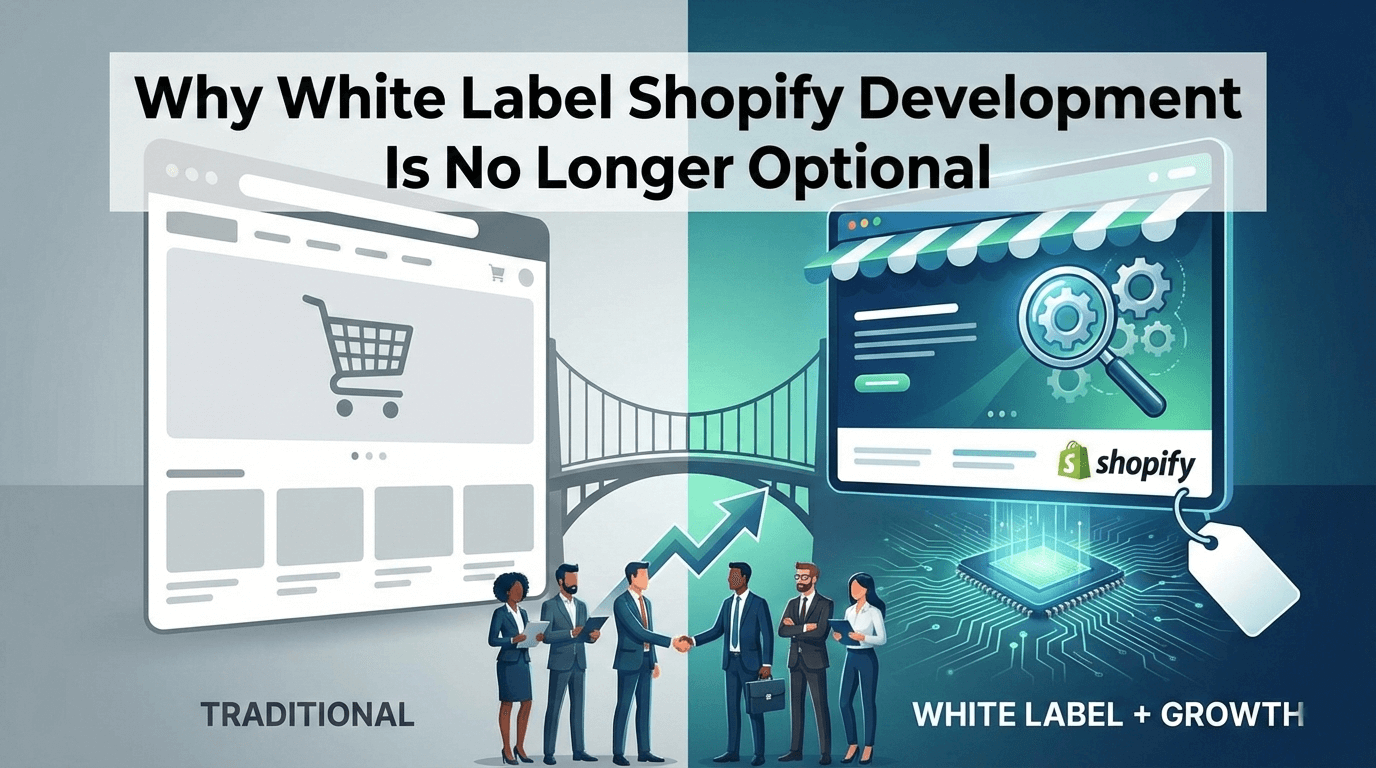
This is where white label Shopify development has evolved from a tactical shortcut into a strategic growth lever.
White label Shopify development allows agencies to deliver enterprise-grade Shopify solutions under their own brand while relying on a specialised, behind-the-scenes development partner. The model is no longer about “outsourcing to save cost”—it’s about building a scalable, resilient delivery engine that keeps agencies competitive in global markets like the USA, UK, Canada, Australia, and New Zealand.
In this guide, we combine insights from leading industry resources and real-world agency experience to create a definitive pillar article on white label Shopify development—covering strategy, execution, risks, trends, and how agencies can partner smartly for long-term success.
What Is White Label Shopify Development?
As ecommerce demand accelerates and client expectations rise, digital agencies are increasingly expected to deliver high-performing Shopify solutions—quickly, consistently, and at scale. However, building and maintaining a fully in-house Shopify team is expensive, operationally heavy, and difficult to scale across fluctuating workloads.
This is where white label Shopify development becomes a strategic advantage rather than just a delivery option.
White label Shopify development is a service delivery model where a specialised Shopify development partner builds, customises, and maintains Shopify stores on behalf of an agency, while the agency retains full ownership of the client relationship, branding, and strategic direction. The partner works entirely behind the scenes, functioning as an invisible extension of the agency’s team.
At its core, this model allows agencies to sell Shopify expertise confidently without carrying the full operational burden of execution.
How White Label Shopify Development Works in Practice
In a white label setup, the agency remains the single point of contact for the end client. Strategy, discovery, timelines, and pricing are owned by the agency, while the execution is handled by the development partner under strict confidentiality and non-disclosure agreements.
The development work itself aligns with Shopify’s best practices, platform standards, and evolving ecosystem, including Online Store 2.0, Shopify APIs, and Shopify Plus capabilities.
For reference, Shopify’s own documentation highlights how flexible and extensible the platform is for custom development:
https://www.shopify.com/partners
https://shopify.dev/docs+
From the Client’s Perspective
From the client’s point of view, nothing changes—and that is exactly the point.
- They work only with your agency
- All communication, proposals, reports, and documentation carry your brand
- Project updates, timelines, and delivery appear fully in-house
- The white label development partner remains completely invisible
This continuity builds trust and reinforces the agency’s position as a full-service Shopify expert, even when complex development or scaling is involved.
From the Agency’s Perspective
For agencies, the benefits are operational, financial, and strategic.
- Instant access to Shopify specialists with hands-on experience across themes, apps, APIs, and Shopify Plus
- No hiring, training, or retention costs, which significantly reduces overhead
- Elastic scaling, allowing teams to ramp up or down based on project demand
- Faster turnaround times without compromising on quality or performance
- More internal focus on strategy, client relationships, and revenue growth
According to industry data from global consulting and outsourcing studies, agencies that adopt structured outsourcing models improve delivery efficiency while protecting margins—especially when working with mature offshore partners.
https://www.deloitte.com/us/en/issues/work/global-outsourcing-survey.html?utm_source=chatgpt.com
Services Commonly Delivered Through White Label Shopify Development
This model is especially powerful for agencies offering end-to-end Shopify and ecommerce services, including:
- Shopify store setup and migration
(New builds or replatforming from WooCommerce, Magento, or custom solutions) - Custom theme development
(Online Store 2.0, performance-focused UX, CRO-driven layouts) - Shopify Plus and headless commerce
(Advanced checkout customisation, API-driven frontends, enterprise integrations) - App integrations and custom functionality
(Payments, logistics, CRM, ERP, marketing automation) - Ongoing maintenance and performance optimisation
(Security updates, speed optimisation, feature enhancements)
These services align directly with Shopify’s own recommendations for scalable ecommerce growth and long-term store success:
https://www.shopify.com/enterprise
Why This Model Is Gaining Momentum
White label Shopify development is no longer just about cost efficiency. For modern agencies, it is about resilience, scalability, and competitive positioning. As Shopify continues to dominate the ecommerce landscape in markets like the USA, UK, Canada, Australia, and New Zealand, agencies that can deliver reliably at scale gain a clear edge.
By leveraging a trusted white label Shopify development partner, agencies can expand their service offerings, handle more complex projects, and grow revenue—without increasing internal complexity or risk.
White label Shopify development enables agencies to operate like large, specialised Shopify firms—without the overhead of building everything in-house. When executed with the right partner, it becomes a long-term growth strategy, not a short-term workaround.
It empowers agencies to stay agile, protect margins, and deliver consistent, high-quality Shopify solutions under their own brand—no matter how fast the business grows.
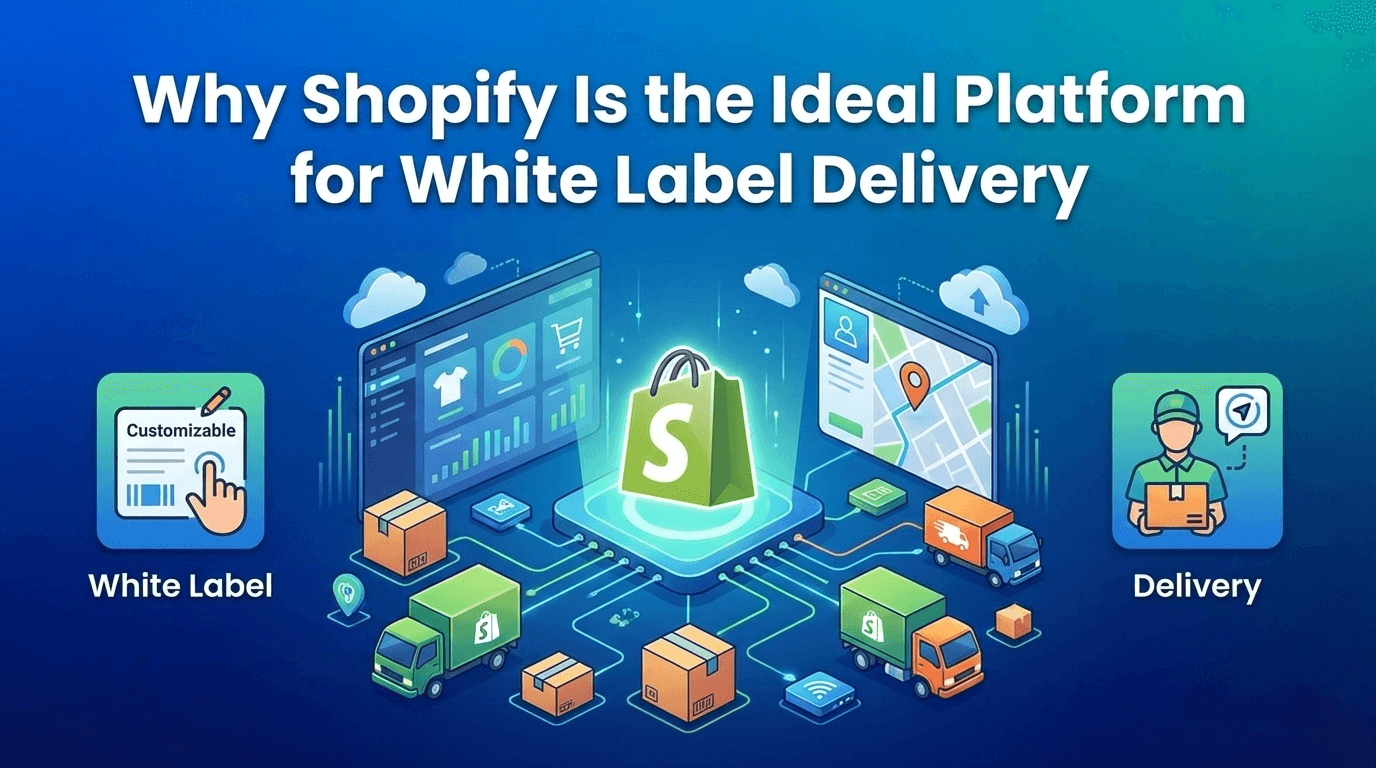
Why Shopify Is the Ideal Platform for White Label Delivery

Over the last decade, Shopify has evolved from a simple ecommerce tool into a global commerce operating system. For digital agencies, this evolution has created a unique opportunity: a platform that is powerful enough for enterprise brands, simple enough for SMBs, and flexible enough to support long-term, recurring client relationships.
This combination makes Shopify uniquely suited for white label delivery models, where agencies need consistency, scalability, and predictable demand without overextending internal teams.
Shopify is not just popular—it is structurally designed to support agency-led growth.
Shopify’s Market Position: Built for Scale and Recurring Revenue
Shopify’s dominance in ecommerce is not accidental. Its market penetration, ecosystem depth, and continuous product innovation make it one of the most agency-friendly platforms available today.
Key Shopify Market Indicators
- Shopify powers millions of online stores globally, spanning startups, DTC brands, and enterprise merchants
https://www.shopify.com/about - It dominates the SMB and mid-market ecommerce segment in Western economies such as the USA, UK, Canada, Australia, and New Zealand
- Shopify Plus adoption is accelerating among high-growth and enterprise brands looking for flexibility without the overhead of legacy platforms
https://www.shopify.com/plus - Agencies increasingly rely on Shopify as a recurring revenue platform, driven by continuous optimisation, feature expansion, and lifecycle support rather than one-time builds
This market structure naturally supports long-term agency-client engagements—making Shopify an ideal foundation for white label Shopify development.
A Platform That Creates Ongoing Demand for Agencies
Unlike platforms that peak at launch, Shopify stores are never “finished.” The ecosystem is designed to evolve alongside the business, which creates continuous demand for agency services.
For agencies, this translates into predictable, repeatable workstreams such as:
- New Shopify store builds for startups, rebrands, and market expansions
- Replatforming projects from WooCommerce, Magento, BigCommerce, or custom-built systems
- Conversion rate optimisation (CRO) driven by data, UX testing, and performance improvements
- Feature expansion through apps and APIs, including subscriptions, loyalty, payments, and integrations
- Ongoing technical support and optimisation, covering speed, security, and platform updates
Shopify’s app marketplace alone includes thousands of extensions that frequently require custom configuration or bespoke development:
https://apps.shopify.com/
This constant evolution is exactly why agencies benefit from having a reliable white label delivery partner rather than maintaining a permanently oversized in-house team.
The Technical Reality: Shopify Requires Specialised Expertise
While Shopify markets itself as user-friendly, professional-grade Shopify development is highly specialised—especially for agencies serving competitive Western markets.
Effective Shopify delivery requires deep expertise in areas such as:
- Liquid templating language, Shopify’s proprietary framework for theme development
- Online Store 2.0 architecture, which introduced modular sections, JSON templates, and performance improvements
https://shopify.dev/docs/storefronts/themes/os20 - Shopify APIs and webhooks, enabling custom apps, third-party integrations, and headless builds
https://shopify.dev/ - Performance optimisation, including Core Web Vitals, theme efficiency, and script management
- CRO-driven UX implementation, balancing design, speed, and conversion psychology
These are not general web development skills—they require continuous upskilling as Shopify releases frequent updates and platform changes.
Why In-House Shopify Teams Don’t Scale Easily
For many agencies, maintaining this level of Shopify expertise internally becomes unsustainable over time.
- Hiring experienced Shopify developers in Western markets is costly
- Training junior developers takes time and carries delivery risk
- Workloads fluctuate, leading to underutilisation or burnout
- Platform updates require ongoing learning and refactoring
As a result, agencies often face a difficult trade-off between delivery quality and operational efficiency.
This is precisely where Shopify development for agencies aligns perfectly with the white label model.
White Label Delivery: A Natural Fit for Shopify-Centric Agencies
White label Shopify development allows agencies to match Shopify’s scalability with an equally scalable delivery model.
By partnering with a specialised Shopify development team, agencies can:
- Instantly access up-to-date platform expertise
- Deliver complex Shopify and Shopify Plus projects confidently
- Scale delivery without permanent overhead
- Focus internal teams on strategy, growth, and client relationships
Rather than fighting the platform’s pace of innovation, agencies can leverage it—using white label delivery to stay agile, competitive, and profitable.
Shopify’s market dominance, recurring service demand, and technical depth make it the ideal platform for white label delivery. For agencies, success on Shopify is no longer about whether you can build a store—it’s about how efficiently and consistently you can deliver value as client needs evolve.
When combined with the right white label Shopify development partner, Shopify becomes more than a platform—it becomes a scalable growth engine for modern digital agencies.
Primary Questions Agencies Ask About White Label Shopify Development
1. What does a white label Shopify development partner actually do?
A true partner handles everything from frontend and backend development to QA, performance optimisation, documentation, and post-launch support—while aligning fully with your agency’s workflows.
2. Is white label Shopify development secure and scalable?
Yes—when executed with proper NDAs, access controls, and delivery processes. Mature partners follow strict security, version control, and data protection standards.
3. Can white label Shopify development support complex projects?
Absolutely. Advanced partners support Shopify Plus, headless builds, ERP integrations, and custom apps.
4. How does white label Shopify development improve agency margins?
Agencies typically improve margins by 30–60% compared to in-house teams due to lower fixed costs and higher utilisation efficiency.
5. Is outsourcing Shopify development suitable for long-term growth?
When done strategically, outsourcing becomes a long-term extension of your agency, not a short-term fix.
Real Business Use Case: How a Mid-Sized Agency Scaled Shopify Revenue Without Increasing Headcount
Agency Profile
- Type: Digital commerce & performance marketing agency
- Location: United Kingdom
- Team size: ~35 employees
- Primary clients: DTC brands and SMBs in retail, lifestyle, and health
- Core services: Shopify development, CRO, paid media, and lifecycle marketing
By 2023, the agency had built a strong reputation for Shopify-based ecommerce solutions. Shopify accounted for nearly 60% of new inbound leads, with increasing demand for migrations, custom themes, and ongoing optimisation retainers.
However, growth exposed serious operational constraints.
The Challenge: Growth Was Hurting Margins
1. Talent Cost Pressure
The agency employed three in-house Shopify developers. As client expectations increased, they needed at least two more senior developers to handle Shopify Plus builds and custom integrations.
- Average annual cost per senior Shopify developer (UK):
£65,000–£80,000, excluding benefits and overhead - Recruitment timelines: 8–12 weeks per hire
- Attrition risk: High, due to competitive hiring market
Leadership realised that each new hire reduced profitability unless utilisation stayed consistently high—which it rarely did.
2. Demand Volatility
Shopify work came in waves, not steady streams.
- Large builds followed by quiet periods
- Spikes during seasonal launches and replatforming cycles
- CRO and optimisation work fluctuated month to month
This created two recurring problems:
- Developers were overloaded during peaks
- Developers were underutilised during troughs
Both scenarios negatively impacted margins and morale.
3. Slowing Speed to Market
Due to limited internal capacity:
- Project start dates were pushed back by 2–4 weeks
- Sales opportunities were lost because timelines felt risky
- Account managers overpromised delivery to close deals
This began to affect the agency’s reputation and client confidence.
The Strategic Decision: Move to a White Label Shopify Model
Rather than hiring more developers, the agency evaluated a white label Shopify development partnership.
Their goal was not cost-cutting—it was operational stability and scalable delivery.
Key requirements:
- Dedicated Shopify specialists (not freelancers)
- Ability to handle Shopify Plus and advanced builds
- NDA-backed, brand-invisible delivery
- Western time-zone overlap and strong communication
- Long-term partnership, not per-project outsourcing
They onboarded a white label Shopify development partner based in India, following a 30-day pilot phase.
Implementation: How the White Label Model Was Rolled Out
Phase 1: Controlled Pilot
- One Shopify migration project
- One CRO optimisation sprint
- Agency retained full client communication
- Partner worked inside the agency’s project management system
Result:
✔ On-time delivery
✔ No client-side visibility of outsourcing
✔ Internal team workload reduced by ~25%
Phase 2: Dedicated White Label Team
Within 90 days, the agency transitioned to:
- 2 dedicated Shopify developers
- 1 QA / performance specialist
The white label team handled:
- Theme customisation
- Shopify Plus features
- App integrations
- Ongoing support tickets
The internal team shifted focus to:
- Discovery and solution architecture
- Client strategy and upsells
- CRO planning and analytics
Business Outcomes (Within 6 Months)
1. Margin Improvement
- Delivery cost per Shopify project dropped by 35–45%
- No increase in fixed payroll costs
- Predictable monthly outsourcing spend
2. Faster Speed to Market
- Project start times reduced from 3 weeks to 5–7 days
- Faster turnarounds became a sales differentiator
- Win rate on Shopify proposals increased noticeably
3. Revenue Growth Without Headcount Growth
- Shopify revenue grew by ~50% year-on-year
- No additional in-house developers hired
- Leadership avoided long-term hiring risk
4. Leadership Focus Shift
Agency leadership spent less time:
- Managing developers
- Resolving delivery bottlenecks
- Firefighting deadlines
And more time on:
- Client relationships
- Strategic consulting
- Partnerships and sales enablement
This shift had a compounding effect on growth.
Why the White Label Model Worked
The success of the transition came down to structural alignment, not just cost arbitrage.
- Shopify’s modular ecosystem made distributed delivery easy
- The white label partner followed agency workflows, not their own
- Dedicated resources ensured accountability and quality
- The agency retained full strategic and commercial control
White label Shopify development acted as a capacity multiplier, not a replacement for the agency’s expertise.
Key Takeaway for Agencies
This case highlights a reality many agencies face:
Growth breaks traditional delivery models before it breaks demand.
White label Shopify development allows agencies to:
- Scale delivery without scaling risk
- Protect margins in competitive Western markets
- Maintain brand authority and client trust
- Adapt to fluctuating demand without operational stress
For agencies serious about long-term growth, white label models are no longer optional—they are foundational infrastructure.
Why India Remains the Global Hub for Shopify Development Outsourcing
India has evolved far beyond the outdated perception of low-cost outsourcing. Today, it is widely recognised as a global delivery hub for high-skill digital services, including ecommerce and Shopify development. For agencies in the USA, UK, Canada, Australia, and New Zealand, India is no longer a “cost alternative”—it is a strategic extension of their delivery capability.
What sets India apart is the rare combination of technical depth, scale, process maturity, and global exposure, making it uniquely suited for white label Shopify development models.
Strategic Advantages of Outsourcing Shopify Development to India
1. Deep and Scalable Shopify Talent Pool
India has one of the world’s largest pools of ecommerce and Shopify-focused developers. As Shopify adoption has grown globally, Indian development teams have evolved alongside the platform—building expertise across:
- Shopify theme and Online Store 2.0 development
- Liquid templating and storefront customisation
- Shopify APIs, webhooks, and custom app development
- Shopify Plus and headless commerce implementations
Many Indian developers and agencies actively participate in Shopify’s global partner ecosystem, contributing to projects for brands across North America, Europe, and APAC.
https://www.shopify.com/partners
This depth of talent allows agencies to scale delivery without the hiring bottlenecks common in Western markets.
2. Strong English Communication and Cultural Alignment
One of the most critical factors in successful outsourcing is communication—and this is an area where India holds a strong advantage.
- English is the primary language of business and technology
- Developers are accustomed to Western documentation standards
- Agile workflows, sprint planning, and written reporting are widely adopted
Most mature Indian Shopify teams work daily with clients and agencies from the US, UK, and Australia, resulting in strong familiarity with:
- Client expectations
- Quality benchmarks
- Compliance and data protection norms
This reduces friction and ensures that white label delivery feels like a natural extension of the agency, not a disconnected offshore unit.
- Time-Zone Advantage for Continuous Delivery
India’s time zone enables near round-the-clock productivity when paired with Western agencies.
- Strong overlap with UK and European business hours
- Partial overlap with US East Coast
- Extended coverage for Australia and New Zealand
This allows agencies to:
- Reduce turnaround times
- Advance work overnight
- Maintain momentum across sprints
For Shopify projects with tight deadlines or ongoing optimisation cycles, this time-zone leverage becomes a competitive advantage, not just a convenience.
4. Process Maturity and Agency Readiness
India’s IT and digital services industry has spent decades serving global enterprises, which has resulted in highly mature delivery processes.
Established Shopify outsourcing partners typically follow:
- Agile and Scrum-based development
- Robust QA and testing protocols
- Secure access and version control practices
- Clear documentation and reporting structures
India’s technology ecosystem, supported by organisations such as NASSCOM, has consistently focused on improving global delivery standards and compliance.
https://nasscom.in/
For agencies, this means fewer operational risks and smoother collaboration—especially in long-term white label engagements.
5. Proven Track Record with Global Clients
Indian Shopify development teams have delivered thousands of projects for:
- DTC brands
- Retail chains
- SaaS-enabled commerce businesses
- Marketing and digital agencies
This exposure translates into:
- Better understanding of Western ecommerce benchmarks
- Experience with cross-border payments, taxes, and logistics
- Familiarity with conversion optimisation and performance expectations
Rather than “learning on the job,” mature Indian partners bring battle-tested experience to every Shopify build.
Cost Efficiency Is a Benefit—Not the Core Value
While cost efficiency remains a factor, it is no longer the primary reason agencies outsource Shopify development to India.
The real value lies in:
- Predictable delivery costs
- Reduced hiring and attrition risk
- Faster access to specialised skills
- Ability to scale without operational drag
Agencies that treat outsourcing purely as a cost play often struggle. Those that approach India as a strategic delivery hub consistently outperform competitors relying solely on in-house teams.
The Critical Difference: Geography vs Partner Selection
It is important to recognise that not all outsourcing partners are equal.
India offers the ecosystem—but success depends on choosing the right kind of partner:
- One that understands agency business models
- One that works under your brand, not alongside it
- One that invests in long-term collaboration, not transactional projects
This is where the concept of a hybrid outsourcing partner becomes essential.
India remains the global hub for Shopify development outsourcing because it combines scale, skill, communication, and process maturity in a way few regions can match. For digital agencies serving demanding Western markets, this makes India a natural choice for white label Shopify delivery.
However, the true advantage does not come from geography alone—it comes from selecting a partner that aligns with your agency’s standards, workflows, and long-term growth goals.
When chosen correctly, outsourcing Shopify development to India becomes a strategic growth multiplier, not just an operational decision.
The Hybrid Outsourcing Model: Why It Works Best
As digital agencies mature, many discover that traditional outsourcing models break down at scale. Freelancers lack consistency and accountability. Large, anonymous development shops often feel transactional, misaligned, and difficult to integrate into agency workflows.
The agencies that scale successfully take a different approach. Instead of outsourcing tasks, they outsource capability—by partnering with hybrid outsourcing partners.
A hybrid outsourcing model combines the delivery strength of offshore teams with the communication, process discipline, and business alignment expected by Western agencies. It is not a compromise between onshore and offshore—it is a deliberate operating model designed for long-term growth.
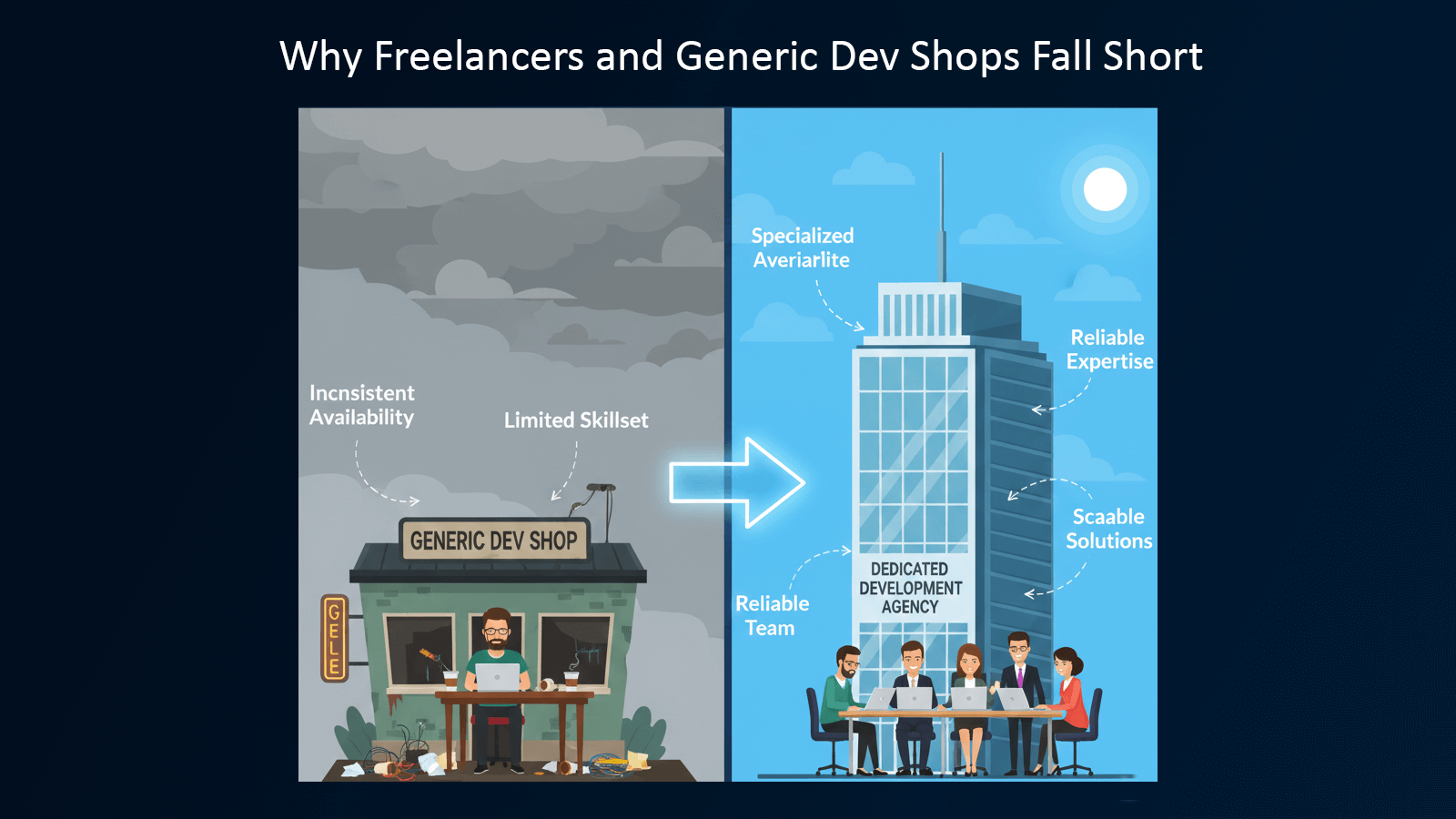
Why Freelancers and Generic Dev Shops Fall Short

Before understanding why the hybrid model works, it’s important to understand why other models fail.
Freelancers:
- Operate as individuals, not teams
- Become unavailable during peak demand
- Lack structured QA, documentation, and continuity
- Create dependency risk if they leave mid-project
Generic offshore dev shops:
- Focus on volume, not agency success
- Push their own processes instead of adapting to yours
- Treat projects as short-term transactions
- Lack ownership mindset over outcomes
For agencies selling premium Shopify services, these models introduce delivery risk, reputational risk, and margin erosion.
What Defines a Hybrid Outsourcing Partner
A true hybrid outsourcing partner is structurally different.
It combines four critical pillars:
1. Offshore Delivery Excellence (India)
Hybrid partners are anchored in India’s deep technical ecosystem, giving agencies access to:
- Experienced Shopify and ecommerce specialists
- Scalable delivery teams
- Cost-efficient, predictable resourcing
Delivery is not ad-hoc—it is process-driven, quality-controlled, and repeatable.
- Western Communication & Process Standards
Hybrid partners operate in alignment with how Western agencies work:
- Clear documentation
- Agile and sprint-based delivery
- Regular reporting and checkpoints
- Time-zone overlap for real-time collaboration
Communication is proactive, structured, and accountable—eliminating the “offshore gap” that plagues traditional outsourcing.
3. Agency-First Mindset
This is the most critical differentiator.
Hybrid partners understand that:
- The agency owns the client relationship
- Brand invisibility is non-negotiable
- Delivery must adapt to the agency’s positioning, not the other way around
Instead of acting like vendors, hybrid partners behave like embedded delivery teams, fully aligned with the agency’s commercial and reputational goals.
4. Long-Term Engagement Models
Hybrid outsourcing is not designed for one-off projects.
It is built around:
- Dedicated or semi-dedicated resources
- Long-term capacity planning
- Knowledge retention across projects
- Continuous improvement over time
This creates stability, predictability, and compound efficiency—benefits that short-term outsourcing can never deliver.
Why the Hybrid Model Performs Better for Agencies
Agencies using hybrid outsourcing models consistently report:
- Faster project ramp-up
- Higher delivery consistency
- Better margin control
- Lower leadership involvement in day-to-day execution
Most importantly, the model allows agencies to scale Shopify and ecommerce services without scaling internal complexity.
Delivery becomes elastic. Strategy becomes the agency’s core focus.
Where Bantech Solutions Fits In
This is where Bantech Solutions stands out—not as a vendor, but as a long-term hybrid outsourcing partner purpose-built for digital agencies.
Bantech combines:
- India-based Shopify and web development expertise
- Western-style communication, documentation, and accountability
- Deep understanding of agency workflows and client expectations
- Engagement models designed for multi-year partnerships, not short-term wins
Teams work under your brand, inside your tools, and according to your standards—allowing you to scale delivery confidently without compromising quality or control.
Hybrid Partner vs Freelancer vs Traditional Dev Shop
Delivery Model Comparison for Digital Agencies
The future of agency scaling is not in hiring endlessly, nor in fragmented outsourcing. It lies in hybrid outsourcing partnerships that balance efficiency with alignment, and scale with stability.
Agencies that adopt this model gain a decisive advantage:
They grow faster, protect margins, and deliver consistently—without operational burnout.
That is why the hybrid outsourcing model works best—and why agencies looking for sustainable growth choose partners like Bantech Solutions.
Why Agencies Choose Bantech Solutions for White Label Shopify Development
Bantech Solutions is built specifically to support digital agencies and startups looking for a reliable, long-term Shopify dev outsourcing partner.
What Makes Bantech Different
1. Agency-First Delivery Model
Bantech operates as an extension of your agency—not a vendor. Teams follow your SOPs, project tools, and branding guidelines.
Learn more about our development capabilities here:
https://www.bantechsolutions.com/web-development/
2. Dedicated Shopify Specialists
From theme customisation to complex Shopify Plus builds, Bantech provides developers with deep platform expertise.
3. Transparent Communication
Clear documentation, regular updates, and timezone-aligned collaboration ensure smooth delivery for Western clients.
4. Scalable Engagement Models
Whether you need a single developer or a full white label Shopify team, Bantech scales with your growth.
Explore our outsourcing approach:
https://www.bantechsolutions.com/outsourcing/
Services Covered Under White Label Shopify Development
A comprehensive white label Shopify partner should support:
Shopify Store Setup & Migration
- New store builds
- Migration from WooCommerce, Magento, or custom platforms
Custom Theme Development
- Online Store 2.0 themes
- Performance-optimised UX
- CRO-focused layouts
Shopify Plus & Headless Commerce
- Custom checkout flows
- API-driven frontend builds
- Enterprise integrations
App Integrations & Custom Features
- Payment gateways
- CRM, ERP, and marketing tools
- Custom Shopify apps
Ongoing Support & Optimisation
- Performance monitoring
- Feature enhancements
- Security updates
Final Thoughts: White Label Shopify Development as a Growth Strategy
White label Shopify development is no longer a cost-cutting tactic—it is a strategic growth framework for agencies that want to scale without sacrificing quality, margins, or reputation.
By partnering with a hybrid outsourcing company like Bantech Solutions, agencies in the USA, UK, Canada, Australia, and New Zealand gain:
- Speed without chaos
- Scale without risk
- Expertise without overhead
If your agency is ready to grow Shopify revenue without operational strain, the next step is choosing a partner that understands agencies—not just code.
Learn how Bantech Solutions can support your growth: https://www.bantechsolutions.com/
FAQs
White label Shopify development is a delivery model where a specialised development partner builds and maintains Shopify stores behind the scenes, while the hiring agency keeps full ownership of the client relationship and brand.
Key Takeaways
- White label Shopify development lets agencies deliver Shopify stores under their own brand while a third-party partner does the technical work.
- Clients never see the outsourcing — all communication, reporting, and delivery appear fully in-house.
- Agencies use it to cut hiring costs, scale delivery up or down, and access specialised Shopify Plus and Online Store 2.0 expertise on demand.
- It works best as a long-term capacity partnership, not a one-off project handoff.
- Choosing the right partner matters more than the model itself — process, communication, and confidentiality determine success.
What Is White Label Shopify Development?
White label Shopify development is a service delivery model where a specialised Shopify partner designs, builds, and maintains Shopify stores on behalf of a digital agency, while the agency retains full ownership of the client relationship, brand, and strategic direction. If your agency is exploring Shopify development outsourcing services as a way to grow without expanding headcount, this is the model most agencies turn to first.
In plain terms: your agency sells the Shopify project, owns the client conversation, and takes the credit. The development partner works quietly in the background, building the store, writing the code, and handling QA — all under strict confidentiality. The client never interacts with the partner directly and, in most cases, never even knows they exist.
This is different from traditional freelance outsourcing or generic subcontracting. White label Shopify development is built specifically around brand invisibility and long-term reliability, which is why it has become a core growth strategy for agencies serving competitive markets like the USA, UK, Canada, and Australia.
How Does White Label Shopify Development Actually Work?
In practice, the agency stays the single point of contact for the client, while the white label partner executes the technical build under NDA and agency branding. Discovery, pricing, and client communication remain entirely with the agency. The development partner plugs into the agency’s existing project management tools, timelines, and workflows — functioning as an extension of the team rather than a separate vendor.
The technical work itself typically follows Shopify’s own platform standards, including Online Store 2.0 architecture, Shopify APIs, and Shopify Plus capabilities where needed. A mature partner won’t just “complete tickets” — they’ll follow structured QA, version control, and documentation processes so the agency can hand off work to the client with confidence.
From the Client’s Perspective
- They only ever deal with your agency
- Proposals, updates, and reporting all carry your branding
- Delivery timelines and communication feel fully in-house
- The development partner remains completely invisible
From the Agency’s Perspective
- Instant access to Shopify and Shopify Plus specialists
- No hiring, training, or retention overhead
- Ability to scale delivery capacity up or down with demand
- More internal bandwidth for strategy, client relationships, and growth
Why Are Agencies Increasingly Using White Label Shopify Development?
Agencies are adopting this model because building and maintaining an in-house Shopify team has become expensive and hard to scale. Hiring experienced Shopify developers in Western markets is costly, and workloads rarely stay steady — spikes during launches followed by quiet periods make full-time hiring inefficient.
According to global outsourcing research, agencies that adopt structured outsourcing models tend to improve delivery efficiency while protecting margins, particularly when partnering with experienced offshore teams. This is echoed in Deloitte’s Global Outsourcing Survey, which highlights cost predictability and access to specialised skill as leading drivers of outsourcing adoption across industries — not just cost-cutting alone.
Shopify itself compounds this demand. Unlike platforms that peak at launch, Shopify stores are never really “finished” — they require ongoing optimisation, app integrations, and feature updates, which creates continuous, recurring work for agencies. Shopify’s own developer documentation reflects just how deep and fast-moving the platform’s ecosystem has become, particularly around Online Store 2.0 and theme architecture, reinforcing why specialised, ongoing expertise matters more than a single build.
What Services Are Typically Included in White Label Shopify Development?
A comprehensive white label Shopify partner usually covers the full lifecycle of a Shopify store, not just the initial build. Here’s how the scope typically breaks down:
| Service Category | What It Covers |
|---|
| Store Setup & Migration | New builds, or replatforming from WooCommerce, Magento, or custom systems |
| Custom Theme Development | Online Store 2.0 themes, performance-focused UX, CRO-driven layouts |
| Shopify Plus & Headless Commerce | Custom checkout flows, API-driven frontends, enterprise integrations |
| App Integrations | Payments, CRM, ERP, logistics, marketing automation |
| Ongoing Support | Performance monitoring, security updates, feature enhancements |
Agencies rarely need every category for every client, but a strong partner should be equipped to handle all of them — because client needs tend to expand over time, not shrink.
Thinking about adding Shopify to your service stack without the hiring risk?
Request a quote from Bantech Solutions and see how a white label Shopify team can plug into your agency this month.
Is White Label Shopify Development the Same as Reselling?
No — reselling typically means passing a project entirely to a third party with little agency involvement, while white label development keeps the agency actively managing strategy, client communication, and quality control. In a reseller arrangement, the agency often has limited visibility into how work is actually delivered. In a true white label partnership, the agency retains oversight, sets standards, and stays accountable for outcomes — the partner simply executes under those standards.
This distinction matters for quality control. Agencies that treat white label development as “pure reselling” often struggle with inconsistent output, because they’ve handed over both execution and oversight. Agencies that treat it as an extension of their own team — reviewing work, maintaining standards, and staying close to delivery — tend to get far better long-term results.
For a deeper look at how this compares across broader digital services beyond Shopify, our guide on white label development for agencies breaks down the model across web, app, and ecommerce delivery.
Does White Label Shopify Development Work for Complex Projects?
Yes — mature white label partners regularly support Shopify Plus builds, headless commerce, and complex API or ERP integrations, not just standard theme customisation. The complexity of the model scales with the partner’s technical depth, which is why vetting matters. A partner comfortable only with basic theme edits won’t be much help on a headless build or a custom checkout flow for a Shopify Plus client.
Agencies serving enterprise or high-growth DTC brands should specifically ask potential partners about their experience with Shopify’s newer capabilities — APIs, webhooks, and Plus-specific features — before assuming a “Shopify developer” can handle every tier of project. This is also where reviewing case studies or past project examples becomes more useful than a generic service list. Our own breakdown of white label website design for scaling agencies covers similar vetting criteria that apply just as well to Shopify-specific partnerships.
How Do Agencies Choose the Right White Label Shopify Partner?
The right partner should function as an “agency-first” team — one that adapts to your workflows, communicates proactively, and treats brand invisibility as non-negotiable, rather than one that pushes agencies into their own processes. Key things to evaluate:
- Confidentiality practices — NDAs, secure access controls, and zero client-facing exposure
- Communication style — proactive updates, clear documentation, timezone overlap
- Technical range — comfort across Online Store 2.0, Shopify Plus, and API-driven builds
- Engagement flexibility — ability to start small (hourly or per-project) and scale to dedicated resources
- Track record — real client examples, not just a generic service list
Cost matters, but it shouldn’t be the deciding factor. A partner that’s cheap but inconsistent will cost more in rework, client trust, and missed deadlines than a slightly pricier partner who delivers reliably the first time.
Ready to add Shopify capability to your agency without the hiring risk?
Talk to a Shopify specialist at Bantech Solutions and get a scoped plan for your next project.
White label Shopify development works through a structured handoff: the agency owns client strategy and communication, while a vetted partner executes the technical build under NDA, reporting back through the agency’s own systems.
Key Takeaways
- The agency stays the single point of contact throughout; the partner works entirely behind the scenes.
- A typical engagement moves through five phases: scoping, onboarding, execution, QA/handoff, and ongoing support.
- Confidentiality is enforced through NDAs, restricted access, and brand-invisible communication.
- Partners plug into the agency’s existing tools and workflows rather than imposing their own.
- Long-term partnerships outperform one-off project handoffs because the partner learns the agency’s standards over time.
How Does White Label Shopify Development Actually Work?
White label Shopify development works by separating client-facing strategy from technical execution: the agency handles discovery, pricing, and communication, while a specialised partner builds and maintains the Shopify store under a non-disclosure agreement and the agency’s own branding. If your agency is evaluating a white label partnership for the first time, understanding this division of labor is the starting point for everything else.
Nothing about the client experience changes. Proposals, timelines, and project updates all carry the agency’s identity. The development partner never appears in emails, calls, or documentation sent to the client — they operate purely as an internal resource, similar to an in-house developer who happens to sit outside the building.
What Are the Typical Phases of a White Label Shopify Engagement?
Most white label Shopify engagements move through five distinct phases, starting with scoping and ending in ongoing support, rather than a single project handoff. Understanding these phases helps agencies set expectations internally and with new partners.
Phase 1: Scoping and Discovery
The agency defines what the client needs — a new build, a migration, a Shopify Plus upgrade, or ongoing optimisation — and shares this scope with the development partner. At this stage, the partner should ask detailed technical questions rather than simply accepting a brief at face value; this is often the clearest signal of experience versus inexperience.
Phase 2: Contracting and NDA
Before any work begins, a non-disclosure agreement and confidentiality terms are put in place. This protects the agency’s client relationships and ensures the partner never contacts the end client directly. Mature partners also define access controls at this stage — who can see client data, staging environments, and credentials.
Phase 3: Onboarding Into Agency Workflows
Rather than asking the agency to adapt to their own systems, a strong white label partner integrates into the agency’s existing project management tools, communication channels, and reporting formats. This is a meaningful difference between a true white label partner and a generic offshore vendor — the partner adjusts, not the other way around.
Phase 4: Development, QA, and Handoff
The technical build happens here — theme development, app integrations, Shopify Plus configuration, or headless architecture, depending on scope. Structured partners follow version control, documented QA checklists, and staged testing before anything reaches the client-facing store. Shopify’s own developer documentation outlines the platform standards this work should align with, particularly around theme architecture and app development practices.
Phase 5: Ongoing Support and Optimisation
Shopify stores are rarely “finished” at launch. Ongoing work — performance monitoring, security updates, feature requests, and seasonal campaign support — typically continues long after the initial build, which is why most white label relationships are structured as retainers or dedicated resourcing rather than single projects.
| Phase | Who Leads | What Happens |
|---|
| Scoping & Discovery | Agency | Define client requirements, share technical brief |
| Contracting & NDA | Both | Confidentiality terms, access controls established |
| Onboarding | Partner | Integrates into agency’s tools and workflows |
| Development & QA | Partner | Builds, tests, and documents the Shopify store |
| Ongoing Support | Partner (agency-managed) | Monitoring, updates, feature requests |
How Do Agencies Maintain Brand Invisibility Throughout the Process?
Brand invisibility is maintained through strict communication protocols: the partner never emails, calls, or messages the end client directly, and all deliverables are formatted to match the agency’s existing branding and documentation style. This is enforced contractually through the NDA, but it’s also a matter of process discipline — reports, staging links, and even code comments are typically scrubbed of any reference to the development partner’s name.
Want a white label Shopify team that fits inside your existing workflows from day one?
Request a quote from Bantech Solutions and we’ll show you exactly how onboarding works before you commit to anything.
Some agencies also request that partners avoid using their own branded tools for staging or communication, opting instead for the agency’s Slack, Asana, or Basecamp environment. This small detail often determines whether a white label relationship feels seamless or exposes the outsourcing arrangement accidentally.
Does the Agency Stay Involved in the Technical Work?
Yes — the agency typically reviews milestones, approves deliverables, and maintains final quality control, even though the partner performs the hands-on development. A common misconception is that white label development means the agency hands off a project and simply waits for a finished product. In practice, the strongest engagements involve the agency staying close to delivery: reviewing staging builds, flagging concerns early, and maintaining the standards clients expect.
This is different from pure resale arrangements, where an agency passes a project along with minimal oversight. For a broader look at how oversight varies across different white label service categories beyond Shopify, our guide on white label API and integrations development covers similar accountability structures that apply across technical outsourcing generally.
What Tools and Processes Do Strong White Label Partners Use?
Reliable partners typically follow Agile or Scrum-based development, maintain version control through Git, and document QA testing before handoff — process maturity is what separates dependable partners from inconsistent ones. India’s technology outsourcing sector, supported by industry bodies like NASSCOM, has spent decades refining these delivery standards for global clients, which is part of why structured process discipline is now an expectation rather than a differentiator among serious partners.
Agencies evaluating a new partner should ask directly about their QA process, documentation standards, and how they handle staging environments — vague answers here are often an early warning sign. It’s also worth asking how the partner handles knowledge transfer if a specific developer leaves the project, since continuity matters more in white label work than in one-off freelance arrangements.
How Does Communication Work Across Time Zones?
Most white label Shopify partnerships rely on structured async communication — daily updates, sprint reports, and scheduled overlap windows — rather than requiring constant real-time availability. Agencies working with India-based partners, for example, often get a working day’s head start due to time zone overlap with UK and European hours, with partial overlap extending into US business hours. This allows work to progress overnight relative to the agency’s local time, which can meaningfully shorten project timelines when managed well.
Clear reporting cadence matters more than physical availability. A partner who sends a concise daily update with blockers flagged early is generally more valuable than one who’s simply online at the same hours but communicates poorly.
What’s the Best Way to Test a White Label Partner Before Committing Long-Term?
Most agencies start with a small pilot project — a single migration or a defined sprint — before moving to a dedicated or retainer-based engagement. This lets both sides evaluate fit: how the partner handles communication, whether deadlines are met, and whether the client-facing output meets the agency’s quality bar, all without the risk of a long-term commitment upfront.
A pilot phase typically runs somewhere between two and six weeks, depending on project scope, and should include a clear review point where both sides assess whether to continue. Agencies that skip this step and move straight into a large retainer often end up locked into a mismatched partnership longer than necessary.
Related Questions
How long does a typical white label Shopify project take?
Standard theme builds often take four to eight weeks, while Shopify Plus or headless projects can extend to several months depending on integration complexity.
Do white label Shopify partners work exclusively with one agency at a time?
It depends on the engagement model — dedicated resources work exclusively with one agency, while shared or hourly models may support multiple agencies concurrently.
What happens if there’s a dispute during a white label engagement?
Strong contracts define escalation paths upfront, typically starting with a project lead review before involving account management on either side.
Can agencies switch white label Shopify partners mid-project?
It’s possible but disruptive — proper documentation and version control during the original engagement make a smoother handover to a new partner if needed.
Is a pilot project necessary before a long-term white label partnership?
It’s not mandatory, but it’s strongly recommended, since it lets both sides confirm communication style and quality fit before committing to a retainer.
Ready to see how a white label Shopify workflow would fit your agency?
Talk to a Shopify specialist at Bantech Solutions and get a scoped pilot plan for your next project.
Subcontracting Shopify work under your own brand is safe when the partner operates under a signed NDA, enforces strict access controls, and follows documented data-handling practices — the risk lies in partner selection, not the model itself.
Key Takeaways
- White label Shopify subcontracting is safe when built on a proper NDA, access controls, and clear data ownership terms.
- The biggest risks come from unvetted freelancers or vendors without documented security processes, not from outsourcing itself.
- Client-facing brand exposure is preventable through strict communication protocols and staging environment controls.
- Shopify’s own platform security (PCI DSS, SOC 2) protects infrastructure, but the agency and partner remain responsible for how they handle access and data.
- A short vetting checklist can catch most red flags before a contract is signed.
Is It Safe to Subcontract Shopify Development Under My Brand?
Yes, subcontracting Shopify development under your own brand is safe, provided the partner works under a signed non-disclosure agreement, follows documented access-control practices, and never contacts your client directly. The safety of white label work has less to do with the concept of outsourcing and everything to do with who you outsource to. If your agency wants a partner that treats data protection as a baseline requirement rather than an afterthought, our Security & Compliance services page outlines what that standard should look like in practice.
The risk agencies actually worry about usually falls into three categories: client data exposure, brand exposure (the client discovering the outsourcing), and quality/reputational risk if the work is subpar. Each of these is manageable with the right safeguards — none of them are inherent flaws in the white label model itself.
What Makes White Label Shopify Work Risky If Done Poorly?
The real risk in white label Shopify work comes from partners without formal confidentiality agreements, unclear data ownership terms, or informal access-sharing practices — not from the act of subcontracting itself. Common red flags include:
- No written NDA, or an NDA with vague or one-sided terms
- Store credentials shared over email or chat instead of secure access management
- No clear policy on who can view or export customer data
- Freelancers working without any documented backup or handover process if they become unavailable
- No defined process for what happens to code, credentials, or data at the end of the engagement
None of these are unique to Shopify — they’re the same risks present in any outsourced technical work. But because Shopify stores often handle live customer and payment data, the stakes are somewhat higher than a purely internal marketing project.
Does Shopify’s Own Security Cover This Risk?
Shopify’s platform-level security — including its Level 1 PCI DSS certification and SOC 2 Type II reporting — protects the infrastructure itself, but it does not extend to how an agency or its subcontractor manages access, credentials, or client data outside the platform. This is an important distinction. Shopify secures its servers, payment processing, and hosting environment, as confirmed on its own security and compliance page. What Shopify cannot control is whether your white label partner shares an admin password over Slack, or whether a departing developer still has access to a client’s store six months later.
In other words: the platform is secure by default, but the agency and its outsourcing partner are responsible for the access layer sitting on top of it. This is exactly where formal contracts matter.
What Should Be in the Contract Before Any Work Begins?
A proper white label Shopify contract should define confidentiality obligations, data-processing responsibilities, access controls, and what happens to credentials and data at the end of the engagement. Regulatory guidance on this — most notably the UK’s Information Commissioner’s Office guidance on contracts between controllers and processors — sets out that any written contract involving personal data processing needs to specify the nature of the processing, security obligations, and what happens to data once the relationship ends. While that guidance is written for GDPR contexts specifically, the same principles are good practice for any agency-partner relationship handling customer data, regardless of jurisdiction.
At minimum, agencies should expect a contract that covers:
| Contract Element | Why It Matters |
|---|
| Non-disclosure agreement | Prevents the partner from contacting your client or disclosing project details |
| Defined access controls | Limits who can view credentials, staging environments, and customer data |
| Data ownership clause | Confirms the agency (and ultimately the client) owns all data and code produced |
| End-of-engagement terms | Specifies credential revocation and data deletion once the project ends |
| Liability and confidentiality breach terms | Establishes recourse if the partner violates the agreement |
How Do Agencies Prevent Clients From Discovering the Outsourcing?
Brand exposure is prevented through strict communication protocols — the partner never emails, calls, or messages the client directly, and all documentation, staging links, and reports are formatted to match the agency’s own branding. This is a process discipline issue as much as a contractual one. Agencies that maintain brand invisibility successfully typically:
- Route all client communication exclusively through the agency
- Use the agency’s own project management tools rather than the partner’s
- Strip developer names, comments, or branding from any client-facing documentation
- Control who has access to staging environments and admin logins
For a broader look at how this discipline applies across white label services beyond Shopify specifically, our guide on white label development for agencies covers similar confidentiality practices that apply to any outsourced technical work.
Not sure if your current white label setup has the right safeguards in place?
Request a quote from Bantech Solutions and we’ll walk you through what a properly secured engagement should look like.
What’s a Practical Vetting Checklist Before Signing With a Partner?
Before committing to a white label Shopify partner, agencies should verify the presence of a real NDA, ask directly about access control practices, and request references from other agencies the partner has worked with. A short but effective vetting process typically includes:
- Ask for a sample NDA — not just a verbal assurance, but the actual document they use with agency clients
- Ask how access is managed — do they use shared logins, individual staff accounts, or a password manager with audit logs?
- Ask what happens at project end — is there a defined process for revoking access and returning or deleting data?
- Ask for agency references — a partner with a real track record should be able to connect you with at least one existing agency client
- Start with a small pilot — before handing over a major client project, test the relationship on a lower-stakes build first
Agencies that skip this vetting step and move straight into a large engagement are the ones most likely to run into problems later — not because outsourcing is inherently risky, but because they didn’t confirm the partner’s practices upfront. For more detail on how a pilot phase should typically run, see our related article on the white label Shopify development pillar guide, which covers onboarding and trial engagement structures in more depth.
Is Subcontracting Riskier for Shopify Plus or Enterprise Clients?
Subcontracting carries somewhat higher stakes for Shopify Plus or enterprise clients simply because these stores tend to handle larger transaction volumes and more sensitive integrations, but the underlying safeguards remain the same. The difference isn’t a different set of rules — it’s that the consequences of a gap in access control or a data-handling mistake are more visible when a high-volume enterprise client is involved. For these engagements, agencies should be more rigorous about vetting, not less, and should expect a partner to demonstrate specific experience with the compliance and integration complexity that Shopify Plus projects typically involve.
Related Questions
Do I need a separate NDA for every white label Shopify project?
It depends on the engagement structure — many agencies use a master NDA covering the ongoing relationship, with project-specific addendums for particularly sensitive work.
What happens to client data if I switch white label partners?
A proper contract should require the outgoing partner to return or delete all client data and revoke access credentials before the transition is considered complete.
Can a white label partner be held liable for a data breach?
Yes, if the contract includes clear liability and confidentiality terms — this is exactly why a written agreement matters more than a verbal understanding.
Should I ask a white label Shopify partner for security certifications?
It’s reasonable to ask about their internal security practices, though certifications like SOC 2 are more common at the platform level (Shopify) than at the individual development partner level.
Is it safer to use a larger white label agency instead of an individual freelancer?
Generally yes, since agencies are more likely to have documented processes, backup staffing, and formal contracts, whereas individual freelancers often lack these safeguards.
Want a second opinion on whether your current white label setup is actually secure?
Talk to a specialist at Bantech Solutions and get a straightforward review of your risk exposure.
Yes, agencies can deliver Shopify Plus and headless commerce projects through a white label partner, provided that partner has demonstrated experience with the Storefront API, Hydrogen, and enterprise-grade integrations — not just standard theme customisation.
Key Takeaways
- White label partners can absolutely deliver Shopify Plus and headless builds, but the technical bar is meaningfully higher than standard theme work.
- Look for real experience with the Storefront API, Hydrogen, and custom checkout extensibility, not general Shopify familiarity.
- Headless projects require ongoing frontend maintenance beyond launch, so long-term partnership fit matters more than for a simple theme build.
- Ask for specific project examples and technical references before committing a Plus or headless client to a partner.
- Not every white label provider that handles standard builds is equipped for enterprise-tier complexity — vetting is essential.
Can Agencies Deliver Shopify Plus or Headless Projects Through White Label Partners?
Yes, agencies can deliver both Shopify Plus and headless commerce projects through a white label development partner, as long as that partner has proven experience with the platform’s more advanced capabilities. This is different from asking whether a partner can handle a standard theme customisation. Agencies exploring this route should look closely at a partner’s enterprise web development capabilities before assuming general Shopify experience automatically translates into Plus or headless readiness.
The short version: the white label model itself scales to any tier of Shopify complexity. What doesn’t automatically scale is the individual partner’s technical depth — that has to be verified project by project.
What Makes Shopify Plus and Headless Projects Different From Standard Builds?
Shopify Plus and headless commerce projects require deeper technical expertise because they involve custom checkout extensibility, enterprise-grade integrations, and — in the case of headless — an entirely separate frontend framework rather than Shopify’s built-in theme system. A standard Shopify build typically means working within Liquid templating and Online Store 2.0’s modular section architecture. Shopify Plus and headless work introduce a different layer of complexity on top of that:
- Shopify Plus unlocks checkout customisation, B2B commerce features, multi-store management, and higher API rate limits suited to high-volume merchants
- Headless commerce replaces the theme layer entirely with a custom frontend — commonly built on Shopify’s own Hydrogen framework — that communicates with Shopify’s backend through the Storefront API
Shopify’s own Hydrogen framework documentation makes clear that this is a genuinely different development discipline: a React-based application requiring frontend engineering skill, not theme customisation skill. A developer who’s excellent at Liquid theme work isn’t automatically equipped to build or maintain a Hydrogen storefront.
What Should a White Label Partner Demonstrate Before Taking on a Plus or Headless Project?
Before assigning a Shopify Plus or headless project to a white label partner, agencies should confirm real, verifiable experience with the Storefront API, checkout extensibility, and — for headless specifically — a modern frontend framework such as React. This isn’t a box-ticking exercise; it’s the difference between a smooth delivery and a project that stalls halfway through.
Practical things to ask for:
| What to Verify | Why It Matters |
|---|
| Past Shopify Plus project examples | Confirms real experience with B2B features, custom checkout, multi-store setups |
| Storefront API / Hydrogen project history | Confirms genuine headless capability, not just familiarity with the concept |
| Frontend framework expertise (React, Remix) | Headless builds require software engineering skill beyond Liquid templating |
| Post-launch maintenance plan | Headless storefronts need ongoing frontend upkeep, unlike a “set and forget” theme |
| References from agencies with similar project scope | Confirms the partner has actually delivered at this complexity level before |
Shopify Plus itself is explicitly positioned by Shopify as the tier built for high-growth and enterprise merchants, which means the clients requesting it typically have higher expectations and lower tolerance for delivery mistakes. A partner without direct Plus experience will often discover platform-specific limitations mid-project rather than anticipating them upfront.
Does Headless Commerce Require a Different Kind of Ongoing Support?
Yes — unlike a standard Shopify theme, a headless storefront requires ongoing frontend maintenance, since the custom application layer sits outside Shopify’s built-in update and hosting cycle. This is one of the most commonly underestimated aspects of headless projects. With a traditional theme, much of the platform maintenance is handled by Shopify itself. With headless, the custom frontend — its dependencies, performance, and hosting — becomes the agency’s (and by extension, the white label partner’s) ongoing responsibility.
This has a direct implication for how agencies structure the white label relationship: a headless project is rarely a one-time build. It typically needs a retainer-style engagement with the same partner post-launch, since institutional knowledge of the custom codebase matters more here than with a standard theme, where a new developer can usually pick up the work without much ramp-up.
Considering a Shopify Plus or headless project for an upcoming client?
Request a quote from Bantech Solutions and we’ll walk through the technical scoping before you commit to a delivery timeline.
How Do Agencies Vet a Partner Specifically for API-Driven and Integration-Heavy Projects?
Agencies should ask for specific examples of past API integrations — ERP systems, custom checkout logic, or third-party service connections — since this is where inexperienced partners most often struggle on complex builds. Integration work is rarely as clean as it looks in a project brief; undocumented edge cases in a client’s existing systems, rate limits, and data mapping issues tend to surface mid-project. A partner with real integration experience will ask pointed questions about the client’s existing tech stack before quoting a timeline, rather than assuming a straightforward connection.
For agencies regularly delivering integration-heavy Shopify projects, it’s worth reviewing how a partner has handled this specifically for API and third-party integration work, which is covered in more depth in our guide on white label API and integrations development — many of the same vetting principles apply directly to Shopify Plus and headless scoping.
Is It Riskier to White Label a Shopify Plus or Headless Project Than a Standard Build?
The risk isn’t inherently higher, but the margin for error is smaller, since Plus and headless clients typically have larger transaction volumes, more integrations, and less tolerance for downtime or delays. A mismatched partner is more likely to be exposed on a complex project simply because there are more places for gaps in expertise to surface. This is exactly why the vetting process matters more here than for a simple theme customisation — a partner that performs well on standard builds isn’t automatically equipped for enterprise-tier complexity, and assuming otherwise is one of the more common mistakes agencies make when scaling into bigger client accounts.
For a broader view of how white label Shopify delivery fits into an agency’s overall growth strategy — including how to structure engagements as complexity increases — our pillar guide on white label Shopify development covers the full range of project types agencies typically encounter as they scale.
What’s a Reasonable Way to Test a Partner Before a Full Plus or Headless Engagement?
A smaller, lower-stakes project — such as a scoped API integration or a discrete feature build — is a practical way to evaluate a partner’s technical depth before committing them to a full Shopify Plus or headless engagement. This mirrors the pilot-project approach recommended for any new white label relationship, but with added emphasis on technical review: agencies should have an internal or trusted technical reviewer assess the quality of the pilot work specifically for API handling, code structure, and documentation, not just whether the feature functioned as expected on the surface.
Related Questions
Does Shopify Plus require a different pricing structure from a white label partner?
Often yes — Plus and headless projects typically involve higher hourly rates or project fees given the increased technical complexity and support requirements.
Can a white label partner migrate an existing headless store to a new frontend framework?
Yes, though framework migrations (for example, moving off a legacy custom stack onto Hydrogen) require careful data and API mapping, and should be scoped as a distinct project.
Do I need a dedicated frontend developer for a headless Shopify project?
Generally yes — headless storefronts benefit from a developer with strong React or similar frontend framework experience, distinct from a typical Liquid theme developer.
Is Shopify Plus required to build a headless storefront?
No — many Hydrogen capabilities work on lower-tier Shopify plans, though certain advanced features are exclusive to Plus.
How do I know if my client actually needs headless commerce instead of an optimized theme?
Headless typically makes sense for highly custom UX requirements or complex product configurators; standard optimized themes are usually sufficient and more cost-effective for most merchants.
Ready to scope a Shopify Plus or headless project with a technically vetted partner?
Talk to a Shopify specialist at Bantech Solutions and get a realistic technical assessment before you quote your client.
White label Shopify development lets agencies deliver expert Shopify builds under their own brand — here’s how the model works, what it costs, and how to choose a partner you can trust with your clients.
Key Takeaways
- White label Shopify development means a third-party dev team builds and maintains Shopify stores while your agency owns the client relationship and the credit.
- It’s the fastest way to add Shopify Plus capability without hiring senior developers at $100–200/hour Western rates.
- Typical engagement models are hourly, fixed-project, or dedicated retainer — pricing ranges from under $1,000 for small tweaks to $50,000+ for enterprise migrations.
- Vet partners on Shopify Partner Program status, NDA/confidentiality terms, communication process, and portfolio depth before signing anything.
- Agencies that outsource 40–60% of delivery report meaningfully faster growth and healthier margins than those trying to build everything in-house.
Agencies chasing Shopify projects hit the same wall eventually: clients want enterprise-grade stores, but hiring and training an in-house Shopify Plus team is slow and expensive. Job postings alone can take months to fill, and by the time a new hire is fully productive, the client’s launch window may have already closed. That’s the gap white label Shopify development for agencies is built to close — a specialized partner handles the build behind the scenes, and your agency stays the only name the client ever sees.
What Is White Label Shopify Development?
White label Shopify development is a service model where a specialized third-party team builds, customizes, and maintains Shopify stores on an agency’s behalf, while the agency retains full ownership of the client relationship, branding, and invoicing. The client never interacts with the development partner directly — every report, every email, and every deliverable carries your agency’s name.
This is different from simple subcontracting. A true white label arrangement includes:
- Complete confidentiality — the partner is contractually invisible to your client
- Branded deliverables, reports, and communication under your agency’s identity
- Flexible engagement models, from single projects to dedicated ongoing teams
- Access to Shopify Plus–certified developers without a hiring cycle
- Capacity that scales up or down with your client pipeline
Think of it the way a restaurant sources bread from a specialty bakery but plates it as its own. The kitchen focuses on the dining experience; the bakery handles the one thing it does at scale. Your agency focuses on strategy, client trust, and growth — the white label partner focuses on writing clean Liquid code and shipping on time.
How Does White Label Shopify Development Work for Agencies?
In practice, your agency stays the single point of contact with the client while a white label partner executes the technical build against your specifications, timeline, and brand voice. You scope the project, the partner delivers the work, and you handle every client-facing conversation.
A typical workflow looks like this:
- Your agency scopes the project and signs the client
- You brief the white label partner with requirements, brand guidelines, and deadlines
- The partner’s developers build, test, and QA the store under NDA
- You review deliverables and handle all client communication and reporting
- The partner provides ongoing maintenance or support as needed, still under your brand
Because Shopify Plus adoption keeps climbing among high-growth brands, more of this work now involves headless storefronts, ERP integrations, and custom checkout logic — the kind of specialized work that’s hard to justify hiring for unless you’re running dozens of enterprise accounts at once.
What Services Can You White Label With a Shopify Development Company?
Most white label Shopify partners cover the full build lifecycle — theme development, migrations, integrations, and ongoing maintenance — so agencies can offer a complete Shopify service line without adding headcount. Here’s how the typical scope breaks down:
| Service Category | What’s Included | Typical Client Fit |
|---|
| New store builds | Custom theme design, product setup, checkout config | Startups, rebrands, new market launches |
| Platform migrations | WooCommerce, Magento, or BigCommerce to Shopify | Businesses outgrowing a legacy platform |
| Shopify Plus / enterprise | Headless commerce, ERP/CRM integrations, custom checkout | High-volume or B2B brands |
| App & third-party integrations | Payment gateways, inventory, marketing tools | Any store adding functionality |
| Ongoing maintenance | Updates, performance monitoring, bug fixes | Retainer clients needing long-term support |
Agencies that also handle related Shopify Plus development work often bundle these into tiered service packages — a basic build tier, a growth tier with integrations, and an enterprise tier with dedicated support.
Ready to add Shopify capability without the hiring headache?
Talk to a white label Shopify specialist →
How Do You Choose the Right White Label Shopify Development Partner?
The right partner combines verified Shopify Partner Program credentials, a real enterprise portfolio, airtight confidentiality terms, and a communication process that matches how your agency actually works. Skipping any of these is how agencies end up with a partner who quietly damages a client relationship.
Use this checklist before signing anything:
- ✅ Confirm official Shopify Partner or Shopify Plus Partner status
- ✅ Review case studies for projects similar in scope to your client’s
- ✅ Get the NDA and confidentiality terms in writing before sharing client details
- ✅ Test communication with a smaller project before committing to a retainer
- ✅ Ask how they handle revisions, timelines, and escalations
- ✅ Clarify whether pricing is fixed-scope, hourly, or retainer-based
An Agency Enterprise Shopify Partner with a track record on complex migrations is a very different fit than a partner best suited to quick theme tweaks — match the partner’s depth to the complexity your clients actually need.
How Much Does White Label Shopify Development Cost?
White label Shopify development typically costs anywhere from under $1,000 for small theme tweaks to $50,000+ for full enterprise migrations, with most standard store builds landing between $5,000 and $20,000. Pricing depends on project scope, engagement model, and where the development team is based.
Here’s a general breakdown agencies can use when estimating client budgets:
| Project Type | Typical Cost Range | Timeline |
|---|
| Theme tweaks / small fixes | Under $1,000 | Days |
| Standard store build | $5,000 – $20,000 | 2–4 weeks |
| Platform migration | $10,000 – $30,000 | 4–8 weeks |
| Shopify Plus / enterprise build | $30,000 – $50,000+ | 2–4 months |
| Ongoing retainer support | $2,000 – $5,000/month | Continuous |
Engagement model also affects cost significantly. Hourly rates for specialized Shopify development commonly run $25–50/hour from experienced offshore partners, compared to $100–200/hour for equivalent Western in-house talent — a gap that’s driven much of the growth in enterprise ecommerce outsourcing over the past few years. Agencies should build their own markup into whatever a partner quotes, since the white label fee is a cost of delivery, not the price the client sees.
A few variables move these numbers more than anything else: how much custom code the design requires versus off-the-shelf theme components, how many third-party systems need to talk to Shopify, and how much of the work is genuinely new build versus fixing something a previous developer left behind. Agencies that scope these variables clearly upfront tend to get tighter, more accurate quotes — and fewer surprise change orders once the project is underway.
It’s worth noting that cost shouldn’t be the only factor. According to Deloitte’s Global Outsourcing Survey, skilled talent and agility now rank alongside cost reduction as top reasons organizations outsource, and 80% of executives plan to maintain or increase their third-party outsourcing investment — a sign that agencies choosing white label partners for capability, not just cheaper labor, tend to build more durable partnerships.
Related Questions
Is white label Shopify development confidential from my clients?
Yes — confidentiality is the defining feature of the model. A legitimate white label partner signs an NDA and never communicates directly with your client, so all deliverables and reporting appear to come entirely from your agency.
Can white label partners work on Shopify Plus projects?
Most established white label Shopify partners hold Shopify Plus Partner status and regularly handle enterprise work, including headless commerce builds, custom checkout extensions, and complex ERP integrations.
What’s the difference between white label and reseller Shopify development?
White label development means the partner builds the product invisibly under your brand; reselling typically means you’re passing along a partner’s existing product or service with less customization and, often, visible attribution to the original provider.
How long does a typical white label Shopify project take?
Small tasks can wrap up in days, standard store builds usually take 2–4 weeks, and full Shopify Plus enterprise migrations can run 2–4 months depending on data volume and integration complexity.
How do I find the best white label Shopify development company for my agency?
Compare candidates on verified Shopify Partner credentials, portfolio depth in your client’s industry, transparent pricing, and a trial project — the best fit is rarely just the cheapest quote.
Want a white label Shopify partner your clients will never know exists?
Request a quote from Bantech Solutions →
A white label Shopify development plan typically bundles the build, QA, documentation, and a defined support window — but exactly what’s included varies a lot by partner, so it’s worth checking line by line before you sign.
Key Takeaways
- A standard white label Shopify plan includes the build itself, QA testing, documentation, and a post-launch warranty window — usually 30 to 90 days.
- Deliverables should include full source files, a style guide, and branded (not vendor-branded) reporting your agency can hand straight to the client.
- Content creation, product photography, paid marketing, and long-term SEO strategy are usually not included unless you add them as separate line items.
- Ongoing maintenance is typically a separate retainer, priced apart from the initial build.
- Get the scope, revision limits, and support window written into the contract — verbal assumptions are where most white label relationships break down.
Before signing with any partner, agencies need a clear answer to one question: what actually comes with the plan, and what will show up later as a change order? This matters more than it might seem, because the answer directly affects how you price the project for your own client. Quote too low because you assumed something was included, and the margin disappears the moment a “surprise” invoice from your partner lands mid-project. A white label Shopify development plan from a serious partner should spell this out in writing, not leave it to be discovered mid-project.
What’s Included in a White Label Shopify Development Plan?
A white label Shopify development plan typically includes the full build (theme setup, custom coding, and app/integration configuration), QA testing across devices, source file documentation, and a defined post-launch warranty period. Beyond that baseline, what’s bundled versus billed separately depends heavily on whether you’re buying a one-time project or an ongoing retainer.
At minimum, a standard plan should cover:
- Store setup or migration (theme, product catalog, checkout configuration)
- Custom development work scoped in the brief (features, integrations, custom Liquid code)
- Cross-device and cross-browser QA testing before handoff
- Documentation of what was built and how it works
- A warranty period for fixing bugs introduced during the build
- Anything beyond that — like ongoing content updates, marketing setup, or unlimited future revisions — is where plans start to differ sharply between partners, which is exactly why it needs to be confirmed upfront rather than assumed.
What Deliverables Should You Expect From a White Label Shopify Partner?
Deliverables should include the complete, unencrypted source code, a style/brand guide documenting design decisions, a QA or testing report, and reporting templates pre-branded with your agency’s identity rather than the partner’s. If a partner can’t hand over clean source files on request, that’s a red flag worth pausing on before you sign anything.
A complete deliverables package typically looks like this:
- Full source code and theme files, with your agency listed as the owner
- A style guide covering fonts, colors, spacing, and component patterns used
- QA/testing documentation showing what was checked and on which devices
- Admin credentials and a walkthrough of any custom functionality
- White-labeled status reports and project updates, ready to forward to the client as-is It’s worth asking specifically how handoff works at the end of a project. Some partners bundle everything into a single shared folder with a walkthrough call; others drip deliverables out piecemeal and expect you to chase down what’s missing. Neither approach is inherently wrong, but knowing which one you’re getting changes how much internal time your team needs to budget for the handoff itself.
- Partners with a real service track record — like the deliverables built into Bantech’s white label ecommerce development engagements — tend to formalize this into a standard handoff checklist rather than improvising it project by project.
What Support and Maintenance Is Typically Included After Launch?
Most white label Shopify plans include a bug-fix warranty window immediately after launch, but ongoing maintenance — updates, monitoring, and new feature requests — is almost always a separate, priced add-on. Confusing the two is one of the most common sources of scope disputes between agencies and their clients.
| Support Tier | What It Covers | Typical Duration |
|---|
| Launch warranty | Fixes for bugs caused by the original build | 30–90 days |
| Basic maintenance retainer | Minor updates, security patches, uptime checks | Ongoing, monthly |
| Standard support retainer | Above, plus small feature requests and app updates | Ongoing, monthly |
| Enterprise/dedicated support | Above, plus a dedicated team, SLAs, and priority response times | Ongoing, monthly |
The industry norm for a launch warranty sits in the 30-to-90-day range, which gives enough time for real-world usage to surface issues the original QA process might have missed. Anything discovered after that window typically falls under a maintenance retainer rather than being fixed for free. Agencies that skip this conversation upfront are often the ones fielding an awkward client call months later, trying to explain why a “free fix” now comes with an invoice attached.
Not sure what your current white label partner actually covers?
Get a scope review from Bantech Solutions →
What’s Usually Excluded From a Standard White Label Shopify Plan?
Standard plans generally exclude content writing, product photography, paid advertising setup, long-term SEO strategy, and unlimited revisions — these are typically quoted as separate services if you need them. Knowing this upfront prevents the awkward conversation where a client assumes something was included that never was.
Common exclusions to confirm before signing:
- ❌ Product copywriting and photography
- ❌ Ongoing SEO strategy or content marketing
- ❌ Paid ad campaign setup and management
- ❌ Unlimited design revisions beyond the agreed round count
- ❌ Third-party app subscription costs (Shopify apps usually bill the store owner directly)
- ❌ Post-warranty bug fixes outside a maintenance retainer
None of this is unusual — it mirrors how most agencies structure services generally. In fact, Clutch’s 2025 survey of small business website decisions found that roughly 45% of small businesses now outsource their web design work entirely to agencies, and clear scope boundaries are consistently what separates the outsourcing relationships that go smoothly from the ones that don’t. The agencies that avoid disputes tend to be the ones that put exclusions in writing alongside inclusions, rather than only documenting what’s covered and leaving everything else implied.
How Can Agencies Customize a White Label Shopify Service Package?
Agencies can customize a white label Shopify package by adjusting the engagement model (project-based vs. retainer), setting revision limits upfront, and requesting dedicated project management or SLA-backed response times for higher-stakes clients. The best partners will build a package around how your agency actually operates rather than offering a single rigid tier.
Questions worth raising with any prospective partner:
Can revision rounds be adjusted based on project complexity?
Is a dedicated project manager available, or is communication pooled across accounts?
Are response-time SLAs available for enterprise or Shopify Plus clients?
Can reporting templates be customized to match our agency’s branding exactly?
What does the process look like for verifying credentials, since Shopify’s own Partner Program structure ties benefits to performance tiers that are worth asking a partner about directly?
Getting these answers in writing before the first project starts is what turns a one-off vendor relationship into a repeatable, scalable part of your agency’s service line.
Related Questions
Does a white label Shopify plan include hosting?
Shopify itself hosts all stores as part of its subscription plans, so hosting isn’t something a white label partner needs to provide separately — it’s built into the Shopify plan the store runs on.
Do I get full source code ownership?
Reputable white label partners transfer full ownership of custom code and theme files to your agency; always confirm this in writing, since ownership terms vary and matter significantly if you ever change partners.
How many rounds of revisions are typically included?
Most standard plans include two to three rounds of revisions during the build phase; anything beyond that is usually billed hourly or as a change order, so it’s worth clarifying the exact number before the project starts.
Is SEO setup part of a standard white label Shopify plan?
Basic technical SEO — clean URLs, meta fields, and sitemap setup — is often included, but ongoing SEO strategy, content creation, and link building are separate services in almost every standard plan.
Can I add ongoing retainer support to a one-time build?
Yes — most white label partners offer a maintenance retainer that can be added after the initial build is complete, which is a common path for agencies that want to keep a client relationship active long-term.
Want a white label Shopify plan with the scope spelled out from day one?
Request a detailed proposal from Bantech Solutions →
Most agencies without a dedicated developer route Shopify API work — ERP syncs, custom apps, third-party integrations — to a specialized white label partner rather than attempting it internally or turning the client away.
Key Takeaways
- Agencies without in-house developers typically outsource Shopify API integrations to a white label partner rather than declining the project or learning GraphQL under deadline pressure.
- Common integration requests involve ERP/CRM syncing, custom checkout logic, inventory automation, and headless storefronts built on the Storefront API.
- DIY attempts without API experience risk broken webhooks, rate-limit errors, and security gaps that surface only after launch.
- A good API partner scopes the integration, builds and tests it in a development store, and hands off documentation your agency can maintain going forward.
- Vetting partners on real Admin API and Storefront API experience — not just theme work — is the difference between a smooth integration and a support headache six months later.
Clients increasingly expect their Shopify store to talk to everything else in their business — the ERP, the CRM, the fulfillment system, a custom loyalty app. That expectation doesn’t slow down just because your agency doesn’t have a developer on staff who’s comfortable in Shopify’s GraphQL Admin API. Turning the work away means losing the account to a competitor who can say yes; attempting it without the right experience risks a broken integration that damages the relationship even more. Here’s how agencies actually handle it.
How Do Agencies Handle Shopify API Integrations Without In-House Expertise?
Agencies without in-house developers typically hand Shopify API work to a specialized white label partner who scopes the integration, builds it against Shopify’s Admin or Storefront API, and delivers it under the agency’s brand. This avoids two bad outcomes: turning down the project entirely, or attempting unfamiliar API work in-house and risking a broken integration the agency then has to explain to the client.
The practical options agencies choose between are:
- White label API integration partner — a specialized developer or team builds the integration under NDA, invisible to the client
- Freelance contractor — faster to engage but less consistent in quality and documentation
- Pre-built Shopify apps — fine for common use cases, but limited when the client needs custom logic
- Declining the work — the default when none of the above feels safe, and the option that costs agencies the most in lost revenue over time
For anything beyond a standard app installation, the first option is usually the one that protects both the client relationship and the agency’s margin.
What Types of Shopify API Integrations Do Agencies Commonly Need?
The most common integration requests involve syncing Shopify with an ERP or CRM, automating inventory across sales channels, customizing checkout logic, and building headless storefronts. Each of these draws on a different part of Shopify’s API surface, which is exactly why generalist developers often struggle without focused Shopify experience.
| Integration Type | Shopify API Used | Common Use Case |
|---|
| ERP / CRM sync | GraphQL Admin API | Order, customer, and inventory data flowing to systems like SAP, NetSuite, or Salesforce |
| Custom checkout logic | Shopify Functions | Dynamic discounts, delivery rules, payment customization |
| Headless storefronts | Storefront API | Custom front-end built in React, Next.js, or Hydrogen |
| Inventory automation | Admin API + webhooks | Real-time stock sync across warehouses or marketplaces |
| Third-party app integrations | REST or GraphQL Admin API | Loyalty programs, subscriptions, marketing tools |
Agencies handling enterprise-level Shopify Plus work run into ERP and headless integrations especially often, since larger clients tend to already have systems in place that a new Shopify store has to fit into rather than replace.
What Are the Risks of DIY API Integration Without a Developer?
Attempting Shopify API integration without real experience risks broken webhooks, rate-limit errors that silently drop data, and security gaps from over-permissioned access tokens — all of which tend to surface after launch, not during testing. These aren’t hypothetical edge cases; they’re the standard failure modes for anyone learning Shopify’s API under a live deadline.
Watch for these common DIY pitfalls:
- ⚠️ Webhooks that fail silently, leaving order or inventory data out of sync
- ⚠️ Hitting API rate limits during traffic spikes, causing failed requests
- ⚠️ Overly broad access token scopes, creating unnecessary security exposure
- ⚠️ No error handling, so a single failed request breaks the entire sync
- ⚠️ Missing documentation, making the integration a black box for whoever inherits it later
Shopify’s own developer documentation is thorough, but reading Shopify.dev’s API reference is a different skill than having already debugged rate-limit errors and webhook failures under a live client deadline — which is exactly the gap a specialized partner closes. The documentation tells you what the API can do; it doesn’t tell you what happens when a client’s ERP sends malformed data at 2 a.m., or when a Black Friday traffic spike hits an integration that was only ever tested against a handful of sample orders.
Have a client asking for an ERP or custom app integration you don’t have the bandwidth to build?
Talk to a Shopify API integration specialist →
How Does a White Label Partner Handle Shopify API Work?
A white label partner typically scopes the integration against the client’s existing systems, builds and tests it in a Shopify development store, then hands off working code and documentation your agency can maintain going forward. The process looks similar to any other white label engagement, just with a more technical brief.
A typical integration workflow includes:
- Requirements gathering — what systems need to talk to Shopify, and how
- API and architecture planning — Admin API, Storefront API, or a combination
- Development in a sandboxed test store, away from the live site
- QA testing, including webhook reliability and rate-limit handling
- Handoff with documentation and admin access, branded under your agency
This mirrors how larger technical builds get handled more broadly — the difference with API work specifically is that testing has to account for how the integration behaves under real transaction volume, not just how it looks in a demo.
What Should Agencies Look for in an API Integration Partner?
Look for a partner with demonstrated experience in the specific API you need — Admin, Storefront, or Functions — plus a track record of documenting handoffs clearly enough that your team could maintain the integration without them. Theme customization experience doesn’t automatically translate to solid API work; the two require different skill sets.
Questions worth asking before committing to a partner:
- Can you show a past integration involving a similar ERP or CRM system?
- How do you handle webhook failures and rate-limit errors in production?
- What documentation do we receive at handoff, and can our team maintain it independently?
- Do you test in a sandboxed development store before touching the live site?
- What’s your process if Shopify pushes an API update that affects the integration?
The developer talent shortage makes this vetting step more important, not less — Clutch’s 2025 web design industry report found that 95% of tech leaders are struggling to hire skilled developers and designers, which is exactly the pressure that pushes some agencies toward under-qualified freelancers for technical work that deserves more scrutiny. Asking for a reference client with a similar integration, and actually calling that reference, catches most of the gap between a partner’s marketing claims and their real capability.
Related Questions
Which Shopify API should be used for ERP integrations?
Most ERP and CRM syncs run on the GraphQL Admin API, since it provides access to orders, customers, and inventory data needed to keep external systems aligned with the store.
Do agencies need a Shopify Partner account to build custom integrations?
Yes — a Shopify Partner account provides access to development stores and API credentials needed to build and test custom integrations before deploying them to a live store.
How long does a typical API integration project take?
Simple integrations like inventory syncing can take one to two weeks, while complex ERP or headless storefront projects often run four to eight weeks depending on the systems involved.
Are third-party Shopify apps a substitute for custom API integration?
For common, standardized needs, yes — but apps fall short when a client needs custom logic, unique data mapping, or integration with a system that doesn’t have an existing app already built for it.
What happens if an API integration breaks after a Shopify update?
A properly documented integration with clear error handling is easier to diagnose and fix quickly; this is why ongoing maintenance support is worth adding for any integration handling business-critical data.
Need a Shopify API integration built right the first time?
Request a scoping call with Bantech Solutions →
A properly run white label Shopify partnership is fully confidential — the partner signs an NDA, never contacts your client directly, and every deliverable carries your agency’s name. The risk isn’t the model itself; it’s skipping the details that keep it invisible.
Key Takeaways
- Confidentiality is the defining feature of white label Shopify development, not an optional add-on — a legitimate partner signs an NDA and never communicates with your client directly.
- Most confidentiality breaks happen through small operational leaks: unbranded email domains, invoice headers, code comments, or a partner listed in Shopify’s Partner Directory alongside your store.
- A solid white label NDA should cover non-solicitation, subcontractor disclosure limits, and clear terms for what happens if confidentiality is breached.
- Agencies protect confidentiality by controlling every client-facing touchpoint themselves — communication, invoicing, and reporting all flow through the agency, never the partner.
- Confidentiality terms should scale with project stakes; enterprise and Shopify Plus engagements warrant tighter contractual language than a small theme tweak.
One of the first questions agencies ask before hiring a white label Shopify partner is whether their client will ever find out. It’s a fair question, and an important one to get right before signing anything — the whole point of the model is that your agency gets the credit and the partner does the work, and if that arrangement isn’t airtight, it can undo years of client trust in a single accidental email. Here’s exactly how confidentiality holds up in practice, and where it tends to break down for agencies new to white label Shopify development.
Is White Label Shopify Development Confidential?
Yes — a properly structured white label Shopify partnership is fully confidential, meaning the development partner signs a non-disclosure agreement, never communicates with your client, and delivers all work under your agency’s brand and name. The client sees your agency’s logo on every report, receives invoices from your agency, and has no reason to know a third party was involved at all.
This confidentiality isn’t an informal courtesy — it’s the structural difference between white labeling and ordinary subcontracting. A legitimate white label relationship includes:
- A signed NDA covering the project, the client relationship, and the fact that the partnership exists at all
- No direct communication between the partner and your client, ever
- Deliverables, reports, and invoices branded entirely under your agency’s identity
- Contractual terms preventing the partner from approaching your client independently
If any of these pieces are missing, what you actually have is a loosely managed subcontractor arrangement — which carries real confidentiality risk even if everyone involved has good intentions. The distinction matters because “white label” gets used loosely in the industry; not every vendor who calls themselves one is actually operating under the contractual protections the term implies.
What Makes a White Label Shopify Partnership Truly Confidential?
True confidentiality comes from the contract, not just good intentions — the NDA, non-solicitation clauses, and communication protocol all need to be explicit and signed before any client details are shared. Agencies that skip formalizing this step are relying on trust alone, which doesn’t hold up well if a partnership ever sours.
The contractual backbone of a confidential white label relationship typically includes:
| Contract Element | What It Protects Against |
|---|
| Non-disclosure agreement (NDA) | Partner sharing client details, project scope, or the existence of the arrangement |
| Non-solicitation clause | Partner approaching your client directly to win future work |
| Communication protocol | Any accidental partner-to-client contact via email, support tickets, or app listings |
| Deliverable ownership terms | Ambiguity over who’s named as the developer of record |
| Breach remedy clause | What happens — financially and contractually — if confidentiality is broken |
According to Thomson Reuters’ overview of confidentiality agreements, disclosing parties commonly require that any downstream subcontractors also sign their own confidentiality agreements — which matters if your white label partner ever brings in additional contractors of their own to help deliver your project.
What Are the Common Ways Confidentiality Breaks Down?
Confidentiality rarely breaks down through a dramatic leak — it usually fails through small operational details that reveal a third party was involved, like an email domain, an invoice header, or a code comment left in by mistake. These are the practical things worth checking before assuming a partnership is airtight.
Watch for these common leak points:
- 📧 Emails or support tickets sent from the partner’s domain instead of yours
- 🧾 Invoices or contracts that list the partner’s company name instead of your agency’s
- 💻 Code comments, commit messages, or theme metadata referencing the partner
- 🌐 WHOIS records or app store listings showing the partner instead of your agency
- 📇 A developer’s LinkedIn profile listing the client project by name
- 📋 The partner appearing in Shopify’s Partner Directory attached to the client’s store
None of these are hypothetical — they’re the specific, boring details that separate agencies who’ve genuinely protected a client relationship from ones who assumed confidentiality was automatic just because they hired a “white label” partner. A quick audit of these touchpoints costs almost nothing compared to the relationship damage of a client discovering one by accident.
Not sure if your current white label setup is actually airtight?
Get a confidentiality audit from Bantech Solutions →
How Do Agencies Protect Client-Facing Confidentiality?
Agencies protect confidentiality by keeping every client touchpoint under their own control — communication, invoicing, reporting, and even Shopify Partner Directory listings — so the partner’s involvement never surfaces in anything the client can see. This is largely a matter of process discipline rather than complex legal engineering.
Practical steps that hold up well in real engagements:
- Route all client communication through your agency’s email domain and support channels
- Require the partner to use your agency’s branded reporting templates, not their own
- Confirm store and app ownership is registered under your agency, not the partner
- Review deliverables for stray code comments, watermarks, or metadata before handoff
- Keep a single point of contact on your side so nothing gets routed to the partner by accident
Agencies handling Shopify Plus and enterprise engagements tend to formalize these steps into a standard onboarding checklist, since enterprise clients are more likely to notice — and more likely to ask pointed questions if something looks off.
What Should Be in a White Label Shopify NDA?
A solid white label Shopify NDA should define what counts as confidential information, prohibit the partner from contacting your client directly, restrict subcontractor disclosure, and specify what happens if the agreement is breached. Vague or boilerplate NDAs are common, and they tend to fail exactly when they’re needed most.
Key elements to look for or request:
- A clear, specific definition of confidential information — not vague language like “proprietary information”
- An explicit non-solicitation clause covering the client relationship
- Terms requiring any subcontractors the partner uses to sign their own confidentiality agreements
- A defined duration for how long confidentiality obligations remain in effect
- Specific remedies — financial penalties, termination rights — in case of a breach
This isn’t unusual rigor for the industry. A freelancermap survey of contractors found that nearly 75% are routinely asked to sign an NDA before starting client work, which reflects how standard this expectation has become across outsourced technical work generally — Shopify development included.
Related Questions
Can I tell my client I use a white label developer if they ask directly?
That’s a business decision for your agency to make, not a legal requirement — many agencies choose transparency with long-term clients while keeping the relationship undisclosed for others, and either approach is compatible with a properly structured NDA.
Does confidentiality cost extra?
Reputable white label partners build confidentiality into their standard terms rather than charging separately for it; if a partner treats an NDA as a premium add-on, that’s worth questioning.
What happens if a white label partner breaches confidentiality?
A well-drafted NDA should specify remedies, which can include financial penalties, contract termination, and legal action for damages — though enforcement can be difficult in practice, which is why prevention through clear process matters as much as the contract itself.
Do white label developers ever get listed in Shopify’s Partner Directory under my name?
Not by default — this needs to be explicitly arranged, since Shopify’s Partner Directory typically reflects whichever partner account is attached to a store, so agencies need to confirm store ownership and app installations are registered correctly.
Should confidentiality terms be different for Shopify Plus or enterprise clients?
Generally yes — higher-stakes clients warrant tighter contractual language, more explicit breach remedies, and more rigorous operational checks, since the reputational and financial risk of a leak is proportionally higher.
Want a white label Shopify partner where confidentiality is built into every step, not bolted on?
Talk to Bantech Solutions about a confidential partnership →
The core difference is control versus flexibility: an in-house Shopify developer gives an agency full day-to-day oversight and steady availability, while outsourcing trades some of that direct control for lower fixed costs, faster access to specialised skills, and the ability to scale capacity up or down with demand.
Key Takeaways
- In-house hiring offers direct oversight and steady availability but comes with higher fixed costs and slower ramp-up time.
- Outsourcing gives faster access to specialised skills and scales with demand, but requires more deliberate process to maintain quality and communication.
- Hiring a mid-to-senior Shopify developer typically takes weeks to months, versus days for an established white label partner to begin work.
- Neither model is universally “better” — the right choice depends on workload consistency, budget, and how much day-to-day oversight the agency wants to maintain.
- Many agencies land on a hybrid approach: a small in-house team supplemented by an outsourced partner for overflow or specialised project types.
What’s the Core Difference Between In-House and Outsourced Shopify Development?
The core difference comes down to control versus flexibility. An in-house Shopify developer works exclusively for the agency, sits inside its existing team structure, and is available on a predictable daily schedule — but hiring one is a significant fixed cost regardless of how much Shopify work is actually flowing in a given month. Outsourcing, by contrast, gives agencies access to a broader pool of specialised talent that can scale up during busy periods and down during slower ones, in exchange for slightly less direct day-to-day oversight. Agencies weighing this decision often start by comparing the cost and process of hiring a dedicated web developer directly against what a white label partnership would look like for the same workload.
Neither model is inherently superior — the right choice depends heavily on how consistent an agency’s Shopify workload actually is, and how much internal bandwidth exists to manage a new hire versus a partner relationship.
How Do the Two Models Compare on Cost?
In-house Shopify developers carry a fixed annual cost — salary, benefits, equipment, and overhead — regardless of workload, while outsourced developers are typically billed hourly, per project, or through a flexible monthly retainer that scales with actual need. A full-time in-house Shopify developer in the US typically costs well over $100,000 annually once benefits and overhead are included, and that cost exists whether the developer has three months of solid work or three weeks. White label arrangements, by contrast, let agencies pay for capacity as it’s used, which tends to favor agencies without a large, steady volume of Shopify projects.
| Factor | In-House | Outsourced |
|---|
| Cost structure | Fixed salary + benefits, year-round | Variable — hourly, project, or retainer |
| Idle-time cost | Paid regardless of workload | Scales down when demand drops |
| Hiring/onboarding cost | Recruiting fees, ramp-up time | Minimal — partner is already trained |
| Cost predictability | High (fixed number) | Depends on engagement model chosen |
How Do Speed and Availability Compare?
Hiring an in-house Shopify developer typically takes weeks to months from job posting to start date, while an established white label partner can often begin work within days of signing an agreement. Industry recruiting benchmarks from SHRM’s 2025 Recruiting Benchmarking Report put the average time to fill a role at well over a month in the US, with technical and specialised roles frequently taking even longer. That timeline doesn’t account for onboarding — the weeks it typically takes a new hire to become fully productive on the agency’s tools, client accounts, and internal processes.
This is where outsourcing research adds useful context. Deloitte’s Global Outsourcing Survey points to speed and access to specialised skill as leading reasons organisations turn to outsourcing, not just cost — reinforcing that the time saved isn’t a minor side benefit but often a central driver of the decision.
A white label partner, particularly one already experienced with Shopify and agency workflows, sidesteps most of that ramp-up. This is one of the more practical advantages of outsourcing for agencies facing an unexpected influx of Shopify projects — the capacity gap can often be closed in days rather than months.
Weighing whether to hire in-house or bring in a white label Shopify team?
Request a quote from Bantech Solutions and we’ll help you map out which option actually fits your current pipeline.
Which Model Offers Better Access to Specialised Skills?
Outsourcing generally provides faster access to a wider range of specialised skills — such as Shopify Plus, headless commerce, or specific API integrations — since a white label partner can draw on a team with varied expertise rather than being limited to one individual’s skill set. An in-house hire is, by definition, a single person (or a small team) with a specific and finite skill profile. If a client suddenly needs a Shopify Plus checkout customisation and the in-house developer’s background is mostly standard theme work, the agency either has to hire again or find outside help anyway.
A white label partner with a broader bench of developers can typically match the right skill set to the right project without the agency needing to predict every future skill requirement at the time of hiring.
Which Model Gives More Day-to-Day Control?
In-house hires offer more direct, real-time oversight since they work exclusively within the agency’s own systems and are available for immediate check-ins throughout the day. This is genuinely one of the strongest arguments for in-house hiring, particularly for agencies that want tight, constant collaboration on complex or fast-moving projects. Outsourced developers can still integrate closely into agency workflows — as covered in our related guide on white label digital marketing services for agencies, which discusses how outsourced teams maintain agency-level responsiveness — but there’s typically a slightly longer feedback loop than working with someone sitting in the same virtual (or literal) office full-time.
Agencies that need very high-touch, constant collaboration on a single ongoing product may lean toward in-house for this reason. Agencies managing multiple client projects with varying and unpredictable Shopify needs often find the flexibility of outsourcing outweighs the marginal loss of real-time oversight.
Does One Model Carry More Risk Than the Other?
Both models carry different types of risk rather than one being categorically safer: in-house hiring risks a bad hire or unexpected departure leaving a capability gap, while outsourcing risks partner quality and consistency if the white label provider isn’t properly vetted. A poor in-house hire can take months to identify and replace, during which productivity suffers. A poorly vetted outsourcing partner can produce inconsistent work or communication issues, though this risk is significantly reduced by proper vetting — checking references, running a pilot project, and confirming documented processes before committing to a larger engagement.
Neither risk profile is inherently worse; they simply require different types of diligence. In-house risk is mitigated through careful hiring and onboarding processes. Outsourcing risk is mitigated through partner vetting and a trial engagement before scaling up.
Is a Hybrid Model Ever the Right Answer?
Yes — many agencies combine a small in-house team for core, steady work with an outsourced white label partner for overflow, specialised skills, or fluctuating demand. This hybrid approach captures much of the benefit of both models: the agency retains direct oversight over its most consistent, foundational work while avoiding the cost and risk of over-hiring for demand spikes that may not be permanent. For a broader look at how this kind of blended structure typically works in practice for Shopify-focused agencies, our pillar guide on white label Shopify development covers how agencies commonly scale their delivery model as client volume grows.
The decision ultimately comes down to workload predictability. Agencies with a large, steady volume of similar Shopify work often justify an in-house hire. Agencies with variable, project-based demand — which describes most agencies serving multiple clients — tend to benefit more from the flexibility outsourcing provides.
Related Questions
Is it possible to convert a white label partner relationship into an in-house hire later?
Yes, some agencies eventually bring a long-term white label developer on as a full-time hire once workload justifies it, though this depends on the partner’s own business model and availability.
Do in-house developers produce higher-quality work than outsourced developers?
Not inherently — quality depends more on individual skill and process discipline than on employment structure, though in-house developers may have deeper institutional knowledge of a specific product over time.
How many in-house Shopify developers does a typical agency need?
This varies widely, but many small to mid-sized agencies operate with zero to two in-house Shopify specialists, supplementing with outsourced partners for additional capacity.
Can outsourcing work for long-term, ongoing Shopify support rather than one-off projects?
Yes — dedicated or retainer-based white label engagements are specifically structured for ongoing, long-term support rather than single projects.
What’s the biggest mistake agencies make when choosing between in-house and outsourcing?
Assuming one model is universally correct rather than evaluating it against actual workload volume, consistency, and internal management bandwidth.
Not sure which model fits your agency’s Shopify workload?
Talk to a specialist at Bantech Solutions and get a straightforward recommendation based on your actual pipeline.
Choosing the right white label Shopify partner comes down to verifying real technical depth, confirming confidentiality practices, and testing communication through a small pilot project before committing to a larger engagement — not simply comparing hourly rates.
Key Takeaways
- Technical fit matters more than a general “Shopify experience” claim — confirm depth in the specific project type you need (theme, Plus, headless, integrations).
- Confidentiality and access-control practices should be documented, not just promised verbally.
- Communication style and timezone overlap often matter more day-to-day than the hourly rate.
- References, case studies, and platforms like Clutch or the Shopify Partner Directory help verify claims independently.
- A small pilot project is the most reliable way to test fit before a long-term commitment.
How Do I Choose the Right White Label Shopify Development Partner?
Choosing the right white label Shopify partner starts with matching their demonstrated technical experience to your actual project needs, then verifying confidentiality practices, communication style, and reliability through references or a trial project. Agencies exploring this for the first time often benefit from reviewing what a well-structured white label partnership should actually look like before comparing specific vendors, since it’s easier to spot a good fit once you know what to look for.
There’s no shortcut that replaces this vetting process. Price and marketing polish are the easiest things for a partner to present convincingly — technical depth, process discipline, and communication reliability are what actually determine whether the relationship works long-term.
What Technical Criteria Should Agencies Verify First?
Agencies should confirm a partner’s real experience with the specific type of Shopify project they need — standard theme customisation, Shopify Plus, headless commerce, or API integrations — rather than accepting a general claim of “Shopify expertise” at face value. These are meaningfully different skill sets, and a partner strong in one doesn’t automatically transfer that strength to another. Practical ways to verify this:
- Ask for project examples specific to your need — not a generic portfolio, but examples matching your project type
- Request references from agencies with similar project scope, not just any past client
- Check the Shopify Partner Directory — Shopify’s own official partner directory lists partners who’ve been vetted by Shopify itself, which adds a layer of independent verification beyond a vendor’s self-reported claims
- Ask pointed technical questions during the sales conversation — vague or evasive answers to specifics are often a stronger signal than a polished pitch deck
How Important Are Confidentiality and Security Practices?
Confidentiality practices are one of the most important — and most commonly under-checked — criteria, since white label work depends entirely on the partner never contacting your client or exposing the outsourcing arrangement. Before signing anything, agencies should ask to see a sample NDA, confirm how access to client stores and data is managed, and clarify what happens to credentials and data once the engagement ends.
| Vetting Category | What to Ask | Red Flag |
|---|
| Technical fit | Can you show examples matching my exact project type? | Only generic, unrelated portfolio examples |
| Confidentiality | Can I see your standard NDA? | Verbal assurance only, no written document |
| Access control | How do you manage credentials and staging access? | Shared logins over email or chat |
| Communication | What’s your reporting cadence and timezone overlap? | Vague answers about availability |
| References | Can I speak with a current agency client? | Reluctance to provide any references |
Does Communication Style Matter as Much as Technical Skill?
Yes — communication reliability often determines day-to-day project success more than raw technical skill, since even highly skilled developers can create friction if updates are inconsistent or unclear. Agencies should pay close attention to how a potential partner communicates during the sales and scoping process itself; it’s usually a reliable preview of how they’ll communicate once the contract is signed. A partner who’s slow to respond or vague before you’ve signed anything is unlikely to improve afterward.
Timezone overlap deserves specific attention here too. A partner with even a few hours of working-day overlap makes real-time troubleshooting far easier than one relying entirely on asynchronous handoffs, particularly during a launch window or when something breaks unexpectedly on a live store.
Want help evaluating whether a potential white label Shopify partner is actually the right fit?
Request a quote from Bantech Solutions and we’ll walk through what a properly vetted engagement should look like.
How Should Agencies Use Reviews and Independent Platforms in Their Vetting?
Independent review platforms provide a useful check against a vendor’s self-reported claims, since they aggregate feedback that isn’t filtered by the partner themselves. Clutch’s own guidance on choosing a software development partner recommends researching a vendor’s background and reputation through first-hand client testimonials rather than relying solely on marketing materials, and cross-referencing that against how a partner presents themselves directly. The same principle applies specifically to Shopify: checking a partner’s presence and reviews within the Shopify Partner Directory adds a layer of platform-level vetting that a standalone agency website can’t fully replicate.
Beyond the star rating itself, it’s worth reading a handful of detailed reviews rather than just the summary score — specific comments about communication, timeline adherence, and how issues were handled tend to be more informative than an average number alone.
What Questions Should Agencies Ask During the Initial Conversation?
A short but pointed set of questions during the first conversation reveals more about partner fit than almost anything else in the vetting process. Useful questions include:
- “Can you walk me through a recent project similar to mine, including what went wrong and how you handled it?” — partners who only describe frictionless successes are less credible than those who can speak honestly about a challenge
- “What does your QA process look like before something reaches a client-facing store?”
- “How do you handle it if a developer on my project becomes unavailable?”
- “What’s included in your quoted rate, and what would trigger an additional charge?”
- “Can I start with a smaller project before committing to a larger engagement?”
A partner who answers these directly and specifically is generally a stronger signal than one who deflects toward generic reassurances. For agencies wanting a deeper look at how these questions apply specifically to the more complex end of Shopify work, our guide on white label API and integrations development covers additional technical vetting points relevant to integration-heavy projects.
Is a Pilot Project Really Necessary Before Committing Long-Term?
Yes — a smaller pilot project is the most reliable way to test a partner’s actual delivery quality, communication, and reliability before committing to a larger, ongoing engagement. Sales conversations and portfolios can only reveal so much; a real project, even a modest one, shows how a partner actually performs under normal working conditions. Most agencies structure a pilot as a single defined task — a specific feature, a smaller migration, or a scoped integration — with a clear review point at the end to decide whether to continue.
Skipping this step and moving directly into a large retainer is one of the more common mistakes agencies make when they’re under time pressure to fill a capacity gap quickly. The extra few weeks a pilot takes upfront is generally far less costly than discovering a mismatch after committing to a major client project. For a broader view of how this fits into an agency’s overall approach to scaling Shopify delivery, our pillar guide on white label Shopify development covers how onboarding and trial engagements typically progress from there.
Related Questions
How many white label Shopify partners should an agency evaluate before choosing one?
There’s no fixed number, but comparing at least two or three partners against the same criteria typically gives enough contrast to make an informed decision.
Is it a red flag if a white label partner has no negative reviews at all?
It can be — a completely spotless record sometimes suggests limited review volume rather than flawless delivery, so checking review count alongside the rating is worthwhile.
Should agencies choose a partner based primarily on price?
No — price should be one factor among several, since the cheapest option is often the most expensive in practice if quality or reliability falls short.
Can an agency switch white label partners if the first choice doesn’t work out?
Yes, though proper documentation and a clean handover process during the original engagement make switching significantly smoother if it becomes necessary.
Does it matter if a white label partner works with competing agencies?
It can, depending on exclusivity terms — agencies concerned about this should clarify whether the partner works with direct competitors and address it contractually if needed.
Ready to evaluate a white label Shopify partner against the right criteria?
Talk to a specialist at Bantech Solutions and get a clear-eyed assessment before you commit.