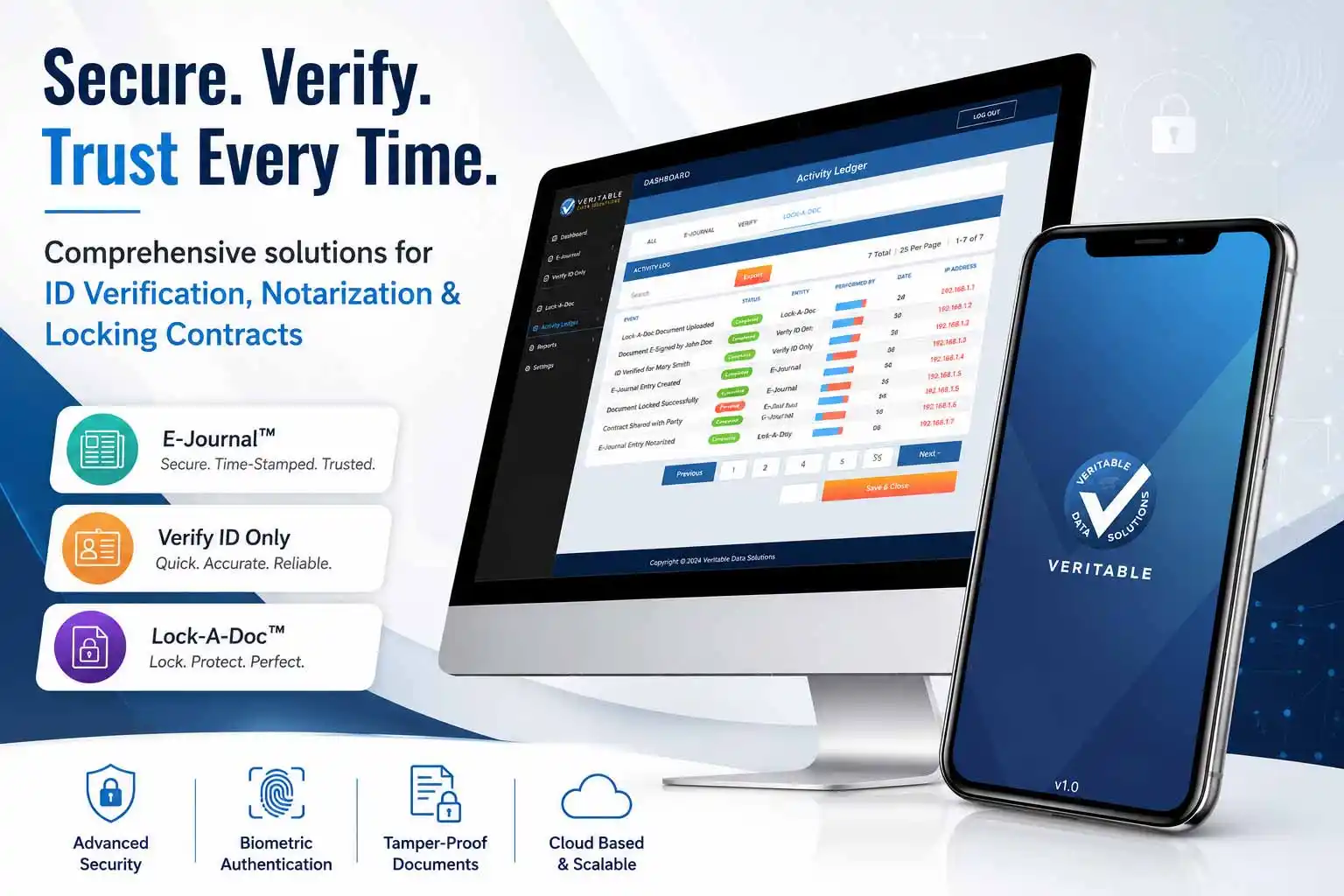

Veritable Data Solutions stops notary and deed fraud by verifying a signer’s identity in real time and writing that verification to a blockchain ledger the moment a document is notarized. Because the record can’t be altered afterward, a forged deed can never pass as real, closing the gap that reactive monitoring tools always leave open.
Deed fraud isn’t rare, and it isn’t going away on its own. A criminal forges a signature, impersonates a notary, or doctors a document, files it at the county recorder’s office, and suddenly a piece of paper with zero legitimate authority carries the same legal weight as a real deed. Homeowners find out their equity has been borrowed against by someone they’ve never met. Buyers discover the person who “sold” them a house never owned it in the first place. It’s the kind of crime that doesn’t require breaking a single window.
That was the exact problem Veritable Data Solutions set out to fix, and Bantech Solutions’ case study on the Veritable Data platform walks through how that idea became a working product: a custom blockchain network, a mobile identity verification app, and a real estate fraud monitoring layer, all built to close the window fraudsters have been climbing through for years. This article breaks down what the platform does, how it was built, and why the approach is becoming a template for identity verification in industries far beyond real estate.
Why Deed and Notary Fraud Keeps Winning
Most fraud-prevention tools on the market today are built to react. They send an alert after a suspicious filing shows up in county records, or they monitor a homeowner’s title and notify them once a change has already been recorded. That’s useful, but it’s also too late in the sense that matters most: the fraudulent document has already been created and already carries legal weight. Reversing it means lawyers, courts, and months of stress for a homeowner who did nothing wrong.
Title insurance, which many people assume covers this, generally does not. Traditional title insurance protects against defects in the chain of title that existed before a homeowner purchased the property. It typically does not protect against fraud that happens after the homeowner already owns the home, which is precisely when most modern deed fraud occurs.
The scale of the problem is well documented. According to the American Land Title Association’s wire fraud resource center, wire and deed-related fraud schemes have become increasingly sophisticated, with criminals now using business email compromise, seller impersonation, and even AI-generated voice and document forgeries to defeat verification steps that used to be considered sufficient. The FBI’s Internet Crime Complaint Center has tracked a similar trend from the enforcement side. The FBI’s most recent annual internet crime report recorded more than $16 billion in reported cybercrime losses in a single year, a 33 percent jump from the year before, with real estate and identity-based fraud among the fastest-growing categories.
Put those two data points together and the picture is clear. Fraud tactics are evolving faster than the manual, paper-based verification processes most of the notarization and title industry still relies on. The fix isn’t more monitoring after the fact. It’s closing the gap at the one moment that actually matters: when the document is created and notarized in the first place.
There’s also a quieter cost that doesn’t show up in loss totals: trust. Every time a story about a stolen deed or an impersonated notary makes local news, it chips away at confidence in a system that homeowners are supposed to be able to rely on without a second thought. Buyers start double-checking things that used to be routine. Title companies add extra manual review steps that slow down closings for everyone, fraudulent or not. The industry ends up paying a tax in friction even on the transactions that were never at risk, simply because there’s no reliable way to tell the legitimate ones apart from the fraudulent ones until it’s too late. A verification layer that’s trustworthy by design, rather than trustworthy because nobody has gotten caught yet, removes that tax instead of just managing it.
The Veritable Data Platform: Three Pieces, One Chain of Trust
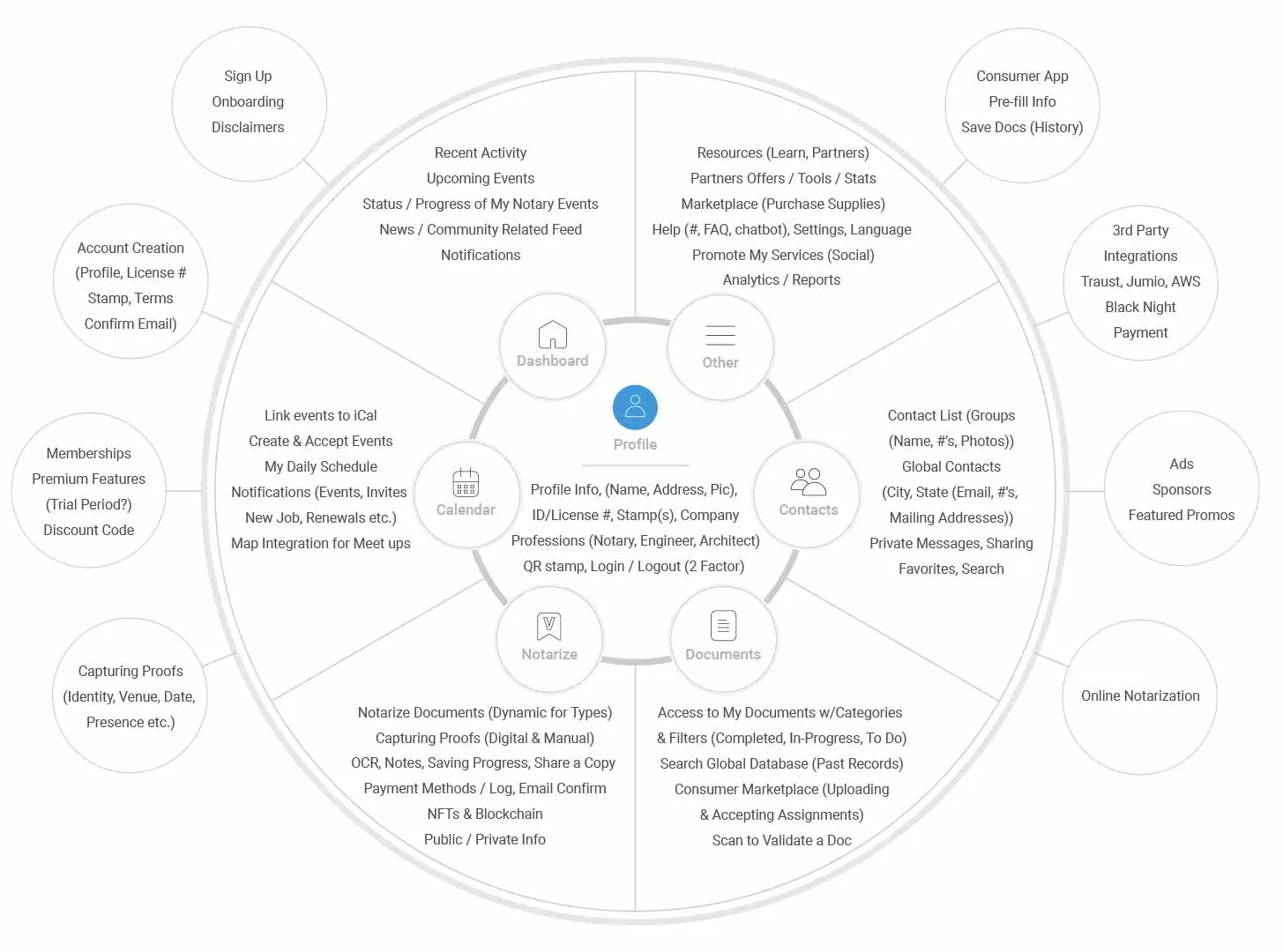
Veritable Data Solutions built its platform around a simple but powerful idea. If you can verify a person’s identity at the exact moment a document is notarized, and you can lock that verification into a record nobody can quietly edit later, you’ve removed the opening fraud depends on. The company’s approach is built on three integrated components that work together rather than as separate tools bolted onto each other.
VeritableData is a comprehensive, searchable notary directory. It gives buyers, sellers, and title professionals a trusted, centralized source for confirming that a notary is legitimate before they ever sign anything, which closes off one of the more common entry points fraudsters use: impersonating a licensed notary who doesn’t actually exist or hasn’t actually reviewed the document.
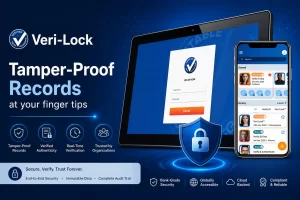
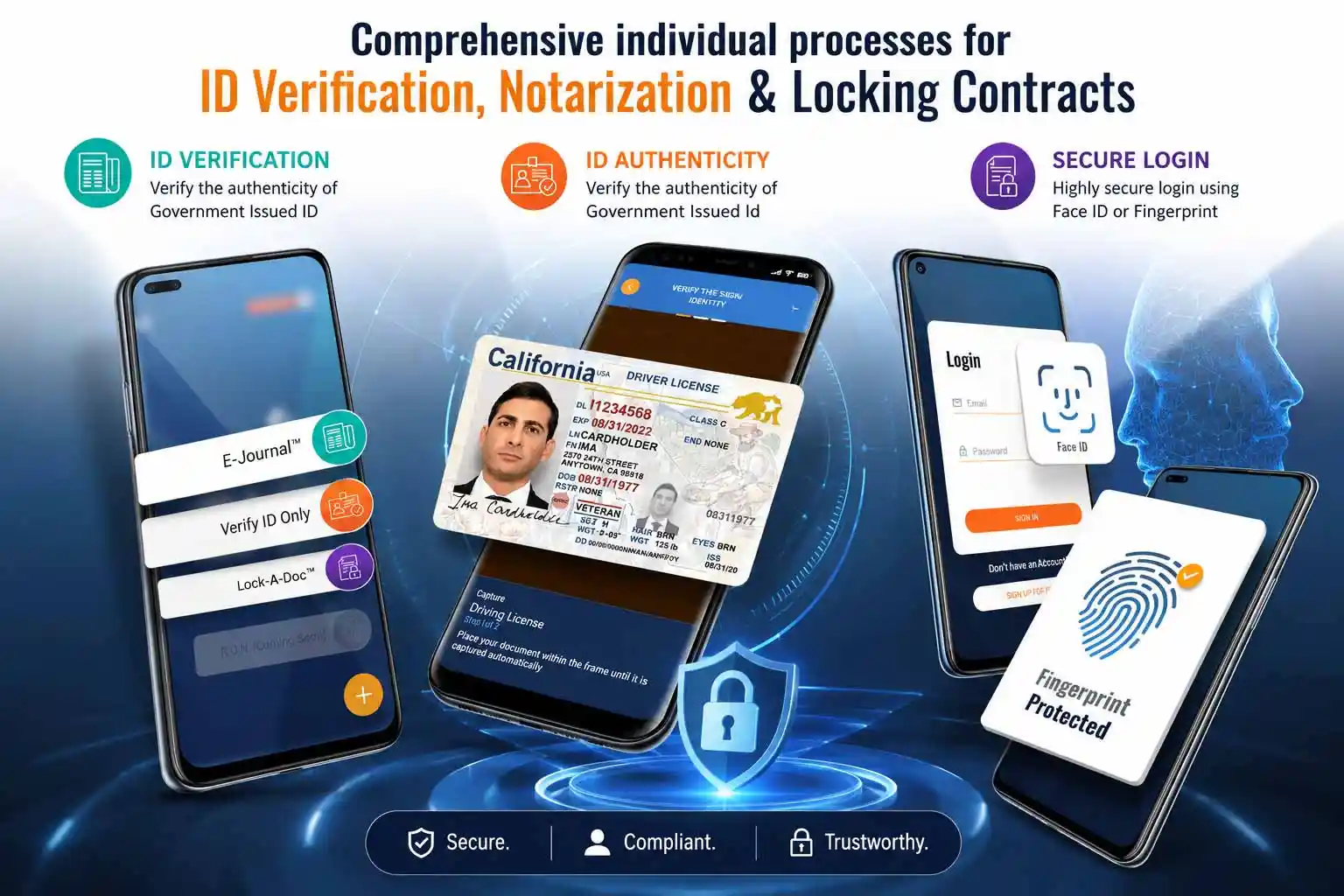
Veri-lock is the mobile identity verification app at the center of the system. Instead of requiring a notary and signer to be in the same room with a photocopier, Veri-lock captures a government ID through the device camera, runs computer vision checks for security features like holograms and microprint, and simultaneously performs facial recognition to match the live person to the ID photo. All of that happens in seconds, and the result, a unique digital fingerprint of the verification, gets written to the blockchain immediately. Nobody, not even the notary, can go back and quietly edit that record later.
TitleShield is the layer that protects a property after the paperwork is done. Once a homeowner enrolls, their properties are pulled in from a major real estate data aggregator and monitored continuously. If any transaction or filing touches one of their properties, TitleShield notifies them right away and asks them to confirm whether the change was authorized. If it wasn’t, the fraud gets caught in days instead of years.
Individually, each piece solves part of the problem. Together, they create what the platform’s engineering team calls a chain of custody: a verified identity, tied to a notarized document, tied to a property record, all cross-referenced against an immutable ledger. If a forger tries to slip a fake deed past the system, the pieces simply don’t match up.
That’s a meaningfully different posture than most fraud tools take. Rather than scoring a transaction for risk after it’s already been submitted, the platform makes it structurally difficult for a fraudulent record to exist in the first place, because every legitimate record has a matching verification event on the ledger and every fraudulent one doesn’t. A forger can fake a signature. Faking a blockchain-anchored identity verification that lines up with a real, timestamped notarization event is a different problem entirely, and it’s the problem the platform was specifically designed to make unsolvable.
Building It: The Engineering Behind the Platform
Turning that concept into a production system was a genuinely complex engineering project, and it’s worth understanding how it was actually built, because the architecture decisions matter as much as the concept. Bantech Solutions, the enterprise software development partner behind the build, designed the platform around a custom, permissioned blockchain rather than a public network like Bitcoin or Ethereum.
That distinction matters more than it might seem. Public blockchains are designed to handle any type of transaction from anyone in the world, which is powerful, but it also means slower processing, higher costs, and no built-in way to restrict who can write to the ledger. A notarization platform needs the opposite: fast, predictable performance, tight control over who can submit records, and a structure purpose-built for documents rather than currency transfers. So the team built the blockchain layer on Hyperledger Fabric, a permissioned blockchain framework maintained by the Linux Foundation, paired with Node.js for the chaincode logic.
The rest of the stack was assembled with the same “purpose over popularity” mindset. The backend services run on Java Spring Boot in a microservices architecture, which lets each function, identity verification, directory search, property monitoring, scale and deploy independently. The web front end uses Angular, the mobile apps were built natively in Objective-C for iOS and Kotlin for Android, and the whole thing runs on MySQL and MariaDB for relational data, with AWS handling infrastructure and continuous delivery pipelines.
Choosing native mobile development instead of a cross-platform framework was itself a deliberate call. Identity verification depends heavily on camera access, on-device image processing, and facial recognition performance, all areas where native code tends to outperform hybrid frameworks, especially when the app has to work reliably in inconsistent lighting or on older phone hardware. For a product where a failed scan means a notary can’t complete a legally required verification, that reliability margin was worth the extra development effort of maintaining two separate native codebases instead of one shared one.
The microservices approach carried its own tradeoffs too. Splitting the platform into independently deployable services makes it easier to scale the identity verification pipeline separately from the property monitoring pipeline, which matters because those two workloads spike at very different times and for very different reasons. But it also means every service boundary is a place where data can drift out of sync if the integration isn’t built carefully, which is exactly the challenge the team ran into next.
Building this required solving several distinct technical problems at once, and the development team ran into each one in turn.
Multi-service integration was the first hurdle. TitleShield and Veri-lock are technically separate applications, but they need to share verified data instantly and consistently. That meant building custom, secured APIs that could move information between systems without creating gaps where data could go stale or get out of sync.
The custom blockchain itself was a significant undertaking on its own. A blockchain optimized for notarial records has different requirements than one built for financial transactions: documents are large, verification events happen in bursts, and the system has to balance data integrity against real-world scalability. Getting that balance right took careful architectural planning rather than just adopting an off-the-shelf blockchain template.
Real-time synchronization created its own challenge. Every time a notary used Veri-lock to verify someone’s identity, that verification needed to appear instantly and accurately across both the mobile app and the main platform, even during high-traffic periods. The team built dedicated status-tracking mechanisms and synchronization APIs specifically to keep this reliable at scale.
Identity verification and e-signatures brought compliance into the picture. Beyond the technical challenge of processing ID documents quickly and accurately, the system had to meet legal requirements for digital signatures, which meant every signing event had to be both secure and legally defensible.
User experience tied it all together. A system this technically complex is only useful if a notary, a homeowner, or a title officer can actually use it without a manual. The team built an Angular-based admin dashboard for platform management and a clean, filterable public directory, prioritizing simplicity on the front end even as the back end grew more sophisticated.
How a Verification Actually Moves Through the System
It helps to walk through what happens end to end, because the value of the platform is really in the sequencing.
A notary opens Veri-lock and scans the signer’s government-issued ID. Computer vision algorithms check the document for tamper-resistant security features, while facial recognition confirms the live person in front of the camera matches the photo on the ID. Within seconds, the app generates a unique cryptographic hash representing that specific verification event and writes it to the Hyperledger Fabric ledger. That hash is now permanently linked to the notarization it belongs to.
If someone later tries to alter the notarized document, the identity record, or the transaction details, the hash on the blockchain won’t match the altered version anymore. The discrepancy is immediate and obvious, which is exactly the opposite of how paper-based fraud usually works, where a forged document can sit undetected in public records for years.
On the property side, TitleShield closes the loop. Because it pulls ownership data directly from Blacknight, described as the largest real estate aggregator in the United States, it can flag any transaction touching a monitored property in near real time. The homeowner reviews the change and marks it either safe or suspicious. If suspicious, the platform has already logged the verified identities and notarization data tied to the transaction, giving investigators a documented trail instead of a blank slate
Results: What Changed for Veritable Data
The measurable impact of the rebuild showed up quickly. According to the case study, the platform saw a 25 percent increase in daily website traffic following launch, a strong signal that a searchable, trustworthy notary directory was filling a real gap in the market. Just as important, the underlying architecture delivered on its core promise: tamper-proof, immutable record-keeping for notarial processes that gave users, from individual homeowners to title officers, confidence that the documents and identities behind a transaction were exactly what they claimed to be.
The synchronization work paid off operationally too. Notaries and users could see verified information reflected consistently across the web platform and the Veri-lock mobile app in real time, even during periods of heavy traffic, which matters enormously in an industry where a delay of even a few hours can be the difference between catching a fraud attempt and recording it as fact.
Beyond the numbers, the project demonstrated something broader: that a permissioned, purpose-built blockchain can solve a specific, high-stakes verification problem more effectively than either a purely manual process or a general-purpose public blockchain. It’s not blockchain for the sake of blockchain. It’s blockchain applied to the exact moment where fraud has the best chance of succeeding, and where a tamper-proof record has the most value.
Why This Model Matters Beyond Real Estate
The Veritable Data build is a useful case study precisely because the underlying pattern isn’t specific to real estate. Any process that depends on a moment of verified trust, a notarization, a credential check, an official seal, a signature, faces the same structural weakness: once that moment passes, there’s usually no reliable way to prove later that it happened correctly.
Binding a verification event to an immutable, timestamped record at the moment it occurs is a pattern that applies to remote notarization by video call, professional licensing and credentialing, construction permits and engineering seals, and any workflow where a document’s legitimacy depends on someone having actually checked it. The specific technology choices matter, permissioned versus public blockchain, real-time biometric verification, synchronized multi-service architecture, but the underlying principle is what other industries should be paying attention to: stop the fraud at its single point of origin instead of trying to detect it after the fact.
For organizations weighing whether an identity verification or document authentication project is worth the engineering investment, this case study offers a fairly direct answer. It is complex. It touches multiple services, requires careful blockchain architecture decisions, and demands strict compliance with digital signature law. But the alternative, monitoring for fraud after it has already happened, means accepting that some percentage of victims will always be discovered too late to help.
A few lessons from this build apply broadly to anyone evaluating a similar project.
Verification has to happen in real time, at the point of action, not as a downstream check. Waiting until a document is filed or a transaction is recorded to verify anything means the fraud has already succeeded by the time anyone notices.
A permissioned blockchain, rather than a public one, is usually the right architectural choice for enterprise verification systems. It offers the same tamper-resistance and immutability benefits without the performance and access-control tradeoffs of a public network.
Integration complexity is often the real challenge, not the blockchain itself. Building the ledger was one piece of this project. Making sure identity verification, document signing, property monitoring, and a public directory all stayed synchronized and secure across web and mobile was the harder, more time-consuming work.
User experience can’t be an afterthought on a security-first platform. If a notary or homeowner finds the system confusing, they’ll route around it, which defeats the entire purpose of building a more trustworthy process in the first place.
Final Thoughts
Deed fraud and notary impersonation succeed because most of the systems built to prevent them were designed for a slower, more paper-based world. Veritable Data’s platform, and the engineering work behind it, shows what happens when identity verification, document authentication, and fraud monitoring are treated as one connected system instead of three separate problems. Real-time verification tied to an immutable ledger doesn’t just catch fraud faster. It removes the opportunity for it to succeed in the first place, which is the entire point.
For any organization dealing with high-stakes documents, whether in real estate, legal services, or professional licensing, the lesson from this case study is the same one that shows up in every serious fraud-prevention conversation: the moment of verification is the moment that matters most, and it deserves a record that nobody can quietly rewrite.
Continue reading the Complete Blockchain Series
This post is a part of the Blockchain Content Series — the complete 5 article series to understanding, implementing, and scaling enterprise blockchain and tokenization in your organization.