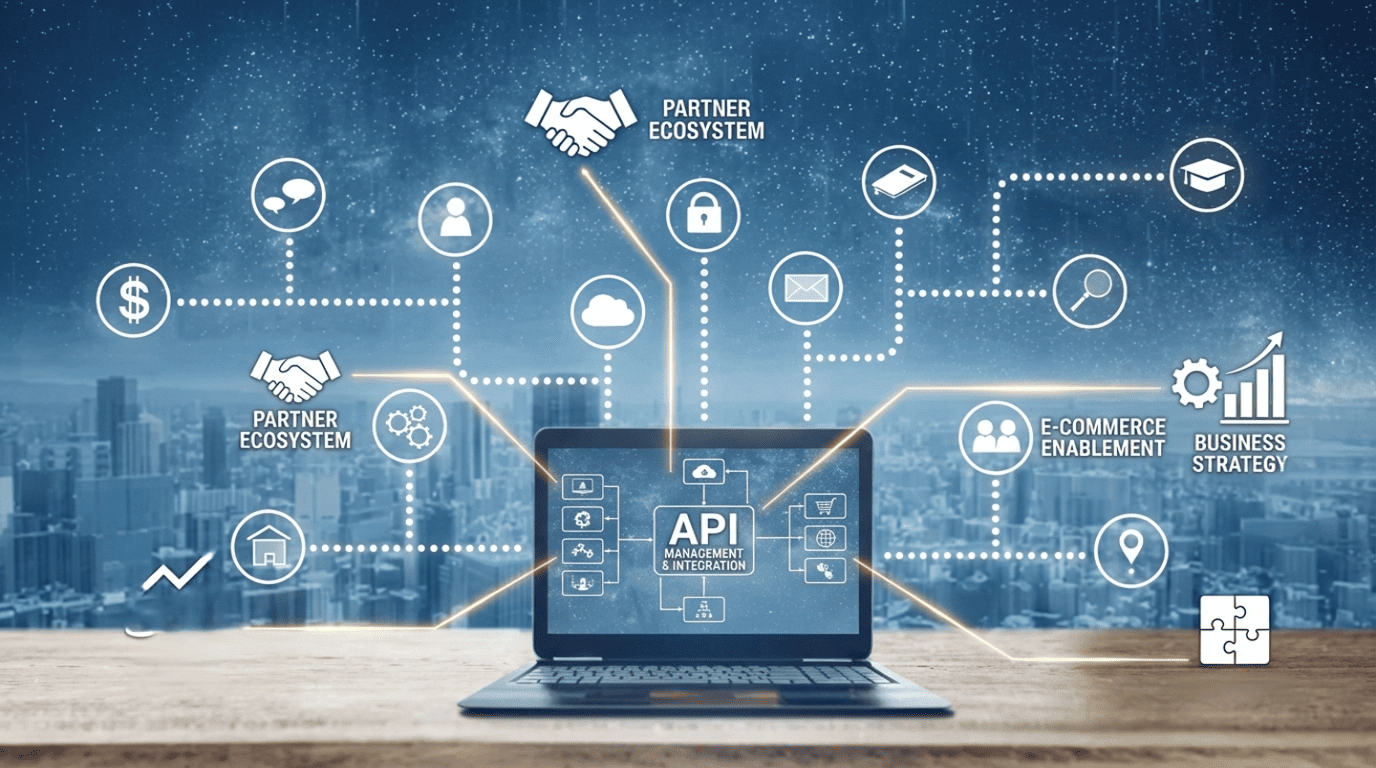

APIs Are Now a Business Capability, Not Just a Technical One
Digital agencies serving clients across the USA, UK, Canada, Australia, and New Zealand are operating in a market where technical execution is no longer evaluated in isolation. Integration has moved out of the engineering backlog and into the boardroom. APIs are now directly tied to business continuity, scalability, and competitive advantage.
This shift is clearly reflected in how leading platforms position their ecosystems. Salesforce, for example, treats APIs as a foundational layer of its platform strategy, enabling partners and businesses to build extensible, interconnected solutions at scale (developer.salesforce.com). Similarly, Stripe’s API-first business model demonstrates how deeply integrations influence revenue operations, billing workflows, and global scalability (stripe.com).
As a result, clients no longer ask whether systems can integrate — they assume that connectivity is built in by default.
CRMs are expected to synchronize seamlessly with marketing automation platforms. Payment systems must pass clean, real-time data into analytics and reporting tools. Internal dashboards increasingly rely on data aggregated from multiple external SaaS products. When these connections fail, or are implemented poorly, agencies don’t just face technical issues — they face a loss of credibility.
This reality fundamentally changes the role APIs play in agency engagements.
APIs now sit at the intersection of strategy, execution, and long-term value creation, enabling agencies to deliver outcomes rather than isolated features. Well-designed integration layers allow agencies to future-proof client platforms while supporting growth, automation, and system flexibility.
From a commercial and operational standpoint, strong API capabilities allow agencies to:
- Enable automation instead of manual, error-prone workflows
- Support real-time data synchronization across platforms
- Build scalable SaaS and subscription-based solutions
- Reduce operational friction for end clients
- Reuse integration frameworks across multiple accounts and industries
Industry research consistently reinforces this shift. McKinsey highlights that organizations leveraging integrated digital platforms outperform peers in both revenue growth and operational efficiency, largely due to better data flow and automation (mckinsey.com).
This is precisely why white label API & integrations development has become a critical capability for modern agencies. Instead of expanding in-house engineering teams or carrying long-term technical risk, agencies can adopt a white-label model that allows them to offer advanced, integration-driven solutions under their own brand—while maintaining focus on strategy, client relationships, and growth.
Agencies that recognize APIs as a business asset rather than a backend deliverable are far better positioned to win larger engagements, retain clients longer, and scale sustainably in an increasingly integration-driven digital landscape.
What Is White Label API & Integrations Development?
White label API & integrations development refers to the structured practice of designing, building, and maintaining backend APIs and third-party system integrations that are delivered entirely under an agency’s brand, while the technical execution is handled by a specialized external engineering partner.
From a client’s perspective, the agency appears to own and operate the full technology stack. The integrations feel native, the workflows are seamless, and the platform behaves as though it were built entirely in-house. This perception is critical, because clients increasingly associate integration quality with overall product maturity and business reliability.
Behind the scenes, however, these systems are powered by well-architected APIs that follow industry standards for scalability, security, and reuse. Leading cloud platforms such as AWS emphasize API-driven architectures as the foundation for building modular, scalable digital products (aws.amazon.com). This same principle applies directly to white label development for agencies.
In practical terms, white label API & integrations development creates a clear separation between brand ownership and technical execution.
To the client:
- The agency owns the solution end to end
- Integrations appear native to the platform
- The technology feels internally developed and controlled
Behind the scenes:
- APIs are architected for reuse across multiple clients and use cases
- Integrations are modular, making them easier to extend or replace
- Delivery, maintenance, and scaling are handled by a white-label engineering partner
This model is increasingly common among SaaS companies and platforms that need to move fast without sacrificing quality. Stripe, for example, has demonstrated how a clean, well-documented API layer can enable rapid product adoption and ecosystem growth without exposing internal complexity (stripe.com).
For agencies, the value lies in leverage.
White label APIs allow agencies to offer sophisticated technical capabilities—such as automation, data synchronization, and multi-platform connectivity—without carrying the cost, risk, or operational burden of building a full internal engineering organization.
From a commercial standpoint, this approach enables agencies to:
- Expand service offerings without increasing fixed overhead
- Standardize integrations across multiple client accounts
- Deliver enterprise-grade functionality to mid-market clients
- Reduce dependency on individual developers or freelancers
- Maintain full control of client relationships and brand perception
Industry leaders consistently advocate for this separation of concerns. Red Hat, for instance, positions APIs as products in their own right—designed, versioned, and maintained independently to support long-term scalability and business agility (redhat.com).
Ultimately, white label API & integrations development allows agencies to operate with the sophistication of a technology company—without becoming one. By combining brand ownership with outsourced execution, agencies gain the ability to deliver complex, integration-driven solutions while staying focused on strategy, growth, and client success.
Why White Label APIs Are Now Essential for Agencies
The expectations placed on digital agencies have changed fundamentally. Clients no longer evaluate agencies only on creativity, delivery speed, or surface-level functionality. Increasingly, they judge value based on how well systems communicate, automate, and scale together.
This shift is driven by the reality that most modern businesses operate across multiple interconnected platforms. Data fragmentation is no longer an inconvenience—it is a direct threat to productivity, decision-making, and customer experience. According to McKinsey, organizations that successfully integrate data and digital systems outperform peers in efficiency and revenue growth, largely due to improved automation and information flow (mckinsey.com).
For agencies, this means one thing: integration capability is now table stakes.
Clients Expect Connected Platforms by Default
Today’s clients assume that their tools will work together seamlessly. CRMs must pass data to marketing platforms. Payment systems must feed reporting dashboards. Internal tools must connect to external SaaS products without manual intervention.
When these connections are missing or unreliable:
- Teams revert to spreadsheets and manual processes
- Data inconsistencies increase
- Operational errors multiply
- Confidence in the agency erodes
Platforms like Zapier have built entire businesses around the demand for system connectivity, reinforcing how critical integrations have become for everyday operations (zapier.com). Agencies that can deliver API-driven integrations directly—rather than relying solely on third-party automation tools—position themselves as far more capable and strategic.
Integration Capability Directly Increases Deal Size
When agencies move beyond standalone deliverables and into integration-led solutions, the commercial impact is immediate.
Agencies that can confidently offer:
- Workflow automation across tools
- Real-time system synchronization
- Custom dashboards and reporting layers
naturally transition from one-off project fees to ongoing retainers, platform management contracts, and long-term engagements.
API-driven solutions also create stickiness. Once a client’s systems are deeply integrated, switching providers becomes costly and risky—dramatically improving retention.
From a sales perspective, integrations shift conversations away from price comparison and toward business outcomes, which supports premium positioning.
In-House API Teams Are Costly and Difficult to Scale
While the demand for integrations is rising, building and maintaining an internal API team remains a significant challenge for most agencies.
Senior backend engineers with API and integration expertise are:
- Expensive to hire in Western markets
- Highly competitive and difficult to retain
- Often underutilized between large projects
According to multiple industry hiring analyses, backend and integration engineers consistently rank among the hardest roles to fill due to skill scarcity and rising salary expectations.
White label API & integrations development removes this constraint.
By working with a specialized white-label partner, agencies gain access to:
- Experienced API engineers on demand
- Proven integration frameworks
- Scalable delivery capacity without long-term payroll risk
- Consistent quality without dependency on individual hires
This model allows agencies to grow integration capabilities in line with demand—without inflating internal teams or taking on unnecessary operational risk.
Ultimately, white label APIs are essential not because they are technically impressive, but because they align with how modern clients operate, buy, and scale. Agencies that recognize this early gain a structural advantage—delivering deeper value while maintaining flexibility, margins, and long-term growth potential.
Third-Party Integrations for Agencies: Where Real Value Is Created
Third-party integrations for agencies represent the point where technical execution translates directly into measurable business value. At a basic level, integrations connect client platforms with the tools they already depend on—CRMs, billing systems, analytics platforms, marketing software, and internal databases. At a strategic level, they determine how efficiently a business operates and how scalable its technology stack truly is.
Most modern SaaS and enterprise platforms are designed to be integration-first. HubSpot, for example, openly positions its APIs as a way for partners and agencies to extend functionality and embed workflows into broader business ecosystems (developers.hubspot.com). Similarly, accounting and billing platforms like Stripe and QuickBooks rely heavily on APIs to support automation, reconciliation, and reporting across systems (stripe.com, developer.intuit.com).
For agencies, the opportunity lies in owning this integration layer on behalf of clients.
When systems operate in isolation, businesses face duplicated data, manual reconciliation, delayed reporting, and higher error rates. Well-executed third-party integrations eliminate these friction points by creating a single, reliable flow of information across tools.
Each well-designed integration delivers tangible benefits:
- Improves operational efficiency by automating data exchange between systems
- Reduces manual work such as spreadsheet exports, re-entries, and reconciliations
- Increases data accuracy through real-time or scheduled synchronization
- Enhances platform stickiness by embedding critical workflows directly into the client’s core systems
Beyond efficiency, integrations change the nature of the agency–client relationship.
When an agency builds and manages the connective tissue between a client’s systems, it becomes deeply embedded in the client’s operations. Reporting dashboards pull from multiple sources. Automation workflows depend on custom logic. Business-critical processes rely on integrations that are tailored—not generic.
Platforms like Zapier highlight just how widespread the demand for connectivity has become, offering thousands of prebuilt app connections to address integration gaps (zapier.com). However, agencies that rely solely on no-code tools often hit limitations around customization, scalability, and control. This is where custom, API-driven integrations create a decisive advantage.
From a commercial standpoint, third-party integrations allow agencies to:
- Deliver higher-value solutions that go beyond surface-level features
- Transition from project-based pricing to ongoing retainers and platform management
- Differentiate themselves in competitive pitches with tangible technical depth
- Increase switching costs, improving long-term client retention
Well-designed integrations don’t just solve isolated problems. They become part of the client’s operating model. Over time, this transforms the agency from a service provider into a trusted technology partner—one whose value compounds as the client’s systems, data, and workflows continue to grow.
Why API Development Outsourcing Is the Smart Choice
API development outsourcing has evolved from a cost-saving tactic into a strategic operating model for high-performing digital agencies. As client expectations around speed, reliability, and integration depth continue to rise, agencies are under pressure to deliver enterprise-grade backend systems without overextending internal teams. Outsourcing API development—particularly to mature technology markets like India—has become one of the most effective ways to balance quality, scalability, and profitability.
Global consulting firms consistently highlight India’s position as a leading destination for high-value technology outsourcing due to its deep engineering talent pool and process maturity. McKinsey notes that India combines cost efficiency with increasingly sophisticated digital capabilities, making it a long-term partner rather than a short-term arbitrage play (mckinsey.com). Industry bodies such as NASSCOM further reinforce this, citing India’s strength in enterprise software, cloud engineering, and API-led integration work (nasscom.in).
From an agency perspective, the economics are compelling—but the advantages go well beyond cost.
Lower Cost Without Cutting Corners
Hiring and retaining senior backend engineers in the USA, UK, Canada, Australia, or New Zealand is both expensive and unpredictable. Salaries, benefits, recruitment overheads, and attrition risks add up quickly. API development outsourcing allows agencies to access experienced engineers at a fraction of the cost, without compromising on architectural rigor or security standards.
A well-structured outsourcing partner provides:
- Engineers experienced in RESTful and event-driven API architectures
- Familiarity with enterprise security, authentication, and compliance requirements
- Proven delivery processes aligned with Agile and DevOps practices
This cost efficiency enables agencies to protect margins while still delivering solutions that meet enterprise expectations.
Faster Delivery Cycles
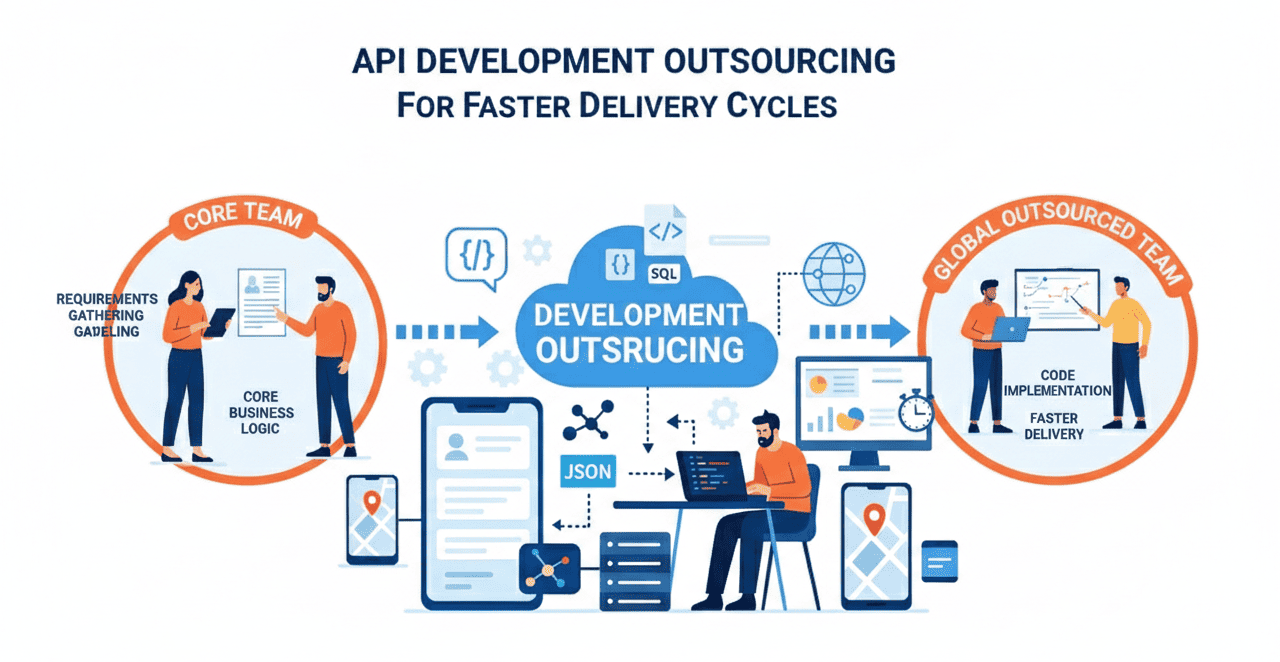
Speed is now a competitive differentiator. Clients expect rapid integration, shorter launch windows, and continuous iteration. Dedicated offshore API teams operate in parallel with onshore strategy, design, and client management functions, significantly compressing delivery timelines.
Time zone differences, when managed well, become an advantage rather than a challenge. Offshore teams progress development while onshore teams handle reviews, feedback, and stakeholder alignment. This “follow-the-sun” model accelerates iteration and reduces idle time across the project lifecycle.
The result:
- Faster proof-of-concepts and MVPs
- Shorter integration timelines
- Quicker go-to-market for client platforms
Focus on Growth, Not Infrastructure
Perhaps the most underestimated benefit of API development outsourcing is the operational clarity it creates. Agencies are not meant to function like software product companies. Their strength lies in understanding client needs, shaping strategy, and delivering outcomes—not in managing backend infrastructure, hiring cycles, or technical debt at scale.
By outsourcing API execution, agencies can concentrate on:
- Building and maintaining client relationships
- Expanding strategic and advisory services
- Driving sales, partnerships, and market positioning
- Innovating new service offerings without internal bottlenecks
Meanwhile, the outsourced engineering partner handles architecture, development, testing, documentation, and ongoing support behind the scenes.
When executed correctly, API development outsourcing doesn’t dilute control—it enhances it. Agencies gain predictable delivery capacity, scalable technical depth, and the freedom to grow without being constrained by internal hiring or infrastructure limitations.
Core Principles of High-Quality White Label API Development
High-quality white label API & integrations development is not defined by how quickly an API is delivered, but by how well it performs over time as client needs evolve. For agencies serving growth-oriented businesses, APIs are no longer disposable components—they become long-term digital infrastructure. The difference between an API that quietly supports scale and one that becomes a liability comes down to foundational design principles.
Industry leaders consistently emphasize that APIs should be treated as products, not one-off technical tasks. Organizations such as the OpenAPI Initiative and cloud providers like AWS advocate for standardized, well-documented, and secure API design as a prerequisite for sustainable digital ecosystems (openapis.org, aws.amazon.com).
Agencies that internalize these principles are better positioned to deliver solutions that endure client growth, platform changes, and evolving compliance requirements.
Scalable, Modular Architecture
Scalability begins with modularity. APIs should be designed as loosely coupled services that can evolve independently without breaking dependent systems. This approach allows agencies to add new integrations, endpoints, or workflows without refactoring entire platforms.
A modular API architecture enables:
- Easier onboarding of new third-party integrations
- Incremental feature expansion without disrupting existing clients
- Better performance tuning as usage grows
Cloud-native design patterns, such as stateless services and event-driven architectures, are now widely recognized as best practice for scalable APIs (aws.amazon.com, learn.microsoft.com).
Strong Authentication and Data Security
Security is non-negotiable in white label API development. Agencies often operate as trusted intermediaries between multiple systems, making APIs a prime target for misuse if not properly secured.
The Open Web Application Security Project (OWASP) publishes the widely referenced API Security Top 10, outlining the most common vulnerabilities in modern API implementations (owasp.org). High-quality APIs address these risks from day one through:
- Robust authentication mechanisms such as OAuth 2.0 and token-based access
- Role-based authorization and least-privilege access controls
- Encrypted data transmission and secure credential handling
- Rate limiting and monitoring to prevent abuse
For agencies, strong security practices are not just technical safeguards—they are trust signals that reassure enterprise clients.
Clear Versioning and Backward Compatibility
APIs are living systems. As business requirements change, APIs must evolve without breaking existing integrations. Clear versioning strategies ensure that clients can adopt new functionality on their own timelines while maintaining operational stability.
Leading API providers consistently emphasize backward compatibility as a cornerstone of developer trust (stripe.com). Effective versioning practices allow agencies to:
- Introduce improvements without disrupting production systems
- Support multiple client environments simultaneously
- Reduce emergency fixes caused by breaking changes
This discipline is especially critical in white label environments, where agencies are accountable for long-term reliability under their own brand.
Well-Structured Documentation
Documentation is often the most underestimated component of API quality. In white label delivery models, APIs must be usable not only by the original development team but also by future engineers, client-side teams, and integration partners.
Standards such as the OpenAPI Specification exist precisely to ensure consistency, clarity, and usability in API documentation (swagger.io). High-quality documentation typically includes:
- Clear endpoint descriptions and use cases
- Authentication and error-handling guidelines
- Sample requests and responses
- Version history and change logs
For agencies, strong documentation reduces dependency on specific individuals, accelerates onboarding, and reinforces professional credibility.
Short-term integrations may solve immediate problems, but they rarely survive scale, audits, or platform evolution. Agencies that think long-term invest in API foundations that are secure, extensible, and well-documented—because those foundations directly determine how confidently they can grow their service offerings and client portfolios over time.
Key Questions Agencies Ask
What is white label API & integrations development?
A delivery model where agencies offer branded APIs and integrations while outsourcing execution to a trusted backend partner.
How do third-party integrations help agencies grow?
They increase client retention, unlock recurring revenue, and position agencies as strategic technology partners.
Is API development outsourcing reliable?
Yes — when done with a structured, long-term partner that follows white-label and security best practices.
Why outsource instead of hiring in-house developers?
Outsourcing reduces cost, speeds delivery, and avoids long-term hiring risk.
Can white label APIs support SaaS platforms?
Yes. Properly designed APIs are ideal for SaaS and multi-tenant systems.
Why India Continues to Lead in API Development Outsourcing
India’s leadership in API development outsourcing is not the result of short-term cost arbitrage—it is the outcome of decades of investment in engineering talent, delivery maturity, and global collaboration. For digital agencies in the USA, UK, Canada, Australia, and New Zealand, India has become the default choice for complex backend and integration work that demands both technical depth and operational reliability.
Global research consistently validates this position. The World Economic Forum highlights India as one of the world’s largest and fastest-growing technology talent hubs, particularly strong in software engineering and digital services (weforum.org). Industry analysis from Deloitte further emphasizes India’s evolution from task-based outsourcing to high-value engineering and platform development (deloitte.com).
What sets India apart is not just scale, but specialization.
A Deep Pool of Backend and Integration Specialists
India produces a large number of engineers with hands-on experience in backend systems, API design, cloud-native architectures, and third-party integrations. Over time, exposure to global enterprise projects has created a workforce that is comfortable working with complex, distributed systems rather than isolated applications.
This talent depth enables agencies to:
- Access engineers skilled in REST, GraphQL, and event-driven APIs
- Scale teams quickly as client demand grows
- Retain institutional knowledge across long-term engagements
Unlike smaller outsourcing markets, India offers continuity—teams can evolve alongside agency portfolios without constant re-staffing.
Proven Delivery Models
India’s outsourcing ecosystem has matured well beyond ad-hoc staffing. Delivery models today are built around Agile methodologies, DevOps pipelines, and structured quality assurance processes. Many Indian technology firms align their workflows with global standards such as ITIL and ISO to ensure predictability and governance (iso.org).
For agencies, this maturity translates into:
- Predictable timelines and milestones
- Transparent communication and reporting
- Reduced delivery risk across multi-client engagements
These models are especially valuable in white label API & integrations development, where agencies remain accountable for outcomes under their own brand.
Cost Efficiencies of 40–70%
Cost efficiency remains a meaningful advantage, but it is best understood in terms of value rather than savings alone. Multiple industry analyses estimate that outsourcing software development to India can reduce costs by 40–70% compared to equivalent onshore teams, without sacrificing technical quality (deloitte.com).
This cost differential allows agencies to:
- Improve margins on fixed-price and retainer engagements
- Reinvest in sales, marketing, and service innovation
- Offer competitive pricing without eroding profitability
When managed correctly, cost efficiency becomes a growth enabler rather than a compromise.
Strong English Communication Skills
Effective API development outsourcing depends on clarity—requirements, documentation, reviews, and iteration cycles must all be communicated precisely. India’s long-standing emphasis on English-language technical education gives agencies a distinct advantage when collaborating across borders.
Clear communication supports:
- Faster onboarding and requirement alignment
- More accurate documentation and handovers
- Reduced friction in agile, iterative workflows
For Western agencies, this minimizes the cultural and operational gaps that often undermine offshore engagements.
India’s continued dominance in API development outsourcing is not accidental. It is the result of talent depth, delivery discipline, cost efficiency, and communication readiness. When paired with the right partner—one that understands agency workflows and white label accountability—this ecosystem becomes a strategic advantage rather than a tactical outsourcing decision.
Why Hybrid Partners Outperform Freelancers
As agencies scale their white label API & integrations development offerings, the limitations of freelancer-based delivery become increasingly visible. Freelancers can be effective for isolated tasks or short-term experimentation, but they rarely provide the consistency, accountability, and scalability required for long-term client engagements—especially when APIs become mission-critical infrastructure.
Industry research on distributed work models consistently shows that structured teams outperform individuals on complex, interdependent projects due to better knowledge retention, standardized processes, and risk mitigation. Harvard Business Review, for instance, has repeatedly emphasized the role of team-based delivery in sustaining quality and continuity as project complexity increases (hbr.org).
For agencies selling backend reliability under their own brand, these factors matter more than raw hourly cost.
The Hidden Risks of Freelancer-Driven Delivery
Freelancers often operate with limited context and minimal institutional support. While highly skilled individuals certainly exist, agencies remain exposed to structural risks that compound over time.
Common challenges include:
- Knowledge gaps, where critical architectural decisions reside with a single individual
- Inconsistent quality, driven by varying standards, availability, and tooling
- Scalability issues, as freelancers cannot easily expand capacity on demand
- Dependency risk, when timelines or support hinge on one person’s availability
These risks become especially pronounced in API-led systems, where long-term maintenance, versioning, and security updates are essential.
The Structural Advantage of Hybrid Outsourcing Partners
A hybrid outsourcing partner blends offshore engineering execution with agency-aligned delivery models. Instead of transactional staffing, agencies gain access to dedicated teams that operate as an extension of their own organization—while remaining invisible to end clients.
This model provides:
- Dedicated teams with shared context and architectural ownership
- Long-term continuity, ensuring knowledge persists beyond individual contributors
- Process maturity, including code reviews, testing, documentation, and governance
- White-label discipline, where all delivery aligns with the agency’s brand, standards, and client expectations
Frameworks such as Capability Maturity Model Integration (CMMI) highlight how process-driven organizations consistently outperform ad-hoc delivery models in software engineering outcomes (cmmiinstitute.com).
Alignment With Agency Growth Goals
Agencies are not optimizing for short-term task completion—they are building repeatable service offerings. Hybrid partners support this by enabling predictable delivery, reusable components, and standardized workflows across multiple clients.
With a hybrid model, agencies can:
- Scale delivery capacity without re-hiring or re-training
- Maintain consistent quality across accounts
- Support long-term retainers and managed services
- Reduce operational risk while increasing client lifetime value
Freelancers may solve immediate gaps, but hybrid partners solve structural problems. For agencies serious about building sustainable, high-margin API and integration practices, the hybrid outsourcing model aligns far more effectively with growth, reliability, and brand protection.
Why Bantech Solutions Fits the White Label Model
Bantech Solutions operates as a long-term, white-label technology partner for digital agencies and startups.
Rather than acting as a task-based vendor, Bantech integrates into agency workflows and supports ongoing delivery across API development, backend systems, and integrations.
Agencies working with Bantech benefit from:
- Dedicated offshore development teams
- White-label execution with no client exposure
- Strong experience in API-driven systems
- Long-term delivery continuity
Explore Bantech’s overall capabilities:
🔗 https://www.bantechsolutions.com/
Industry Trends Making White Label APIs a Long-Term Investment
The shift toward white label API & integrations development is not a passing trend—it reflects fundamental changes in how businesses design, deliver, and scale digital products. Agencies that adopt these capabilities now are not just meeting current client expectations; they are building compounding technical assets that pay dividends over years of client engagements. Understanding the broader industry trends highlights why this investment is both timely and strategic.
API-First Product Strategies
Modern SaaS companies increasingly adopt API-first approaches, designing software with integrations at the core rather than as an afterthought. This enables platforms to extend functionality seamlessly, interact with partner ecosystems, and respond rapidly to changing business needs. Leading examples include Shopify, Twilio, and Slack, whose API-first strategies allow them to scale partner and client integrations efficiently (twilio.com).
For agencies, aligning with API-first thinking means building platforms that are:
- Modular and scalable
- Easy to extend for future clients
- Capable of supporting complex workflows across multiple tools
Embedded Integrations in SaaS Platforms
Embedded integrations are no longer optional; they are expected. SaaS platforms now provide extensive API ecosystems, allowing agencies to embed features, automate workflows, and extend core functionality without reinventing the wheel. HubSpot, for instance, offers embedded integrations and a developer marketplace to empower partners and agencies (developers.hubspot.com).
Agencies leveraging embedded integrations can:
- Deliver rapid client value with minimal overhead
- Customize solutions while maintaining brand ownership
- Reduce the time and cost of repeated integrations
Automation Replacing Manual Workflows
Manual processes are increasingly seen as bottlenecks. APIs and integrations automate tasks such as data synchronization, reporting, billing, and customer communications. Automation reduces errors, accelerates workflows, and frees client teams to focus on strategic priorities. Gartner research underscores that process automation through APIs improves operational efficiency and scalability for businesses of all sizes (gartner.com).
Key benefits for agencies include:
- Increased client satisfaction through faster, more accurate results
- Enhanced platform value through integrated, automated processes
- Improved ability to scale services across multiple accounts
Integration-Led Differentiation
Integration capabilities have become a competitive differentiator for agencies. Platforms that integrate seamlessly with existing client ecosystems are more likely to be retained, expanded, and recommended. Offering robust API-driven integrations positions agencies as technical thought leaders rather than just service executors.
Benefits of integration-led differentiation include:
- Higher-value, recurring engagements
- Stronger client retention due to platform dependence
- Greater credibility in pitches for enterprise-level projects
Agencies that invest in white label API & integrations development today are effectively creating compounding technical assets. Each reusable integration, standardized API framework, and automated workflow not only delivers immediate client value but also lays the foundation for faster delivery, higher-quality solutions, and long-term client relationships in the future.
This approach transforms technical execution into a strategic advantage, allowing agencies to scale sustainably, protect margins, and solidify their reputation as trusted technology partners.
How Agencies Should Start
Building a robust white label API & integrations capability does not happen overnight. Agencies looking to scale offerings without inflating internal teams must follow a structured, repeatable approach. By prioritizing strategy alongside technical execution, agencies can deliver value faster while laying a foundation for long-term growth and operational efficiency.
Identify Integration-Heavy Client Needs
The first step is understanding where client workflows rely on multiple systems. Agencies should conduct a thorough audit of client tools, processes, and pain points. Identifying opportunities for automation and seamless data flow allows agencies to prioritize integrations that deliver the highest immediate impact.
Examples include:
- CRMs syncing automatically with marketing automation platforms
- Accounting software feeding real-time data to dashboards
- Project management tools integrating with time-tracking or billing systems
Research from Deloitte emphasizes that identifying business-critical integrations early is a major driver of digital transformation success (deloitte.com).
Standardize API Requirements
Once the integration needs are clear, agencies should define standard API requirements across clients. Standardization ensures that reusable modules can be built efficiently, reducing redundant work while improving quality and maintainability. Key elements include:
- Authentication and security protocols
- Data models and endpoints
- Error handling and logging conventions
- Versioning and backward compatibility
Clear, standardized API specifications also reduce the learning curve for offshore or white-label teams, accelerating delivery without compromising quality.
Choose a Long-Term White-Label Partner
Selecting the right white-label partner is critical. Agencies should look for partners that provide:
- Dedicated, experienced backend and integration teams
- Process maturity aligned with Agile and DevOps practices
- Proven track record in API-first, white-label delivery
- Transparent reporting and collaboration capabilities
A strong partner allows agencies to scale confidently while maintaining brand ownership and client trust. Bantech Solutions, for instance, offers dedicated offshore teams that integrate seamlessly with agency workflows, providing predictable, high-quality delivery (Bantech Hire a Team).
Build Reusable Integration Modules
Rather than treating each client engagement as a standalone project, agencies should focus on creating reusable integration modules. Modular APIs and integration patterns allow teams to:
- Accelerate onboarding for future clients
- Reduce maintenance overhead
- Standardize quality and security practices
- Quickly adapt to platform or client changes
Reusable modules act as compounding technical assets, enabling agencies to expand offerings without proportional increases in team size or cost.
Scale Responsibly Over Time
Finally, agencies should approach scaling deliberately. Rapid expansion without structure can lead to technical debt, inconsistent quality, and operational bottlenecks. Agencies that adopt a phased, metrics-driven approach ensure sustainable growth:
- Start with high-impact integrations for strategic clients
- Measure efficiency, reliability, and client satisfaction
- Expand the reusable module library based on demand
- Gradually increase team capacity and service offerings
By following these steps, agencies move from ad-hoc delivery to a strategic, repeatable, and scalable white label API & integrations practice, creating long-term value for both clients and the agency itself.
This structured approach ensures agencies can grow confidently, deliver enterprise-grade integrations, and maintain the operational flexibility necessary for future expansion.
Final Thoughts
White label API & integrations development is no longer optional for agencies that want to compete at the high end of the market.
By combining strong client relationships with a trusted outsourcing partner like Bantech Solutions, agencies can scale delivery, protect margins, and position themselves for long-term growth — without becoming bloated or brittle.