
Table of Contents
White Label MVP Development Overview
White Label MVP Development has emerged as a game-changer for startups and digital agencies in 2025, enabling rapid product launches by rebranding pre-built platforms as your own. This approach leverages ready-made solutions, allowing businesses to customize and deploy branded MVP solutions without the burdens of full custom development.
The key benefits include significant cost savings and accelerated timelines. According to the White Label MVP Development Guide, 80% of startups report faster launches, with development time reduced by up to 70% through white label software development services. Agencies benefit from scalable outsourced MVP platforms, fostering strong agency white label development partnerships that minimize initial investments while maximizing ROI and market entry speed.
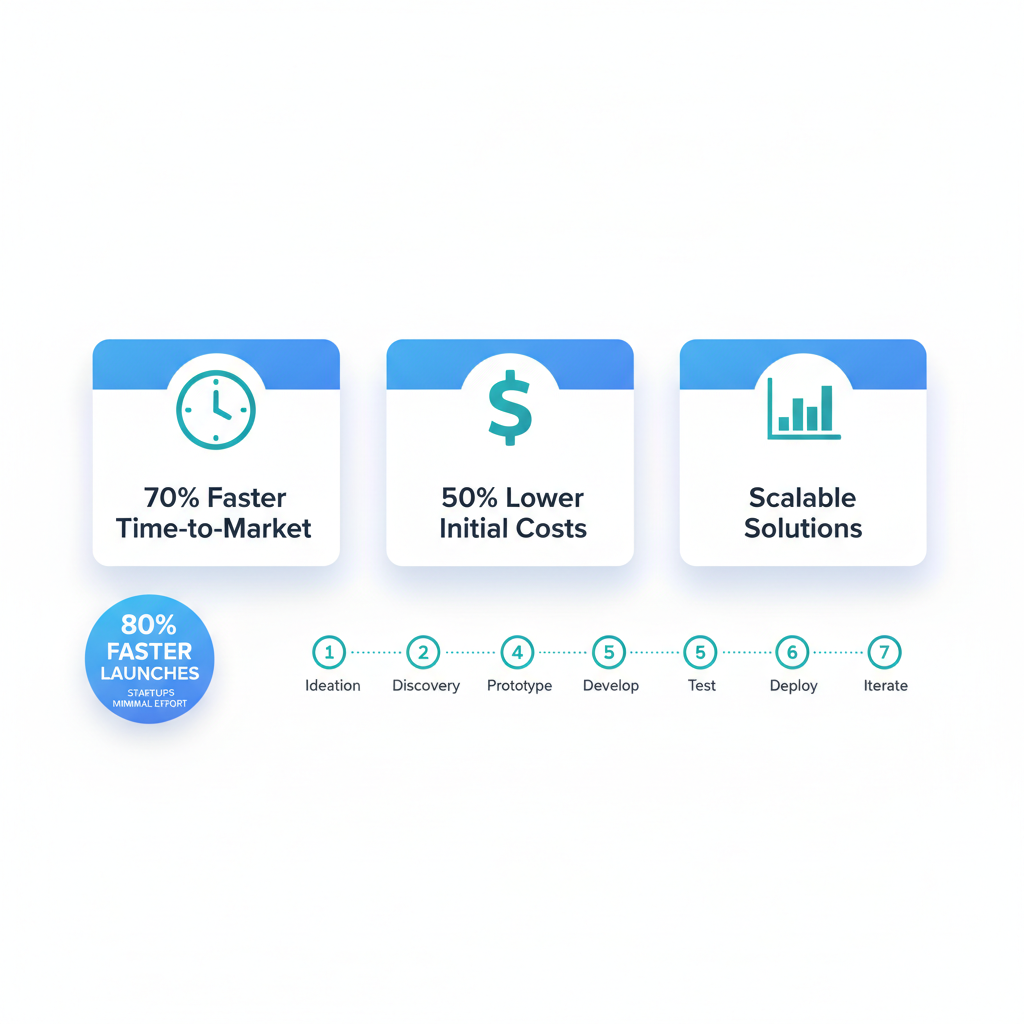
Overview of white label MVP development advantages for agencies and startups
This guide outlines a 7-step process: ideation, platform selection, customization, testing, rebranding, launch, and optimization–ideal for White Label Product Development for Agencies MVPS. Bantech Solutions excels in delivering white label web dev services, empowering your team to focus on growth while we handle the technical heavy lifting. Before proceeding, assess your readiness for this efficient path to innovation.
Assessing Readiness for White Label MVP Projects
Before diving into White Label MVP Development, agencies and startups must assess their readiness to avoid costly setbacks. This evaluation ensures alignment with business objectives, optimizing time and resources for a seamless launch.
Conduct a thorough checklist to gauge preparedness:
- Define Core Features: Identify essential functionalities for your MVP, such as user authentication and basic analytics, focusing on pre-packaged MVP customization to accelerate development.
- Assess Internal Resources: Evaluate your team’s design, marketing, and technical skills; consider branded development platforms if gaps exist in expertise.
- Estimate Budget: Factor in costs for white label software development services, typically ranging from $5,000 to $20,000 for initial setups, including platform licensing and custom tweaks.
- Review Legal Considerations: Examine rebranding agreements and intellectual property rights through private label web development options to ensure compliance without ownership disputes.
- Identify Integrations: Prioritize must-have connections like payment gateways or CRM systems; for a fintech startup, emphasize API security. Reference guides on white label app builders highlight scalability metrics and integration compatibility as key selection criteria.
Neglecting these factors often results in project delays, scope creep, or budget overruns, undermining the efficiency of white label partnerships.
With readiness confirmed, proceed to defining your project vision in the next step.
Defining Your Product Vision Clearly
Begin your White Label MVP Development journey by defining a clear product vision. This step ensures your white label solution aligns with business goals and resonates with users.
- Gather stakeholder input: Conduct interviews with team members, clients, and potential users to identify needs and pain points. Ask about target audience preferences and challenges they face.
- Draft your unique value proposition (UVP): Articulate what sets your branded product apart, focusing on core benefits like cost-efficiency and scalability.
- Outline core features: Prioritize essentials using a simple list, emphasizing MVP blueprinting for vision alignment in branded products.
- Define success metrics: Set measurable goals such as user engagement rates and launch timelines.
A strong vision document accelerates handoffs to developers, reducing implementation risks. For instance, agencies with defined visions see 30% faster project completions compared to vague approaches, as noted in white label guides. It minimizes misunderstandings, ensuring reliable agency white label development partnership and higher success rates.
Sample Vision Statement: “Our white label e-commerce MVP delivers seamless, scalable shopping for small businesses, solving inventory management pains with AI-driven recommendations.”
Tips for Success: Use templates from white label web development resources to prioritize features, like those enabling successful agency projects. Brainstorm with tools like Miro for collaboration, and explore reseller web development services to align partners early. Keep it concise to build confidence in your white label software development services rollout.
Selecting Suitable White Label Platforms
After defining your app vision in Step 1, focus on selecting white label platforms that align with your goals. This evaluation ensures White Label MVP Development proceeds smoothly by prioritizing platforms with strong customization, scalability, and integration features.
To research platforms effectively:
- List your core requirements, such as mobile compatibility and API support.
- Explore demos and user reviews on sites offering white label web development, including forums and case studies from providers like Bantech Solutions.
- Schedule live demos to test platform customization for MVPs in real-time.
- Check compatibility checklists, as recommended in the ‘Building White Label Mobile Apps Guide’ for non-technical founders, which emphasizes verifying backend integration and UI flexibility.
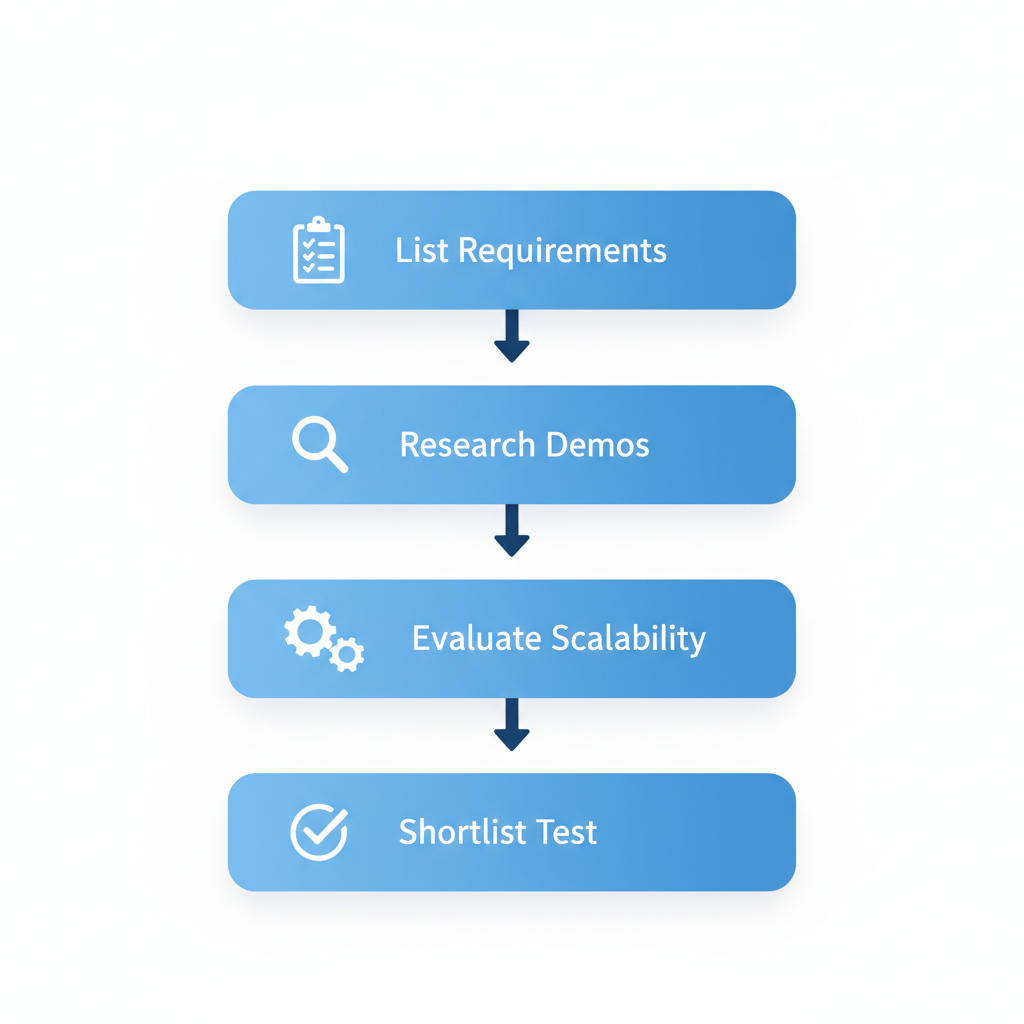
Step-by-step process for evaluating and selecting white label platforms
Choosing compatible platforms guarantees seamless integration, reducing development time by up to 50% and cutting costs on white label software development services, often ranging from $5,000 to $20,000 versus $50,000+ for custom builds. This approach minimizes rework and accelerates market entry.
For shortlisting, prioritize tech stacks like React Native for cross-platform needs or scalable white label bases with cloud support. Opt for open-source options to enhance flexibility and partner with agency white label development partnership providers for ongoing scalability.
Customizing the Chosen Platform
Once you’ve selected a white label platform, the next step in White Label MVP Development involves tailoring it to your unique needs. This process ensures your minimum viable product (MVP) aligns perfectly with your brand, fostering an agency white label development partnership that delivers seamless, customized solutions without heavy coding.
Begin by applying branding elements: update logos, color schemes, and typography to match your identity. Use intuitive drag-and-drop interfaces to modify UI/UX layouts, such as repositioning navigation menus or adding personalized dashboards. For feature tweaks, integrate essential tools like user authentication or basic analytics via simple configurations. Follow step-by-step UI guides from resources like the White Label Web Development Guide to make adjustments efficiently, ensuring responsive design across devices. (72 words)
These branded platform tweaks are crucial for user engagement, as they create a familiar and intuitive experience that boosts retention and trust. A personalized interface encourages users to interact more deeply, reducing bounce rates and enhancing satisfaction in white label software development services. (38 words)
Leverage no-code tools for MVP personalization by testing rapid iterations–prototype changes, gather feedback, and refine quickly. Collaborate with your development partner to explore scalable add-ons. For ongoing enhancements, consider product development services to support post-customization needs, preparing for smooth integration in the next phase. (40 words)
Integrating Key Features and APIs
After customizing your white label solution, the next phase in White Label MVP Development involves integrating key features and APIs to boost functionality and user engagement. This step transforms a basic MVP into an API-enhanced MVP by connecting third-party services seamlessly.
Instructions for API Connections:
- Identify essential APIs, such as payment gateways like Stripe or analytics tools like Google Analytics, that align with your app’s needs.
- Utilize mobile app api integration expertise from reliable providers to authenticate and configure endpoints.
- Test connections in a staging environment to ensure data flows correctly without disruptions.
This process is streamlined in white label software development services compared to custom builds, saving time and resources. (72 words)
Why Integrate APIs for Functionality:
API integrations enable scalability by allowing your MVP to incorporate advanced features like real-time notifications or e-commerce capabilities. They enhance user value through personalized experiences, such as integrating social logins, which drive retention and growth. In an agency white label development partnership, this adds immediate competitiveness without starting from scratch. (48 words)
Tips for Security:
Prioritize secure APIs with OAuth 2.0 authentication and encryption protocols to protect user data. Regularly audit integrations for vulnerabilities and comply with standards like GDPR. Choose providers offering robust support to mitigate risks, ensuring your white label MVP remains trustworthy and efficient. (42 words)
With integrations complete, proceed to testing in Step 5 for optimal performance.
Testing and Iterating the MVP
After integrating the white label software, rigorous testing ensures the MVP’s reliability. Begin QA cycles with unit testing for individual components, followed by integration testing to verify seamless functionality across modules. Conduct usability testing to mimic real-user interactions, identifying bugs and performance issues. Employ automated tools for regression testing to catch reintroduced errors. For mobile elements, use platforms like TestFlight to simulate diverse device environments and gather early insights. This iterative white label refinement process, often 2-3 cycles, polishes the product (72 words).
Quality assurance prevents costly post-launch failures, safeguarding user satisfaction and brand reputation in White Label MVP Development. It minimizes downtime, enhances security, and complies with industry standards, justifying the investment in professional white label software development services. Agencies benefit from such protocols in their partnership, ensuring scalable, error-free deliverables (38 words).
To optimize, solicit user feedback through beta testing with a small target group, focusing on ease of use and feature relevance. Partner with developers for quick iterations based on responses. In the realm of mobile application development, incorporate analytics tools to track engagement metrics, refining based on data-driven insights. This step bridges to launch in Step 6, answering how to collaborate effectively with partners (40 words).
Preparing for Market Launch
As you approach the final stage of your White Label MVP development journey, thorough preparation ensures a smooth go-to-market transition. Focus on compliance checks, launch checklists, and strategic planning to maximize impact. Engaging in website development consulting early can help identify regulatory gaps, such as data privacy standards and intellectual property protections, tailored to your white label software development services.
Create a comprehensive launch checklist to guide your rollout. Start with technical audits to verify system stability and scalability. Conduct user acceptance testing with real scenarios to catch usability issues. Address legal compliance, including partnership agreements that outline revenue shares, IP rights, and termination clauses–key for addressing questions like the best terms for a white label partnership agreement. Finally, prepare contingency plans for post-launch support. According to MVP development guides, structured checklists reduce launch failures by up to 40%.
These preparations are crucial for success because they mitigate risks and build confidence in your agency white label development partnership. A well-prepared launch accelerates market entry, enhances user adoption, and positions your MVP for scalable growth, ultimately driving revenue and long-term viability.
For effective marketing, leverage targeted digital campaigns highlighting your unique value proposition. Partner with influencers in your niche to amplify reach. Use email nurturing sequences to build anticipation among early adopters. Track metrics like conversion rates to refine strategies post-launch, ensuring sustained momentum.
Establishing Long-Term Partnerships
Securing an agency white label development partnership is essential for digital agencies seeking reliable white label software development services. This collaboration enables ongoing maintenance, scaling, and innovation, such as White Label MVP Development, ensuring your projects evolve with client needs. To hire white label developers effectively, focus on partners who align with your business goals and emphasize trust-building through transparent communication and shared successes.
When negotiating agreements, start by outlining clear scopes, deliverables, and timelines to avoid ambiguities. Use standard templates from white label web development guides to structure contracts that include intellectual property rights, confidentiality clauses, and pricing models for retainers or project-based work. Discuss scalability options early, ensuring the partner can handle growth without disrupting service. Prioritize flexible terms that allow adjustments as your agency expands, fostering a collaborative environment from the outset. (72 words)
Long-term partnerships promote sustainability by providing consistent white label website support and reducing turnover costs. They enable proactive updates and enhancements, keeping your offerings competitive while building a reliable revenue stream through retainer models. This stability strengthens client relationships and positions your agency as a full-service provider. (38 words)
For effective SLAs, define response times for maintenance requests, uptime guarantees, and escalation procedures. Incorporate metrics for performance monitoring, such as bug resolution within 24 hours. Highlight the importance of white label website support in these agreements to ensure seamless post-launch assistance, paving the way for addressing common partnership challenges ahead. (42 words)
Resolving Common White Label MVP Challenges
In White Label MVP Development, agencies often face unexpected hurdles that can stall progress and frustrate teams. Acknowledging these challenges early allows for swift resolutions, ensuring your branded product launches smoothly without derailing timelines or budgets. By addressing common pitfalls proactively, you safeguard your agency’s reputation and client satisfaction.
Here are key issues and solutions encountered in troubleshooting branded MVPs:
API Incompatibilities Causing Integration Glitches: Mismatched APIs between your white label platform and client systems lead to data sync failures, as seen in an e-commerce agency integrating payment gateways. Leverage white label software development services to conduct pre-launch compatibility audits and implement middleware adapters for seamless connectivity.
Customization Limits Hindering Unique Branding: Rigid templates restrict tailoring the MVP to client visions, frustrating design teams. Opt for flexible platforms with modular components, collaborating closely with developers to extend core features via custom plugins without breaking the base code.
Scaling Bottlenecks During User Growth: Initial MVPs struggle with traffic spikes, causing slowdowns in apps for growing startups. Incorporate scalable architecture from the outset, following a structured new product development process to upgrade servers and optimize databases for handling increased loads efficiently.
Communication Gaps in Partnerships: Misaligned expectations between agencies and providers result in delayed features or scope creep. Establish clear partnership issue resolution protocols, including weekly check-ins and shared project dashboards to align on milestones and adjustments.
Security Vulnerabilities Exposing Data Risks: Unpatched white label solutions invite breaches, eroding trust. Prioritize security-first white label software development services with regular audits and compliance checks to fortify your MVP against threats.
To prevent these issues, foster transparent agency white label development partnerships from day one, investing in thorough vendor vetting. Outsourced Product Dev for Agencies can streamline this. As we wrap up, these strategies empower confident navigation toward successful launches.
Key Takeaways on White Label Strategies
White Label MVP Development offers a game-changing approach for agencies and startups, enabling rapid launches with enhanced efficiency and scalability. By leveraging established solutions, businesses can bypass lengthy development cycles, focusing instead on core competencies and market growth. This strategy not only cuts costs but also boosts ROI, with many partners reporting up to 40% faster time-to-market and improved resource allocation.
Key benefits include accelerated speed to launch, seamless scalability for evolving needs, and access to expert teams without in-house overheads. The step-by-step framework–from ideation to deployment–ensures alignment with business goals, while strong partnerships mitigate risks in cost management and partner selection.
- Prioritize white label software development services for proven reliability and customization.
- Evaluate agency white label development partnership options based on expertise and support.
- Project success through integrated ROI metrics to justify adoption.
Having navigated these steps and solutions, the ideal next move is partnering with a proven provider like Bantech to launch your MVP. Reach out for a customized consultation to get started immediately, including free initial assessments and dedicated expertise.
Outsourced Product Dev for Agencies
Agencies specializing in white label MVP development often turn to outsourcing to scale their offerings without expanding internal teams. This approach allows seamless execution of product launches by leveraging external expertise in software development. Selecting reliable partners ensures high-quality deliverables that align with agency branding and client expectations.
Vetting potential outsourcers requires a structured process to guarantee reliability. Start by reviewing their portfolio for relevant white label software development services, focusing on case studies in agency white label development partnerships. Check client testimonials and references to assess track record and communication styles. Evaluate technical capabilities, such as proficiency in agile methodologies and tools like Git and Jira. Conduct interviews with key team members to gauge cultural fit and responsiveness. Verify certifications like ISO 27001 for security compliance and request detailed proposals outlining timelines, costs, and risks. Prioritize partners with proven scalability to handle varying project volumes. This thorough evaluation minimizes disruptions and fosters long-term collaborations essential for ongoing MVP support.
Outsourcing provides access to specialized expertise that might be cost-prohibitive to build in-house. Agencies benefit from diverse skill sets in areas like AI integration and cloud deployment, accelerating time-to-market for White Label MVP development. This model enhances innovation while maintaining focus on core marketing and client relations.
Effective contracts are crucial for protecting interests in these partnerships. Clearly define scope, milestones, deliverables, and payment terms to avoid ambiguities. Include clauses for intellectual property rights, confidentiality, and non-disclosure. Specify quality assurance metrics, revision policies, and dispute resolution mechanisms. Opt for fixed-price models for well-defined MVPs or time-and-materials for iterative work. Regular reviews and SLAs ensure accountability and reliability throughout the engagement.
Key Takeaways on White Label Strategies
White Label MVP Development offers a game-changing approach for agencies and startups, enabling rapid launches with enhanced efficiency and scalability. By leveraging established solutions, businesses can bypass lengthy development cycles, focusing instead on core competencies and market growth. This strategy not only cuts costs but also boosts ROI, with many partners reporting up to 40% faster time-to-market and improved resource allocation.
Key benefits include accelerated speed to launch, seamless scalability for evolving needs, and access to expert teams without in-house overheads. The step-by-step framework–from ideation to deployment–ensures alignment with business goals, while strong partnerships mitigate risks in cost management and partner selection.
- Prioritize white label software development services for proven reliability and customization.
- Evaluate agency white label development partnership options based on expertise and support.
- Project success through integrated ROI metrics to justify adoption.
Having navigated these steps and solutions, the ideal next move is partnering with a proven provider like Bantech to launch your MVP. Reach out for a customized consultation to get started immediately, including free initial assessments and dedicated expertise.