Digital agencies across the USA, UK, Canada, Australia, and New Zealand are facing a familiar challenge. Clients increasingly expect agencies to deliver not only marketing strategy and design, but also software products, SaaS platforms, mobile apps, and digital tools.
However, building a fully staffed internal development team can be expensive, slow, and operationally complex.
This is where white label product development for agencies (MVPs) has become a transformative strategy.
By partnering with an experienced technology team such as Bantech Solutions, agencies can deliver fully functional software products under their own brand while leveraging the expertise and efficiency of an external engineering team.
The result is a powerful model where agencies can:
- Expand services without hiring developers
- Launch products faster using white label MVP development
- Increase profit margins through strategic outsourcing
- Deliver enterprise-grade technology solutions to clients
This guide explores how outsourced product dev for agencies works, why it is becoming the preferred model for modern digital agencies, and how a hybrid development partner in India can provide a significant competitive advantage.
Why Digital Agencies Are Moving Toward Product Development
Over the last decade, digital agencies have evolved beyond traditional marketing services.
Today’s clients demand solutions such as:
- SaaS platforms
- Customer portals
- Mobile applications
- AI-powered automation tools
- Internal productivity systems
These products often begin with a Minimum Viable Product (MVP) — a simplified version of the product designed to validate an idea quickly.
The challenge is that building these products requires specialized skills:
- backend engineering
- frontend frameworks
- cloud architecture
- DevOps
- security compliance
- UI/UX product design
Hiring these specialists internally can take months and requires significant investment.
White label development solves this problem.
What Is White Label Product Development for Agencies?
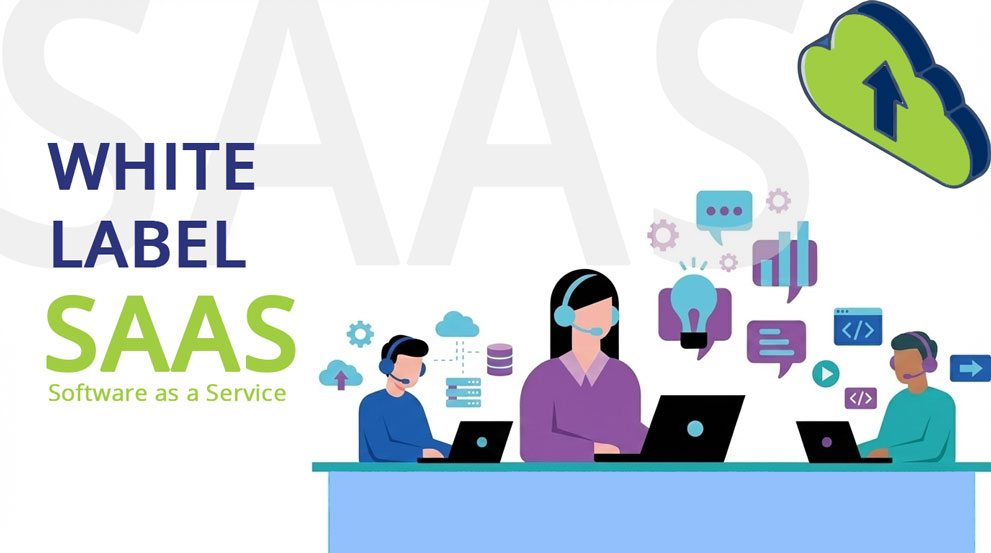
White label development is a model where a technology partner builds software on behalf of an agency, allowing the agency to deliver the product under its own brand.
In the context of startups and product launches, the most common form is white label MVP development.
How the Model Works
- The agency secures the client relationship
- The client needs a software product or digital platform
- The agency partners with a white label development team
- The development partner builds the product behind the scenes
- The agency delivers the solution under its own brand
From the client’s perspective, the agency remains the primary technology provider.
This approach allows agencies to offer high-value technology services without building an internal engineering department.
Why MVP Development Is the Perfect Entry Point
Most digital products start as an MVP.
An MVP is designed to:
- Validate product ideas quickly
- Test user demand
- Minimize initial development costs
- Enable rapid iteration
Instead of building a full product immediately, companies launch a lean version with core features.
If the product gains traction, additional features are developed later.
This is why white label MVP development is especially attractive for agencies.
Key benefits include:
- Faster development cycles
- Lower financial risk
- Clear product validation
- Quick go-to-market timelines
For startups and entrepreneurs, launching an MVP quickly can mean the difference between success and failure.
The Growing Demand for Outsourced Product Development for Agencies

According to global outsourcing reports, the IT outsourcing market is expected to exceed $500 billion within the next few years.
Several factors are driving this growth:
1. Global Talent Shortages
Western countries face a shortage of experienced software developers.
2. Rising Development Costs
Hiring a senior developer in the US or UK can cost $120,000+ per year.
3. Faster Product Timelines
Clients want products launched in weeks, not months.
4. Increased Technology Complexity
Modern products require expertise in cloud infrastructure, security, AI, and scalable architecture.
For agencies, outsourced product dev for agencies provides a practical solution.
Why India Is the Global Hub for Outsourced Development

India has become one of the most trusted destinations for software outsourcing.
Several factors contribute to this reputation.
Large Engineering Talent Pool
India produces over a million engineering graduates annually, creating one of the largest developer ecosystems in the world.
Cost Efficiency
Development costs in India can be 50–70% lower than in Western markets.
This allows agencies to maintain healthy profit margins.
Global Experience
Indian development companies frequently work with clients from:
- the United States
- Europe
- Australia
- New Zealand
This international exposure ensures strong communication standards and familiarity with Western business practices.
Time Zone Advantages
The time difference between India and Western countries enables round-the-clock development cycles.
Projects can progress while clients sleep.
Why a Hybrid Partner Model Is the Future
Not all outsourcing relationships are equal.
Traditional outsourcing can feel transactional.
A hybrid strategic partner provides a deeper level of collaboration.
Companies like Bantech Solutions operate with this hybrid approach.
Hybrid outsourcing includes:
- Dedicated development teams
- Transparent communication
- Agile sprint collaboration
- Strategic product consultation
- long-term partnership mindset
Instead of acting as a vendor, the development team becomes an extension of the agency’s internal capabilities.
The Business Benefits of White Label MVP Development
Agencies that adopt a white label MVP development model gain access to technical capabilities that would otherwise require significant internal investment. By partnering with specialized development teams, agencies can expand their offerings, accelerate delivery timelines, and improve profitability while maintaining full ownership of the client relationship. Below are several key business advantages that make this model particularly attractive for digital agencies and consulting firms.
1. Faster Product Launches
Speed is one of the most significant advantages of white label MVP development. When agencies partner with an experienced development team, they can move from concept to launch much faster than if they were building products entirely in-house. Skilled development partners typically have established workflows, reusable frameworks, and experienced engineers who are already familiar with common product architectures.
Because of this operational efficiency, many MVPs can be developed and launched within four to eight weeks, depending on the complexity of the product and the number of core features required. This accelerated development timeline enables agencies to help their clients validate product ideas quickly and bring solutions to market before competitors.
Faster launches also allow agencies to take on more projects within the same timeframe, increasing overall business capacity without sacrificing quality or delivery timelines.
2. Higher Profit Margins
White label development can significantly improve an agency’s profit margins. Instead of hiring full-time developers, agencies can outsource technical execution to a development partner at a predictable cost while maintaining control over pricing for their clients.
Many agencies apply a 30–60 percent markup on outsourced development services, creating a profitable margin while still offering competitive pricing in the marketplace. This structure allows agencies to generate revenue from technical services without incurring the long-term expenses associated with hiring, training, and retaining specialized engineering talent.
Additionally, agencies can package development services alongside other offerings such as branding, UX design, marketing strategy, and product consulting. This bundled approach increases the overall value of the project while strengthening the agency’s role as a comprehensive digital partner.
3. Expanded Service Portfolio
One of the most powerful benefits of white label MVP development is the ability for agencies to expand their service offerings without building a large internal development department. By leveraging external technical expertise, agencies can confidently provide advanced digital solutions that may have previously been outside their capabilities.
For example, agencies can begin offering services such as:
- SaaS product development, enabling startups and businesses to launch subscription-based software platforms
- Mobile application development for iOS and Android, helping clients reach users on smartphones and tablets
- AI-powered automation tools that streamline business processes, customer service, or data analysis
- Enterprise software solutions designed to support complex internal workflows and operational systems
By adding these services to their portfolio, agencies position themselves as full-service digital partners capable of supporting clients through both strategic planning and product development.
4. Reduced Operational Risk
Maintaining a full-scale engineering team can be costly and unpredictable for many agencies. Salaries, benefits, training, and infrastructure costs can quickly add up, particularly if project demand fluctuates throughout the year.
White label development significantly reduces this operational risk by allowing agencies to access skilled developers only when they are needed. Instead of carrying the financial burden of a large internal team during slower periods, agencies can rely on flexible partnerships that align with project demand.
This model also helps agencies avoid common challenges associated with recruiting and retaining specialized technical talent. Software developers are highly competitive hires, and turnover can disrupt project timelines. By working with established development partners, agencies can maintain continuity and stability across projects.
5. Scalability
Scalability is another critical advantage of the white label MVP model. As agencies grow and acquire more clients, the demand for development services often increases rapidly. Without the right infrastructure in place, scaling internal teams can be slow and expensive.
A white label development partner provides the flexibility to scale technical capacity up or down depending on project demand. When multiple projects are underway simultaneously, the development partner can allocate additional resources to meet deadlines. Conversely, during quieter periods, agencies can reduce development capacity without worrying about staffing costs.
This scalable structure allows agencies to pursue larger projects and more ambitious product initiatives while maintaining operational efficiency. It also enables agencies to respond quickly to new opportunities, helping clients bring innovative products to market without delays.
The MVP Development Process for Agencies
When agencies work with a white label development partner, the MVP process usually follows structured phases.
Phase 1: Product Discovery
This stage defines:
- product goals
- user personas
- core features
- technical architecture
Phase 2: UX and Product Design
Wireframes and prototypes are created to validate the user experience.
Phase 3: Agile Development
Developers build the product in sprint cycles.
Phase 4: Testing and QA
Quality assurance ensures stability, security, and performance.
Phase 5: Launch and Iteration
The MVP is released to real users and improved based on feedback.
Agencies working with Bantech Solutions can integrate this entire process seamlessly into their own client workflows.
For example, agencies can explore additional outsourcing capabilities through their software development services page on the Bantech website.
Key Technologies Used in Modern MVP Development
Modern MVP development leverages scalable technologies that allow products to grow quickly.
Common technologies include:
Frontend
Backend
Cloud Infrastructure
Mobile Development
A strong white label partner ensures that the technology stack supports long-term scalability, not just a quick launch.
How Agencies Can Successfully Implement a White Label Strategy
Agencies that succeed with white label product development follow a few best practices.
Choose a Strategic Partner
The development partner should offer:
- transparent communication
- strong project management
- proven technical expertise
Define Clear Processes
Successful partnerships establish clear workflows between:
- agency account managers
- product teams
- development teams
Maintain Client Ownership
The agency remains the primary contact for the client.
The development partner works behind the scenes.
Focus on Long-Term Collaboration
White label development works best when agencies build long-term relationships with their technology partners.
Why Bantech Solutions Is a Strategic Partner for Agencies
Among outsourcing providers, Bantech Solutions stands out as a reliable long-term technology partner for Western agencies.
Key advantages include:
1. Hybrid Agency Collaboration Model
Bantech follows a hybrid collaboration model designed specifically for agencies that need additional technical capacity without expanding their internal development team. Instead of operating as a detached outsourcing vendor, Bantech integrates directly with agency workflows and acts as a seamless extension of the in-house team. This approach allows agencies to maintain control over strategy, client communication, and project direction while leveraging Bantech’s technical expertise for product development.
Through shared project management tools, regular sprint meetings, and transparent reporting, agencies are able to stay fully informed throughout the development lifecycle. Designers, strategists, and account managers within the agency can collaborate directly with Bantech developers, ensuring that the final product aligns with the agency’s brand standards and client expectations.
This hybrid structure also enables agencies to scale their technical capabilities quickly when new opportunities arise. Instead of hiring and onboarding developers internally, agencies can rely on Bantech’s established team to handle the technical execution while maintaining the agency’s brand ownership and client relationships.
2. MVP-Focused Development
Bantech’s development processes are optimized around Minimum Viable Product (MVP) creation, enabling agencies and startups to bring new digital products to market quickly and efficiently. Rather than investing months or years building a full-scale platform before validating the concept, the MVP approach focuses on developing a streamlined version of the product that contains only the most essential features.
This method allows agencies to test ideas, gather user feedback, and validate product-market fit before committing to larger development investments. Bantech works closely with agencies during the planning phase to identify the core functionality required for the MVP, ensuring that the product can deliver meaningful value while remaining cost-effective and fast to build.
By prioritizing rapid prototyping, iterative development, and early user testing, Bantech helps agencies reduce risk and accelerate time-to-market. Once the MVP is launched and validated, the product can then evolve through additional development cycles, guided by real user insights and performance data.
3. Global Client Experience
Bantech has built extensive experience working with agencies and startups across North America, Europe, and Oceania, allowing the company to understand the operational expectations and market dynamics of these regions. This international exposure enables Bantech to adapt its development processes, communication style, and project management practices to align with the standards commonly followed by agencies in these markets.
Working with clients across multiple time zones has also helped Bantech develop flexible collaboration workflows that support asynchronous communication and efficient project coordination. Agencies benefit from predictable delivery timelines, structured reporting, and consistent updates throughout the development process.
Additionally, Bantech’s experience with diverse client portfolios allows the team to bring insights from different industries, technologies, and business models. This global perspective helps agencies build digital products that are not only technically robust but also capable of meeting the expectations of international markets and users.
4. Agile Delivery Framework
Bantech follows an agile delivery framework that emphasizes iterative development, transparency, and continuous improvement throughout the project lifecycle. Agile methodologies divide development into smaller work cycles known as sprints, allowing teams to deliver incremental progress while maintaining flexibility to adjust features or priorities as the project evolves.
For agencies, this approach provides a higher level of visibility into the development process. Regular sprint reviews, progress reports, and collaborative planning sessions ensure that stakeholders remain aligned and informed at every stage of the project. If new requirements emerge or priorities shift, the agile structure allows the development team to adapt quickly without disrupting the overall timeline.
This framework also improves product quality by encouraging continuous testing, feedback, and refinement. Instead of waiting until the end of the development cycle to identify issues, problems can be addressed early and improvements can be incorporated in real time, resulting in a more reliable and polished final product.
5. Long-Term Scalability
Beyond MVP development, Bantech supports agencies in transforming early-stage products into fully scalable digital platforms. Once an MVP has been validated in the market, the next step often involves expanding features, improving infrastructure, and preparing the platform to support a growing user base.
Bantech assists agencies in designing scalable system architectures, optimizing application performance, and implementing advanced integrations as the product matures. This ensures that the platform can evolve without requiring a complete rebuild as new features, users, and data demands increase over time.
By maintaining long-term partnerships with agencies, Bantech provides continuous development support, technical guidance, and strategic input as products grow. This enables agencies to confidently take MVP concepts to the next level, transforming them into robust platforms capable of supporting long-term business growth.
Agencies interested in learning more about these capabilities can explore additional information and case studies directly on the Bantech Solutions website.
Industry Trends Shaping White Label Development
Several technology trends are accelerating the adoption of white label product development.
AI-Assisted Development
AI tools are helping developers build products faster.
Low-Code Platforms
Some MVPs now integrate low-code frameworks to accelerate development.
Microservices Architecture
Modern applications use microservices for greater scalability.
SaaS Product Growth
More startups are launching SaaS products, increasing demand for MVP development.
These trends create new opportunities for agencies that can offer product development services.
Final Thoughts
As client expectations continue to evolve, digital agencies must adapt by offering more sophisticated technology solutions.
However, building an in-house development team is not always practical.
This is why white label product development for agencies (MVPs) has emerged as one of the most effective strategies for modern agencies.
By partnering with an experienced technology provider such as Bantech Solutions, agencies can deliver high-quality software products while maintaining their brand identity and client relationships.
For agencies in the USA, UK, Canada, Australia, and New Zealand, outsourcing MVP development to India offers a powerful combination of:
- speed
- cost efficiency
- technical expertise
- scalability
The result is a smarter way to grow agency capabilities while staying competitive in an increasingly technology-driven world.
White label MVP development lets a digital agency deliver a fully functional software product under its own brand, while an outside technical partner handles the actual engineering behind the scenes.
Author: Bantech Solutions Editorial Team, Agency Partnerships & Product Strategy Last Updated: August 17, 2026
TL;DR — Key Takeaways
- White label MVP development is a model where a technology partner builds a Minimum Viable Product on an agency’s behalf, and the agency delivers it to the client under its own brand.
- Agencies use it to offer software, SaaS, and app development services without hiring in-house engineers.
- The client only ever sees the agency — the development partner works invisibly, from planning through QA and launch.
- Most white label MVPs can be scoped, built, and launched in four to eight weeks, compared to months for a fully custom build.
- Agencies typically apply a 30–60% markup on white label development costs, turning it into a genuine profit center rather than just a client-retention tool.
Digital agencies are under constant pressure to say “yes” to more than design and marketing. Clients now ask for SaaS platforms, customer portals, and mobile apps — and increasingly, they expect their agency to deliver them. For agencies without an internal engineering team, that expectation creates a real gap. Understanding white label product development for agencies — and specifically how it applies to MVPs — is the first step to closing that gap without the cost or risk of building a development department from scratch. Agencies exploring this route often start by reviewing a white label partnership program to see how the collaboration actually works before committing to a client timeline.
What Is White Label MVP Development?
White label MVP development is when a specialized technology partner designs, builds, and tests a Minimum Viable Product for an agency’s client, then hands over the finished product for the agency to present under its own name. The agency owns the client relationship from start to finish; the development partner never appears in any client-facing communication, contract, or invoice.
The term borrows from the “white label” concept used in retail and manufacturing, where one company makes a product and another company sells it under its own branding. Applied to software, it means the code, the sprint reports, the QA documentation, and even the Slack channel used for updates are all styled to look like they came from the agency itself.
An MVP (Minimum Viable Product) is the leanest version of a product that still delivers real value — just enough functionality to test an idea with actual users before investing in a full build. Pairing white label delivery with an MVP-first approach gives agencies a low-risk way to enter the software space: the scope is small, the cost is predictable, and the client gets to validate their idea quickly.
How Is This Different from Just “Outsourcing”?
Traditional outsourcing is often transactional — a vendor completes a scope of work and the relationship ends there. White label MVP development is closer to a standing partnership. The development team integrates with the agency’s existing project management tools, follows the agency’s communication style, and is available for repeat engagements as the agency signs new clients. This is the model described in more detail in our guide to white label mobile app development for digital agencies, which breaks down how the same partnership structure applies specifically to app projects.
White Label vs. Custom vs. In-House: A Quick Comparison
| Factor | White Label MVP Development | Custom In-House Build | Freelance/Transactional Outsourcing |
| Typical timeline | 4–8 weeks | 4–9 months | Varies, less predictable |
| Upfront cost to agency | Low (no hiring) | High (salaries, benefits, tools) | Low–moderate |
| Client sees the partner? | No — fully invisible | N/A | Sometimes, if not managed carefully |
| Scalability | High — scale up/down per project | Low — fixed headcount | Moderate |
| Best suited for | MVPs, first-time software clients | Long-term flagship products | One-off, low-stakes tasks |
| Agency profit model | 30–60% markup on delivery | Overhead-heavy, margin from retainer | Thin margins, project-by-project |
Mid-Article CTA Considering white label MVP development for an upcoming client project? Our team can scope your next build, estimate timelines, and show you exactly how the white label workflow fits into your existing client process. Request a Quote →
Why Are Agencies Choosing White Label Product Development?
Agencies are adopting white label product development for digital agencies for a few concrete business reasons, not just as a trend.
It closes the capability gap without new hires. Senior developers in the US or UK often cost $120,000 or more per year in salary alone, before benefits and overhead. A white label partner gives an agency access to the same skill set — backend engineering, cloud architecture, UI/UX — without the fixed payroll cost.
It protects margins during unpredictable demand. Client software requests don’t arrive on a steady schedule. Maintaining a full-time development team means paying for capacity that sits idle between projects. According to Deloitte’s Global Outsourcing Survey, <cite index=”27-1″>80% of executives are planning to maintain or increase investment in third-party outsourcing</cite>, citing skilled talent and agility as key drivers alongside cost — a trend that applies directly to agencies weighing whether to build or partner for software delivery.
It taps into a genuinely deep talent pool. A large share of white label technology partners operate out of India, which <cite index=”36-1″>is home to the world’s largest developer workforce, with over 5.4 million software engineers</cite> according to India Brand Equity Foundation data. That scale is part of why development costs through an Indian partner typically run 50–70% lower than hiring the same skill set domestically.
It turns technology into a new revenue line. Rather than referring software work to a third party and losing the client relationship, agencies that white label the build keep 100% of the client contact and add a markup on top of development cost — often the same 30–60% range referenced in our main guide to white label product development for agencies.
How Does the White Label MVP Development Process Actually Work?
The mechanics are simpler than most agencies expect. A typical engagement follows five stages:
- Discovery. The agency (sometimes with the partner’s help) defines the client’s goals, target users, and the core features the MVP needs to prove the concept.
- UX and product design. Wireframes and clickable prototypes are built to validate the experience before a single line of production code is written.
- Agile development. Engineers build the product in short sprints, with progress shared through the agency’s preferred reporting format.
- QA and testing. The product is tested for stability, security, and performance before it reaches real users.
- Launch and iteration. The MVP goes live, and feedback from early users shapes the next round of features.
Throughout every stage, the agency’s brand — not the development partner’s — is what the client sees on reports, invoices, and communication threads.
Is White Label MVP Development Right for Every Agency?
Not necessarily, and that’s worth being direct about. It’s a strong fit for agencies that:
- Already own strong client relationships but lack in-house engineering capacity
- Want to test whether software services are worth adding to their offering before hiring
- Handle unpredictable or seasonal development demand across their client base
- Need to move a client from idea to launched product in weeks, not quarters
It’s a weaker fit for agencies that already run a stable, fully staffed internal dev team with consistent utilization, or for one-off projects so small that the coordination overhead outweighs the benefit.
Related Questions
How much does white label MVP development cost?
Cost depends on feature scope, platform (web vs. mobile vs. both), and integrations required, but most agencies budget for a range that allows a healthy markup once the client is quoted — the earlier comparison table gives a directional sense of how this stacks up against in-house development.
Who owns the code once the MVP is delivered?
In a properly structured white label arrangement, the agency — and by extension its client — owns the final code and intellectual property. This should always be confirmed in the partnership agreement before work begins.
Can white label MVPs be built for both web and mobile?
Yes. Most white label partners work across web applications, iOS, and Android using shared modern frameworks, which keeps timelines and cost predictable regardless of platform.
Does the client ever find out a third party built the product?
No, not in a properly run engagement. All documentation, communication, and delivery are branded to the agency, and the development partner does not appear in any client-facing materials.
How is white label MVP development different from white label SaaS development?
MVP development typically refers to building a first, lean version of a new product to validate an idea, while white label SaaS development often involves building or customizing a subscription-based platform meant to scale immediately. Our guide to white label SaaS development partnerships covers that distinction in more depth.
Ready to see how white label MVP development could work for your next client project? Talk to a Bantech Product Specialist and Request a Quote →
White label MVP development works through a structured five-phase process — discovery, design, agile build, QA, and launch — where the development partner executes the technical work while the agency manages every client-facing touchpoint.
Author: Bantech Solutions Editorial Team, Agency Partnerships & Product Strategy Last Updated: August 17, 2026
TL;DR — Key Takeaways
- White label MVP development follows a repeatable workflow: discovery, UX/product design, agile sprints, QA, and launch — usually inside a 6–12 week window.
- The agency owns discovery framing and every client conversation; the development partner executes the technical build behind a shared, agency-branded reporting layer.
- Communication typically runs through the agency’s own project management tools (Slack, Jira, Asana, or similar), not the partner’s internal systems.
- A written statement of work (SOW) defines scope, sprint cadence, and change-request handling before a single sprint starts — this is what prevents most white label breakdowns.
- Agencies that manage this process well can run multiple client MVPs in parallel without adding a single developer to headcount.
Once an agency understands what white label MVP development is, the next question is almost always operational: how does the actual handoff work day to day? Getting the process right — not just the concept — is what determines whether a white label partnership becomes a reliable revenue line or a source of client-facing risk. Agencies that want a partner to plug directly into this workflow often start by looking at how to hire a dedicated software development team structured specifically around white label delivery, rather than a generic staffing arrangement.
The Five Phases of the White Label MVP Workflow
Every well-run white label engagement follows the same underlying structure, regardless of the client’s industry or feature set.
Phase 1: Discovery and Scoping
The discovery phase defines what the MVP actually needs to do — and just as importantly, what it doesn’t. The agency (often supported by the partner’s product team) works with the client to identify the core user problem, the target audience, and the minimum feature set required to test the idea. This phase typically produces a scope document and a rough sprint plan, and it’s the single biggest predictor of whether the rest of the project stays on schedule.
Phase 2: UX and Product Design
Before any code is written, wireframes and clickable prototypes are built to validate the user experience. This lets the agency walk the client through what the product will look and feel like, catching misalignment early — when it costs a design revision, not a rebuild.
Phase 3: Agile Development
This is where the bulk of the timeline lives. Development happens in short, fixed-length sprints — typically one to two weeks each — with a working increment of the product delivered at the end of every cycle. According to Netguru’s analysis of MVP delivery timelines, <cite index=”43-1″>the average time to create an MVP is around four months</cite>, though scoped-down agency MVPs with a tight, well-defined feature set frequently move faster than that industry average.
Phase 4: QA and Testing
Every feature is tested for functionality, performance, and security before it reaches real users. This phase is where white label partners earn their keep — a partner with an established QA process catches issues that a generalist or first-time build often misses.
Phase 5: Launch and Iteration
The MVP ships to real users, and usage data plus direct feedback shape the next round of development. This is also the point where many agencies convert a one-off MVP project into an ongoing retainer, since most products need continued iteration after launch.
Who Does What: Agency Role vs. Development Partner Role
The clearest way to understand the workflow is to see exactly where the line sits between what the agency handles and what the partner handles.
| Activity | Agency’s Role | Development Partner’s Role |
| Client relationship & contract | Owns entirely | No visibility to client |
| Requirements gathering | Leads conversation | Supports with technical framing |
| UX/UI design | Reviews and approves | Produces wireframes and prototypes |
| Backend & frontend development | Not involved | Builds and owns the codebase |
| Sprint reporting | Presents to client under agency brand | Prepares reports, agency-styled |
| QA & testing | Reviews final results | Executes test cycles |
| Invoicing | Bills the client directly | Invoices the agency only |
| Post-launch support | Manages client expectations | Provides technical fixes/updates |
Mid-Article CTA Want to see this workflow mapped to your next client project? We’ll walk through discovery, sprint cadence, and reporting so you know exactly what to expect before you quote the client. Request a Quote →
What Tools and Processes Keep the Partnership Running Smoothly?
A white label engagement only stays invisible to the client if the operational layer is set up correctly from day one. The strongest partnerships share a few common elements:
- A written Statement of Work (SOW) covering scope, sprint length, deliverables per sprint, and how change requests are priced and approved
- Shared project management tooling — the agency’s Jira, Asana, ClickUp, or Trello board, not the partner’s internal system, so the agency always has real-time visibility
- A single point of contact on each side — usually an account manager for the agency and a delivery lead for the partner — to avoid miscommunication through too many channels
- Agency-branded reporting templates used for every sprint update, so nothing that reaches the client carries the partner’s name or logo
- A defined escalation path for bugs, delays, or scope disagreements, agreed before the first sprint begins
This operational discipline is the same structure we outline in our broader guide to white label product development for agencies, and it’s consistent with what we’ve seen work across offshore development partnerships more generally — the process matters as much as the talent behind it.
How Long Does Each Phase Typically Take?
Timelines vary by scope, but a well-run white label MVP tends to follow a predictable rhythm:
- Discovery and scoping: 1–2 weeks
- UX and product design: 1–3 weeks (can run partly parallel with late discovery)
- Agile development: 4–8 weeks, broken into 2–4 sprints
- QA and testing: 1–2 weeks, often overlapping the final development sprint
- Launch and stabilization: Ongoing, with a hypercare window of 2–4 weeks immediately after go-live
Most agency-scoped MVPs land in the 6–12 week range from kickoff to launch — considerably faster than the broader four-month industry average, since agency MVPs are typically scoped tighter from the start.
Why the Process Matters More Than the Pitch
Agencies sometimes evaluate white label partners primarily on price or portfolio, but the workflow itself is usually the better predictor of success. A partner that outsources IT delivery well tends to show measurable results beyond just cost. Deloitte’s Global Outsourcing Survey found that <cite index=”27-1″>25% of executives are seeing reductions in vendor service costs or improvement in service quality</cite> when outsourcing relationships are structured with clear governance — reinforcing that process discipline, not just technical talent, is what separates a dependable white label partner from a risky one.
Common Process Pitfalls to Avoid
- Skipping a written SOW and relying on informal scope conversations — this is the single most common source of disputes
- Letting the partner communicate directly with the client, even accidentally, which breaks the white label arrangement
- Underscoping discovery to save time, which almost always costs more time later in rework
- Not defining a change-request process up front, leaving the agency to absorb scope creep costs
- Skipping the hypercare window after launch, leaving early bugs to surface directly with the client instead of the delivery team
Related Questions
Does the agency need any technical staff to manage this process?
Not necessarily. Most agencies designate a non-technical or semi-technical account manager to run client communication and rely on the partner’s delivery lead for technical decisions, though agencies with some in-house technical fluency can manage the relationship even more efficiently.
What happens if the client wants to change scope mid-sprint?
A well-structured SOW defines a change-request process upfront, typically allowing new requests to be scoped, priced, and slotted into a future sprint rather than disrupting the sprint in progress.
How often does the agency get updates during development?
Most white label partnerships report at the end of each sprint — usually every one to two weeks — through the agency’s own project management tools, styled to look native to the agency.
Can an agency run more than one white label MVP at the same time?
Yes. Since the development partner supplies the engineering capacity, agencies can run multiple client MVPs in parallel without hiring additional developers, which is one of the main scalability advantages of the model.
What happens after the MVP launches?
Most MVPs enter an iteration phase based on real user feedback, and many agencies convert the initial project into an ongoing development retainer to keep building new features under the same white label arrangement.
Ready to put this process to work for your next client build? Talk to a Bantech Product Specialist and Request a Quote →
White label MVP development typically costs an agency between $10,000 and $60,000 for a well-scoped product, before the agency’s markup to the client — with price driven mainly by feature count, platform, and integrations rather than by the white label arrangement itself.
Author: Bantech Solutions Editorial Team, Agency Partnerships & Product Strategy Last Updated: August 17, 2026
TL;DR — Key Takeaways
- A well-scoped white label MVP usually costs $10,000–$60,000, with simple single-feature builds at the low end and AI-enabled or marketplace products pushing past $80,000.
- The white label model itself doesn’t add cost — the price is driven by the same factors as any MVP build: features, platform, integrations, and compliance needs.
- Agencies typically apply a 30–60% markup on the development partner’s price when quoting the client, turning delivery into a genuine profit center.
- Offshore development partners can lower base cost by 50–70% compared to hiring an equivalent in-house US or UK developer.
- Fixed-price and hourly billing are both common — fixed-price protects the agency’s margin, while hourly suits projects with evolving scope.
Cost is almost always the first question an agency asks once they understand how white label product development for agencies works — and it’s a fair question, because pricing this correctly is what turns a client project into a profitable service line rather than a break-even favor. Before quoting a client, it helps to understand both what a white label partner actually charges and how that number should translate into what the agency bills. Agencies weighing this against building in-house often start by comparing it to what a custom software development services engagement would cost to staff internally.
How Much Does White Label MVP Development Cost?
Most white label MVPs cost between $10,000 and $60,000 for the agency to have built, depending on feature complexity, platform, and integrations — with simple builds starting closer to $10,000 and AI-enabled or multi-platform products running $80,000 or more. This is the base development cost paid to the white label partner, before the agency applies its own markup for the client-facing quote.
The white label arrangement itself doesn’t change the price of the engineering work. What it changes is who the client pays, and how much room the agency has to build in margin without the client ever seeing the underlying development cost.
MVP Cost by Complexity Tier
| Complexity Tier | Typical Feature Set | Estimated Cost | Typical Timeline |
| Simple MVP | Single core feature, basic auth, one platform | $10,000 – $25,000 | 4–6 weeks |
| Mid-Complexity MVP | 5–8 features, payments or booking flow, one to two platforms | $25,000 – $60,000 | 6–10 weeks |
| Complex MVP | AI features, marketplace/multi-sided flows, multiple integrations | $80,000 – $150,000+ | 10–16 weeks |
| Compliance-Heavy MVP | Healthtech, fintech, HIPAA/SOC-2 requirements | $80,000 – $250,000+ | 12–20 weeks |
Mid-Article CTA Not sure which complexity tier your next client project falls into? Share the requirements and we’ll return a scoped estimate and timeline before you quote the client. Request a Quote →
What Actually Drives the Cost of a White Label MVP?
Several factors move a project up or down within these ranges, regardless of which white label partner is doing the work.
Feature count and depth. Every additional feature — real-time chat, advanced search, custom reporting — adds development and QA time. Agencies that resist client requests to over-scope the first version protect both timeline and budget.
Platform choice. A web-only MVP is almost always the cheapest and fastest path to validation. Native iOS and Android builds run in parallel and roughly double platform-specific cost, while cross-platform frameworks like Flutter or React Native close most of that gap for a fraction of the price.
Third-party integrations. Payments, messaging, mapping, and authentication providers save build time but add licensing and integration testing cost, typically $1,000–$20,000 depending on how many are required and how deeply they’re woven into core flows.
Compliance requirements. Healthtech, fintech, and other regulated categories layer in security audits, data handling requirements, and legal review, which can add 30–50% to the base build cost.
Where the development team is based. This is where the white label model creates real savings. Offshore development partners — particularly in India — can lower base development cost by roughly 50–70% compared to hiring an equivalent developer in the US or UK. According to pricing data published by Clutch, <cite index=”66-1″>most software development companies listed on Clutch charge between $24 and $49 an hour</cite>, a range that sits well below typical US in-house developer costs once salary, benefits, and overhead are factored in.
How Do Agencies Price This to the Client?
Once the agency knows the development partner’s cost, the next decision is markup. Two billing models are common:
- Fixed-price billing, where the agency quotes the client a flat project fee based on a defined scope — this protects margin but requires disciplined scoping upfront to avoid absorbing overages.
- Hourly or sprint-based billing, where the client pays for actual time spent — better suited to projects where requirements are likely to evolve mid-build.
Most agencies apply a 30–60% markup on the white label partner’s cost when quoting the client. On a $30,000 mid-complexity MVP, that translates to a client-facing quote in the $39,000–$48,000 range, with the difference covering the agency’s account management, client relationship work, and business risk — not additional engineering hours.
Hidden Costs Agencies Should Budget For
The development quote is rarely the full picture. A few costs are easy to underbudget:
- Post-launch maintenance, typically 15–25% of the initial build cost annually, for bug fixes and platform updates
- Third-party service fees, such as hosting, analytics, and payment processing, which scale with usage after launch
- Change requests, which should be priced separately from the original scope rather than absorbed into the original quote
- Design revisions, if the client’s brand requirements evolve significantly after wireframes are approved
Failing to account for these in the original client quote is one of the more common ways agencies erode their margin on an otherwise well-priced white label project — a pattern also covered in our guide to white label eCommerce development for agencies, where post-launch platform costs follow a similar pattern.
Why Startup Validation Risk Makes MVP Pricing Worth It
Pricing an MVP correctly matters beyond margin — it directly affects whether the client’s product has a real shot at succeeding. Research cited by Intigate Technologies notes that <cite index=”56-1″>42% of startups fail due to no market need</cite>, which is precisely the risk an MVP is designed to reduce before a client commits to a larger build. A white label MVP priced and scoped correctly gives the client a low-cost way to test that assumption before either side invests in a full platform — a principle that applies just as much to e-commerce and Shopify projects, as we outline in our white label Shopify Plus development guide.
Related Questions
Does white label pricing include design and QA, or just development?
Reputable white label partners include UX/UI design and QA testing within the quoted price — always confirm this is bundled before comparing quotes, since some vendors price design and QA as separate line items.
Is fixed-price or hourly billing better for a first-time white label client?
Fixed-price billing is generally safer for a first-time engagement, since it protects the agency’s margin and gives the client cost certainty, as long as the scope is clearly documented upfront.
How much should an agency markup a white label MVP quote?
Most agencies apply a 30–60% markup on the development partner’s cost, which covers account management, client relationship work, and business risk rather than additional engineering hours.
Does building for both web and mobile roughly double the cost?
Not exactly — native iOS and Android development run close to double the cost of a single platform, but cross-platform frameworks like Flutter or React Native significantly narrow that gap while still shipping to both app stores.
Are there ongoing costs after the MVP launches?
Yes. Budget roughly 15–25% of the initial build cost annually for maintenance, plus usage-based third-party service fees like hosting and payment processing.
Ready to get a real cost estimate for your next client’s MVP? Talk to a Bantech Product Specialist and Request a Quote →
A well-scoped white label MVP typically takes 4 to 10 weeks from kickoff to launch — faster than the broader industry average of three to six months, because agency-led MVPs are usually scoped tighter and run through an established delivery process from day one.
Author: Bantech Solutions Editorial Team, Agency Partnerships & Product Strategy Last Updated: August 17, 2026
TL;DR — Key Takeaways
- Most white label MVPs launch in 4–10 weeks, compared to the 3–6 month average cited across broader MVP industry research.
- Timeline is driven primarily by feature count, platform choice, and integration complexity — not by the white label arrangement itself.
- A tight, well-run discovery phase is the single biggest lever for keeping a timeline short; skipping it is the most common cause of delay.
- Fast-track builds (single feature, web-only) can launch in as little as 3–4 weeks; AI-enabled or multi-platform products often need 12–16 weeks.
- Agencies should always quote clients a range, not a fixed date, until the discovery phase confirms final scope.
Once an agency has a handle on cost and process, timeline is usually the deciding factor a client cares about most. Whether a startup client is racing a competitor or a brand needs a working prototype for an upcoming investor pitch, “how fast can this launch” often matters more than almost anything else in the conversation. Timeline expectations should be set carefully, since they directly shape how agencies scope product design and ideation work at the front end of the engagement — rushing this stage to hit an arbitrary date is where most delays actually originate.
How Long Does It Take to Build a White Label MVP?
A well-scoped white label MVP typically takes four to ten weeks from kickoff to launch, depending on feature complexity, platform, and integrations. This is meaningfully faster than the three-to-six-month average cited across broader MVP development research, largely because agency-led MVPs tend to be scoped tighter from the outset and run through a development partner’s already-established delivery process rather than starting from zero.
For context on how that industry-wide average compares: according to a survey referenced by Makers Den, <cite index=”45-1″>most development teams land somewhere between three and six months for a standard web or mobile MVP</cite>. White label partnerships compress that timeline mainly by eliminating ramp-up time — the partner isn’t hiring, onboarding, or building process from scratch for each new project.
Timeline by Build Type
| Build Type | Typical Scope | Timeline |
| Fast-Track MVP | Single core feature, web-only, minimal integrations | 3–4 weeks |
| Standard MVP | 5–8 features, one to two platforms, 1–3 integrations | 6–10 weeks |
| Complex MVP | AI features, marketplace flows, multiple integrations | 10–16 weeks |
| Compliance-Heavy MVP | Healthtech/fintech, security and regulatory review | 12–20 weeks |
These ranges track closely with the cost tiers covered in our companion guide on white label MVP development cost — complexity drives both budget and timeline together, so a client’s cost and speed expectations should always be set in the same conversation.
Mid-Article CTA Need a real timeline for a client project before you quote it? Share your scope and we’ll return a phase-by-phase timeline you can present with confidence. Request a Quote →
What Determines Whether a Build Lands on the Fast or Slow End?
A handful of factors consistently separate a 4-week build from a 14-week one.
Feature count. Every additional feature adds development time and a corresponding QA cycle. Agencies that hold the line on a genuinely minimal feature set — resisting the pull toward “just one more thing” — are the ones that hit the fast end of the range.
Platform choice. A web-only MVP is the fastest path to launch. Adding native iOS and Android development in parallel typically adds several weeks, though cross-platform frameworks like Flutter or React Native narrow that gap considerably.
Integration complexity. Payment processors, mapping APIs, and authentication providers are usually quick to wire in individually, but each one adds testing time, and MVPs with several deep integrations should budget one to two extra weeks per integration.
Discovery quality. A rushed or vague discovery phase is the most common source of mid-project delay. Time spent clarifying scope before development starts is almost always recovered many times over during the build — this is the same discipline covered in more detail in our guide to how white label product development works for agencies.
Client responsiveness. Feedback turnaround on design approvals and sprint reviews has a direct, and often underestimated, effect on timeline. A client who takes a week to review a prototype adds a week to the schedule, regardless of how fast the development team is working.
A Phase-by-Phase Timeline Breakdown
For a standard MVP landing in the 6–10 week range, time typically breaks down as follows:
- Discovery and scoping: 1–2 weeks — defining the core feature set and technical approach
- UX and product design: 1–2 weeks, often overlapping the tail end of discovery
- Agile development: 3–6 weeks, broken into two to four sprints
- QA and testing: 1 week, typically overlapping the final development sprint
- Launch and stabilization: Ongoing, with a 2–4 week hypercare window immediately after go-live
Why Speed to Market Actually Matters
Timeline isn’t just a scheduling detail — it has a measurable effect on a product’s commercial outcome. In a widely cited McKinsey study referenced by TCGen, <cite index=”77-1″>a product that launches six months late to market earns 33% less profit over five years, while a product released on time but 50% over budget only loses about 4% of profit</cite>. In other words, being late costs a client far more than being slightly over budget — which is exactly why the speed advantage of white label MVP development is one of its strongest selling points to a client weighing their options.
Common Reasons Timelines Slip
Even well-run white label engagements can lose time to a handful of predictable causes:
- Scope creep during development, where new feature requests are absorbed into the current sprint instead of queued for a later phase
- Slow client feedback loops on design approvals or sprint reviews
- Underscoped discovery, which surfaces missing requirements mid-build instead of before development starts
- Late-stage integration changes, such as switching payment providers after development has already begun
- Skipping the hypercare window, which pushes post-launch bug fixes into an unplanned, unbudgeted phase
Why White Label Partners Are Faster Than Building In-House
The timeline advantage of white label MVP development isn’t just about smaller scope — it comes from skipping the ramp-up costs an in-house build always carries. An agency assembling an internal team for a single client project typically loses two to four weeks to hiring, onboarding, and tool setup before any actual development begins. A white label partner has already solved that problem: the team, the sprint cadence, the QA process, and the reporting templates all exist before the project is even scoped.
This is also why timeline estimates from a white label partner tend to be more reliable than a from-scratch internal estimate. A partner that has delivered dozens of similar MVPs can point to real historical data for how long a booking flow, a marketplace, or a subscription billing integration actually takes — rather than guessing based on a single past project. For an agency quoting a client for the first time, that track record is often more valuable than the raw speed itself, because it turns the launch date into a commitment the agency can actually stand behind.
Related Questions
Can a white label MVP be built faster than four weeks?
Yes, for very narrow-scope builds — a single feature with no complex integrations can sometimes launch in two to three weeks, though this leaves little room for iteration before the client presents it to real users.
Does a tighter timeline mean lower quality?
Not necessarily. A shorter timeline achieved through tight scoping is different from one achieved by skipping QA — the former is a disciplined MVP; the latter is a liability. Agencies should be cautious of any partner promising speed without describing how QA fits into that timeline.
How much time should be built in for client feedback rounds?
Plan for at least two to three business days per feedback round on design and sprint reviews. Slower client response times should be factored directly into the quoted timeline before the project starts.
Does adding AI features significantly extend the timeline?
Yes. Genuine AI/ML functionality — as opposed to marketing copy that mentions AI — typically adds several weeks for data preparation, model evaluation, and testing, which is why AI-enabled MVPs sit at the higher end of the timeline range.
Should agencies quote clients an exact launch date?
It’s safer to quote a range until discovery is complete. Committing to an exact date before scope is fully confirmed is one of the most common ways agencies end up managing a client’s disappointment instead of their success.
Ready to map out a realistic launch date for your next client build? Talk to a Bantech Product Specialist and Request a Quote →
In a properly structured white label MVP arrangement, the agency — and by extension its client — owns the code and intellectual property, but only if the contract with the development partner includes an explicit IP assignment clause; without one, default copyright law can leave ownership with the developer.
Author: Bantech Solutions Editorial Team, Agency Partnerships & Product Strategy Last Updated: August 17, 2026
This article provides general information about how IP ownership typically works in white label software arrangements. It is not legal advice — agencies should have development contracts reviewed by qualified counsel before signing.
TL;DR — Key Takeaways
- The agency should own the code outright, but this only happens if the contract with the white label partner contains a clear IP assignment clause.
- “Work made for hire” language alone often isn’t enough for custom software — most code doesn’t fit the narrow statutory categories the doctrine requires, so an assignment clause is the safer mechanism.
- Without an explicit clause, default copyright law can leave ownership with the individual developer, not the agency or the paying client, even after full payment.
- Contracts should also address background IP — reusable frameworks or tools the partner brings to every project — separately from the custom code built specifically for the client.
- Agencies should confirm IP transfer happens on payment, not just on delivery, to avoid disputes if a milestone payment is delayed.
Cost and timeline are usually the first questions an agency asks about white label product development for agencies, but IP ownership is the one that carries the most legal weight — and it’s the one most often assumed rather than confirmed. Getting this wrong doesn’t just create risk for the agency; it can leave a client’s product legally exposed years after launch. Agencies evaluating a partner should treat this the same way they’d evaluate any vendor relationship involving sensitive client deliverables, similar to how they’d assess a partner’s security and compliance practices before signing a contract.
Who Owns the Code in a White Label MVP Arrangement?
In a properly structured arrangement, the agency owns the code and intellectual property outright, and the client owns it in turn once the agency delivers the final product. But that outcome isn’t automatic — it depends entirely on the contract between the agency and the development partner containing a clear, written IP assignment clause. Without one, U.S. copyright law defaults ownership to the party that actually created the work, which in a white label engagement is the development partner or its individual engineers, not the agency that paid for it.
This is a common point of confusion, because many agency owners assume payment alone transfers ownership. It doesn’t. Ownership transfers through contract language, not invoices.
Why “Work Made for Hire” Isn’t Always Enough
Many development contracts include “work made for hire” language, assuming it automatically vests copyright ownership in the paying party. In practice, this protection is narrower than most people expect. According to the U.S. Copyright Office’s official guidance, <cite index=”84-1″>the authoritative source for what qualifies as a work made for hire is Section 101 of the Copyright Act</cite>, which limits the doctrine to a specific set of situations — primarily employee-created work, or commissioned work that falls into one of nine narrowly defined statutory categories.
Custom software frequently doesn’t fit cleanly into any of those nine categories. As explained in guidance from the Association of Corporate Counsel, <cite index=”80-1″>work-for-hire language in a development contract may have no legal effect on copyright ownership</cite> if the underlying work doesn’t meet the doctrine’s strict requirements — meaning the safer, more reliable mechanism is a separate, explicit assignment of copyright clause, rather than relying on “work made for hire” wording alone.
Work Made for Hire vs. IP Assignment Clause
| Mechanism | What It Does | Reliability for Custom Software |
| “Work made for hire” language | Attempts to make the hiring party the legal author from the start | Often legally ineffective for custom code — narrow statutory categories rarely fit |
| IP assignment clause | Developer/partner explicitly transfers ownership to the agency after creation | Reliable and broadly enforceable — the standard recommended approach |
| No clause at all | Ownership defaults to whoever created the work | High risk — agency and client may not legally own the final product |
Mid-Article CTA Want to see how IP ownership is handled in a real white label contract? We’ll walk you through exactly how ownership, assignment, and delivery are structured before you commit to a project. Request a Quote →
What a Solid White Label Contract Should Cover
Beyond the core assignment clause, a few additional contract elements protect the agency and its client:
- A clear IP assignment clause stating that all custom code, designs, and documentation transfer to the agency upon completion and payment
- A defined trigger for transfer — ideally tied to payment milestones, not just delivery, so ownership doesn’t linger in a gray area if an invoice is delayed
- A distinction between background IP and custom IP — reusable internal frameworks or tools the partner brings to every project should remain the partner’s property, while code built specifically for the client should transfer fully
- Disclosure of third-party and open-source components, since these carry their own licenses that continue to apply regardless of what the main contract says
- Source code and documentation handover terms, specifying that the agency receives full source access, not just a compiled build or hosted instance
Working through these terms upfront is the same discipline covered in our guide to how white label product development works for agencies, where a written statement of work anchors the entire engagement.
Background IP vs. Custom IP: Why the Distinction Matters
Most experienced white label partners reuse certain internal tools, boilerplate code, or frameworks across projects to move faster — this is part of why white label builds are faster and more cost-effective than starting from zero, a point covered in our guide to white label MVP development cost. That reusable foundation, often called background IP, typically stays the partner’s property, since it wasn’t created specifically for any one client.
What matters is that the contract draws a clear line: background IP remains licensed for use within the product, while everything built specifically for the client — the custom features, business logic, and unique functionality — transfers fully to the agency. A well-drafted contract makes this distinction explicit rather than leaving it implied, which prevents disputes if the client later wants to move the product to a different development team.
What Happens If the Contract Doesn’t Address IP Clearly
When a white label contract is silent or vague on ownership, the agency is exposed to real risk: the development partner, or even an individual developer who worked on the project, could retain legal rights to the code even after full payment. In practice this rarely leads to a dispute with an established, reputable partner — but it becomes a real problem if the relationship ends on bad terms, if the partner goes out of business, or if the client later needs to prove clean ownership during a fundraising round or acquisition due diligence process. This is precisely why the contract, not the payment history, is what actually determines ownership.
Related Questions
Can the client resell or relicense the product once it’s delivered?
Yes, as long as the underlying contract assigns full ownership to the agency and, by extension, the client. Any background IP or third-party licensed components should be reviewed separately, since those may carry usage restrictions that limit resale or relicensing.
Does IP transfer happen at delivery or at final payment?
This should be defined explicitly in the contract. Many agreements tie IP transfer to full and final payment rather than delivery alone, which protects the development partner if a client or agency fails to complete payment.
What if the white label partner uses open-source components?
Open-source licenses remain in effect regardless of the main development contract. A solid agreement should require the partner to disclose which open-source components are used and confirm their licenses are compatible with commercial use and resale.
What happens to IP ownership if the agency switches white label partners mid-project?
This depends entirely on what has already been delivered and paid for under the existing contract. Work covered by a completed and paid milestone with a proper assignment clause should already belong to the agency, making a partner transition far smoother than if ownership was never clearly assigned.
Should agencies require IP terms in writing even for small MVP projects?
Yes. Project size doesn’t change the legal exposure — a small MVP that later grows into a funded, scaling product carries the same ownership risk as a larger build if the original contract never addressed IP clearly.
Ready to make sure your next client project starts with clean IP ownership? Talk to a Bantech Product Specialist and Request a Quote →
Agencies outsource MVP and software development to India primarily because of its scale of engineering talent, development costs that run 50–70% lower than Western markets, and time zone coverage that lets projects keep moving overnight — a combination few other regions can match at the same scale.
Author: Bantech Solutions Editorial Team, Agency Partnerships & Product Strategy Last Updated: August 17, 2026
TL;DR — Key Takeaways
- India is home to over 5.4 million software engineers, giving agencies access to a talent pool few other outsourcing regions can match at scale.
- Development costs in India typically run 50–70% lower than hiring equivalent talent in the US or UK.
- The 9.5–13-hour time zone gap between India and most Western markets allows agencies to hand off work at end of day and receive progress the next morning.
- India’s IT sector produces over 500,000 new engineering graduates annually, sustaining a continuous, growing supply of technical talent.
- India remains one of the top three global hubs for Global Capability Centers, alongside the US and Poland, reflecting sustained enterprise confidence in the market.
Once an agency has worked through cost, timeline, and IP ownership for white label product development for agencies, the next natural question is where that development work should actually happen. India comes up constantly in this conversation, and not by accident — it has become the default answer for a specific set of measurable reasons. Agencies evaluating a partner in this market often start by reviewing why agencies choose Bantech as a India-based development partner before comparing it against other regions.
Why Do Agencies Outsource MVP Development to India?
Agencies outsource MVP and software development to India because of the scale of its engineering talent pool, development costs that run 50–70% lower than Western markets, and time zone coverage that allows projects to progress around the clock. These three factors compound: a large, skilled talent pool keeps quality high even at lower price points, and the time zone gap means a client-facing agency isn’t sacrificing speed for savings.
None of these advantages are new — India has been a major outsourcing destination for two decades — but the scale and cost gap have both grown more pronounced as Western developer salaries have continued climbing.
The Talent Pool Argument
India’s engineering talent pool is larger than any other single-country outsourcing market. According to India Brand Equity Foundation data, <cite index=”36-1″>India boasts the world’s largest developer workforce, with over 5.4 million software engineers</cite>, and its universities produce more than 500,000 new engineering graduates each year, creating a continuous pipeline of fresh technical talent rather than a fixed, aging pool.
This matters for agencies specifically because MVP development requires a mix of skills — backend engineering, frontend frameworks, DevOps, and product design — all at once. A talent pool this size makes it realistic for a development partner to assemble a specialized team quickly, rather than stretching a small generalist team across every discipline a modern MVP needs.
The Cost Argument
Cost remains the most commonly cited reason agencies look to India, and the numbers back it up clearly. Development costs through an India-based partner typically run 50–70% lower than hiring an equivalent developer in the US or UK, once salary, benefits, and overhead are factored into the comparison.
Cost and Talent Comparison by Region
| Region | Typical Hourly Rate | Talent Pool Scale | Time Zone Overlap with US/UK |
| United States / UK (in-house) | $60–$150+/hr | Large but expensive | Full overlap |
| Eastern Europe | $35–$65/hr | Moderate, highly skilled | Partial overlap (UK-friendly) |
| India | $20–$50/hr | Largest globally (5.4M+ engineers) | Minimal daytime overlap, strong handoff model |
The lower hourly rate isn’t a signal of lower quality — it reflects differences in cost of living and currency value, not engineering capability. Agencies that have worked with established India-based partners consistently point to the same driver: the savings free up margin that can either boost agency profit or be passed along to win price-sensitive client pitches.
Mid-Article CTA Curious how India-based development pricing compares for your next client project? We’ll put together a real, scoped estimate so you can see the cost difference directly. Request a Quote →
The Time Zone Argument
The time difference between India and Western markets — typically 9.5 to 13 hours depending on the specific country — is often framed as a drawback, but for MVP development it usually works in the agency’s favor. A US-based agency can hand off requirements, feedback, or bug reports at the end of its business day, and the India-based team can pick up that work overnight, delivering updates before the agency’s next workday begins.
This “round-the-clock” development cycle doesn’t replace the need for some overlapping meeting time — most partnerships still schedule regular sync calls — but it does mean the calendar keeps moving even when the agency’s own team has logged off, which shortens the practical time-to-launch on tightly scoped MVPs.
The Institutional Scale Argument
Beyond talent and cost, India’s position as a trusted enterprise outsourcing destination is reinforced by how global companies are structuring their own operations there. Deloitte’s most recent Global Business Services Survey identifies India as one of the world’s leading locations for Global Capability Centers, noting that <cite index=”34-1″>leading GBS locations such as India, the USA, and Poland highlight the global reach and adaptability of these service delivery models</cite>. When large enterprises are choosing India as a primary location for their own in-house global operations — not just outsourced vendor relationships — it signals a level of market maturity that smaller agencies can also rely on with more confidence.
What Agencies Should Still Verify Before Choosing an India-Based Partner
Cost and talent scale are strong arguments, but they aren’t a substitute for due diligence. Agencies should still confirm:
- English-language communication quality during initial calls, since fluency varies meaningfully between individual teams and companies
- Time zone overlap availability for at least a few hours of live daily or weekly collaboration, not purely asynchronous handoffs
- A track record with Western clients specifically, since experience working within US or UK business norms and expectations differs from purely domestic project experience
- Clear IP and contract terms, following the same principles covered in our guide to who owns the code in a white label MVP arrangement
- Realistic timeline commitments, benchmarked against the ranges in our guide to white label MVP development timelines
Is India the Right Choice for Every Agency?
Not automatically. India tends to be the strongest fit for agencies prioritizing cost efficiency and access to a large, specialized talent pool, and who are comfortable with a primarily asynchronous collaboration model supplemented by scheduled live calls. Agencies that need heavy daytime overlap for fast-moving, highly iterative collaboration sometimes lean toward Eastern Europe instead, accepting a smaller cost advantage in exchange for more real-time overlap. The right choice depends more on an agency’s own working style than on any universal ranking of outsourcing destinations.
Why the “Hybrid Partner” Model Matters More Than the Country
It’s worth separating two different questions that often get blurred together: why India as a region makes sense, and why a specific partnership model within India matters just as much. Traditional outsourcing relationships — where a vendor is handed a scope document and returns a finished product with minimal collaboration in between — tend to underdeliver regardless of where the vendor is based. The agencies getting the most value out of India-based development have typically moved toward what’s often called a hybrid partnership model: dedicated teams that integrate with the agency’s own project management tools, participate in regular sprint reviews, and function more like an extension of the agency than an external vendor.
This distinction matters because it’s the operational layer, not the geography, that determines whether an India-based engagement feels reliable or risky to a client-facing agency. Two agencies working with development teams in the same Indian city can have completely different experiences depending on whether the partner treats the relationship as a one-off transaction or a structured, ongoing collaboration. When evaluating a potential partner, agencies should weigh the collaboration model at least as heavily as the country the team is based in.
Related Questions
Is the quality of India-based development comparable to US or UK teams?
Quality varies by individual company and team, the same as anywhere else. The strongest indicator isn’t country of origin but a partner’s specific track record delivering projects for Western agency clients, verified through case studies and references.
How much time zone overlap should agencies expect with an India-based partner?
Most established partnerships schedule at least a few hours of overlapping meeting time per week, typically in the early morning for the Western agency or late evening for the India-based team, supplemented by asynchronous updates the rest of the time.
Are there risks specific to outsourcing to India that agencies should plan for?
The most common risks are communication mismatches and unclear contract terms, both of which are mitigated by working with an established partner with direct Western client experience and a properly structured, written agreement.
Do agencies save money working with India-based partners on smaller projects too?
Yes, though the savings are most pronounced on larger, longer engagements where the hourly rate difference compounds across more development hours. Even a single MVP project typically shows meaningful cost savings compared to hiring domestically.
Besides India, what other regions do agencies commonly consider?
Eastern Europe (Poland, Ukraine, Romania) and Latin America are the most common alternatives, generally offering closer time zone overlap with Western markets at a somewhat smaller cost advantage than India.
Ready to see how an India-based white label partnership could work for your agency? Talk to a Bantech Product Specialist and Request a Quote →
The core difference isn’t the code itself — it’s who the client sees. White label MVP development delivers a bespoke product under the agency’s own brand through an invisible partner, while custom MVP development typically means the agency or a client-facing vendor builds the product from a blank slate, often with the vendor visible to the client.
Author: Bantech Solutions Editorial Team, Agency Partnerships & Product Strategy Last Updated: August 17, 2026
TL;DR — Key Takeaways
- White label MVP development is defined by branding and delivery model — a partner builds the product, but the agency is the only name the client ever sees.
- “Custom” in this context usually describes the build approach, not the branding — a bespoke, from-scratch product versus one assembled from reusable frameworks or accelerators.
- These two dimensions aren’t mutually exclusive — most white label MVPs are also custom-built; the terms just answer different questions (who delivers it vs. how it’s built).
- Fully bespoke custom builds cost more and take longer, but avoid the architectural constraints that can appear in heavily templated, accelerator-driven builds.
- The right choice depends on how unique the client’s core product logic actually needs to be, not on price alone.
Agencies researching this topic often run into a confusing overlap in terminology, because “white label” and “custom” get used loosely across the industry — sometimes as opposites, sometimes describing entirely different things. Before comparing the two head-to-head, it helps to get specific about what each term actually means in the context of white label product development for agencies, since the distinction matters more for how a project runs than most agencies initially assume. Agencies weighing a fully bespoke build often start by reviewing mobile application development services to see what a from-scratch build actually involves before comparing it to a white label engagement.
What’s the Difference Between White Label and Custom MVP Development?
White label MVP development describes who delivers the product — a technology partner builds it while the agency’s brand is the only one the client ever sees — while custom MVP development typically describes how the product is built, meaning entirely from scratch rather than assembled from reusable components. These are answers to two different questions, which is exactly why the terms sometimes seem to conflict: a project can be both white label and custom at the same time, or white label and templated, depending on the partner and the build approach chosen.
This is worth clarifying up front because most of what agencies actually compare when they ask this question isn’t “white label vs. custom” as pure opposites — it’s really white label MVP development (as covered throughout this series) versus fully bespoke, from-scratch development, whether that’s done in-house or through a vendor that works directly with the client under its own name.
Two Different Axes: Branding vs. Build Approach
The clearest way to understand this comparison is to separate it into two independent dimensions.
Branding and delivery model answers: does the client see the development partner, or only the agency? White label engagements keep the partner completely invisible; a traditional vendor relationship puts the development company’s own brand directly in front of the client.
Build approach answers: is the product built from a blank slate, or assembled using proven, reusable frameworks and pre-built modules the partner has refined across other projects? White label partners frequently use accelerators — authentication flows, payment integrations, admin dashboards — to move faster without starting every project from zero, while a purely from-scratch custom build reinvents even the standard, non-differentiating pieces of the product.
White Label MVP vs. Fully Bespoke Custom MVP
| Factor | White Label MVP Development | Fully Bespoke Custom MVP |
| Client sees the developer? | No — agency-branded only | Often yes, if using a direct vendor |
| Build approach | Often accelerator-assisted for common features | Entirely from scratch |
| Typical timeline | 4–10 weeks | 3–8+ months |
| Upfront cost | Lower — reuses proven components | Higher — every component is custom-engineered |
| Architectural uniqueness | Strong for most standard MVP features | Maximum — no inherited constraints |
| Best fit | Validating an idea quickly under the agency’s brand | Core, differentiating product logic with long-term scale needs |
| Long-term flexibility | Good, though partner-dependent for deep changes | Highest — full architectural control |
Mid-Article CTA Not sure whether your next client project needs a white label MVP or a fully bespoke build? Tell us what the client is trying to validate and we’ll recommend the right approach before you quote it. Request a Quote →
When White Label MVP Development Makes More Sense
White label is generally the stronger choice when the goal is speed and validation rather than long-term architectural uniqueness. This fits most first-time software clients, who need to prove an idea works before investing further, as well as agencies testing whether software services belong in their offering at all. Since most MVP feature sets — authentication, basic CRUD functionality, standard payment flows — aren’t actually where a product’s competitive edge lives, using proven components for those pieces rarely costs a client meaningful differentiation.
When Fully Bespoke Custom Development Makes More Sense
A fully bespoke build earns its higher cost and longer timeline when the product’s core logic is the competitive advantage — a proprietary matching algorithm, a unique data model, or workflow automation that doesn’t resemble anything on the market. Industry research reflects this trade-off clearly: in a survey referenced by Cyber Infrastructure, <cite index=”9-1″>75% of IT leaders believe bespoke software development leads to better business outcomes for core, differentiating business functions</cite>. That’s a meaningful data point, but it’s specific to core functions — not a blanket argument against white label or accelerator-driven builds for an MVP whose main goal is fast validation.
The Long-Term Cost Question
Upfront price isn’t the only number that matters. Forrester’s 2024 research on software total cost of ownership, cited by Neontri, found that <cite index=”18-1″>annual maintenance for custom software typically runs 15–20% of the initial development budget</cite> — a detail worth factoring into any comparison, since a fully bespoke build’s ongoing maintenance cost compounds every year, while a white label MVP built on well-supported components can often lean on the partner’s existing maintenance processes rather than starting support from zero. This is the same total-cost-of-ownership thinking covered in more depth in our guide to white label MVP development cost.
Ownership Doesn’t Have to Be the Deciding Factor
One misconception worth addressing directly: agencies sometimes assume custom development is required to guarantee IP ownership, and that white label engagements leave ownership murkier. That isn’t accurate. As covered in our guide to who owns the code in a white label MVP arrangement, a properly structured white label contract transfers full code ownership to the agency just as reliably as a bespoke build does — the ownership outcome depends on the contract’s IP assignment clause, not on whether the build used reusable components or started from scratch.
The Hybrid Reality Most Agencies Actually Use
In practice, the sharpest line agencies should draw isn’t “white label vs. custom” — it’s closer to what enterprise technology teams increasingly describe as a blended build strategy: use proven, pre-built components for standard, non-differentiating functionality, and reserve fully custom engineering for the specific logic that makes the client’s product genuinely unique. A well-run white label MVP engagement can absolutely follow this same blended approach internally, which is often the most cost-effective way to protect a client’s differentiation without paying bespoke-level prices for every single feature.
Related Questions
Can a white label MVP still include fully custom, proprietary features?
Yes. Most white label partners build the differentiating logic from scratch while relying on proven components for standard functionality like authentication or basic dashboards — the two approaches aren’t mutually exclusive within a single project.
Is custom development always more expensive than white label?
Generally yes for comparable scope, since custom development rebuilds even standard functionality from zero, but the gap narrows for very simple MVPs and widens significantly for complex, feature-heavy products.
Does choosing white label limit how much the product can scale later?
Not inherently. Scalability depends more on the specific architecture and technology choices the partner makes than on whether the engagement is labeled white label or custom — this should be a direct question for any partner during scoping.
How do agencies know if their client’s idea needs a fully bespoke build?
If the client’s core value proposition depends on a workflow, algorithm, or data model that doesn’t resemble anything already on the market, that specific piece likely warrants custom engineering, even within an otherwise white label-delivered MVP.
Can an agency start with white label and move to a fully custom build later?
Yes, and this is a common path. Many agencies use a white label MVP to validate a client’s idea quickly and cost-effectively, then invest in deeper custom engineering once the product has proven demand and needs to scale.
Ready to figure out the right build approach for your next client’s MVP? Talk to a Bantech Product Specialist and Request a Quote →
Agencies protect client ownership through a combination of contract clauses — primarily non-solicitation and non-circumvention terms — and operational controls like agency-only communication channels, so the development partner never has direct access to the client relationship in the first place.
Author: Bantech Solutions Editorial Team, Agency Partnerships & Product Strategy Last Updated: August 17, 2026
This article provides general information about how client relationship protections typically work in white label arrangements. It is not legal advice — agencies should have contracts reviewed by qualified counsel before signing.
TL;DR — Key Takeaways
- Non-solicitation and non-circumvention clauses are the primary legal tools agencies use to prevent a white label partner from contacting or working directly with their clients.
- Operational controls matter as much as contract language — routing all communication through agency-branded channels prevents circumvention from ever becoming possible in practice.
- A single point of contact on each side reduces the surface area for accidental client-partner contact and keeps the relationship clean.
- The client relationship is the agency’s most valuable asset — Harvard Business Review research shows acquiring a new customer costs five to twenty-five times more than retaining an existing one, which is exactly what’s at risk if a white label arrangement isn’t structured correctly.
- Agencies should watch for specific red flags during partner selection, since not every vendor treats client ownership with the same discipline.
Cost, timeline, and code ownership tend to dominate early conversations about white label product development for agencies, but there’s a quieter risk that matters just as much: what stops the development partner from eventually working with the client directly and cutting the agency out? This is a legitimate concern, and it’s also a solvable one — agencies that get the contract and workflow right rarely run into this problem. It’s the same reason a properly structured white label partnership program spells out these protections clearly before any client work begins.
How Do Agencies Maintain Client Ownership When Using a White Label Partner?
Agencies maintain client ownership primarily through non-solicitation and non-circumvention clauses in the partnership contract, combined with operational practices — like agency-branded communication and a single point of contact — that keep the development partner from ever having direct access to the client relationship. The legal protection sets the boundary; the operational discipline is what actually prevents that boundary from being tested in the first place.
This distinction matters because contract language alone isn’t enough. A non-circumvention clause gives the agency legal recourse if something goes wrong, but the stronger, more reliable protection is simply never putting the partner in a position to contact the client directly at all.
The Contract Clauses That Actually Protect the Relationship
Three related but distinct clauses show up in well-structured white label agreements, and it’s worth understanding what each one actually covers.
Non-Solicitation, Non-Circumvention, and Non-Contact: What’s the Difference?
| Clause Type | What It Prevents | Typical Duration |
| Non-contact clause | Partner contacting the agency’s client for any business purpose during the engagement | Duration of contract |
| Non-solicitation clause | Partner actively pursuing a direct relationship with the client, even after the engagement ends | 1–2 years post-termination |
| Non-circumvention clause | Partner entering into a direct relationship with the client even if the client initiates contact | 1–2 years post-termination, sometimes longer |
As one white label contract resource puts it plainly, <cite index=”26-3″>a non-circumvention clause prohibits the provider from entering into a direct business relationship with the agency’s clients even if the client initiates contact, and requires the provider to notify the agency and decline to engage if that happens</cite>. This is the clause that matters most in practice, since it’s common for a client to be impressed by the quality of work and try to reach out to whoever actually built it — a well-drafted non-circumvention clause closes that door regardless of who initiates contact.
It’s also worth understanding why this clause exists at all beyond a single white label relationship. As legal guidance on B2B technology contracts explains, <cite index=”28-1″>a non-circumvention clause is specifically designed to prevent a party from using the access and relationships gained during a business relationship to cut out the original intermediary</cite> — a risk that applies directly to white label partnerships, where the development partner necessarily gains visibility into the client relationship as part of doing the work.
Mid-Article CTA Want to see exactly how these protections are structured in a real partnership agreement? We’ll walk you through our contract terms so you know exactly what’s protecting your client relationships before you sign. Request a Quote →
The Operational Practices That Reinforce the Contract
Legal protection is the backstop, not the primary defense. The agencies that maintain client ownership most reliably build a workflow where circumvention is structurally difficult, not just contractually prohibited.
- Route all communication through agency-branded channels — email domains, project management tools, and reporting templates should all carry the agency’s branding, never the partner’s
- Maintain a single point of contact on each side — an account manager for the agency and a delivery lead for the partner, so there’s no ambiguity about who talks to whom
- Keep the client relationship contractually separate — the agency contracts directly with the client, and the development partner is engaged as a subcontractor to the agency, never as a party the client contracts with directly
- Limit the partner’s access to client contact information where possible, sharing only what’s operationally necessary to complete the work
- Review deliverables before they reach the client so nothing — including code comments, documentation headers, or automated email footers — accidentally reveals the partner’s identity
This operational discipline is the same structure covered in more detail in our guide to how white label product development works for agencies, where the workflow itself is what keeps the partnership invisible to the client.
Why This Protection Is Worth the Effort
The client relationship isn’t just a nice-to-have for an agency — it’s the core asset the entire white label model is built to protect. Harvard Business Review research, widely cited across customer retention studies, found that <cite index=”33-1″>acquiring a new customer can cost five to twenty-five times more than retaining an existing one</cite>. Applied to an agency’s business, this means a single lost client relationship — one that gets circumvented to a development partner — doesn’t just cost the immediate project revenue; it costs whatever it would take to replace that client with a new one, which is a materially higher number.
Red Flags to Watch for When Selecting a White Label Partner
Not every development partner treats client ownership with the same seriousness. A few warning signs are worth watching for during partner evaluation:
- Reluctance to sign a non-circumvention clause, or pushing for unusually short post-termination protection periods
- A public portfolio or case studies page that names specific end clients from past white label engagements, which suggests weak confidentiality discipline
- Requests for direct payment arrangements with the client instead of billing the agency exclusively
- Insistence on using the partner’s own project management or communication tools rather than the agency’s, which increases the surface area for direct contact
- Vague or informal answers when asked directly how client relationships are protected in past engagements
Structuring the Contract So the Agency Sits in the Middle
Beyond specific clauses, the overall contract structure matters. In a properly built white label arrangement, there are effectively two separate agreements: one between the agency and the client, and a completely separate one between the agency and the development partner. The client never signs anything with the partner, never receives an invoice from the partner, and has no contractual relationship with them at all. This structure alone does much of the protective work, because it means the partner has no legal standing to bill, contract with, or formally represent the client even if a non-circumvention clause were somehow absent.
This two-contract structure also clarifies liability and accountability. If something goes wrong with the delivered product, the client’s recourse runs through the agency, and the agency’s recourse runs through its own agreement with the partner — the client is never left trying to figure out which of two vendors is actually responsible for a given issue, which is exactly the kind of confusion that erodes trust in the agency relationship over time.
Related Questions
What happens if a client insists on speaking directly with the development team?
Well-run engagements can accommodate structured, agency-supervised calls when necessary — for example, technical scoping sessions — without breaching confidentiality, as long as the interaction is arranged and monitored by the agency rather than initiated independently by the partner.
Are non-circumvention clauses legally enforceable everywhere?
Enforceability varies by jurisdiction and the specific terms of the clause, which is why these agreements should be reviewed by qualified legal counsel familiar with the relevant jurisdictions rather than relying on a generic template.
Can a white label partner list a project in its portfolio?
This should be addressed explicitly in the contract. Many agreements prohibit naming the specific end client, though some allow anonymized case studies or general descriptions of the type of work completed.
What happens if the partner violates a non-circumvention clause?
Consequences typically include contract termination and potential legal claims for damages, though the specific remedies available depend on how the clause was drafted and the jurisdiction governing the agreement.
Does using the agency’s own project management tools really make a difference?
Yes. Beyond the legal protection, routing all communication through agency-controlled channels removes the practical opportunity for direct contact to happen at all, which is a more reliable safeguard than relying on contract enforcement after the fact.
Ready to see how client relationship protections are built into a real white label partnership? Talk to a Bantech Product Specialist and Request a Quote →
Most agencies apply a 30–60% markup on the development partner’s cost when quoting a white label MVP to the client, though the right number depends on pricing model, project risk, and how the agency chooses to position the work — not a single fixed industry rate.
Author: Bantech Solutions Editorial Team, Agency Partnerships & Product Strategy Last Updated: August 17, 2026
TL;DR — Key Takeaways
- A 30–60% markup on the white label partner’s cost is the most common range, though it varies by project risk, client relationship, and pricing model.
- Markup and margin are different numbers — a 50% markup on cost produces roughly a 33% margin on the final price, and confusing the two leads to underpricing.
- Value-based pricing outperforms cost-plus pricing on profitability — agencies using value-based pricing report meaningfully higher net margins than those billing hourly.
- Development-focused agencies tend to post lower net margins than design or marketing agencies industry-wide, which makes disciplined markup on white label work even more important to overall profitability.
- The gap between a healthy project-level margin and what actually reaches the bottom line is usually the real reason agencies feel underpaid despite quoting reasonable markups.
Once an agency understands white label MVP development cost, the natural next question is what to actually charge the client. This is where a lot of agencies underprice themselves — not because the markup percentage is wrong, but because they’re applying it inconsistently or without accounting for the real cost of managing the relationship. Getting this right is closely tied to how an agency structures its underlying delivery model, which is why it’s worth understanding what it actually takes to hire a dedicated software development team before deciding how to price the output of that team to a client.
What Markup Can Agencies Charge on White Label MVP Development?
Most agencies apply a 30–60% markup on the white label partner’s development cost when quoting the client, translating a $30,000 partner cost into a $39,000–$48,000 client-facing quote. This range isn’t arbitrary — it reflects the value the agency adds beyond the raw engineering hours: account management, client relationship ownership, quality oversight, and the business risk of standing behind the final product.
The exact number within that range should shift based on project risk, how established the client relationship is, and whether the agency is pricing to win a competitive bid or pricing an existing client it already trusts.
Markup vs. Margin: A Distinction Worth Getting Right
These two terms get used interchangeably, but they aren’t the same calculation, and confusing them is one of the most common pricing mistakes agencies make.
- Markup is the percentage added on top of cost: a $30,000 cost with a 50% markup produces a $45,000 quote ($30,000 × 1.50).
- Margin is the percentage of the final price that represents profit: on that same $45,000 quote, the $15,000 profit represents a 33% margin, not 50%.
The higher the markup percentage, the wider this gap gets. Agencies that think in markup terms but report results in margin terms often end up disappointed by numbers that were mathematically predictable from the start.
Markup-to-Margin Quick Reference
| Markup Applied | Partner Cost | Client Quote | Resulting Margin |
| 30% | $30,000 | $39,000 | ~23% |
| 40% | $30,000 | $42,000 | ~29% |
| 50% | $30,000 | $45,000 | ~33% |
| 60% | $30,000 | $48,000 | ~38% |
Mid-Article CTA Want help figuring out the right markup for your next client’s project? Share the scope and we’ll return a partner cost estimate so you can model your own client-facing pricing with confidence. Request a Quote →
Cost-Plus Pricing vs. Value-Based Pricing
Agencies generally price white label work using one of two models, and the data suggests they aren’t equally profitable.
Cost-plus pricing applies a fixed markup percentage to the partner’s cost, which is simple, transparent, and easy to justify — but it caps the agency’s upside at whatever percentage it chooses, regardless of how much value the finished product delivers to the client.
Value-based pricing starts from what the outcome is worth to the client rather than what it cost to build, and the profitability difference is measurable. Industry research from Promethean Research’s 2026 State of Digital Services survey found that <cite index=”42-1″>value-based pricing firms achieve roughly 18% net margins compared to 13% for hourly-billed agencies</cite>. For white label MVP work specifically, this often means pricing based on the business outcome the MVP unlocks for the client — investor validation, a new revenue stream, a proof of concept for a larger deal — rather than purely marking up development hours.
Why Project Margin and Net Margin Aren’t the Same Number
It’s worth understanding where markup actually ends up, because a healthy-looking project margin doesn’t always survive contact with the agency’s full cost structure. Promethean Research’s direct benchmarking found that <cite index=”43-1″>the average agency project margin was 35%, while the average after-tax net margin across the same agencies was only 13%</cite> — meaning roughly 22 points of margin disappear between the client-facing quote and what actually reaches the bottom line, consumed by overhead, account management, sales, and administrative costs.
This gap matters specifically for white label MVP pricing, because the 30–60% markup range only protects the agency’s project-level economics. Agencies that don’t separately account for overhead, non-billable account management time, and the cost of standing behind the delivered product often find their healthy-looking markup doesn’t translate into the profit they expected.
Does Markup Vary by Agency Type?
Yes, and this is worth knowing before benchmarking against a generic “average agency” figure. Research on agency profitability by service type found that <cite index=”49-1″>development-focused agencies posted the lowest average net margins at 11%, compared to 18% for design agencies</cite>, largely because development work is easier for clients to commoditize and price-compare than creative or strategic work. This makes disciplined, consistent markup even more important for agencies white labeling development specifically — it’s a category where margin has to be actively protected rather than assumed.
A Risk-Adjusted Approach to Markup
Rather than applying a single flat percentage to every project, many agencies adjust markup based on a few practical factors:
- New client, first project: Lean toward the lower end (30–35%) to win the relationship, with room to increase markup on future work once trust is established
- Existing client, repeat engagement: Move toward the middle or higher end (45–55%), since the relationship, discovery, and onboarding costs are already sunk
- High-complexity or compliance-heavy builds: Price toward the higher end (50–60%+), reflecting the added account management and oversight these projects require
- Highly competitive, price-sensitive pitches: Consider whether value-based framing — pricing around business outcomes rather than a visible markup on cost — better protects margin than competing purely on price
How to Present Markup to a Client Without Exposing It
Client-facing quotes should never reveal the underlying partner cost or the specific markup applied — the client is buying a finished product and an outcome from the agency, not a itemized breakdown of vendor costs. Framing the quote around deliverables, timeline, and value (rather than hours or line-item vendor pricing) keeps the markup invisible while still being fully honest about what the client is paying for.
Related Questions
Is a 30-60% markup too high for white label MVP development?
Not for comparable work — this range is consistent with typical agency project margins across service types, and it reflects real costs the agency absorbs: account management, quality oversight, and the business risk of standing behind the delivered product.
Should markup change based on project size?
Often yes. Very large projects sometimes see markup percentages trend slightly lower in absolute terms since the dollar amount of profit stays healthy even at a reduced percentage, while very small projects may need a higher percentage markup to cover the fixed cost of account management regardless of project size.
Should agencies charge markup on ongoing maintenance retainers too?
Yes, using the same underlying logic as the initial build — maintenance retainers still require account management and quality oversight, so a comparable markup on the partner’s ongoing maintenance cost is standard practice.
Do agencies ever price white label work without any visible markup structure?
Some agencies use fully value-based, outcome-priced quotes that don’t map cleanly back to a markup percentage at all — this is more common for established clients where the agency has a track record and can price based on business impact rather than development cost.
How should agencies price change requests that come up mid-project?
Change requests should generally be priced with the same markup logic as the original scope, quoted separately once the new requirement is defined, rather than absorbed into the original quote or discounted informally.
Ready to build a pricing model that protects your margin on the next client project? Talk to a Bantech Product Specialist and Request a Quote →
White label MVP development works best for SaaS platforms, marketplaces, booking and scheduling tools, e-commerce extensions, internal operations tools, and consumer apps — categories with well-established feature patterns that let a partner move fast without reinventing standard functionality.
Author: Bantech Solutions Editorial Team, Agency Partnerships & Product Strategy Last Updated: August 17, 2026
TL;DR — Key Takeaways
- SaaS, marketplace, booking, e-commerce, internal tools, and consumer apps are the strongest fit for white label MVP development, since their core features follow well-established patterns.
- Highly regulated or research-heavy categories — like novel AI/ML products, core banking infrastructure, or hardware-integrated systems — often need more caution and deeper direct collaboration.
- The right question isn’t “is this industry allowed?” but “does this MVP’s core value come from a standard workflow, or from something genuinely novel that needs to be engineered from scratch?”
- Right-sizing the MVP matters as much as the category — Startup Genome’s research on 3,200 high-growth startups found that most failure traces back to scaling before validating, which is exactly the risk a well-scoped white label MVP is designed to avoid.
- Regulated categories aren’t automatically off-limits — they just require a partner with specific compliance experience and a contract that reflects the added scrutiny.
By this point in exploring white label product development for agencies, most agencies have a clear picture of cost, timeline, and contract structure. The remaining question is often the most practical one: which client requests are actually a good fit for this model? Getting this right at the scoping stage — before a client conversation turns into a signed contract — is closely tied to how an agency approaches product design and ideation for a new engagement, since the category of product often determines how that discovery phase should be structured.
What Types of Software Are Best Suited for White Label MVP Development?
White label MVP development is best suited to SaaS platforms, marketplaces, booking and scheduling tools, e-commerce extensions, internal operations tools, and consumer apps — categories where the core feature set follows well-established patterns that a development partner has likely built variations of before. These categories benefit the most from the speed and cost advantages of the white label model, since the partner isn’t starting from a completely blank architectural slate.
The common thread across all of these categories isn’t the industry itself — it’s that a meaningful portion of the required functionality (authentication, dashboards, payment processing, booking calendars, listing management) is standard enough that reusing proven approaches doesn’t compromise what makes the product valuable to its users.
Categories That Are a Strong Fit
SaaS Platforms
B2B and B2C subscription software is one of the most common white label MVP categories, since subscription billing, user management, and dashboard patterns are extremely well understood, leaving development effort focused on the specific workflow or data the SaaS product actually delivers.
Marketplaces and Two-Sided Platforms
Marketplaces connecting buyers and sellers, freelancers and clients, or renters and owners share a common structural backbone — listings, search and filtering, messaging, and payment processing — that a partner can build on quickly while the truly differentiating logic (matching algorithms, trust and safety features, category-specific fields) gets custom attention.
Booking and Scheduling Apps
Appointment booking, reservation systems, and scheduling tools for service-based businesses follow recognizable patterns around calendars, availability logic, and notifications, making them a fast and cost-effective category for white label delivery.
E-Commerce Extensions and Custom Storefronts
Custom shopping experiences, subscription commerce, and storefront extensions that go beyond what an off-the-shelf platform like Shopify supports natively are a strong fit, particularly when built on top of established e-commerce infrastructure rather than from a completely custom checkout and payments stack.
Internal Operations and Workflow Tools
Client-facing agencies increasingly get requests for internal dashboards, admin panels, and operational tools that a client’s own business runs on. These tend to have clear, bounded requirements and lower external compliance pressure, making them straightforward white label candidates.
Consumer and Social Apps
Content, community, and on-demand consumer apps validate quickly with a lean, well-scoped feature set, which aligns closely with the white label model’s strength in fast, cost-conscious delivery.
Cost Snapshot by Project Category
| Category | Typical MVP Cost Range | White Label Fit |
| SaaS / productivity tools | $25,000 – $50,000 | Strong |
| Marketplace platforms | $40,000 – $90,000 | Strong |
| Booking / scheduling apps | $20,000 – $45,000 | Strong |
| E-commerce extensions | $30,000 – $70,000 | Strong |
| On-demand / mobility apps | $50,000 – $100,000+ | Moderate — evaluate integration complexity |
| Healthtech / telemedicine | $60,000 – $120,000+ | Moderate — requires compliance-experienced partner |
Mid-Article CTA Not sure if your client’s idea fits the white label model? Share the concept and we’ll tell you honestly whether it’s a strong fit or needs a different approach. Request a Quote →
Categories That Need Extra Caution
A few categories can still work under a white label model, but they deserve a more careful conversation before committing to it.
Deep AI/ML research products, where the model architecture or training approach itself is the core innovation, often need closer, more direct technical collaboration than a standard accelerator-driven build allows — the differentiation lives in research decisions, not implementation patterns.
Core financial infrastructure, such as payment processing engines or banking cores (as opposed to fintech apps built on top of existing banking-as-a-service providers), typically requires far deeper regulatory and security engagement than a typical MVP timeline accommodates.
Hardware-integrated and IoT products often depend on tight, iterative collaboration between software and physical device teams that doesn’t translate cleanly into an invisible, agency-branded delivery model.
Mission-critical or safety-relevant systems — medical devices, industrial control software, anything where a bug has physical safety consequences — generally warrant a level of direct oversight and liability structuring beyond what a standard white label MVP engagement is built for.
None of this means these categories are permanently off-limits for white label delivery — as covered in our guide to white label vs. custom MVP development, the smarter approach for borderline categories is often a hybrid: white label delivery for the standard supporting functionality, paired with more direct, custom-engineered work on the specific piece that carries the real risk or differentiation.
Regulated Doesn’t Automatically Mean “Not a Fit”
It’s worth being precise here: healthtech and fintech generally, as broad categories, are not automatically poor fits for white label MVP development — plenty of successful white label healthtech and fintech MVPs exist. What matters is whether the specific partner has genuine experience with the relevant compliance framework (HIPAA, SOC 2, PCI DSS) and whether the contract reflects the added scrutiny these categories require, a point covered in more depth in our guide to white label MVP development cost, where compliance-heavy builds carry a distinct pricing tier.
Why Matching the Model to the Right Scope Matters
Choosing the right category isn’t just about technical fit — it directly affects whether the MVP actually does its job of validating an idea before further investment. Startup Genome’s research across 3,200 high-growth technology startups found that <cite index=”58-1″>93% of startups that scale prematurely never break the $100,000-per-month revenue threshold</cite>, with premature scaling identified as a leading cause of startup failure. A well-scoped white label MVP in a well-suited category is one of the most direct ways to avoid this trap — it lets a client test real demand with a lean, cost-effective build before committing to the kind of scaling investment that so often gets made too early.
A Simple Framework for Evaluating Fit
Before committing to a white label approach for a specific client project, it’s worth running through three questions:
- Does most of the core functionality follow patterns that have been built before (auth, payments, dashboards, listings), or is the majority of the product genuinely novel?
- Does the category carry regulatory or safety requirements that demand a partner with specific, verifiable compliance experience?
- Is the goal fast, low-cost validation of an idea, or does the client already know they’re building a long-term, deeply differentiated platform that warrants a fully custom investment from day one?
Projects that lean toward “established patterns,” “standard or manageable compliance,” and “validation first” are strong white label candidates. Projects that lean the other way on all three deserve a more direct conversation about custom development instead.
Related Questions
Can enterprise internal tools be built through a white label partnership?
Yes, and this is a growing category. Internal dashboards and operational tools often have well-bounded requirements and fewer external compliance pressures than consumer-facing products, making them a straightforward fit.
Is fintech automatically too risky for white label MVP development?
No. Fintech products built on established banking-as-a-service or payment infrastructure are common white label candidates; the risk concentrates specifically around core financial infrastructure and novel regulatory territory, not the fintech category as a whole.
Can AI features be added to an otherwise standard white label MVP?
Yes, in most cases. Adding AI-powered features to a SaaS or consumer app is different from building a novel AI research product — the former fits well within a standard white label engagement, while the latter often benefits from more direct technical collaboration.
Should a highly novel, unproven idea avoid white label development entirely?
Not necessarily — a novel idea can still validate its core assumption through a lean, well-scoped MVP. The caution applies more to the depth of custom engineering the truly novel piece requires, not to avoiding the white label model altogether.
Can a single MVP combine both standard and custom-built components?
Yes, and this is common in practice. Most successful white label MVPs use proven patterns for standard functionality while investing custom engineering specifically in whatever makes the product genuinely differentiated.
Ready to find out if your next client project is a strong fit for white label MVP development? Talk to a Bantech Product Specialist and Request a Quote →