The Partner Decision That Now Shapes Agency Futures
For digital agencies in the USA, UK, Canada, Australia, and New Zealand, the question is no longer whether SaaS should be part of their growth strategy — it is how to execute SaaS without destabilising the core business.
Over the last few years, many agencies have recognised the appeal of SaaS-led growth: recurring revenue, stronger client lock-in, and higher long-term valuation. Yet far fewer have successfully made the transition from services to scalable software products.
The reason is not vision. It is execution.
Building SaaS is fundamentally different from delivering projects. It requires architectural thinking, long-term engineering discipline, security maturity, and continuous iteration — capabilities most agencies are not structured to maintain internally.
This is why the choice of a whitelabel SaaS development partner has quietly become one of the most important strategic decisions an agency can make.
Not as a vendor.
Not as a short-term outsourcing solution.
But as a long-term extension of the agency’s delivery and product capability.
Agencies that choose the right partner accelerate growth, reduce risk, and unlock new revenue models. Agencies that choose poorly often abandon SaaS altogether — after burning capital, time, and internal trust.
The Real Constraint Agencies Face: Capability, Not Ambition
Most agency leaders already understand why SaaS matters. What holds them back is the gap between ambition and operational reality.
Developing SaaS internally requires:
- Dedicated product management
- Senior SaaS architects
- Security-aware engineering teams
- DevOps and infrastructure expertise
- Ongoing maintenance beyond launch
For agencies built around client delivery, this introduces immediate strain. Hiring even a small SaaS team in Western markets can add $400,000–$700,000 per year in fixed costs before a product generates meaningful revenue.
As Gartner has consistently noted, talent scarcity and engineering cost inflation are among the top operational risks for digital firms. This makes in-house SaaS development a high-stakes gamble for most agencies.
A whitelabel SaaS development partner exists to remove this constraint — allowing agencies to build SaaS products without rebuilding their organisation.
Why Project-Led Agencies Hit a Growth Ceiling Without a SaaS Partner
Traditional agency growth is linear by design.
More clients require:
- More developers
- More project managers
- More QA
- More operational overhead
Even high-performing agencies eventually encounter margin pressure. Industry benchmarks show average agency operating margins hovering between 10–20%, despite rising revenues.
Project-based revenue also suffers from:
- Inconsistent pipelines
- Heavy founder involvement
- Revenue volatility
- Lower acquisition multiples
This is where agencies begin exploring SaaS — but without the right partner, SaaS simply becomes another expensive experiment layered on top of an already stressed delivery model.
A capable whitelabel SaaS development partner changes this dynamic by enabling agencies to introduce non-linear revenue without internal disruption.
Why Clients Are Pushing Agencies Toward SaaS-Led Solutions
Client expectations are evolving faster than most agencies realise.
Across Western markets, clients increasingly expect:
- Automated workflows instead of manual execution
- Platforms instead of point solutions
- Real-time dashboards instead of static reports
- Continuous value instead of one-off delivery
They are no longer buying “work.” They are buying outcomes enabled by software.
Agencies that rely solely on services struggle to meet these expectations at scale. Agencies that introduce SaaS — delivered under their own brand — reposition themselves as technology partners rather than service vendors.
However, clients also expect SaaS products to be:
- Secure
- Scalable
- Reliable
- Continuously improved
Meeting these expectations without a specialised SaaS partner exposes agencies to reputational risk.
SaaS Productisation Only Works With the Right Delivery Model
SaaS productisation is not about building an app once and selling it repeatedly. It is about committing to a product lifecycle.
Successful SaaS-backed agencies typically:
- Launch MVPs quickly
- Iterate based on usage data
- Scale infrastructure as adoption grows
- Continuously refine features and UX
According to SaaS Capital benchmarks:
- Companies with recurring revenue models grow 1.5–2x faster than services-only businesses
- Predictable MRR improves cash flow planning and investment confidence
But these benefits only materialise when SaaS is executed professionally.
A SaaS dev outsourcing agency with white-label capability provides:
- Speed to market
- Architectural stability
- Reduced execution risk
- Cost efficiency without quality compromise
Valuation Reality: Why Acquirers Care Who Built Your SaaS
From an acquisition or investment perspective, SaaS-backed agencies are evaluated very differently.
Buyers assess:
- Code quality and maintainability
- IP ownership clarity
- Security posture
- Dependency on third parties
- Scalability readiness
Agencies that build SaaS through poorly structured vendors often fail technical due diligence — regardless of revenue performance.
In contrast, agencies working with a mature whitelabel SaaS development partner can demonstrate:
- Clean IP ownership
- Documented architecture
- Stable engineering processes
- Reduced key-person risk
This is why SaaS-enabled agencies frequently command 2–3x higher valuation multiples than services-only peers.
Why “Whitelabel” Matters More Than Most Agencies Realise
Not all SaaS partners are suitable for agencies.
True white-label partners:
- Remain invisible to end clients
- Do not compete for IP or product control
- Align with agency branding and positioning
- Support long-term roadmap ownership
Many generic SaaS vendors fail here. They prioritise delivery speed over brand alignment, or retain architectural control that limits agency independence.
Choosing the wrong model can quietly undermine the very advantage SaaS is meant to create.
Setting the Foundation for the Right Partnership
At its core, choosing a whitelabel SaaS development partner is not a technical decision — it is a strategic one.
It determines:
- How fast you can move to market
- How safely you can scale
- How confidently you can sell SaaS to clients
- How attractive your agency becomes long-term
What Exactly Is a Whitelabel SaaS Development Partner — and Why Most Vendors Don’t Qualify
Why “Whitelabel SaaS Partner” Is Not Just Another Outsourcing Label
As SaaS adoption has accelerated, the market has become crowded with vendors claiming to offer “white-label SaaS development.” In practice, very few actually meet the requirements agencies need to succeed long term.
For agencies, the distinction matters enormously.
A whitelabel SaaS development partner is not simply a team that builds software on contract. It is a delivery partner that operates entirely behind the scenes, enabling the agency to own, brand, sell, and scale a SaaS product as if it were built in-house.
This difference becomes critical once SaaS moves from experimentation to revenue dependency.
Agencies that mistake generic SaaS outsourcing for white-label partnership often discover the problem too late — when architecture limits growth, IP ownership becomes unclear, or client expectations outpace the vendor’s capabilities.
The Core Definition: What a True Whitelabel SaaS Development Partner Does
At its most fundamental level, a whitelabel SaaS development partner provides end-to-end SaaS product engineering while remaining invisible to the agency’s clients.
But in practice, the role is broader and more strategic.
A true partner is responsible for:
- Product discovery and technical feasibility
- SaaS architecture design (multi-tenant, scalable, secure)
- MVP development and launch
- Ongoing product evolution and optimisation
- Infrastructure, DevOps, and performance management
- Security, data protection, and compliance alignment
- Long-term roadmap execution
Most importantly, the partner builds the product as if the agency owns the engineering function, not as a disposable project team.
Why Generic SaaS Outsourcing Agencies Fall Short
Many agencies initially engage what appears to be a capable SaaS dev outsourcing agency, only to encounter structural issues months later.
Common shortcomings include:
- Project-first mindset rather than product lifecycle thinking
- Single-tenant or poorly abstracted architectures
- Limited experience with SaaS scalability beyond MVP
- Inadequate security and data isolation practices
- Rigid contracts that don’t support iteration or growth
These vendors may deliver a functioning application, but they are not equipped to support a SaaS business.
This distinction is critical: building software is not the same as building a SaaS product.
The Non-Negotiables of a Whitelabel SaaS Development Partner
Agencies evaluating partners should treat the following capabilities as non-negotiable.
1. True White-Label Engagement Model
A qualified partner must:
- Remain invisible to end clients
- Never appear in client-facing documentation
- Avoid conflicts of interest with direct-to-market SaaS products
- Operate under strict confidentiality and NDA frameworks
Anything less introduces brand and trust risk.
2. Clear IP Ownership and Control
Agencies must retain:
- Full source code ownership
- Rights to modify, resell, and scale the product
- Freedom from vendor lock-in
Partners that retain architectural control or reuse proprietary frameworks without clarity create long-term dependency — a red flag for both growth and valuation.
3. SaaS-Grade Architecture (Not “App-Level” Builds)
A whitelabel SaaS development partner must demonstrate deep experience with:
- Multi-tenant SaaS architectures
- Tenant-level data isolation
- Role-based access control
- Modular, API-first systems
This is especially important for agencies targeting mid-market or enterprise clients, where scalability and security expectations are higher.
Why Multi-Tenancy Is the First Real Test of Partner Competence
Multi-tenancy is often misunderstood.
In simple terms:
- One codebase
- One infrastructure
- Multiple clients (tenants)
- Strict data isolation
Done correctly, multi-tenancy:
- Reduces operational cost
- Enables faster feature rollouts
- Supports scalable growth
Done poorly, it becomes a security and performance nightmare.
Agencies should expect their whitelabel SaaS development partner to clearly explain:
- How tenant data is separated
- How permissions are managed
- How performance scales as tenants increase
- How updates are deployed without disruption
If a partner cannot explain this in plain language, they likely cannot execute it reliably.
SaaS Is a Long Game — Why Lifecycle Ownership Matters
Unlike projects, SaaS products are never “finished.”
After launch, agencies must contend with:
- Feature requests from multiple clients
- Infrastructure scaling as usage grows
- Performance optimisation
- Security updates and patching
- Integration requests
- UX refinement
A transactional vendor that disengages post-launch forces agencies back into reactive hiring or vendor switching — both expensive and risky.
A true whitelabel SaaS development partner plans for:
- Continuous improvement
- Long-term maintenance
- Predictable scaling
- Technical debt management
This lifecycle mindset is what separates SaaS partners from coders-for-hire.
Governance: The Invisible Factor That Determines Success
One of the most overlooked elements of white-label SaaS partnerships is governance.
Agencies in the US, UK, CA, AU, and NZ operate with:
- Structured communication
- Clear documentation expectations
- Predictable delivery cycles
- Accountability-driven reporting
Partners that lack governance maturity create friction, misalignment, and delivery risk.
This is where hybrid models — combining offshore engineering with Western-aligned governance — consistently outperform pure offshore setups.
Why Agencies Need Partners Built Specifically for Them
Many SaaS vendors serve multiple audiences:
- Startups
- Enterprises
- Direct SaaS founders
- Agencies
This creates conflicting priorities.
An agency-focused whitelabel SaaS development partner is structurally different:
- Engagement models are designed around agency workflows
- Delivery aligns with client-facing commitments
- Confidentiality is absolute
- Long-term partnership is prioritised over short-term margins
This agency-first orientation is rare — and essential.
Setting the Stage for Partner Evaluation
By this point, one thing should be clear:
Not every SaaS development company qualifies as a whitelabel partner.
Agencies that treat this decision lightly risk:
- Platform instability
- Brand damage
- Lost clients
- Wasted capital
- Failed SaaS initiatives
Build vs Buy vs White-Label: How Agencies Should Choose the Right SaaS Execution Model
Why This Decision Determines Whether SaaS Becomes an Asset or a Liability
For many agencies, the move toward SaaS begins with enthusiasm and ambition—but stalls at the same critical crossroads: how should we actually build this product?
There are three primary paths available:
- Build the SaaS platform in-house
- Buy or resell an existing SaaS product
- Partner with a whitelabel SaaS development partner
Each option carries distinct implications for cost, speed, control, risk, and long-term value. The wrong choice doesn’t just slow execution—it can undermine trust with clients and derail the entire SaaS initiative.
Option 1: Building SaaS In-House — Maximum Control, Maximum Risk
At first glance, building SaaS internally feels like the most “pure” option. You control the roadmap, own the IP, and keep everything under one roof.
In reality, the in-house route is where many agencies overestimate their readiness.
What In-House SaaS Development Actually Requires
Building and sustaining a SaaS platform demands:
- Product managers who think beyond client briefs
- Senior SaaS architects (not just full-stack developers)
- Security-aware engineering
- DevOps and infrastructure management
- QA automation and performance monitoring
In Western markets, assembling even a lean SaaS team can cost $500,000–$800,000 annually before the product generates meaningful revenue.
Why Agencies Struggle With In-House SaaS
- Hiring takes months
- Attrition disrupts continuity
- Product development competes with client delivery
- Engineering priorities constantly shift
Gartner consistently highlights internal capability strain as a major reason digital firms fail to scale new product initiatives.
For agencies without a strong product DNA, in-house SaaS often becomes a sunk cost rather than a growth engine.
Option 2: Buying or Reselling an Existing SaaS — Speed Without Differentiation
The second path is to buy, license, or resell an existing SaaS product under a reseller or white-label arrangement.
This option is attractive because it promises:
- Fast time to market
- Minimal engineering involvement
- Predictable licensing costs
However, speed comes at a strategic cost.
The Hidden Downsides of Buying SaaS
- Limited product differentiation
- Vendor-controlled roadmap
- Licensing fees that cap margins
- Risk of platform changes outside your control
Most importantly, agencies do not truly own the product.
From a valuation standpoint, resold SaaS revenue is often discounted because it depends on third-party stability rather than internal capability.
This model may work for short-term revenue expansion—but it rarely builds long-term defensibility.
Option 3: White-Label SaaS Development — Control Without Internal Burden
For most agencies, partnering with a whitelabel SaaS development partner offers the strongest balance of speed, ownership, and scalability.
Why White-Label Works for Agencies
With the right partner, agencies gain:
- Full IP ownership
- Custom-built SaaS aligned to their niche
- Faster MVP launches (often 8–16 weeks)
- Lower upfront cost compared to in-house teams
- The ability to scale without hiring internally
This model allows agencies to act like SaaS companies without becoming one operationally.
Scenario-Based Comparison: Which Model Fits Which Agency?
Scenario A: Mid-Size Marketing Agency (20–50 staff)
- Wants to productise reporting or automation
- Limited engineering bench
- Needs fast validation
Best fit: White-label SaaS development
In-house is too risky; buying SaaS limits differentiation.
Scenario B: Large Digital Agency (100+ staff)
- Strong engineering team
- Multiple service lines
- Long-term SaaS ambition
Best fit: Hybrid approach
White-label partner for MVP and early scale, internal team later if justified.
Scenario C: Boutique Niche Agency
- Deep domain expertise
- Clear product idea
- Limited capital
Best fit: White-label SaaS partner
Allows focus on niche value rather than infrastructure.
Cost, Risk, and Time-to-Market Comparison
| Factor | Build In-House | Buy SaaS | White-Label SaaS |
|---|
| Time to MVP | 12–24 months | 1–3 months | 8–16 weeks |
| Upfront Cost | Very high | Low | Moderate |
| IP Ownership | Full | None | Full |
| Scalability Control | High | Low | High |
| Execution Risk | High | Medium | Low–Medium |
| Long-Term Value | High (if successful) | Limited | High |
This table highlights why white-label SaaS development has become the default strategic choice for agencies looking to scale responsibly.
Why White-Label SaaS Requires the Right Partner — Not Just Any Vendor
White-label is not a shortcut. When executed poorly, it introduces:
- Architectural debt
- Security gaps
- Vendor dependency
- Brand risk
This is why the choice of whitelabel SaaS development partner is inseparable from the choice of model itself.
The partner must:
- Think in terms of product lifecycles
- Design for multi-tenant scale
- Align with agency delivery rhythms
- Commit to long-term evolution
Without these capabilities, white-label SaaS simply becomes outsourced technical debt.
Decision Clarity Before Execution
Before committing to any SaaS path, agencies should ask:
- Do we need speed or control first?
- Can we afford long-term internal investment?
- How critical is IP ownership?
- How much execution risk can we absorb?
- Is this a revenue experiment or a strategic pillar?
For most agencies, the answers point toward white-label SaaS — but only when executed through a partner built for agency-led productisation.
The Technical Foundations Agencies Must Get Right — Without Becoming a SaaS Engineering Company
Why Technical Decisions Define SaaS Success Long After Launch
Many agency-led SaaS initiatives fail not because the idea was flawed, but because technical foundations were treated as implementation details rather than strategic decisions.
In the early stages, MVP speed often takes precedence. The platform works, early users are onboarded, and initial traction feels promising. But six to twelve months later, cracks begin to appear—performance issues, security concerns, integration limitations, or scaling failures.
By then, reversing poor technical choices becomes expensive and disruptive.
This is why agencies must ensure their whitelabel SaaS development partner thinks beyond MVP delivery and builds for long-term resilience from day one.
Multi-Tenant SaaS Architecture — Explained in Plain English
At the heart of every scalable SaaS product lies multi-tenancy.
In simple terms:
- One platform
- One codebase
- One infrastructure
- Many customers (tenants)
Each tenant’s data, users, and configurations remain isolated, even though they share the same underlying system.
This model enables:
- Lower operational costs
- Faster feature rollouts
- Easier maintenance
- Scalable growth without duplication
However, multi-tenancy is not trivial to implement correctly.
A competent whitelabel SaaS development partner designs multi-tenancy at the architectural level, not as an afterthought. Retrofitting a single-tenant application into a multi-tenant SaaS later is one of the most common and costly mistakes agencies make.
Data Isolation: The Non-Negotiable Expectation of Western Clients
Clients in the US, UK, Canada, Australia, and New Zealand have become increasingly sensitive to data privacy and security.
They expect:
- Strict data separation between tenants
- Role-based access control
- Secure authentication mechanisms
- Clear auditability
Gartner estimates that nearly 45% of SaaS security incidents stem from poor architecture and misconfigured access controls rather than external attacks.
For agencies, this is a reputational risk. A single breach can undermine years of client trust.
A reliable whitelabel SaaS development partner must clearly articulate:
- How tenant data is isolated
- Where encryption is applied
- How permissions are managed
- How compliance requirements are supported
If these answers are vague or overly technical, that’s a warning sign.
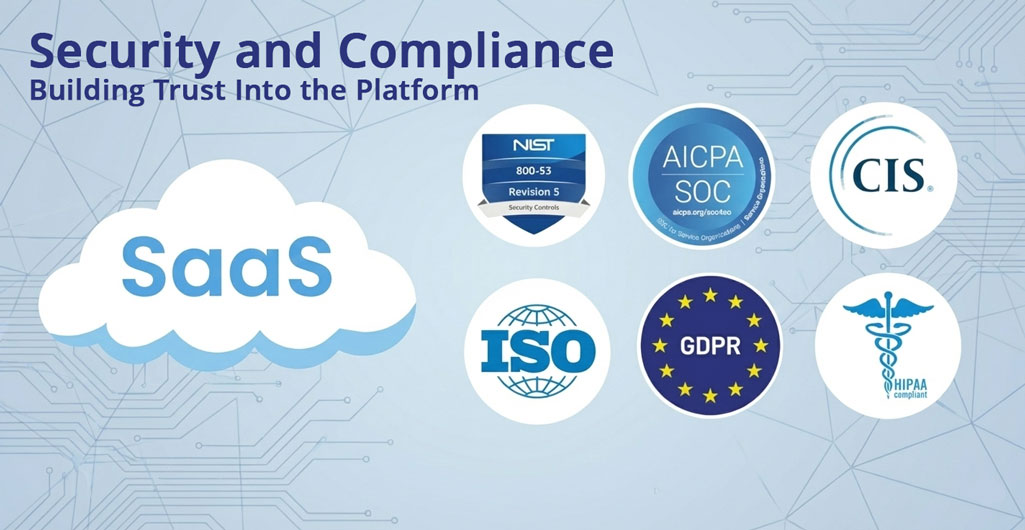
Security and Compliance: Building Trust Into the Platform

Security is no longer a “feature.” It is part of the product’s value proposition.
Agencies must assume that clients—especially mid-market and enterprise customers—will ask about:
- Data encryption (at rest and in transit)
- Authentication standards (OAuth, MFA)
- Secure hosting practices
- Backup and recovery policies
While agencies are not expected to be security experts, their SaaS dev outsourcing agency must be.
The role of the partner is to:
- Embed security best practices by default
- Document them clearly
- Support compliance-aligned architectures (GDPR-ready, SOC-aligned designs)
This enables agencies to sell SaaS with confidence rather than hesitation.
Scalability Planning Beyond the MVP Stage
A common failure pattern in agency-led SaaS products is success-driven collapse.
The platform works for 10 clients.
Then performance degrades at 50.
At 100, stability becomes unpredictable.
Scalability must be planned before it is needed.
A forward-thinking whitelabel SaaS development partner considers:
- Load testing and performance benchmarks
- Modular service design
- Horizontal scaling strategies
- Database optimisation
- Infrastructure monitoring
This ensures that growth becomes an operational advantage—not a liability.
Tech Stack Flexibility and Future-Proofing
Technology evolves quickly. SaaS platforms must adapt.
Rigid, tightly coupled stacks create long-term risk. Agencies should prioritise partners who:
- Design API-first architectures
- Use modular, replaceable components
- Support modern frameworks without lock-in
- Document systems thoroughly
This flexibility allows:
- Easier integration with third-party tools
- Faster feature development
- Smoother team transitions if needed
A whitelabel SaaS development partner that prioritises future-proofing protects the agency’s investment long after the initial build.
Why “It Works” Is Not Enough for SaaS
In project work, “it works” is often sufficient.
In SaaS, “it works” is merely the starting point.
Agencies must consider:
- How the platform behaves under load
- How quickly bugs can be resolved
- How safely updates can be deployed
- How easily new features can be added
This is where many generic vendors fall short. They optimise for delivery completion rather than long-term operability.
A SaaS-minded partner optimises for:
- Stability
- Maintainability
- Observability
- Continuous improvement
The Hidden Role of DevOps and Infrastructure Management
Behind every reliable SaaS product is invisible infrastructure work.
This includes:
- Deployment pipelines
- Monitoring and alerting
- Automated backups
- Rollback mechanisms
- Environment management
Agencies rarely want to own this responsibility internally—and they shouldn’t have to.
A mature whitelabel SaaS development partner includes DevOps as part of the engagement, not as an afterthought or upsell.
Why Technical Confidence Enables Better Selling
When agencies understand—at a high level—how their SaaS product is built, they sell it more confidently.
They can answer client questions about:
- Security
- Scalability
- Reliability
- Longevity
This confidence translates into higher deal sizes, longer contracts, and stronger client relationships.
The role of the partner is not just to build the product—but to enable the agency to own the narrative around it.
Outsourcing SaaS Development to India in 2025: Why the Right Partner Changes the Equation
Why Outsourcing Still Carries Skepticism — and Why That View Is Outdated
For many agency leaders in the USA, UK, Canada, Australia, and New Zealand, outsourcing still triggers mixed reactions.
Earlier generations of offshore outsourcing often delivered inconsistent quality, communication friction, and limited accountability. Those experiences left a lasting impression—and a justified one.
However, the global SaaS landscape has changed dramatically.
Today, the question is no longer whether agencies should outsource SaaS development—but how to do it in a way that strengthens the business rather than introducing risk.
This is where the distinction between transactional outsourcing and partnering with a whitelabel SaaS development partner becomes critical.
India’s Evolution: From Cost Center to SaaS Engineering Hub
India is no longer simply a destination for low-cost development. It is one of the world’s most mature SaaS engineering ecosystems.
According to NASSCOM:
- India hosts 7,000+ SaaS companies
- Indian SaaS firms serve customers in over 150 countries
- The ecosystem produces more than 1.5 million engineering graduates annually
Many global SaaS platforms—across fintech, martech, healthtech, and enterprise software—are built and scaled by Indian engineering teams operating at world-class standards.
For agencies, this means access to depth, scale, and experience that is increasingly difficult to replicate locally.
Talent Density and Delivery Velocity
One of India’s most underappreciated advantages is talent density.
In practical terms:
- SaaS architects are easier to source
- Teams often have multi-product experience
- Engineering turnover is lower within structured firms
- DevOps and cloud expertise is widely available
This density enables faster iteration cycles and more predictable delivery.
A capable SaaS dev outsourcing agency in India can often deliver in weeks what would take months in Western markets—not by cutting corners, but by operating with focused, specialised teams.
Cost Efficiency Without Compromising Quality
Cost efficiency remains a real advantage—but it is no longer the primary one.
A senior SaaS engineer in India typically costs 40–60% less than their Western counterpart. However, the true value lies in what agencies can do with that efficiency:
- Build MVPs without massive upfront investment
- Iterate more aggressively based on feedback
- Scale engineering capacity without internal disruption
When paired with the right governance model, cost efficiency becomes a growth enabler rather than a risk factor.
Why Pure Offshore Models Still Fail
Despite India’s strengths, pure offshore models often disappoint agencies.
Common failure points include:
- Communication gaps
- Misaligned expectations
- Lack of transparency
- Inconsistent accountability
These issues are not about geography—they are about governance.
Agencies operating in Western markets require:
- Clear documentation
- Predictable sprint cycles
- Outcome-oriented reporting
- Cultural alignment around quality and ownership
This is where hybrid delivery models outperform traditional offshore setups.
The Hybrid Model: Where Strategy Meets Execution
A hybrid whitelabel SaaS development partner combines:
- Offshore engineering scale (India)
- Western-aligned project management and governance
- Structured communication and documentation
- Clear escalation and accountability paths
This model bridges the trust gap that historically plagued outsourcing.
From an agency’s perspective, it feels less like outsourcing and more like extending an internal team—without the overhead.
Time-Zone Leverage: The Hidden Advantage Agencies Underuse
One of the most practical benefits of working with Indian teams is time-zone leverage.
When structured correctly:
- Work progresses while Western teams are offline
- Feedback loops accelerate
- Release cycles shorten
- Bottlenecks resolve faster
This “follow-the-sun” model is particularly powerful in SaaS development, where iteration speed directly impacts product success.
A mature whitelabel SaaS development partner designs workflows to take advantage of this rather than fighting it.
Risk Mitigation Through Specialisation
Agencies often fear that outsourcing increases risk. In reality, the opposite is true when partnering with specialists.
Specialised SaaS partners:
- Have battle-tested architectures
- Follow established security practices
- Anticipate scaling challenges
- Maintain institutional knowledge beyond individuals
This reduces dependency on single hires and protects agencies from internal attrition shocks.
Why India + Hybrid Governance Works for Western Agencies
For agencies in the US, UK, CA, AU, and NZ, the optimal model is clear:
- India for engineering depth and velocity
- Hybrid governance for communication and trust
- White-label engagement for brand protection
This combination allows agencies to compete at a level that would otherwise require enterprise-scale resources.
How Agencies Should Evaluate a Whitelabel SaaS Development Partner (and Avoid Costly Mistakes)
Why Partner Selection Is the Highest-Risk Decision in SaaS Productisation
For agencies pursuing SaaS-led growth, few decisions carry more long-term risk than choosing the wrong development partner.
Ideas can pivot. Features can change. Pricing models can be refined.
But a poorly chosen whitelabel SaaS development partner can lock an agency into architectural debt, delivery instability, and vendor dependency that is difficult—and expensive—to unwind.
Most SaaS failures in agency environments are not caused by bad product ideas. They stem from misaligned partnerships chosen too quickly, evaluated too shallowly, or framed as cost-saving exercises rather than strategic relationships.
This section provides a practical, agency-first framework to evaluate partners with clarity and confidence.
The Core Question Agencies Must Ask First
Before comparing vendors, agencies should ask one foundational question:
“Is this partner built to help agencies run SaaS businesses—or just to deliver software?”
The difference is subtle, but decisive.
A SaaS business requires:
- Lifecycle ownership
- Ongoing iteration
- Security and scalability discipline
- Predictable governance
- Long-term alignment
A vendor that optimises for project completion will inevitably fall short once the product enters active use.
The Agency-Focused Partner Evaluation Framework
Agencies should assess potential partners across five critical dimensions.
1. SaaS Product Maturity (Not Just Technical Skill)
Ask:
- How many multi-tenant SaaS platforms has the team built?
- Have they scaled products beyond MVP?
- Do they understand subscription models, user tiers, and usage-based logic?
A qualified whitelabel SaaS development partner should speak fluently about:
- Tenant onboarding
- Feature flagging
- Backward compatibility
- Product evolution
If discussions remain limited to frameworks and tools, that’s a warning sign.
2. White-Label Readiness and Confidentiality
White-label SaaS requires more than NDAs.
Agencies should confirm:
- The partner never interacts with end clients
- Branding and positioning are fully agency-controlled
- No reuse of proprietary IP without explicit permission
- Clear policies around confidentiality and non-compete
Partners that also sell SaaS directly to the same markets introduce structural conflicts.
3. Governance, Communication, and Accountability
Delivery success depends heavily on governance.
Agencies should evaluate:
- Sprint planning and reporting cadence
- Documentation standards
- Escalation paths
- Ownership clarity
A reliable SaaS dev outsourcing agency provides transparency by default—not only when asked.
If progress updates feel reactive or inconsistent during sales conversations, they will worsen post-engagement.
4. Scalability and Continuity Planning
Agencies must plan for success—not just launch.
Ask:
- How do teams scale as adoption grows?
- What happens if key engineers leave?
- How is knowledge documented and transferred?
- Can capacity expand without disrupting delivery?
Partners built around individuals rather than systems introduce operational fragility.
5. IP Ownership, Flexibility, and Exit Safety
From day one, agencies should protect future optionality.
Confirm:
- Full ownership of source code
- Freedom to modify or transition if needed
- Clean handover processes
- No hidden dependencies on proprietary frameworks
These factors significantly affect valuation and acquisition readiness.
The Most Common Red Flags Agencies Overlook
Many warning signs appear early—but are often ignored due to excitement or time pressure.
Key red flags include:
- Overpromising speed without architectural clarity
- Vague answers about security and data isolation
- Reluctance to document systems
- Fixed-scope contracts that discourage iteration
- Heavy reliance on one or two senior developers
Any of these should prompt deeper scrutiny.
Transactional Vendors vs Long-Term Partners
Not all vendors are meant to be partners—and that’s okay.
Transactional vendors:
- Optimise for short-term delivery
- Focus on scope completion
- Minimise involvement post-launch
Long-term whitelabel SaaS development partners:
- Invest in product thinking
- Anticipate scaling challenges
- Align incentives with agency growth
- View success as ongoing, not contractual
For agencies building SaaS as a strategic pillar, only the second category is viable.
Why Agencies Often Fail at This Stage
Despite best intentions, agencies commonly:
- Prioritise cost over capability
- Rush selection to meet client timelines
- Underestimate governance importance
- Assume SaaS is “just another build”
These mistakes compound over time.
The cost of switching partners six or twelve months in is significantly higher than getting the decision right upfront.
Setting the Foundation for Sustainable Partnership
A strong whitelabel SaaS development partner should feel less like an external supplier and more like an embedded capability.
When evaluation is done properly, agencies gain:
- Confidence in delivery
- Reduced execution risk
- Faster time to market
- Long-term strategic leverage
Why Bantech Solutions Fits the Partner Profile Modern Agencies Actually Need
Positioning Matters: Why This Is About Fit, Not Superiority
Not every SaaS development company is right for every agency.
Some vendors are optimised for startups.
Others focus on enterprise IT projects.
Many chase volume across unrelated industries.
Bantech Solutions is deliberately structured for one audience only: digital agencies that want to build, own, and scale SaaS products under their own brand.
That focus shapes everything—from engagement models and governance to how success is defined.
This section does not attempt to “sell” Bantech. Instead, it maps how Bantech’s operating model aligns with the evaluation framework agencies should already be using.
Agency-Only, White-Label by Design
Bantech Solutions operates on a strict agency-only, white-label engagement model.
This means:
- No direct-to-market SaaS products
- No competing client relationships
- No exposure to end customers
- No dilution of agency brand ownership
For agencies, this removes a major structural risk that exists with many SaaS vendors: conflict of interest.
Bantech’s success is directly tied to the agency’s success. There is no parallel incentive to prioritise internal products or alternative revenue streams.
This alignment is foundational—not contractual.
SaaS Product Thinking, Not Project Delivery Mentality
One of the most consistent failure points in white-label SaaS initiatives is the “project mindset”—vendors optimising for delivery milestones rather than product health.
Bantech operates with a product lifecycle orientation, which includes:
- Discovery and validation support
- MVP scoping with scalability in mind
- Architecture decisions aligned to long-term growth
- Continuous iteration post-launch
This approach reflects a clear understanding that SaaS is never finished. It evolves, compounds, and requires sustained engineering discipline.
Agencies benefit because they are not forced to reframe expectations midstream—SaaS realities are built into the engagement from day one.
Hybrid Governance: The Practical Middle Ground Agencies Need
Bantech’s delivery model combines:
- Indian SaaS engineering depth
- Western-aligned governance and communication standards
This hybrid approach addresses the two most common agency concerns with outsourcing:
- Loss of visibility
- Loss of control
In practice, this means:
- Clear sprint planning and reporting
- Documented architecture and decisions
- Predictable delivery cycles
- Transparent ownership and escalation paths
Agencies remain in control of product direction, while engineering execution scales efficiently behind the scenes.
Technical Discipline Without Overengineering
Bantech’s SaaS delivery philosophy is pragmatic rather than theoretical.
Key principles include:
- Multi-tenant architecture designed upfront
- Security and data isolation treated as defaults
- Cloud-native scalability planning
- API-first, integration-ready systems
- Avoidance of unnecessary proprietary lock-in
This balance matters.
Overengineering slows time to market.
Underengineering creates future risk.
Bantech’s value lies in engineering restraint—building what is necessary today without limiting what becomes possible tomorrow.
Continuity, Not Dependency
A critical but often overlooked factor in SaaS partnerships is continuity.
Agencies should never be dependent on:
- A single developer
- Undocumented systems
- Unclear handover processes
Bantech mitigates this by:
- Structuring delivery around teams, not individuals
- Maintaining documentation as a standard practice
- Ensuring knowledge transfer is continuous, not reactive
This reduces operational fragility and improves long-term optionality—important for agencies considering future exits or internalisation.
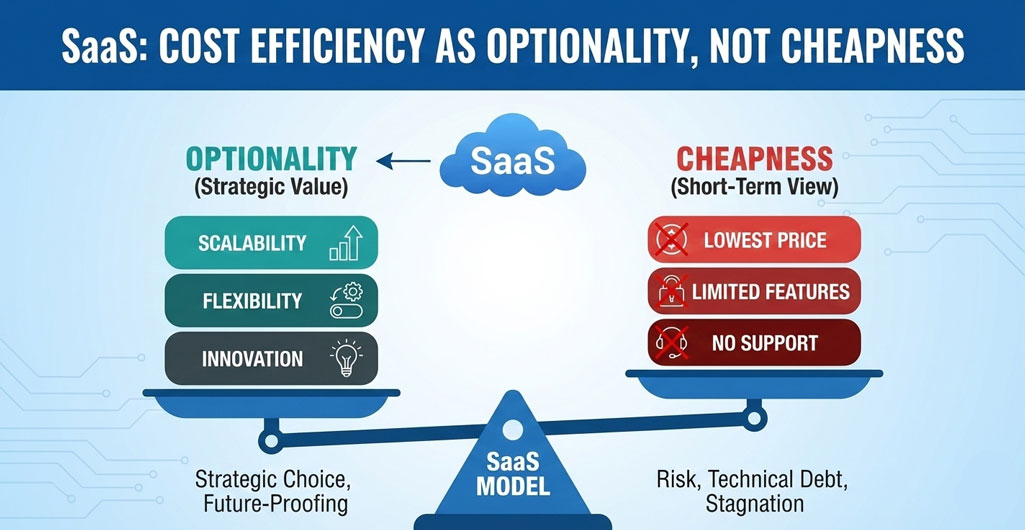
Cost Efficiency Framed as Optionality, Not Cheapness
While cost efficiency is a reality of offshore delivery, Bantech does not position itself as a low-cost vendor.
Instead, cost efficiency is framed as strategic optionality:
- The ability to test SaaS ideas without overcommitting capital
- The freedom to iterate aggressively based on real usage
- The flexibility to scale engineering capacity without internal disruption
This reframing is important. Agencies are not outsourcing to save money—they are outsourcing to allocate resources more intelligently.
Comparison Snapshot: Bantech vs Typical SaaS Vendors
| Dimension | Bantech Solutions | Typical SaaS Vendor |
|---|
| Target Audience | Agencies only | Mixed (startups, enterprises, agencies) |
| Engagement Model | 100% white-label | Often partially white-label |
| Product Mindset | SaaS lifecycle-focused | Project delivery-focused |
| Governance | Hybrid, Western-aligned | Offshore-only or inconsistent |
| IP Ownership | Fully agency-owned | Often unclear or restrictive |
| Long-Term Alignment | Built-in | Transactional |
This comparison highlights why fit matters more than features.
Why Long-Term Partnerships Outperform Short-Term Wins
Agencies that succeed with SaaS rarely treat development as a one-off initiative.
They:
- Build roadmaps instead of feature lists
- Invest in platforms, not just products
- Choose partners who grow with them
Bantech’s operating model supports this long-term view. Engagements are structured to evolve, not reset every quarter.
This continuity reduces friction, improves velocity, and compounds institutional knowledge over time.
Conclusion
From Service Providers to Platform Owners: The Strategic Role of the Right Partner
The shift from services to SaaS is not a trend—it is a structural evolution in how agencies create value.
Agencies that remain purely project-driven will continue to face:
- Margin pressure
- Talent constraints
- Growth ceilings
- Lower valuation multiples
Agencies that successfully introduce SaaS gain:
- Recurring revenue
- Stronger client retention
- Non-linear growth
- Strategic optionality
But SaaS success is not determined by ideas alone. It is determined by execution, architecture, governance, and partnership choices.
A whitelabel SaaS development partner is not a vendor decision.
It is a strategic decision that shapes speed, risk, and long-term outcomes.
By combining:
- Agency-only focus
- White-label discipline
- SaaS-first engineering
- Hybrid governance
- Long-term alignment
Bantech Solutions positions itself as a partner for agencies that want to build platforms—not just deliver projects.
For agencies ready to move from client work to product ownership, the right partner doesn’t just help you build SaaS.
They help you become a different kind of agency.
Understanding White Label SaaS Development: A Complete Guide for Agencies
White label SaaS development is one of the most transformative approaches available to digital agencies, technology consultancies, and growth-focused businesses looking to expand their service offering without the time, cost, or risk of building software from the ground up. Despite its growing popularity, the term is frequently misunderstood, misapplied, or conflated with simpler reseller arrangements. This guide provides a clear, authoritative explanation of what white label SaaS development actually means, how it works in practice, and why it has become the default execution model for agencies operating across the USA, UK, Canada, Australia, and New Zealand.
The Core Definition
At its most fundamental level, white label SaaS development refers to the process of commissioning or licensing a software-as-a-service product that is built, maintained, and supported by a third-party development partner, but branded, sold, and managed entirely under the commissioning agency’s own name and identity. The end client — the agency’s customer — never sees, knows, or interacts with the underlying development partner. From the client’s perspective, the software belongs to the agency.
The word ‘white label’ originates from the manufacturing industry, where products were produced by one company and labelled by another before reaching consumers. In the SaaS context, the principle is the same: a technically capable partner builds the product; the agency owns the customer relationship, the brand, and the commercial value.
How White Label SaaS Development Actually Works
In a typical white label SaaS engagement, the agency identifies a software product opportunity — this might be a niche automation tool, a client-facing reporting dashboard, an industry-specific platform, or a workflow management system. Rather than attempting to hire developers internally or build capability from scratch, the agency engages a specialist white label SaaS development partner to design, architect, and build the product.
The development partner operates entirely in the background. All client-facing elements — the domain, the branding, the UI language, the support communications, and the product naming — are controlled and owned by the agency. The partner handles the engineering, infrastructure, security, and ongoing product evolution, while the agency focuses on positioning, selling, and growing the product with its existing client base.
This model is distinct from simply reselling someone else’s existing SaaS platform. In true white label SaaS development, the product is purpose-built for the agency’s specific use case and target audience. The agency retains full intellectual property ownership and is not dependent on a third-party vendor’s product roadmap or pricing decisions.
Why It Is Different From Traditional Outsourcing
Many agencies confuse white label SaaS development with standard software outsourcing. While there is overlap, the differences are critical. Traditional outsourcing typically involves commissioning a team to complete a defined project — building a website, developing an application, or delivering a specific feature set. Once the project is delivered, the engagement often concludes.
White label SaaS development is a long-term, lifecycle-oriented engagement. SaaS products are never truly finished. They require ongoing iteration, infrastructure management, security updates, performance optimisation, and feature development in response to user feedback. A genuine white label SaaS development partner takes responsibility not just for the initial build, but for the product’s continuous evolution over time.
Additionally, white label SaaS development demands a specific type of architectural expertise. Multi-tenant SaaS systems — where a single platform serves multiple clients simultaneously — require fundamentally different design thinking than project-based applications. Security, data isolation, scalability, and role-based access control must all be planned and built from the start, not retrofitted later.
The Commercial Logic for Agencies
The appeal of white label SaaS development for agencies is rooted in a simple but powerful commercial shift: the move from linear, project-based revenue to recurring, scalable income. Traditional agency revenue grows proportionally with headcount. More clients require more people. Margins compress over time, and growth eventually plateaus.
SaaS-based revenue operates differently. Once a product is built and a client is subscribed, the incremental cost of serving that client each month is minimal. As the subscriber base grows, revenue compounds without a corresponding increase in delivery overhead. This non-linear growth model is what attracts agencies to SaaS, and white label development is the mechanism that makes it operationally achievable.
Industry data consistently supports this transition. SaaS Capital benchmarks show that businesses with recurring revenue grow significantly faster than services-only counterparts. Acquisition multiples for SaaS-enabled agencies are routinely two to three times higher than for pure services firms. These outcomes are available to agencies of all sizes — provided the SaaS execution model is sound.
What White Label SaaS Development Requires to Succeed
Successfully deploying white label SaaS requires more than selecting a development vendor and waiting for delivery. Several foundational elements must be in place for the model to generate lasting value.
First, the agency must retain clear intellectual property ownership from day one. This means ensuring that source code, architecture documentation, and all product assets are owned by the agency — not licensed, borrowed, or held by the development partner. Without this clarity, the agency’s ability to grow, exit, or evolve the product is constrained.
Second, the development partner must operate with a genuine white label orientation. This sounds obvious but is frequently violated in practice. Partners that also sell competing SaaS products directly to the market, or that interact with the agency’s clients without authorisation, undermine the agency’s brand position and create structural conflicts.
Third, the product must be built on scalable, secure, multi-tenant architecture. A product that works for ten clients but degrades at fifty is not a viable SaaS business. Architecture decisions made at the MVP stage have long-lasting implications for the product’s commercial ceiling.
Fourth, the engagement must be governed with the same discipline applied to internal projects. Clear sprint cycles, documented delivery, transparent ownership, and consistent communication are not optional luxuries — they are the governance infrastructure that prevents white label engagements from drifting into ambiguity and delay.
Common Misconceptions About White Label SaaS Development
A number of persistent misconceptions cloud agency decision-making in this area. The most common is the belief that white label SaaS development is inherently lower quality than in-house development. In reality, specialist white label partners often outperform in-house teams in SaaS contexts, precisely because SaaS engineering is their core discipline rather than a secondary capability.
Another misconception is that white label SaaS development is only accessible to large agencies. In practice, the model is particularly well-suited to boutique and mid-sized agencies, where the cost of in-house SaaS capability would be prohibitive. White label development democratises access to product-led revenue for agencies at any scale.
A third misconception relates to speed. Some agency leaders assume that white label SaaS development will be slow because it involves an external partner. In practice, competent white label partners with mature delivery infrastructure often bring products to MVP in eight to sixteen weeks — significantly faster than most agencies could achieve internally.
The Strategic Significance of the Partner Choice
Ultimately, white label SaaS development is only as effective as the partner executing it. The development partner’s capabilities determine product quality, architectural soundness, delivery speed, and long-term scalability. Choosing the wrong partner does not just delay the product — it introduces technical debt, brand risk, and operational fragility that can take years to unwind.
For agencies serious about building SaaS as a strategic asset, the partner selection decision deserves the same rigour applied to any major business investment. The right partner operates invisibly, builds with architectural integrity, governs with Western-aligned discipline, and aligns incentives with the agency’s long-term growth rather than short-term contract value.
White label SaaS development, executed correctly, allows agencies to compete at a level previously available only to venture-backed software companies. It is not a shortcut — it is a strategic model that, when implemented with the right partner, transforms how agencies create and capture value in an increasingly software-driven market.
White Label vs Private Label SaaS: Understanding the Difference and Choosing the Right Model
For agencies and businesses exploring SaaS as a growth strategy, few distinctions cause more confusion than the difference between white label and private label SaaS. The two terms are regularly used interchangeably in marketing materials, vendor pitches, and industry content — yet they describe meaningfully different arrangements with very different implications for ownership, customisation, control, and long-term value.
Understanding this distinction is not merely academic. Choosing the wrong model can limit product differentiation, constrain commercial growth, and introduce dependency risks that undermine the entire SaaS initiative. This article provides a clear, practical comparison to help agencies make an informed decision.
Starting With the Basics: What Both Models Share
Before exploring the differences, it is useful to acknowledge what white label and private label SaaS have in common. Both models allow a business — typically an agency, consultancy, or reseller — to offer software under their own brand without building it from scratch. In both cases, the underlying technology is developed by a third party, and the end client interacts with the reseller’s branded experience rather than the original vendor’s.
Both models emerged from the same commercial logic: the recognition that brand ownership and distribution capability are often more valuable than engineering capacity, and that there is significant market demand for allowing technology to be repackaged and resold by parties other than its original developers. However, the depth, flexibility, and strategic implications of the two models diverge significantly.
What White Label SaaS Actually Means
White label SaaS, in its truest form, refers to software that has been purpose-built or significantly customised for a specific reseller, under a full brand transfer model. The reseller — typically an agency — owns the product’s identity entirely. The original development partner is invisible to end users, has no claim on the product’s commercial value, and typically operates under strict confidentiality agreements.
Crucially, genuine white label SaaS development gives the agency full intellectual property ownership over the product. This means the agency controls the roadmap, retains all source code, and can evolve, expand, or even migrate the product to a different technical partner without restriction. The development partner builds the product on the agency’s behalf, but the product belongs to the agency in every meaningful commercial and legal sense.
In the context of a white label SaaS development partner engagement, the agency is not buying access to someone else’s platform — it is commissioning the creation of its own platform, built under its own brand, with full ownership rights. This distinction is critical for valuation, acquisition readiness, and long-term strategic independence.
What Private Label SaaS Actually Means
Private label SaaS, by contrast, typically refers to a licensing or reseller arrangement in which an existing, fully developed SaaS platform is made available to resellers under their own branding. The underlying product belongs to the original vendor. The reseller can apply their logo, choose a custom domain, and sometimes adjust certain UI elements — but they do not own the product, control the roadmap, or hold any intellectual property rights.
In a private label arrangement, the reseller is essentially a distributor with branding rights. If the original vendor changes pricing, discontinues a feature, or modifies the product in ways that do not serve the reseller’s client base, the reseller has limited recourse. The product’s commercial ceiling is defined by the vendor’s roadmap, not the reseller’s ambition.
Private label SaaS is faster to market than true white label development, and it requires no upfront engineering investment. For agencies that simply want to add a new revenue stream quickly and are not concerned about deep differentiation or long-term product ownership, it can be a pragmatic choice. However, it comes with structural limitations that become increasingly problematic as the product grows in commercial significance.
Comparing Ownership and Intellectual Property
Ownership is the most fundamental axis of difference between the two models. In white label SaaS development, the agency owns the product. In private label SaaS, the agency licenses the product. This distinction has profound implications across several dimensions.
From a valuation perspective, owned SaaS products are treated very differently from licensed reseller arrangements. When a business is acquired or seeks investment, the presence of owned intellectual property — code, architecture, product assets — is a primary driver of value. A private label arrangement, where the product can be revoked or disrupted by the original vendor, does not generate the same acquisition premium.
From a client trust perspective, owning the product allows agencies to make unconditional commitments about its future. They can commit to features, security standards, and roadmap directions with full authority. In a private label arrangement, the agency is making commitments on behalf of a vendor they do not control — a position that becomes uncomfortable as client relationships deepen.
Customisation: Depth and Flexibility
White label SaaS development offers unlimited customisation by definition, since the agency commissions the product and owns every line of code. The user experience, feature set, pricing logic, integration capabilities, and product architecture can all be designed to serve the agency’s specific market niche. Differentiation is genuine and defensible.
Private label SaaS customisation is constrained by what the original vendor permits. Typically, resellers can modify branding elements — logos, colour schemes, domain names, and sometimes UI text — but cannot alter core functionality, pricing structures, or system architecture. This means every competing reseller of the same private label platform offers essentially the same product, making market differentiation dependent entirely on sales and service rather than product capability.
For agencies with deep domain expertise and a specific client base, this customisation gap matters enormously. A white label SaaS product built for a specific niche — say, a legal workflow platform for mid-market firms, or a reporting tool for e-commerce agencies — can be differentiated in ways that a generic private label platform simply cannot replicate.
Speed to Market and Upfront Investment
The clearest advantage of private label SaaS is speed. Because the product already exists, a reseller can go to market in days or weeks, with minimal upfront investment beyond licensing fees. This makes it appealing for agencies that want to test SaaS revenue before committing to a full development programme.
White label SaaS development requires more time and investment at the outset. A well-scoped MVP built by a competent white label SaaS development partner typically takes eight to sixteen weeks to deliver, and requires investment in discovery, architecture, and initial development. However, this investment yields a fundamentally different type of asset: one that the agency owns outright and can grow without constraint.
For agencies approaching SaaS as a long-term strategic pillar rather than a short-term revenue experiment, the white label development model almost always delivers superior returns over a three to five year horizon, despite higher initial investment.
Which Model Is Right for Your Agency?
The right choice depends on the agency’s strategic intent, risk tolerance, and time horizon. Agencies that want to test SaaS as a concept, generate quick revenue, and are not yet committed to building a proprietary product may find private label arrangements a sensible starting point. However, they should enter these arrangements with clear awareness of the limitations.
Agencies that view SaaS as a core growth pillar — a product that will drive recurring revenue, strengthen client relationships, and increase long-term valuation — should pursue white label SaaS development. The investment is greater and the timeline is longer, but the resulting asset is genuinely owned, genuinely differentiated, and genuinely scalable.
For many agencies, the progression follows a predictable path: private label for quick validation, followed by white label development once the market opportunity has been confirmed. The key is to avoid treating private label revenue as a permanent substitute for owned product development — a trap that can limit agency growth for years.
How SaaS Development Outsourcing Works for Agencies: A Practical Guide
Outsourcing SaaS development is increasingly common among digital agencies across the USA, UK, Canada, Australia, and New Zealand — yet the mechanics of how it actually works remain poorly understood by many agency leaders. The result is that agencies either underestimate what outsourcing can deliver, or they engage vendors without the structure needed to protect quality, ownership, and delivery reliability. This guide explains the practical process of SaaS development outsourcing for agencies, from initial engagement through to long-term product management.
Why Agencies Outsource SaaS Development
The core reason agencies outsource SaaS development is the gap between SaaS ambition and internal capability. Building a production-grade SaaS product requires a specific set of engineering disciplines — multi-tenant architecture, cloud infrastructure management, security-aware development, DevOps, and continuous iteration — that most agencies are not structured to maintain internally.
Hiring even a lean internal SaaS team in Western markets can cost between $500,000 and $800,000 per year in salaries alone, before accounting for management overhead, attrition risk, and the time required to recruit and onboard senior engineers. For most agencies, this investment cannot be justified until SaaS revenue is already generating substantial returns — creating a catch-22 that outsourcing is specifically designed to resolve.
By outsourcing SaaS development to a specialist partner, agencies gain immediate access to teams with the required capabilities, without the fixed overhead of in-house hiring. The engagement can scale up or down based on product stage and investment appetite, and the agency retains focus on its core strengths: client relationships, market positioning, and commercial growth.
The Typical SaaS Development Outsourcing Engagement
A well-structured SaaS development outsourcing engagement typically follows a series of distinct phases, each with specific objectives and deliverables.
The first phase is discovery and scoping. Before any code is written, the agency and development partner work together to define the product concept, identify target users, map core workflows, and establish technical requirements. This phase should also clarify the commercial model — subscription pricing, user tiers, feature gating — since these have direct implications for how the platform is architected. Discovery typically takes two to four weeks and produces a product brief, a technical specification, and a development roadmap.
The second phase is architecture design. This is where the technical foundations of the SaaS product are established. A qualified SaaS dev outsourcing agency will design a multi-tenant architecture that separates client data, manages user permissions, and supports scalable growth from the outset. Architecture decisions made here have long-lasting implications; shortcuts taken to accelerate delivery often result in expensive rearchitecting six to twelve months later.
The third phase is MVP development. The minimum viable product is the first deployable version of the SaaS platform — typically containing the core features required to validate the product concept with real users. A competent white label SaaS development partner will scope the MVP to be as lean as possible without compromising architectural integrity. MVP delivery typically takes eight to sixteen weeks, depending on complexity.
The fourth phase is iteration and growth. After the MVP launches, the product enters a continuous improvement cycle. Usage data, client feedback, and market signals drive feature prioritisation. The development partner manages infrastructure scaling, security updates, and new feature development in regular sprint cycles. This phase is ongoing for as long as the product remains in operation.
Governance: The Invisible Factor That Determines Success
Governance is the element most frequently underestimated in SaaS development outsourcing engagements. Even agencies with strong development partners have experienced poor outcomes because the governance structure was insufficiently defined.
Effective governance in a SaaS outsourcing engagement includes several components. Sprint planning and review cycles establish a predictable delivery rhythm. Typically, sprints run in two-week intervals, with each sprint beginning with a planning session to define deliverables and ending with a review and retrospective. This cadence creates accountability and prevents the delivery drift that plagues poorly structured outsourcing relationships.
Documentation standards determine whether the agency retains operational independence throughout the engagement. All architectural decisions, system designs, API specifications, and infrastructure configurations should be documented in a format the agency can access and understand without the development partner’s involvement. This is critical for knowledge continuity and for future transitions if the partnership changes.
Reporting and transparency expectations define how progress is communicated. Agencies should expect regular written updates, access to project management tools, and clear visibility into what has been built, what is in progress, and what is planned. Partners that operate in opacity — providing updates only when prompted — introduce unnecessary risk.
IP Ownership and Contractual Protections
Intellectual property ownership must be established clearly before development begins. A white label SaaS development partner should transfer all source code ownership to the agency on an ongoing basis — not at the end of a contract period, but throughout the engagement. The agency should be able to access repositories at any time and, if necessary, engage a different development partner to continue development.
The engagement contract should also address non-compete provisions to ensure the development partner is not building competing products for the agency’s direct competitors. Confidentiality obligations should extend to all information shared during the engagement, including the agency’s client relationships, product plans, and commercial strategies.
Data protection agreements are increasingly important for agencies operating in markets with strict privacy regulations. The development partner’s infrastructure choices, data handling practices, and security protocols should align with the compliance requirements relevant to the agency’s client base — whether that involves GDPR in the UK and EU, PIPEDA in Canada, or other applicable frameworks.
Common Pitfalls to Avoid
Several recurring mistakes undermine SaaS development outsourcing engagements for agencies. The most damaging is choosing a development partner based primarily on price. Cost efficiency is a genuine benefit of outsourcing, but a partner selected on price alone will typically optimise for delivery speed at the expense of architectural quality. The resulting product may function adequately at launch but will create significant technical debt as the product scales.
Another common pitfall is failing to define ownership clearly upfront. Agencies that assume ownership will be straightforward without explicitly addressing it in contracts frequently discover ambiguity when they attempt to scale, exit, or transition the product. The time to address ownership is before development begins, not after a dispute arises.
Underestimating the importance of cultural and communication alignment is a third significant pitfall. Development partners that are technically capable but poorly aligned in communication style, reporting expectations, and professional standards create ongoing friction that compounds over time. A development partner’s governance maturity is as important as their technical skills.
Why the Right Partner Makes Outsourcing Transformative
When structured correctly, SaaS development outsourcing is not a compromise or a temporary measure — it is a strategic model that enables agencies to compete with SaaS companies that have raised millions in venture capital. By accessing world-class engineering capability without the overhead of in-house teams, agencies can bring products to market faster, iterate more aggressively, and scale more confidently.
The key variable is partner quality. A mature, agency-focused SaaS development outsourcing partner brings not just technical execution but product thinking, governance discipline, and long-term alignment. These qualities are what separate transformative outsourcing engagements from disappointing ones — and they should be the primary criteria in any partner evaluation process.
What Is Multi-Tenant SaaS Architecture and Why Does It Matter for Agencies?
If there is one technical concept that every agency leader engaged in SaaS development needs to understand — even at a high level — it is multi-tenancy. Multi-tenant SaaS architecture is not a technical preference or a stylistic choice; it is the architectural foundation that determines whether a SaaS product can grow, scale, and operate securely as a real commercial platform. Understanding what it is and why it matters allows agencies to ask better questions of their development partners, make more informed investment decisions, and avoid the costly pitfall of discovering architectural inadequacy after the product is already in the market.
The Plain-Language Definition
Multi-tenant SaaS architecture is a software design model in which a single instance of an application — one codebase, one database infrastructure, one deployment — serves multiple clients simultaneously. Each client, referred to as a tenant, operates within their own isolated environment on the platform. Their data, users, configurations, and workflows remain completely separate from those of every other tenant, even though they are sharing the same underlying system.
The contrast to this model is single-tenant architecture, where each client has their own dedicated instance of the application. In a single-tenant model, if you have fifty clients, you have fifty separate applications to maintain, update, monitor, and secure. The operational overhead scales linearly with the number of clients, making it increasingly expensive and complex as the platform grows.
Multi-tenancy allows one platform to serve many clients simultaneously, with the same update deployed once and received by all tenants, the same security patches applied universally, and the same infrastructure supporting the entire client base. This is the operational model that makes SaaS economically viable at scale.
How Multi-Tenancy Works in Practice
At the architecture level, multi-tenancy requires deliberate design decisions at every layer of the system. The database must be structured to ensure that each tenant’s data is logically separated — this can be achieved through shared schemas with tenant identifiers, separate schemas per tenant within a shared database, or entirely separate databases per tenant with shared application logic. Each approach has different implications for performance, security, and operational complexity.
The application layer must enforce tenant context consistently across all requests. Every data query, every user action, and every system process must be scoped to the correct tenant — a requirement that demands careful implementation to prevent data leakage between tenants. Role-based access control must be implemented at the tenant level, ensuring that administrative users within one tenant cannot access or influence another tenant’s environment.
Authentication and session management must also be tenant-aware. Users from different tenants may share email addresses, usernames, or other identifiers, so the system must disambiguate identity within the correct tenant context at every point of interaction. Implementing this correctly requires senior engineering expertise and comprehensive testing — it is not a capability that can be assumed from a development partner without verification.
Why Multi-Tenancy Matters for Agency-Led SaaS Products
For agencies building SaaS products as commercial offerings, multi-tenancy is not optional. It is the architecture that makes the commercial model work. Consider the economics of a single-tenant approach: if each client requires a dedicated infrastructure deployment, the cost of serving each additional client increases proportionally. At ten clients, this may be manageable. At fifty, it becomes operationally burdensome. At two hundred, it is unsustainable.
Multi-tenancy inverts this cost curve. The incremental cost of adding a new tenant to a well-designed multi-tenant platform is minimal — primarily the compute and storage resources consumed by that tenant’s usage. All other costs — development, maintenance, security, and updates — are shared across the tenant base. This is why SaaS economics produce the non-linear growth curves that make SaaS companies so commercially attractive.
For agency clients specifically, multi-tenancy enables the kind of feature consistency and reliability expectations that professional buyers demand. Every client automatically receives the same update, the same security patch, and the same performance improvements — without requiring individual deployments or client-specific maintenance windows. This uniformity is a feature, not just a convenience.
Data Isolation: The Security Imperative
Perhaps the most critical dimension of multi-tenant SaaS architecture is data isolation. In any multi-tenant system, the risk exists that a misconfigured query, a software bug, or a security vulnerability could expose one tenant’s data to another. For SaaS products serving professional or enterprise clients — particularly those in regulated industries — this is not merely an operational concern. It is a reputational and legal risk that can destroy a product’s commercial viability in a single incident.
Gartner estimates that a significant proportion of SaaS security incidents originate not from external attacks but from internal architecture failures — misconfigured access controls, inadequate data isolation, and poorly implemented permission systems. This underscores the importance of treating data isolation as a first-class architectural concern rather than an afterthought.
Agencies should expect their white label SaaS development partner to clearly and specifically explain how tenant data is isolated in the platforms they build. Vague or evasive answers to this question are a serious red flag. A partner that cannot articulate their data isolation approach in plain language almost certainly cannot implement it reliably either.
Scalability and Performance at Scale
Multi-tenant architecture must also be designed for performance under load. A platform that performs well with ten tenants may degrade significantly at one hundred if the underlying architecture has not been designed with scalability in mind. Database queries that are efficient at small scale can become bottlenecks as data volumes grow. Infrastructure that is adequate for modest usage may become overwhelmed during peak periods.
A forward-thinking white label SaaS development partner designs for scale from the beginning, even when the initial deployment is small. This includes implementing appropriate indexing strategies, designing for horizontal scaling of application tiers, planning for database growth, and establishing monitoring systems that provide visibility into performance trends before they become problems.
Load testing should be a standard component of any serious SaaS development engagement. The platform should be validated not just at current scale but at projected scale — ensuring that the product can support the client’s growth ambitions without architectural intervention.
What Agencies Should Ask Their Development Partner
When evaluating a white label SaaS development partner’s multi-tenant capabilities, agencies should ask several specific questions. How does the platform separate tenant data at the database level? What happens if a misconfigured query returns data across tenant boundaries — what safeguards exist? How are tenant-specific configurations and settings managed? How does the platform perform under concurrent load from multiple tenants? How are updates deployed without disrupting active tenants?
Partners with genuine multi-tenant expertise will answer these questions specifically and confidently. Partners without this expertise will typically respond with generalities, redirect to different topics, or provide answers that reveal a limited understanding of multi-tenancy’s architectural demands. The quality of these answers is one of the most reliable indicators of a development partner’s true capability.
The Long-Term Value of Getting Architecture Right
Investing in correct multi-tenant architecture at the start of a SaaS product’s life has compounding returns. A well-architected platform is easier to maintain, cheaper to scale, simpler to secure, and more attractive to acquirers or investors during due diligence. The alternative — building a product on inadequate architecture and attempting to fix it later — is one of the most expensive and disruptive challenges a SaaS business can face.
For agency leaders, the message is straightforward: multi-tenancy is not a technical detail to be delegated and forgotten. It is a strategic foundation that determines the product’s commercial ceiling. Understanding it at a conceptual level, asking informed questions about it during partner evaluation, and insisting on proper implementation from the outset are among the most valuable decisions an agency can make in a SaaS development engagement.
The Strategic Benefits of Outsourcing SaaS Development to India for Western Agencies
For agencies in the United States, United Kingdom, Canada, Australia, and New Zealand, the question of whether to outsource SaaS development to India was once primarily a cost-saving decision. That framing has become outdated. Today, India represents one of the world’s most mature SaaS engineering ecosystems, and the agencies that have learned to leverage it strategically — rather than simply cheaply — consistently outperform those that build internally or source from local markets alone.
This article examines the genuine benefits of outsourcing SaaS development to India in 2025 and beyond, addresses the limitations and risks that honest assessment requires, and explains why the right governance model transforms an offshore engagement from a cost play into a strategic advantage.
The Scale and Maturity of India’s SaaS Engineering Ecosystem
The depth of India’s SaaS engineering community is frequently underestimated by Western agency leaders whose understanding of Indian technology services is shaped by earlier generations of outsourcing — characterised by code factories, low-complexity work, and inconsistent quality standards.
That picture is now substantially inaccurate. India’s technology sector has undergone a profound transformation over the past decade. According to NASSCOM, India is home to more than seven thousand SaaS companies, serves clients in over one hundred and fifty countries, and produces more than one and a half million engineering graduates annually. A significant proportion of global SaaS infrastructure — across fintech, healthtech, martech, e-commerce, and enterprise software — is built and maintained by Indian engineering teams operating to world-class standards.
This maturity means that agencies engaging with Indian SaaS development partners are not accessing a lower tier of engineering capability — they are accessing a specialised, competitive, and experienced talent pool that has been tested across thousands of product deployments at every stage of scale.
Talent Density: The Underappreciated Advantage
One of the most practically significant but rarely discussed benefits of India’s SaaS engineering ecosystem is talent density. In Western markets, senior SaaS architects, experienced DevOps engineers, and multi-tenant platform specialists are scarce. Recruiting for these roles can take months, and the competition for talent drives salaries to levels that are prohibitive for most agencies.
In India’s major technology hubs — Bengaluru, Hyderabad, Pune, Mumbai, and Chennai — these specialists are far more accessible. Firms that have operated in these markets for a decade or more have built teams with broad SaaS product experience across multiple industries and use cases. This multi-product exposure is particularly valuable for agencies, whose SaaS products often need to serve nuanced, industry-specific requirements that generic engineering experience cannot easily accommodate.
Talent density also reduces one of the most disruptive risks in software development: key person dependency. When a development partner’s capability is distributed across a team rather than concentrated in one or two individuals, the impact of individual departures is managed within the firm rather than escalated to the agency. This continuity benefit is consistently undervalued in partner evaluation processes.
Cost Efficiency as a Strategic Enabler
The cost advantage of Indian SaaS development is real and significant. Senior SaaS engineers in India typically command forty to sixty percent of the equivalent cost in the United States or United Kingdom. This differential is well-documented and persistent — it reflects the difference in living costs between markets rather than a difference in capability or qualification.
For agencies, the strategic value of this cost efficiency is not primarily about saving money — it is about expanding optionality. At Western development costs, a meaningful SaaS MVP requires an investment that many agencies cannot justify without prior revenue validation. At India-aligned costs, the same MVP can be developed for a fraction of the investment, enabling agencies to test product concepts, iterate based on real user feedback, and scale engineering capacity without overcommitting capital in early stages.
This optionality changes the risk calculus of SaaS investment for agencies. It makes it commercially rational to pursue SaaS initiatives that would otherwise be too expensive to attempt, and to iterate more aggressively once a product is in the market — characteristics that are directly associated with SaaS success in empirical research.
Delivery Velocity and the Time-Zone Advantage
India-based development teams can, when correctly structured, deliver higher velocity than Western equivalents — not because they work faster in isolation, but because time-zone differences, when managed intentionally, enable asynchronous progress that accelerates cycle times.
When a Western agency’s team ends its working day and provides feedback or approvals, an Indian development team can act on those inputs overnight, returning results by the time the agency resumes work the next morning. This follow-the-sun model effectively extends the productive development window by many hours each day, compressing sprint cycles and accelerating time to market.
This advantage is not automatic — it requires deliberate workflow design, clear asynchronous communication protocols, and a development partner with the discipline to execute without real-time oversight. Agencies that invest in establishing these workflows report meaningfully faster iteration cycles compared to both Western outsourcing arrangements and in-house teams working standard hours.
The Limitation: Pure Offshore Models Often Disappoint
Honesty requires acknowledging that not all engagements with Indian SaaS development partners deliver the benefits described above. Many agencies have had unsatisfying experiences with offshore development, and those experiences are not simply the result of bad luck. They reflect structural challenges that pure offshore models frequently fail to address.
The most persistent challenges are communication misalignment, governance gaps, and inconsistent accountability. When an Indian development team operates without Western-aligned project management — without structured sprint planning, predictable reporting, documented architecture decisions, and clear escalation paths — the distance between the agency and the team creates opportunities for misalignment to accumulate undetected.
The quality of a development partner is not primarily determined by their geography — it is determined by their governance maturity and cultural alignment with the expectations of Western professional services. Development firms that have invested in bridging this gap through hybrid delivery models consistently outperform those that have not.
The Hybrid Model: Where the Opportunity Is Fully Realised
The model that consistently delivers the best outcomes for Western agencies engaging Indian SaaS development talent is the hybrid approach: Indian engineering depth, combined with Western-aligned governance, communication, and project management. This combination preserves the cost and talent advantages of India while eliminating the governance friction that undermines pure offshore arrangements.
In practice, a hybrid white label SaaS development partner operates with sprint cycles structured around Western business hours, documentation standards consistent with Western professional expectations, reporting that provides genuine transparency rather than status theatre, and a communication style that reflects an understanding of how Western agency leaders think and work.
Agencies working within this model routinely report that the engagement feels less like outsourcing and more like working with an embedded team — one that happens to be located in a different time zone. This quality of engagement is what transforms Indian SaaS development from a cost play into a genuine strategic advantage, and it is the standard against which any prospective development partner should be evaluated.
How Digital Agencies Build SaaS Products Without an In-House Development Team
One of the most persistent misconceptions in the agency world is that building a SaaS product requires building an engineering team first. This belief keeps many agencies trapped in a services-only model, watching their margins compress and their growth ceiling approach, while quietly aware that SaaS could offer a different trajectory — if only they had the technical capability to pursue it.
The truth is that the most successful agency-led SaaS initiatives in recent years have been built without a single in-house developer. Not because engineering is unimportant, but because engineering is a capability that can be accessed strategically rather than owned operationally. This article explains the model in detail: how it works, what it requires, and how agencies can execute it successfully.
Why Agencies Avoid In-House SaaS Teams — and Why That Instinct Is Correct
Before exploring the alternative, it is worth understanding why in-house SaaS development is genuinely problematic for most agencies — and why the agencies that have tried it often find themselves abandoning the initiative halfway through.
Building a SaaS product in-house requires assembling a team with very specific, expensive capabilities: senior SaaS architects who understand multi-tenant design, DevOps engineers who can manage cloud infrastructure, product managers who can translate business requirements into technical specifications, and a QA function that can validate security and performance at scale. In Western markets, recruiting this team takes months and costs hundreds of thousands of dollars per year before a single feature is released.
More problematically, an in-house SaaS team competes for attention with existing client delivery commitments. When a client project escalates, internal SaaS development is the first thing that gets deprioritised. The result is a product that is perpetually in development, never launched, and gradually abandoned — along with the capital and opportunity cost it has consumed.
These structural challenges are not resolved by hiring better people or committing more firmly to the initiative. They are inherent to the operating model of a services agency attempting to sustain internal product development. The solution is a different model entirely.
The White Label Partnership Model Explained
The model that has proven most effective for agencies building SaaS without in-house teams is the white label development partnership. In this arrangement, the agency engages a specialist white label SaaS development partner that operates entirely behind the scenes, building and maintaining the product on the agency’s behalf while remaining invisible to the agency’s clients.
The agency’s role in this model is not passive. The agency drives product strategy — defining the target market, shaping the user experience vision, establishing commercial requirements, and making decisions about roadmap priorities. What the agency does not do is manage engineers, maintain infrastructure, write code, or solve technical problems directly. These responsibilities belong to the development partner.
From the agency’s clients’ perspective, the product is entirely the agency’s own creation. All branding, domain ownership, client communications, and support interactions are managed by the agency. The development partner’s involvement is contractually confidential and operationally invisible. This is the white label model at its most commercially powerful: the agency owns the product relationship and the product value, without owning the product’s technical infrastructure.
What the Agency Actually Does in This Model
Understanding what the agency’s role looks like in a white label SaaS engagement helps demystify the model and identify where agency leadership genuinely adds value. The agency is responsible for product market fit: identifying the specific problem the platform solves, defining the target client segment, and validating that the product addresses a real, commercially significant need. This domain expertise — knowing the client’s industry, pain points, and decision-making patterns — is precisely what development partners cannot provide and what makes agency-led SaaS products genuinely differentiated.
The agency is also responsible for commercial positioning, pricing strategy, and go-to-market execution. How the product is packaged, what it costs, how it is sold alongside existing services, and how existing clients are transitioned to SaaS relationships are all strategic decisions that require agency-level insight. These are often the decisions that determine whether a product succeeds commercially, regardless of its technical quality.
Finally, the agency manages the client relationship at every stage of the product lifecycle. Onboarding new users, handling feature requests, managing renewals, and responding to client feedback are all agency functions. The development partner executes on product evolution; the agency owns the client relationship. This division of responsibility is one of the model’s greatest strengths.
The Critical Importance of Partner Selection
The white label model only works as described when the development partner is genuinely built for agency engagements. Many SaaS development firms serve multiple audiences simultaneously — startups, enterprises, agencies — without structuring their engagement models or confidentiality practices for any of them specifically. Engaging these firms as a white label partner introduces risks that can undermine the entire initiative.
A development partner built for agency-led SaaS understands that confidentiality is non-negotiable, that the agency’s brand must remain fully protected, and that the product lifecycle — not just the initial build — is the scope of the engagement. They are experienced in operating behind the scenes, produce documentation that the agency can own and access independently, and align their governance model with Western professional standards.
Agencies evaluating potential white label SaaS development partners should assess these qualities explicitly. Reviewing past work, speaking with existing agency clients of the partner, and evaluating governance documentation standards are all important steps that agencies frequently skip in favour of rapid engagement — a shortcut that often proves expensive.
MVP Scoping: Starting Lean Without Sacrificing Architecture
One of the most practically important principles for agencies building SaaS without an in-house team is the discipline of MVP scoping. The minimum viable product is not the smallest possible version of the full product vision — it is the minimum capability required to validate the core value proposition with real users and generate enough feedback to inform the next stage of development.
MVP scoping requires resisting the temptation to build everything upfront. Agencies without in-house engineering expertise are particularly susceptible to scope creep at the MVP stage, partly because they cannot easily evaluate which features are technically complex and which are straightforward, and partly because they are eager to present clients with a comprehensive product. A good development partner manages this discipline actively, advocating for a lean MVP that can be launched quickly and improved based on real usage data.
Critically, a lean MVP does not mean a technically compromised one. Even the smallest viable version of a SaaS product must be built on sound multi-tenant architecture, secure data handling, and scalable infrastructure. The discipline of MVP scoping applies to features, not to foundations.
The Transition From Services to SaaS Revenue
For agencies executing this model successfully, the commercial outcome is a gradual but meaningful shift in revenue composition. SaaS revenue — subscription-based, predictable, and compounding — begins to offset the volatility of project-based income. As the subscriber base grows, the contribution of SaaS to total revenue increases without a proportional increase in delivery cost, improving margins and smoothing the revenue cycle.
This transition also changes how clients perceive the agency. An agency that offers a proprietary SaaS product is no longer simply a services vendor — it is a technology partner with genuine IP and a product that creates ongoing value for clients. This repositioning commands higher pricing, stronger retention, and more strategic client relationships — outcomes that compound over time in ways that pure services revenue cannot replicate.
How to Evaluate a SaaS Development Company: A Practical Agency Framework
Choosing a SaaS development company is one of the most consequential decisions an agency will make in its transition toward SaaS-led revenue. Get it right and the partnership accelerates growth, protects quality, and compounds value over time. Get it wrong and the consequences — architectural debt, failed products, wasted capital, and damaged client relationships — can set an agency back by years.
Despite the stakes, many agencies approach this evaluation too quickly, rely on surface-level signals like portfolio aesthetics or proposal pricing, and fail to probe the capabilities that actually determine long-term success. This guide provides a rigorous, practical framework for evaluating SaaS development companies from an agency perspective.
Criterion One: SaaS Product Maturity, Not Just Technical Skill
The most important initial distinction when evaluating a SaaS development company is whether the firm has genuine SaaS product experience, as distinct from general application development capability. These are not the same thing, and the gap between them is where most partner failures originate.
A competent general development firm can build an application that works. A competent SaaS development company can build a platform that scales. The difference lies in whether the firm thinks in terms of product lifecycles rather than project delivery. Have they built multi-tenant platforms that have scaled beyond the MVP stage? Do they understand subscription logic, usage-based billing, feature gating, and the economics of SaaS growth? Can they speak fluently about tenant onboarding, backward compatibility, and roadmap evolution?
Agencies should ask prospective partners directly: what are the most complex SaaS platforms you have built, and what did they look like twelve months after launch? The answer to this question reveals far more about product maturity than a portfolio of screenshots.
Criterion Two: White Label Readiness and Confidentiality Discipline
For agencies specifically, the development partner must demonstrate genuine white label orientation — not just a willingness to sign an NDA, but a structural and cultural commitment to operating invisibly. This means the firm does not interact with the agency’s clients without explicit authorisation, does not allow its team members to reference the agency’s product in their own marketing or portfolios without permission, and maintains confidentiality as a default behaviour rather than a contractual obligation.
Agencies should also verify that the development firm does not compete directly in the same market as the agency’s SaaS product. A firm that builds and sells its own SaaS products targeting the same client segment as the agency’s product has an inherent structural conflict — one that may not manifest immediately but will increasingly compromise the partnership over time.
Assessing white label readiness requires direct conversation. Ask the firm: how do you protect client confidentiality? Have you ever had a situation where a client’s white label arrangement was compromised, and how was it resolved? What systems do you have in place to ensure your team members do not reference client engagements in public contexts? Firms with genuine white label discipline will answer these questions specifically and confidently.
Criterion Three: Governance, Communication, and Accountability
Governance maturity is the factor most frequently overlooked in partner evaluation — and the one most directly correlated with delivery success. A development company can be technically exceptional and still produce a disastrous engagement if its governance is inadequate.
Agencies should evaluate governance across several dimensions. Sprint planning and delivery cadence: how are development cycles structured, how is progress reported, and how are delivery commitments managed when unforeseen complexity arises? Documentation standards: how are architectural decisions, system designs, and technical specifications recorded, and who owns access to this documentation? Escalation and accountability: when a technical challenge or delivery delay occurs, what is the escalation process, and how quickly and transparently is the agency informed?
The governance evaluation should begin during the sales process. If a prospective partner’s communication is already inconsistent, opaque, or dependent on repeated prompting during the proposal stage, this pattern will worsen post-engagement. Conversely, firms that communicate with clarity, document their proposals thoroughly, and follow up proactively demonstrate governance discipline from first contact.
Criterion Four: Scalability, Continuity, and Exit Safety
Agencies must evaluate a development partner not just for their current capability but for their ability to support the product as it grows — and to enable a safe transition if circumstances change. These considerations are often neglected during evaluation because they feel premature, but addressing them retroactively is far more expensive than planning for them upfront.
Scalability assessment should cover both technical and team dimensions. Can the development firm scale engineering capacity as the product’s user base grows? Do they have the infrastructure expertise to support a platform serving hundreds or thousands of tenants? Can they introduce additional engineers to the engagement without disrupting delivery momentum?
Continuity assessment should probe knowledge management. If a key engineer leaves the firm, what happens to institutional knowledge about the platform? How is knowledge documented and distributed across the team? Is the agency’s product dependent on specific individuals within the firm, or is capability distributed and documented?
Exit safety requires explicit contractual clarity. The agency must retain full source code ownership throughout the engagement, with access to repositories at any time. There should be no proprietary frameworks or tooling that would make migration to a different partner impractical. All architectural decisions should be documented in a format the agency can independently use and share.
Criterion Five: IP Ownership and Commercial Alignment
Intellectual property ownership must be established unambiguously before development begins. The agency must own all source code, all architecture documentation, all design assets, and all product specifications created during the engagement. This ownership should be unconditional — not contingent on payment completion, not subject to licencing restrictions, and not encumbered by the development partner’s proprietary technology stack.
Commercial alignment assesses whether the development partner’s incentives are structurally aligned with the agency’s long-term success. A partner whose business model depends on project volume — optimising for delivery completion rather than product quality — will not naturally invest in the long-term health of the platform. A partner whose success is tied to the ongoing evolution of the agency’s product has inherently aligned incentives.
Ask prospective partners directly: what does success look like for this engagement in three years? Firms with genuine long-term orientation will answer in terms of product health, client satisfaction, and platform growth. Firms with a transactional mindset will answer in terms of delivered features and contract renewal.
Red Flags That Agencies Frequently Miss
Several warning signs appear consistently in partner evaluations but are frequently overlooked due to time pressure or optimism bias. Overpromising on delivery timelines without detailed architectural clarity — promising an MVP in four weeks for a platform that genuinely requires sixteen — is one of the clearest signals of inexperience or dishonesty. Vague answers about security and data isolation reveal inadequate SaaS engineering capability. Reluctance to document architecture or provide transparent access to development processes suggests a firm that manages visibility deliberately.
Heavy reliance on one or two senior technical individuals, with limited evidence of team-based knowledge distribution, introduces key person risk. Fixed-scope contracts that offer no flexibility for the iteration and refinement that SaaS development inherently requires signal a project-oriented mindset that will create friction throughout the engagement.
None of these red flags disqualifies a firm automatically, but each one warrants explicit investigation. The cost of due diligence during partner evaluation is small compared to the cost of unwinding a failing partnership six months into product development.
How Long Does It Take to Build a SaaS Product From Scratch?
One of the most common questions from agencies exploring SaaS development is also one of the most difficult to answer honestly: how long will it take to build? The reason it is difficult is not that the answer is unknowable — it is that the answer depends enormously on factors that are frequently glossed over in vendor proposals and optimistic planning conversations.
This article provides a realistic, factor-based analysis of SaaS development timelines, distinguishes between different execution models and their time implications, and explains why the choice of development partner is the single variable with the greatest impact on how quickly — and how reliably — an agency can bring a SaaS product to market.
The Honest Answer: It Depends on What You Are Building
A simple, single-feature SaaS product with a narrow user base and minimal integration requirements might reach a deployable MVP in as few as six to eight weeks with a competent team working in focused sprints. A complex, multi-feature platform with enterprise-grade security requirements, multiple integration touchpoints, and a large intended user base might require six to twelve months of sustained development before reaching production readiness.
The variables that most significantly influence timeline include the complexity and ambiguity of the product requirements, the maturity and discipline of the development team, the quality of the architecture designed at the outset, the number and complexity of third-party integrations required, and whether the platform requires compliance with specific regulatory frameworks such as GDPR, HIPAA, or SOC 2.
Agencies that receive timeline estimates from development partners without detailed discussion of these variables should treat those estimates with significant caution. A timeline that does not reflect the product’s specific requirements is either a sales device or evidence of insufficient discovery — neither of which reflects well on the partner providing it.
Breaking Down the Typical SaaS Development Timeline
For a typical agency-led SaaS product of moderate complexity — a niche industry tool, a client-facing analytics platform, or a workflow automation system — the development timeline can be broken down across several phases.
Discovery and product scoping typically requires two to four weeks. This phase covers defining the product concept, mapping user journeys, establishing technical requirements, and aligning on the commercial model. Agencies that invest properly in this phase — resisting the temptation to rush to development — consistently report faster overall timelines, because ambiguity resolved during discovery does not resurface as expensive rework during development.
Architecture design takes one to three weeks, depending on complexity. This phase establishes the multi-tenant structure, data models, API design, authentication approach, and infrastructure plan. Architecture decisions made here shape every subsequent development sprint — shortcuts taken here are the most expensive category of technical debt in SaaS development.
MVP development, for a product of moderate complexity, typically requires six to twelve weeks in well-structured sprints with a capable team. This phase delivers the core feature set required to validate the product with real users. A skilled white label SaaS development partner will manage scope aggressively during this phase, ensuring that only essential features are included in the MVP and that the codebase remains clean and extensible.
Post-launch iteration begins immediately after the MVP is deployed. This phase is ongoing — it has no defined end date, because SaaS products are continuously evolved in response to user feedback, market changes, and competitive pressures. The velocity of post-launch iteration depends on the quality of the initial architecture, the effectiveness of the development team, and the quality of user feedback the agency is able to generate.
The In-House Development Timeline: Why It Takes So Much Longer
Agencies that attempt to build SaaS products in-house consistently find that timelines extend dramatically beyond initial estimates. The primary reasons are not incompetence or poor planning — they are structural to the in-house model.
Recruiting a capable SaaS engineering team in Western markets takes months. Even after the team is assembled, ramping engineers onto a new codebase and establishing productive working patterns takes additional time. The team must also be managed alongside existing client delivery commitments, which means SaaS development consistently loses priority when client projects escalate — a pattern that can pause progress for weeks at a time.
Industry research consistently shows that internal product development initiatives at services firms take two to three times longer than initially projected, and a significant proportion are abandoned before reaching production. The financial and opportunity cost of these extended timelines is rarely quantified clearly at the outset — making in-house development appear more attractive than it ultimately proves to be.
How White Label SaaS Development Compresses the Timeline
Working with a specialist white label SaaS development partner compresses the development timeline in several specific ways. First, the partner brings an existing team with relevant SaaS product experience — there is no recruitment delay, no onboarding period, and no ramp-up time. The team begins productive development within days of engagement, not months.
Second, a partner with genuine SaaS product maturity brings reusable architectural patterns, proven security implementations, established DevOps infrastructure, and documented processes that accelerate every phase of development. An agency building internally must create all of these from scratch; a specialist partner applies them from day one.
Third, a focused development partner is not subject to the competing priorities that slow in-house teams. The agency’s product is the partner’s primary responsibility — not something that gets deprioritised when a client project escalates. This focused execution is one of the most practically significant differences between external partnership and internal development.
The result is that a competent white label SaaS development partner typically delivers an MVP in eight to sixteen weeks — a timeline that most agencies cannot match internally, regardless of investment. This speed advantage has compounding commercial value: faster time to market means earlier user feedback, earlier revenue, and a more competitive market position.
Setting Realistic Expectations With Your Development Partner
Agencies should enter SaaS development engagements with realistic expectations about timeline variability. Even the most capable development partners encounter unforeseen technical challenges, scope clarifications, and integration complexities that affect delivery timelines. The relevant question is not whether timelines will require adjustment — they almost always do — but whether the partner manages adjustments transparently, communicates proactively, and maintains quality standards under schedule pressure.
Partners that never revise estimates are either not discovering genuine complexity or are not being honest about it. Partners that revise estimates reactively — informing the agency of delays only after they have materialised — lack the governance discipline that quality partnerships require. The gold standard is a partner that proactively identifies risks, models their timeline implications, and presents options for resolution before they become problems.
Can Agencies Offer SaaS Products Under Their Own Brand? Yes — Here Is How
The short answer is yes — and the number of agencies successfully doing so is growing rapidly. Offering a fully branded SaaS product under an agency’s own name, domain, and visual identity is not only possible but has become one of the most commercially powerful strategies available to digital agencies looking to build recurring revenue, deepen client relationships, and reposition themselves in the market.
However, the ‘how’ matters enormously. The ability to offer a SaaS product under your own brand depends entirely on the execution model chosen and the development partner engaged. This article explains what it actually means to offer a branded SaaS product as an agency, how the white label model enables full brand ownership, and what agencies need to ensure to protect their brand throughout the product lifecycle.
What Branded SaaS Ownership Means for Agencies
When an agency offers a SaaS product under its own brand, the client experience is completely aligned with the agency’s identity. The platform operates on a domain owned by the agency. The login screens, dashboards, notification emails, and help documentation all carry the agency’s branding — its logo, typography, colour palette, and tone of voice. The client’s contract is with the agency. The client’s support relationship is with the agency. From the client’s perspective, the software is as much the agency’s own product as any other service the agency provides.
Behind this client-facing identity, the actual engineering work is performed by a white label SaaS development partner that operates under strict confidentiality. The agency’s clients never learn the partner’s identity. The partner’s branding appears nowhere in the client-facing experience. Contractual arrangements are structured to ensure that this invisibility is permanent and enforceable.
This model is not deceptive — it is commercially standard practice. Software is regularly built by one party and sold under another party’s brand across a wide range of industries. What matters ethically and commercially is that the agency owns the product’s intellectual property, controls the product’s evolution, and takes full accountability for the product’s performance with its clients. All three of these conditions are fully satisfied in a well-structured white label SaaS engagement.
The Components of Full Brand Ownership in White Label SaaS
Full brand ownership in a white label SaaS product encompasses several distinct elements, each of which must be explicitly secured in the development partnership arrangement.
Domain and infrastructure ownership ensures that the platform operates under a domain the agency owns and controls, hosted on cloud infrastructure that the agency has ultimate administrative access to. Dependency on the development partner for infrastructure access or domain control creates a structural vulnerability that could, in a worst case scenario, give the partner leverage over the agency’s client relationships.
Source code and intellectual property ownership ensures that all code produced during the engagement belongs unconditionally to the agency. This means the agency can provide the codebase to a technical auditor during due diligence, engage a different development partner to continue development without legal or contractual obstacles, and include the product as a genuine owned asset in any acquisition or investment conversation.
Product identity and roadmap control ensures that the agency determines the product’s feature priorities, branding decisions, UX direction, and market positioning — not the development partner. The partner’s role is to execute the agency’s product vision, not to shape it according to the partner’s preferences or other clients’ requirements.
Confidentiality and non-compete provisions in the partnership agreement ensure that the development partner cannot disclose the agency’s product strategy, client list, or technical architecture to competitors, and cannot build directly competing products for the agency’s market segment without the agency’s knowledge and consent.
What the White Label Model Means for Client Trust
Agencies sometimes worry that offering a SaaS product built by an external partner somehow compromises client trust or misrepresents the agency’s capabilities. In practice, the opposite is often true. Clients purchase SaaS products based on the value they deliver — the problems they solve, the time they save, the insights they generate. They do not require their vendor to have personally written every line of code, any more than they require their agency to have personally designed every component of a website rather than using established frameworks and tools.
What clients do require is accountability. They need to know that the agency stands behind the product, will fix problems when they arise, will continue to evolve the platform in response to client feedback, and will protect the security and privacy of their data. All of these commitments are fully within the agency’s power to make and honour in a well-structured white label arrangement.
In fact, agencies that take the product relationship seriously — investing in client onboarding experiences, dedicated account management for SaaS clients, and responsive feature development based on client feedback — find that their branded SaaS product strengthens client relationships far more than it creates any perception of compromise. The product becomes evidence of the agency’s commitment to delivering long-term, evolving value rather than discrete project outcomes.
Common Scenarios Where Branded SaaS Works for Agencies
The range of SaaS products that agencies have successfully launched under their own brand is broad. Marketing agencies have built branded analytics and reporting platforms that give clients real-time visibility into campaign performance — transforming what was previously a monthly report deliverable into an always-on branded dashboard experience. HR consultancies have launched workflow management tools that automate recruitment processes for their client base. E-commerce agencies have built branded inventory and pricing optimisation platforms that create ongoing operational dependency with their retail clients.
In each case, the agency’s deep domain expertise — their understanding of the specific industry, the specific client type, and the specific problem — is what makes the product genuinely valuable and genuinely differentiated. The white label development partner provides the engineering capability; the agency provides the product insight. This division of expertise is what makes agency-led SaaS so commercially compelling.
Getting the Brand Positioning Right
Successfully launching a branded SaaS product requires more than technical execution — it requires deliberate commercial positioning. Agencies that simply repackage a generic platform under their name without clear articulation of why their version is different or better will struggle to generate meaningful adoption, particularly if competitors offer similar products.
The strongest branded SaaS positions are built on genuine niche specificity. A platform designed explicitly for a specific industry, integrated with the specific tools that industry uses, and supported by the agency’s existing domain expertise commands a premium and generates stronger client retention than a general-purpose alternative. Niche depth is the asset that agencies bring to SaaS that generic software vendors cannot easily replicate — and it is the foundation on which durable branded SaaS businesses are built.
What Is the Cost of Building a SaaS Product for an Agency?
Cost is inevitably one of the first questions agencies ask when exploring SaaS development — and it is also one of the most difficult to answer accurately without context. The range of real-world SaaS development costs is enormous: from under $30,000 for a lean, well-scoped MVP developed by an offshore partner, to several million dollars for a complex, enterprise-grade platform built by a Western agency team over two or more years. Providing a useful answer requires distinguishing between execution models, scoping accurately, and understanding what drives cost in different scenarios.
This article provides an honest, agency-focused breakdown of SaaS development costs, compares the primary execution models, and explains how agencies can structure their investment to maximise return while controlling risk.
The Primary Cost Variables in SaaS Development
Before comparing models or quoting ranges, it is important to understand the variables that most significantly influence SaaS development cost. Product complexity is the most obvious driver: a platform with a narrow feature set, a single integration, and a limited user base costs substantially less to build than one with extensive functionality, multiple integrations, and enterprise-grade compliance requirements.
Team geography is the next most significant variable. Senior SaaS engineers in the United States typically cost $150,000 to $220,000 per year in salaries alone. The same calibre of engineer in India, operating within a well-governed hybrid engagement, typically costs $40,000 to $80,000 per year in equivalent contract value. This differential does not reflect a difference in capability — it reflects the difference in cost of living between markets — and it is the primary reason that offshore-supported development models can deliver comparable technical quality at a fraction of the in-house cost.
Architectural complexity drives hidden costs that are frequently underestimated. A platform designed with proper multi-tenant architecture, security controls, and scalability planning costs more to build at the outset than one assembled quickly from components without architectural rigour. However, the cost of retrofitting a poorly architected platform — or rebuilding it entirely when it fails to scale — is typically three to five times the cost of doing it correctly the first time.
Ongoing maintenance and evolution cost is often overlooked entirely in initial planning. A SaaS product is never finished. After launch, the platform requires continuous iteration, security updates, infrastructure management, performance optimisation, and feature development. This ongoing cost is as real and significant as the initial development investment, and any credible cost estimate must account for it.
The In-House Development Cost Model
Building a SaaS product with an in-house development team is the most expensive execution model available to most agencies, for reasons that extend well beyond salaries. Recruiting a capable SaaS engineering team — including a senior architect, two to three full-stack engineers, a DevOps specialist, and a QA engineer — in Western markets requires not only substantial salary budgets but also extensive recruitment time and significant management attention.
Conservative estimates for a lean internal SaaS team in the United States range from $500,000 to $800,000 per year in direct employment costs. This figure does not include management overhead, office costs, benefits, recruitment fees, or the cost of delays caused by competing client delivery priorities. It also does not account for attrition — the loss of a senior engineer mid-development can cost months of productivity and significant knowledge reconstruction.
For most agencies below enterprise scale, in-house SaaS development represents a bet of several hundred thousand dollars on a product that has not yet been validated — a risk profile that is commercially rational for well-capitalised technology companies but genuinely precarious for services firms with existing cost structures.
The White Label Development Cost Model
Working with a white label SaaS development partner, particularly one operating on a hybrid model with India-based engineering and Western-aligned governance, offers a substantially different cost structure. MVP development for a product of moderate complexity typically ranges from $25,000 to $80,000, depending on scope and the partner’s pricing model. This investment delivers a production-ready platform that the agency owns outright and can begin selling to clients immediately.
Ongoing development retainers — covering post-launch iteration, infrastructure management, security updates, and feature development — typically range from $5,000 to $20,000 per month, again depending on scope and the volume of development activity required. At these rates, an agency can sustain continuous product evolution for a cost that is a small fraction of an equivalent in-house team.
The key distinction between this model and cheaper alternatives — freelancers, generic outsourcing firms, or build-it-yourself approaches — is quality and continuity. A specialist white label SaaS development partner brings architectural expertise, security discipline, governance infrastructure, and long-term commitment that freelancers and generic vendors cannot reliably provide. The cost premium over the cheapest available option is real but represents genuine risk management.
Comparing the Models: A Cost Perspective
A direct comparison illustrates the financial logic clearly. In-house development: $600,000+ per year to sustain a modest team, with no guarantee of delivery and high attrition risk. The product, if built well, is owned outright — but the cost of reaching that outcome is substantial and front-loaded. Buying or reselling a private label SaaS platform: typically $500 to $5,000 per month in licensing costs, with fast time to market. However, no IP ownership, limited differentiation, and exposure to the vendor’s pricing and roadmap decisions. White label SaaS development: $25,000 to $80,000 for a well-scoped MVP, $5,000 to $20,000 per month ongoing, with full IP ownership, genuine differentiation, and architectural quality that supports long-term growth.
For agencies with serious SaaS ambitions and a three to five year investment horizon, the white label development model consistently delivers the best return on investment. The upfront investment is meaningful but manageable, the ongoing cost is predictable and scalable, and the resulting asset is genuinely owned and genuinely differentiated.
Controlling Costs Without Compromising Quality
The most effective cost control mechanism in SaaS development is disciplined MVP scoping. Every feature added to the initial build extends timeline and increases cost. Every feature deferred to post-launch iteration is funded by early revenue rather than upfront investment. The discipline to define the MVP strictly and launch with the minimum viable capability is the single most impactful financial decision an agency can make in a SaaS development engagement.
A qualified white label SaaS development partner actively supports this discipline, pushing back on scope creep not just because it protects the agency’s budget but because lean, focused MVPs consistently outperform over-engineered ones in early market validation. The best development partners are advocates for simplicity — not because they cannot build complexity, but because they understand that product success depends on learning quickly from real users, not on delivering everything at once.
The ROI Perspective: Why the Investment Makes Financial Sense
SaaS development costs look very different when viewed against the revenue model they enable. A SaaS product generating $10,000 per month in subscription revenue from twenty clients at $500 per month produces $120,000 per year in recurring income. At a conservative SaaS valuation multiple of four to six times annual recurring revenue, this product adds $480,000 to $720,000 to the agency’s valuation — before accounting for growth. An agency that builds this product for $50,000 and sustains it for $10,000 per month generates a return that justifies the investment within its first year of commercial operation.
These numbers scale significantly as the subscriber base grows. SaaS Capital data consistently shows that SaaS-enabled agencies command acquisition multiples two to three times higher than services-only peers. For agencies considering an exit, the decision to invest in owned SaaS capability is not a cost question — it is a valuation question. The development investment is small relative to the multiple expansion it enables.