
Is my website ready for AI search? A site is AI-search ready when it loads clean, crawlable HTML, answers questions directly near the top of the page, uses structured data, and demonstrates real expertise. If any of those pieces are missing, tools like AI Overviews and ChatGPT will likely skip your page in favor of one that has them.
Why “Ranking” Isn’t Enough Anymore
For twenty years, the entire game of SEO came down to one number: where does your page sit on the results list. That number still matters, but it’s no longer the whole story. Search results now open with an AI-generated summary, a chat-style answer, or a cluster of “people also ask” boxes before a single blue link ever appears. Ranking third for a keyword used to mean a healthy stream of clicks. Today it can mean your content gets read, summarized, and used to answer someone’s question, without a single visitor landing on your site.
That shift is why we put together this audit. It’s built the same way we approach the technical side of AI readiness for clients, the kind of structured, model-facing groundwork our team handles through Bantech’s AI development and consulting services, where the goal is always making a system (in this case, a search engine’s AI layer) actually understand what it’s looking at. Think of this checklist as the website equivalent: twelve concrete, testable items that determine whether an AI system can find your page, understand it, trust it, and quote it.
This isn’t theoretical. Google has been explicit that its AI-driven search features draw from the same index and the same quality systems as traditional search, meaning a page has to clear the basic technical and content bar before it’s even eligible to show up in an AI Overview. There’s no separate “AI SEO” universe with its own secret rules. There is, however, a much less forgiving bar for clarity, structure, and trustworthiness, because a language model has to parse your page the way a very literal, very fast reader would, with no patience for ambiguity.
Grab a coffee, pull up your site, and work through each of these twelve points. Most businesses fail at least four or five on the first pass, and that’s fine. The value here is in seeing exactly where the gaps are.
The 12-Point AI-Search Readiness Checklist
1. Your Content Is Actually Crawlable and Renderable
Before an AI system can evaluate your content, it has to be able to see it. This sounds obvious, but it’s the single most common failure point we run into during audits. If your critical text lives inside a JavaScript framework that renders client-side, and your server doesn’t serve a pre-rendered or server-side-rendered version, crawlers may see a blank page or a shell with no usable text.
Check this by disabling JavaScript in your browser and reloading a key page. If the content disappears, so does most of your AI visibility. Also check your robots.txt file for accidental blocks on CSS or JS resources that crawlers need to understand how the page is laid out, and confirm your canonical tags point to the right URL rather than a duplicate or a staging environment left over from a redesign.
2. There’s a Direct Answer Near the Top of the Page
AI Overviews and chat-based answer engines love extractable, self-contained answers. If someone asks “what is X” or “how much does X cost,” your page should answer that question in plain language within the first 100 to 150 words, ideally in its own short paragraph or a bolded lead sentence.
Long, meandering introductions that don’t get to the point until paragraph six might read fine to a patient human, but they’re a liability for machine extraction. Write the direct answer first, then use the rest of the page to build depth, context, and nuance around it. This single change is often the fastest win in an entire AI-readiness overhaul.
3. Structured Data Is in Place and Validated
Schema markup doesn’t guarantee inclusion in an AI answer, but it removes ambiguity about what your content actually is. Article schema, FAQPage schema, HowTo schema, Product schema, and Organization schema all give search systems machine-readable confirmation of what they’re looking at, rather than forcing them to infer it from unstructured text.
Run your key pages through a structured data testing tool and fix every error and warning, not just the errors. A “warning” today can quietly become a disqualifying issue after the next algorithm update. If you publish FAQs, comparison content, or step-by-step guides, matching schema types are close to mandatory at this point, not optional polish.
4. Headings Follow a Logical, Semantic Hierarchy
A single H1, followed by properly nested H2s and H3s, does more than help human skimmers. It gives an AI model a table of contents it can use to understand how your ideas relate to one another. Skipping heading levels, using headings purely for visual styling, or stuffing keywords into headings without regard for logical structure all make your content harder to parse correctly.
Read through your heading structure alone, ignoring all body text. It should read like a coherent outline. If it doesn’t, an AI summarizing your page probably can’t follow your logic either.
5. The Content Demonstrates Real Experience, Not Just Information
Generic, could-have-been-written-by-anyone content is exactly what AI systems are trained to deprioritize, because there’s already an abundance of it competing for the same query. Specific numbers, named examples, original data, screenshots, case outcomes, and firsthand observations are what separate content that gets cited from content that gets skipped.
This maps directly to Google’s E-E-A-T framework: experience, expertise, authoritativeness, and trustworthiness. If your article about audit checklists never mentions an actual audit you’ve run, or your guide to a technical process never shows the process actually happening, you’re leaving the most persuasive evidence on the table.
6. Author and Organizational Trust Signals Are Visible
Anonymous or vague authorship used to be a minor issue. In an AI-search environment, it’s a bigger one, because trust signals are part of how these systems decide whose information to surface. Add a real author byline with a short bio, link to an About page that actually explains who runs the business, and make sure your contact information, physical address if relevant, and organizational details are consistent and easy to find.
An Organization schema block tying your content to a verifiable entity, complete with logo, social profiles, and contact details, reinforces this at the machine-readable level too.
7. Page Speed and Core Web Vitals Are Genuinely Healthy
Slow, janky pages don’t just frustrate visitors, they can affect how reliably crawlers and rendering systems process your content in the first place, especially at scale. Largest Contentful Paint, Cumulative Layout Shift, and Interaction to Next Paint remain the standard metrics worth tracking.
Compress images, lazy-load anything below the fold, eliminate render-blocking scripts, and test on an actual mid-range mobile device rather than your development machine’s fast broadband connection. A page that takes six seconds to become usable on a mid-tier phone is a page that’s fighting an uphill battle for both human patience and machine processing priority.
8. FAQ and How-To Content Is Formatted for Extraction
If you already publish FAQ sections, format each question as an actual heading, follow it with a concise 40 to 60 word answer, and mark it up with FAQPage schema where genuinely appropriate. The same logic applies to step-by-step content: numbered lists with clear, short action statements extract far more cleanly than a wall of prose describing the same steps.
This is exactly the kind of format that earns a spot in the “People Also Ask” box and gets pulled directly into AI-generated summaries, because the answer is already isolated and self-contained rather than buried in surrounding text.
9. Internal Linking Reinforces Topic Relationships
Internal links do more than move visitors around your site. They tell crawlers and AI systems which pages are related, which ones you consider authoritative on a given subject, and how your overall site is organized around topics rather than just individual keywords.
Link from broad, high-level pages down to specific, detailed ones, and back up again, using descriptive anchor text rather than generic phrases like “click here.” If you’re serious about building topical authority signals, it’s also worth reviewing how your backlink and content-sharing strategy supports that structure; something we cover in more depth through Bantech’s keyword ranking and SEO services, where relevance between linking sites and pages is treated as seriously as the links themselves.
10. Content Is Actively Maintained, Not Just Published
A published date from three years ago with zero updates since is a quiet signal that your information might be stale, and AI systems weighing freshness for time-sensitive queries will often favor a more recently reviewed source. This doesn’t mean every page needs weekly edits. It means pricing, statistics, screenshots, and specific claims should get reviewed on a regular cadence, and that review should be reflected in a visible “last updated” date.
Set a calendar reminder every quarter to revisit your highest-traffic pages specifically, check every number, and confirm every external link still resolves correctly rather than pointing at a dead or redirected page.
11. Your Brand Is a Consistent Entity Across the Web
AI systems increasingly reason about entities, meaning your business, not just individual keywords on individual pages. Consistent business name, address, and contact details across your website, Google Business Profile, social profiles, and any directory listings help reinforce that you’re a single, coherent, trustworthy entity rather than a collection of disconnected pages.
Search your business name and check for inconsistent addresses, outdated phone numbers, or duplicate listings that might be diluting or confusing that entity signal. This is unglamorous work, but it compounds.
12. Images and Non-Text Assets Have Real Alt Text and Context
Charts, screenshots, and diagrams that carry meaningful information but have no descriptive alt text, or worse, text baked directly into an image with nothing readable in the surrounding HTML, are effectively invisible to most AI systems evaluating your content. Every meaningful image should have alt text that actually describes what it shows, and any data or instructions communicated visually should also exist somewhere in real, selectable text on the page.
This also matters for accessibility independent of SEO, which makes it one of the rare checklist items that’s worth doing even if AI search didn’t exist at all.
Scoring Your Audit
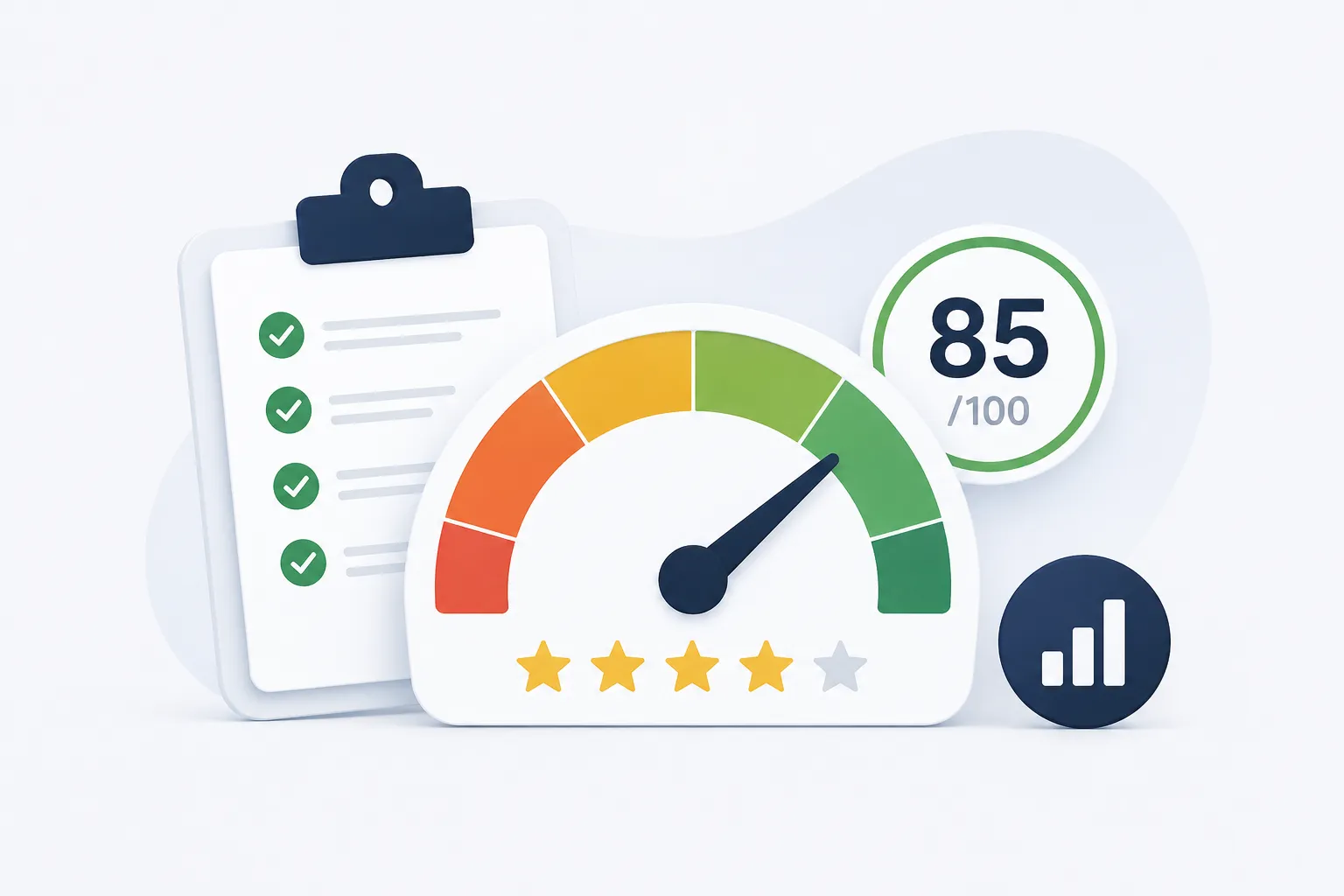
Give yourself one point for every item above that your site clearly passes, and be honest rather than generous. A score of 10 to 12 means you’re in strong shape and should focus on maintenance and monitoring. A score of 6 to 9 means there’s real opportunity sitting on the table, usually concentrated in structured data, page speed, or content depth. Anything below 6 suggests foundational technical work needs to happen before content refinements will move the needle at all.
For further reading directly from the source, Google’s own documentation on how AI features surface content in Search and its guidance on optimizing for generative AI search features are both worth bookmarking. They confirm what this checklist is built around: there’s no separate AI algorithm to game, just a stricter, less forgiving version of the same fundamentals that have mattered for years.
Common Mistakes That Sink an Otherwise Good Site
A few patterns show up repeatedly during audits, and they’re worth calling out on their own because they’re easy to miss even when everything else looks solid.
Answering the wrong question first. Many pages are optimized around a broad keyword but never actually answer the specific question a person typed in. If your page targets “AI search optimization” but never explicitly says what AI search optimization means in the first few sentences, you’re relying on the reader, or the AI system, to infer your point rather than stating it outright.
Treating schema as a one-time task. Structured data gets added during a redesign and then quietly breaks six months later when a template changes or a plugin update alters the output. Structured data needs the same ongoing validation as any other technical asset, not a set-it-and-forget-it approach.
Confusing length with depth. A 4,000-word article that repeats the same three points in different words isn’t more valuable to an AI system than a tighter, more specific 1,800-word article. Depth means original detail, not word count padding.
Ignoring mobile rendering entirely. Desktop testing alone hides a huge range of problems, from content that’s technically present but visually collapsed, to interactive elements that never load correctly on touch devices. Since mobile-first indexing has been the default for years now, this should be the primary testing environment, not an afterthought.
Publishing FAQs that don’t match real search behavior. Made-up questions that nobody actually searches for waste the exact format that’s most valuable for extraction. Pull real questions from your own customer emails, support tickets, and sales calls, and from the “People Also Ask” boxes already showing up for your target terms.
Turning the Checklist Into a Repeatable Process
A one-time audit is useful, but AI search behavior shifts often enough that this really needs to become a recurring habit rather than a single event. A practical cadence looks something like this: run the full twelve-point check quarterly on your top ten pages by traffic or business value, run a lighter version whenever you publish anything new, and do a full-site technical crawl at least twice a year to catch structural issues like broken schema, orphaned pages, or accidental crawl blocks that accumulate quietly over time.
It also helps to keep a simple shared spreadsheet or tracker with each page, its last audit date, its score, and the specific items still outstanding. Treating this like ongoing technical debt management, rather than a one-off project, is what actually keeps a site competitive as these systems continue to evolve.
Where This Fits Into Your Broader SEO Strategy
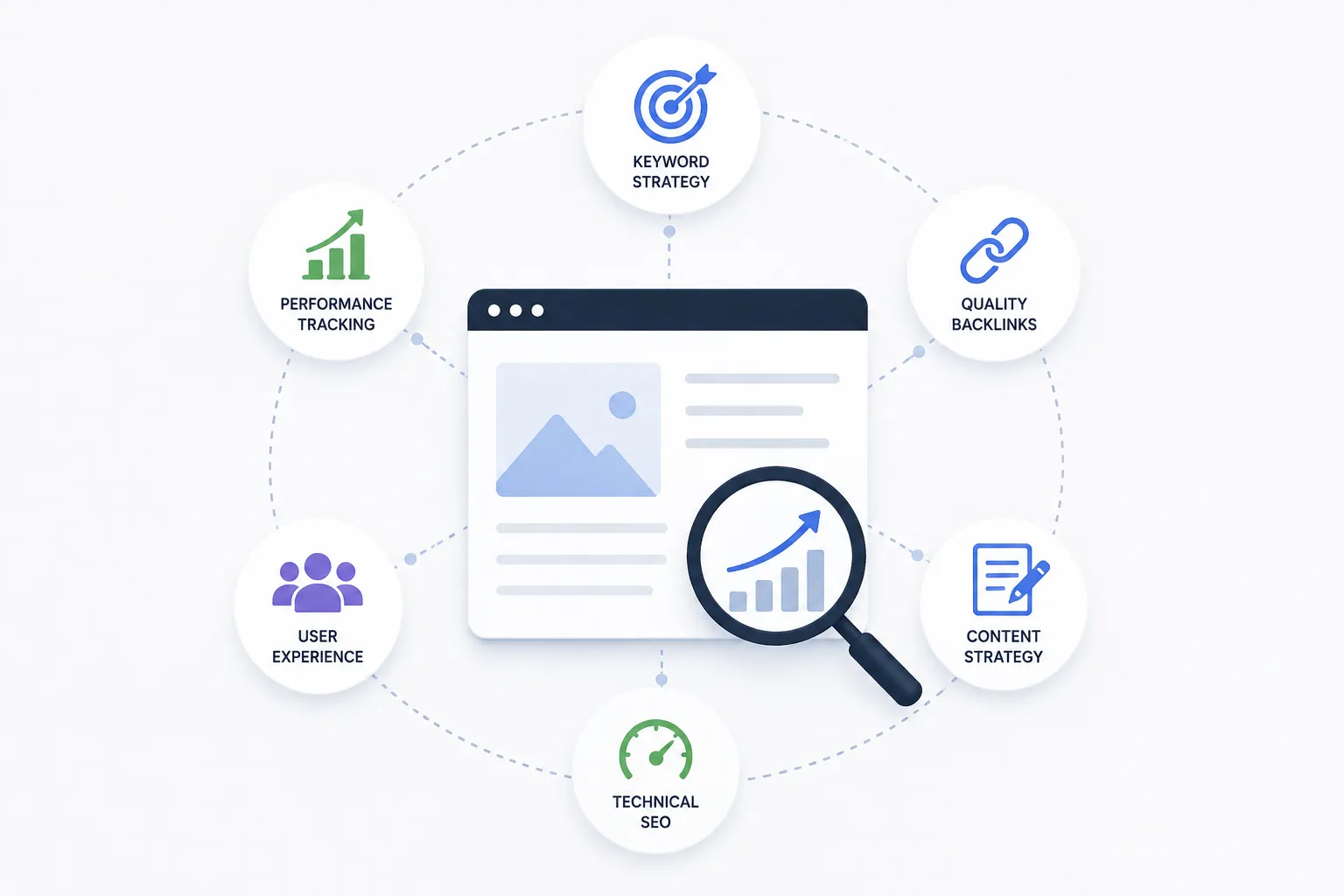
None of this replaces the fundamentals of good SEO: relevant keyword targeting, quality backlinks, solid on-page optimization, and a genuinely useful content strategy. AI-search readiness sits on top of those fundamentals rather than replacing them. A page with weak keyword relevance and thin content won’t magically start appearing in AI Overviews just because its schema markup is perfect and its Core Web Vitals score is green across the board.
Think of the twelve points above as the technical and structural layer that determines whether your existing content quality and authority actually get recognized and surfaced by these newer systems. Good content that’s invisible to a crawler, or unreadable by a language model because of poor structure, never gets the chance to compete on quality in the first place.
Frequently Asked Questions
How long does an AI-search readiness audit take? For a single page, a thorough manual check against all twelve points takes roughly 30 to 45 minutes. For a full site, plan on several days depending on how many templates and page types you’re working with, since issues often repeat across similar page types rather than being unique to each one.
Do I need to rebuild my site to become AI-search ready? Rarely. Most of the twelve items are fixable within an existing site through template updates, added schema, content edits, and image optimization. Full rebuilds are usually only necessary when the underlying technical architecture makes content genuinely uncrawlable, such as heavy client-side rendering with no server-side alternative.
Will passing this checklist guarantee my page appears in AI Overviews? No single checklist guarantees inclusion, since AI systems weigh many signals and inclusion criteria aren’t fully public. What this checklist does is remove the most common disqualifying issues and put your content in a genuinely competitive position, which is the most any site owner can control directly.
How is AI-search optimization different from traditional SEO? It isn’t a separate discipline so much as a stricter application of the same one. The core principles, crawlability, relevance, trust, and clear structure, are unchanged. What’s changed is how unforgiving the bar has become, since a language model extracting a direct answer has far less tolerance for ambiguity than a human reader scanning a page.
Should small businesses worry about AI search readiness right now? Yes, and arguably sooner rather than later. Smaller sites often have simpler technical setups, which can make some of these fixes faster to implement than on a large enterprise site with years of legacy code. Waiting until AI Overviews dominate even more of the results page just means starting from further behind.
Final Thoughts
Twelve points is a manageable list, but working through all of them honestly, on your actual site, tends to reveal more gaps than most teams expect going in. That’s normal, and it’s exactly the point of running an audit like this rather than assuming everything is fine because rankings haven’t visibly dropped yet. AI search isn’t a future trend to prepare for anymore, it’s already reshaping how a meaningful share of your traffic finds, or doesn’t find, your content today.
Work through the checklist, fix what you can this week, schedule the bigger technical items, and revisit the whole thing again next quarter. Consistency across every point matters more than perfection on any single one.
Other Articles in the AI Search & GEO Series
This post is part of the AI Search & GEO Content Series — a practical guide to improving visibility across traditional search engines and AI-powered search experiences.