
Table of Contents
Shopify Development Outsourcing Essentials
In the booming e-commerce landscape, businesses are increasingly seeking scalable solutions to stay competitive. With global e-commerce sales projected to exceed $6.5 trillion by 2024 and Shopify holding a significant 28% market share among top online stores, partnering with a Shopify development outsourcing partner in India has become essential. This approach addresses key challenges like in-house expertise gaps and escalating costs, enabling faster launches without compromising quality.
Shopify development outsourcing involves delegating critical tasks such as store design, app integration, theme customization, and migrations to specialized firms. The rising demand stems from e-commerce’s rapid growth, where companies benefit from access to certified Indian developers offering high-quality delivery at 40-60% lower costs than in-house teams. Hiring Shopify developers India provides regional expertise advantages, including agile offshore Shopify dev teams that ensure seamless scalability. For agencies, e-commerce outsourcing partners deliver white label capabilities, allowing outsource web development for agencies to resell services under their brand while maintaining compliance and efficiency. Leading firms, as noted in industry insights, offer end-to-end Shopify solutions including migrations, reducing time-to-market and enhancing ROI.
Bantech Solutions stands out as a full-service white label partner with over 15 years in CMS and e-commerce, delivering custom solutions for enterprises and agencies worldwide. Their certified teams focus on secure, performant platforms tailored to business needs.
This article explores the fundamentals of effective outsourcing, deep dives into selection processes, practical steps for partnering, advanced considerations like compliance, and answers to common FAQs. To make an informed choice, start with understanding the basics of what makes a strong outsourcing partner.
Core Principles of Shopify Outsourcing Partnerships
Shopify outsourcing partnerships form the backbone of efficient e-commerce development, enabling businesses to leverage specialized expertise without building internal teams from scratch. At its core, selecting a reliable partner involves evaluating certification, cost efficiency, and alignment with operational needs. Certified partners, such as those holding Shopify Partner status, ensure access to vetted tools and best practices that enhance store performance and user experience. This foundational approach not only streamlines development but also mitigates risks associated with subpar implementations.
Key principles guide the choice of outsourcing models, balancing cost, expertise, and scalability. Businesses must consider hourly rates versus fixed-price contracts to match project scopes. For instance, hourly models suit iterative tasks like custom app integrations, while fixed-price agreements work for well-defined builds such as theme customizations. Outsourcing to Indian teams offers distinct advantages, including competitive pricing and skilled talent pools. Hire Shopify developers India at rates of $15-40 per hour, significantly lower than Western counterparts, without compromising quality. These developers excel in English proficiency and time zone compatibility with APAC clients, facilitating seamless collaboration. According to industry trends from hirewithnear.com, 70% of firms outsource to cut costs by up to 60%, validating the appeal of Indian offshore Shopify partners. Regional hubs like Kolkata host experienced teams focused on scalable solutions, further boosting efficiency.
To aid in evaluating these options, the following table compares core outsourcing models, highlighting factors critical for agencies and growing e-commerce operations.
| Model | Cost Range (USD) | Expertise Level | Scalability | Compliance Focus |
|---|---|---|---|---|
| In-House | Higher initial setup (50k+) | High but limited | Slow scaling | Internal standards |
| Freelance | Low (5k-20k per project) | Variable, often uncertified | Limited growth | Minimal |
| Agency Outsourcing | Moderate (10k-50k+) | Certified experts (e.g., Shopify Partners) | Flexible team expansion | ISO-compliant, security-first |
Data sourced from industry averages; the agency model emphasizes white label capabilities for seamless integration. This comparison underscores why agencies often prefer outsourcing for its balanced profile, particularly in expertise and compliance, which are essential for handling sensitive e-commerce data.
White label Shopify development introduces a strategic layer for digital agencies seeking to expand offerings without in-house expansion. This model allows providers to deliver services that agencies can rebrand as their own, maintaining client relationships while outsourcing technical execution. For example, white label web development enables agencies to present custom Shopify stores under their branding, fostering branded e-commerce outsourcing. Benefits include faster time-to-market and access to specialized skills in areas like API integrations and theme optimization. As noted in magecomp.com insights, certified agencies prioritize such partnerships to meet certification requirements, ensuring robust, client-ready solutions.
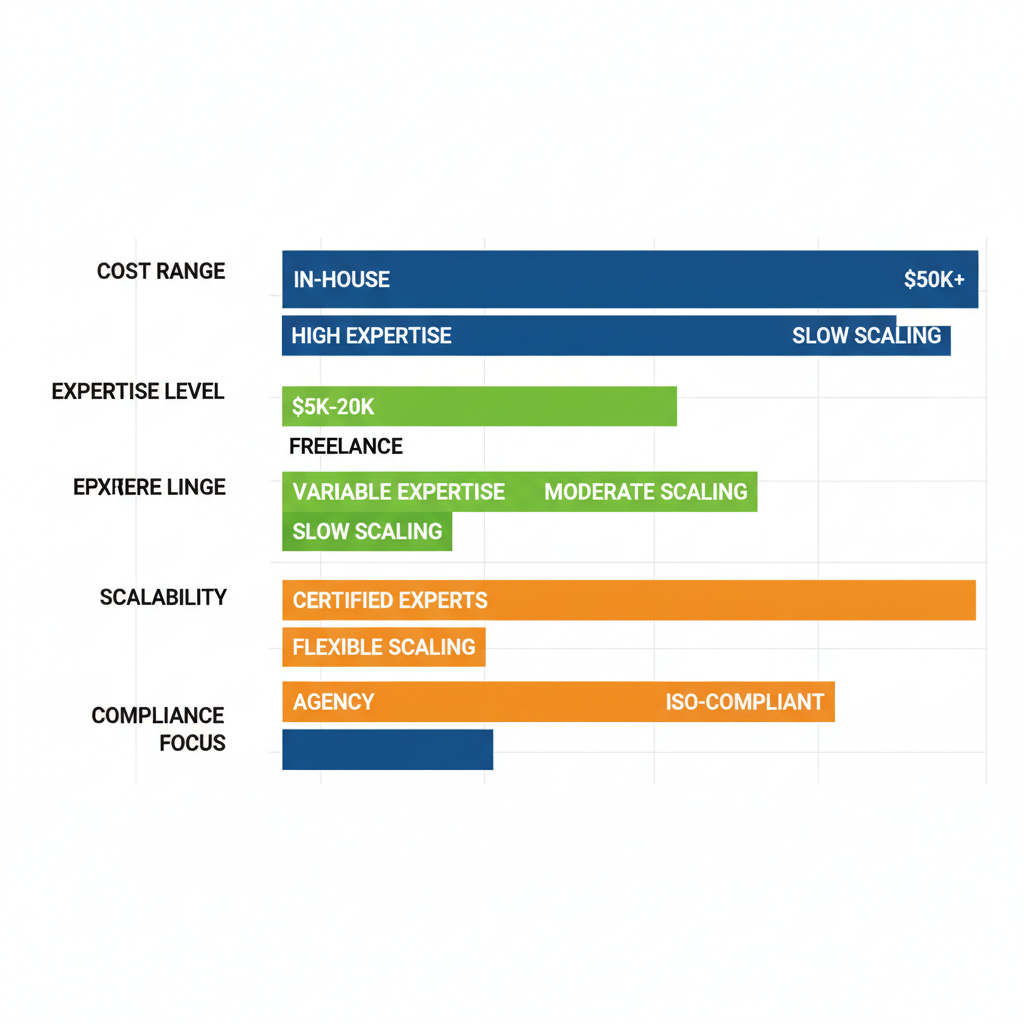
Bar chart visualization of Shopify outsourcing models and key comparison factors
Compliance remains a cornerstone, with essentials like GDPR for data privacy and PCI-DSS for payment security dictating partner viability. Outsourcing partners must adhere to these standards to protect user information and avoid regulatory pitfalls. Agile methodology enhances this by promoting iterative development, regular feedback, and adaptive planning.
- Certification Check: Verify Shopify Partner status for proven expertise.
- Cost Evaluation: Compare hourly ($15-40) and fixed models for budget fit.
- Compliance Audit: Ensure ISO-level security and data protection protocols.
- Process Alignment: Confirm agile practices for flexible project management.
For agencies eyeing white label options, hire Shopify developers India again proves advantageous, combining compliance focus with cost savings. With these fundamentals in mind, explore deeper into partner evaluation in the next section.
In-Depth Evaluation of Shopify Dev Partners
Building on core principles, now examine detailed evaluations of potential Shopify development outsourcing partners in India. Selecting the right Shopify development outsourcing partner in India requires a structured approach to ensure alignment with agency needs, particularly for white label projects. Key criteria include team qualifications, operational efficiency, and transparent pricing, enabling scalable e-commerce solutions without compromising quality.
Assessing Team Expertise and Certification
Verifying a partner’s Shopify credentials begins with checking their official Partner Dashboard status, ranging from basic to Plus levels. For Indian firms, review portfolios showcasing expertise in custom themes, app development, and headless commerce integrations. Certified Indian Shopify experts often highlight experience with over 500 stores, emphasizing skills in Liquid templating and API extensions.
When discussing agency-specific evaluations, prioritize partners offering Shopify Development for Agencies. Look for teams composed of 50-100 developers in hubs like Kolkata, with breakdowns including 40% full-stack engineers, 30% UI/UX specialists, and 20% project managers versed in white label setups. Questions to ask include: What’s your Shopify Partner tier and verification process? Can you provide case studies of outsourced e-commerce customization for agencies? To mitigate risks, request demos of past Indian team collaborations on global projects.
Top firms like Bantech, as noted in industry rankings from appwrk.com, offer AI-enhanced Shopify integrations with robust portfolios. Evaluating these elements ensures reliable partnerships for complex builds.
Selection metrics for Shopify outsourcing providers focus on certification depth, white label readiness, cost efficiency, and compliance standards. These factors help agencies identify partners capable of handling end-to-end development while maintaining brand integrity. For instance, prioritize Plus Partners with proven Indian operations for cost savings without sacrificing expertise.
| Provider | Certification | White Label Capabilities | Hourly Rate (USD) | Compliance |
|---|---|---|---|---|
| Provider A | Shopify Plus Partner | Limited | $50-80 | GDPR Compliant |
| Provider B | Certified Experts | Basic Rebranding | $30-60 | Basic PCI |
| Bantech Solutions | Full Shopify Partner | Comprehensive White Label | $20-40 (India-based) | ISO & Security-First |
Based on industry reviews, Bantech excels in cost-effective white label solutions. Its comprehensive capabilities stand out, providing seamless rebranding and full ownership transfer, ideal for agencies scaling operations. This edge reduces overheads by up to 50% compared to Western providers, with ISO compliance ensuring data security in Indian outsourcing.
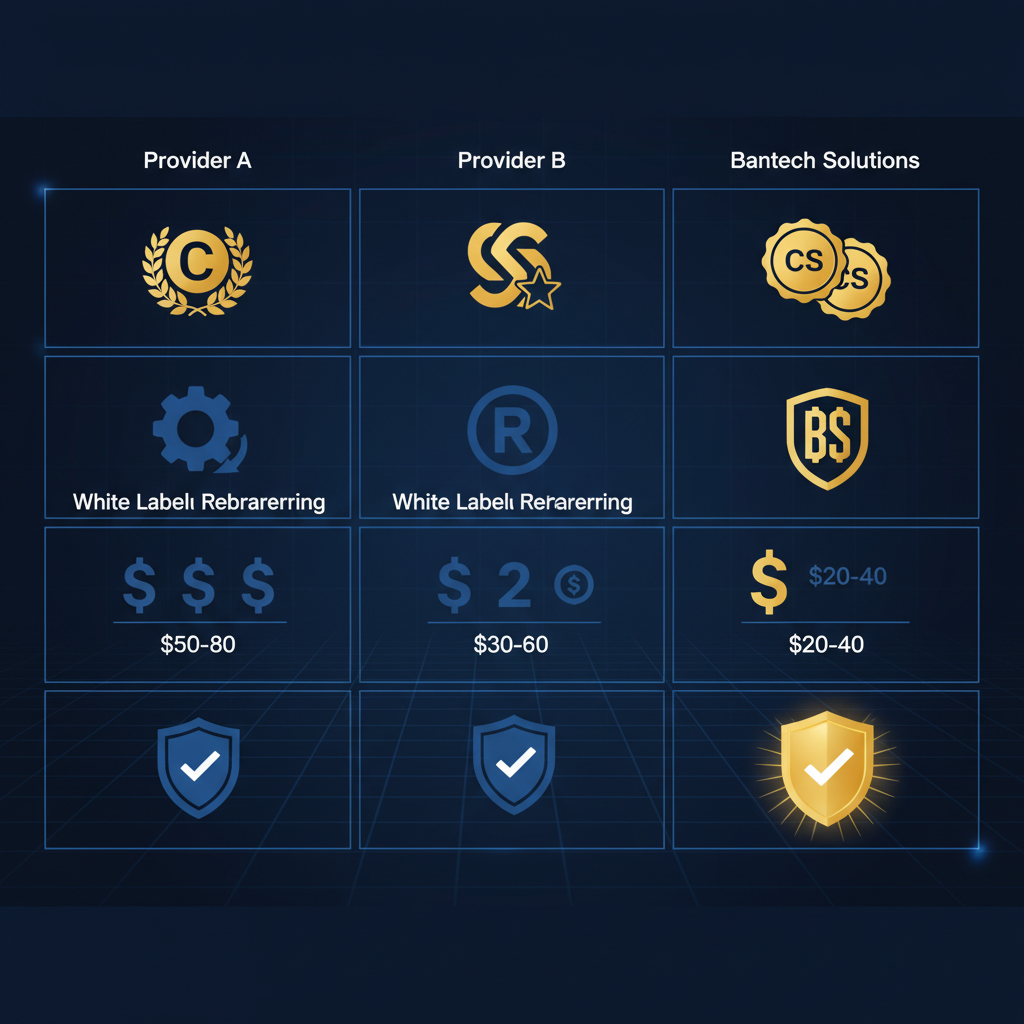
Visual comparison of leading Shopify development partners emphasizing Bantech Solutions
Analyzing Service Processes and Delivery
Effective outsourcing hinges on agile workflows tailored for Shopify projects. Indian partners typically follow Scrum methodologies with two-week sprints, starting from discovery phases involving requirement mapping and wireframing. Project timelines vary: a standard store build takes 4-8 weeks, while app integrations extend to 12 weeks, supported by tools like Jira for tracking.
Quality assurance integrates automated testing via Shopify’s CLI and manual audits for cross-browser compatibility. In white label setups, processes include client portals for real-time reporting and seamless handovers. As per 42manufactory.com case studies, successful Indian firms mitigate communication gaps using Slack and Zoom, ensuring 95% on-time delivery rates.
For white label Shopify development, depth in UI/UX integration is crucial, allowing agencies to present solutions as in-house. Evaluate white label web design capabilities through questions like: How do you handle source code access and branding customization? What post-launch support frameworks exist? These steps address common pitfalls in outsourced e-commerce customization, fostering long-term collaborations.
Cost Structures and Hidden Fees
Pricing models for Shopify outsourcing in India blend fixed-price for defined scopes and hourly rates for iterative work. Hourly fees range from $20-50 for certified Indian Shopify experts, influenced by project complexity, team seniority, and location premiums in tech hubs like Bangalore versus Kolkata. Fixed bids suit MVP builds at $5,000-15,000, while enterprise migrations hit $50,000+.
Hidden fees often lurk in add-ons like ongoing maintenance (10-20% of project cost annually), third-party app integrations ($1,000-5,000), or rush delivery surcharges. Factors driving budgets include customization depth–basic themes cost less than bespoke apps–and compliance needs like PCI-DSS audits. To hire Shopify developers in India effectively, negotiate all-in quotes covering revisions and 30-day support.
Industry references highlight Bantech’s transparent structures, avoiding surprises through detailed proposals. Questions for vendors: What inclusions define your base rate? Are there escalation clauses for scope changes?
The following mini-table breaks down typical pricing components based on top provider analyses:
| Component | Fixed Price Range (USD) | Hourly Add-On (USD/hr) | Notes from References |
|---|---|---|---|
| Theme Customization | $2,000-8,000 | $25-45 | Core for basic stores (appwrk.com) |
| App Development | $5,000-20,000 | $30-50 | Plus-level integrations (42manufactory) |
| Maintenance Retainer | $500-2,000/month | N/A | Annual contracts for updates |
| Compliance Audits | $1,000-3,000 | $20-40 | Essential for secure e-commerce |
This breakdown reveals how Indian outsourcing yields 40-60% savings versus global rates, with Bantech optimizing through agile efficiencies. Budget for 15% buffers against unforeseen fees, ensuring viable ROI on white label Shopify development. Apply these insights through hands-on selection strategies next.
Hands-On Strategies for Partner Selection
Leverage the criteria from earlier evaluations to implement selection now, turning insights into actionable partnerships with Shopify development outsourcing companies in India. This section outlines practical outsourcing workflows for agencies seeking white label solutions, ensuring scalable e-commerce growth.
Conducting RFPs and Initial Consultations
Begin by crafting a Request for Proposal (RFP) tailored to your white label Shopify development needs. Include clear scope details like store customization requirements, integration timelines, and budget constraints. Sample RFP questions: “Outline your experience with headless Shopify architectures?” “How do you handle API integrations for third-party apps?” According to atwix.com, RFP success rates improve with detailed scopes, often boosting response quality by 40% for complex builds.
Next, schedule initial consultations to gauge partner fit. Request live demos of past Shopify projects and check client references for reliability. Focus on Indian developers’ responsiveness, considering cultural nuances like hierarchical communication styles common in collaborations. Use a checklist: Verify agile methodologies, review portfolio diversity, and assess communication tools like Slack or Zoom.
To aid this process, the following table outlines essential RFP tools drawn from industry best practices:
| Tool | Purpose | Benefit for Indian Partners |
|---|---|---|
| Scope Template | Defines project deliverables | Ensures alignment with time zone workflows |
| Timeline Tracker | Maps milestones | Accommodates 12.5-hour IST offset |
| Budget Query Form | Gathers cost estimates | Highlights cost efficiencies in outsourcing |
This structured approach answers key questions like processes followed by Indian Shopify developers, streamlining agency partner onboarding.
Budgeting and Negotiation Tactics
Estimate costs for hiring Shopify developers India using online calculators, factoring in development ($5k-15k for core builds), design ($3k-8k), and ongoing maintenance (10-20% annually). For mid-size stores, total budgets range from $10k-30k, varying by complexity. White label Shopify development offers retainer models, like Bantech’s flexible options, for predictable scaling.
Discuss how white label outsourcing benefits agencies: It provides full rebranding control, seamless scalability, and integrated compliance without overhead. The table below compares this to direct services:
| Aspect | White Label | Direct Services |
|---|---|---|
| Customization | Full rebranding, agency IP | Limited branding, client control |
| Pricing Model | Retainer + project fees | Fixed or hourly, no retainers |
| Scalability | Seamless team expansion | In-house limits, slower growth |
| Compliance | Agency-led standards integration | Provider-managed, less flexibility |
Agencies gain negotiation leverage through this model, as Indian partners like Bantech emphasize agile practices per magecomp.com, quoting streamlined workflows that reduce costs by 30-50%. In negotiations, prioritize SLAs for uptime (99.9%) and IP rights for custom code ownership.
For scalable contracts blending e-commerce and SaaS, partnering with a saas dev outsourcing agency ensures integrated solutions. Address pricing queries head-on: White label fees often include white-glove support, building long-term value.
Onboarding and Project Kickoff
Once selected, initiate smooth integration with your Indian outsourcing partner through structured agency partner onboarding. Start with tool setups: Align on Jira for task tracking, GitHub for version control, and shared drives for assets, accounting for time zone differences (e.g., daily stand-ups at 8 AM IST/7 PM EST).
Follow these numbered steps for kickoff:
- Conduct a virtual kickoff meeting to review project roadmap and assign roles.
- Establish communication protocols, incorporating cultural notes like building rapport via informal check-ins.
- Set milestones: Week 1 for discovery, Month 1 for MVP launch, with bi-weekly reviews.
- Plan for contingencies, such as escalating issues through dedicated account managers.
This process mirrors Bantech’s agile workflows, ensuring compliance and security from day one. Highlight retainer options for maintenance, fostering ongoing collaboration.
Once selected, consider these advanced factors for long-term success.
Advanced Considerations for Long-Term Partnerships
Beyond initial setup, advanced elements ensure longevity in Shopify outsourcing, particularly with Indian providers specializing in white label Shopify development. For enterprise e-commerce outsourcing, sustaining partnerships demands focus on post-deployment support, compliance evolution, and cutting-edge integrations. These strategies future-proof operations against market shifts and technological advancements.
Maintenance models vary to match ongoing needs, with retainer agreements offering proactive oversight compared to hourly ad-hoc interventions. Retainers provide consistent updates and monitoring, reducing downtime by 40% as noted in industry trends from hirewithnear.com. Basic plans handle routine tasks, while full retainers encompass broader enhancements. The right model depends on project scale and risk tolerance.
Selecting a support structure aligns with business growth; for instance, Indian firms excel in cost-effective retainers that integrate DevOps for seamless updates.
| Model | Cost (Monthly USD) | Coverage | Best For |
|---|---|---|---|
| Basic Maintenance | $500-1k | Updates, minor fixes | Small to medium sites |
| Full Retainer | $2k+ | Security, compliance, scaling | Enterprise operations |
| Ad-Hoc | $50/hour | Emergency support | Occasional troubleshooting |
This comparison highlights how full retainers suit high-volume platforms, emphasizing Indian providers’ compliance strengths. Bantech Solutions, for example, tailors these options to deliver reliable post-launch stability, optimizing costs while minimizing disruptions for global clients.
In compliance and integrations, ongoing audits and post deployment security compliance become critical for compliant dev partnerships. Indian teams like Bantech leverage AI for personalization and ERP systems to streamline operations, ensuring GDPR and PCI adherence. Blockchain integrations for NFTs, as seen in advanced firms per 42manufactory.com, add secure asset management, enhancing trust in transactions. Pros of these setups include robust data protection; cons involve initial setup complexity, mitigated by expert guidance.
- Pros: Scalable security, innovative features like AI-driven compliance checks.
- Cons: Higher upfront investment, requiring skilled oversight.
Scalability through PWA and headless architectures empowers Shopify development outsourcing partner in India to handle traffic surges efficiently. Bantech’s blockchain and NFT capabilities enable tokenized loyalty programs, future-proofing stores. To hire Shopify developers in India for such evolutions, prioritize partners with proven DevOps expertise. Enterprise e-commerce outsourcing thrives on these adaptations, supporting AI personalization and cloud migrations for sustained performance.
Common queries on these topics follow in the FAQ section.
Common Queries on Shopify Outsourcing
Q: What is the average cost to hire Shopify developers in India?
A: Outsourcing to India offers competitive rates, typically $20-40 per hour for skilled Shopify developers, making it cost-effective for agencies seeking quality without high expenses. This range covers full-stack expertise, as noted in industry insights from top development firms.
Q: What are the benefits of white label Shopify development?
A: White label Shopify development allows agencies to brand solutions as their own, boosting margins by 30-50% while leveraging expert teams. It ensures seamless integration, scalability, and client satisfaction without revealing the backend partnership.
Q: What questions should I ask when selecting a Shopify outsourcing partner?
A: Inquire about their portfolio of successful e-commerce projects, adherence to SLAs for timely delivery, and post-launch support. Verify communication protocols and scalability for growing stores to ensure alignment with your goals.
Q: What processes do Indian Shopify developers follow?
A: Indian teams often use agile methodologies with certified Scrum practices, ensuring iterative development, regular sprints, and quality assurance. This approach minimizes risks and delivers robust, customized Shopify solutions efficiently.
Q: What unique offerings does Bantech provide for Shopify outsourcing?
A: Bantech excels in full-stack white label Shopify development, offering end-to-end services from ideation to maintenance, with a focus on security, AI personalization, and cloud integration tailored for agencies worldwide.
With these outsourcing FAQs clarified, finalize your partner choice for seamless Shopify success.
Finalizing Your Shopify Partner Choice
Selecting the right Shopify development outsourcing partner in India requires evaluating key criteria like certifications, streamlined processes, and transparent pricing, as validated by comparisons from Atwix. These partners offer substantial cost efficiencies, strict compliance standards, and scalable solutions for e-commerce growth.
White label services shine for agencies, allowing seamless client scaling without in-house expansion. As a White Label Shopify Development Agency, Bantech Solutions provides these advantages plus ongoing support for long-term success. Armed with this guide, connect with a trusted partner like Bantech to launch your project seamlessly and achieve e-commerce excellence.