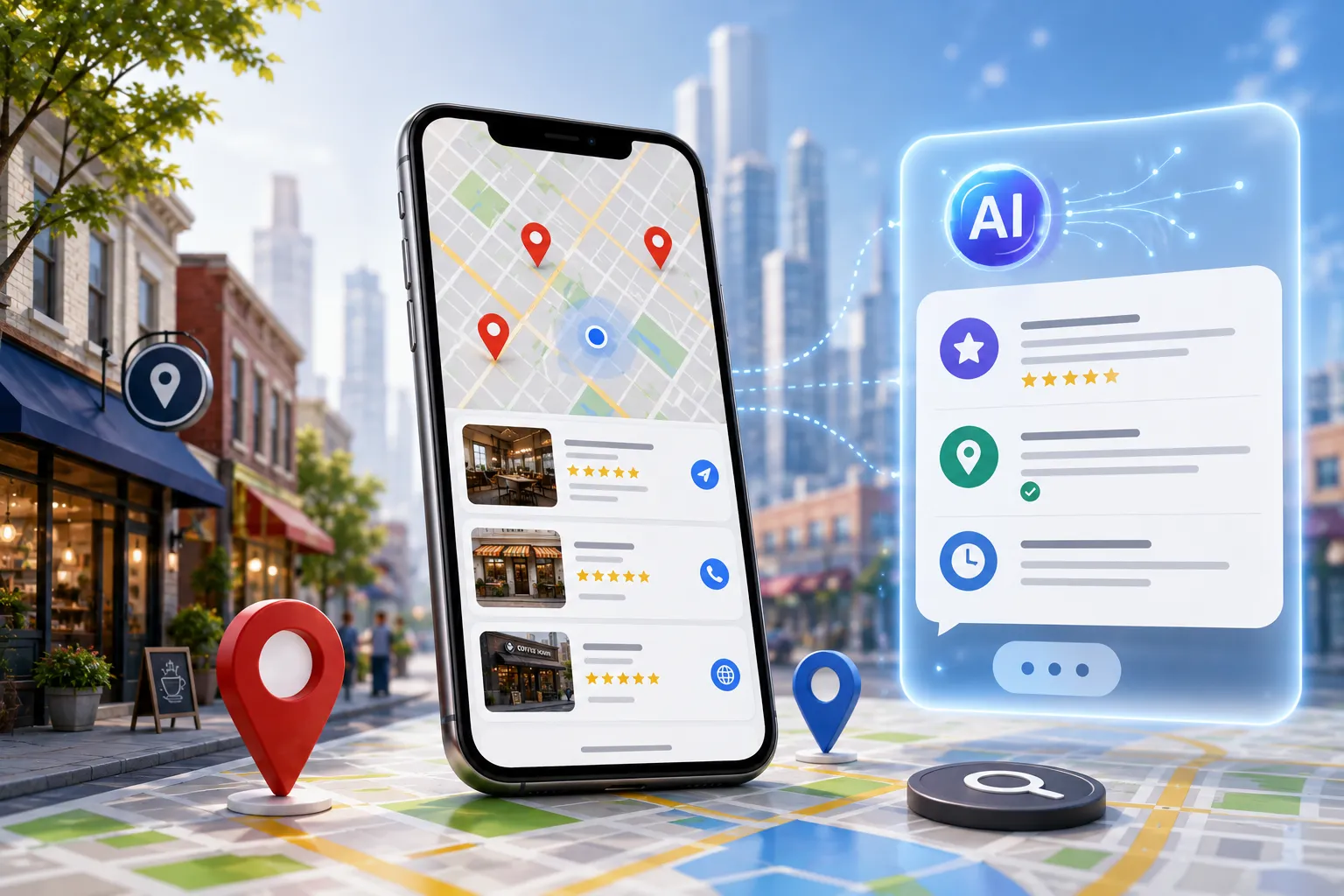

When someone searches “plumber near me,” Google increasingly answers the question directly inside an AI Overview instead of sending the searcher to a list of websites. For local businesses, this means visibility now depends less on ranking a webpage and more on being the business that Google’s AI, Google Business Profile, and review platforms all agree is the right, nearby answer.
For twenty years, ranking for “near me” searches meant one thing: get your website into the top three results on a map pack and hope for the click. That playbook still matters, but it is no longer the whole game. Search engines have started answering local questions themselves, summarizing hours, pricing, and even recommendations before a searcher ever taps through to a website. Businesses that have leaned on Bantech’s digital marketing services to build out their SEO and local visibility strategy are already adjusting to this shift, and the businesses that haven’t started adjusting yet are the ones most likely to lose ground over the next twelve months.
This isn’t a minor tweak to an existing playbook. It’s a structural change in how local intent gets satisfied, and it’s happening fast enough that a strategy built even eighteen months ago is already showing cracks.
Why “Near Me” Searches Behave Differently Now
“Near me” queries have always carried a specific kind of urgency. Someone typing “coffee shop near me” or “emergency electrician near me” isn’t browsing. They’re deciding, often within minutes, and they expect an answer that matches their location, their timing, and their intent without much friction.
That urgency is exactly why AI-generated answers have moved into local search so aggressively. Recent industry research indicates that AI Overviews now appear on a substantial share of “near me” style queries, with some analyses placing informational near-me searches in the high 70% range for AI Overview presence. Local SEO researchers have also tracked steady growth in AI Overview coverage of local queries over the past two years, with figures climbing from single digits in early 2025 to well over a third of local searches by the middle of 2026, and higher still for certain query types.
What that means in practice: the search engine is no longer just a directory pointing to your website. It’s becoming an intermediary that reads your business information, synthesizes it alongside competitors, and presents a summarized answer, sometimes without a single click reaching your site.
For local business owners, this creates a strange paradox. Search volume for local, “near me,” and location-based queries hasn’t dropped. If anything, global searches for many local intent phrases have grown substantially year over year. But the click-through pattern has changed. When an AI Overview appears above the traditional results, organic click-through rates on those queries tend to fall noticeably. That doesn’t mean local SEO stopped mattering. It means the way you get credit for showing up has changed.
From Ten Blue Links to One Synthesized Answer
The old local SEO model was straightforward. You optimized a page, built citations, collected reviews, and competed for a spot in the map pack or the first page of organic results. Success was measured in rankings and clicks.
The AI-answer model works differently. Instead of ranking ten separate results, the search engine (or the AI assistant, whether that’s Google’s AI Mode, ChatGPT, or Perplexity) pulls structured facts about businesses from multiple sources, cross-references them, and produces a single synthesized response. That response might mention two or three businesses by name, summarize what makes each one distinct, and only then offer links for further reading.
This changes what “ranking well” even means. A business no longer needs to win the click. It needs to win the mention. Being cited, quoted, or referenced inside an AI answer is now a visibility outcome in its own right, even when it doesn’t translate into an immediate visit to the website.
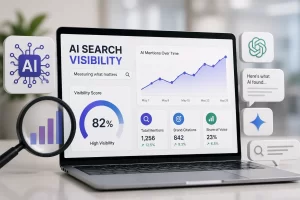
This is a genuinely uncomfortable shift for a lot of business owners, because it breaks the mental model that “more traffic to my website equals more success.” A business can be doing brilliantly in AI visibility terms, showing up as the recommended plumber or the top-rated bakery in every relevant AI answer, while its raw website traffic numbers look flat or even declining. The old dashboards don’t capture that story, which means measurement strategy has to evolve alongside the SEO strategy itself.
How AI Systems Actually Pull Local Information
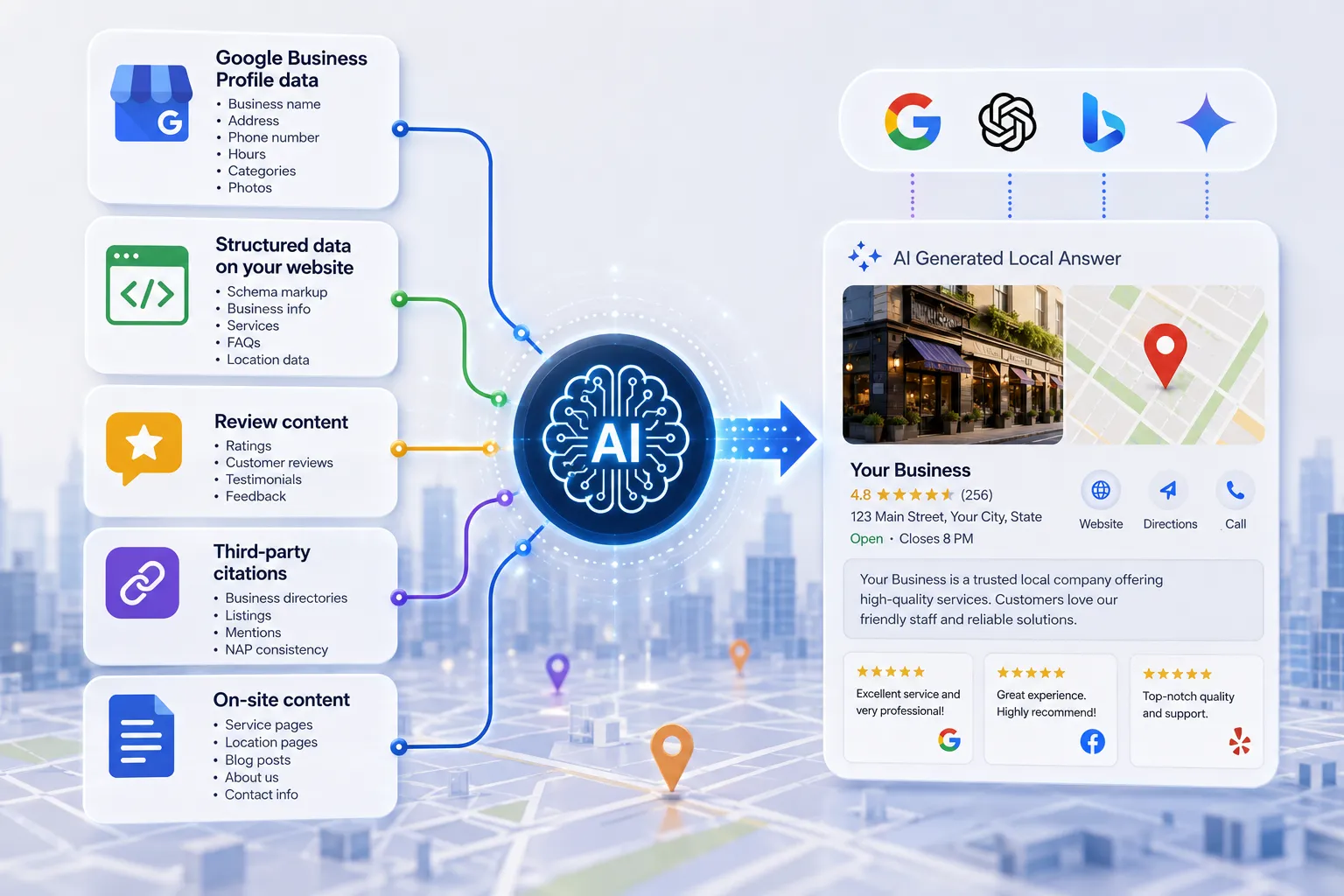
To adapt, it helps to understand what these systems are drawing from. AI Overviews and similar tools don’t invent answers about local businesses out of nowhere. They pull from a combination of:
- Google Business Profile data: hours, categories, attributes, photos, and posts
- Structured data on your website: particularly LocalBusiness schema markup that explicitly tells search engines your name, address, phone number, service area, and pricing tier
- Review content: not just star ratings, but the actual text of reviews, which AI systems increasingly mine for sentiment, specific service mentions, and recurring themes
- Third-party citations: directories, industry associations, and mentions across the web that corroborate your business details
- On-site content: service pages, FAQ sections, and location pages that answer specific questions in clear, extractable language
Google’s own documentation on LocalBusiness structured data lays out exactly which properties search systems look for, including address, hours, price range, and review data, and stresses that accuracy and consistency across these fields directly affects eligibility for enhanced local search features. That’s not a minor technical detail anymore. It’s closer to the foundation of the entire strategy, because an AI system pulling together a local answer needs machine-readable facts it can trust, and inconsistent or missing structured data makes a business functionally invisible to that process even if the website itself reads perfectly well to a human visitor.
Google Business Profile Is Still the Foundation, Just With Higher Stakes
If your Google Business Profile was already the centerpiece of your local SEO before AI Overviews existed, that instinct was right, and it matters even more now. GBP data is one of the primary, most trusted sources AI systems draw from when constructing a local answer, because it’s structured, verified, and frequently updated.
That means the basics carry more weight than ever:
Category accuracy. Choosing the most specific, correct primary category (and relevant secondary categories) helps the AI system understand precisely what you do, rather than lumping you into a broad, less useful bucket.
Hours that are actually correct. An AI answer that confidently tells someone you’re open right now, when you’re not, creates a bad experience that reflects on your business, not on the AI system. Businesses lose trust fast when the summarized answer turns out to be wrong, even if the error originated in stale data they never got around to updating.
Photos and posts that stay current. Fresh content signals an active, real business. Stale profiles increasingly read as low-confidence sources to systems trying to determine which businesses are still operating and reliable.
Q&A sections. The Q&A feature on Google Business Profile is an underused opportunity. Answering common questions directly, in plain language, gives AI systems pre-packaged, verified content to pull from.
Service and product listings. These give AI systems specific, extractable facts about exactly what you offer, at what price range, which is far more useful for answer generation than a vague business description.
Businesses running a broader digital marketing strategy through a partner rather than piecing it together internally often catch these details faster simply because someone is actively monitoring the profile rather than setting it up once and forgetting about it. Profile decay is one of the most common, and most avoidable, reasons a business quietly drops out of AI-generated local answers over a period of months.
Structured Data: Teaching Machines to Read Your Business Correctly
Website structured data, specifically schema.org markup for LocalBusiness and its many subtypes, has moved from “nice to have” to functionally essential in an AI-driven search environment. Structured data doesn’t change what a human visitor sees on the page. It changes what a machine can extract from the page with confidence.
At minimum, a local business website should mark up:
- Business name, address, and phone number, matching exactly what’s listed on Google Business Profile and other directories
- Opening hours, including seasonal or holiday variations
- Price range, using the standard notation search engines expect
- Service area, particularly important for businesses that travel to customers rather than operating from a single storefront
- Aggregate review data, where the site legitimately captures and displays its own reviews
Consistency across every one of these fields, on the website, on Google Business Profile, and on every directory listing, has become one of the clearest trust signals available to an AI system trying to decide whether your business information is reliable enough to summarize confidently. A mismatch, like a phone number that’s slightly different on your website versus your GBP listing, doesn’t just create a minor SEO ding anymore. It can be the exact kind of inconsistency that makes an AI system quietly exclude a business from a synthesized answer in favor of a competitor whose data lines up cleanly across every source.
Reviews Are Doing More Work Than Ever
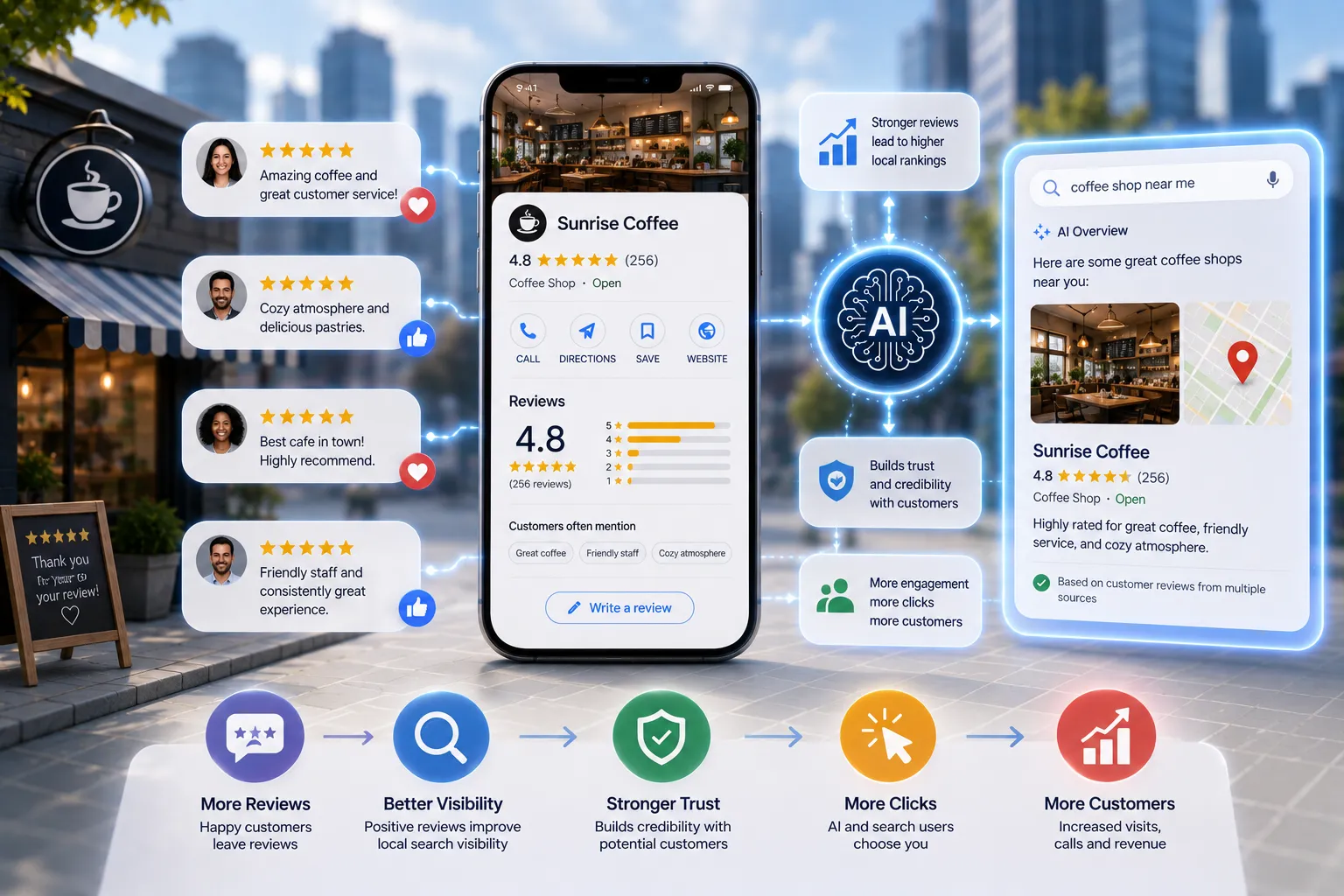
Reviews were always important for local SEO. In an AI-answers environment, they’ve become something closer to primary source material. AI systems don’t just look at your star rating. They read the actual review text, looking for specific, repeated details: mentions of particular services, comments about response time, references to pricing, and sentiment about specific aspects of the customer experience.
According to BrightLocal’s Local Consumer Review Survey research, consumer reliance on reviews before choosing a local business remains extremely high, and a growing share of consumers are now using AI tools directly as part of that discovery and vetting process rather than only browsing traditional review sites. That shift matters enormously for strategy, because it means the words inside your reviews, not just the aggregate rating, are increasingly part of what an AI system uses to describe your business to someone else.
Practically, that changes how a business should think about review generation:
- Encourage reviewers to mention specific services, not just leave a generic five-star rating
- Respond to reviews thoughtfully, since AI systems can factor in whether a business engages with feedback
- Address negative reviews professionally and promptly rather than ignoring them, since unaddressed complaints can become part of the narrative an AI system builds
- Diversify where reviews live, since AI discovery tools increasingly draw from multiple platforms beyond Google alone, including industry-specific directories and even social platforms
A business with fifty generic five-star reviews and no descriptive detail is, somewhat counterintuitively, less useful to an AI answer engine than a business with thirty reviews that consistently mention specific, extractable details about the service experience.
Content Strategy: Writing for Extraction, Not Just Ranking
Traditional SEO content strategy optimized for keyword matching and topical depth, aiming to rank a page highly enough that a human would click it. AI-answer-era content strategy has an additional job: making it as easy as possible for an AI system to lift a clear, accurate, well-attributed answer directly from your page.
That means service pages and location pages benefit from:
Direct, front-loaded answers. Structuring content so the most important, specific fact appears early and clearly, rather than buried under three paragraphs of scene-setting. AI extraction systems favor content that answers a question plainly near the top.
FAQ sections built around real customer questions. Not generic filler, but the actual questions customers ask before booking, phrased the way people actually type or speak them. This is also exactly the kind of content that tends to get pulled into “People Also Ask” style features and AI summaries.
Location-specific detail, not templated boilerplate. Generic “we serve the greater metro area” language does very little for either human readers or AI extraction. Specific neighborhood names, landmarks, and service area detail give both audiences something concrete to work with.
Clear service and pricing information. Vague pricing language forces an AI system to either omit pricing from its answer entirely or, worse, guess based on outdated third-party data. Being specific, even with ranges, keeps your business as the source of truth.
Genuine expertise, not generic advice. Content that demonstrates real, specific knowledge, case examples, technical detail, local context, performs better both for AI extraction and for the human reader who eventually does click through.
Businesses that already work with a structured content and search strategy tend to have an easier time making this shift, since the underlying discipline of writing clear, well-organized, fact-dense content translates directly into AI-extraction readiness. It’s less about learning an entirely new skill and more about tightening standards that were already loosely in place.
Building Local Entity Authority Beyond Your Own Website
AI systems increasingly evaluate businesses as entities, not just as websites. That means your visibility depends partly on signals that exist entirely outside your own domain: how consistently your business is described across directories, how often reputable local publications or industry sites mention you, and whether your NAP (name, address, phone) data lines up everywhere it appears.
This is where a broader entity-building strategy becomes valuable. Practical steps include:
- Auditing and correcting citations across major directories (not just the big ones, but industry-specific and locally relevant ones too)
- Pursuing genuine local press mentions, sponsorships, or community involvement that generates organic, third-party references
- Ensuring your website’s “About” and location pages clearly and consistently state your service area, founding history, and credentials
- Claiming and maintaining profiles on platforms beyond Google, since AI discovery tools pull from a widening pool of sources rather than relying on a single search engine’s index
None of this is new advice in the abstract. What’s changed is the stakes. A messy, inconsistent citation profile used to cost you a few ranking positions. Now it can mean an AI system simply doesn’t have enough confidence in your business data to include you in an answer at all, regardless of how good your actual service is.
Measuring Success When Visibility Doesn’t Always Mean Clicks
One of the hardest adjustments for local business owners is accepting that traffic numbers alone no longer tell the whole story. A business can be performing extremely well in terms of AI visibility, showing up as a cited or recommended option in relevant AI answers, while its website analytics show flat or declining sessions from organic search.
A more complete measurement approach for the AI-answers era includes:
- Tracking brand mention frequency and sentiment across AI tools where possible, alongside traditional keyword rank tracking
- Monitoring phone calls, direction requests, and other Google Business Profile actions, which often hold steady or grow even when website clicks decline
- Watching for direct, branded search increases, a common sign that AI-answer visibility is driving offline awareness that later converts into a direct search or a walk-in
- Paying attention to review volume and quality trends as a proxy for overall reputation health, since that data feeds directly into how AI systems describe you
This is also where working with a team that understands both the technical and the analytics side of local search pays off. Reading the right signals, rather than panicking over a dip in raw organic sessions, requires a strategy built around the whole picture rather than a single metric.
A Practical Local SEO Checklist for the AI-Answers Era
Pulling all of this together, here’s a working checklist for adapting a local SEO strategy to an environment where AI answers increasingly sit between the search and the click:
- Audit and correct Google Business Profile data across every field, not just hours and address
- Implement or update LocalBusiness structured data on your website, keeping it perfectly consistent with your GBP listing
- Build or refresh FAQ content around real customer questions, phrased naturally
- Strengthen your review generation process to encourage specific, descriptive feedback rather than generic ratings
- Respond to every review, positive and negative, in a way that reflects well on the business
- Audit citations across directories for NAP consistency, correcting mismatches
- Rewrite thin or templated location pages with specific, locally grounded detail
- Expand measurement beyond website traffic to include calls, direction requests, and brand search trends
- Monitor how your business appears (or doesn’t) in AI Overviews and AI assistant answers for your key service queries
For businesses that would rather hand this process to a team that lives in it daily, Bantech’s SEO and keyword strategy services are built around exactly this kind of ongoing, detail-heavy work, tracking both traditional rankings and the newer AI-visibility signals that increasingly determine whether a local business gets mentioned at all.
The Bottom Line
“Near me” search hasn’t gotten smaller. It’s gotten more concentrated, more automated, and considerably less forgiving of inconsistent or thin business data. The businesses that will keep winning local visibility over the next few years are the ones treating their Google Business Profile, structured data, reviews, and content as one interconnected system, rather than four separate checkboxes handled at different times by different people.
AI answers didn’t kill local SEO. They raised the accuracy bar, shortened the distance between question and answer, and rewarded the businesses whose information is clean, consistent, and genuinely useful enough for a machine to trust it on the first read. That’s a real shift in how the work gets done, but it’s one that rewards the same underlying discipline good local SEO has always required: be accurate, be specific, and make it easy for someone, human or otherwise, to understand exactly why your business is the right answer.
Other Articles in the AI Search & GEO Series
This post is part of the AI Search & GEO Content Series — a practical guide to improving visibility across traditional search engines and AI-powered search experiences.