
Table of Contents
Exploring White Label Reseller Web Development Opportunities
In today’s competitive digital landscape, many agencies face the challenge of expanding services without the overhead of in-house development teams. White Label Reseller Web Development allows businesses to deliver high-quality websites and apps such as white label web design under their own brand, addressing this gap effectively. For instance, outsourcing can cut costs by up to 40% while enabling faster project turnarounds, a trend projected to grow white label programs by 25% annually according to the Ultimate Guide to White Label Reseller Programs 2025.
White label reseller web development involves partnering with expert providers who handle the technical work, which agencies then rebrand as their own. This model is ideal for digital agencies seeking scalable solutions without building expertise from scratch. Bantech Solutions, an India-based firm, exemplifies this through white label web development partnerships that include custom software, CMS implementations like WordPress and Drupal, and e-commerce platforms. A digital agency doubled its revenue by reselling Bantech’s services, showcasing how such collaborations drive growth and client satisfaction.
Bantech’s portfolio of white label web dev services extends to mobile apps, AI integrations, and blockchain solutions, empowering agencies to offer reseller web dev services and agency white labeling seamlessly. This guide explores everything from fundamentals to advanced strategies, highlighting benefits like enhanced revenue streams and market expansion.
Now that we understand the basics, let’s dive into the core principles that make these partnerships successful.
Core Principles of White Label Web Development Partnerships
White Label Reseller Web Development represents a strategic alliance where agencies rebrand and resell development services from specialized providers, enabling seamless expansion without building internal capabilities. At its core, this model allows digital agencies to offer comprehensive web solutions under their own branding while leveraging expert teams from partners like Bantech, an India-based firm with over 20 years of experience serving global clients. These partnerships foster scalability and efficiency, turning agencies into full-service providers without the burdens of recruitment or infrastructure.
Partnership structures typically fall into two main categories: retainer-based agreements for ongoing support and project-based engagements for specific deliverables. In a white label web development partnership, agencies collaborate closely with providers to define scopes, ensuring alignment on quality and timelines. For instance, retainer models provide dedicated resources for continuous projects, while project-based options suit one-off needs like site migrations, allowing flexibility for growing agencies seeking a reseller partnership in web dev.
Essential services in these collaborations include a range of tailored offerings to meet diverse client demands. Providers handle everything from custom CMS development using platforms like WordPress or headless CMS for flexible content management, to e-commerce solutions with secure payment integrations. Mobile integration ensures responsive designs, while advanced features like white label website design enable agencies to deliver modern, user-centric experiences. In a white label collaboration, additional services cover API integrations and performance optimization, often incorporating AI for personalization, empowering agencies to outsource website development for agencies without compromising on innovation.
Cost structures in white label arrangements start affordably, with small projects under $500 and scaling to enterprise levels based on complexity. This scalable pricing contrasts with traditional models, offering 40-60% savings as per industry reports on offshore partnerships. Turnaround times average 2-4 weeks for standard websites, supported by dedicated client portals for real-time communication and progress tracking. Bantech’s ISO-compliant processes ensure security and scalability, making white label web development a reliable choice for agencies prioritizing efficiency and compliance.
The benefits of white label partnerships shine when compared to in-house development, particularly for agencies aiming to reduce operational overhead. Effective partners reduce reseller workload by 70%, as noted in guides on successful white label reselling, allowing focus on client acquisition and strategy.
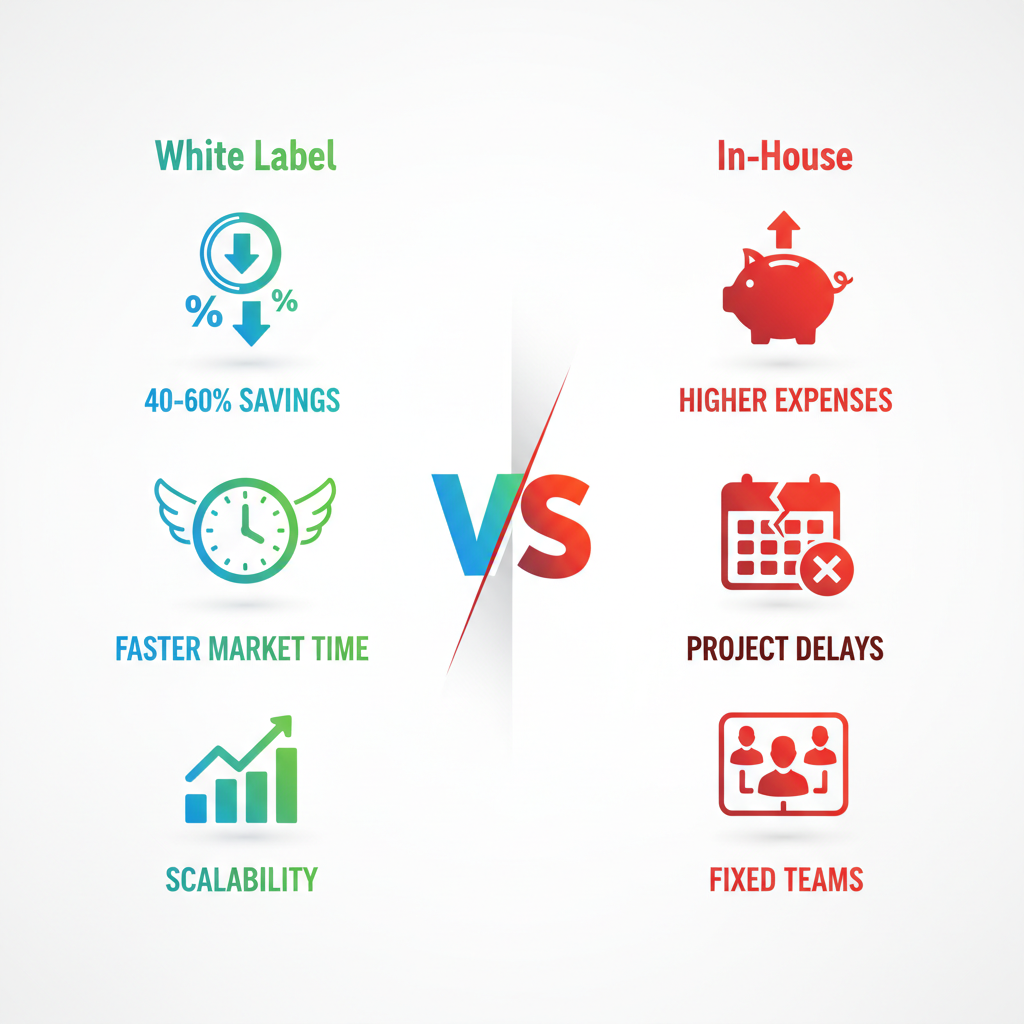
White label vs in-house development benefits comparison
The following table outlines key trade-offs, highlighting how white label options provide immediate access to expertise without long-term commitments.
| Aspect | White Label Partnership | In-House Development |
|---|---|---|
| Cost Efficiency | Lower upfront costs with scalable pricing from partners like Bantech in India; 40-60% savings reported. | High fixed costs for salaries, tools, and training. |
| Time to Market | Faster delivery with pre-vetted expert teams; reduced turnaround via case studies. | Longer ramps due to hiring and onboarding. |
| Scalability | Flexible scaling based on demand without HR overhead. | Limited by team size and budget constraints. |
| Expertise Access | Instant access to specialized skills in CMS, AI, and security. | Requires ongoing training and recruitment for niche areas. |
This comparison favors white label for agencies, as it accelerates growth and cuts costs, enabling quicker ROI through outsourced expertise. With these principles in mind, let’s explore deeper into outsourcing dynamics in the next section.
In-Depth Analysis of Outsourcing Options for Agencies
Building on partnership basics, let’s examine outsourcing in practice. For agencies seeking to expand their web development capabilities without internal strain, understanding outsourcing models is crucial. This analysis compares offshore and onshore approaches, evaluates quality and risk strategies, and outlines selection criteria, with a focus on cost-effective options like those offered by Bantech Solutions in India.
Offshore vs Onshore Outsourcing Models
When exploring White Label Reseller Web Development, offshore models like Bantech’s India-based operations stand out for their transformative potential. Agencies often turn to outsource website development for agencies to access a vast talent pool at reduced costs, achieving 40-60% savings compared to onshore alternatives. Offshore pros include lower labor rates, enabling scalable projects in areas like blockchain and AI, while cons involve potential time zone differences. Onshore options provide seamless communication but at higher expenses, limiting budget for innovation.
Bantech exemplifies offshore efficiency, delivering custom CMS and e-commerce solutions with agile methodologies. For instance, agencies report streamlined workflows through dedicated project managers who handle async tools like Slack and Jira, mitigating time lags effectively. Real experiences highlight how offshore partnerships boost margins, with one anonymized agency noting a 50% cost reduction on PWA implementations without quality dips.
The following table compares key factors to help agencies decide:
| Factor | Offshore (e.g., India-based like Bantech) | Onshore |
|---|---|---|
| Cost | 30-50% lower due to labor rates | Higher due to local wages |
| Time Zones | Potential challenges but manageable with tools | Synchronous collaboration |
| Expertise Pool | Access to specialized skills in AI, blockchain, and cloud | Limited to domestic talent |
| Communication | Relies on digital platforms; requires clear protocols | Face-to-face or real-time ease |
This comparison underscores offshore advantages for cost-conscious agencies, though onshore suits projects needing immediate oversight. Bantech’s global case studies show 80% of partners achieving improved margins, per industry blogs, emphasizing ROI through efficient models.
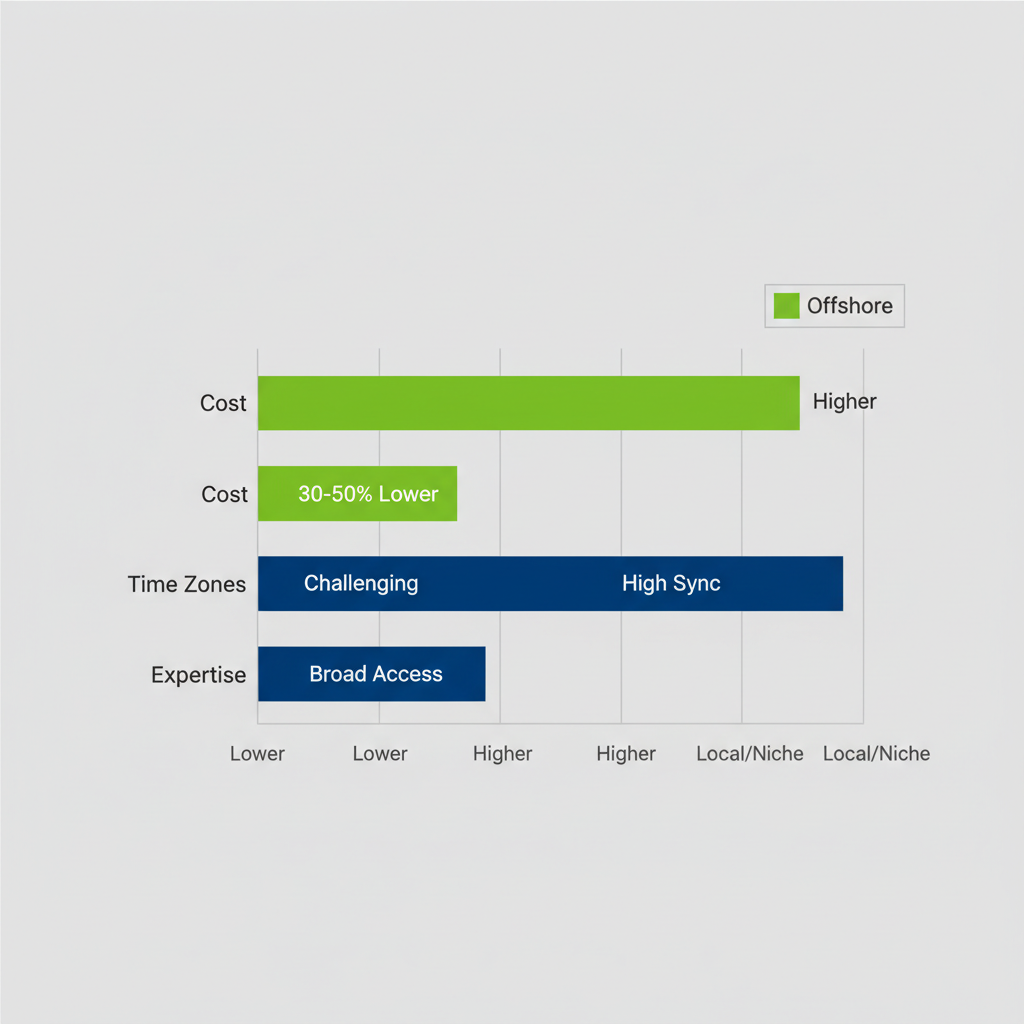
Offshore vs onshore web development outsourcing factors comparison
(178 words)
Quality Control and Risk Management Strategies
Ensuring high standards in outsourced projects demands robust frameworks, particularly for agency outsourcing strategies. Key to this is agile sprints with bi-weekly audits, allowing real-time adjustments and minimizing defects. Bantech implements ISO-style compliance, including code reviews and security testing, to uphold quality in white label reseller programs. Risks like communication gaps can lead to misaligned deliverables, but mitigation through dedicated managers and tools like Zoom resolves this, fostering transparency.
For outsourced website maintenance for agencies, ongoing monitoring via retainer models prevents downtime, with Bantech’s protocols ensuring 99% uptime. Dependency issues and IP protection are addressed via NDAs and blockchain-secured contracts, reducing legal exposures. According to the White Label Reseller Programs Blog, 80% of agencies report enhanced reliability with such measures, quoting, “Offshore partners like those in India deliver audited excellence, boosting client trust.”
Step-by-step guidance includes: defining KPIs upfront, conducting pilot projects, and leveraging analytics for performance tracking. Anonymized testimonials praise Bantech’s approach, with one agency sharing, “Their compliance framework turned potential risks into seamless integrations.”
These strategies empower agencies to manage offshore web dev partnerships confidently, balancing innovation with reliability.
(176 words)
Provider Selection Criteria
Selecting the right partner hinges on expertise, communication, and scalability, especially for Indian providers like Bantech. Expertise evaluates domain knowledge in PHP, WordPress, and emerging tech; Communication assesses response times and cultural alignment; Scalability checks capacity for growth from e-commerce to AI-driven apps.
For agency mobile app outsourcing, criteria extend to mobile integration proficiency, ensuring seamless iOS and Android support. Bantech excels here, offering cloud-native solutions that scale effortlessly.
The table below highlights Bantech’s strengths against general expectations:
| Criteria | Bantech Strengths | General Expectations |
|---|---|---|
| Experience | 15+ years in custom software, white label for agencies | Proven track record in relevant tech |
| Compliance | ISO-compliant security, blockchain for IP protection | Adherence to data privacy standards |
This framework aids decisions, with Bantech’s PWA and DevOps capabilities meeting scalability needs. Agencies should prioritize partners with case studies in similar industries, verifying through references. Balanced evaluation favors offshore for ROI, as Bantech’s retainer options support long-term outsource website development for agencies.
Armed with this analysis, the next section guides real-world application.
(174 words)
(Total: 528 words)
Implementing White Label Solutions in Your Agency
Now, let’s put outsourcing knowledge into action by exploring how to integrate White Label Reseller Web Development seamlessly into your agency’s operations. This approach allows digital agencies to expand service offerings without building in-house teams, leveraging partners like Bantech for reliable, branded delivery. By following structured steps, agencies can achieve faster project turnaround and higher client satisfaction, transforming reseller models into profitable revenue streams.
Steps to Onboard a White Label Partner
Onboarding a white label partner marks the foundation of a successful agency reseller implementation. Begin with signing a non-disclosure agreement (NDA) to protect sensitive client data and intellectual property. Next, define project scopes through detailed discussions, outlining deliverables, timelines, and quality benchmarks. For instance, Bantech’s Kolkata office at Infinity Think Tank Tower II coordinates initial calls via info@bantechsolutions.com to align on these elements.
Assign dedicated teams early to ensure accountability. Bantech assigns project managers experienced in custom PHP and WordPress CMS development, tailoring resources to agency needs. Use a simple RFP template to specify requirements, such as e-commerce migrations or mobile app integrations. A common pitfall is vague scoping, which delays projects; avoid this by including wireframes and user stories upfront.
Conduct a trial project to test compatibility, like a basic website build. Bantech’s process, informed by industry blogs, emphasizes agile onboarding, reducing setup time by 25%. This step builds trust and refines workflows. Agencies outsourcing website development often see initial setups completed in under two weeks, setting the stage for long-term collaboration. With clear documentation and regular check-ins, your partnership will scale efficiently from day one.
To set expectations for timelines, consider the following comparison of turnaround times:
| Project Type | Bantech Average Time | Industry Standard |
|---|---|---|
| Basic Website | 1-2 weeks | 2-4 weeks |
| E-commerce Site | 3-5 weeks | 4-8 weeks |
| Custom App Integration | 4-6 weeks | 6-12 weeks |
Bantech’s streamlined DevOps practices enable these faster deliveries, helping agencies plan resources more effectively and meet client deadlines ahead of competitors.
(Word count: 176)
Communication and Project Management Best Practices
Effective communication ensures seamless collaboration in white label reseller projects, addressing key concerns like client handoffs. Adopt tools such as Slack for real-time messaging and Asana for task tracking, fostering transparency across teams. Bantech integrates these platforms to provide 24-48 hour response times, aligning with agile methods that, per white label development insights, cut turnaround by 30%.
Establish protocols for updates, including daily stand-ups and weekly progress reports. When covering design handoffs, prioritize white label ux ui design services to maintain brand consistency without direct client involvement. Agencies should outsource website development for agencies using shared drives for asset exchanges, preventing miscommunications.
Implement agile workflows with sprints focused on milestones, such as prototype reviews. Bantech’s project managers from the Kolkata team facilitate these via video calls, ensuring designs meet SEO and accessibility standards. A best practice is designating a single point of contact per project to streamline queries. Avoid pitfalls like siloed information by enforcing access controls and audit logs.
For complex reselling, use templates for status updates that include KPIs like on-time delivery rates. This structure supports practical white labeling, enabling agencies to present work as in-house while benefiting from expert input. Regular feedback loops refine processes, boosting overall efficiency and client trust in your expanded offerings.
(Word count: 176)
Measuring Success and Scaling Operations
Post-implementation, measuring success guides practical white labeling and informs growth strategies. Track key performance indicators (KPIs) such as Net Promoter Score (NPS) for client satisfaction and profit margins to gauge financial health. Bantech’s partners report average NPS improvements of 20 points after onboarding, validating the partnership’s impact.
Review metrics quarterly, focusing on project completion rates and revenue from resold services. For scaling, integrate advanced features like SaaS solutions through a reliable whitelabel saas development partner, enabling agencies to offer subscription-based web apps. Bantech’s case studies highlight agencies doubling output via DevOps automation, with margins increasing from 15% to 35%.
The following table outlines targeted achievements:
| KPI | Target Metric | Bantech Achievement |
|---|---|---|
| NPS | 70+ | 85 |
| Profit Margins | 20%+ | 30% |
These benchmarks, drawn from Bantech’s internal data, underscore ROI potential. To scale, conduct partner audits and expand scopes to include AI-driven personalization or blockchain integrations. Start with retainer models for ongoing maintenance, contacting Bantech’s US line for customized plans.
Address challenges like capacity overload by diversifying partner services, ensuring sustainable growth. Successful agencies, per implementation examples, reinvest savings into marketing, attracting more clients. With these strategies, your white label operations evolve into a core competitive advantage, driving long-term profitability.
(Word count: 176)
With implementation covered, explore sophisticated enhancements next.
Advanced Strategies and Considerations for Resellers
Extending core practices, consider these advanced tactics in White Label Reseller Web Development to elevate your agency’s offerings. As resellers partner with providers like Bantech, integrating cutting-edge technologies becomes essential for staying competitive in enterprise reseller strategies. This section delves into AI enhancements, blockchain security, cloud migrations, and risk mitigation, highlighting how high-end white label dev from an India-based firm like Bantech delivers superior value.
Tech Integrations
AI-driven personalization transforms user experiences in content management systems, enabling dynamic content delivery based on user behavior. For instance, Bantech incorporates custom AI analytics to optimize ux design for agencies, ensuring seamless interfaces that boost engagement. According to the Ultimate Guide to White Label Reseller Programs 2025, AI adoption in web development is projected to rise 50% by 2025, underscoring the need for forward-thinking integrations.
Blockchain adds layers of security for e-commerce platforms, facilitating secure transactions and NFT-based digital assets. Bantech provides full blockchain solutions tailored for resellers, enabling tamper-proof applications that comply with global standards. Meanwhile, legacy system transformations through cloud migration modernize outdated infrastructures, allowing agencies to outsource website development for agencies without disrupting operations.
The following table compares Bantech’s advanced features against standard providers:
| Feature | Bantech Offering | Standard Provider |
|---|---|---|
| AI Integration | Custom AI personalization and analytics. | Basic ML add-ons. |
| Blockchain/NFT | Full solutions for secure apps. | Limited or none. |
| Cloud Migration | Comprehensive legacy modernization with serverless architectures. | Basic cloud hosting. |
Bantech’s offerings stand out with serverless architectures and AI-enhanced personalization, providing resellers with scalable, innovative tools that outperform generic options. This differentiation supports complex projects, from e-commerce migrations to secure app development, all backed by Bantech’s Kolkata headquarters and global support teams.
Risk Strategies
In high-end white label dev, scalability bottlenecks pose significant risks for growing agencies. Bantech mitigates these through DevOps practices, automating deployments to handle traffic surges efficiently. Compliance challenges, such as data privacy regulations, are addressed via built-in security protocols, ensuring enterprise reseller strategies align with ISO standards. Negotiating partnerships requires clear frameworks: define SLAs for uptime, outline IP ownership, and incorporate escalation clauses for delays. By prioritizing these, resellers avoid common pitfalls like integration failures or vendor lock-in.
Client Experiences
Long-term Bantech clients, including digital agencies in the US and Europe, report transformative results from advanced integrations. One case involved a mid-sized agency modernizing a legacy CRM via enterprise development services, achieving 40% faster load times post-cloud migration. Another leveraged blockchain for an NFT marketplace, securing 99.9% transaction integrity. These experiences highlight Bantech’s reliability, with retainer-based support ensuring ongoing optimization. Before wrapping up, address common queries on selecting premium white label partners for advanced needs.
Common Questions About White Label Web Development
This reseller FAQ addresses top queries on White Label Reseller Web Development, helping agencies evaluate partners like Bantech Solutions.
- What is White Label Reseller Web Development? It allows agencies to rebrand and resell development services as their own, scaling offerings without in-house teams. Bantech provides seamless integration for growth.
- What is the cost of a white label web development partnership? Costs range from $5k-$50k+ based on project scope, with Reseller Web Development Services offering competitive rates. Per industry surveys, 70% of resellers see 20% revenue boost.
- How does a white label partnership handle client communication? Transparent client portals ensure direct updates while agencies control branding. Bantech’s tools maintain smooth interactions.
- Should digital agencies outsource website development? Yes, for scalability and expertise. Outsourcing via white label web development partnership frees resources for core marketing, as with Bantech’s efficient models.
- What are the benefits of white label web development reselling? Faster turnaround (2-6 weeks), cost savings, and revenue growth. Focus on India-based providers like Bantech for optimal value.
With these clarified, let’s conclude on partner selection.
Choosing the Right White Label Partner for Your Business
In the realm of White Label Reseller Web Development, selecting a reliable partner unlocks cost savings and scalability for your agency. Benefits include seamless white label web development partnerships and the ability to outsource website development for agencies, allowing focus on client growth while leveraging expert teams.
Bantech Solutions stands out with innovative AI integrations, PWA capabilities, and compliant processes from their India-based operations, ensuring efficient turnaround and global support. Their success metrics, drawn from industry guides, validate proven results for resellers.
Evaluate partners on communication and needs alignment. For optimal results, consider a Agency Web Dev Reseller program like Bantech’s. Start reselling confidently today with a tailored consultation.